What is a Traumatic Brain Injury
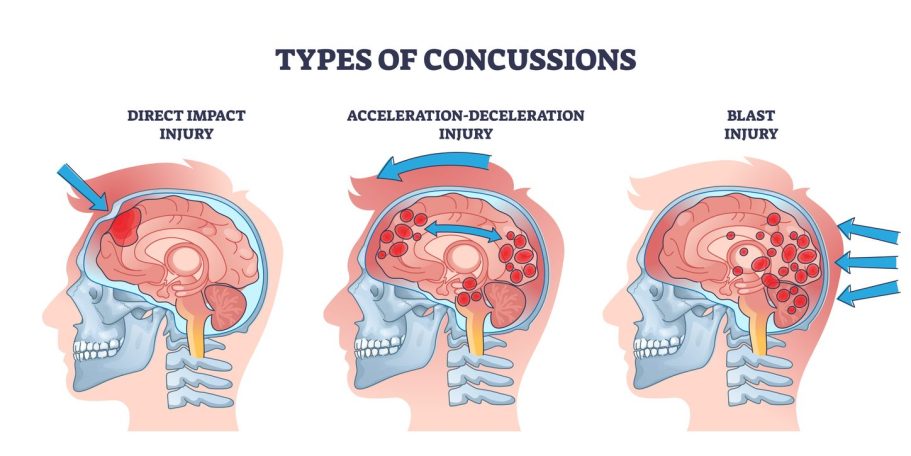
A concussion is a type of brain injury caused by a blow to the head, face, neck, or body that causes the brain to move suddenly inside the skull. This movement can disrupt how the brain normally works, even if there is no visible injury and no loss of consciousness.
Concussions are often described as “mild” traumatic brain injuries, but that does not mean their effects are minor. A concussion is a real injury to the brain and can have serious short- and long-term consequences.
Concussion recovery is not one-size-fits-all. While many people recover within weeks, others may take months — especially those with previous concussions. This is why recognising symptoms, allowing adequate recovery time, and avoiding premature return to activity are essential for long-term brain health.
How Does a Concussion Happen?
A concussion does not require a direct hit to the head. It can occur when a force to the body causes the head to whip or twist suddenly. Common causes include:
- Sports and recreational activities
- Falls
- Road traffic collisions
- Physical assaults
- Workplace accidents
When this happens, the brain can jolt, rotate, or twist within the skull. This rapid movement stretches brain cells and disrupts normal communication between them.
What Happens Inside the Brain?
During a concussion, brain cells are affected on a microscopic level. The injury can cause:
- A sudden surge of chemicals in the brain
- Reduced blood flow to brain tissue
- Temporary disruption of brain cell communication
- Inflammation and energy imbalance in brain cells
These changes explain why concussion symptoms can appear immediately, develop hours later, or even worsen over time.
Common Symptoms of Concussion
Concussion symptoms vary from person to person and may affect thinking, emotions, physical sensations, and sleep. Symptoms can include:
Cognitive (thinking) symptoms
- Confusion or feeling “foggy”
- Memory problems
- Difficulty concentrating
- Slowed thinking
Physical symptoms
- Headache
- Dizziness or balance problems
- Nausea or vomiting
- Sensitivity to light or noise
- Fatigue
Emotional and behavioural symptoms
- Irritability
- Anxiety
- Low mood
- Emotional changes
Sleep-related symptoms
- Sleeping more or less than usual
- Trouble falling or staying asleep
Not everyone experiences the same symptoms, and not all symptoms appear straight away.
Loss of Consciousness Is NOT Required
A common myth is that you must lose consciousness to have a concussion. In reality, most concussions do not involve being knocked out. Someone can walk, talk, and appear “fine” while still having a brain injury.
Recovery and Repeated Concussions
Many people recover from a concussion within weeks, especially with proper rest and medical care. However, recovery is not the same for everyone. Some people experience prolonged symptoms, known as post-concussion syndrome.
Repeated concussions — or returning to activity before the brain has fully healed — increase the risk of:
- Longer recovery times
- Ongoing cognitive and emotional difficulties
- Increased vulnerability to future brain injury
- Long-term neurological conditions
- Concussion and Long-Term Brain Health
Research shows that repeated concussions and sub-concussive impacts (head impacts that don’t cause obvious symptoms) can have cumulative effects on the brain. Over time, this exposure may contribute to long-term brain health problems in some individuals.
This is why recognition, rest, and proper medical assessment after any suspected concussion are essential.
When to Seek Medical Advice
Anyone who experiences a head impact followed by symptoms — even mild ones — should seek medical advice. It is especially important to tell healthcare professionals about any history of previous head injuries, no matter how long ago they occurred.
In summary a concussion is:
- A real brain injury
- Caused by sudden movement of the brain inside the skull
- Possible without loss of consciousness
- Different for every person
- Something that should always be taken seriously
What is a Sub Concussive hit?
A sub-concussive hit is a blow to the head or body that does not cause a diagnosed concussion or traumatic brain injury, and often causes no immediate symptoms. These impacts are common in contact sports such as rugby and football and can happen through both direct contact to the head or indirect forces to the body.
Even without visible symptoms, these impacts can cause the brain to move inside the skull. The brain may jolt or twist, similar to what happens during a car crash. Over time, this repeated movement can lead to inflammation and microscopic damage within brain tissue.
The scale of exposure is a major concern. Research estimates that a rugby player may experience over 1,500 sub-concussive impacts in a single season, while a footballer may experience up to 1,400 sub-concussive impacts, depending on factors such as heading the ball.
Another serious concern is the effect sub-concussive hits may have on the blood–brain barrier (BBB). The BBB acts as a protective filter between the brain and the bloodstream, helping to keep harmful substances out. It is made up of tightly connected cells and support structures that protect brain tissue.
A study by Marchi (2013) examined American football players who had no reported concussions. Brain imaging after just one season showed evidence of blood–brain barrier disruption, highlighting that brain changes can occur even without diagnosed injury.
Concussions in Children
The human brain continues to develop well into the mid-twenties. Because of this ongoing development, concussions in children and adolescents can be particularly concerning. Research increasingly shows that a brain which has not yet fully matured may be more vulnerable to injury, with the potential for long-lasting effects on thinking, behaviour, and emotional wellbeing.
A large study involving over 448,000 children aged 5 to 18 found that more than 40% of those who had experienced a concussion were at increased risk of later mental health difficulties, psychiatric hospitalisation, and self-harm (Ledoux, 2022). These findings challenge earlier assumptions that young brains recover more easily from concussion.
Previously, it was widely believed that a child’s developing brain was more resilient due to its “plasticity.” However, newer research suggests the opposite may be true. Studies indicate that children and adolescents can experience longer-lasting cognitive and behavioural difficulties than adults following concussion. McKee (2011) reports that young people often show worse cognitive symptoms one year after injury compared to adults.
One reason for this increased vulnerability is that the prefrontal cortex — the area of the brain responsible for attention, impulse control, planning, and behaviour — is among the last regions to fully mature. This may help explain why parents sometimes notice changes such as attention difficulties, hyperactivity, or behavioural problems following a head injury.
More recent research by Julius Möttönen (2025) reinforces these concerns. His work suggests that even a single, mild concussion can have long-term effects on learning and cognitive abilities. The study found that around 15% of children who sustained a concussion were less likely to progress to further education, such as college or university.
Together, this growing body of evidence highlights the importance of taking childhood and adolescent concussions seriously, recognising symptoms early, and ensuring appropriate medical assessment and support.
What does science tell us about concussion recovery?
Research into concussion recovery is ongoing, and while there are many theories, there are two key points that doctors and scientists consistently agree on.
First, the cause of the concussion does not affect recovery time. The brain does not distinguish between a concussion caused by a fall, a car crash, or a sports injury. A concussion is a concussion, and the brain will take the time it needs to recover regardless of how the injury occurred.
Second, a person’s history of concussion matters. Research shows that people with previous concussions — particularly those with more severe or longer-lasting symptoms — are more likely to experience longer recovery times after subsequent injuries (Harman, 2013).
Symptoms may fade before the brain fully recovers
A recent American study compared the brains of 50 people diagnosed with a mild concussion to 50 people with no concussion. While many symptoms, such as headaches, resolved within a few weeks, brain scans taken four months later showed ongoing differences in how fluid moved within the brain. This suggests that, even when symptoms improve, the brain itself may not yet have fully healed (Hallock, 2023).
Why do some people take longer to recover?
Dr David Stamatakis from the University of Cambridge has highlighted a key challenge in concussion care:
“At present, we have no clear way of working out which patients will recover quickly and which will take longer.”
This uncertainty can result in some people not receiving adequate support for ongoing symptoms (Stamatakis, 2023).
In a study conducted with the CENTER-TBI project, researchers examined 108 concussion patients and compared them to 76 healthy volunteers. Brain scans revealed that 45% of patients with ongoing symptoms showed abnormalities in the thalamus — a key brain region responsible for relaying information.
Rather than showing obvious structural damage, the thalamus appeared to be over-connected, likely attempting to compensate for injury. As researcher Woodrow explained:
“The thalamus appears to be over-compensating, and this may be at the root of some of the long-lasting symptoms patients experience.”
The study also found that people experiencing emotional symptoms, such as depression, showed increased connectivity between the thalamus and areas of the brain involved in serotonin regulation (Woodrow, 2023).
NHS guidance and the reality of recovery
According to NHS guidance, concussion symptoms can last up to three months, with around 80% of people experiencing post-concussion symptoms during this time. For people over the age of 40, symptoms may persist for six to twelve months.
The NHS advises:
- Resting physically and mentally for the first 48 hours
- Avoiding driving or operating machinery
- Gradually returning to normal activities
- Avoiding stressful situations
- Not returning to work or sport until symptoms have resolved
- Avoiding contact sports for at least three weeks
- Following a gradual return-to-play programme after a minimum of 14 days rest (NHS, 2022)
However, growing scientific evidence suggests that symptom-based timelines alone may be misleading. Symptoms can improve before the brain has fully recovered, meaning a return to sport or activity too soon may increase the risk of prolonged symptoms or further injury.
Are you experiencing a mental health crisis?
There is help for you!
Shout: For 24/7 text support, text SHOUT to 85258 or click HERE
NHS 111 Online or Phone: If it's not an emergency but you need urgent help with your mental health, you can access NHS 111 online or by calling 111
Samaritans: Call 116 123 to talk , or email: jo@samaritans.org for a reply within 24 hours or click HERE
CALM - 0800 585 858 or click HERE
Mind - 0300 1233 393 or click HERE
No Panic - 0844 9674 848 or click HERE
National Domestic Abuse - 0808 2000 247 or click HERE