Does Brain Injury Increase Suicide Risk?
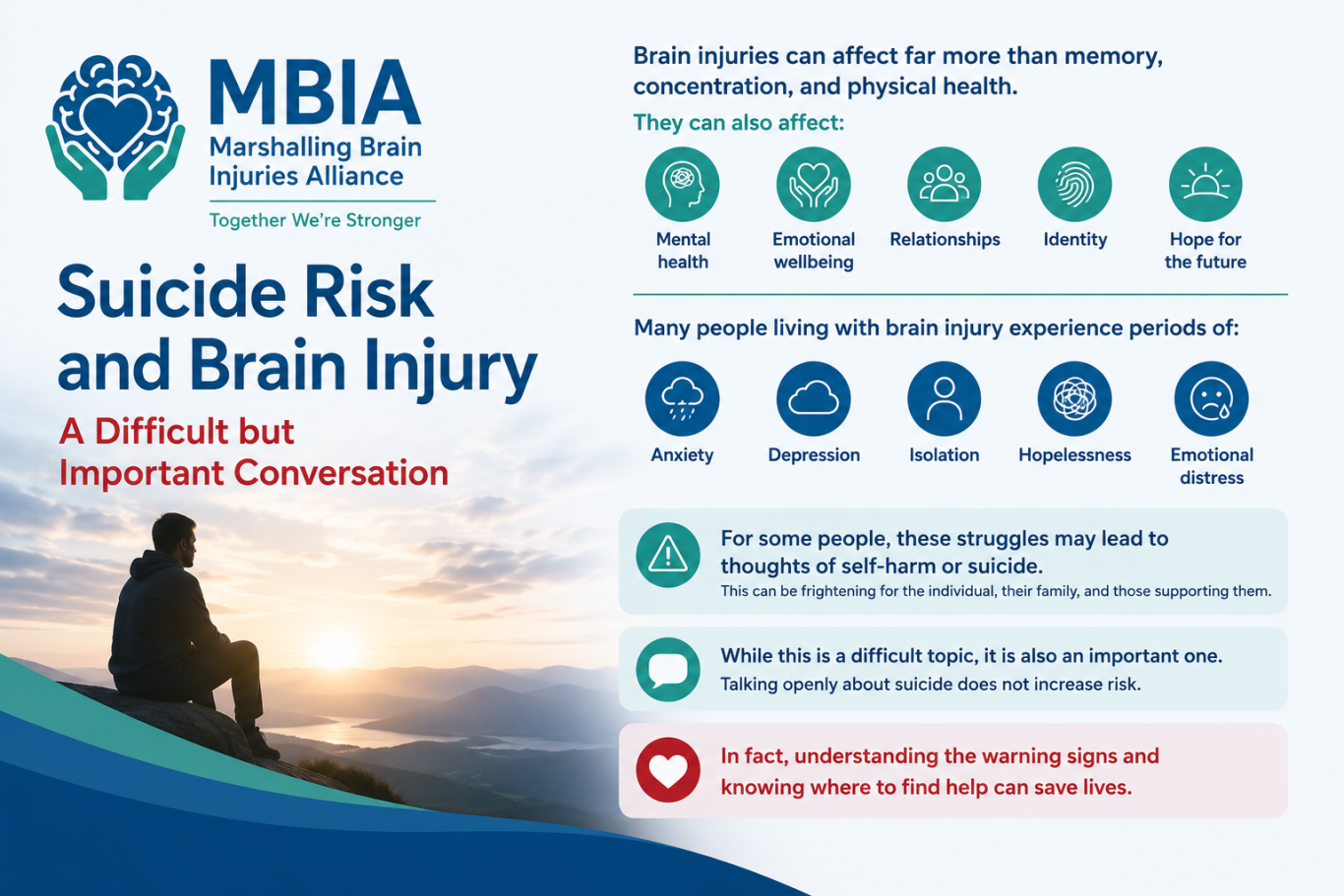
Research suggests that people living with brain injuries may be at a higher risk of experiencing:
- Depression
- Anxiety
- Substance misuse
- Suicidal thoughts
compared to the general population.
This does not mean that everyone with a brain injury will experience suicidal thoughts.
Most do not.
However, awareness is important because brain injury can create challenges that increase vulnerability.
Why Can Brain Injury Change Someone?
There is rarely a single cause.
Often, several factors combine.
Neurological Changes
Brain injury can affect areas involved in:
- Mood regulation
- Emotional control
- Impulse control
- Stress responses
These changes may influence how a person experiences and manages emotions.
Grief and Loss
Many people grieve after a brain injury.
They may feel they have lost:
- Their health
- Their career
- Their independence
- Their identity
- Their future plans
Grief can be a powerful emotional burden.
Chronic Symptoms
Living with ongoing symptoms such as:
- Fatigue
- Pain
- Headaches
- Memory difficulties
- Sleep problems
can take a significant toll on mental wellbeing over time.
Isolation
Many people become socially isolated after a brain injury.
They may:
- Stop working
- Reduce social activities
- Withdraw from friends
- Feel misunderstood
Isolation can increase emotional distress.
Relationship Difficulties
Changes in relationships can also contribute to feelings of hopelessness.
Some people struggle with:
- Marital difficulties
- Family conflict
- Loss of friendships
- Feeling like a burden
These feelings can be extremely painful.
The Link Between Brain Injury and Impulsivity
Some brain injuries affect impulse control.
This is important because impulsivity can sometimes increase risk during periods of emotional crisis.
A person may act on thoughts more quickly than they otherwise would have.
This is one reason why suicidal thoughts should always be taken seriously.
What Do Suicidal Thoughts Look Like?
Not everyone who struggles with suicidal thoughts talks openly about them.
Some people may say things such as:
- "Everyone would be better off without me."
- "What's the point anymore?"
- "I can't do this."
- "I'm a burden."
Others may never mention suicide directly.
Warning Signs Families Should Watch For
Possible warning signs include:
- Increasing hopelessness
- Withdrawal from family and friends
- Giving away possessions
- Talking about death
- Sudden calmness after severe distress
- Increased substance use
- Risk-taking behaviour
- Expressions of feeling trapped
- Changes in sleep
- Severe depression
One sign alone does not necessarily mean someone is suicidal, but patterns and changes should be taken seriously.
What If My Loved One Mentions Suicide?
Many people panic when someone talks about suicide.
It is natural to feel frightened.
However, one of the most important things you can do is stay calm and listen.
Try:
✅ Listening without judgement
✅ Taking them seriously
✅ Encouraging professional support
✅ Staying connected
Avoid:
❌ Dismissing their feelings
❌ Telling them to "cheer up"
❌ Arguing with them
❌ Assuming they will be fine without support
Asking About Suicide Does Not Cause Suicide
This is a common myth.
Research shows that asking someone directly about suicidal thoughts does not put the idea into their head.
In many cases, it can provide relief because the person feels heard and understood.
Protective Factors
Many things can help protect against suicide risk.
Examples include:
- Strong relationships
- Family support
- Peer support groups
- Access to healthcare
- Community connection
- Hope for the future
- Meaningful activities
- Faith or spirituality for some individuals
These factors do not eliminate risk, but they can help strengthen resilience.
Looking After Mental Health Matters
Mental health is an important part of brain injury recovery.
Seeking support for:
- Depression
- Anxiety
- Trauma
- Stress
- Relationship difficulties
is just as important as addressing physical symptoms.
There is no shame in asking for help.
What To Do If You Are Struggling
If you are living with a brain injury and experiencing thoughts of self-harm or suicide:
Please tell someone.
This might be:
- A family member
- A friend
- Your GP
- A mental health professional
- A support worker
You do not have to carry these thoughts alone.
Help is available.
What To Do If You Are Supporting Someone
If you believe someone may be at risk:
- Take concerns seriously
- Encourage professional support
- Stay connected
- Remove access to immediate means of harm where possible
- Seek emergency help if necessary
Trust your instincts.
It is always better to seek support and discover the risk was lower than expected than to ignore concerns.
Crisis Support (United Kingdom)
If someone is in immediate danger:
🚨 Call 999
or attend the nearest Accident & Emergency department.
Mental Health Crisis Support
📞 NHS 111 (Option 2)
📞 Samaritans – 116 123 (24 hours a day)
📱 SHOUT Crisis Text Line – Text SHOUT to 85258
A Message for Families
If your loved one is struggling, remember:
You are not expected to have all the answers.
You are not expected to fix everything.
Sometimes the most powerful thing you can do is listen, stay present, and help connect them with support.
And if you are supporting someone in crisis, remember that your wellbeing matters too.
A Message for People Living With Brain Injury
If you are reading this and feeling overwhelmed, hopeless, or exhausted:
Please know that you are not alone.
Many people living with brain injury experience dark periods.
Many people who once believed things would never improve later found support, connection, treatment, and hope.
The way you feel today does not predict how you will feel forever.
Please reach out.
There are people who care, people who will listen, and people who want to help.
Key Takeaways
- Brain injury may increase vulnerability to depression, anxiety, and suicidal thoughts in some individuals.
- Risk is influenced by many factors, including neurological changes, chronic symptoms, isolation, and loss.
- Suicidal thoughts should always be taken seriously.
- Asking someone about suicide does not increase risk.
- Strong support networks and access to help are important protective factors.
- Help is available for both individuals and families.
- If someone is in immediate danger, call 999.
- There is always hope, and support is available.
Continue Exploring
- Brain Injury and Mental Health
- Grief & Loss
- Caregiver Burnout
- Crisis Support
- Family Support Group
- Support Groups
Together We're Stronger