How Does Neuroplasticity Work?
The brain is made up of billions of neurons that communicate through complex networks.
When we repeatedly practise a task or learn something new, these connections become stronger and more efficient.
A common phrase used in neuroscience is:
"Neurons that fire together, wire together."
The more often a pathway is used, the stronger it becomes.
This is why practice improves performance, habits become automatic, and rehabilitation can help rebuild skills after injury.
What Is Neuroplasticity?
Neuroplasticity refers to the brain's ability to:
- Form new neural connections
- Strengthen existing pathways
- Reorganise functions
- Adapt to injury or illness
- Learn and store new information
Every time you learn something new, practise a skill, form a habit, or recover from an injury, your brain is changing and adapting.
In simple terms, neuroplasticity is the brain's way of rewiring itself.
Why Recovery Looks Different for Everyone
No two brain injuries are the same.
Recovery is influenced by many factors, including:
- The type of injury
- The severity of the injury
- The location of the injury
- Age
- General health
- Sleep quality
- Rehabilitation and therapy
- Mental wellbeing
- Social support
Because every brain is unique, recovery timelines can vary significantly between individuals.
Neuroplasticity After Brain Injury
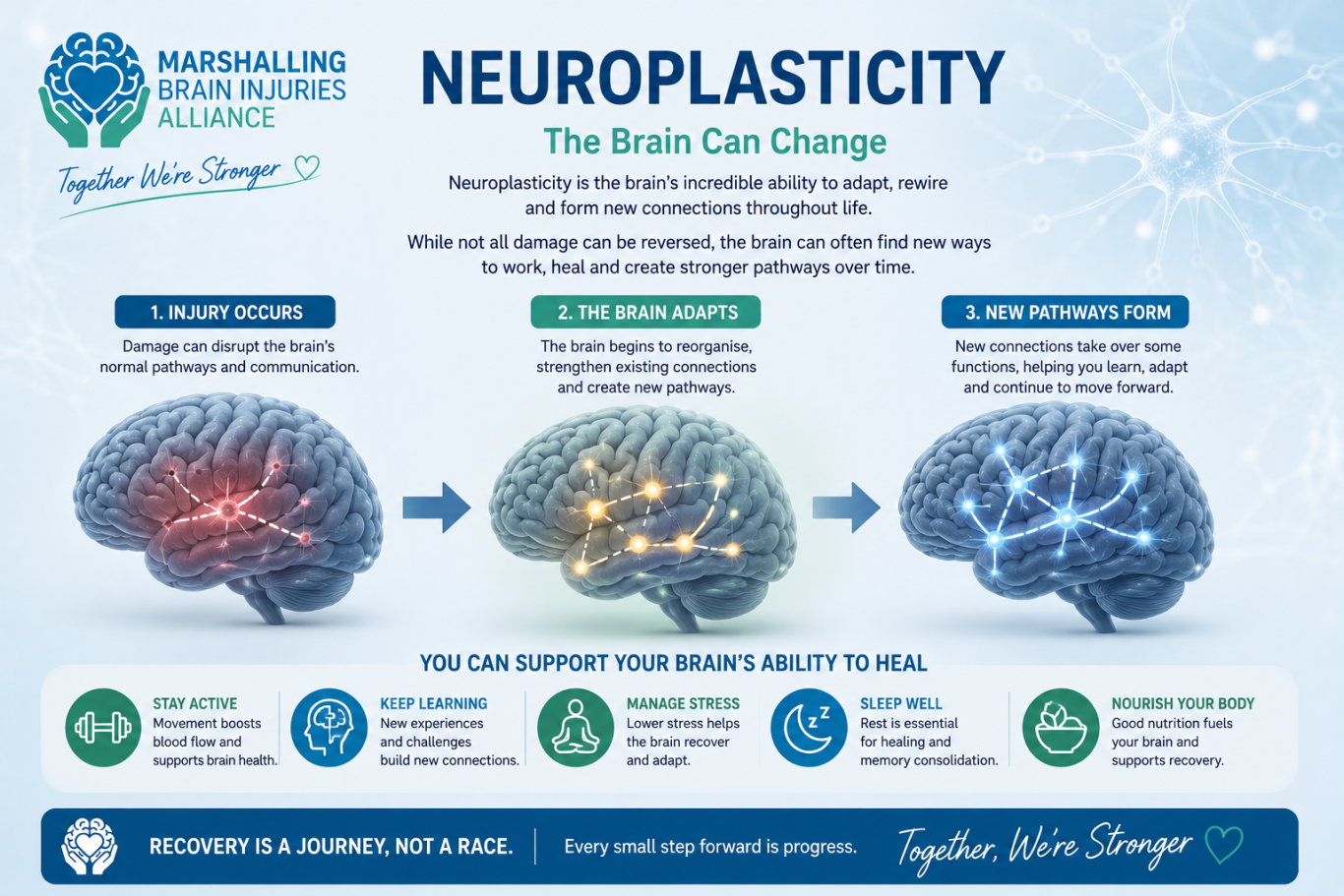
When a brain injury occurs, some neural pathways may become damaged or disrupted.
Neuroplasticity allows the brain to adapt by:
- Strengthening existing pathways
- Creating new connections
- Finding alternative routes around damaged areas
- Improving efficiency in healthy parts of the brain
This process may help explain why some people continue to recover abilities long after an injury.
Recovery does not necessarily mean damaged cells are replaced. Instead, the brain often learns new ways of performing tasks.
Nutrition
The brain requires a constant supply of nutrients to function effectively.
A balanced diet rich in:
- Healthy fats
- Protein
- Vitamins
- Minerals
- Antioxidants
may help support overall brain health and recovery.
Rehabilitation and Therapy
Structured rehabilitation often takes advantage of neuroplasticity.
Examples include:
- Physiotherapy
- Occupational therapy
- Speech and language therapy
- Cognitive rehabilitation
- Vestibular therapy
- Psychological therapies
These approaches encourage the brain to repeatedly practise and strengthen important skills.
Neuroplasticity and Mental Health
Neuroplasticity isn't only relevant to physical recovery.
The brain also changes in response to:
- Thoughts
- Emotions
- Experiences
- Stress
- Trauma
This means that positive habits, therapy, mindfulness, exercise, and supportive relationships may all influence how the brain functions over time.
What Supports Neuroplasticity?
While researchers continue to study neuroplasticity, several factors appear to support healthy brain adaptation and recovery.
Learning New Skills
Learning stimulates the brain and encourages the formation of new neural connections.
Examples include:
- Reading
- Puzzles
- Learning a language
- Musical instruments
- New hobbies
The goal isn't perfection—it's providing the brain with opportunities to learn and adapt.
Physical Exercise
Exercise increases blood flow to the brain and supports overall brain health.
Research suggests regular physical activity may help support:
- Memory
- Attention
- Mood
- Cognitive function
- Neuroplasticity
Even gentle activities such as walking can be beneficial.
Sleep
Sleep is one of the most important processes for brain health.
During sleep, the brain:
- Consolidates memories
- Removes waste products
- Supports learning
- Strengthens neural connections
Poor sleep may interfere with recovery and cognitive function.
Common Myths About Neuroplasticity
Myth: The brain cannot change after adulthood.
Fact: The brain continues changing throughout life.
Myth: Neuroplasticity means complete recovery is guaranteed.
Fact: Neuroplasticity can support recovery and adaptation, but outcomes vary significantly between individuals.
Myth: Recovery stops after a few months.
Fact: Improvements can continue for years following an injury.
Myth: If symptoms remain, recovery has failed.
Fact: Recovery often involves adaptation, compensation, and improved quality of life rather than complete symptom resolution.
Continue Exploring
Key Takeaways
- Neuroplasticity is the brain's ability to adapt and change.
- The brain can create new connections throughout life.
- Neuroplasticity plays an important role in learning, recovery, and rehabilitation.
- Exercise, sleep, nutrition, therapy, and learning may all help support healthy brain function.
- Recovery after brain injury is highly individual.
- Improvement can continue long after an injury has occurred.