Neurons
The Brain's Messengers
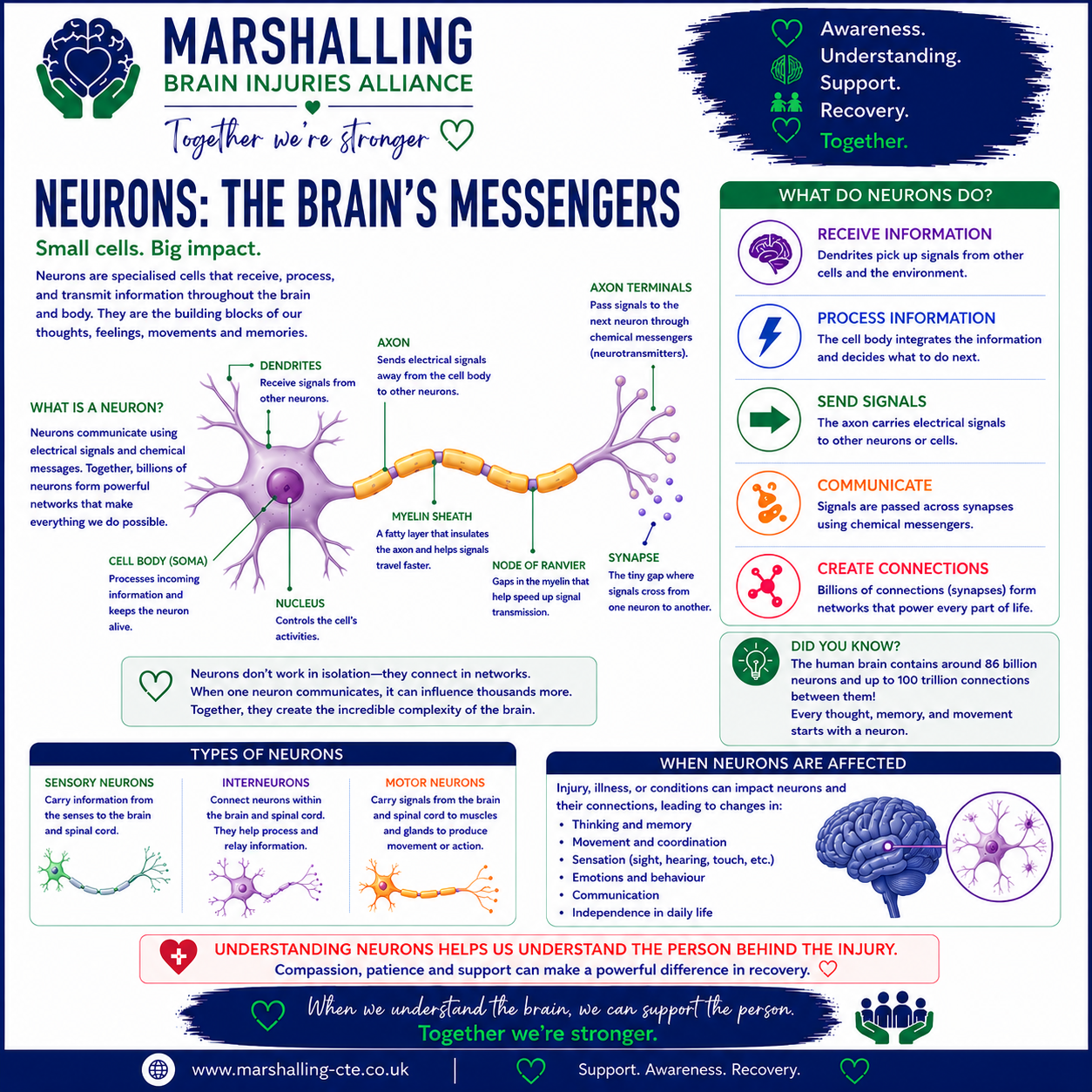
How Information Travels
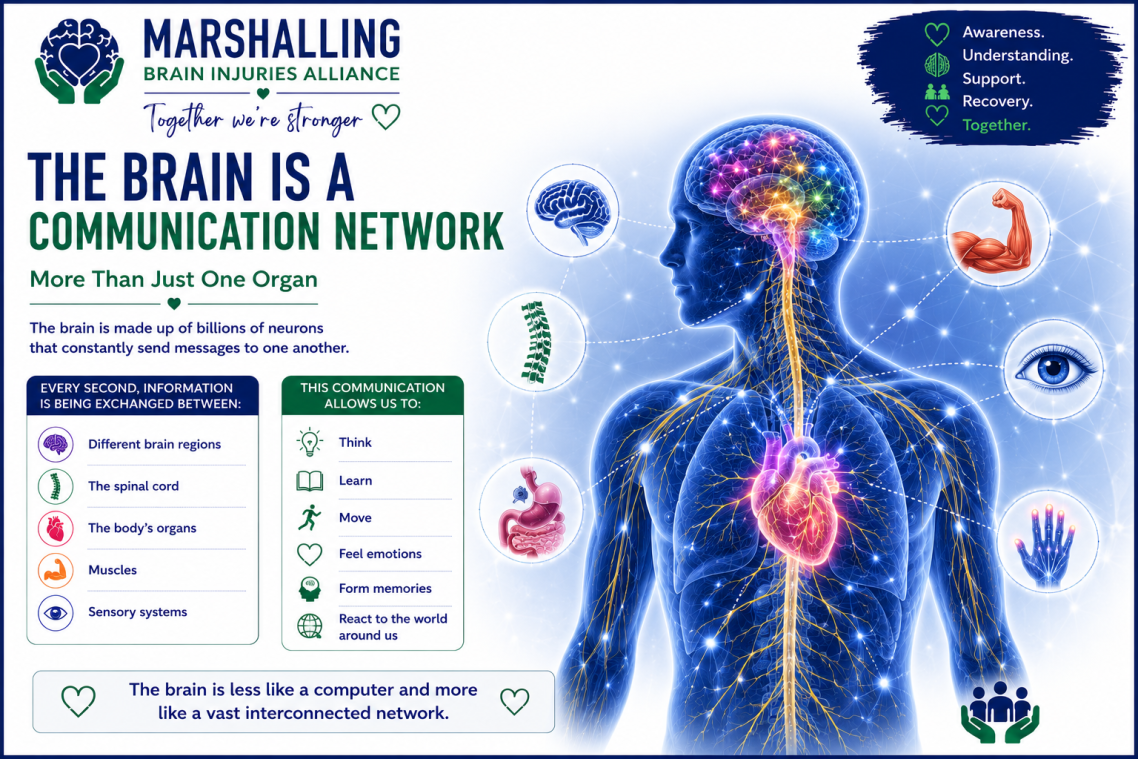
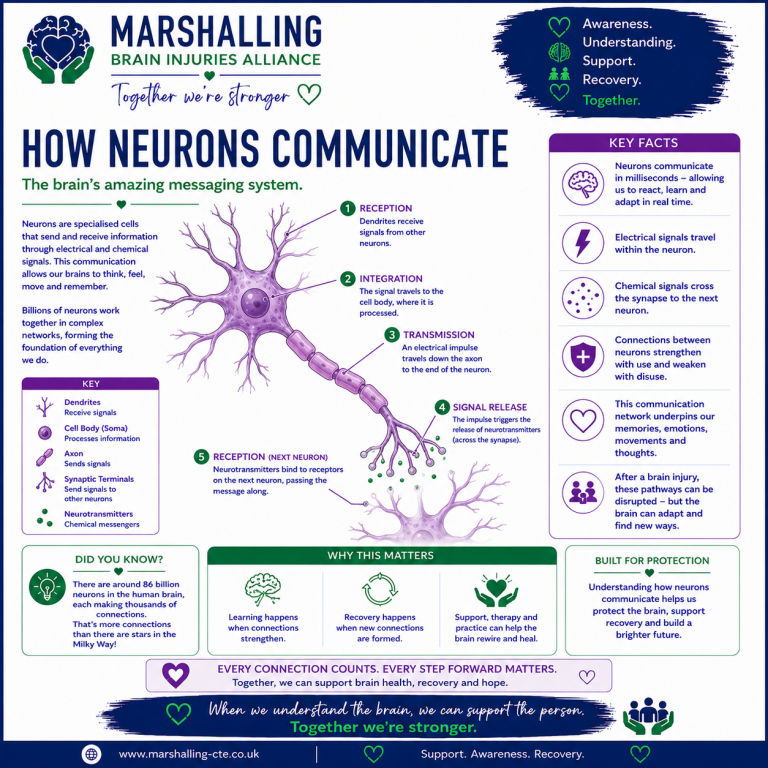
Neurons are specialised cells that transmit information.
Each neuron contains:
- Dendrites (receiving information)
- Cell body
- Axon (sending information)
- Synapse (connection point)
Signals travel as tiny electrical impulses before being converted into chemical messages between neurons.
The average neuron can communicate with thousands of other neurons simultaneously.
Why We Have Focused on These 12 White Matter Tracts
The brain contains hundreds of white matter pathways, but not all tracts are equally relevant when discussing concussion, traumatic brain injury (TBI), diffuse axonal injury (DAI), and chronic traumatic encephalopathy (CTE).
For the Brain Health Hub, we have focused on 12 of the most important and most studied white matter tracts because they are frequently examined in brain injury research and are closely linked to many of the symptoms experienced by people living with concussion, PCS, TBI, and suspected CTE.
These tracts act as the brain's communication highways, carrying information between different regions of the brain and between the brain and body. When they become stretched, damaged, disrupted, or affected by tau pathology, communication can slow down or break down entirely.
The 12 White Matter Tracts We Focus On
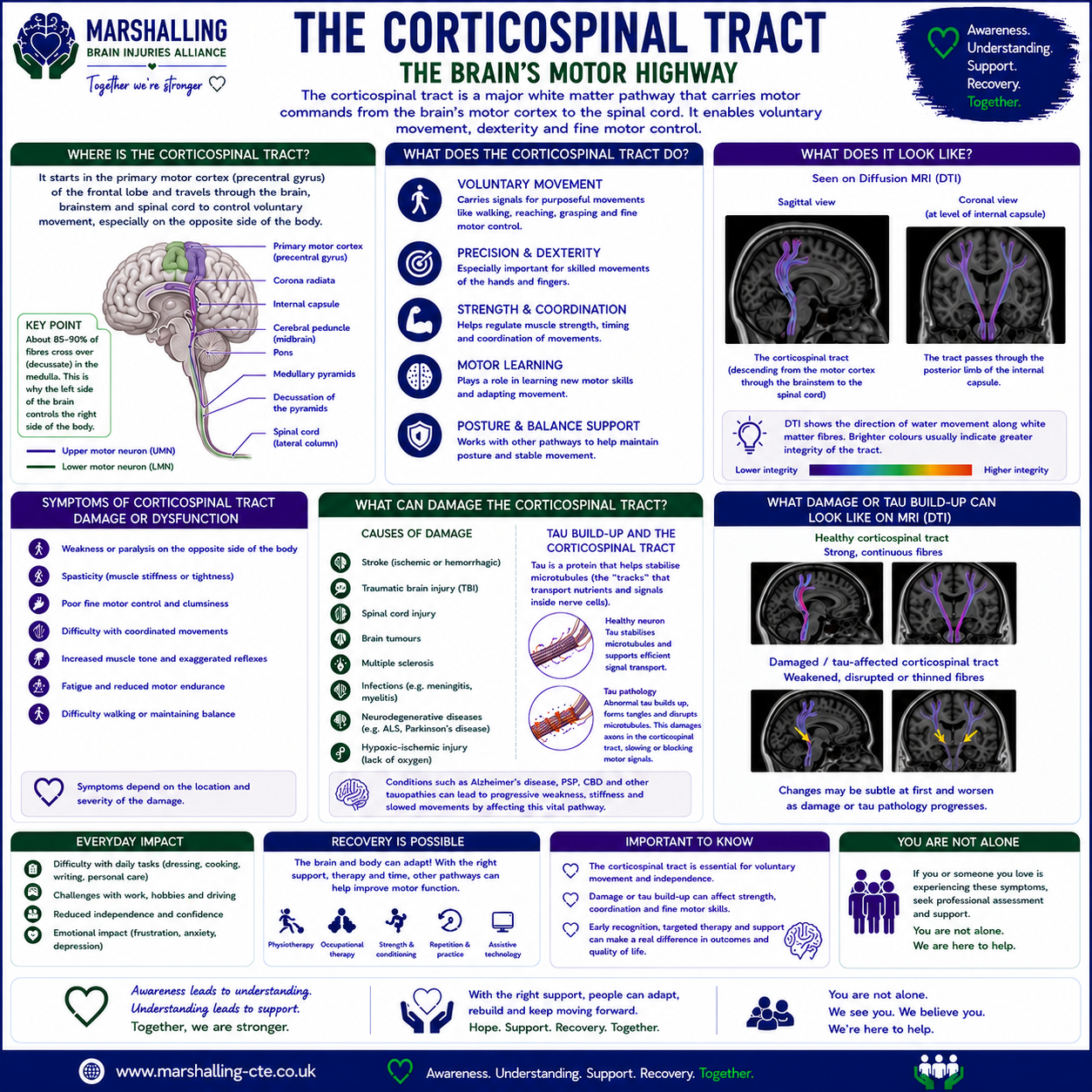
Corticospinal Tract
Function: Movement and motor control
Possible symptoms when affected:
- Weakness
- Poor coordination
- Balance problems
- Reduced dexterity
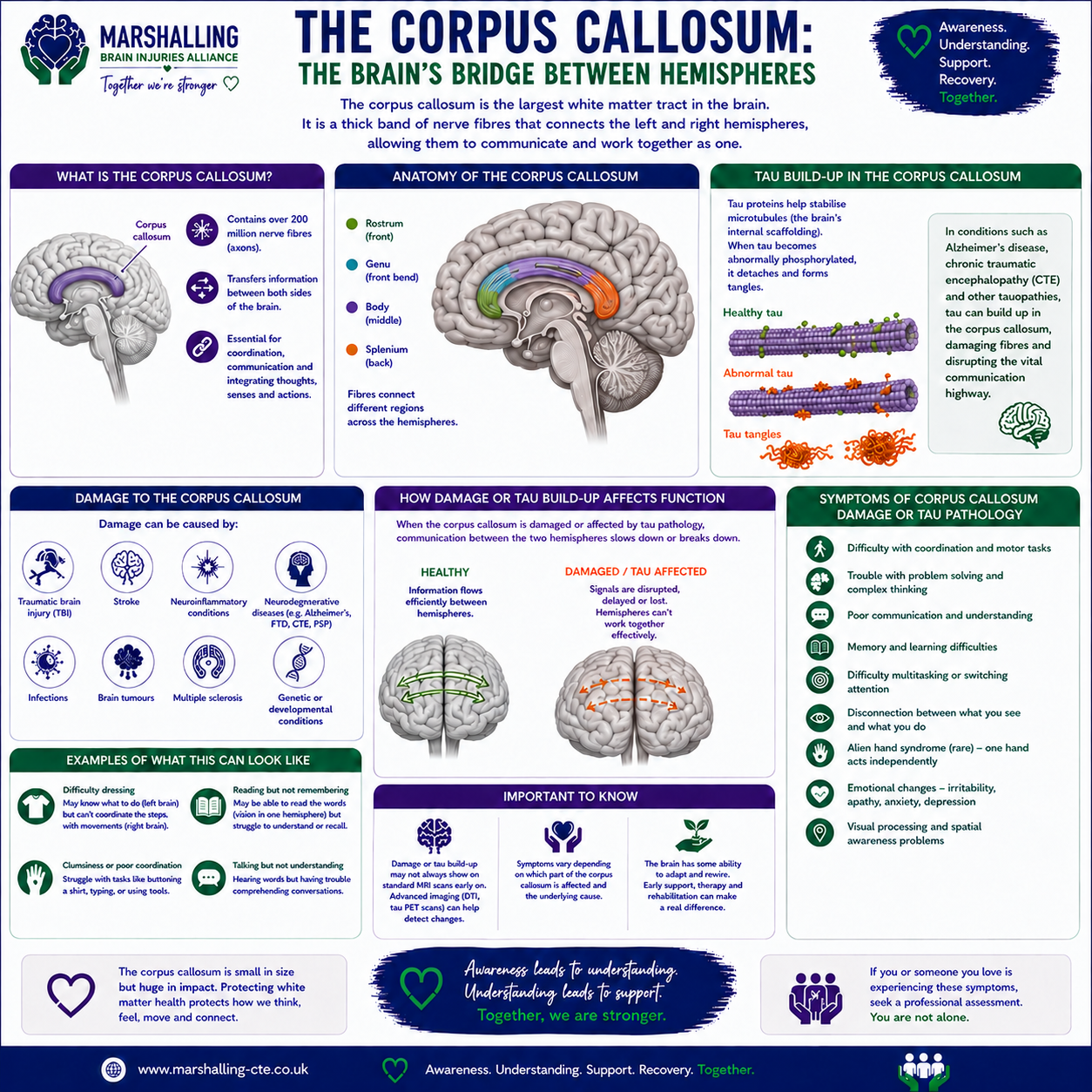
Corpus Callosum
Function: Connects the left and right hemispheres
Possible symptoms when affected:
- Slower thinking
- Processing difficulties
- Problems coordinating information between brain regions
The corpus callosum is one of the most commonly injured structures in diffuse axonal injury.
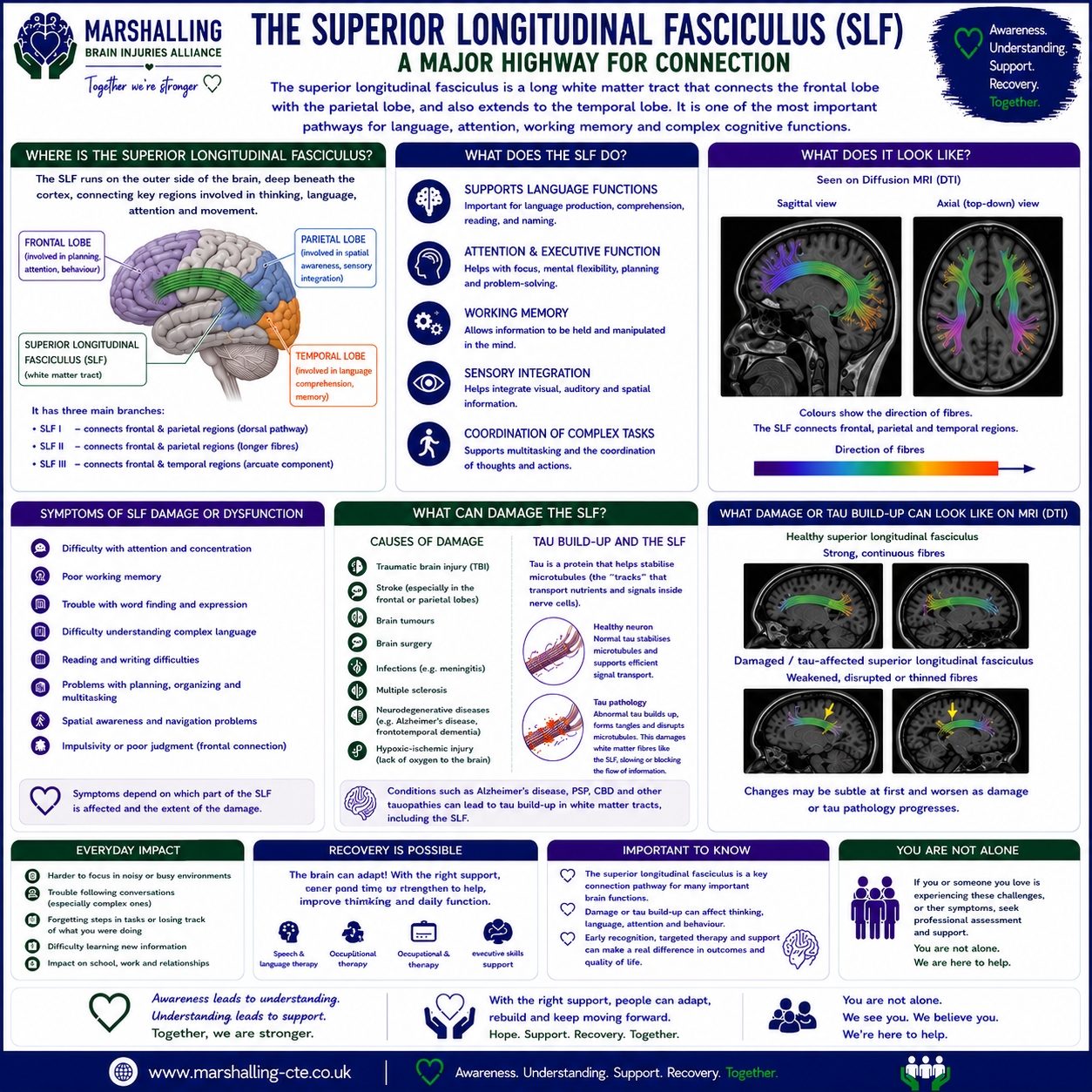
Superior Longitudinal Fasciculus (SLF)
Function: Language, attention, working memory, executive function
Possible symptoms when affected:
- Brain fog
- Concentration problems
- Word-finding difficulties
- Cognitive fatigue
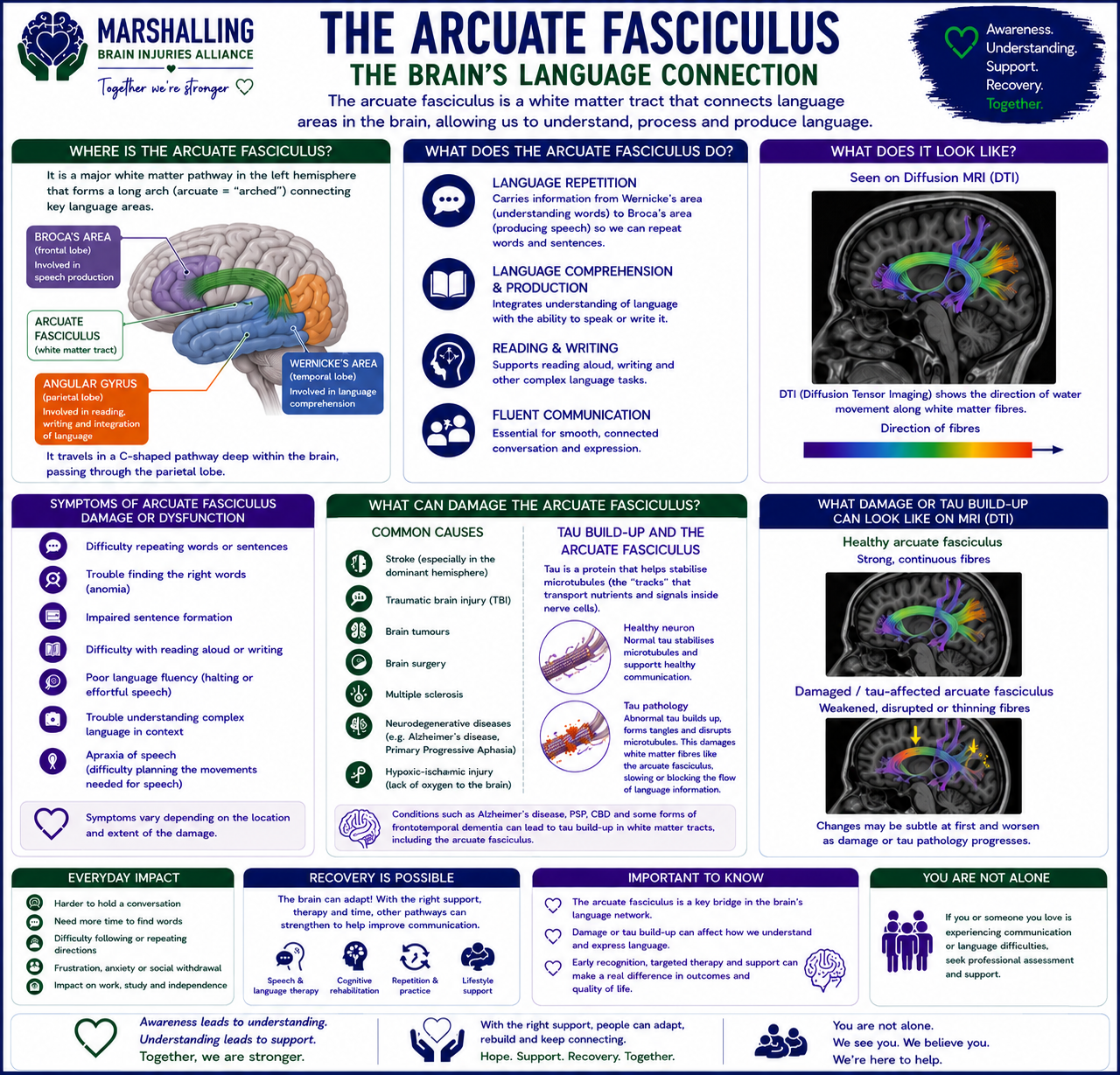
Arcuate Fasciculus
Function: Connects language centres
Possible symptoms when affected:
- Difficulty understanding language
- Difficulty producing speech
- Word retrieval problems
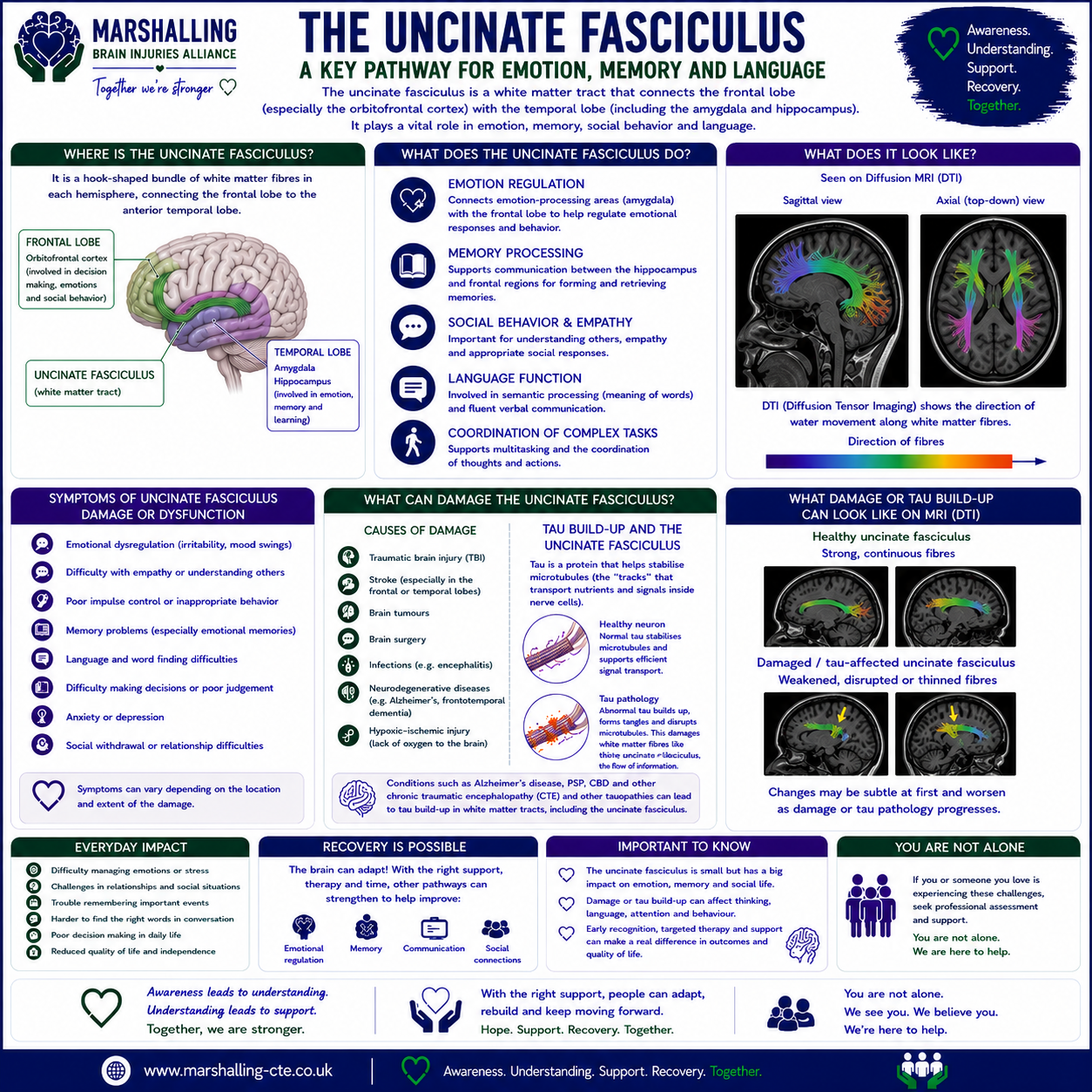
Uncinate Fasciculus
Function: Emotion, memory, social behaviour
Possible symptoms when affected:
- Emotional dysregulation
- Irritability
- Anxiety
- Memory difficulties
- Changes in social behaviour
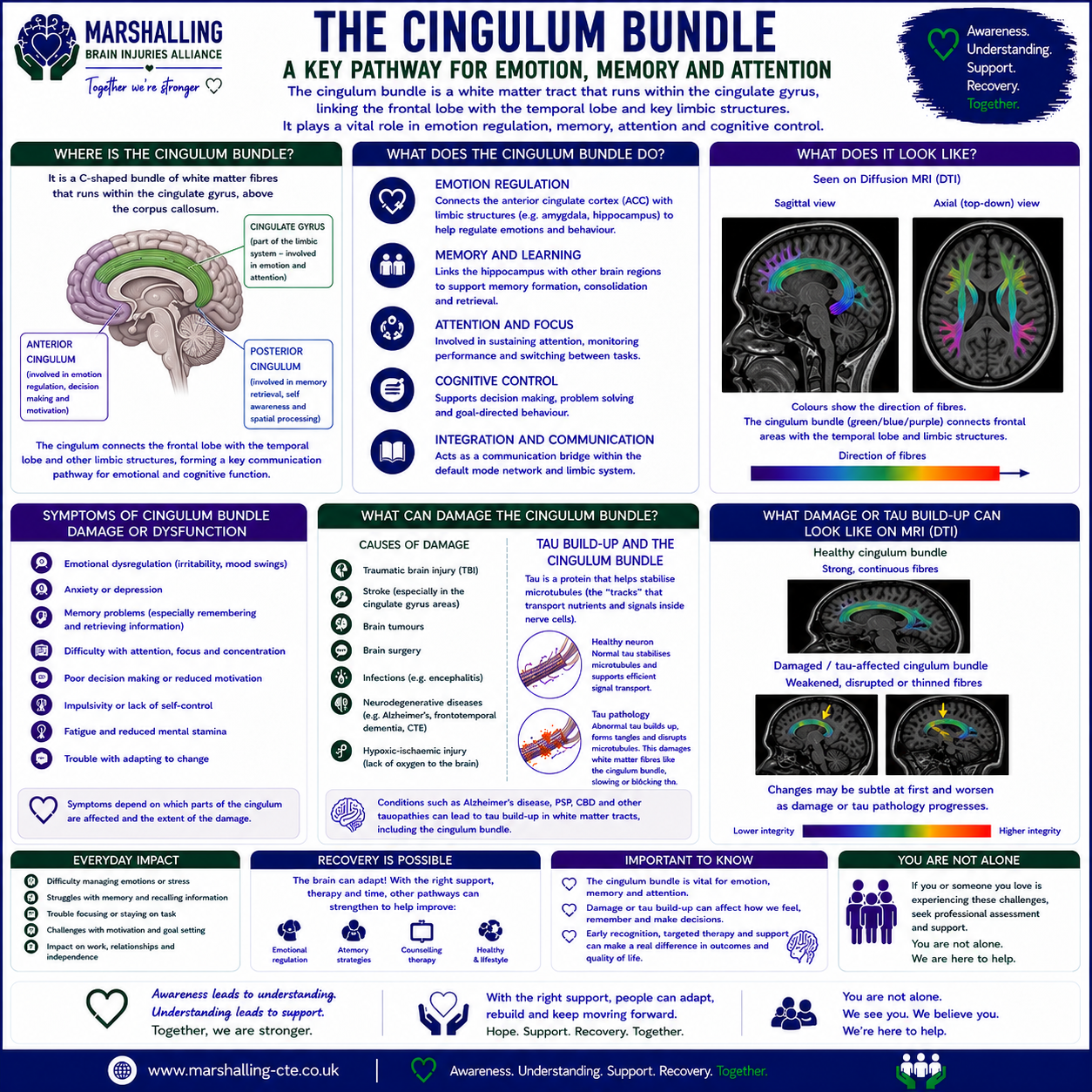
Cingulum Bundle
Function: Emotion, attention, memory and self-awareness
Possible symptoms when affected:
- Depression
- Poor concentration
- Memory problems
- Reduced emotional regulation
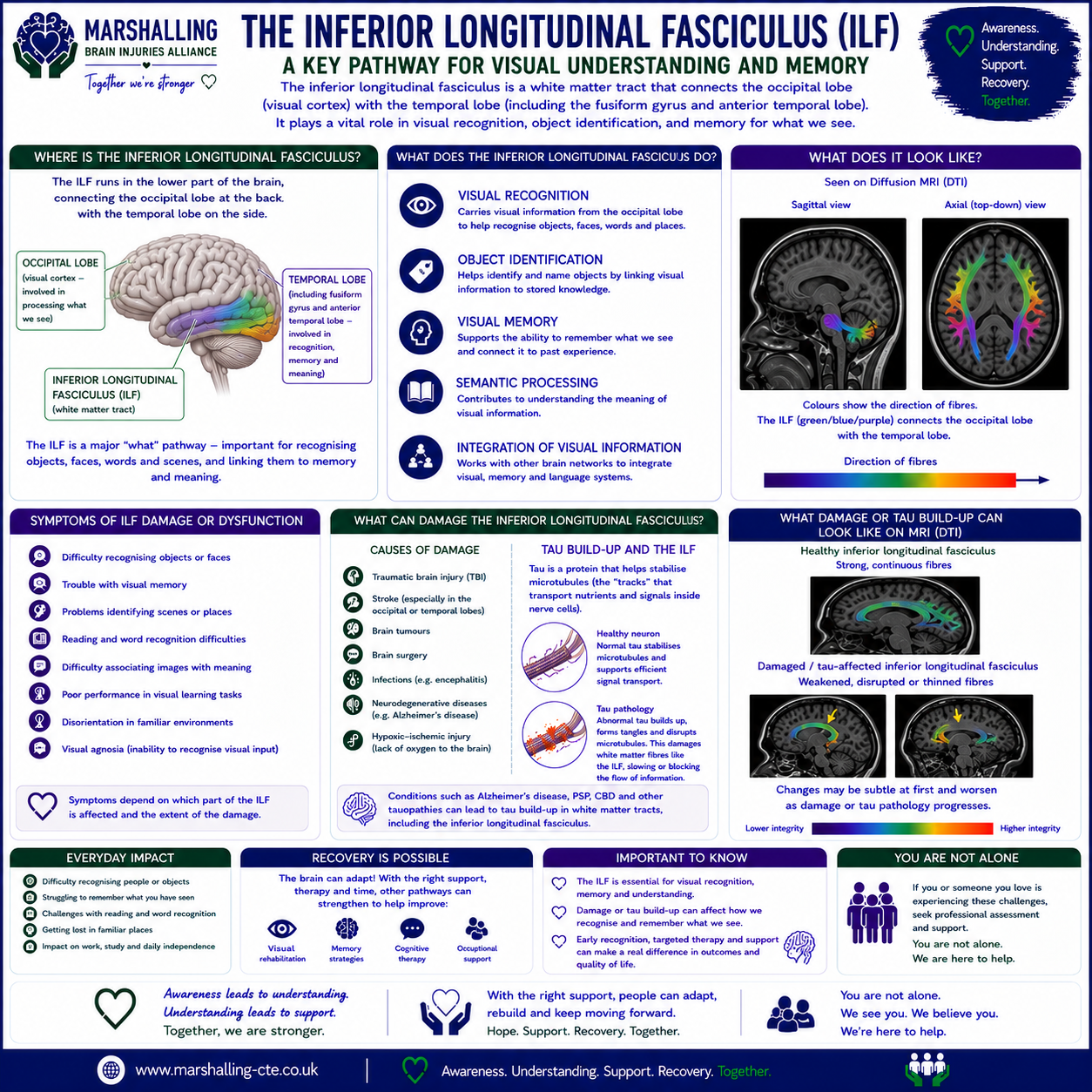
Inferior Longitudinal Fasciculus (ILF)
Function: Visual recognition and visual memory
Possible symptoms when affected:
- Difficulty recognising faces or objects
- Visual processing problems
- Visual memory difficulties
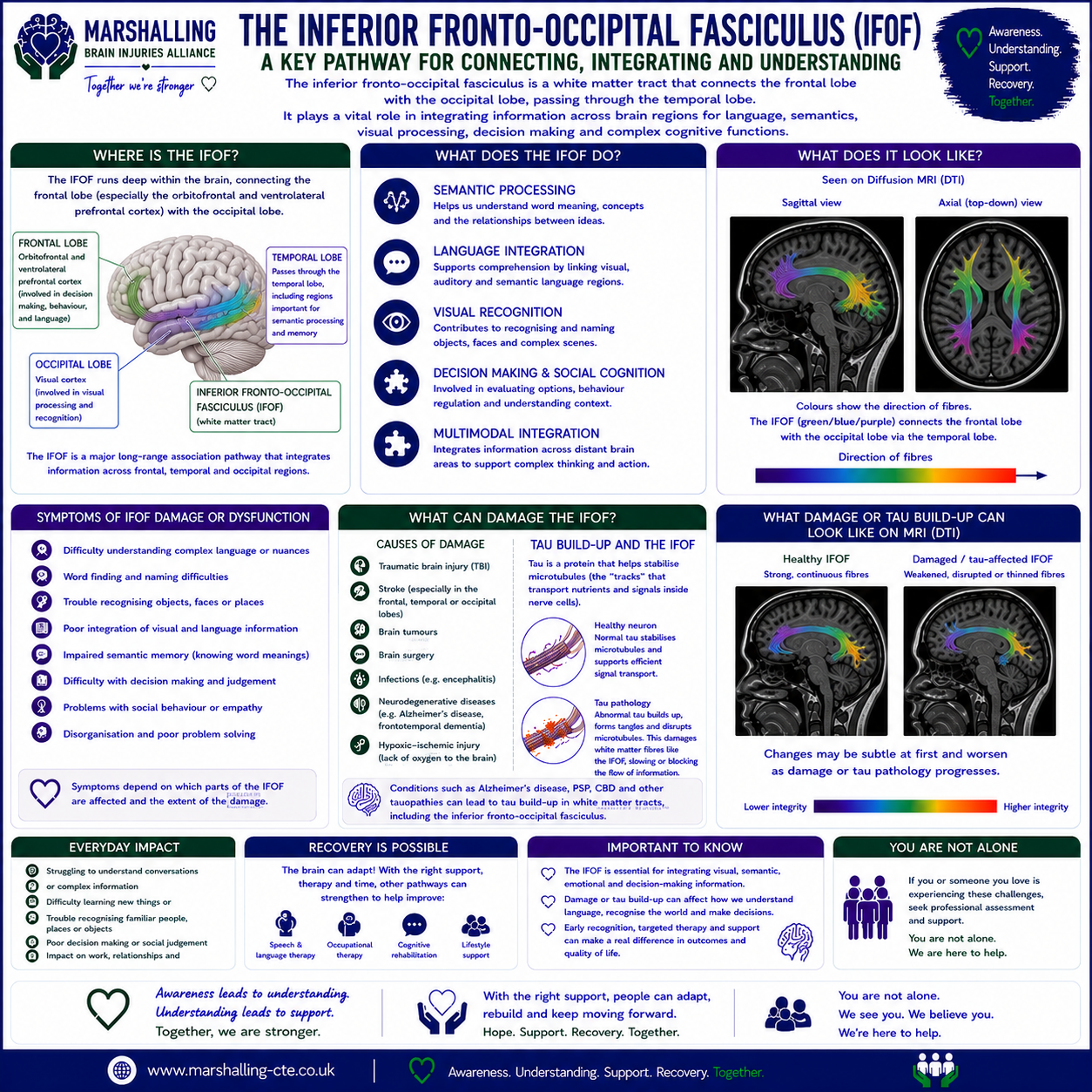
Inferior Fronto-Occipital Fasciculus (IFOF)
Function: Complex cognition, language and visual integration
Possible symptoms when affected:
- Difficulty understanding information
- Slower processing speed
- Executive dysfunction
- Communication difficulties
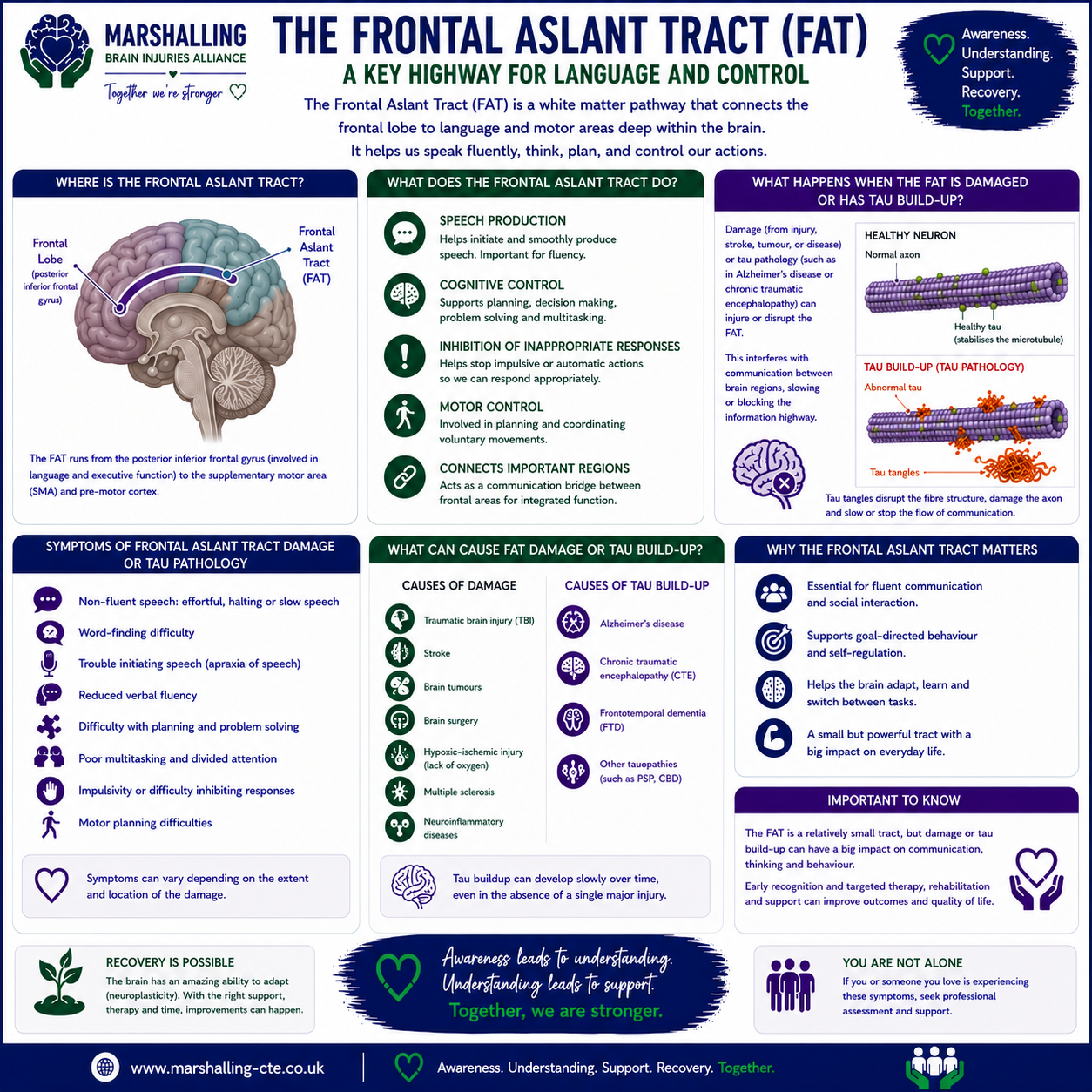
Frontal Aslant Tract (FAT)
Function: Speech initiation, executive function and self-control
Possible symptoms when affected:
- Difficulty starting conversations
- Poor verbal fluency
- Impulsivity
- Problems planning tasks
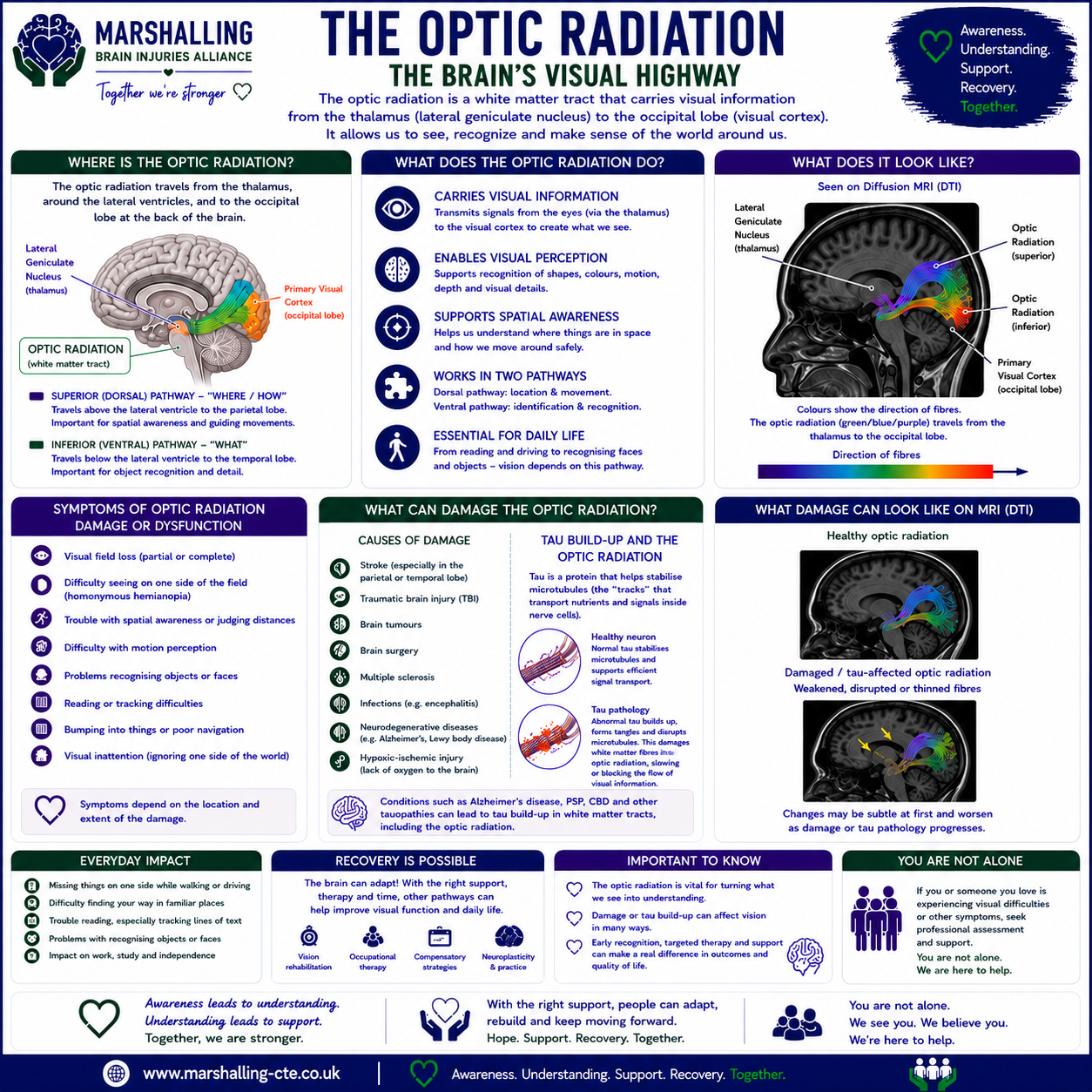
Optic Radiation
Function: Visual processing
Possible symptoms when affected:
- Visual field loss
- Visual disturbances
- Reading difficulties
- Problems with spatial awareness
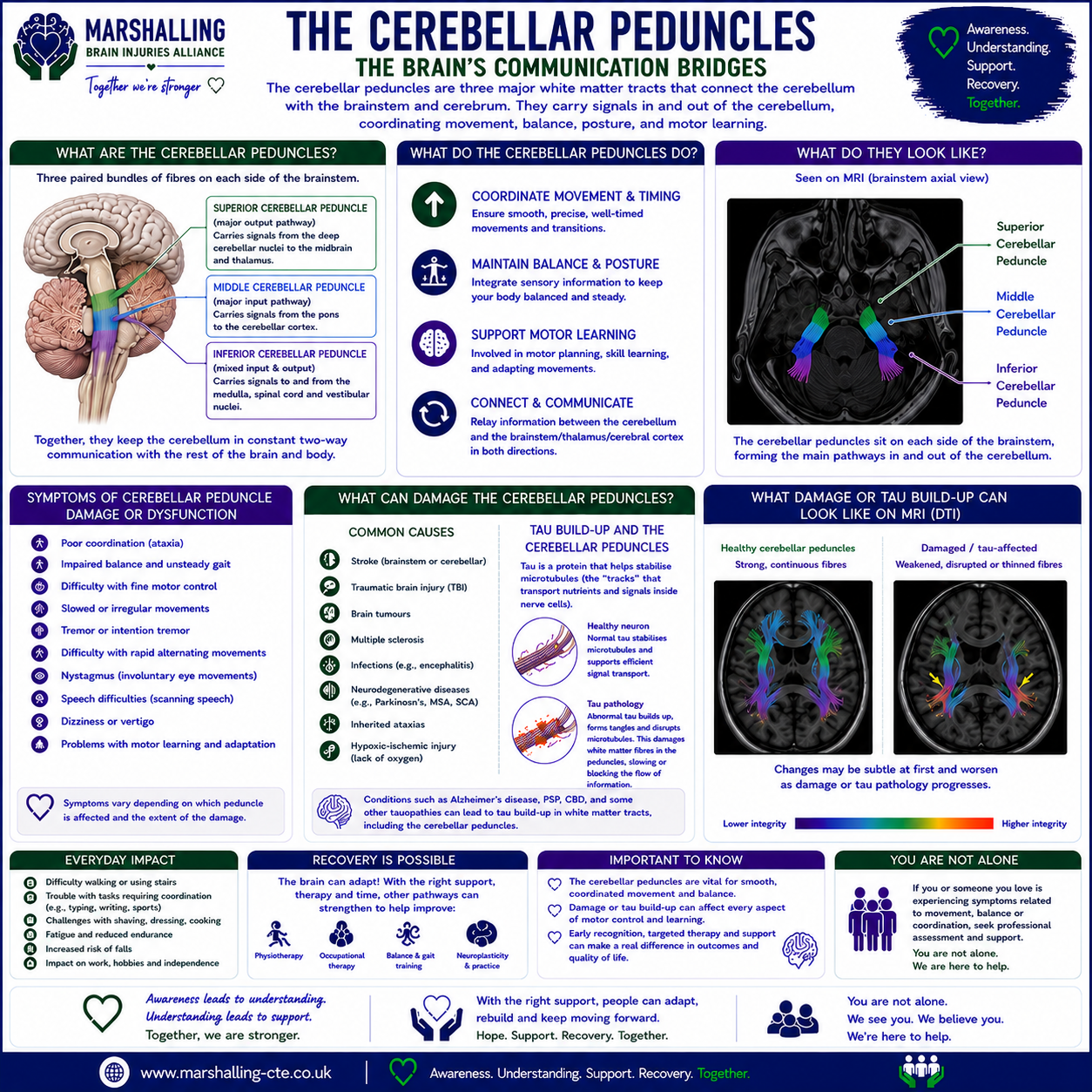
Cerebellar Peduncles
Function: Balance, coordination and motor learning
Possible symptoms when affected:
- Dizziness
- Balance problems
- Poor coordination
- Tremor
- Walking difficulties
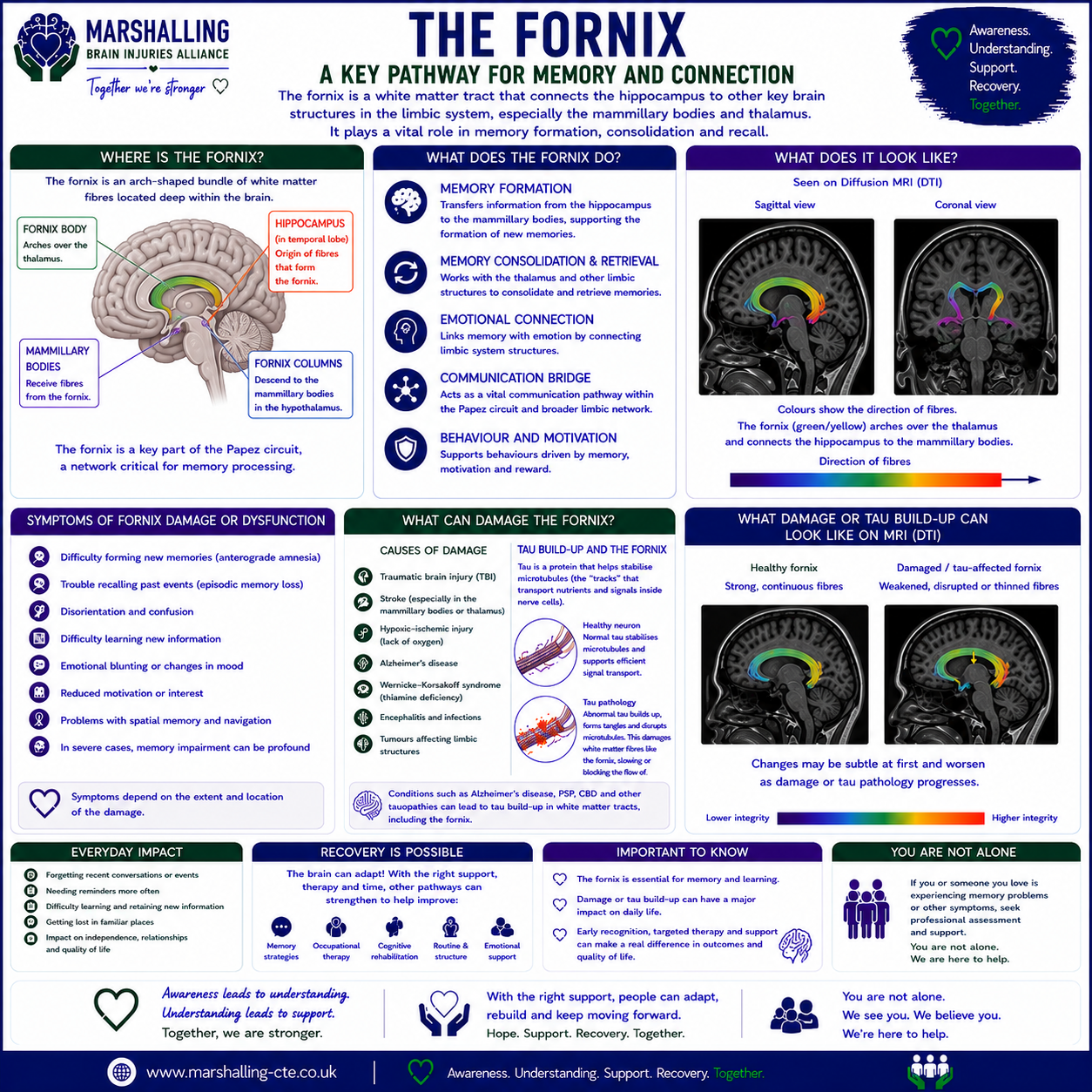
Fornix
Function: Memory formation and recall
Possible symptoms when affected:
- Memory loss
- Difficulty forming new memories
- Learning difficulties
- Reduced recall
Why These Tracts Matter in Concussion, TBI and CTE
Research using Diffusion Tensor Imaging (DTI) consistently shows that these pathways are among the white matter tracts most vulnerable to:
- Rotational forces
- Repetitive head impacts
- Concussion
- Diffuse axonal injury (DAI)
- Neuroinflammation
- Tau-related degeneration
Many of the symptoms commonly reported by people living with brain injury—including memory problems, fatigue, emotional changes, dizziness, visual disturbances, language difficulties, poor concentration, impulsivity, and balance problems—can often be linked to disruption within one or more of these key communication pathways.
By understanding these 12 tracts, we can better understand how brain injury affects communication inside the brain, why symptoms occur, and why different people can experience very different challenges despite having similar injuries.
In Simple Terms
If the brain is a city, neurons are the buildings and these white matter tracts are the motorways connecting them.
When those motorways become damaged, congested, or disrupted, information cannot travel efficiently. The result is often the symptoms we associate with concussion, TBI, PCS, and CTE.
That is why these 12 tracts form the foundation of our White Matter Pathways section within the Brain Health Hub. They help bridge the gap between brain structure, brain injury, and the real-world symptoms experienced by our community.
Major White Matter Tracts
Click On An Image To Learn More
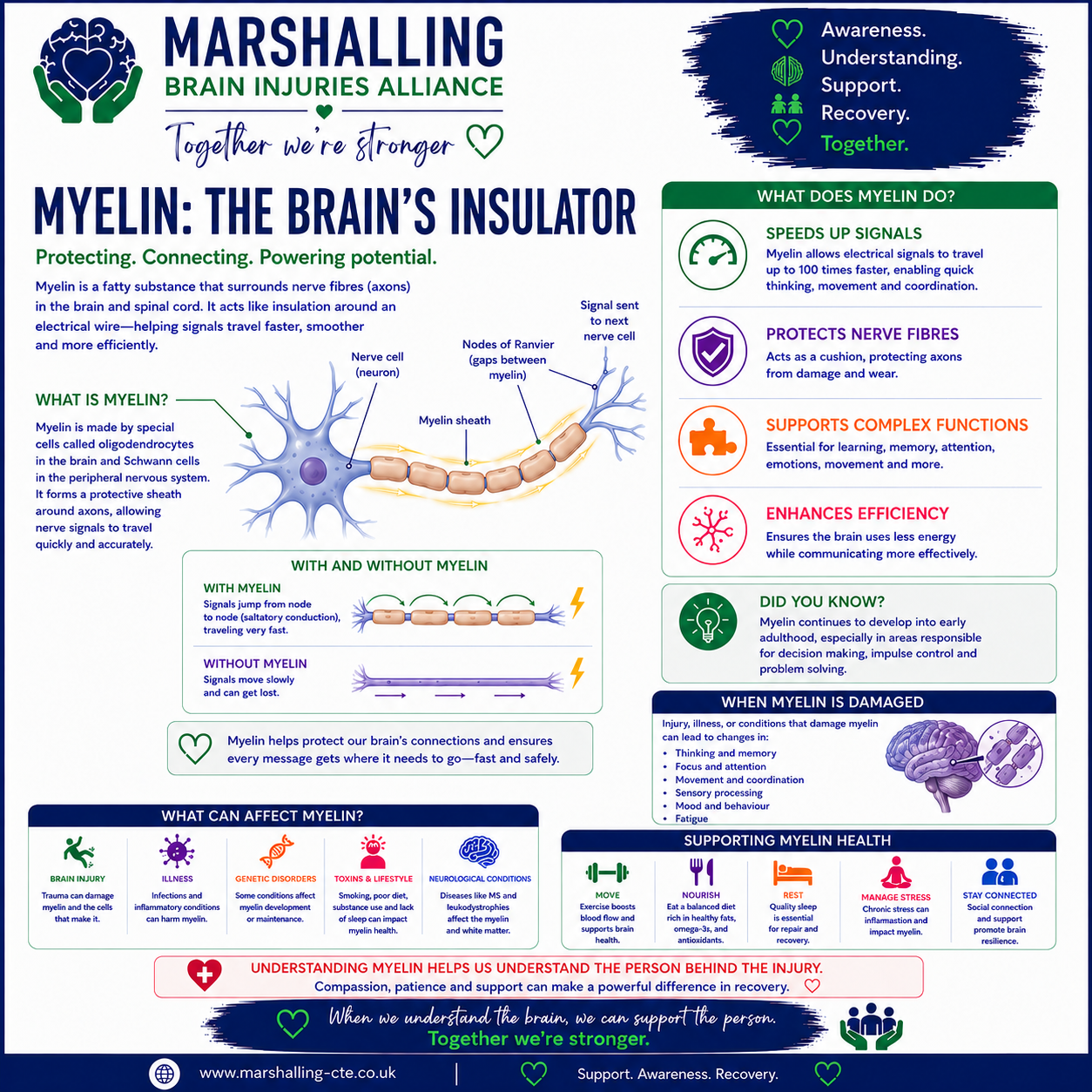
Myelin
The Brain's Insulation
Why Speed Matters
Myelin is a fatty protective coating surrounding nerve fibres.
It acts like insulation around electrical wiring.
Healthy myelin helps signals travel:
- Faster
- More accurately
- More efficiently
Damage to myelin can slow communication throughout the nervous system.
The Brain's Electrical and Chemical Messages
How Brain Cells Talk To One Another
The brain uses two communication systems:
Electrical Signals
Fast messages travelling along neurons.
Chemical Signals
Neurotransmitters that pass messages between neurons.
Common neurotransmitters include:
- Dopamine
- Serotonin
- GABA
- Acetylcholine
- Glutamate
These chemicals help regulate:
- Mood
- Memory
- Attention
- Sleep
- Learning
- Movement
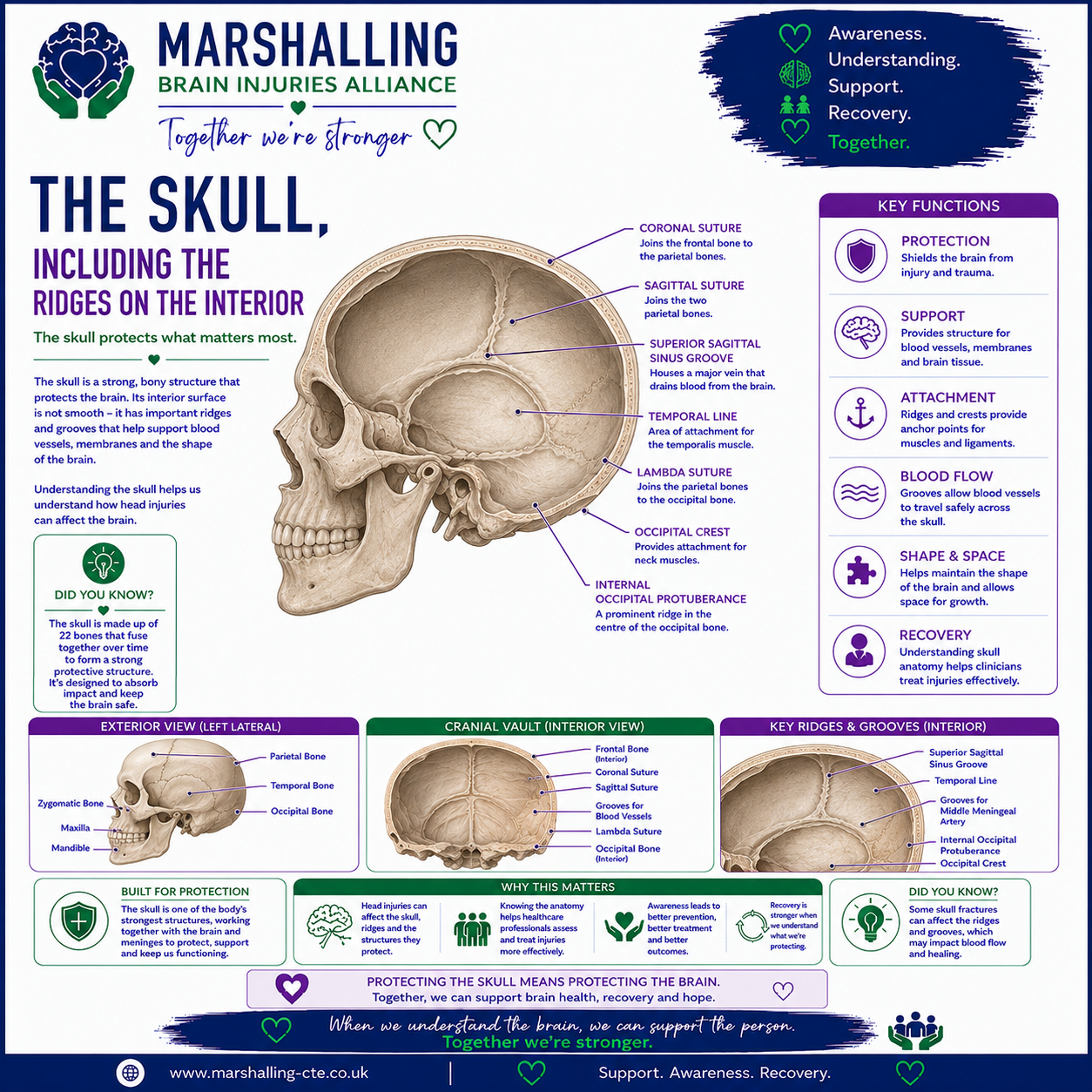
The Skull
More Than A Protective Helmet
The Skull Is Not Smooth Inside
Many people imagine the inside of the skull as smooth.
In reality, the inner surface contains:
- Ridges
- Grooves
- Bony prominences
These structures help support blood vessels and brain tissues but can become important during head injuries.
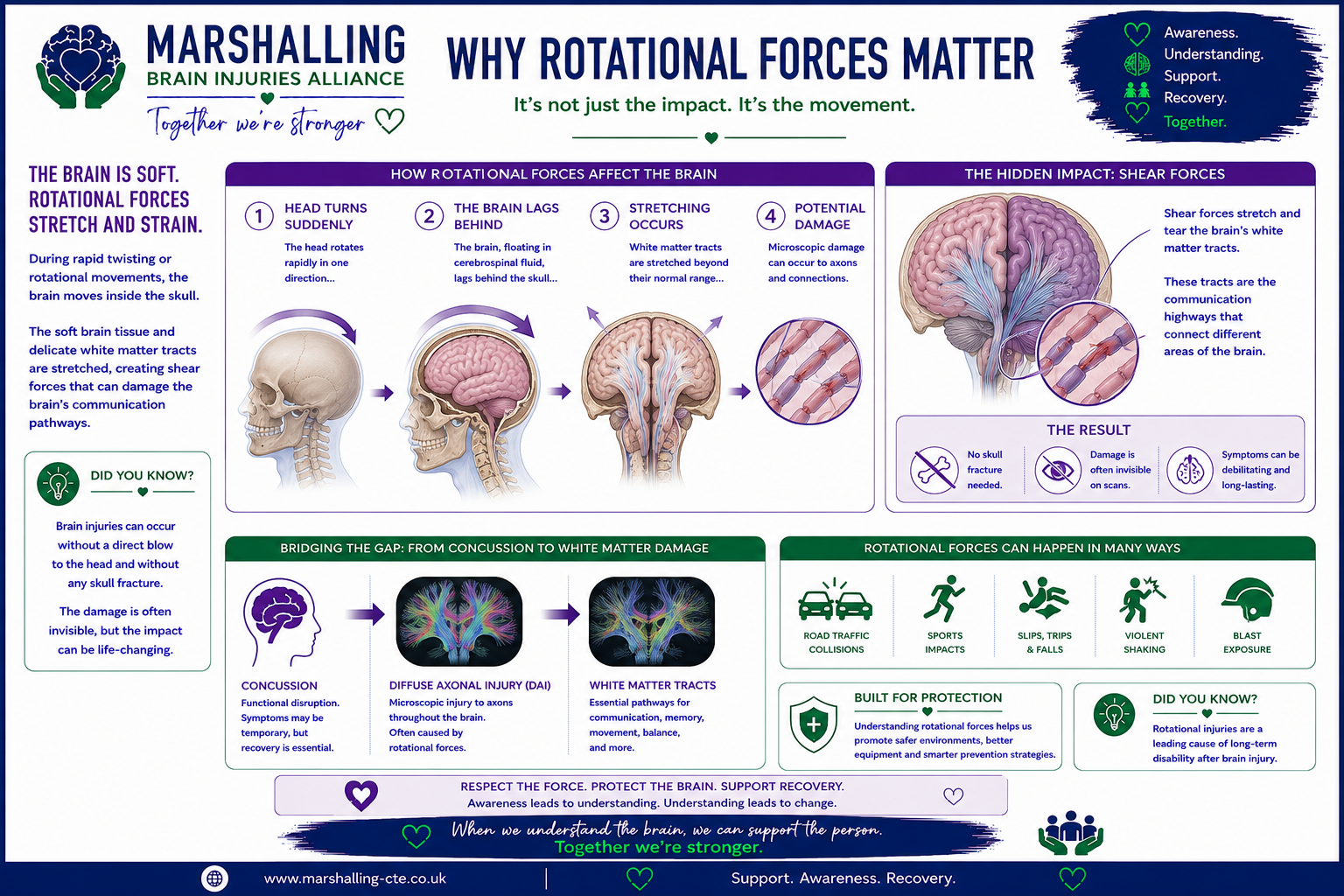
When the head experiences a sudden impact:
- The brain can move within the skull
- The brain may strike these irregular surfaces
- Bruising and damage can occur
Some of the most vulnerable areas are the:
- Frontal lobes
- Temporal lobes
This helps explain why these regions are commonly affected in traumatic brain injuries.
The Brain Floats
But Not Much
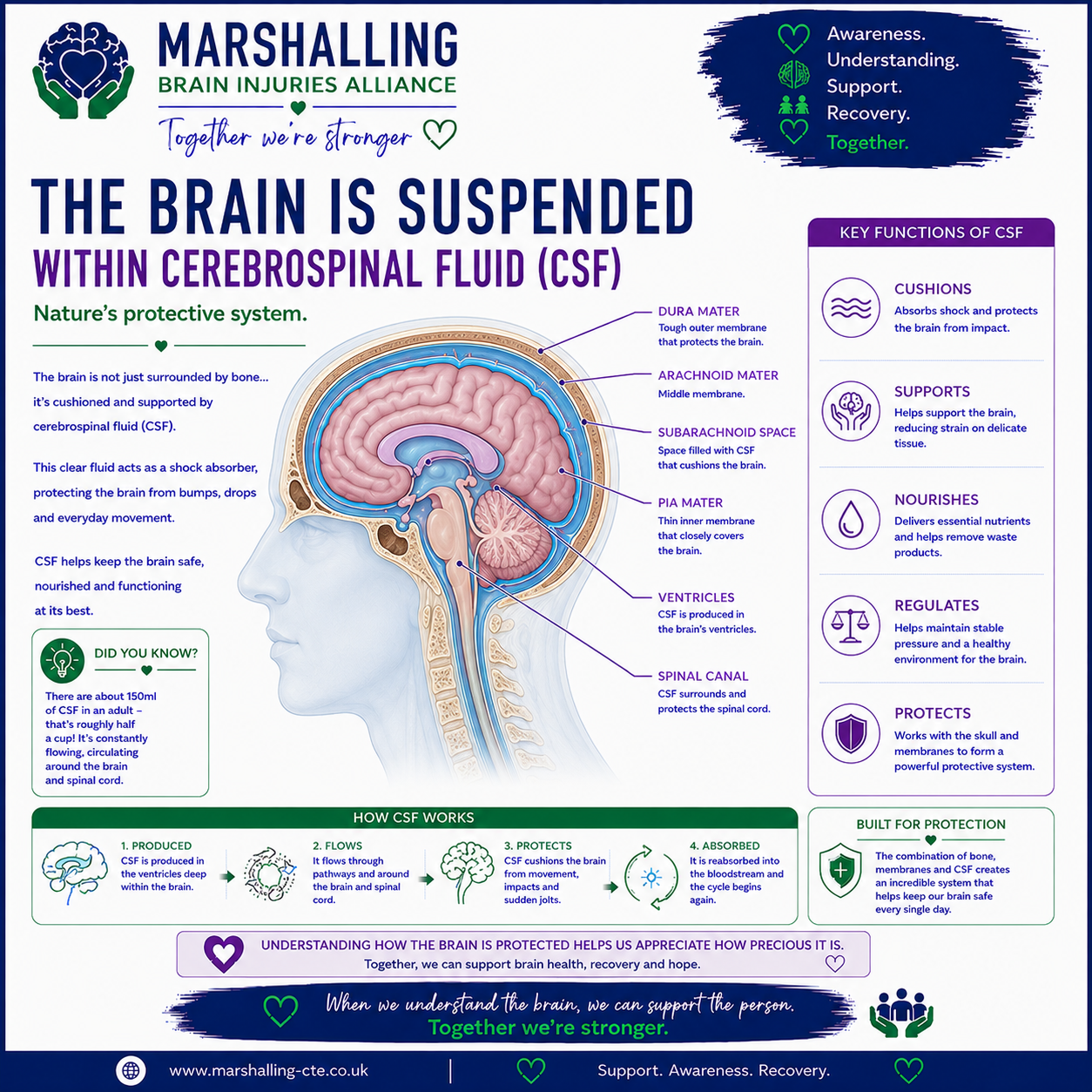
Cerebrospinal Fluid
The brain is suspended within cerebrospinal fluid (CSF).
This fluid:
- Cushions the brain
- Delivers nutrients
- Removes waste products
- Helps regulate pressure
While CSF provides protection, it cannot completely prevent the brain from moving during significant impacts.y recovery,
emotional regulation, and overall wellbeing.
The Vagus Nerve
The Brain-Body Connection
The vagus nerve is the longest cranial nerve in the body.
It travels from the brainstem through the neck and into the chest and abdomen.
The vagus nerve helps regulate:
- Heart rate
- Breathing
- Digestion
- Inflammation
- Stress responses
It forms a key part of the parasympathetic nervous system, often called the "rest and digest" system.
Researchers are increasingly interested in the role of vagal function in brain injury recovery, emotional regulation, and overall wellbeing.
The Superhighway Between Brain and Body
The vagus nerve connects the brain to:
- Heart
- Lungs
- Digestive system
- Immune system
It helps regulate:
- Heart rate
- Digestion
- Inflammation
- Breathing
- Stress responses
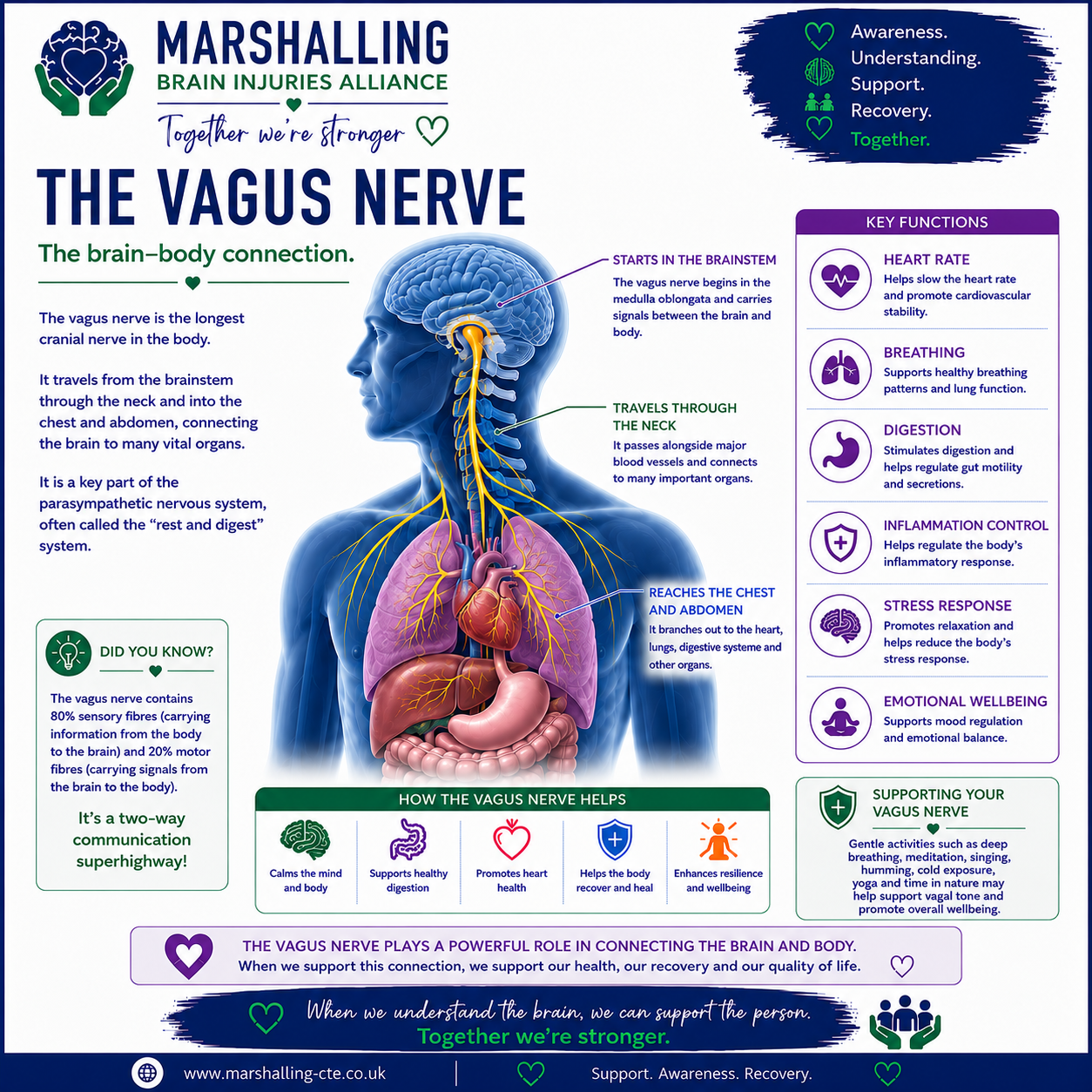
Around 80% of vagus nerve fibres carry information from the body to the brain.
This means the brain is constantly listening to signals from the body.
The Brain's Energy Demands
A Hungry Organ
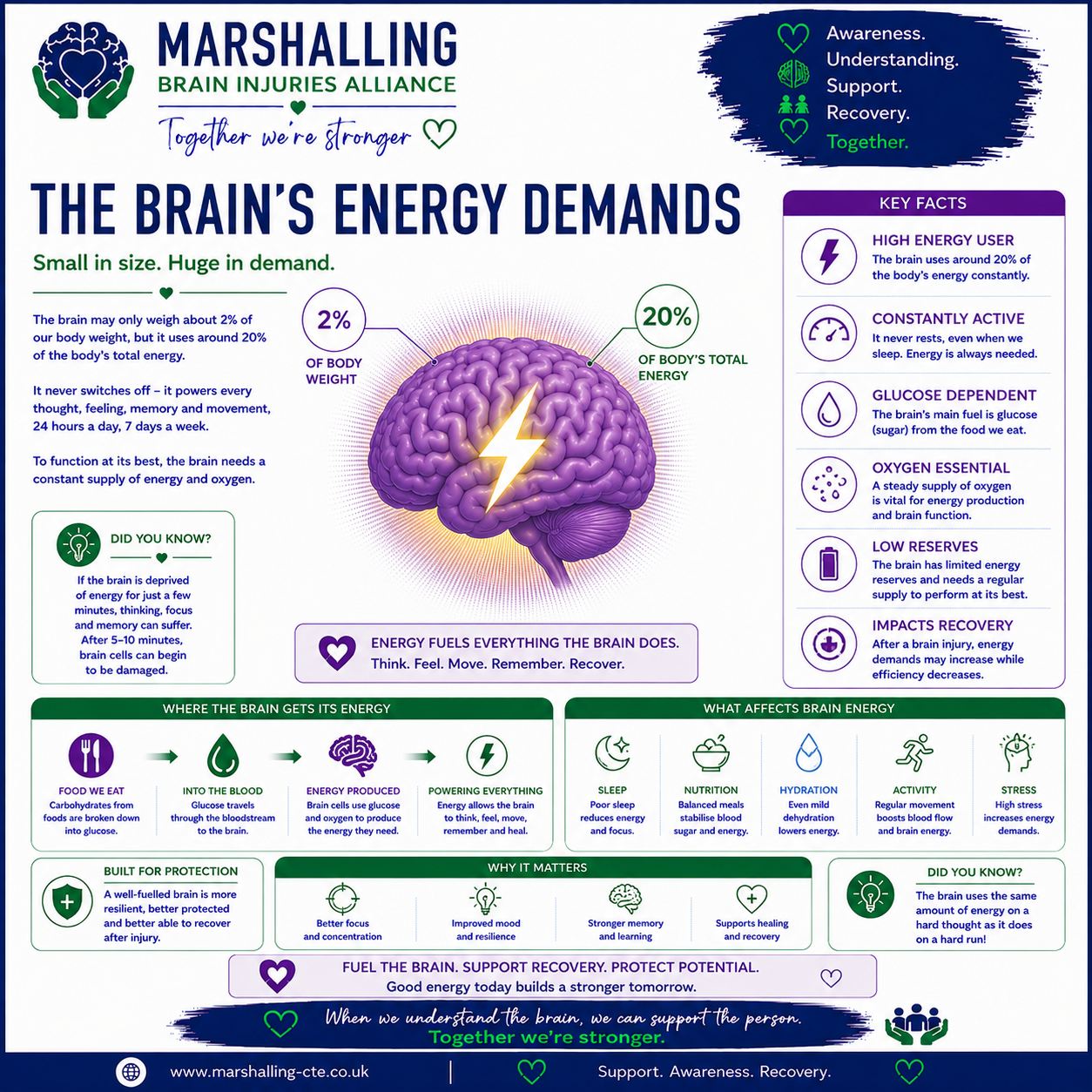
Although the brain accounts for only around 2% of body weight, it uses approximately 20% of the body's energy.
The brain relies heavily on:
- Oxygen
- Glucose
- Blood flow
- Sleep
Disruptions to any of these can affect brain performance.
The Brain's Waste Disposal System
Cleaning The Brain During Sleep
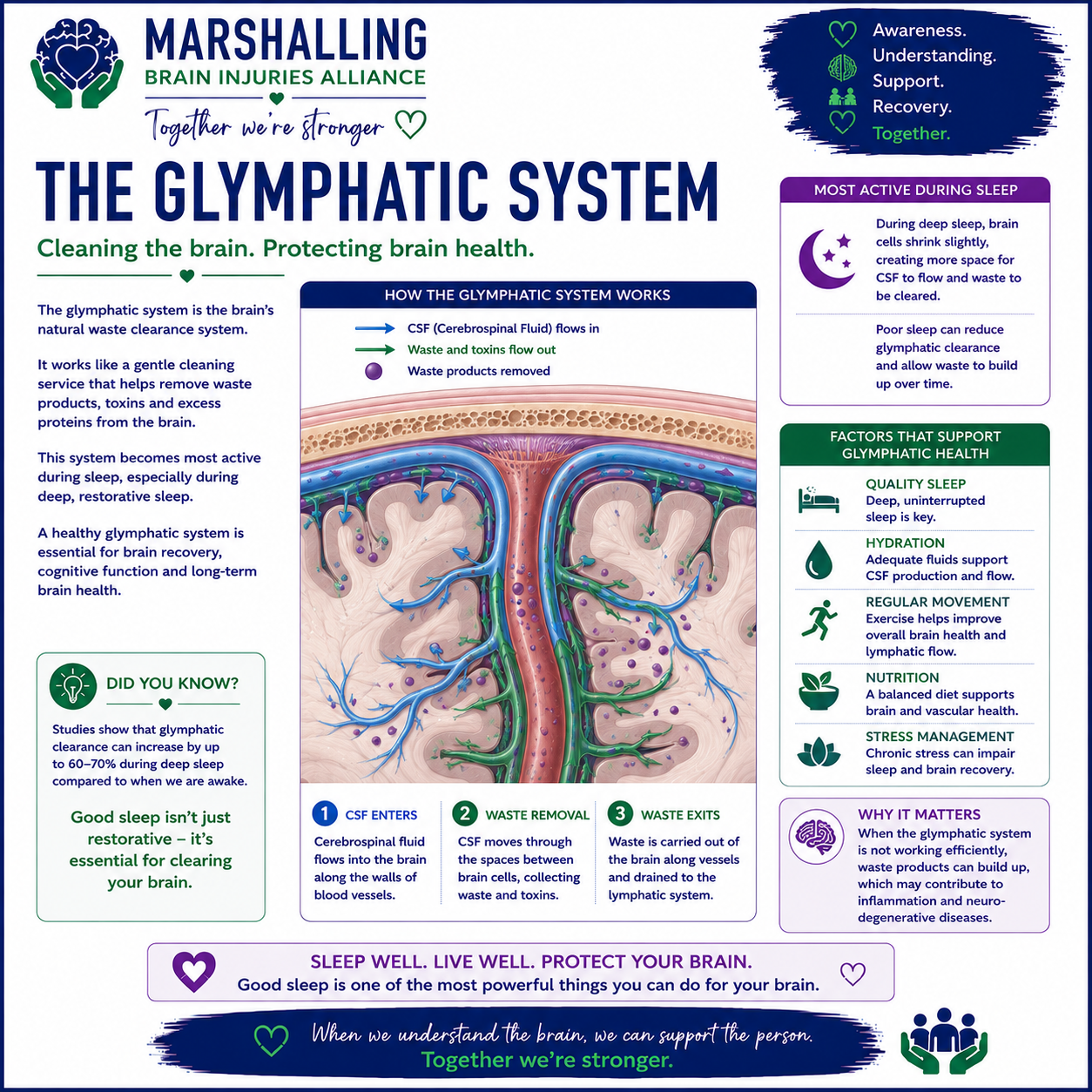
The glymphatic system helps remove waste products from the brain.
It becomes most active during sleep.
Researchers believe this system plays an important role in:
- Recovery
- Brain health
- Neurodegenerative disease prevention
Poor sleep may reduce the brain's ability to clear waste efficiently.
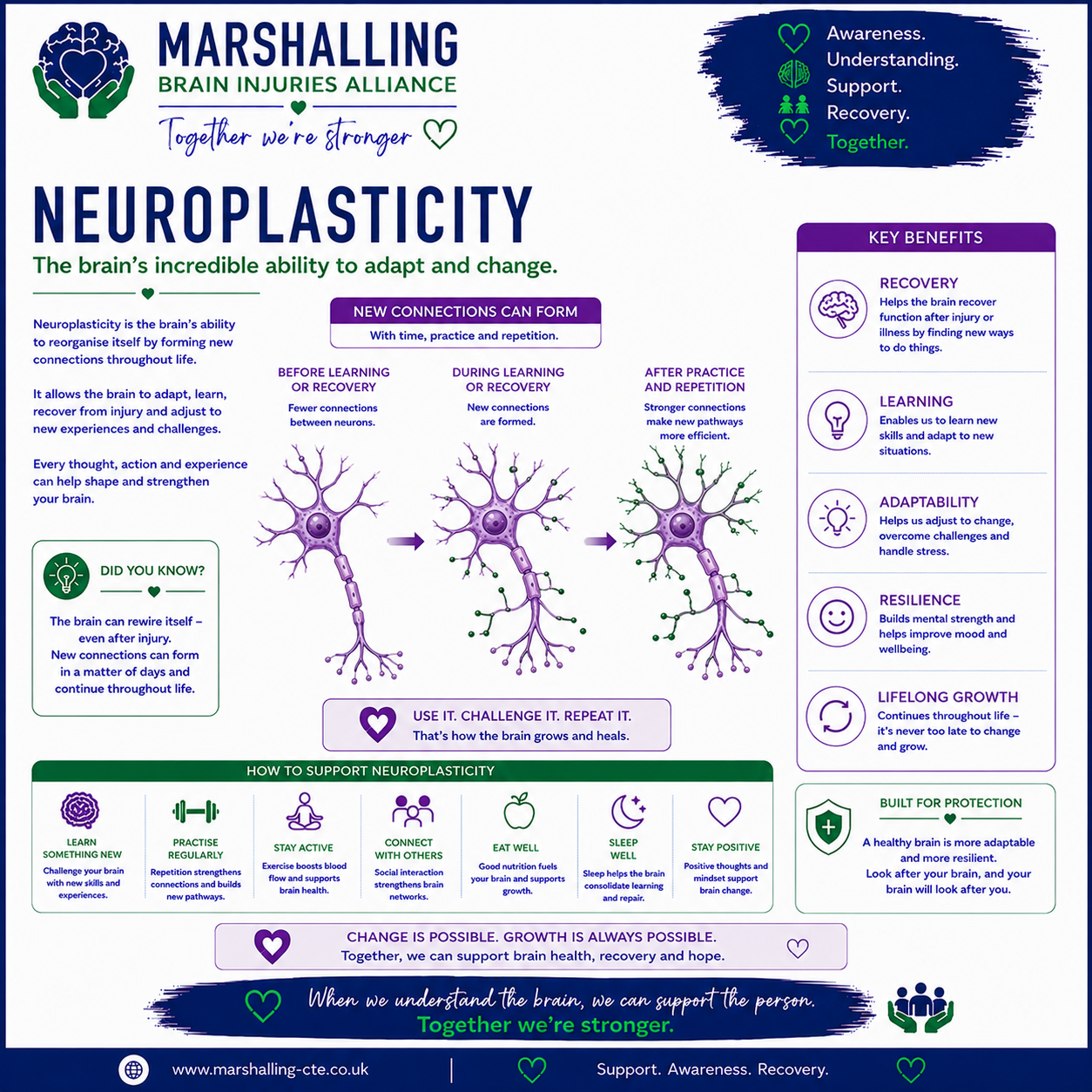
Neuroplasticity
The Brain's Ability To Adapt
The Brain Can Change
One of the most remarkable features of the brain is its ability to adapt.
This process is known as neuroplasticity.
The brain can:
- Form new connections
- Strengthen pathways
- Reorganise functions
- Adapt following injury
Recovery often involves helping the brain build alternative routes around damaged pathways.
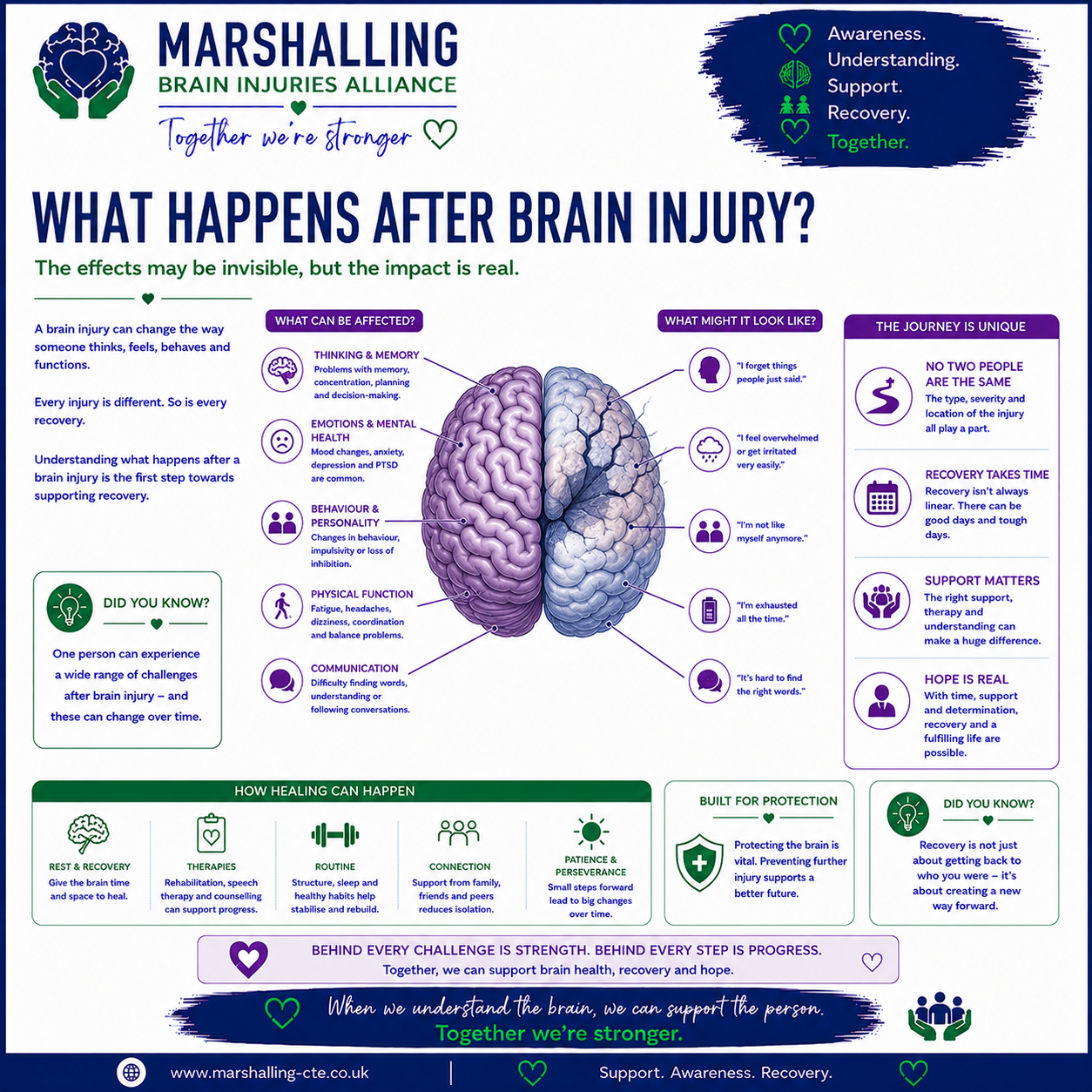
What Happens After Brain Injury?
When Communication Networks Are Disrupted
Brain injuries do not always destroy brain cells.
Sometimes they disrupt communication between them.
This can affect:
- Memory
- Attention
- Processing speed
- Emotional regulation
- Balance
- Fatigue
- Sleep
The symptoms often depend on which networks have been affected.
This is one reason why two people with similar injuries may experience very different symptoms.
Related Pages
Understanding The Brain Helps Us Understand The Person
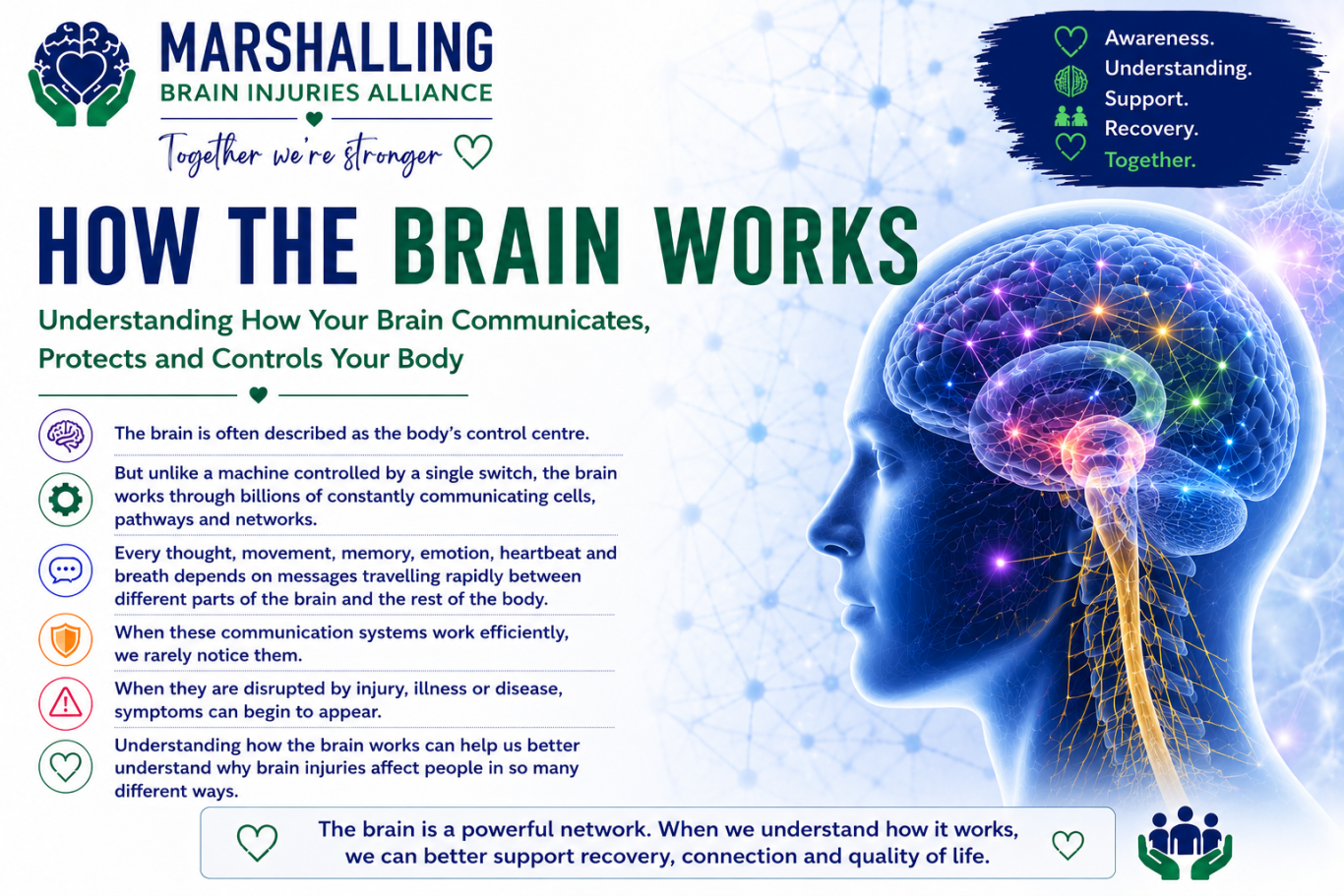
Every thought, feeling, memory and behaviour depends on an incredibly complex network working together.
When that network is disrupted, the effects can be invisible to others but very real to the person experiencing them.
The more we understand how the brain works, the better equipped we are to support recovery, adaptation and quality of life.