What Is A Brain Injury?
A brain injury occurs when damage affects the normal functioning of the brain.
This damage can be caused by:
- A blow or jolt to the head
- Penetrating injuries
- Repeated head impacts
- Lack of oxygen
- Stroke
- Infection
- Tumours
- Toxic exposure
- Neurological disease
The effects of a brain injury can range from mild and temporary to
severe and life-changing.
Traumatic Brian Injury (TBI)
A Traumatic Brain Injury (TBI) occurs when an external force causes damage to the brain.
Common causes include:
- Falls
- Road traffic collisions
- Sporting injuries
- Assaults
- Military blast exposure
- Workplace accidents
Symptoms can include:
- Headaches
- Memory problems
- Fatigue
- Dizziness
- Difficulty concentrating
- Emotional changes
- Sleep disturbances
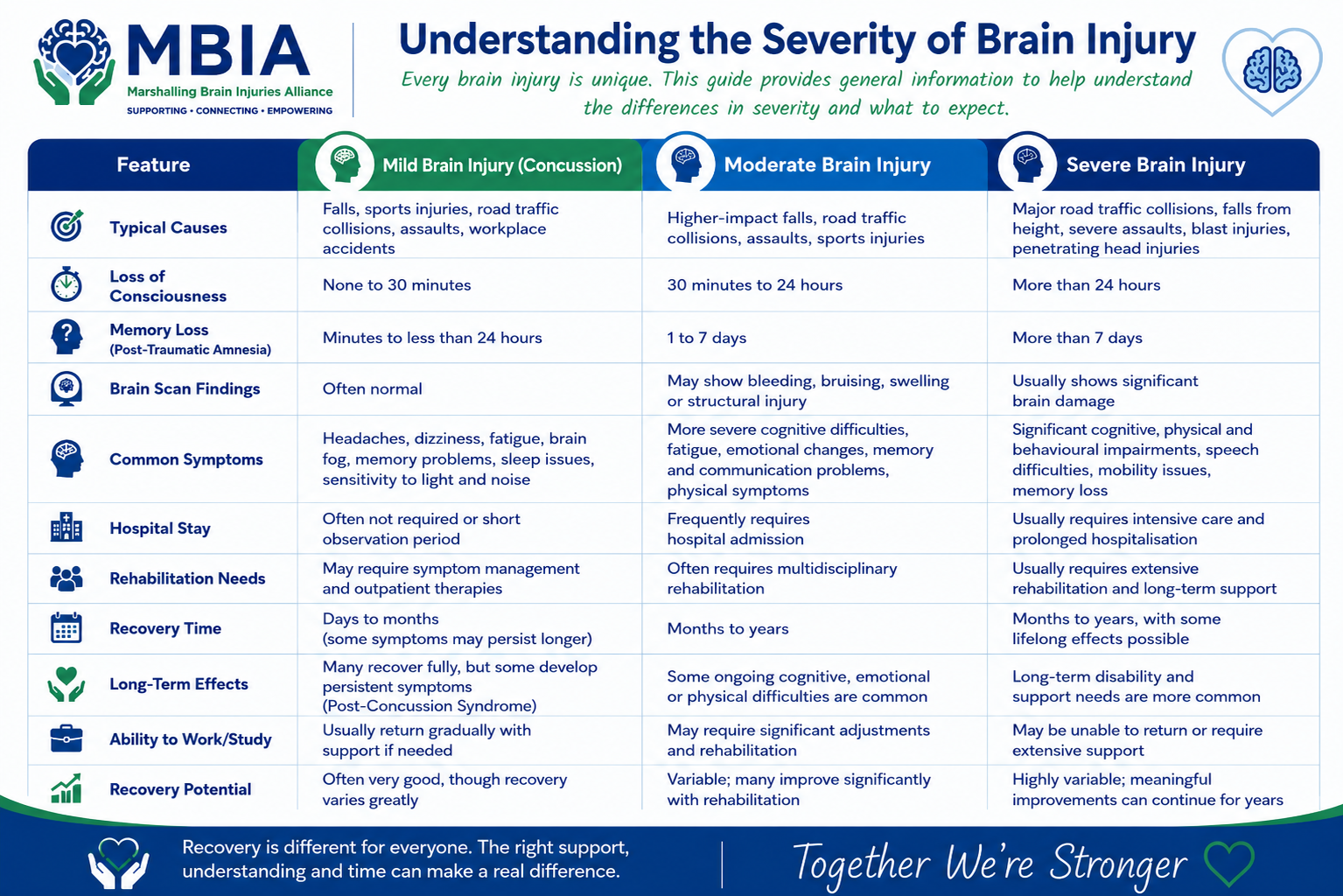
TBI can be classified as mild, moderate, or severe depending on the nature and severity of the injury.
Post-Concussio Syndrome (PCS)
Post-Concussion Syndrome (PCS)
Post-Concussion Syndrome occurs when concussion symptoms persist beyond the
expected recovery period.
Symptoms may include:
- Persistent headaches
- Fatigue
- Memory difficulties
- Anxiety
- Depression
- Sleep problems
- Sensory sensitivities
Recovery varies significantly between individuals.
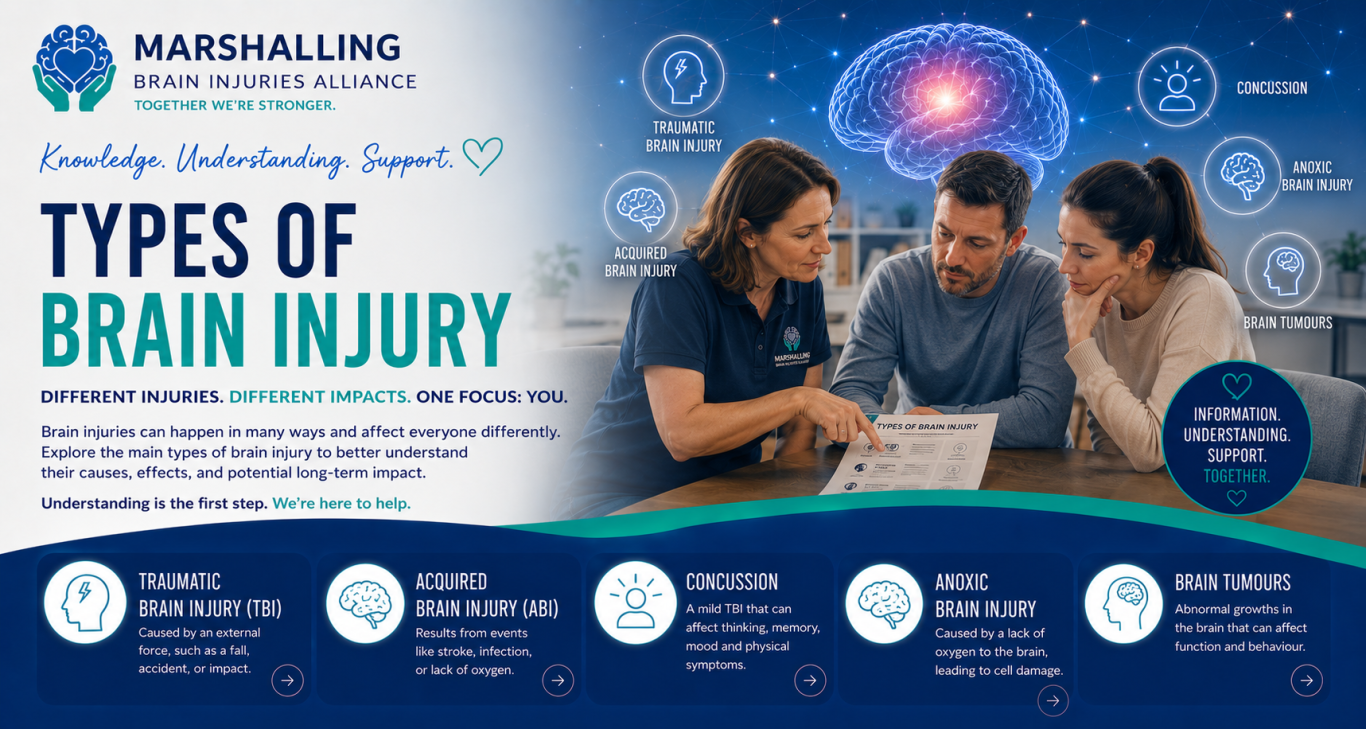
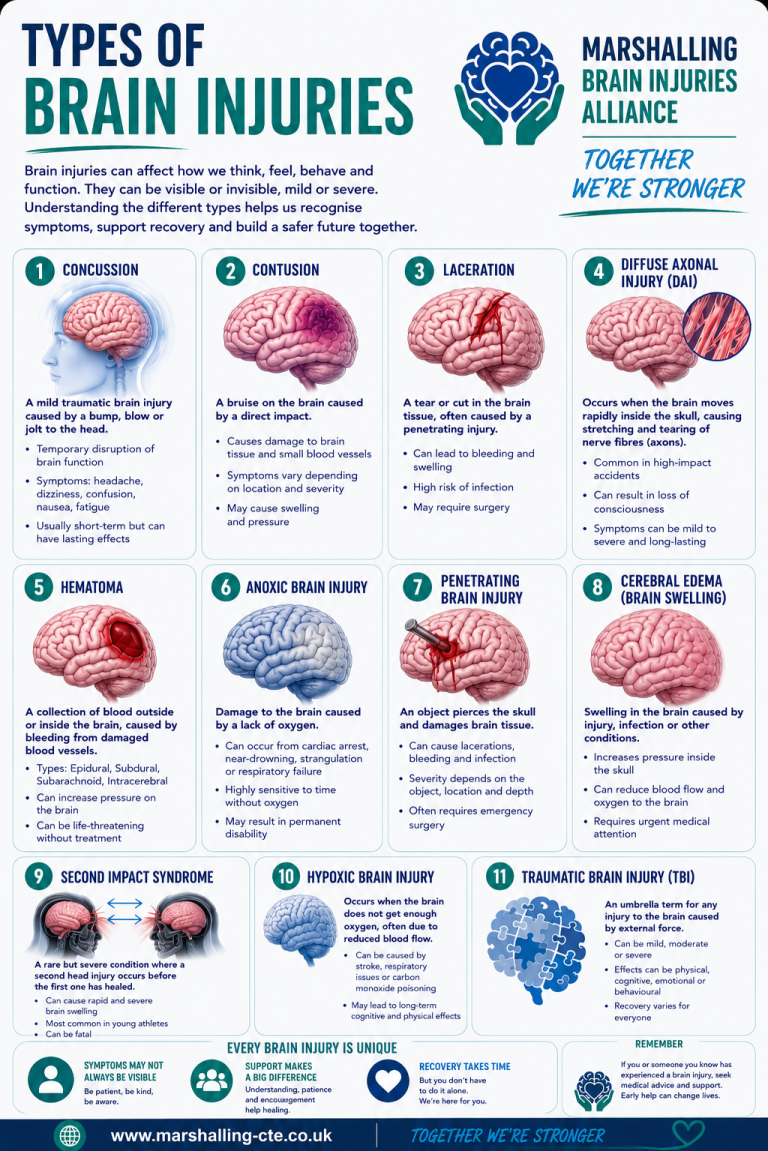
Concussion
Concussion is a type of mild traumatic brain injury.
It occurs when the brain is shaken inside the skull following an impact or sudden movement.
Common symptoms include:
- Headaches
- Dizziness
- Nausea
- Brain fog
- Difficulty concentrating
- Sensitivity to light and noise
- Fatigue
- Sleep problems
Most people recover from concussion, but some experience ongoing symptoms
known as Post-Concussion Syndrome.
Non-Traumatic Brain Injury
Non-traumatic brain injuries occur without an external blow to the head.
These injuries result from internal factors affecting the brain.
Examples include:
- Stroke
- Brain tumours
- Meningitis
- Encephalitis
- Lack of oxygen
- Toxic exposure
- Neurological diseases
Although the cause differs from TBI, symptoms can often be very similar.
Hypoxic & Anoxic Brain Injury
Hypoxic Brain Injury
Occurs when the brain receives reduced oxygen.
Anoxic Brain Injury
Occurs when the brain receives no oxygen at all.
Possible causes include:
- Cardiac arrest
- Drowning
- Choking
- Carbon monoxide poisoning
- Respiratory failure
The severity of symptoms depends on how long oxygen deprivation lasted.
Stroke
A stroke occurs when the blood supply to part of the brain is interrupted or reduced.
Without oxygen and nutrients, brain cells begin to die.
There are two main types:
Ischaemic Stroke
Caused by a blockage in a blood vessel supplying the brain.
Haemorrhagic Stroke
Caused by bleeding in or around the brain.
Stroke can affect movement, speech, memory, thinking, emotions, and independence.
Acquired Brain Injury (ABI)
An Acquired Brain Injury (ABI) refers to any brain injury that occurs after birth and is not related to a congenital condition.
ABI includes both traumatic and non-traumatic injuries.
Examples include:
- Stroke
- Brain infections
- Brain tumours
- Oxygen deprivation
- Toxic exposure
- Traumatic brain injury
Many organisations use ABI as an umbrella term covering a wide range of brain injuries.
Brain Infections
Certain infections can cause inflammation and damage within the brain.
Examples include:
Meningitis
Inflammation of the protective membranes surrounding the brain and spinal cord.
Encephalitis
Inflammation of the brain itself, often caused by viral infections.
These conditions can sometimes result in long-term neurological difficulties.
Brain Tumours
Brain tumours can be benign (non-cancerous) or malignant (cancerous).
Symptoms vary depending on the tumour's size and location but may include:
- Headaches
- Seizures
- Memory difficulties
- Personality changes
- Visual disturbances
- Balance problems
Both the tumour and treatments such as surgery, radiotherapy, or chemotherapy can affect brain function.
Penetrating Brain Injury
A penetrating brain injury occurs when an object passes through the skull and enters the brain.
Examples include:
- Gunshot wounds
- Shrapnel injuries
- Severe industrial accidents
These injuries are often severe and require urgent medical treatment.
Blast-Related Brain Injury
Blast injuries are particularly relevant to military personnel and some emergency service workers.
Explosions can expose the brain to powerful pressure waves, resulting in:
- Concussion
- TBI
- Hearing difficulties
- Balance problems
- Cognitive symptoms
Research into blast-related brain injury continues to evolve.
Repetitive Head Trauma
Not all brain injuries result from a single major event.
Repeated impacts over months or years may contribute to cumulative damage.
Sources can include:
- Contact sports
- Military service
- Domestic abuse
- Certain occupations
- Repeated falls
Repeated head impacts are an area of active scientific research.
Chronic Traumatic Encephalopathy (CTE)
CTE is a progressive neurodegenerative disease associated with repeated head impacts.
It is characterised by abnormal accumulations of tau protein within the brain.
Research is ongoing to better understand:
- Risk factors
- Diagnosis during life
- Symptoms
- Prevention
- Treatment
CTE is discussed in more detail HERE
Key Takeaways
- Brain injuries can occur in many different ways.
- Some injuries are caused by trauma, while others result from illness or medical conditions.
- Symptoms can vary widely depending on the type, location, and severity of the injury.
- Every brain injury is unique.
- Understanding your diagnosis can help you access the right support and resources.
Continue Exploring
Together We're Stronger