What Does the Brain Do?
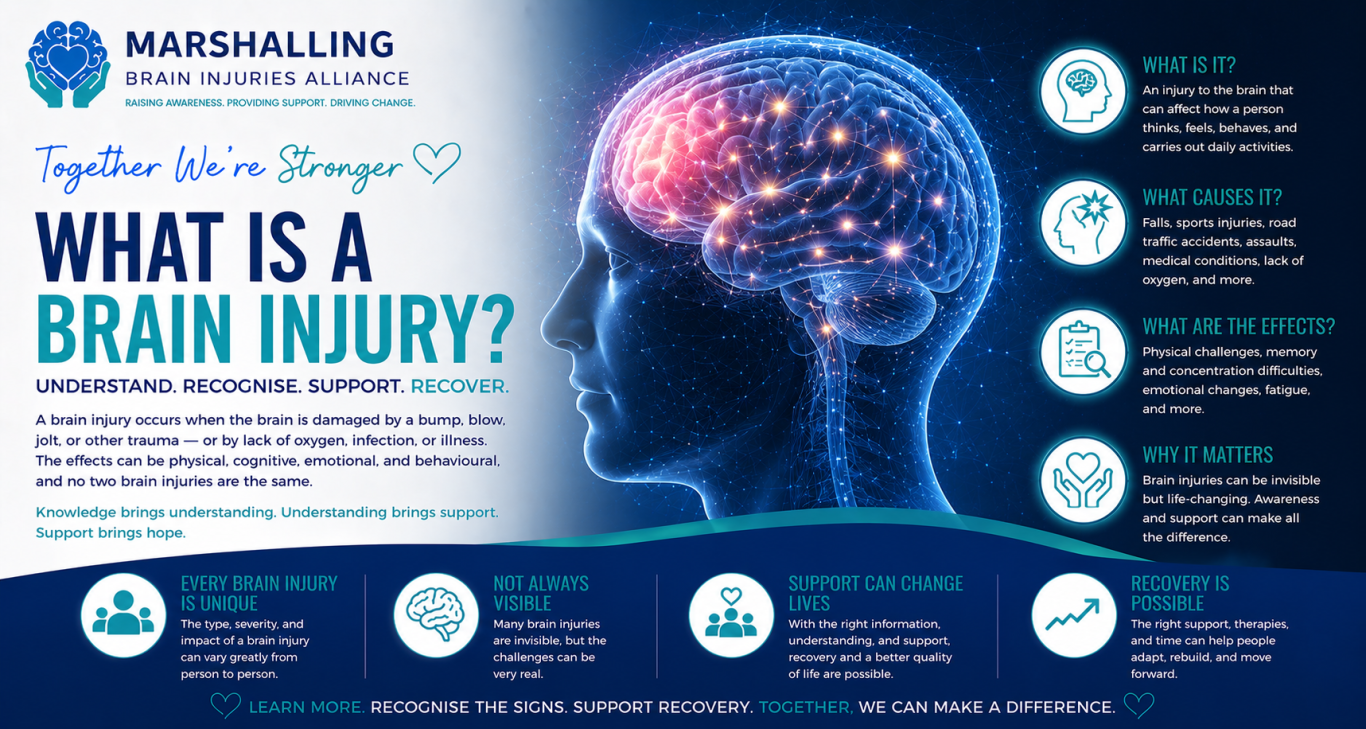
The brain acts as the body's control centre.
It is responsible for:
- Memory and learning
- Attention and concentration
- Emotions and behaviour
- Movement and coordination
- Speech and communication
- Vision and hearing
- Sleep regulation
- Decision-making and problem-solving
When the brain is injured, some of these functions may be affected.
What Causes Brain Injury?
Brain injuries can occur in many different ways.
Common causes include:
Falls
One of the most common causes of brain injury across all age groups.
Road Traffic Collisions
Car, motorcycle, bicycle, and pedestrian accidents can all result in brain injury.
Sports and Recreational Activities
Concussions and repetitive head impacts can occur in many sports, including rugby, football, boxing, horse riding, cycling, and martial arts.
Military Service
Blast exposure and repeated head trauma can affect serving personnel and veterans.
Domestic Abuse
Head injuries caused by physical assaults, strangulation, and repeated trauma are often under-recognised.
Workplace Accidents
Construction, emergency services, industrial work, and other occupations may carry an increased risk of head injury.
Stroke
A disruption to the blood supply in the brain can result in significant brain injury.
Infection or Illness
Conditions such as meningitis, encephalitis, brain tumours, and oxygen deprivation can damage the brain.
Common Symptoms of Brain Injury
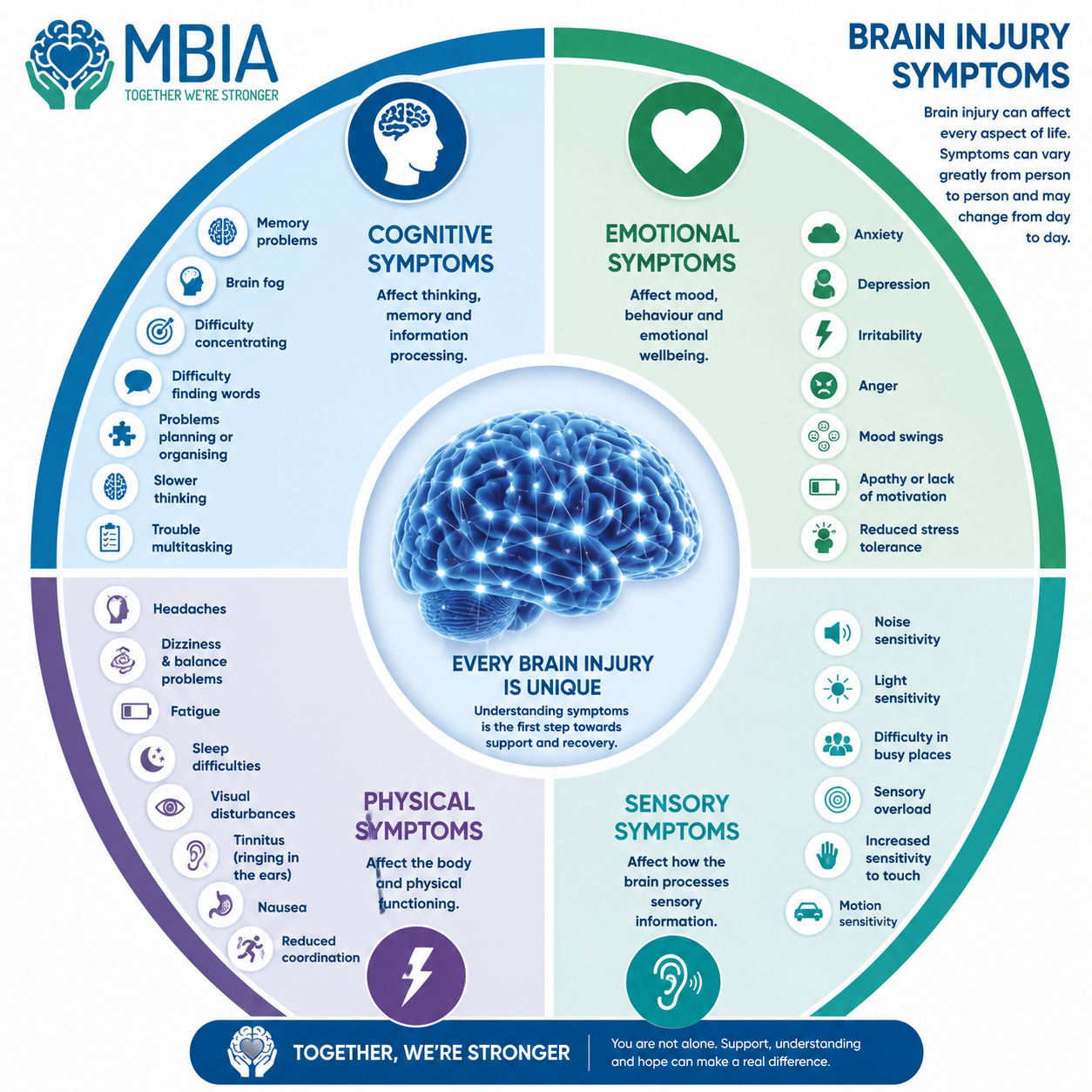
Cognitive Symptoms
These affect thinking and information processing.
Common examples include:
- Memory problems
- Brain fog
- Difficulty concentrating
- Slower thinking
- Difficulty finding words
- Reduced attention span
- Problems planning or organising tasks
- Difficulty multitasking
- Forgetting appointments or conversations
Many people describe feeling as though their brain is constantly working harder than it used to.
Physical Symptoms
Physical symptoms are often among the first changes people notice.
Common symptoms include:
- Headaches
- Migraines
- Dizziness
- Balance problems
- Fatigue
- Sleep difficulties
- Nausea
- Visual disturbances
- Tinnitus (ringing in the ears)
- Sensitivity to light
- Sensitivity to noise
These symptoms can vary from day to day and are often worsened by stress, illness, poor sleep, or overexertion.
Fatigue
Fatigue is often described as one of the most disabling symptoms of brain injury.
Unlike normal tiredness, brain injury fatigue is often:
- Sudden
- Overwhelming
- Difficult to predict
- Not always relieved by rest
Simple tasks such as conversations, shopping, reading, or concentrating can leave someone exhausted.
Emotional and Behavioural Symptoms
Brain injuries can affect emotional regulation and behaviour.
This is not a sign of weakness or a personality flaw—it may be a symptom of changes within the brain itself.
Common examples include:
- Anxiety
- Depression
- Irritability
- Anger
- Mood swings
- Frustration
- Emotional outbursts
- Reduced stress tolerance
- Apathy or lack of motivation
Many people report feeling like a different version of themselves after a brain injury.
Sensory Symptoms
The brain processes information from our senses.
When this process is disrupted, sensory difficulties can occur.
Examples include:
- Noise sensitivity
- Light sensitivity
- Difficulty coping in busy environments
- Feeling overwhelmed in crowds
- Increased sensitivity to touch
- Motion sensitivity
These symptoms can contribute to sensory overload and fatigue.
Sleep Problems
Sleep difficulties are extremely common after brain injury.
Examples include:
- Difficulty falling asleep
- Waking frequently during the night
- Sleeping excessively
- Vivid dreams
- Poor sleep quality
- Daytime fatigue
Because sleep plays a vital role in brain health and recovery, ongoing sleep difficulties should not be ignored.
Symptoms can develop immediately after an injury or appear gradually over days, weeks, months, or even years.
Many people experience a combination of physical, cognitive, emotional, and sensory symptoms.
Why Symptoms Can Fluctuate
One of the most confusing aspects of brain injury is that symptoms often change from day to day.
Factors that can influence symptoms include:
- Sleep quality
- Stress
- Pain
- Illness
- Physical activity
- Mental exertion
- Diet and hydration
- Environmental stimulation
Good days and bad days are common.
Recovery is rarely a straight line.
When Should You Seek Medical Advice?
Any new, worsening, or concerning symptoms should be discussed with a healthcare professional.
Urgent medical attention should be sought if someone experiences:
- Loss of consciousness
- Seizures
- Persistent vomiting
- Severe headaches
- Sudden weakness
- Difficulty speaking
- Confusion that worsens
- Significant changes in behaviour
If in doubt, seek medical advice.
Living With Brain Injury
Living with a brain injury can be challenging, but understanding your symptoms is often the first step towards managing them.
Many people find that education, support, rehabilitation, healthy lifestyle choices, and connection with others who understand can make a significant difference.
Key Takeaways
- Brain injuries can be caused by trauma, illness, stroke, infection, or repeated head impacts.
- Symptoms can affect thinking, emotions, behaviour, sleep, and physical health.
- Every brain injury is unique.
- Symptoms often fluctuate and may change over time.
- Understanding your symptoms can help you access the right support and resources.
Continue Exploring
Together We're Stronger