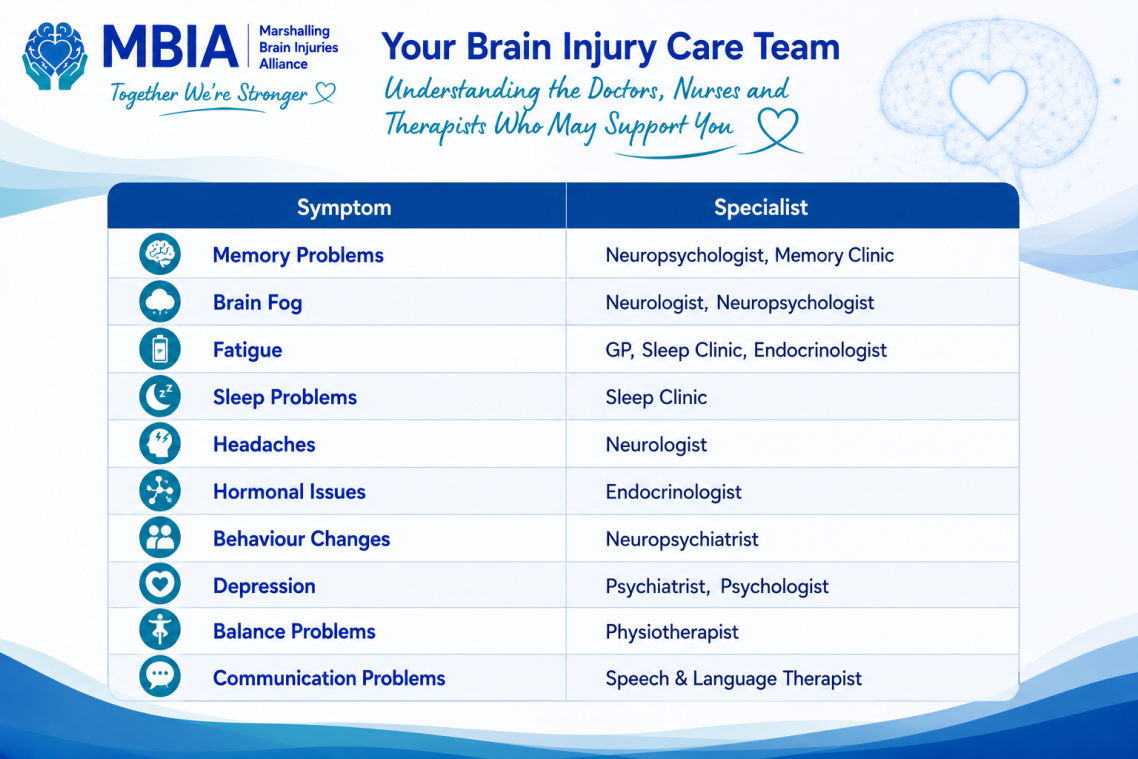
Doctors & Medical Specialists
Doctors often focus on diagnosing conditions, investigating symptoms, prescribing medication, and coordinating medical care.
GP (General Practitioner)
What do they do?
Your GP is usually the first healthcare professional you will see.
They can:
- Assess symptoms
- Arrange referrals
- Prescribe medication
- Coordinate care
- Monitor ongoing health concerns
You might see a GP for:
- Persistent concussion symptoms
- Memory concerns
- Headaches
- Mood changes
- Sleep problems
Neurologist
What do they do?
Neurologists specialise in conditions affecting the brain, spinal cord and nervous system.
They may:
- Investigate neurological symptoms
- Review MRI and CT scans
- Assess cognitive symptoms
- Rule out other neurological conditions
You might see a neurologist for:
- Persistent symptoms
- Seizures
- Severe headaches
- Memory concerns
- Unexplained neurological changes
Neuropsychiatrist
What do they do?
Neuropsychiatrists specialise in conditions where brain function affects:
- Behaviour
- Mood
- Personality
- Thinking
They bridge the gap between neurology and psychiatry.
You might see one for:
- Personality changes
- Emotional regulation difficulties
- Behavioural symptoms
- Suspected CTE-related symptoms
Psychiatrist
What do they do?
Psychiatrists diagnose and treat mental health conditions.
They may help with:
- Depression
- Anxiety
- PTSD
- Sleep difficulties
- Medication management
Rehabilitation Consultant
What do they do?
Rehabilitation consultants oversee rehabilitation following injury or illness.
They often coordinate:
- Therapies
- Rehabilitation plans
- Functional recovery
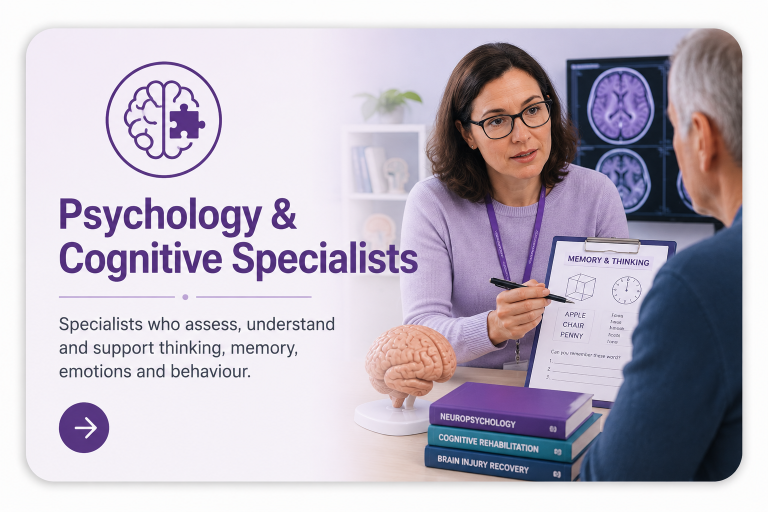
Psychology & Cognitive Specialists
These specialists focus on memory, thinking, emotions and cognitive functioning.
Neuropsychologist
What do they do?
Neuropsychologists assess how the brain is functioning.
They may evaluate:
- Memory
- Attention
- Concentration
- Executive function
- Processing speed
Common assessments:
- Cognitive testing
- Memory assessments
- Neuropsychological evaluations
Clinical Psychologist
What do they do?
Clinical psychologists help people manage:
- Anxiety
- Depression
- Trauma
- Adjustment difficulties
- Emotional wellbeing
Unlike psychiatrists, they do not prescribe medication.
Memory Clinic Team
What do they do?
Memory clinics often assess:
- Memory difficulties
- Cognitive decline
- Dementia concerns
- Suspected TES/CTE presentations
The team may include:
- Doctors
- Nurses
- Psychologists
- Occupational therapists
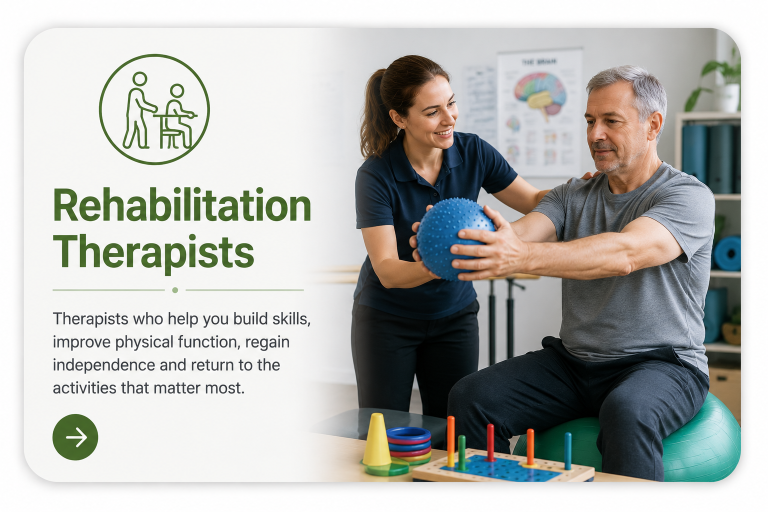
Rehabilitation Therapists
Therapists focus on helping people regain skills, independence and quality of life.
Occupational Therapist (OT)
What do they do?
Occupational therapists help people manage everyday activities.
Examples include:
- Cooking
- Working
- Driving
- Managing fatigue
- Returning to daily routines
Physiotherapist
What do they do?
Physiotherapists help with:
- Balance
- Mobility
- Dizziness
- Strength
- Physical rehabilitation
Speech & Language Therapist (SALT)
What do they do?
Speech therapists support:
- Communication
- Word-finding difficulties
- Cognitive communication problems
- Swallowing difficulties
Many people are surprised to learn that SALTs do much more than help with speech.
Vestibular Therapist
What do they do?
Vestibular therapists specialise in:
- Dizziness
- Balance problems
- Vertigo
- Visual-vestibular symptoms
They are particularly important following concussion.
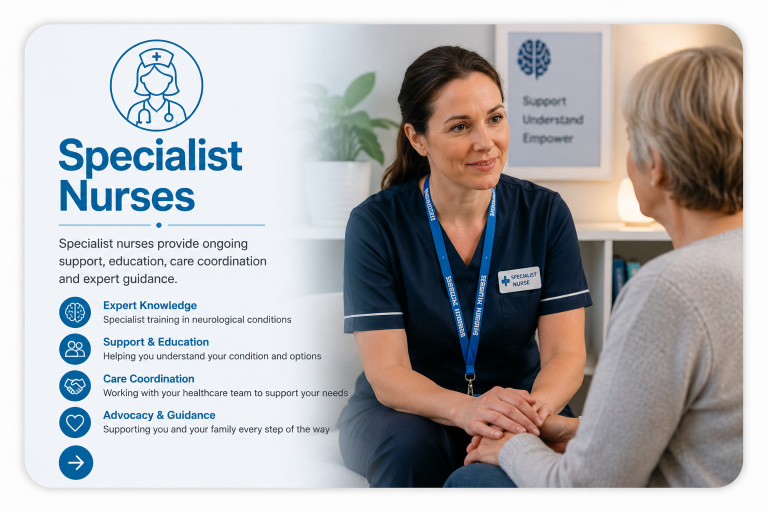
Psychology & Cognitive Specialists
Specialist nurses often provide ongoing support, education and care coordination.
Neurology Nurse
Supports people with neurological conditions and treatments.
Dementia Nurse
Provides support, education and practical guidance for individuals and families.
Brain Injury Nurse
May help coordinate rehabilitation and support following injury.
Community Nurse
Provides support within the community and home environment.
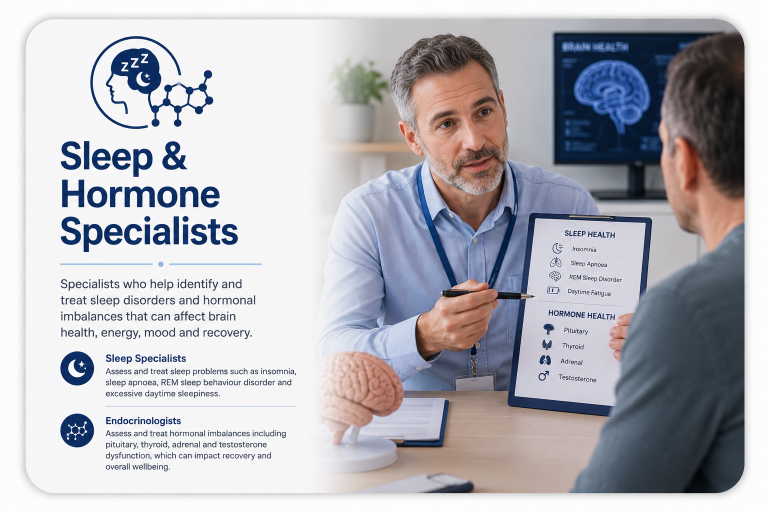
Sleep & Hormone Specialists
Sleep and hormone problems are common after brain injury but are frequently overlooked.
Sleep Specialist
They may assess:
- Sleep apnoea
- Insomnia
- REM Sleep Behaviour Disorder
- Excessive daytime sleepiness
Endocrinologist
They may assess:
- Hormonal imbalances
- Pituitary dysfunction
- Fatigue
- Libido changes
- Temperature regulation difficulties
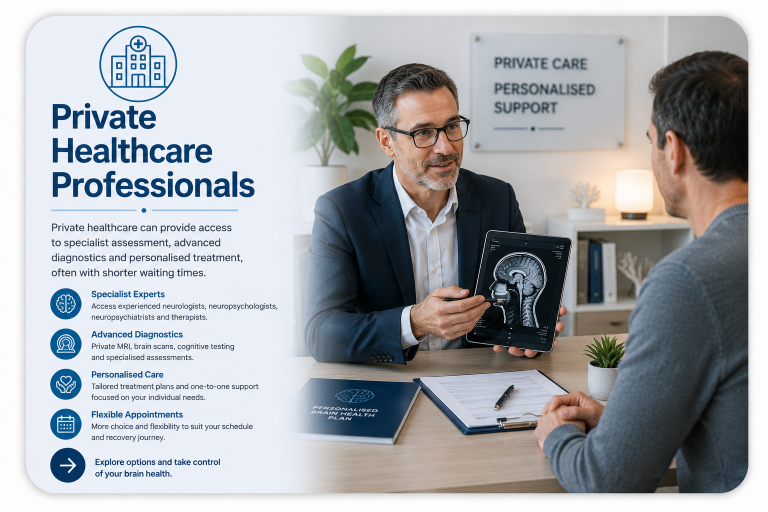
Private Healthcare Professionals
Private Neurologists
Private Neuropsychologists
Private Neuropsychiatrists
Private Rehabilitation Services
Private Imaging Providers
Important note:
Private healthcare can sometimes reduce waiting times, but NHS services remain an important source of specialist assessment, treatment and rehabilitation.
Remember
You may not need to see every healthcare professional listed on this page.
Every brain injury is different.
Your care team will depend on:
- Your symptoms
- Your recovery needs
- Local NHS services
- Whether you access private healthcare
The most important thing is finding the right support for your individual situation.
Related Articles
- What Is A Brain Injury?
- Understanding Neuropsychology
- Sleep Problems After Brain Injury
- Hormones and Brain Injury
- How To Support Someone Through Medical Appointments
- Becoming An Advocate
Together We're Stronger