What Is Neuro Fatigue?
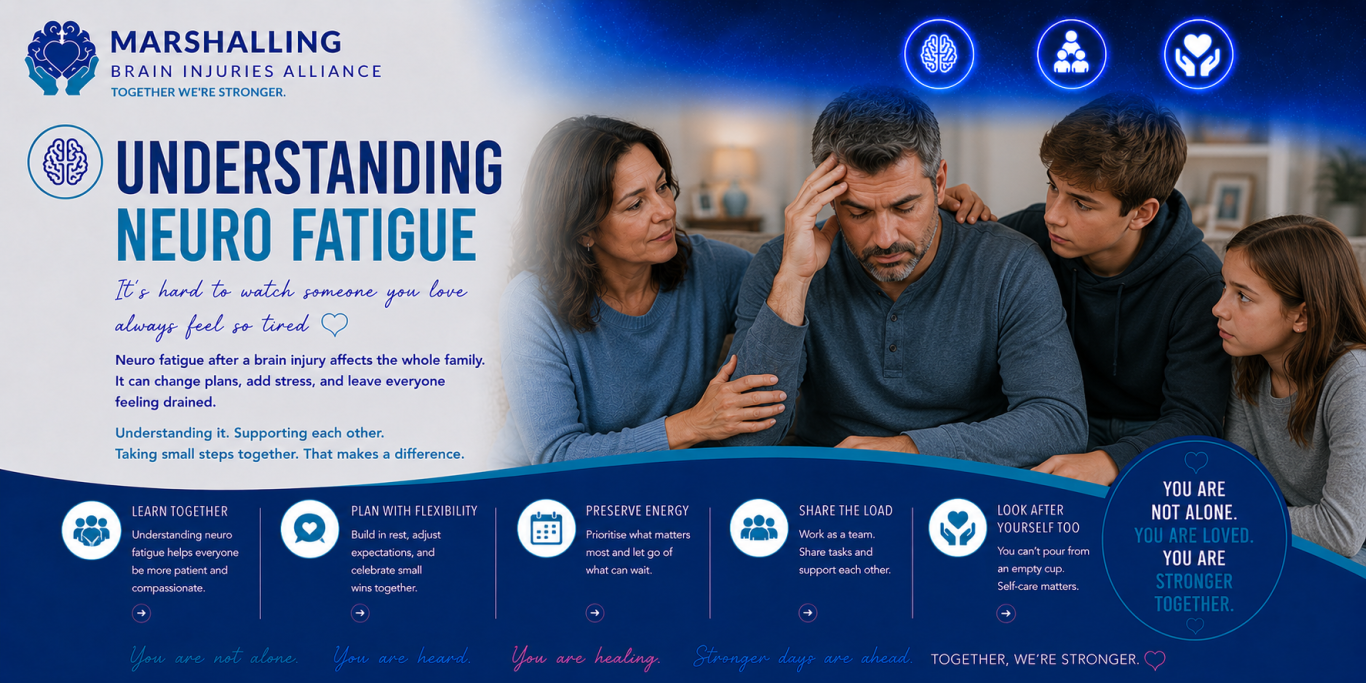
Neuro fatigue (sometimes called cognitive fatigue or neurological fatigue) is a type of exhaustion caused by the brain working harder than it used to.
After a brain injury, everyday activities often require significantly more effort.
Tasks that once happened automatically may now require:
- More concentration
- More planning
- More processing
- More energy
As a result, the brain becomes fatigued more quickly.
Why Does It Happen?
The brain is one of the most energy-demanding organs in the body.
Following a brain injury, the brain often becomes less efficient.
This means it may need to work harder to complete tasks such as:
- Holding a conversation
- Reading
- Shopping
- Driving
- Attending appointments
- Managing emotions
- Filtering noise and distractions
The extra effort uses more energy.
Eventually, the brain becomes fatigued.
Neuro Fatigue Is Not Laziness
This is one of the most important things for families to understand.
Your loved one is not:
❌ Lazy
❌ Unmotivated
❌ Weak
❌ Not trying hard enough
In many cases, they are working much harder than people realise just to get through the day.
Neuro Fatigue Is Different From Being Tired
Most people have experienced ordinary tiredness.
Neuro fatigue is different.
Ordinary Tiredness
- Often improves with rest.
- Can sometimes be pushed through.
- Usually feels predictable.
Neuro Fatigue
- Can appear suddenly.
- Often affects thinking as much as energy.
- May take hours or days to recover from.
- Often becomes worse if ignored.
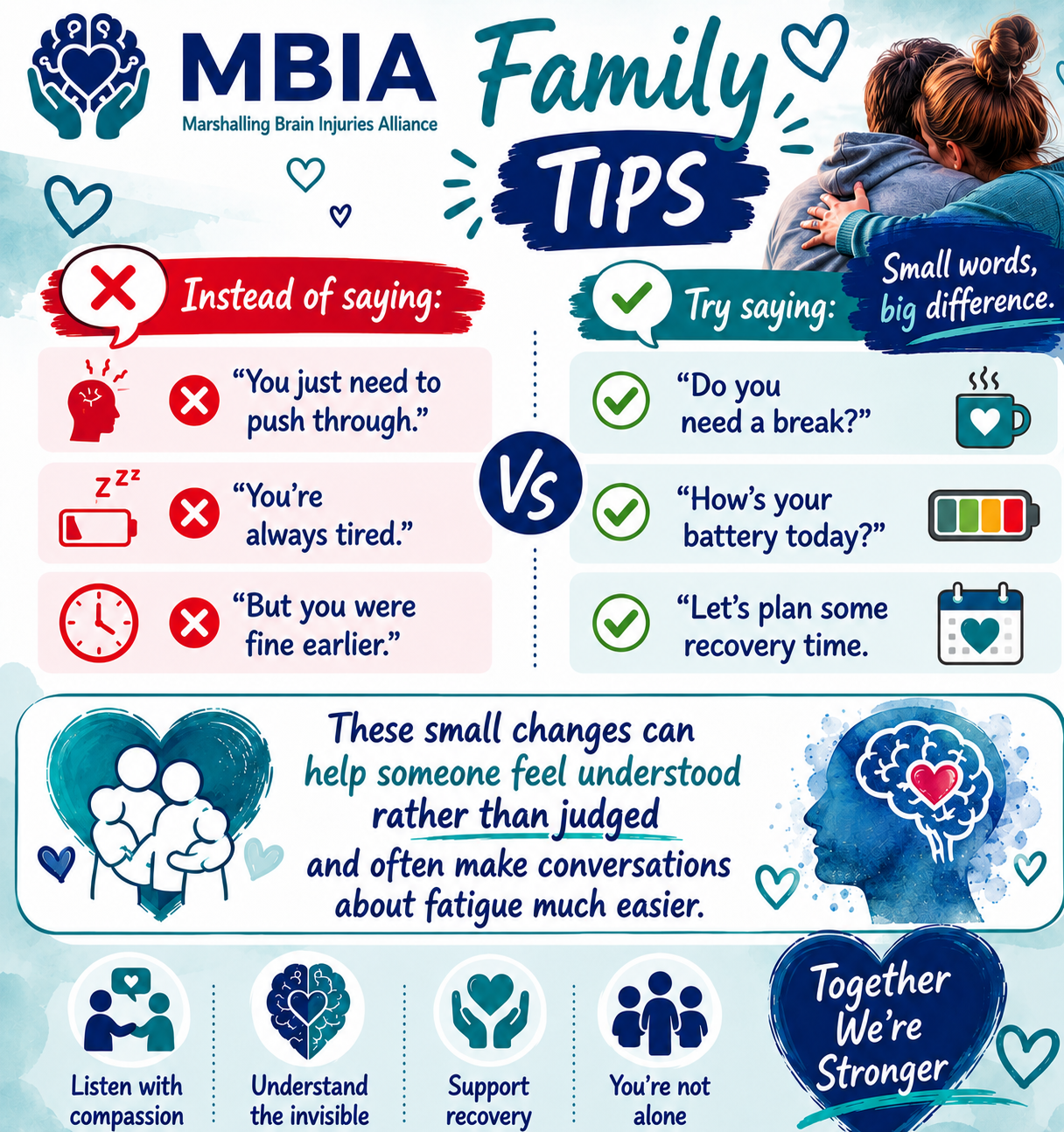
This is why "just pushing through" is often not helpful.
What Neuro Fatigue Looks Like
Every person experiences it differently.
Common signs include:
- Brain fog
- Slower thinking
- Forgetfulness
- Irritability
- Reduced concentration
- Difficulty finding words
- Increased headaches
- Emotional sensitivity
- Reduced patience
- Difficulty making decisions
As fatigue increases, these symptoms often become more noticeable.
Why Simple Tasks Can Be Exhausting
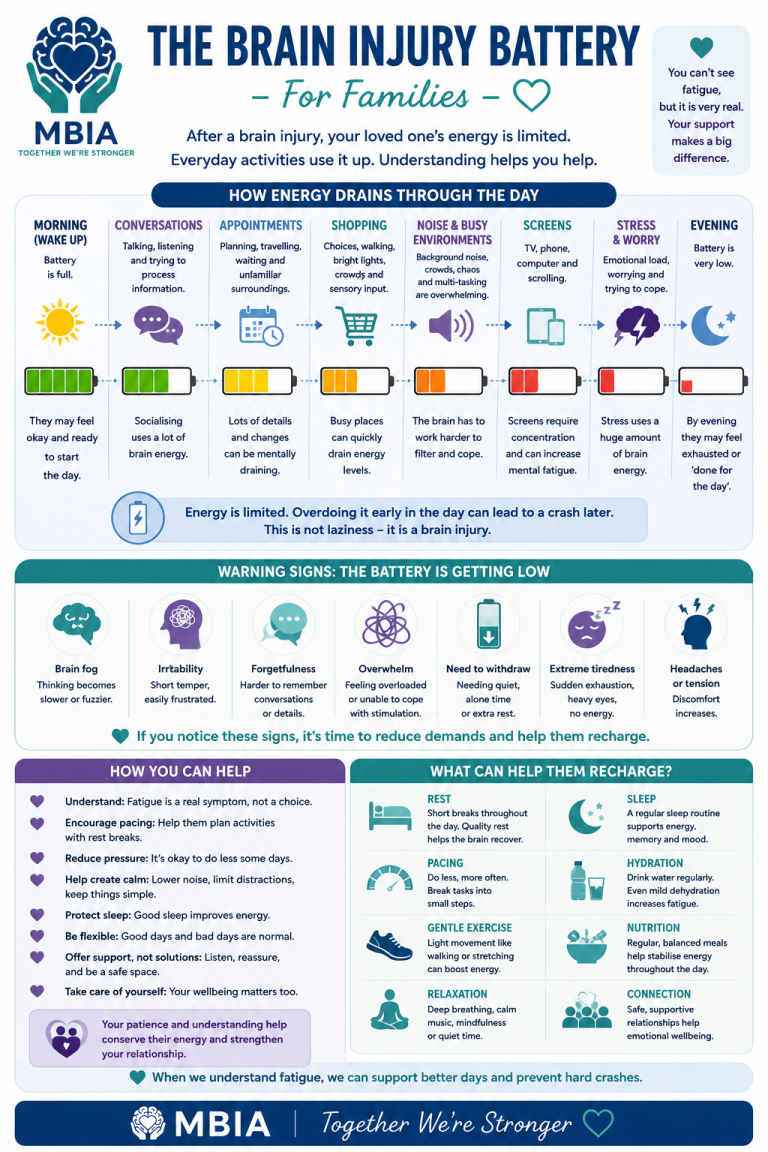
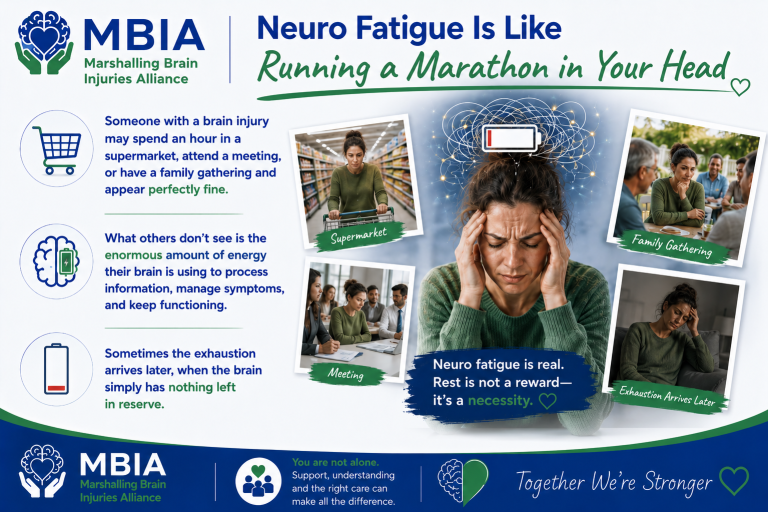
One of the biggest misunderstandings is assuming that only physically demanding activities cause fatigue.
In reality, activities such as:
- Shopping
- Family gatherings
- Telephone calls
- Meetings
- Filling in forms
- Watching a busy sports event
can all be mentally exhausting.
This is because the brain is processing large amounts of information.
Why They Seem Fine Then Suddenly Crash
Families often describe a pattern where their loved one appears fine and then suddenly becomes exhausted.
This happens because the brain often continues working until it reaches its limit.
When that limit is reached, symptoms can increase rapidly.
People often describe it as:
"Hitting a wall."
Why Socialising Can Be So Tiring
Social interaction is surprisingly demanding for the brain.
During conversations, the brain must:
- Listen
- Process information
- Remember details
- Read facial expressions
- Manage emotions
- Filter background noise
For someone with a brain injury, this can use a significant amount of energy.
Why They Cancel Plans
Few things are harder for families than having plans cancelled.
It can feel disappointing or even personal.
In reality, many people cancel plans because they know they do not have enough cognitive energy available.
Often they desperately want to attend but recognise that doing so may leave them struggling for hours or days afterwards.
Why Fatigue Often Causes Irritability
As neuro fatigue increases, the brain has fewer resources available for:
- Emotional regulation
- Patience
- Stress management
This is why people often become:
- More irritable
- More emotional
- Less tolerant of noise
- More easily overwhelmed
Fatigue is often a major trigger for arguments and misunderstandings.
How Families Can Help
Learn Their Warning Signs
Many people have early signs of fatigue such as:
- Yawning
- Becoming quieter
- Difficulty concentrating
- Headaches
- Increased irritability
Recognising these signs early can help prevent a crash.
Respect Their Limits
It can be tempting to encourage someone to push through.
However, repeatedly exceeding limits often worsens symptoms.
Accepting limits does not mean giving up.
It means working with the brain rather than against it.
Encourage Pacing
Pacing involves balancing activity and rest.
This may include:
- Taking regular breaks
- Spreading activities throughout the day
- Avoiding back-to-back commitments
Pacing is one of the most effective fatigue management strategies.
Help Prioritise
Many people do not have enough energy for everything they want to do.
Helping prioritise important activities can reduce stress and fatigue.
Plan Recovery Time
Following demanding activities, your loved one may need time to recover.
This is normal.
Recovery should be viewed as part of the activity rather than an optional extra.
Don't Take Fatigue Personally
If your loved one:
- Needs to leave early
- Goes quiet
- Cancels plans
- Spends time alone
it is usually not about you.
More often, it reflects the limits of their brain's available energy.
Key Takeaways
- Neuro fatigue is a common symptom after brain injury.
- It is caused by the brain working harder and using more energy.
- Neuro fatigue is different from ordinary tiredness.
- People may look fine while feeling completely exhausted.
- Socialising, shopping, conversations, and thinking can all be mentally draining.
- Fatigue often worsens memory, concentration, mood, and emotional regulation.
- Pacing and respecting limits are important management strategies.
- Understanding fatigue can reduce conflict and improve family relationships.
Continue Exploring
- Supporting Someone With Brain Fog
- Why Does My Loved One Get Overwhelmed So Easily?
- Understanding Executive Dysfunction
- Memory Problems
- Looking After Yourself
- Why Has My Loved One Changed?
Together We're Stronger