How Barometric Pressure Affects the Brain
The brain exists within a finely balanced system of blood flow, oxygen delivery, and cerebrospinal fluid pressure. When barometric pressure drops rapidly, subtle shifts can occur inside the skull, affecting oxygen levels and cerebral blood flow.
Research consistently shows that barometric pressure drops are associated with increased headaches, migraines, neurological symptoms, and cognitive changes — particularly in people with existing neurological vulnerabilities. Studies have found that falling atmospheric pressure significantly correlates with headache onset and symptom severity.
In individuals with TBI or CTE, the brain’s ability to regulate blood flow and pressure is often impaired, making them far more sensitive to environmental stressors.
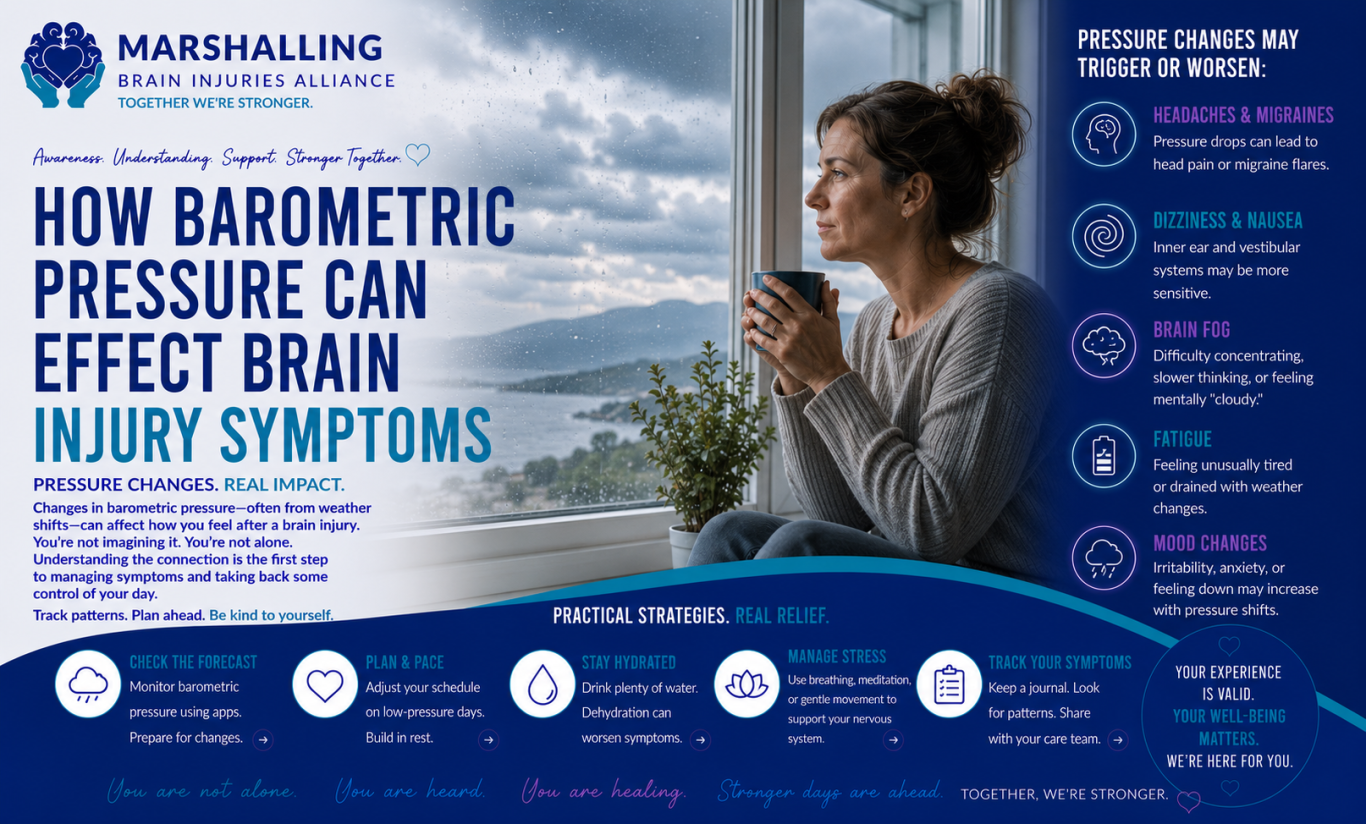
Common brain-related symptoms triggered by pressure changes include:
- Headaches and migraines
- Dizziness and vertigo
- Brain fog
- Slowed processing speed
- Memory difficulty
- Visual sensitivity
- Increased confusion
- Mood, Sleep & Nervous System Effects
Barometric pressure changes do not only affect cognition — they also strongly influence mood regulation, emotional stability, and sleep quality.
Weather shifts can impact:
- Serotonin and dopamine levels, influencing mood and motivation
- Autonomic nervous system balance, increasing anxiety, irritability, and emotional volatility
- Sleep architecture, worsening insomnia and fragmented sleep
Research indicates that weather fluctuations — particularly falling pressure — are associated with higher rates of depression, anxiety, fatigue, and migraine activity.
For individuals with CTE and TBI, whose nervous systems are already under strain, these changes can cause profound symptom flare-ups.
What Is Barometric Pressure?
Barometric pressure, also called atmospheric pressure, refers to the weight of the air pressing on the body. It fluctuates constantly as weather systems move. High-pressure systems often bring clear weather, while low-pressure systems usually accompany storms, rain, or snow.
Although these pressure changes may seem minor, the human nervous system — especially an injured one — is remarkably sensitive to them.
Why People with TBI & CTE Are More Sensitive
Brain injuries disrupt the body's ability to maintain homeostasis, the internal balance that regulates blood flow, oxygen, inflammation, and nervous system activity.
As a result, individuals with TBI and CTE often have:
- Reduced stress tolerance
- Heightened nervous system sensitivity
- Impaired blood flow regulation
- Increased inflammation
- Slower neurological recovery
Environmental stressors — including pressure changes — therefore create larger physiological reactions than in individuals without brain injury.
Whole-Body Effects of Pressure Changes
Barometric pressure affects more than the brain. Many people with neurological injury experience widespread physical symptoms, including:
- Joint and muscle pain
- Increased inflammation
- Sinus pressure
- Fatigue and weakness
- Blood pressure fluctuations
As pressure drops, tissues can expand slightly, irritating nerves and injured structures. This effect is especially noticeable in people with prior injuries, neuroinflammation, or autonomic dysfunction.
Symptom Management Tips For Pressure Changes
At Marshalling Brain Injuries Alliance, we focus on brain-based, non-invasive treatments that help regulate nervous system function, improve cerebral blood flow, and support neural healing — helping individuals better tolerate environmental stressors.
If your symptoms worsen when storms approach, pressure drops, or weather systems shift, you are not imagining it.
The injured brain is highly sensitive to environmental changes. Understanding this relationship reduces frustration, validates lived experiences, and empowers individuals to plan proactively for symptom management.
Healing the brain requires acknowledging both internal injury and external influences — and weather plays a bigger role than many realize.
While weather cannot be controlled, proactive management can significantly reduce symptom severity:
- Track symptoms alongside barometric changes
- Increase hydration
- Reduce physical and cognitive load during weather shifts
- Prioritize sleep and rest
- Practice gentle nervous system regulation techniques
- Use pressure monitoring apps
- Explore non-invasive neurological therapies
Weather Tracking & Prevention Tools: The WeatherX App & Earplugs
Many individuals use barometric pressure monitoring tools to anticipate symptom flares. One widely used option is the WeatherX app, which tracks atmospheric pressure patterns and sends alerts when significant changes are expected.
The app is often paired with WeatherX pressure-regulating earplugs, which contain a micro-ceramic filter designed to slow the rate of pressure change reaching the middle ear, helping reduce pressure-related headache triggers.
How WeatherX Works:
- The app tracks pressure changes in your location
- Users receive notifications before major shifts
- Earplugs are worn before and during pressure changes
- Designed to reduce headache severity and symptom onset
While research on earplug effectiveness remains limited, many migraine and brain injury patients report meaningful symptom reduction, especially when used preventively. Individual results vary, but pressure moderation may offer a useful supportive strategy.
These tools can be especially helpful for individuals with:
- Migraine disorders
- Post-concussion syndrome
- Autonomic dysfunction
- CTE or repetitive head trauma