What Is Intermittent Fasting?
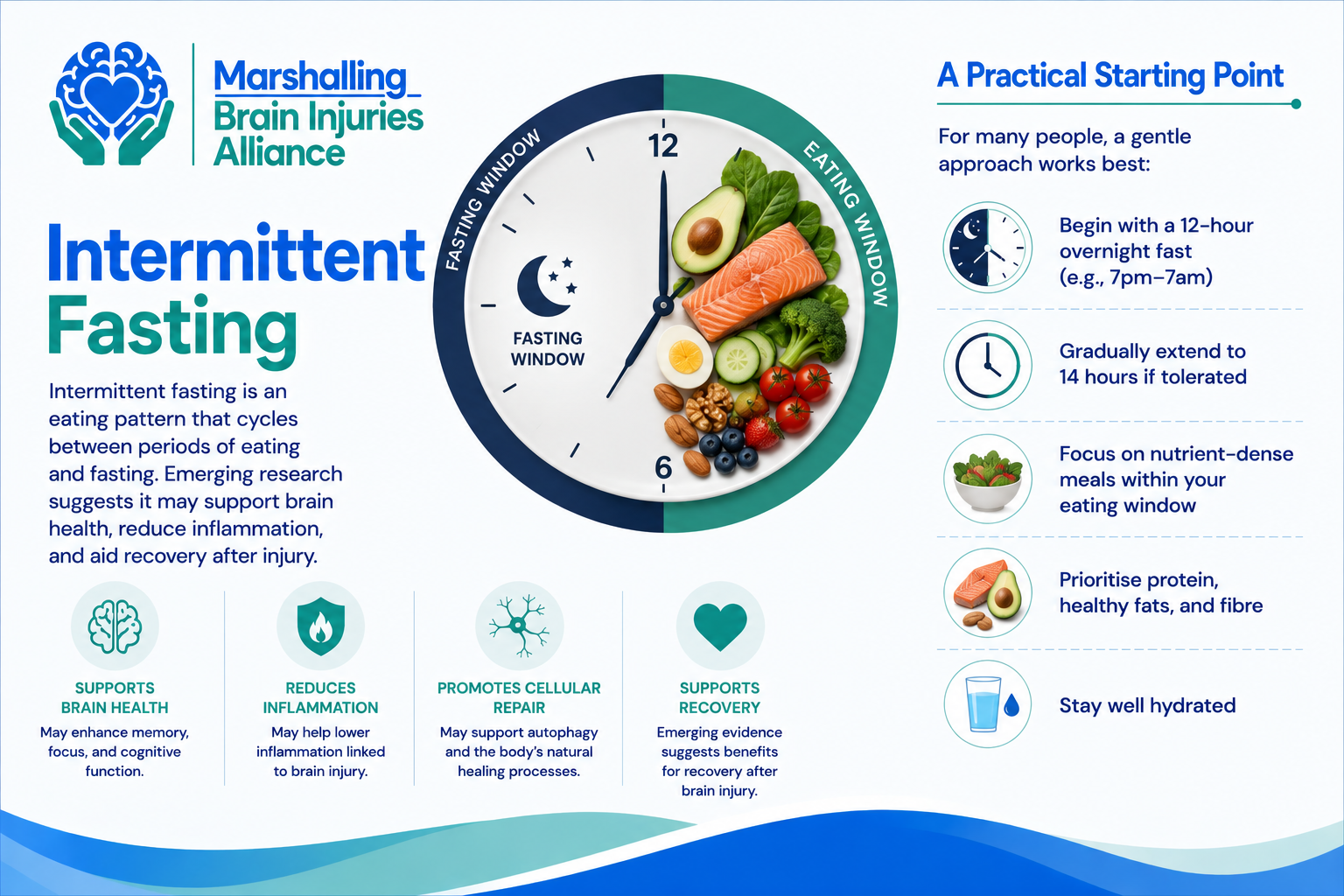
Intermittent fasting (IF) is not a specific diet — it is a pattern of eating that cycles between periods of eating and periods of fasting.
Common approaches include:
- 16:8 method – fasting for 16 hours, eating within an 8-hour window
- 14:10 method – fasting 14 hours, eating within 10 hours
- Alternate-day fasting
- Time-restricted eating (consistent daily eating window)
Rather than focusing on what you eat, intermittent fasting focuses on when you eat.
Potential Brain Benefits of Intermittent Fasting
Supports Metabolic Flexibility
Fasting trains the body to switch between fuel sources. This metabolic flexibility may support brain cells that are struggling with energy production after injury.
Promotes Ketone Production
Ketones provide an alternative energy source for neurons. Some research suggests ketones may improve cognitive clarity and mental stamina in certain neurological conditions.
Reduces Inflammation
Chronic inflammation is central to TBI, CTE, and neurodegenerative disease. Fasting has been shown to reduce systemic inflammatory markers in some studies.
Stimulates Autophagy
Autophagy is the body’s “cellular clean-up” process. During fasting, the body increases this recycling mechanism, which may help clear damaged proteins and cellular debris.
This is particularly relevant in conditions like CTE and Alzheimer’s disease, where abnormal protein accumulation is a hallmark feature.
Why Fasting Affects the Brain
The brain is highly sensitive to metabolic changes. When we fast, the body shifts from burning glucose (sugar) to burning fat for fuel. This produces molecules called ketones, which can act as an alternative and often efficient fuel source for the brain.
For individuals with:
- Traumatic brain injury (TBI)
- Post-concussion symptoms
- Chronic traumatic encephalopathy (CTE)
- Early cognitive decline or dementia
Metabolic dysfunction is common. The brain may struggle to use glucose efficiently — sometimes referred to as “cerebral glucose hypometabolism.”
Intermittent fasting may help address this.
Increases BDNF (Brain-Derived Neurotrophic Factor)
Some studies suggest fasting may increase levels of BDNF — a protein that supports:
- Neuroplasticity
- Learning and memory
- Neuronal survival
Higher BDNF levels are associated with improved cognitive resilience.
Intermittent Fasting & Brain Injury
After a brain injury, the brain enters a state of increased energy demand combined with impaired energy production.
Some emerging research suggests that carefully structured fasting protocols may:
- Improve mitochondrial efficiency
- Reduce oxidative stress
- Enhance cognitive recovery markers
- Support long-term metabolic resilience
However, timing is critical. Fasting is generally not recommended immediately after an acute brain injury, when adequate nutrition is essential for healing.
In chronic phases of recovery, under medical guidance, some individuals report improvements in:
- Brain fog
- Mental clarity
- Energy stability
- Mood regulation
Intermittent Fasting & Neurodegenerative Disease
There is growing scientific interest in fasting-related metabolic strategies for neurodegenerative diseases.
Preclinical and early human research suggests fasting may:
- Improve insulin sensitivity in the brain
- Reduce neuroinflammation
- Support cellular repair mechanisms
- Potentially slow cognitive decline
However, in older adults — especially those already frail or underweight — fasting must be approached cautiously.
Who Should Be Careful?
Intermittent fasting may not be suitable for individuals who:
- Are underweight or malnourished
- Have diabetes (without medical supervision)
- Have a history of eating disorders
- Are experiencing significant fatigue or hormonal instability
- Are in early acute brain injury recovery
Medical guidance is strongly recommended before beginning.