What Is the Mediterranean Diet?
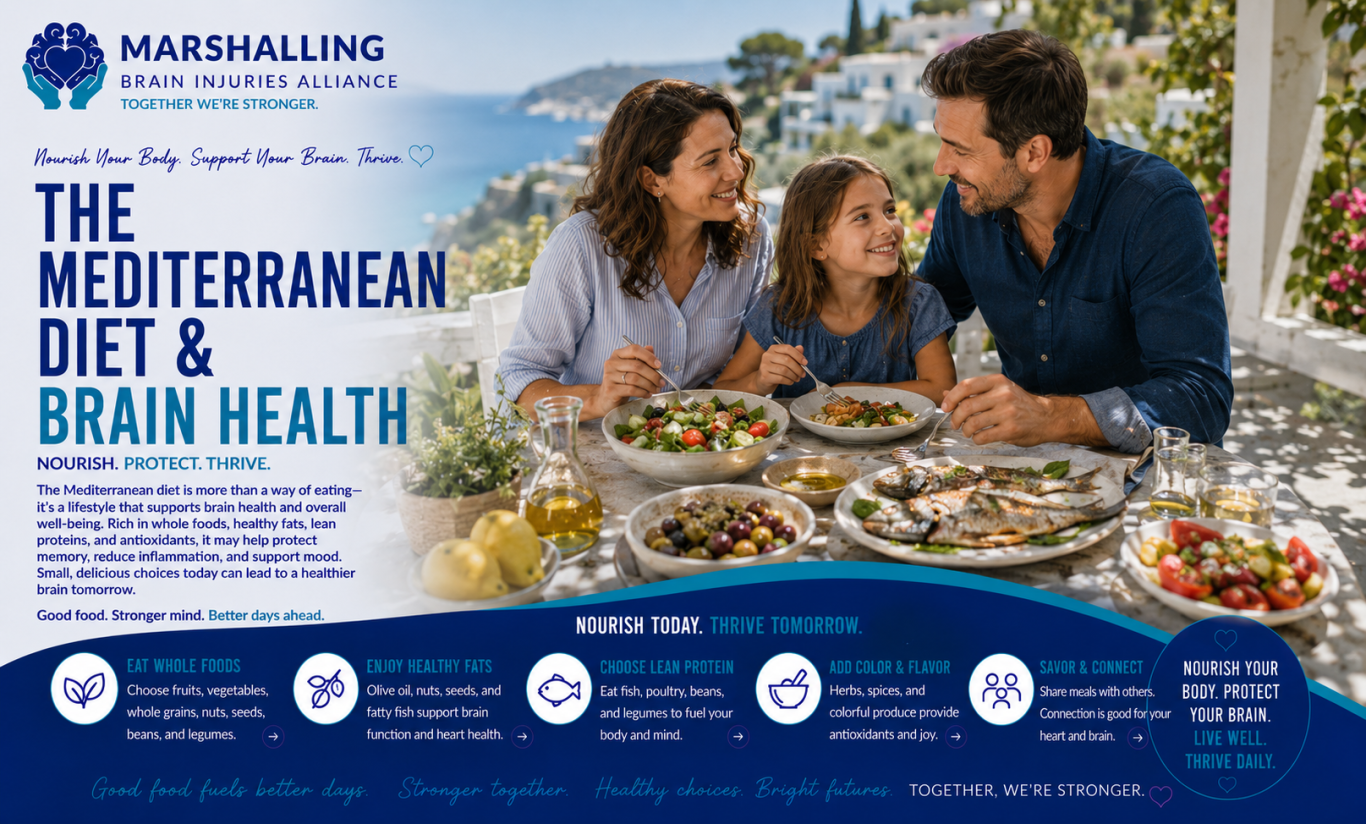
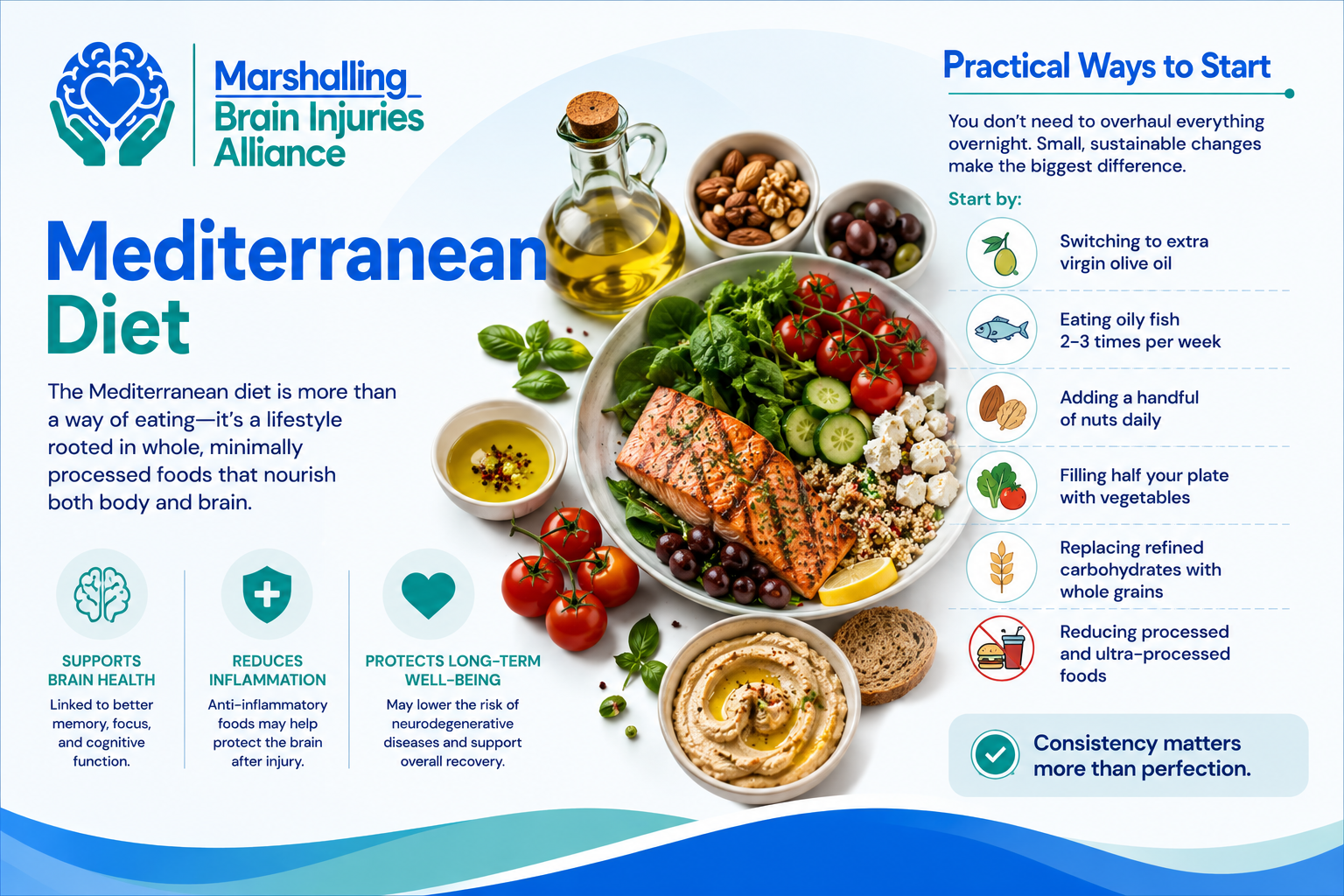
The Mediterranean diet is based on the traditional eating patterns of countries bordering the Mediterranean Sea, including Greece, Italy, and Spain. It is not a restrictive “diet” in the modern sense, but a long-term lifestyle approach centred around whole, nutrient-dense foods.
At its core, it emphasises:
- Fresh vegetables and fruits
- Olive oil as the primary fat source
- Oily fish (such as salmon, sardines, and mackerel)
- Nuts and seeds
- Legumes (beans, lentils, chickpeas)
- Whole grains
- Moderate dairy
- Limited red meat and processed foods
This way of eating is consistently associated with lower rates of cardiovascular disease — and increasingly, with better brain health.
What Is the Mediterranean Diet?
Reduces Inflammation
Olive oil, oily fish, nuts, and vegetables are rich in anti-inflammatory compounds. Chronic neuroinflammation is a key driver in long-term brain injury symptoms and neurodegenerative disease progression.
Provides Healthy Fats
The brain is approximately 60% fat. Omega-3 fatty acids (especially DHA) found in oily fish support:
- Neuronal membrane integrity
- Communication between brain cells
- Mood regulation
- Cognitive function
Improves Blood Flow
The Mediterranean diet supports cardiovascular health, which directly impacts cerebral circulation. Improved blood flow means better oxygen and nutrient delivery to brain tissue.
Stabilises Blood Sugar
High-sugar diets can worsen cognitive decline and brain fog. The Mediterranean approach, rich in fibre and whole foods, helps stabilise glucose levels — critical for individuals with TBI or dementia-related metabolic vulnerability.
Rich in Antioxidants
Colourful fruits and vegetables provide polyphenols and antioxidants that help combat oxidative stress — one of the central contributors to brain ageing and injury progression.
Why Diet Matters for Brain Injury & CTE
The brain is one of the most metabolically active organs in the body. It requires:
- Stable blood sugar
- Healthy fats
- Adequate oxygen and blood flow
- Low levels of inflammation
- Strong antioxidant protection
- Traumatic brain injury (TBI), concussion, CTE, and dementia are all linked to:
- Chronic inflammation
- Oxidative stress
- Impaired glucose metabolism
- Reduced cerebral blood flow
- Mitochondrial dysfunction
The Mediterranean diet directly targets many of these mechanisms.
Why It May Be Particularly Important for TBI & CTE
Research & Cognitive Protection
Following a brain injury, the brain often becomes more vulnerable to:
- Energy deficits
- Inflammatory cascades
- Blood sugar instability
- Oxidative damage
- A Mediterranean-style diet provides:
- Stable fuel
- Anti-inflammatory support
- Essential fatty acids
- Micronutrients required for neurotransmitter production
Over time, this nutritional foundation may help reduce symptom severity, improve mental clarity, and support overall resilience.
Multiple long-term studies have shown that adherence to a Mediterranean-style diet is associated with:
- Slower cognitive decline
- Reduced risk of Alzheimer’s disease
- Improved memory and executive function
- Lower rates of mild cognitive impairment
Some research suggests that individuals who closely follow a Mediterranean dietary pattern may reduce their dementia risk by up to 30–40%.
While diet alone cannot cure CTE or reverse advanced dementia, it is one of the most evidence-supported lifestyle interventions for protecting brain function.