What Do We Mean by Substance Misuse?
Substance misuse refers to the harmful or problematic use of:
- Alcohol
- Prescription medications
- Illegal drugs
- Recreational substances
- Other mood-altering substances
Not everyone who drinks alcohol or uses medication has a substance misuse problem.
The concern arises when use begins to negatively affect:
- Health
- Relationships
- Work
- Finances
- Safety
- Daily functioning
Is Substance Misuse More Common After Brain Injury?
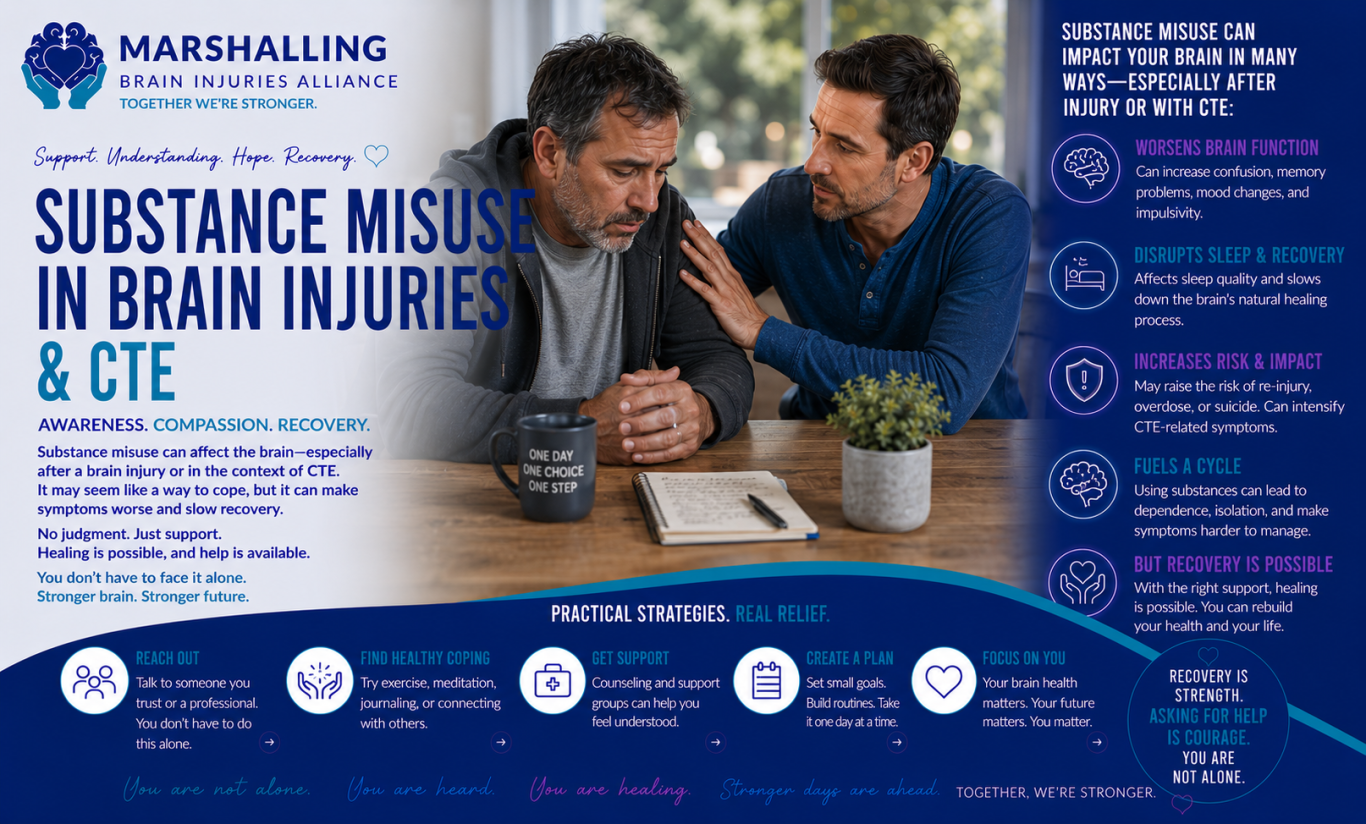
Research suggests that some people with brain injuries may be at increased risk of developing difficulties with alcohol, drugs, gambling, or other addictive behaviours.
This does not affect everyone.
However, several factors associated with brain injury and probable CTE may increase vulnerability.
Self-Medicating Symptoms
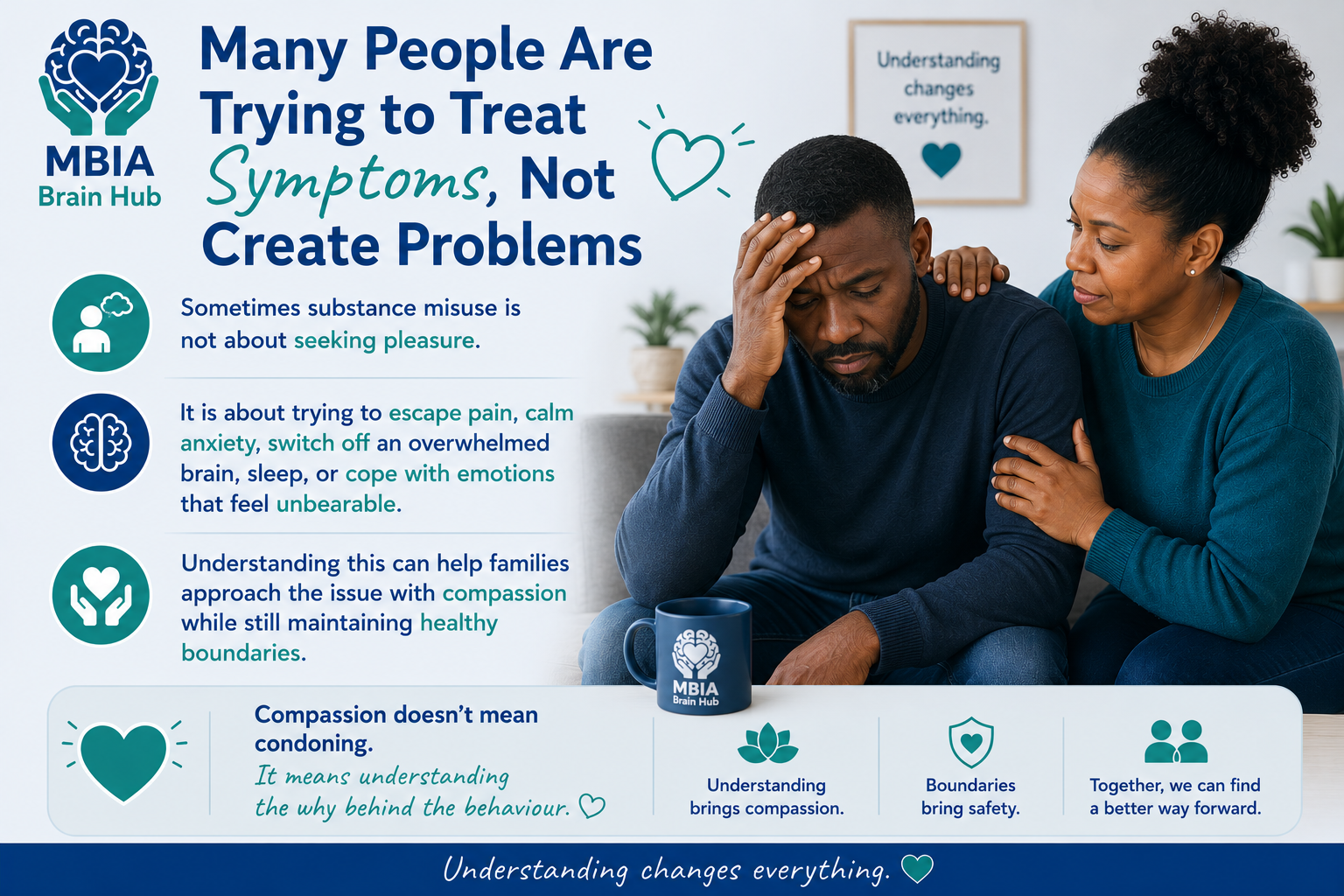
One of the most common reasons people turn to substances is to try to manage symptoms.
Many people describe using alcohol or drugs to cope with:
- Headaches
- Chronic pain
- Anxiety
- Depression
- Sleep problems
- Intrusive thoughts
- Emotional distress
- Trauma
For a short time, substances may appear to provide relief.
Unfortunately, they often create additional problems in the longer term.
"I Just Want My Brain to Switch Off"
This is something many people living with brain injury report.
After a day of:
- Brain fog
- Fatigue
- Memory problems
- Sensory overload
- Frustration
some individuals use substances in an attempt to:
- Relax
- Escape
- Sleep
- Feel normal
While understandable, this can sometimes develop into a harmful pattern.
Depression and Emotional Pain
Brain injury can increase vulnerability to:
- Depression
- Anxiety
- Grief
- Hopelessness
Some people use substances as a way to numb emotional pain.
This is particularly common when individuals feel:
- Isolated
- Misunderstood
- Unsupported
Unfortunately, alcohol and many drugs can worsen mental health symptoms over time.
Trauma and PTSD
Many people living with brain injuries have also experienced traumatic events.
Examples may include:
- Military service
- Domestic abuse
- Road traffic collisions
- Sporting injuries
- Workplace accidents
Substance use may become a way of coping with trauma-related symptoms.
Reward and Addiction Pathways
The brain's reward system can also be affected by injury.
Some individuals may become more vulnerable to behaviours that provide:
- Immediate relief
- Immediate pleasure
- Temporary escape
Examples include:
- Alcohol misuse
- Drug misuse
- Gambling
- Excessive spending
- Risk-taking behaviours
Researchers are continuing to study these links.
Changes in Impulse Control
One of the lesser-known reasons substance misuse may develop after brain injury is impaired impulse control.
The frontal lobes help regulate:
- Judgement
- Decision-making
- Self-control
- Risk assessment
When these systems are affected, some people may become more likely to:
- Act impulsively
- Take risks
- Struggle to stop behaviours once they start
This does not remove personal responsibility, but it may help explain why certain behaviours emerge.
Why Substance Misuse Can Be Particularly Harmful After Brain Injury
Substances may worsen many existing symptoms.
Examples include:
- Memory problems
- Fatigue
- Balance difficulties
- Sleep disturbances
- Depression
- Anxiety
- Emotional regulation difficulties
In some cases, alcohol or drugs can make it difficult to determine which symptoms are related to the brain injury and which are related to substance use.
The Impact on Families
Families often find themselves caught between concern and frustration.
You may feel:
- Angry
- Frightened
- Helpless
- Resentful
- Guilty
Many family members desperately want to help but are unsure how.
Watching someone you love struggle with substance misuse can be heartbreaking.
Recovery Is Possible
Many people affected by brain injury and substance misuse do go on to make positive changes.
Recovery is rarely a straight line.
There may be setbacks.
There may be difficult periods.
But improvement is possible.
Support, treatment, education, and connection can all play an important role.
A Message for People Living With Brain Injury
If you are using alcohol or substances to cope with symptoms, you are not alone.
Many people turn to substances because they are trying to manage pain, distress, trauma, or exhaustion.
Asking for help is not a sign of weakness.
It is often one of the bravest steps a person can take.
There are people who understand and support is available.
A Message for Families
If your loved one is struggling with substance misuse, please remember:
You did not cause it.
You cannot control it.
You cannot cure it.
But you can support them while also protecting yourself.
Compassion and boundaries can exist together.
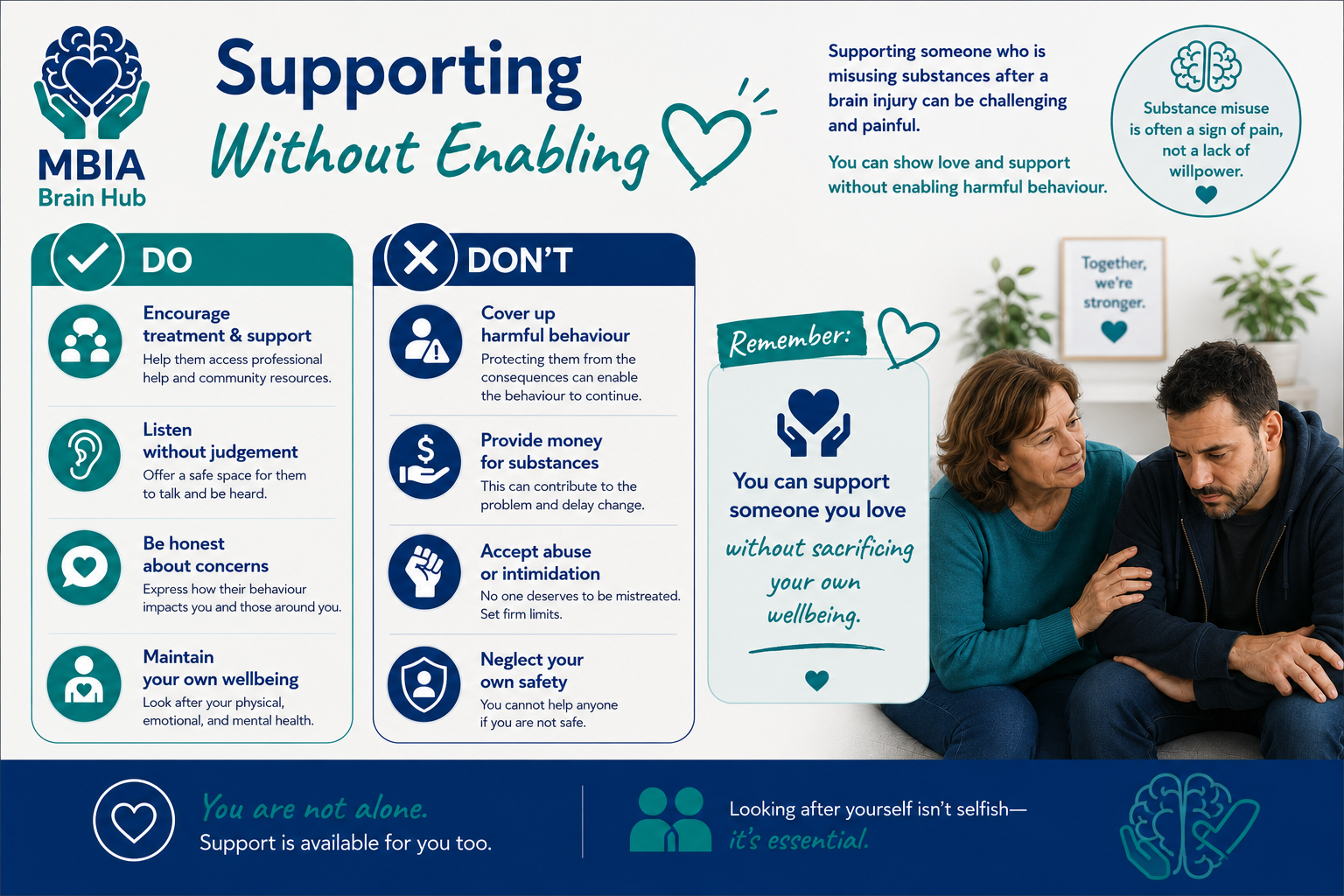
How to Support Someone Without Enabling Them
This is one of the most difficult balancing acts families face.
Support is important.
But so are healthy boundaries.
Try to Understand the "Why"
Rather than focusing only on the behaviour, try to understand what may be driving it.
Ask yourself:
- What symptoms are they trying to escape?
- What pain are they trying to manage?
- What needs are not being met?
Understanding does not excuse harmful behaviour, but it can help guide a more compassionate response.
Avoid Shame and Judgement
Many people already feel:
- Embarrassed
- Guilty
- Ashamed
Shame rarely motivates positive change.
Supportive conversations are often more productive than criticism.
Encourage Professional Support
Substance misuse often requires specialist support.
Encourage access to:
- GPs
- Addiction services
- Mental health support
- Counselling
- Peer support groups
Recovery is rarely something people should be expected to manage alone.
Encourage Professional Support
Substance misuse often requires specialist support.
Encourage access to:
- GPs
- Addiction services
- Mental health support
- Counselling
- Peer support groups
Recovery is rarely something people should be expected to manage alone.
Be Honest About Your Concerns
It is okay to say:
"I'm worried about you."
"I can see you're struggling."
"I want to help."
Open conversations are often more effective than accusations.
Healthy Boundaries Matter
Supporting someone does not mean accepting behaviour that harms you.
Boundaries may include:
- Not providing money for substances
- Not covering up harmful behaviour
- Not making excuses for repeated actions
- Protecting your own wellbeing
Boundaries are not punishment.
They are a way of protecting everyone involved.
Understanding Does Not Mean Accepting Abuse
If substance misuse is contributing to:
- Aggression
- Intimidation
- Violence
- Coercive behaviour
your safety must remain the priority.
Brain injury and addiction may help explain behaviour.
They do not excuse abuse.