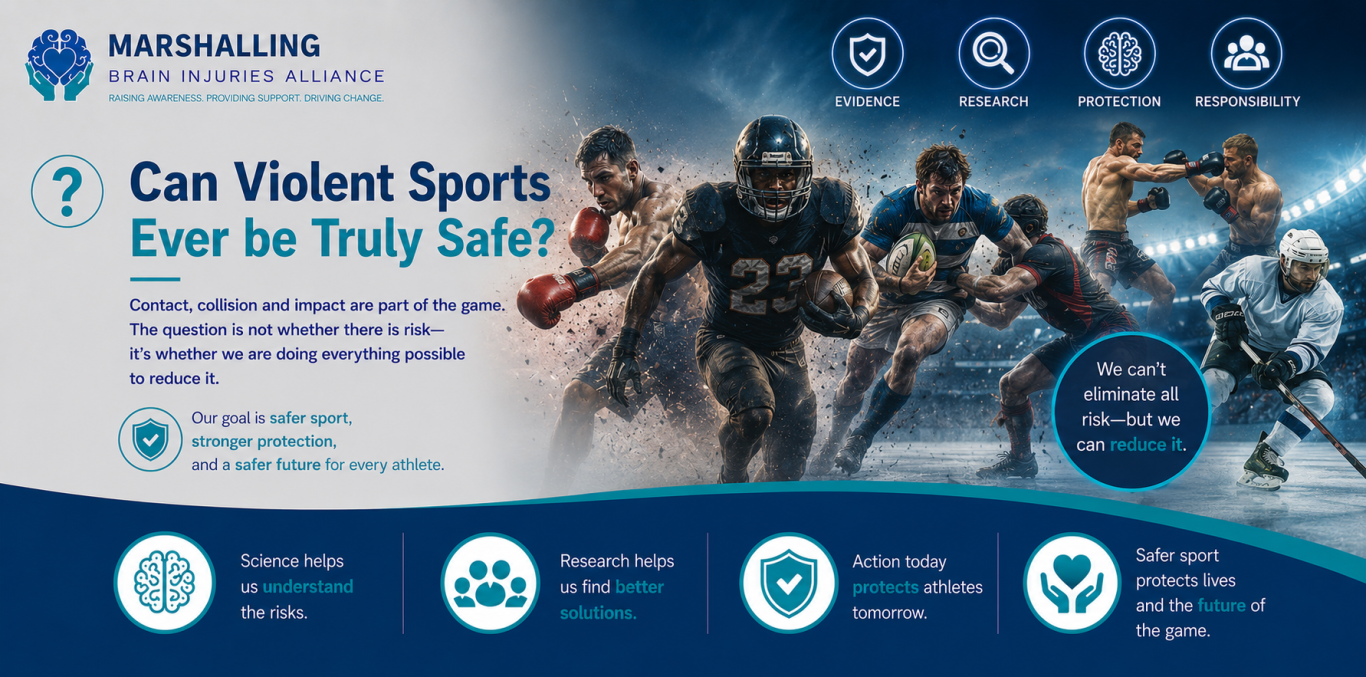
Can Violent Sports Ever Be Truly Safe?
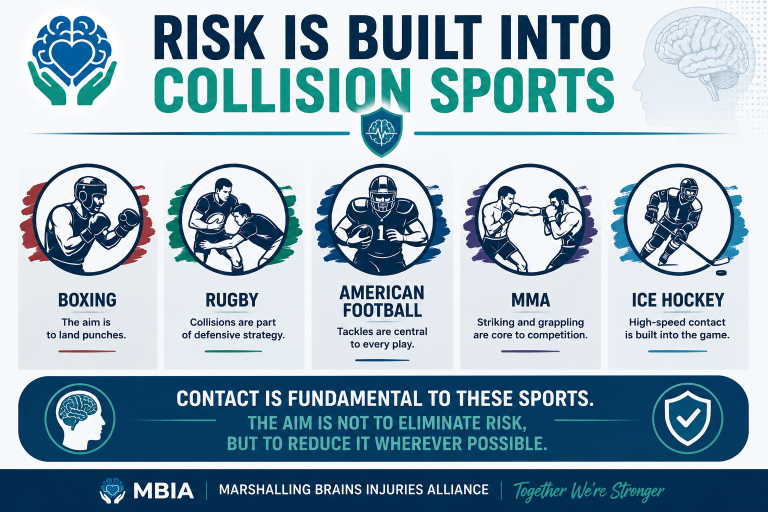
In many collision sports, physical contact is not accidental.
It is an essential part of how the sport is played.
For example:
- Boxing: Landing punches is the objective.
- Rugby: Tackling and collisions are fundamental to defence.
- American Football: Every play involves controlled collisions.
- Ice Hockey: High-speed physical contact is built into the sport.
- Mixed Martial Arts: Striking and grappling are central elements of competition.
Because the brain sits inside the skull, any rapid acceleration or deceleration of the head has the potential to affect it.
This means that while many injuries can be reduced, the risk of brain injury cannot be completely eliminated in sports where repeated impacts are part of the game.
Risk Is Part of the Game
Perhaps the better question is not:
"Can violent sports be made safe?"
Instead, we should ask:
"How can they be made safer?"
Over the past two decades, many sports have introduced important changes designed to reduce risk.
These include:
- Improved concussion recognition
- Independent medical assessments
- Stricter return-to-play protocols
- Better education for players and coaches
- Law changes designed to reduce dangerous tackles
- Improved emergency medical care
- Increased investment in brain injury research
These changes represent genuine progress.
However, no single intervention removes the underlying physics of repeated collisions.
Safe vs Safer
From rugby pitches and boxing rings to American football fields and mixed martial arts cages, contact and collision sports are enjoyed by millions of people around the world.
They build fitness, confidence, teamwork, discipline and lifelong friendships.
For many, sport is far more than a game – it is part of their identity and community.
However, as our understanding of brain injury has grown, so too has an important question:
Can sports built around physical collisions ever be truly safe?
The answer is more complex than a simple yes or no.
Understanding Risk, Responsibility and the Future of Player Welfare
What Science Has Taught Us
Our understanding of brain injury has changed dramatically.
Researchers now know that:
- Concussion symptoms may not appear immediately.
- Recovery often takes longer than previously believed.
- A person may still be recovering even after symptoms improve.
- Repeated concussions may increase the risk of long-term neurological problems.
- Repetitive sub-concussive impacts may also contribute to cumulative brain changes in some individuals.
Science continues to evolve, and recommendations should evolve alongside it.
The Physics Cannot Be Changed
One of the biggest misconceptions is that equipment can completely protect the brain.
In reality, protective equipment has important limitations.
Helmets are excellent at reducing:
- Skull fractures
- Facial injuries
- Scalp injuries
But helmets cannot stop the brain moving inside the skull during a sudden impact.
Similarly:
- Mouthguards protect the teeth and jaw.
- Soft headguards may reduce cuts and bruising.
Neither can eliminate the forces acting on the brain during a collision.
Protective equipment plays an important role—but it cannot make collision sports risk-free.
The Youth Question
The conversation becomes even more important when children and young people are involved.
Developing brains are still growing.
Children and adolescents may:
- Take longer to recover from concussion.
- Be more vulnerable to repeated injury.
- Face many decades of life after their sporting careers.
For these reasons, many experts support more cautious approaches for young athletes, including:
- Age-appropriate coaching
- Reduced unnecessary head impacts
- Conservative return-to-play decisions
- Education for parents, coaches and teachers
Protecting young brains is one of the greatest opportunities to reduce long-term risk.
Safety Is About More Than Equipment
One of the biggest barriers to improving player welfare is culture.
For decades, athletes have often been praised for:
- "Playing through pain."
- "Taking one for the team."
- "Shaking it off."
- "Showing toughness."
While resilience is an important quality, continuing to play with a suspected concussion can increase the risk of further injury.
Modern sporting culture is gradually changing.
Today, reporting symptoms should be viewed as:
- Responsible
- Professional
- Courageous
—not as weakness.
Every sport carries some level of risk.
Whether it is skiing, horse riding, cycling, motorsport or rugby, no activity is completely risk-free.
The difference lies in understanding those risks.
Athletes should be able to make informed decisions based on:
- Accurate scientific evidence
- Honest education
- Transparent communication
- Independent medical advice
Informed participation is only possible when people have access to reliable information.
The Importance of Informed Choice
When Does a Sport Become Ethically Responsible?
A collision sport becomes more ethically responsible when it is committed to continually improving player safety.
This includes:
- Following evolving scientific evidence
- Supporting independent medical decision-making
- Investing in research
- Educating players and families
- Monitoring long-term health outcomes
- Prioritising welfare over short-term success
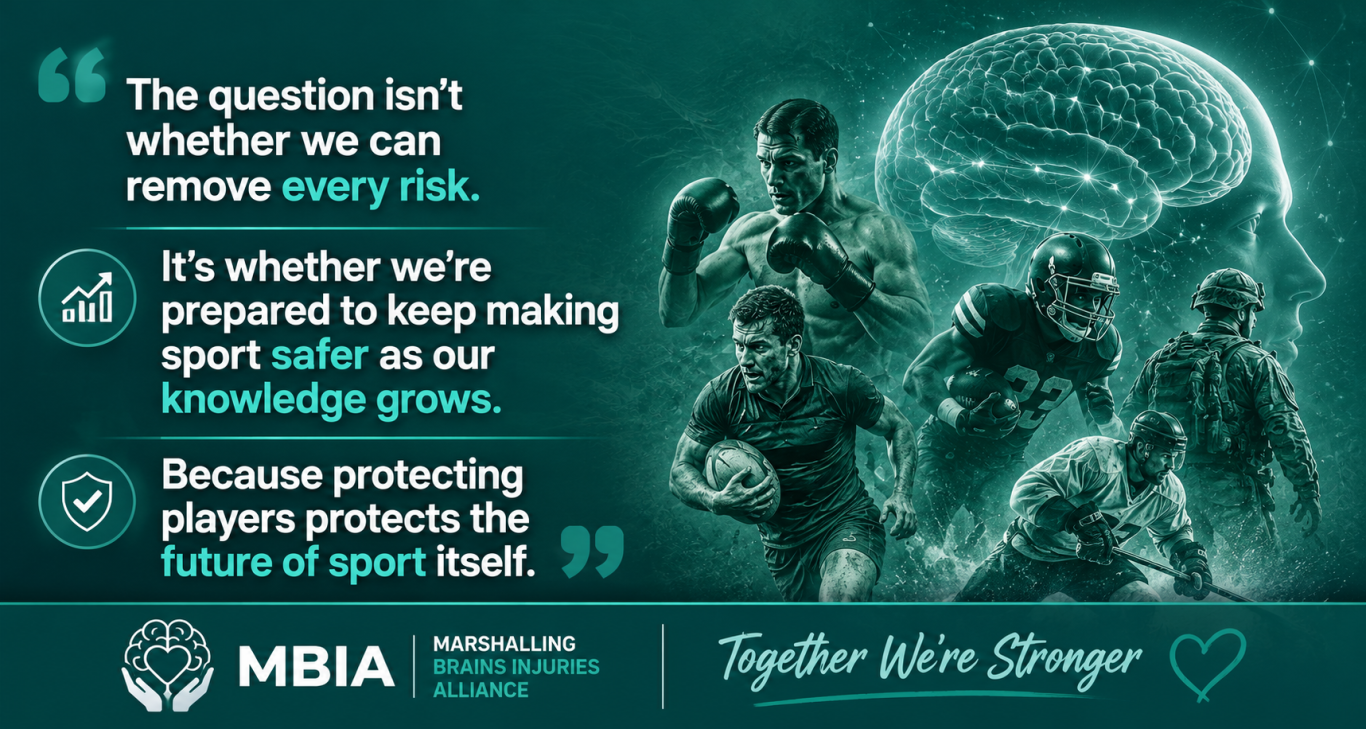
Protecting players should never be viewed as being in conflict with protecting sport.
In reality, the future of sport depends upon protecting those who play it.
Can Violent Sports Ever Be Truly Safe?
If "truly safe" means eliminating all risk of brain injury, the answer is almost certainly no.
As long as collisions remain an essential part of a sport, some level of risk will always exist.
However, this does not mean efforts to improve safety are pointless.
Every safer tackle.
Every better protocol.
Every informed decision.
Every honest conversation.
Every investment in research.
These all have the potential to reduce harm and improve outcomes.
The goal should not be perfection.
The goal should be continuous improvement.