Benefits for brain health
One of the main benefits of vitamin B12 is that it can help your brain and nerve cells to communicate easier with each other. This means that B12 can help you improve cognitive function and processing speed after brain injury
- Neurotransmitter Synthesis: L-Methyl folate (Methyl folate) is vital for creating serotonin, dopamine, and norepinephrine, which regulate mood and cognition.
- Blood-Brain Barrier: It's the only form of folate that readily crosses into the brain to be used directly.
- Supports Mental Health Conditions: May improve outcomes in depression (especially treatment-resistant), schizophrenia, bipolar disorder, and ADHD.
- Genetic Advantage: More effective for individuals with MTHFR gene mutations, as they can't easily convert folic acid into active methyl folate.
- Reduces Fatigue: B vitamins, including folate, support energy metabolism, reducing tiredness and fatigue.
- Nervous System Function: Essential for myelin production and nerve signalling.
What Is Vitamin B Complex?
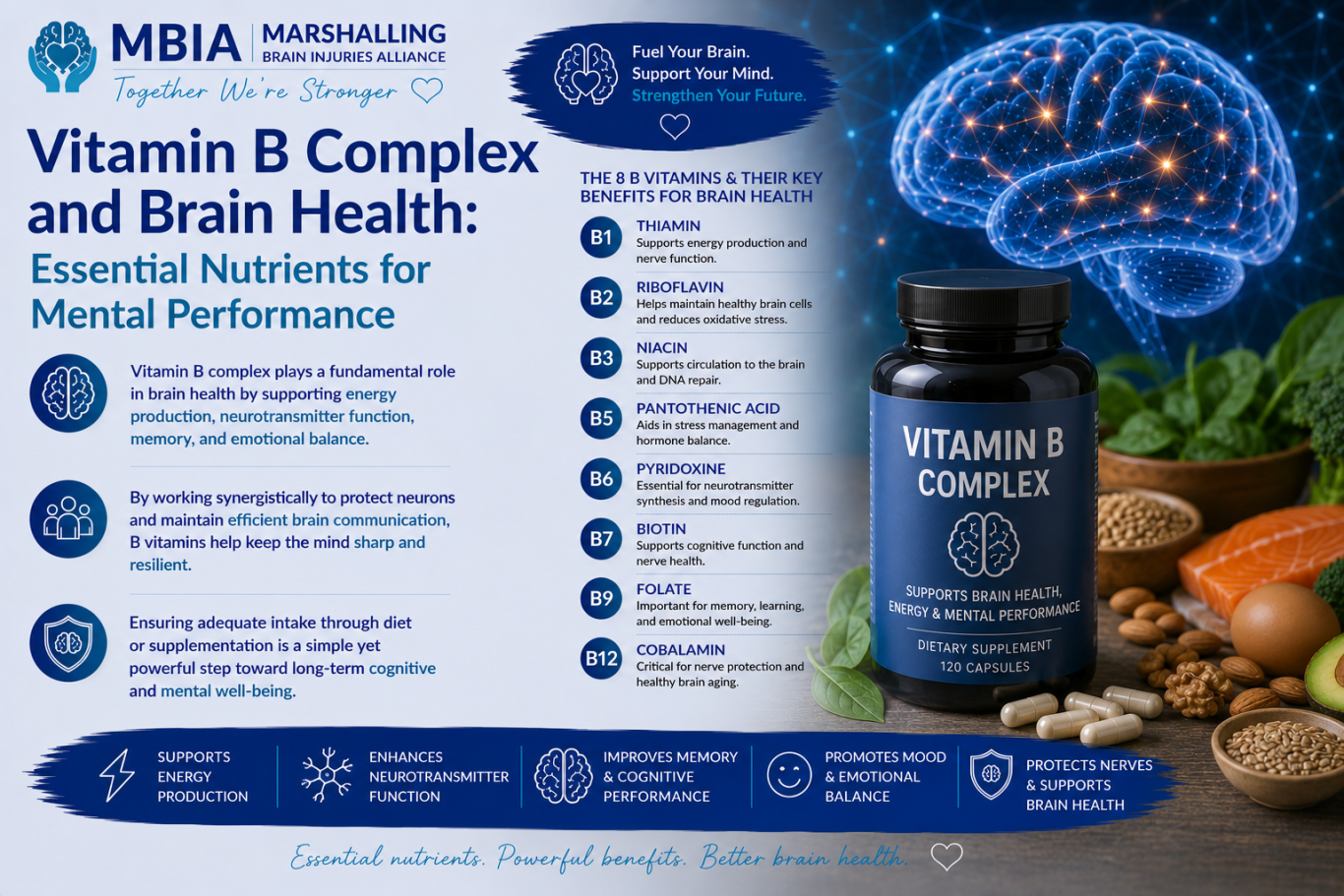
Vitamin B complex includes eight water-soluble vitamins:
- Vitamin B1 (Thiamine)
- Vitamin B2 (Riboflavin)
- Vitamin B3 (Niacin)
- Vitamin B5 (Pantothenic Acid)
- Vitamin B6 (Pyridoxine)
- Vitamin B7 (Biotin)
- Vitamin B9 (Folate)
- Vitamin B12 (Cobalamin)
Each of these vitamins contributes uniquely to brain health, but together they form a powerful foundation for neurological function.
Supports Energy Production in the Brain
The brain is one of the most energy-demanding organs in the body. B vitamins are essential for converting carbohydrates, fats, and proteins into usable energy. Without sufficient B vitamins, brain cells may struggle to meet their energy needs, leading to mental fatigue, brain fog, and poor concentration.
Vitamin B1, B2, B3, and B5 are especially important in maintaining efficient brain energy metabolism.
Enhances Neurotransmitter Function
Vitamin B complex plays a key role in the production and regulation of neurotransmitters such as serotonin, dopamine, and GABA. These chemical messengers influence mood, focus, motivation, and emotional balance.
Vitamin B6, in particular, is essential for neurotransmitter synthesis, while B12 and folate help maintain healthy nerve signalling and brain cell communication.
Supports Memory and Cognitive Function
B vitamins help protect brain cells by reducing levels of homocysteine, an amino acid that, when elevated, is associated with cognitive decline and increased risk of dementia. Vitamins B6, B9 (folate), and B12 work together to regulate homocysteine levels, supporting long-term brain health.
Adequate intake of these vitamins has been linked to better memory, information processing, and cognitive performance, especially as people age.
Supports Mood and Mental Well-Being
Low levels of B vitamins have been associated with increased risk of depression, anxiety, and irritability. Folate, B6, and B12 are involved in methylation processes that affect brain chemistry and emotional regulation.
Ensuring adequate B vitamin intake may support emotional resilience, stress management, and overall mental well-being.
Protects the Nervous System
Vitamin B complex is essential for maintaining the myelin sheath, the protective coating that surrounds nerve fibers. Myelin allows electrical signals to travel quickly and efficiently between neurons. Vitamin B12 is particularly important in this process, and deficiency can lead to nerve damage, tingling sensations, memory problems, and mood changes.
Who May Be at Risk of B Vitamin Deficiency?
Certain groups are more susceptible to B vitamin deficiencies, including:
- Older adults
- Vegetarians and vegans (especially B12)
- People with digestive disorders
- Individuals under chronic stress
- Those who consume high amounts of alcohol
Because B vitamins are water-soluble and not stored in large amounts, regular intake is important.
Vitamin B complex supplements provide all eight B vitamins in balanced amounts and can be useful when dietary intake is insufficient. Consistent supplementation may help support energy levels, focus, and nervous system function, particularly during periods of stress or aging.
Recommended dose for TBI/CTE Symptoms & overall Brain health: There are many different guidelines on the different individual B vitamins, but one thing they can all agree on is you need to take a complex B vitamin with a high amount of B12, B6 & B9 (folic acid)
Possible side effects excessive thirst, nausea, increased urination, high blood sugar. High folate can mask B12 deficiency, so ensuring adequate B12 is also important