What Is Choline?
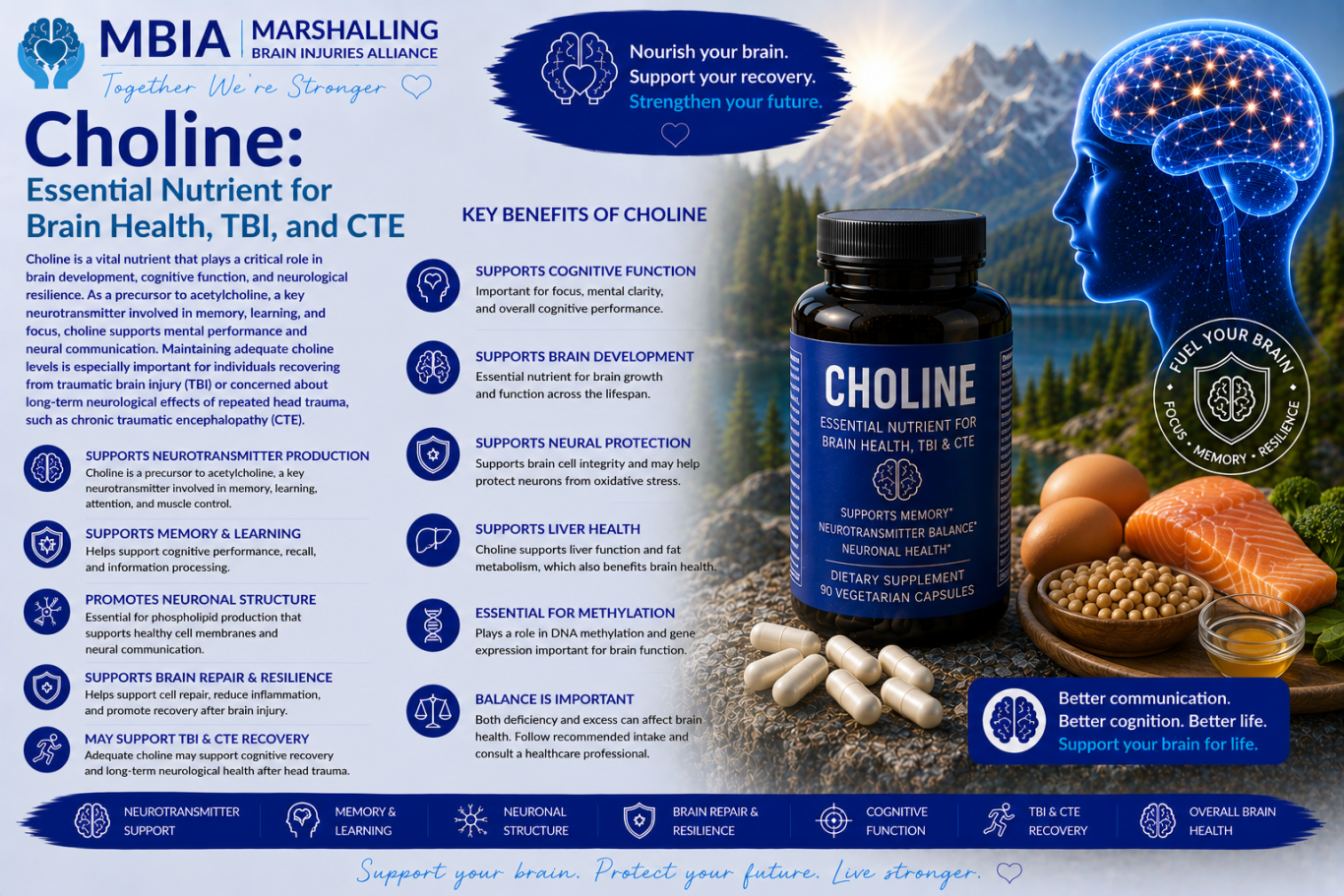
Choline is an essential nutrient, meaning the body cannot produce sufficient amounts on its own and must obtain it from diet or supplementation. It serves multiple functions in the brain and body:
- Neurotransmitter synthesis: Acetylcholine supports memory, learning, and attention
- Cell membrane integrity: Phosphatidylcholine is a key component of neuronal membranes
- Methylation and gene expression: Supports overall cellular health
How Choline Supports Brain Health
Supports Memory and Learning
Choline is required to produce acetylcholine, which is essential for memory formation, focus, and learning. Adequate choline intake is associated with better cognitive performance across the lifespan.
Supports Neural Repair and Protection
Choline is a building block for phospholipids in neuronal membranes, helping maintain structural integrity and facilitating repair following injury or stress.
Supports Neurotransmitter Balance
By supporting acetylcholine production, choline helps regulate attention, mental clarity, and emotional stability.
Supports Neurodevelopment and Lifelong Brain Health
Choline plays a role in foetal and early brain development and continues to support neural plasticity and cognitive function in adulthood.
Choline and Traumatic Brain Injury (TBI)
TBI can disrupt neurotransmitter systems and damage neuronal membranes, leading to cognitive impairment, memory deficits, and slowed processing. Choline may support post-TBI brain health by:
- Supporting acetylcholine production for memory and focus
- Supporting repair of neuronal membranes
- Maintaining cognitive performance during recovery
While choline is not a treatment for TBI, its role in neurotransmission and neural repair aligns with key recovery pathways.
Choline and CTE
Dietary Sources and Supplementation
CTE is associated with progressive neurodegeneration, neurotransmitter disruption, and cognitive decline due to repeated head trauma. By supporting acetylcholine synthesis and neuronal membrane integrity, choline may contribute to long-term brain resilience and cognitive support.
Although research specific to CTE is still emerging, choline is recognized as a fundamental nutrient for maintaining neurological health.
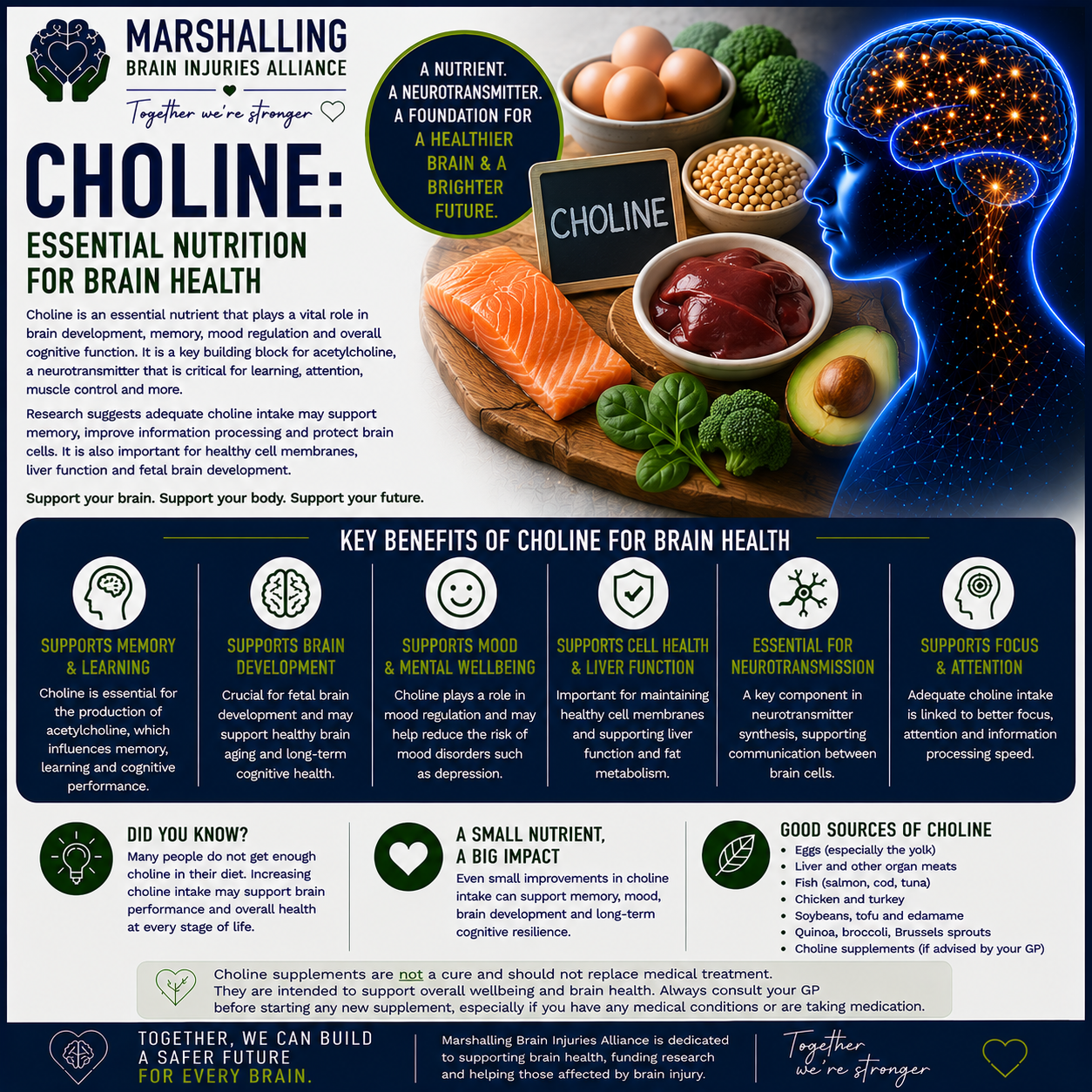
Choline can be obtained from:
- Eggs (especially yolks)
- Liver and other organ meats
- Fish and poultry
- Legumes, nuts, and seeds
Choline supplements are also available as:
- Alpha-GPC (Alpha-glycerylphosphorylcholine) – highly bioavailable
- Citicoline (CDP-Choline) – supports acetylcholine and phospholipid synthesis
- Choline bitartrate – commonly used, moderately bioavailable
Recommended daily intake:
Men: 550 mg/day
Women: 425 mg/day
Supplementation doses vary by form and product, typically 250–500 mg/day for cognitive support
Safety and Considerations
Choline is generally well tolerated. Excessive intake may cause mild gastrointestinal discomfort, fishy body odor, or hypotension. Individuals with liver disease or specific metabolic conditions should consult a healthcare professional before supplementation.
Study https://www.sciencedirect.com/science/article/pii/S0002916523025042