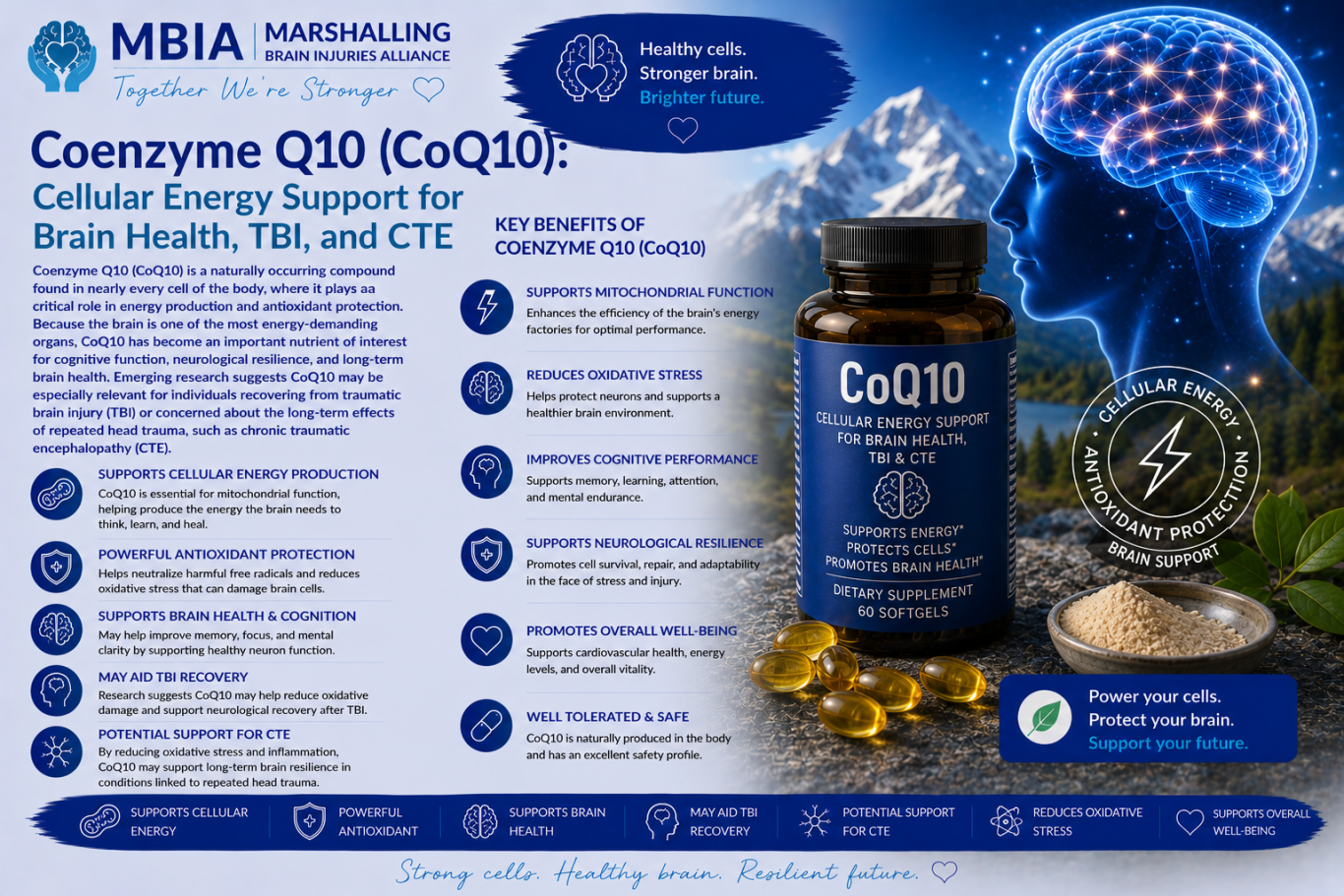
What Is CoQ10?
CoQ10 is a fat-soluble, vitamin-like compound located primarily in the mitochondria—the “power plants” of cells. It plays a key role in the production of adenosine triphosphate (ATP), the molecule that fuels cellular activity.
CoQ10 also functions as a powerful antioxidant, helping protect cells from oxidative damage. Levels of CoQ10 naturally decline with age and may be further depleted by illness, stress, or injury.
How CoQ10 Supports Brain Health
Supports Mitochondrial Energy Production
The brain requires a constant supply of energy to maintain cognitive function, memory, and neural signalling. CoQ10 supports efficient ATP production within neurons, helping maintain mental clarity and focus.
Antioxidant and Neuroprotective Effects
Oxidative stress is a major contributor to brain aging and neurodegeneration. CoQ10 helps neutralize free radicals and protect neuronal membranes from damage, supporting long-term brain health.
Supports Cognitive Function
Research suggests CoQ10 may help preserve cognitive performance by supporting energy metabolism and reducing oxidative stress in brain tissue, particularly as part of healthy aging.
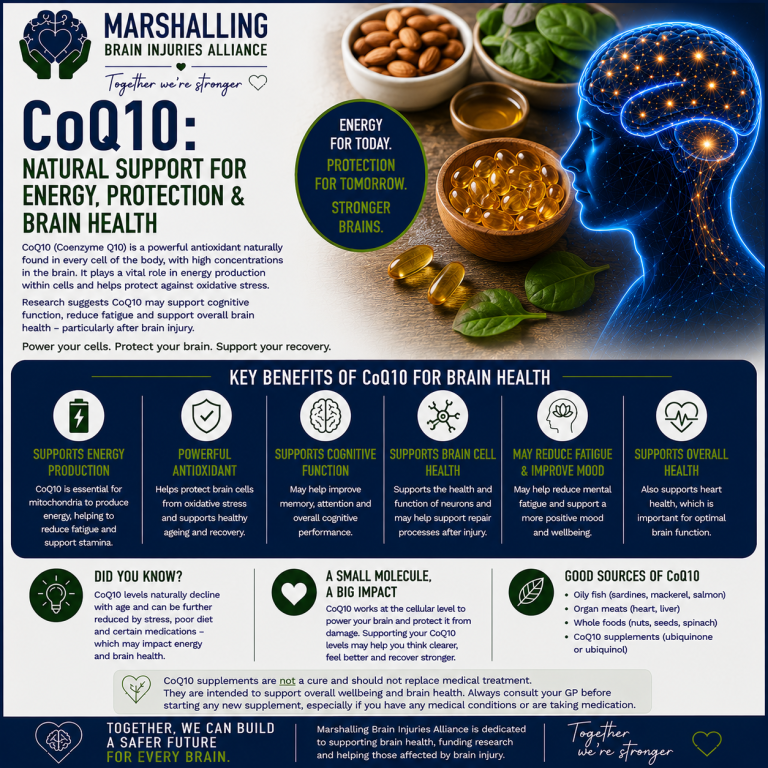
CoQ10 and Traumatic Brain Injury (TBI)
TBI triggers a cascade of secondary injury mechanisms, including mitochondrial dysfunction, oxidative stress, and inflammation. These processes can persist long after the initial trauma and contribute to ongoing cognitive and neurological symptoms.
CoQ10 may support brain health after TBI by:
- Supporting mitochondrial repair and energy production
- Reducing oxidative stress in injured brain tissue
- Helping protect neurons from secondary damage
Although CoQ10 is not a treatment for TBI, its cellular-supporting properties align with key pathways involved in recovery and long-term neurological resilience.
CoQ10 and CTE
CTE is a progressive neurodegenerative condition associated with repeated head trauma and characterized by chronic inflammation, oxidative stress, and impaired brain energy metabolism.
Because CoQ10 supports mitochondrial function and antioxidant defences, it has drawn interest as a potential supportive nutrient for individuals at risk of or concerned about CTE. By helping maintain cellular energy and reduce oxidative damage, CoQ10 may contribute to neuronal resilience over time. Human clinical research specific to CTE is still limited, but ongoing studies continue to explore metabolic and antioxidant strategies for neuroprotection.
Additional Neurological and Systemic Benefits
Beyond brain health, CoQ10 may also:
- Support cardiovascular health and circulation
- Promote nerve health
- Support overall cellular vitality and endurance
These systemic benefits may be especially valuable during recovery from brain injury, when the body’s energy demands are increased.
Forms of CoQ10 and Absorption
Safety and Considerations
CoQ10 supplements are available in two primary forms:
- Ubiquinone – the oxidized form
- Ubiquinol – the reduced, more bioavailable form
Ubiquinol is often preferred for older adults or those with increased oxidative stress. CoQ10 is best absorbed when taken with meals containing healthy fats.
Foods containing COQ10
- Organ meats: Animal heart, liver, and kidney are especially rich sources.
- Oily fish: Salmon, mackerel, sardines, and herring contain high amounts.
- Muscle meats: Beef, chicken, and pork are good sources.
Plant-Based Sources of CoQ10
For vegetarians or those looking for plant-based options, the following contain CoQ10 in smaller amounts:
- Nuts and seeds: Peanuts, pistachios, and sesame seeds are the best options.
- Legumes: Soybeans and lentils.
- Vegetables: Broccoli, spinach, and cauliflower contain small but helpful amounts.
- Oils: Rapeseed oil, soybean oil, and virgin olive oil.
- Fruits: Strawberries and oranges contain trace amounts.
- Whole Grains: The germ portion of whole grains, such as wheat germ.
Important Considerations
- Absorption: CoQ10 is fat-soluble, so it's better absorbed when consumed with a source of dietary fat (e.g., pairing vegetables with olive oil or eating whole eggs)
CoQ10 is generally well tolerated. Mild side effects may include digestive discomfort or headache. Individuals taking blood-thinning medications or managing medical conditions should consult a healthcare professional before use.