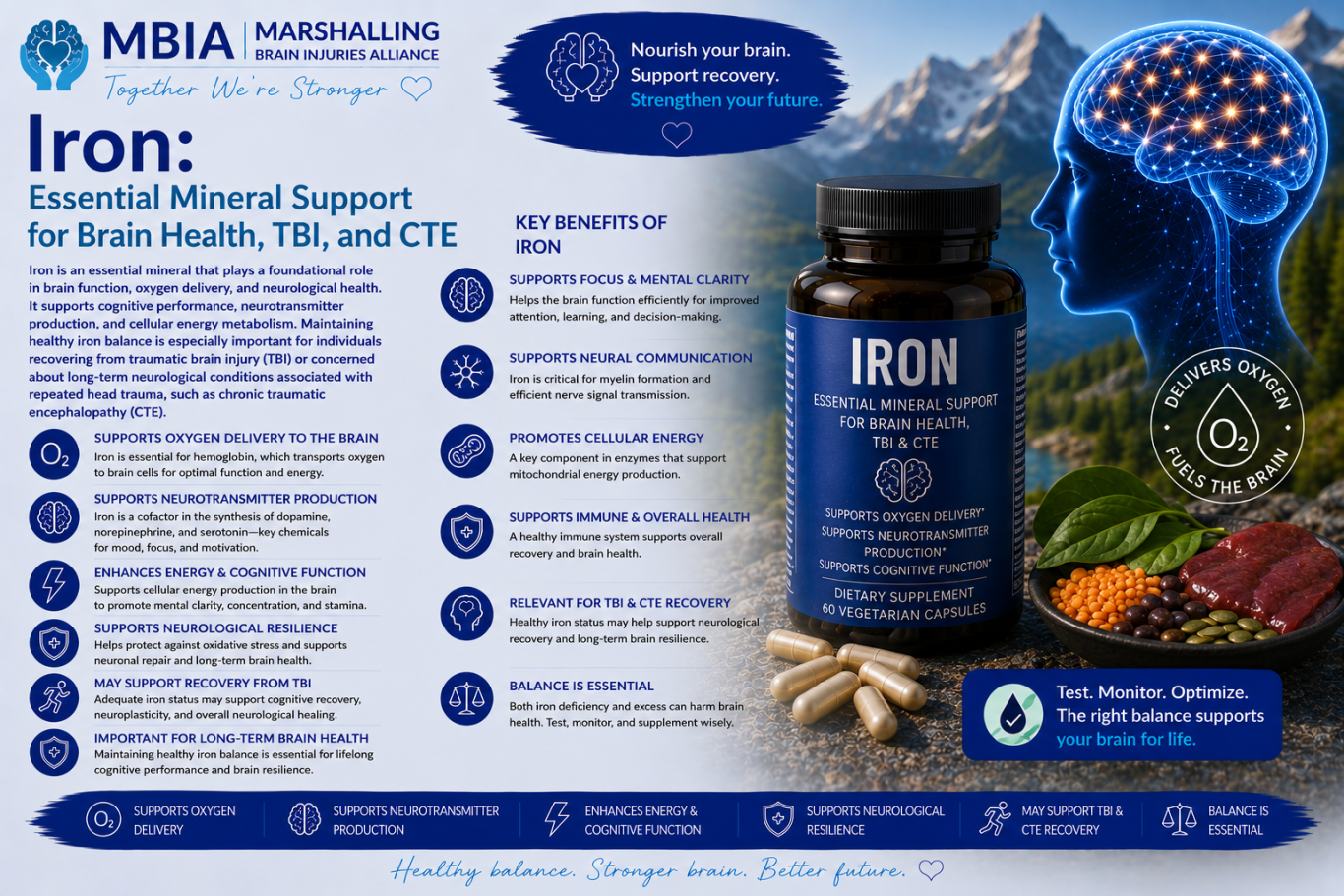
What Is Iron and Why Is It Important?
Iron is a key component of haemoglobin, the protein in red blood cells responsible for transporting oxygen throughout the body — including to the brain. It is also essential for:
- Neurotransmitter synthesis
- Myelin formation (the protective sheath around nerve fibres)
- Mitochondrial energy production
Both iron deficiency and iron overload can negatively affect brain health, making balance critical.
Iron and Traumatic Brain Injury (TBI)
TBI can disrupt cerebral blood flow, oxygen utilization, and metabolic processes in the brain. Iron status may influence recovery and long-term neurological function following injury.
Iron may support post-TBI brain health by:
- Supporting oxygen delivery to healing brain tissue
- Supporting neurotransmitter balance, which can be disrupted after injury
- Supporting energy metabolism at the cellular level
However, TBI can also alter iron regulation in the brain, and excessive iron accumulation has been associated with increased oxidative stress. For this reason, iron supplementation after TBI should always be guided by laboratory testing and medical supervision.
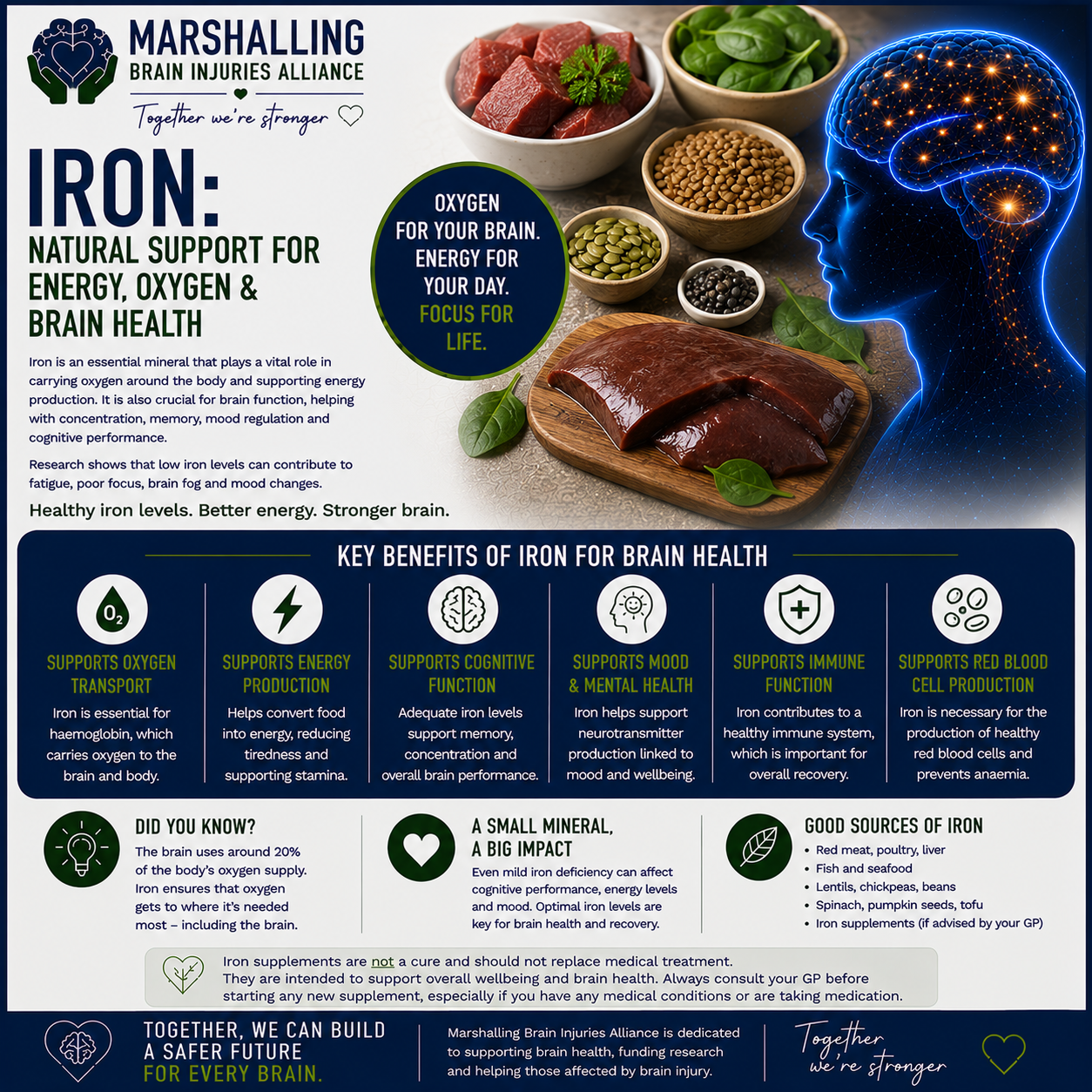
How Iron Supports Brain Health
Supports Oxygen Delivery to the Brain
The brain consumes a significant amount of oxygen to maintain cognitive function. Adequate iron levels help ensure efficient oxygen transport, supporting alertness, memory, and mental clarity.
Supports Neurotransmitter Production
Iron is required for the synthesis of key neurotransmitters such as dopamine, norepinephrine, and serotonin, which influence mood, motivation, focus, and emotional regulation.
Supports Myelin and Neural Communication
Iron plays a role in the formation and maintenance of myelin, which allows nerve signals to travel efficiently. Healthy myelination supports processing speed and coordination.
Supports Cognitive Development and Maintenance
Iron deficiency has been associated with impaired attention, memory, and learning. Adequate iron supports cognitive performance across the lifespan.
Iron and CTE
CTE is associated with chronic inflammation, oxidative stress, and progressive neurodegeneration following repeated head trauma. Research suggests abnormal iron accumulation in certain brain regions may contribute to oxidative damage and disease progression.
Maintaining appropriate iron balance — avoiding both deficiency and excess — is critical for long-term brain health. Rather than indiscriminate supplementation, careful assessment and nutritional balance are key strategies for individuals concerned about CTE.
Iron Balance and Oxidative Stress
While iron is essential, excess free iron can promote oxidative stress through the generation of free radicals. This makes iron regulation particularly important in neurological conditions where oxidative damage is already elevated.
Supporting iron balance through proper testing, diet, and medical guidance is essential for safe brain health support.
Dietary Sources of Iron
Supplementation and Dosage Considerations
Iron is available in two forms:
- Heme iron (more easily absorbed): red meat, poultry, fish
- Non-heme iron: leafy greens, legumes, nuts, seeds, fortified grains
Vitamin C can enhance non-heme iron absorption, while certain compounds like phytates and tannins may reduce absorption.
Iron supplements should only be used when deficiency is confirmed through blood testing. Dosage varies based on individual needs and iron status and should be determined by a healthcare professional.
Common supplemental forms include:
- Ferrous bisglycinate
- Ferrous sulfate
- Ferric iron complexes
Safety and Considerations
Iron supplementation without confirmed deficiency can be harmful. Excess iron may increase oxidative stress and contribute to neurological damage. Individuals with genetic conditions affecting iron metabolism or those managing neurological injuries should consult a healthcare professional before using iron supplements.
Study https://www.sciencedirect.com/science/article/abs/pii/S0149763425003732