What Is L-Tyrosine?
How L-Tyrosine Supports Brain Health
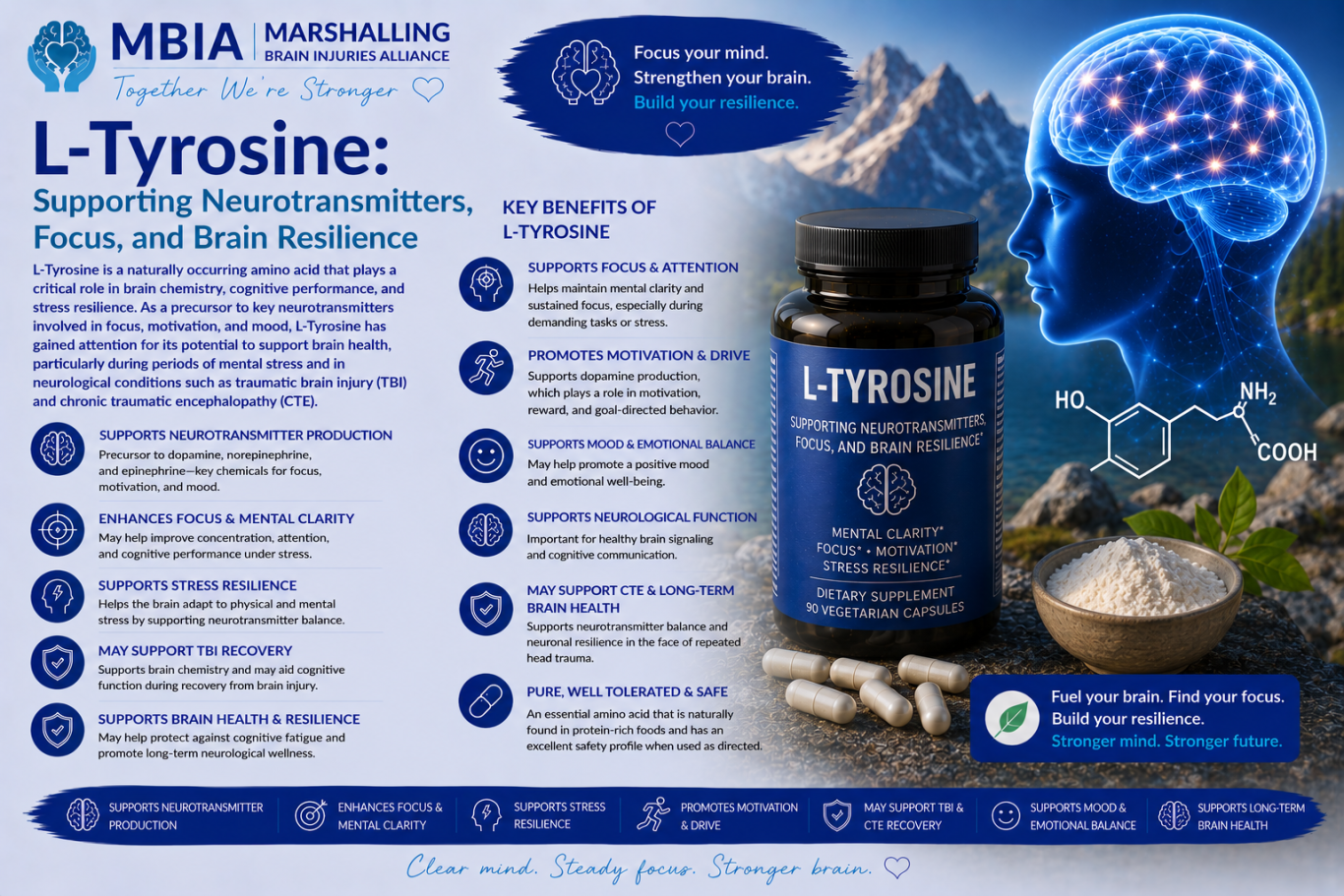
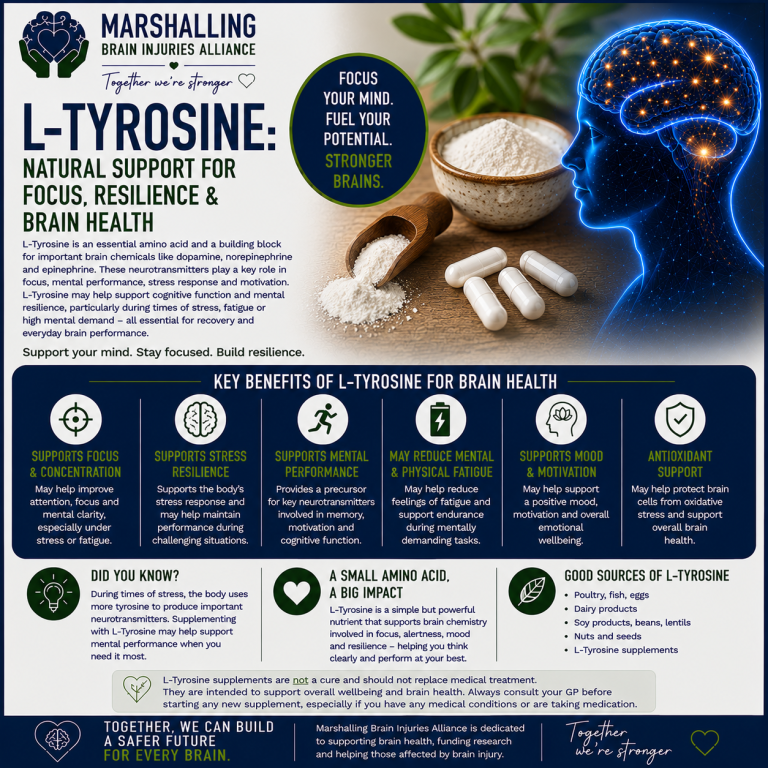
L-Tyrosine is an amino acid obtained from dietary protein sources such as poultry, dairy, fish, legumes, and seeds. In the body, it serves as a building block for important neurotransmitters and hormones, including:
- Dopamine
- Norepinephrine
- Epinephrine
These neurotransmitters are essential for attention, learning, motivation, stress response, and executive function.
Supports Neurotransmitter Production
Dopamine and norepinephrine play a central role in cognitive performance, working memory, and emotional regulation. L-Tyrosine helps replenish these neurotransmitters, particularly during periods of stress or mental fatigue when levels may become depleted.
Supports Focus and Cognitive Performance
Research suggests L-Tyrosine may help maintain attention, mental clarity, and working memory during demanding situations, such as sleep deprivation, intense cognitive tasks, or psychological stress.
Supports Stress Resilience
L-Tyrosine supports the brain’s ability to adapt to stress by helping sustain catecholamine neurotransmitter levels. This may improve mental performance under pressure and reduce stress-related cognitive decline.
Supports Mood and Motivation
By supporting dopamine production, L-Tyrosine may contribute to improved motivation, mood stability, and emotional resilience.
L-Tyrosine and Traumatic Brain Injury (TBI)
TBI can disrupt neurotransmitter systems, particularly dopamine and norepinephrine pathways, contributing to symptoms such as poor focus, slowed thinking, fatigue, and mood changes.
L-Tyrosine may support post-TBI brain health by:
- Supporting neurotransmitter replenishment
- Helping maintain cognitive function during mental stress
- Supporting motivation and mental energy
While L-Tyrosine is not a treatment for TBI, its role in neurotransmitter synthesis aligns with pathways commonly affected by brain injury and recovery.
L-Tyrosine and CTE
CTE is associated with progressive changes in brain chemistry, inflammation, and neurotransmitter dysfunction resulting from repeated head trauma. Dopaminergic system disruption is believed to contribute to cognitive and mood-related symptoms seen in CTE.
By supporting neurotransmitter availability, L-Tyrosine may help promote mental clarity, focus, and emotional balance in individuals concerned about long-term neurological health. Research specific to CTE remains limited, but neurotransmitter support remains an important area of interest in neuroprotective strategies.
Why Brain Energy Matters
Beyond brain health, L-Tyrosine may also:
- Support physical endurance during stress
- Support healthy thyroid hormone production
- Support mental alertness without stimulants
These benefits can be especially helpful during rehabilitation or periods of increased physical and cognitive demand.
How to Take L-Tyrosine
L-Tyrosine supplements are commonly available as:
- Capsules or tablets
- Powder for flexible dosing
Typical dosages range from 500–2,000 mg per day, often taken in divided doses or before mentally demanding activities. L-Tyrosine is best taken between meals for optimal absorption.
Safety and Considerations
L-Tyrosine is generally well tolerated. Possible side effects may include headache, nausea, or restlessness at higher doses. Individuals with thyroid disorders, melanoma, or those taking medications affecting dopamine should consult a healthcare professional before use.
Study https://www.sciencedirect.com/science/article/abs/pii/S0091305715000945