What Is MCT Oil?
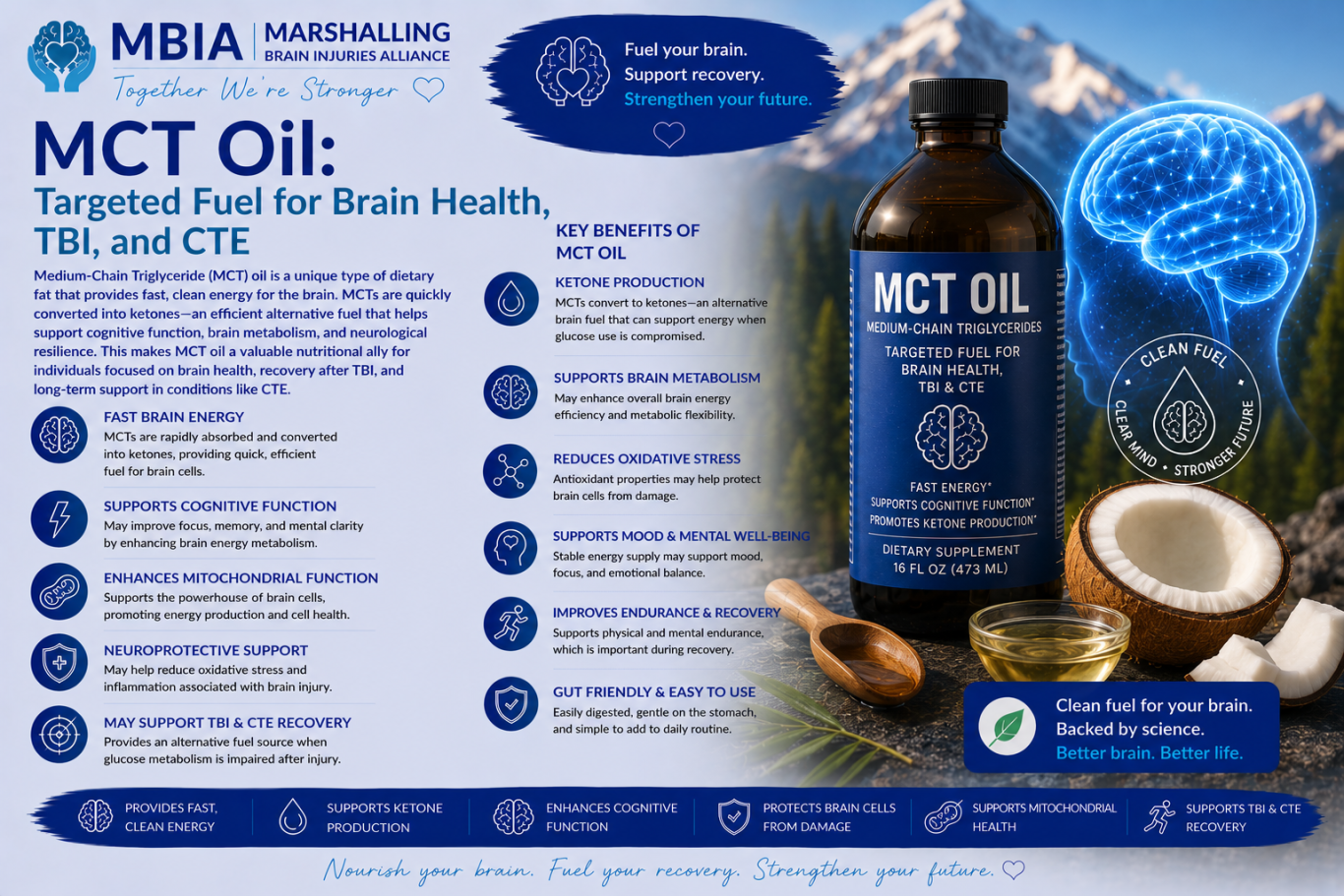
MCT oil is typically derived from coconut or palm kernel oil and contains medium-chain fatty acids, primarily:
- Caprylic acid (C8)
- Capric acid (C10)
These fatty acids are quickly metabolized by the liver into ketones, which can cross the blood-brain barrier and provide energy to brain cells.
Why Brain Energy Matters
The brain normally relies on glucose for fuel. However, after brain injury or during neurodegenerative processes, glucose metabolism in the brain can become impaired. This “energy crisis” is a key feature of both TBI and CTE.
Ketones produced from MCT oil offer an alternative and efficient energy source that does not rely on glucose metabolism.
How MCT Oil Supports Brain Health
Provides Rapid Alternative Brain Fuel
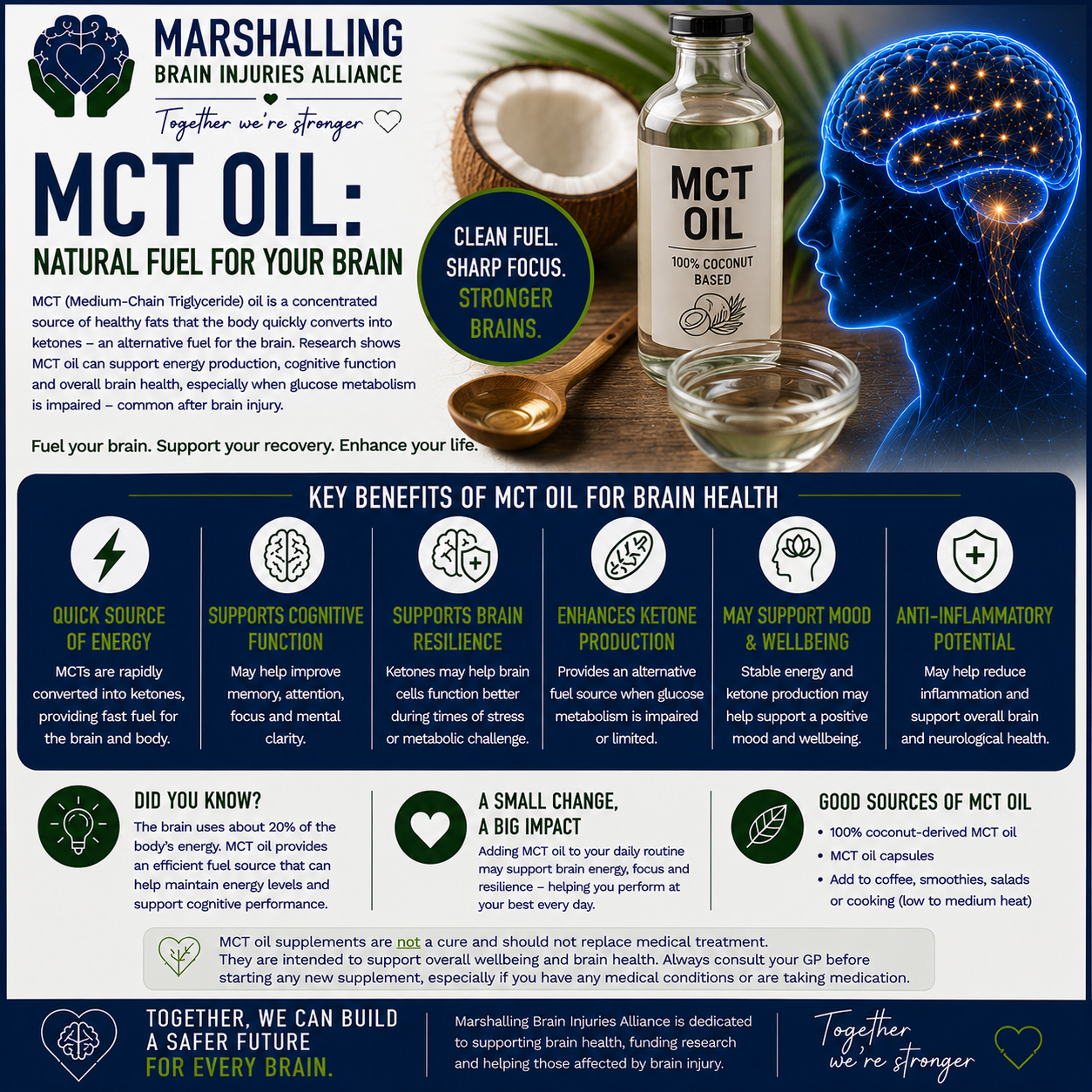
Ketones generated from MCT oil can be readily used by neurons for energy. This may support mental clarity, focus, and cognitive performance, particularly when glucose utilization is compromised.
Supports Mitochondrial Function
MCT-derived ketones may improve mitochondrial efficiency, helping brain cells produce energy more effectively—an essential factor in brain health and recovery.
Supports Cognitive Function and Mental Clarity
Some research suggests MCT oil may support memory, attention, and overall cognitive performance, especially in aging populations or those experiencing cognitive stress.
May Support Neuroprotection
Ketones have been shown to influence pathways involved in reducing oxidative stress and supporting neuronal survival, contributing to long-term brain resilience.
MCT Oil and Traumatic Brain Injury (TBI)
TBI often disrupts normal brain metabolism, leading to reduced glucose uptake and impaired energy production. MCT oil may support recovery by:
- Providing ketones as an alternative energy source
- Supporting mitochondrial repair and function
- Helping stabilize brain energy demands during recovery
While MCT oil is not a treatment for TBI, its metabolic support may complement rehabilitation and long-term brain health strategies when used under medical guidance.
MCT Oil and CTE
CTE is associated with chronic inflammation, impaired brain energy metabolism, and neurodegeneration resulting from repeated head trauma. Supporting brain energy availability is an emerging focus in neuroprotective strategies.
By supplying ketones that bypass impaired glucose pathways, MCT oil may help:
- Support neuronal energy needs
- Promote cognitive resilience
- Complement lifestyle and nutritional strategies aimed at long-term brain health
Human research specific to CTE is still limited, but metabolic therapies remain an area of active scientific interest.
How to Use MCT Oil
MCT oil can be easily incorporated into daily routines:
- Added to coffee or tea
- Blended into smoothies
- Used in salad dressings or low-heat cooking
- Supplement form, Primarily extracted from coconut oil or palm kernel oil, containing C8 (caprylic acid) and C10 (capric acid) fatty acids. C8 is often considered the most efficient for producing ketone energy.
Additional Benefits of MCT Oil
Beyond brain health, MCT oil may also:
- Support sustained physical and mental energy
- Aid fat metabolism and weight management
- Support gut health and nutrient absorption
These systemic benefits can be especially helpful for individuals managing the physical and cognitive challenges associated with brain injury recovery.
MCT oil is generally safe when used as directed. Potential side effects may include digestive discomfort, especially when taken in large amounts or on an empty stomach. Gradual dosing can help minimize these effects.
Individuals with liver conditions or those following medical nutrition therapy should consult a healthcare professional before use.