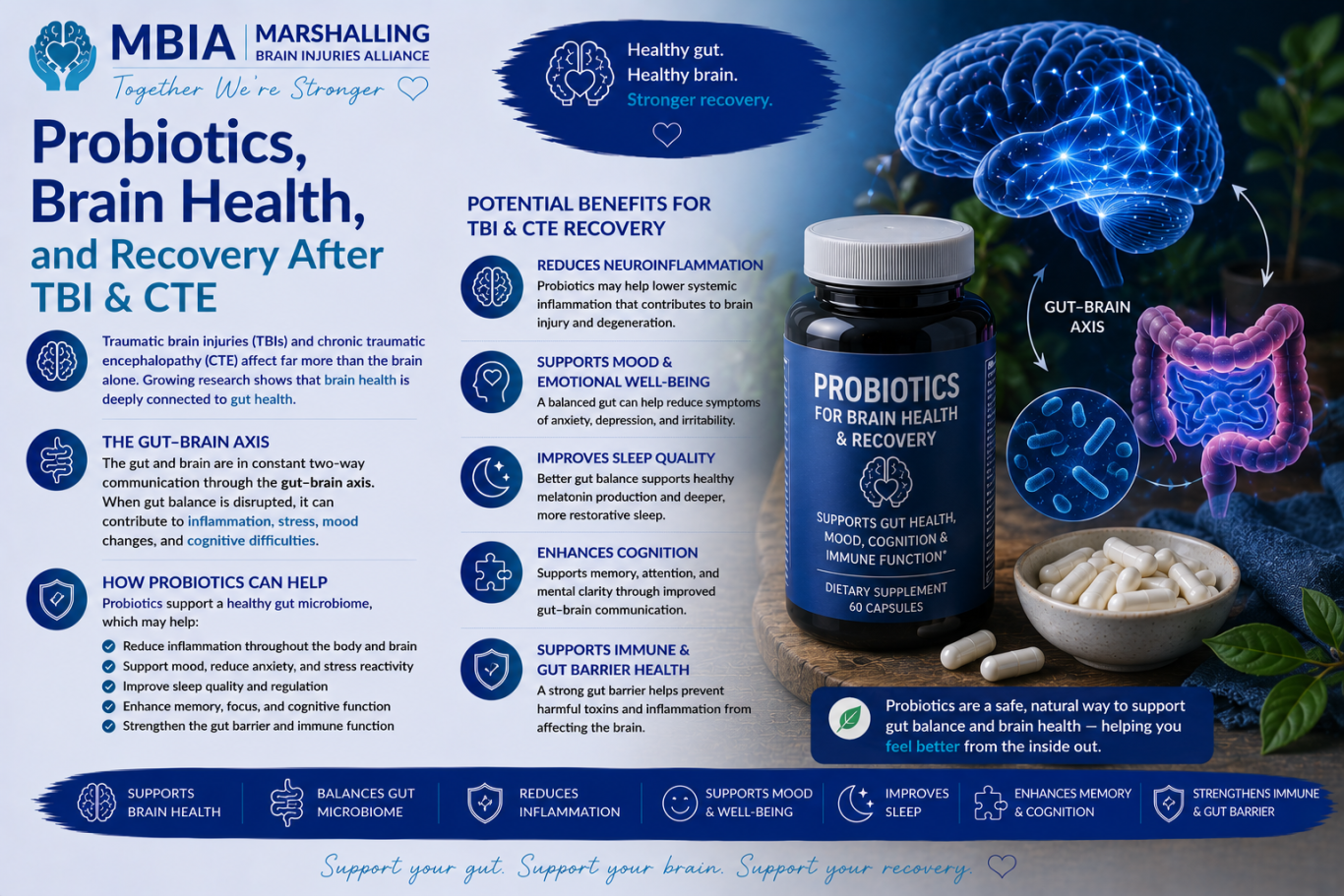
Understanding the Gut–Brain Axis
The gut and brain communicate through:
- The vagus nerve
- The immune system
- Hormones and neurotransmitters (including serotonin and GABA)
- Inflammatory and metabolic signalling pathways
Around 70–80% of the immune system resides in the gut, and over 90% of serotonin—a key neurotransmitter for mood and sleep—is produced there. When gut health is compromised, inflammation can increase and neurological symptoms may worsen.
TBIs and repetitive head trauma are known to:
- Increase systemic inflammation
- Disrupt the blood–brain barrier
- Alter gut microbiome balance (dysbiosis)
This makes gut support a critical—yet often overlooked—part of brain injury care.
What Are Probiotics?
Probiotics are beneficial live microorganisms that support a healthy balance of gut bacteria. When taken in adequate amounts, they can help restore microbiome diversity and improve gut integrity.
Common probiotic strains include:
- Lactobacillus species
- Bifidobacterium species
- Saccharomyces boulardii
Each strain plays a different role, and benefits are often strain‑specific.
How Probiotics May Support Brain Health
Protecting the Gut After Injury
Research into probiotics and neurological health is rapidly expanding. While probiotics are not a cure for TBI or CTE, evidence suggests they may provide meaningful support in several key areas.
Reducing Neuroinflammation
Chronic inflammation is a hallmark of TBI and CTE. Certain probiotic strains help:
- Lower pro‑inflammatory cytokines
- Strengthen the gut lining, reducing inflammatory leakage into the bloodstream
- Modulate immune responses that affect the brain
Reducing systemic inflammation may help ease symptoms such as brain fog, fatigue, and mood instability.
Supporting Mood and Emotional Regulation
Anxiety, depression, irritability, and emotional dysregulation are common after brain injury. Probiotics may support mental health by:
- Influencing neurotransmitter production (including serotonin and GABA)
- Regulating the stress response via the hypothalamic–pituitary–adrenal (HPA) axis
- Improving sleep quality, which is essential for brain repair
Some strains are now referred to as “psychobiotics” due to their impact on mental wellbeing.
Enhancing Cognitive Function
Emerging studies suggest probiotics may help with:
- Attention and focus
- Memory performance
- Mental clarity
This may be due to reduced inflammation, improved metabolic signalling, and better nutrient absorption—all vital for a healing brain.
TBIs can disrupt gut permeability, often referred to as “leaky gut.” This allows toxins and inflammatory molecules to enter circulation and potentially reach the brain.
- Probiotics may help:
- Strengthen the intestinal barrier
- Restore microbiome balance after injury or medication use
- Improve digestion and nutrient uptake
Probiotics and CTE: A Preventative & Supportive Approach
CTE develops over time through repeated brain trauma and chronic neuroinflammation. While no treatment currently reverses CTE, supporting systemic health—including gut health—may help:
- Reduce inflammatory burden
- Support brain resilience
- Improve quality of life and symptom management
Probiotics should be viewed as part of a holistic, long‑term brain health strategy, not a standalone solution.
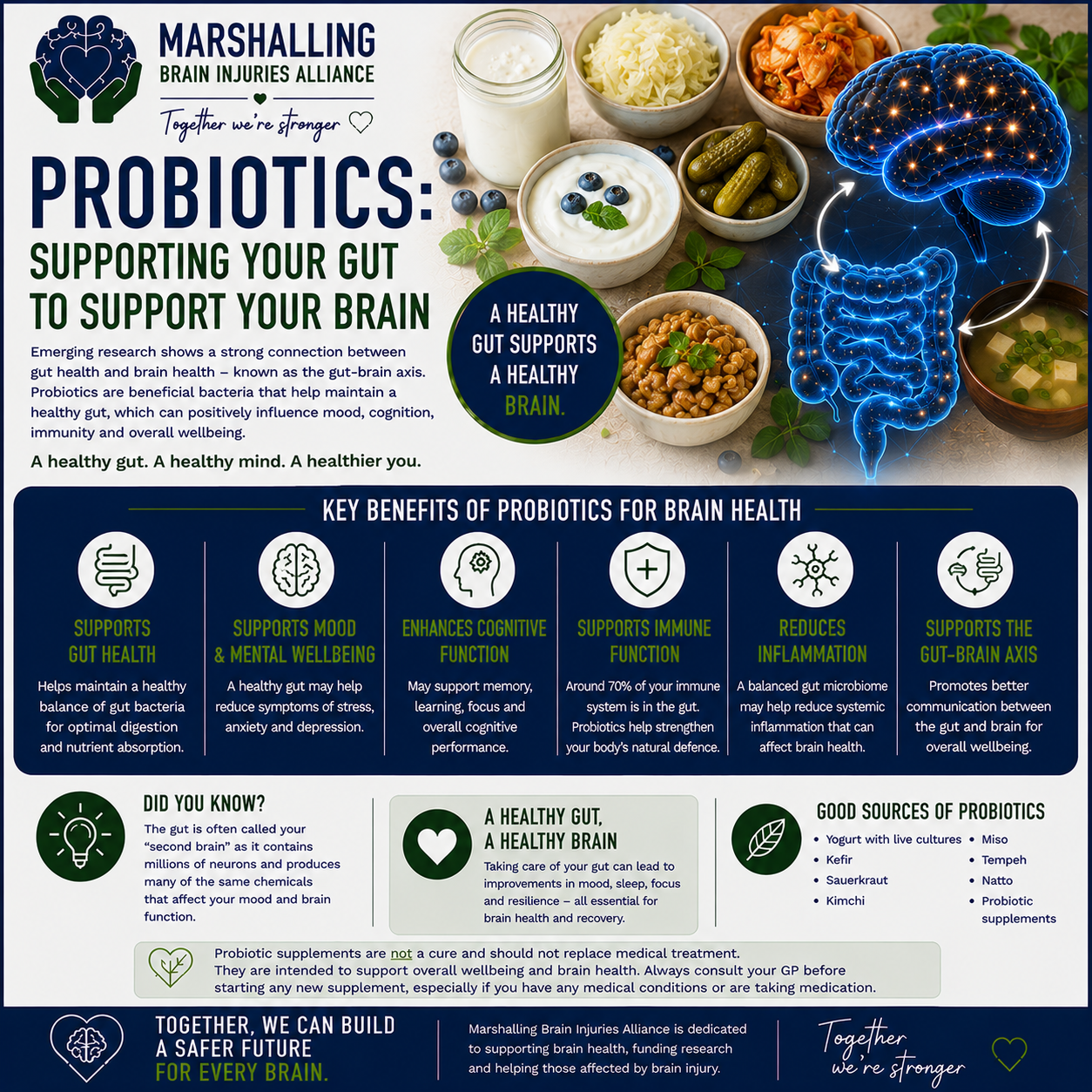
Food Sources That Support Gut Health
In addition to supplements, probiotic‑rich foods can support the microbiome:
- Live yoghurt or kefir
- Sauerkraut and kimchi
- Miso and tempeh
- Kombucha
A diet rich in fibre, polyphenols, and omega‑3 fatty acids further enhances gut–brain health.
Choosing the Right Probiotic
When considering probiotics for brain and nervous system support:
- Look for multi‑strain formulations
- Choose products with clinically studied strains
- Ensure adequate CFU counts (often 10–50 billion, depending on formulation)
- Consider pairing probiotics with prebiotics (fibre that feeds good bacteria)
It’s always advisable to consult a healthcare professional, especially for individuals with complex neurological conditions.
Side Effects
Probiotics are generally safe, but common side effects include temporary digestive issues like gas, bloating, constipation, and increased thirst, which typically subside within a few weeks. Rare but severe complications, particularly in immunocompromised individuals or those with critical illnesses, include systemic infections, sepsis, and gene transfer.