What Is Selenium?
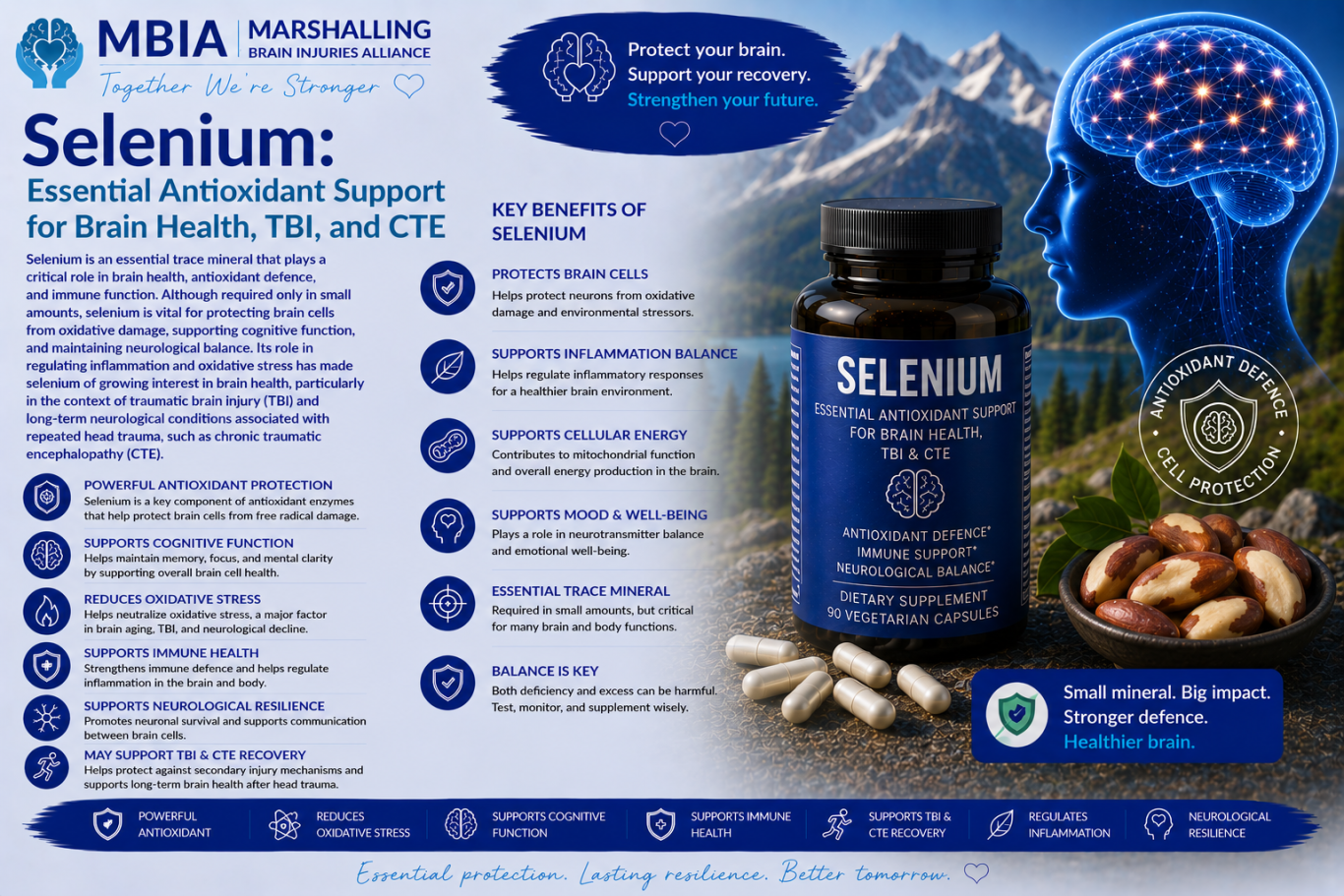
Selenium is a trace mineral incorporated into proteins known as seleno-proteins, many of which function as powerful antioxidants and regulators of cellular health. These seleno-proteins play a key role in protecting cells from oxidative stress and supporting normal metabolic processes in the brain and nervous system.
Dietary selenium is found in soil and enters the food chain through plants and animals.
Selenium and Traumatic Brain Injury (TBI)
TBI triggers oxidative stress, inflammation, and disruption of antioxidant systems in the brain. Research suggests selenium levels may decrease following brain injury, potentially reducing the brain’s ability to counteract oxidative damage.
Selenium may support brain health after TBI by:
- Supporting antioxidant enzyme activity
- Helping regulate inflammation
- Supporting neuronal protection during recovery
While selenium is not a treatment for TBI, maintaining adequate selenium status may be an important component of long-term neurological support following injury.
How Selenium Supports Brain Health
Antioxidant Protection
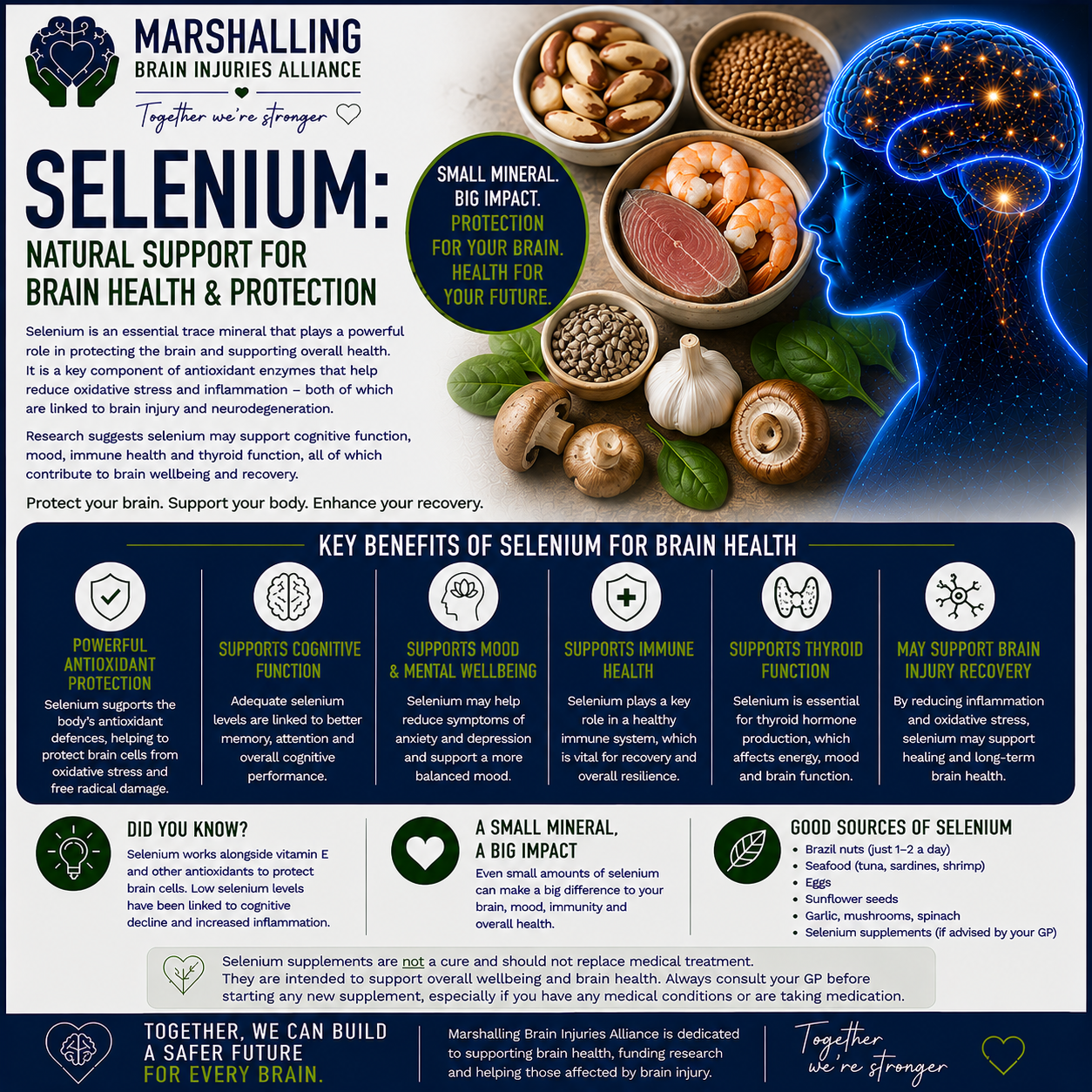
The brain is highly vulnerable to oxidative stress due to its high oxygen consumption and lipid-rich structure. Selenium is a critical component of antioxidant enzymes such as glutathione peroxidase, which help neutralize free radicals and protect neurons from damage.
Supports Cognitive Function
Adequate selenium levels are associated with healthy memory, attention, and mental processing speed. Low selenium status has been linked to cognitive decline and impaired neurological function.
Supports Neuroinflammation Regulation
Selenium helps regulate inflammatory pathways in the brain. Balanced inflammation is essential for protecting neurons and supporting recovery after neurological stress or injury.
Supports Thyroid-Brain Connection
Selenium is essential for healthy thyroid hormone metabolism. Because thyroid hormones influence brain development, mood, and cognitive function, selenium indirectly supports neurological health through endocrine regulation.
Dietary Sources of Selenium
Natural food sources of selenium include:
- Brazil nuts (very high in selenium)
- Seafood (tuna, sardines, shrimp)
- Eggs
- Meat and poultry
- Whole grains
Because selenium content varies by soil quality, dietary intake can differ significantly by region.
Selenium and CTE
CTE is associated with chronic oxidative stress, inflammation, and neurodegeneration resulting from repeated head trauma. Because selenium supports antioxidant defence and inflammatory balance, it has drawn interest as a supportive nutrient for long-term brain health.
Maintaining optimal selenium levels may help support neuronal resilience and protect brain tissue from ongoing oxidative damage. However, human research specific to selenium and CTE remains limited, and supplementation should focus on balance rather than high doses.
Supplementation and Dosage
Safety and Considerations
Selenium supplements are commonly available as:
- Selenomethionine
- Sodium selenite
The recommended daily intake for adults is approximately 55 mcg per day. Supplemental doses should be used cautiously, as excess selenium can be harmful.
Both selenium deficiency and excess can negatively impact brain and overall health. High doses may lead to toxicity symptoms, including gastrointestinal upset, hair loss, or neurological effects.
Individuals recovering from TBI or managing neurological conditions should consult a healthcare professional before supplementing with selenium, especially if using multi-nutrient formulas.
Study https://www.sciencedirect.com/science/article/abs/pii/S1568163725002442