What Is Tryptophan?
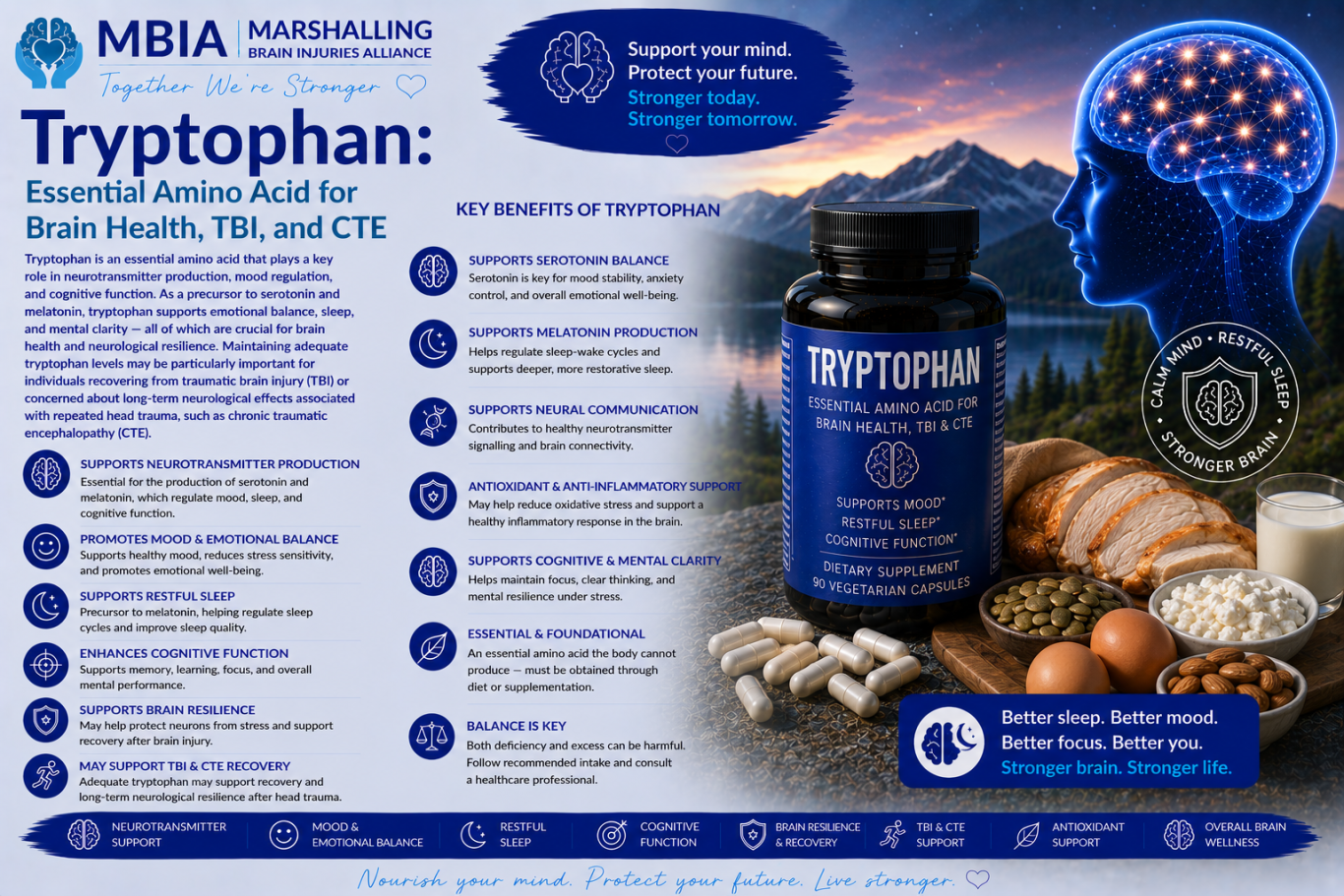
Tryptophan is an amino acid that must be obtained through diet or supplementation. In the brain, tryptophan is converted into:
- Serotonin — a neurotransmitter that regulates mood, focus, and cognition
- Melatonin — a hormone that regulates sleep-wake cycles and supports neuronal recovery
Tryptophan also contributes to the production of niacin (vitamin B3), supporting overall energy metabolism.
How Tryptophan Supports Brain Health
Supports Mood and Emotional Balance
Serotonin produced from tryptophan is essential for regulating mood, reducing anxiety, and promoting emotional resilience. Low serotonin levels are linked to mood disturbances, irritability, and cognitive challenges.
Supports Sleep and Brain Recovery
Melatonin synthesis from tryptophan supports healthy sleep patterns, which are critical for memory consolidation, neuroplasticity, and recovery after brain injury.
Supports Cognitive Function
Through its role in neurotransmitter production, tryptophan supports attention, learning, and memory, helping maintain mental clarity and focus.
Supports Neuroinflammation and Oxidative Stress
Tryptophan metabolism can influence pathways involved in oxidative stress and inflammation, both of which are key factors in neurodegeneration and post-injury brain health.
Tryptophan and Traumatic Brain Injury (TBI)
TBI often disrupts neurotransmitter balance and sleep patterns, leading to fatigue, mood disturbances, and cognitive impairment. Tryptophan may support recovery by:
- Supporting serotonin production to regulate mood and cognitive function
- Promoting melatonin synthesis to improve sleep and neuronal recovery
- Helping maintain emotional balance during post-injury rehabilitation
While tryptophan is not a treatment for TBI, it may complement nutritional and therapeutic strategies aimed at cognitive and emotional support.
Tryptophan and CTE
CTE is associated with chronic neuroinflammation, neurotransmitter dysregulation, and cognitive decline. By supporting serotonin and melatonin production, tryptophan may help:
- Promote emotional resilience and mood stability
- Support restorative sleep critical for brain repair
- Maintain cognitive clarity over time
Although research specific to CTE is limited, supporting neurotransmitter balance and sleep is considered an important aspect of long-term brain health.
Dietary Sources and Supplementation
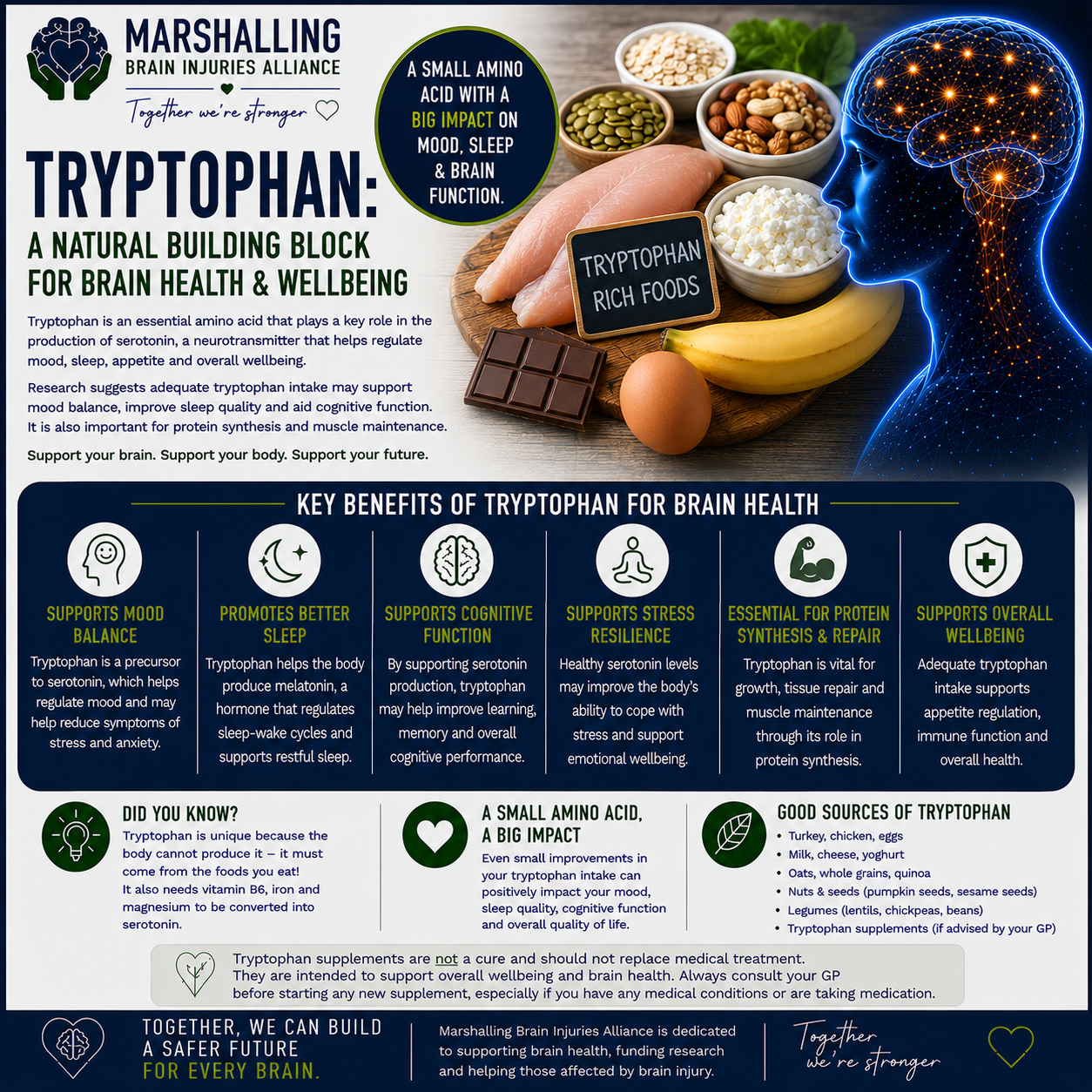
Tryptophan can be obtained from protein-rich foods, including:
- Poultry (chicken, turkey)
- Eggs and dairy
- Fish
- Nuts and seeds
- Soy products
Tryptophan supplements are also available in capsule or powder form. Dosages for cognitive or mood support typically range from 250–1,000 mg per day, depending on individual needs and formulation.
Tryptophan is generally well tolerated at recommended doses. Excessive intake may cause mild drowsiness, gastrointestinal discomfort, or headache. Individuals taking antidepressants or other medications affecting serotonin levels should consult a healthcare professional before supplementation.