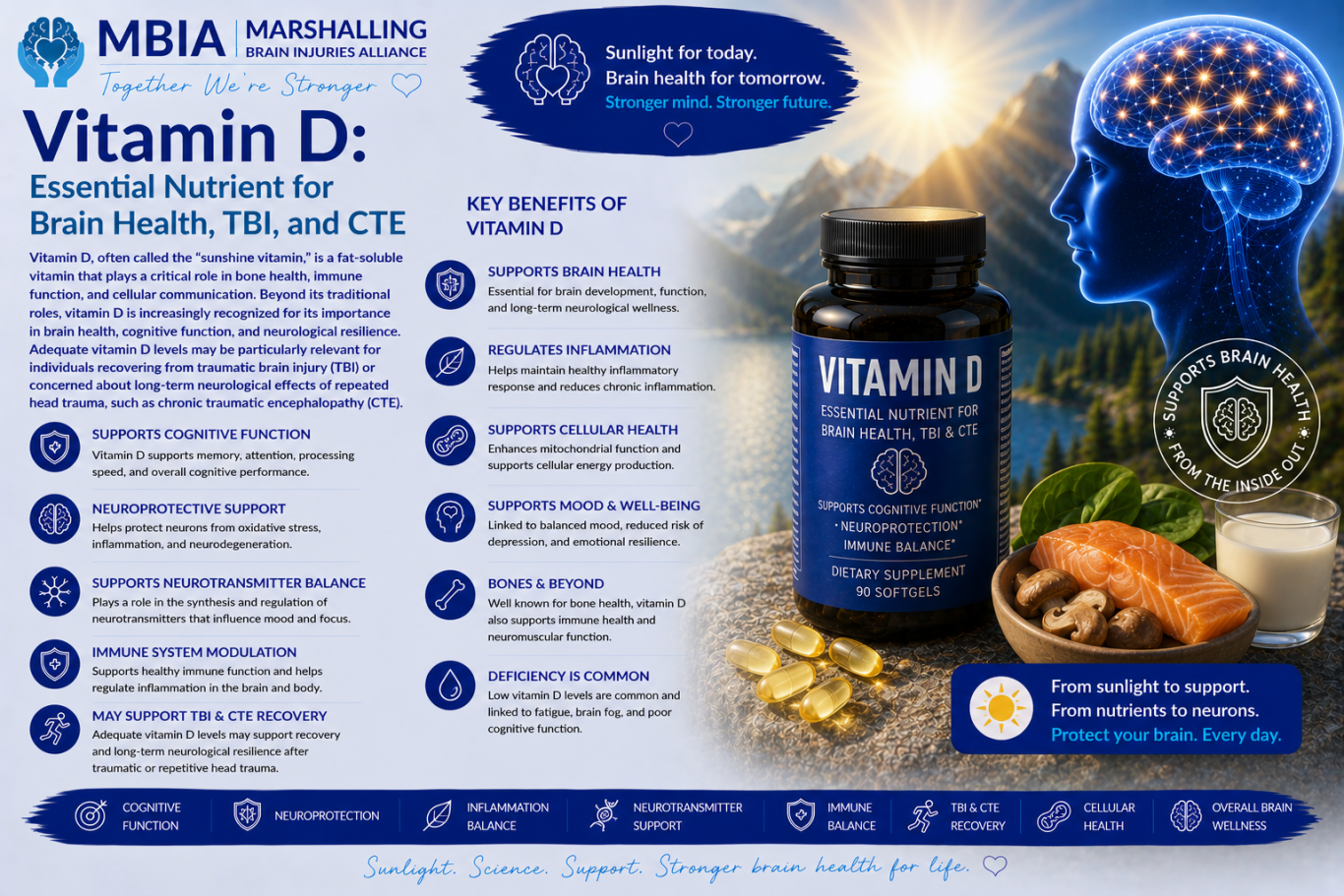
What Is Vitamin D?
Vitamin D is produced in the skin in response to sunlight (UVB radiation) and can also be obtained through dietary sources and supplements. In the body, it is converted into its active form, calcitriol, which acts as a hormone regulating hundreds of cellular processes, including those in the brain.
Vitamin D receptors are found throughout the brain, highlighting its role in neural function, mood regulation, and cognitive health.
Vitamin D and Traumatic Brain Injury (TBI)
TBI can disrupt normal brain signalling, increase oxidative stress, and trigger inflammatory responses. Research suggests that maintaining adequate vitamin D levels may support post-TBI brain health by:
- Reducing neuroinflammation
- Supporting antioxidant defences
- Protecting neurons from secondary injury
- Supporting recovery of cognitive function
While vitamin D is not a treatment for TBI, optimal levels may improve neurological resilience during recovery.
How Vitamin D Supports Brain Health
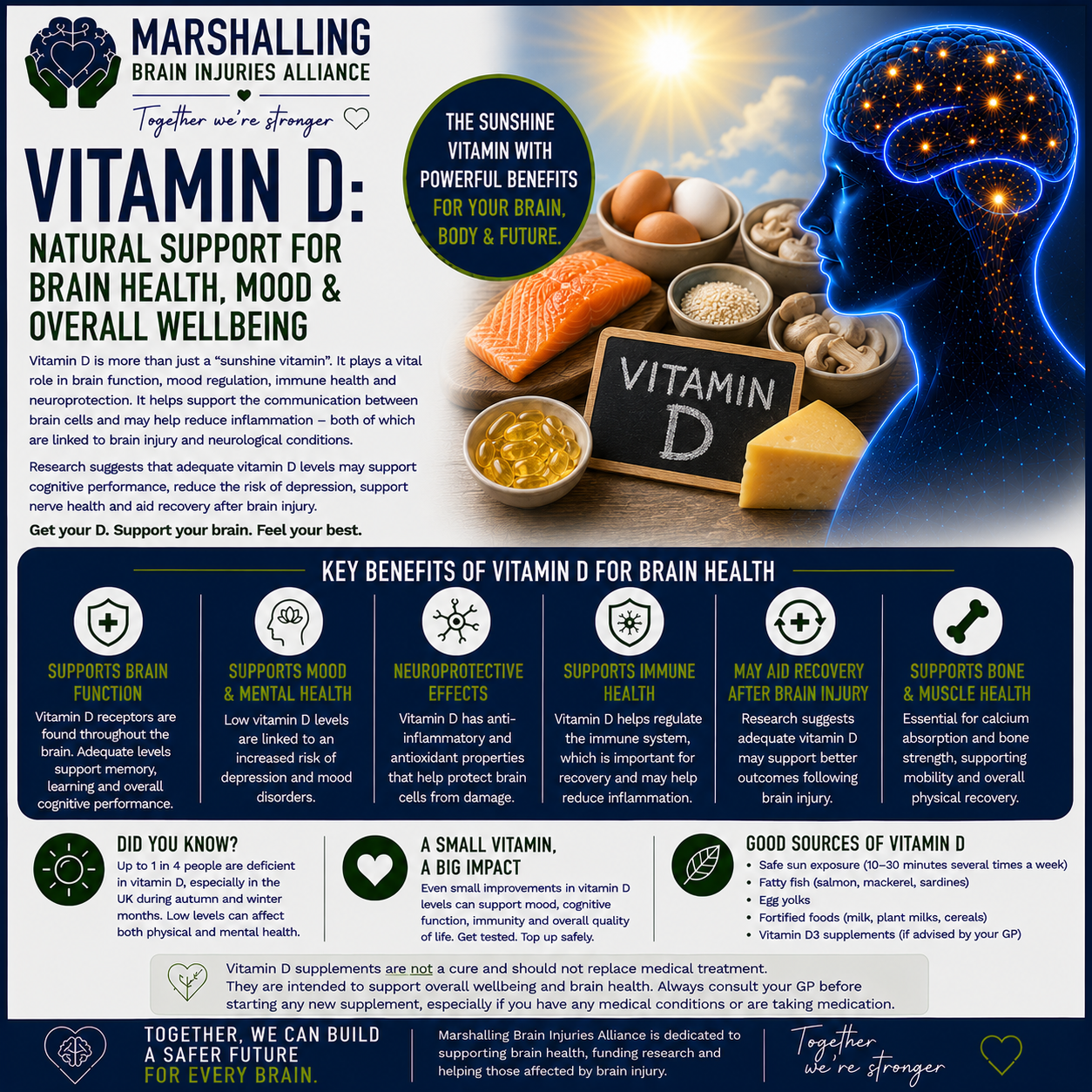
Supports Cognitive Function
Vitamin D influences the growth and survival of neurons and helps regulate neurotransmitter systems, supporting memory, learning, and overall cognitive performance. Low vitamin D levels have been associated with cognitive decline and memory impairment.
Regulates Neuroinflammation
Vitamin D helps modulate inflammatory pathways in the brain. Chronic neuroinflammation is a key contributor to neurological damage after TBI and in conditions like CTE. By supporting immune balance in the brain, vitamin D may help protect neurons and maintain neurological health.
Supports Neuroprotection
Vitamin D acts as an antioxidant, helping reduce oxidative stress in brain tissue. It also regulates calcium balance in neurons, protecting them from excitotoxicity and supporting long-term neuronal resilience.
Supports Mood and Mental Well-Being
Vitamin D plays a role in serotonin synthesis and other neurochemical pathways, contributing to mood regulation, emotional balance, and stress resilience.
Vitamin D and CTE
Dietary Sources and Supplementation
CTE is characterized by chronic inflammation, neuronal damage, and cognitive decline resulting from repeated head trauma. Vitamin D’s role in neuroprotection, inflammation regulation, and antioxidant defence has made it a nutrient of interest for long-term brain health.
Maintaining sufficient vitamin D may help support neuronal resilience and cognitive function in individuals at risk for or concerned about CTE.
- Vitamin D can be obtained from:
- Sunlight exposure (UVB)
- Fatty fish (salmon, mackerel, sardines)
- Egg yolks and fortified foods
- Supplements (vitamin D3/cholecalciferol preferred for bioavailability)
Recommended daily intake:
Higher doses may be prescribed under medical supervision for deficiency
Vitamin D is fat-soluble, so taking it with meals containing fat enhances absorption.
Safety and Considerations
Vitamin D is generally safe when taken within recommended limits. Excessive intake can lead to toxicity, causing hypercalcemia, kidney stress, or vascular calcification. Blood testing is recommended to guide supplementation, especially after TBI or in chronic neurological conditions.
Study https://www.exeterbrc.nihr.ac.uk/news/taking-vitamin-d-could-help-prevent-dementia-study-finds/