What Is Zinc?
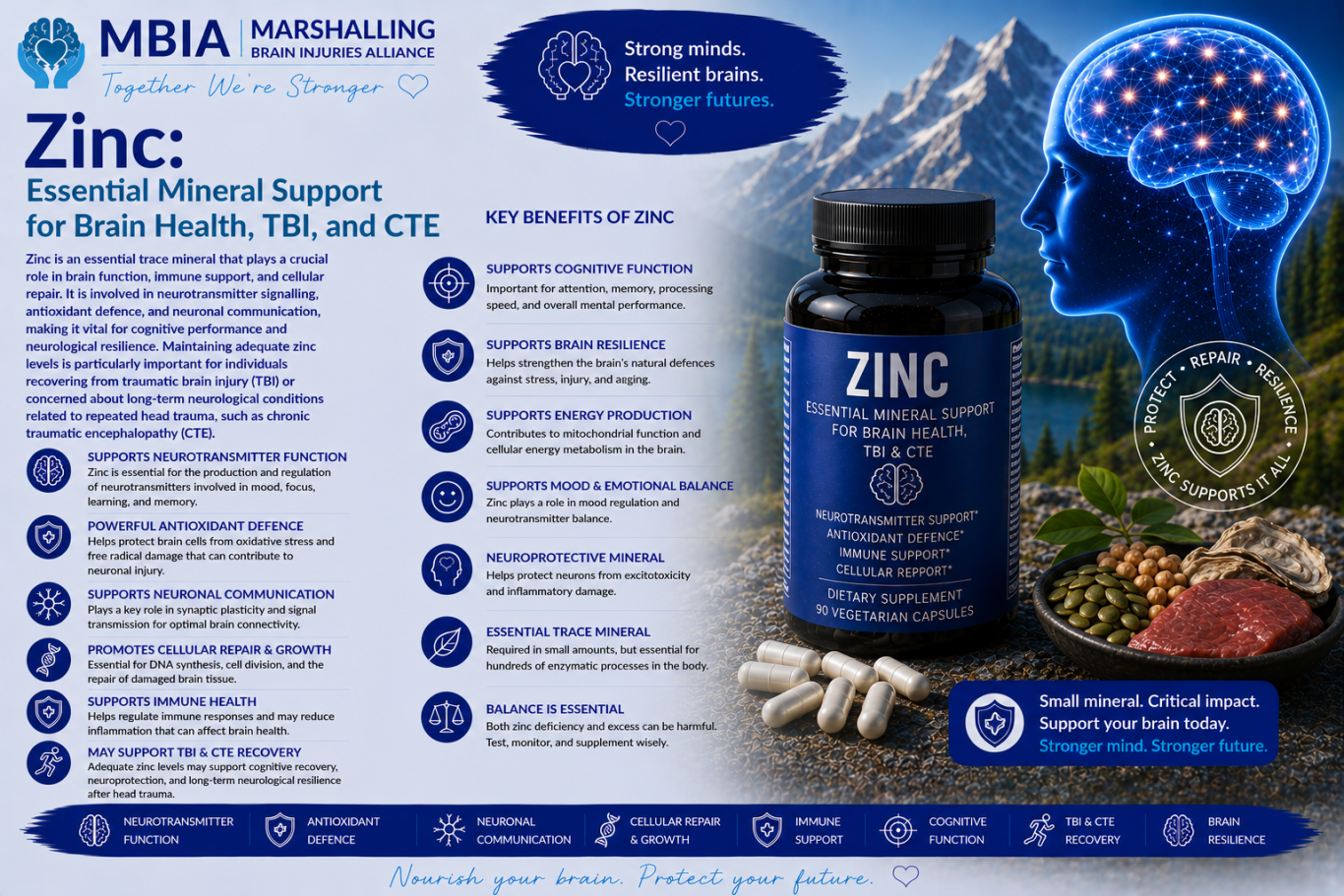
Zinc is a micronutrient required for hundreds of enzymatic reactions in the body. In the brain, zinc is involved in:
- Neurotransmitter synthesis and signalling
- Antioxidant defence
- Immune and inflammatory regulation
- Neuronal growth and repair
Zinc cannot be stored in the body in large amounts, so regular intake through diet or supplementation is essential.
Zinc and Traumatic Brain Injury (TBI)
TBI triggers oxidative stress, inflammation, and disruption of neurotransmitter systems in the brain. Zinc plays an important role in post-injury recovery by:
- Supporting antioxidant defence
- Helping repair damaged neurons
- Supporting neurotransmitter balance
Research indicates that zinc status may influence the severity of cognitive and neurological symptoms following TBI. Adequate zinc intake can be an important component of a comprehensive brain-recovery strategy.
How Zinc Supports Brain Health
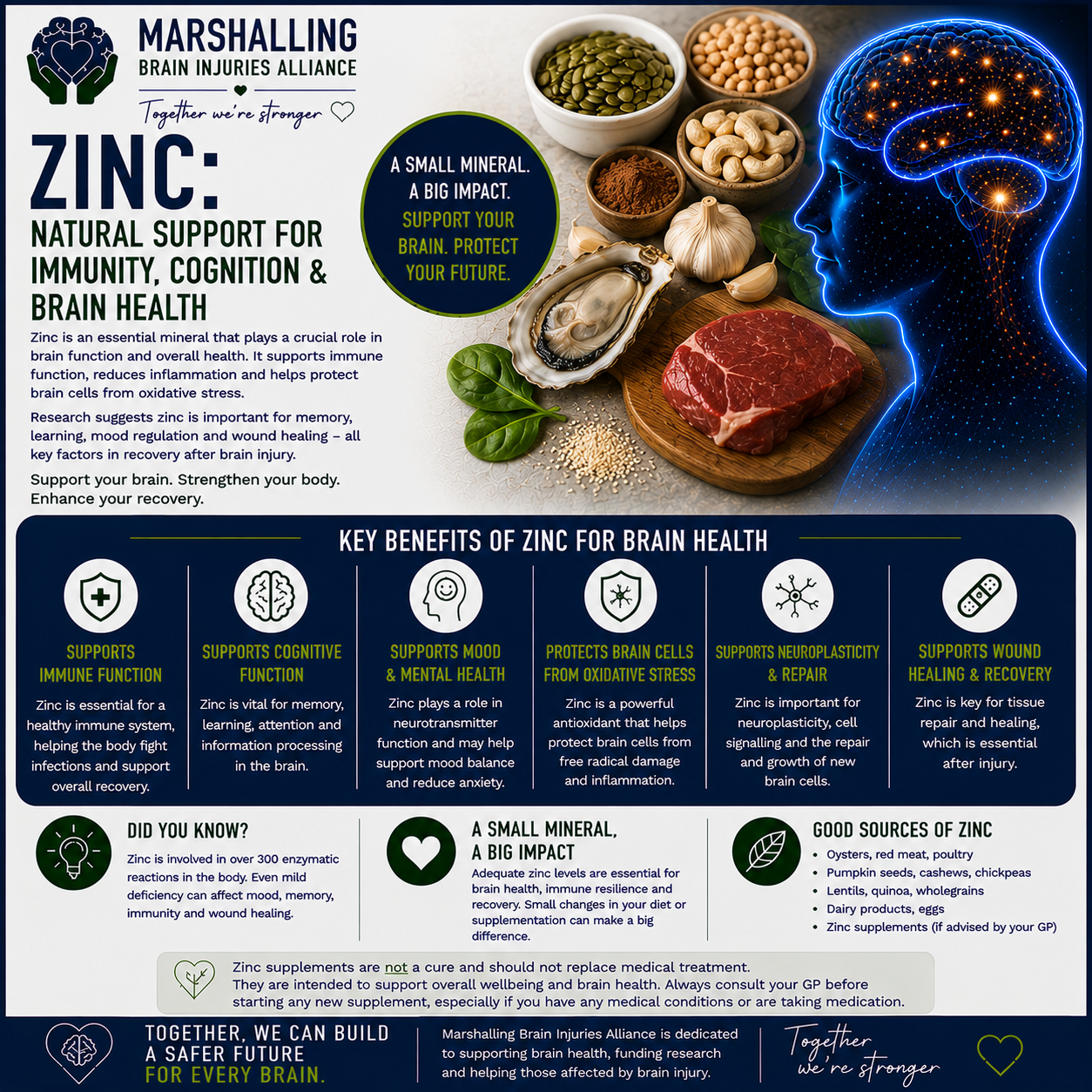
- Supports Neurotransmitter Function Zinc plays a key role in modulating neurotransmitters, including glutamate and GABA, which are critical for learning, memory, and emotional regulation. Adequate zinc supports communication between neurons, improving cognitive performance.
- Antioxidant and Neuroprotective Effects Zinc is essential for the activity of antioxidant enzymes such as superoxide dismutase (SOD). These enzymes protect brain cells from oxidative stress, which is a major factor in cognitive decline and neurodegeneration.
- Supports Cognitive Function and Memory Research suggests that optimal zinc levels support memory, learning, and mental clarity. Zinc deficiency has been linked to impaired cognition, attention deficits, and mood disturbances.
- Supports Immune and Inflammatory Balance Zinc helps regulate inflammatory pathways in the brain. Chronic neuroinflammation is a key contributor to long-term cognitive decline and is implicated in conditions such as CTE.
Dietary Sources of Zinc
Zinc and CTE
Zinc is found in a variety of foods, including:
- Meat, poultry, and seafood (especially oysters)
- Legumes (lentils, chickpeas, beans)
- Nuts and seeds
- Whole grains and fortified cereals
Absorption can be affected by phytates in plant-based foods, so a balanced diet is essential.
CTE is a progressive neurodegenerative condition linked to repeated head trauma. Oxidative stress, neuroinflammation, and neuronal damage are hallmarks of CTE.
By supporting antioxidant defences, neurotransmitter function, and inflammatory balance, zinc may contribute to long-term neuronal resilience. While research specific to CTE is limited, maintaining optimal zinc status is recognized as important for brain health and cognitive longevity.
Supplementation and Dosage
Safety and Considerations
Zinc supplements are available in several forms, including zinc picolinate, zinc citrate, and zinc gluconate.
Higher doses may be used under medical supervision, but excessive zinc can cause nausea, digestive upset, or interfere with copper balance
While zinc is essential, too much zinc can lead to toxicity, including gastrointestinal symptoms, impaired immune function, and altered mineral balance. Individuals with neurological conditions or TBI should consult a healthcare professional before supplementing.