Understanding The Daily Living Activities
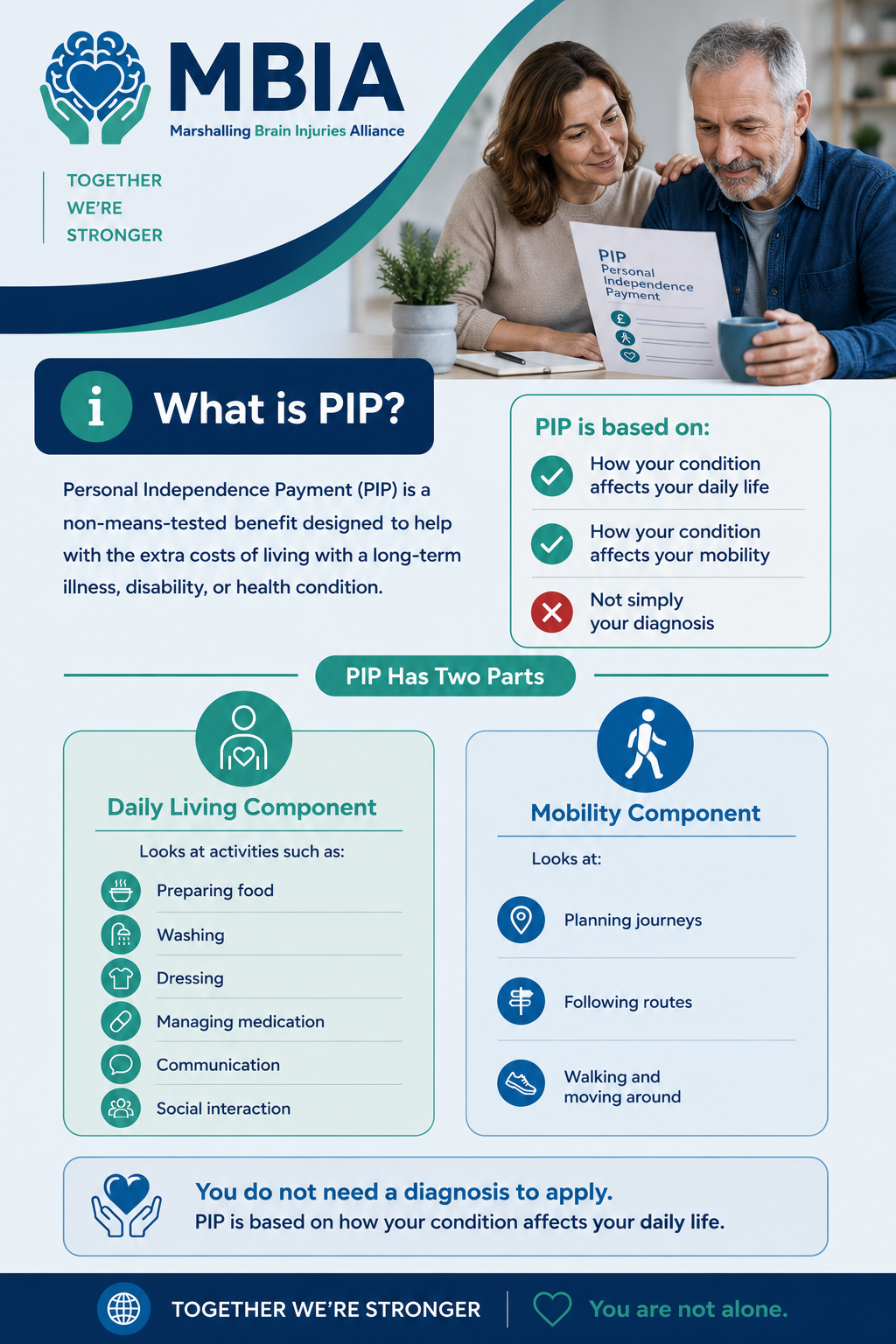
🍳 Preparing Food
Can you prepare and cook safely?
🍽 Eating & Drinking
Do you need prompting or supervision?
💊 Managing Medication
Do you need reminders?
🚿 Washing & Bathing
Can you wash safely?
🚽 Toilet Needs
Do you need assistance?
👕 Dressing
Can you dress independently?
🗣 Communication
Can you understand and express information?
📖 Reading & Understanding
Can you understand written information?
🤝 Social Engagement
Can you interact with others safely?
💷 Budgeting
Can you manage money and decisions?
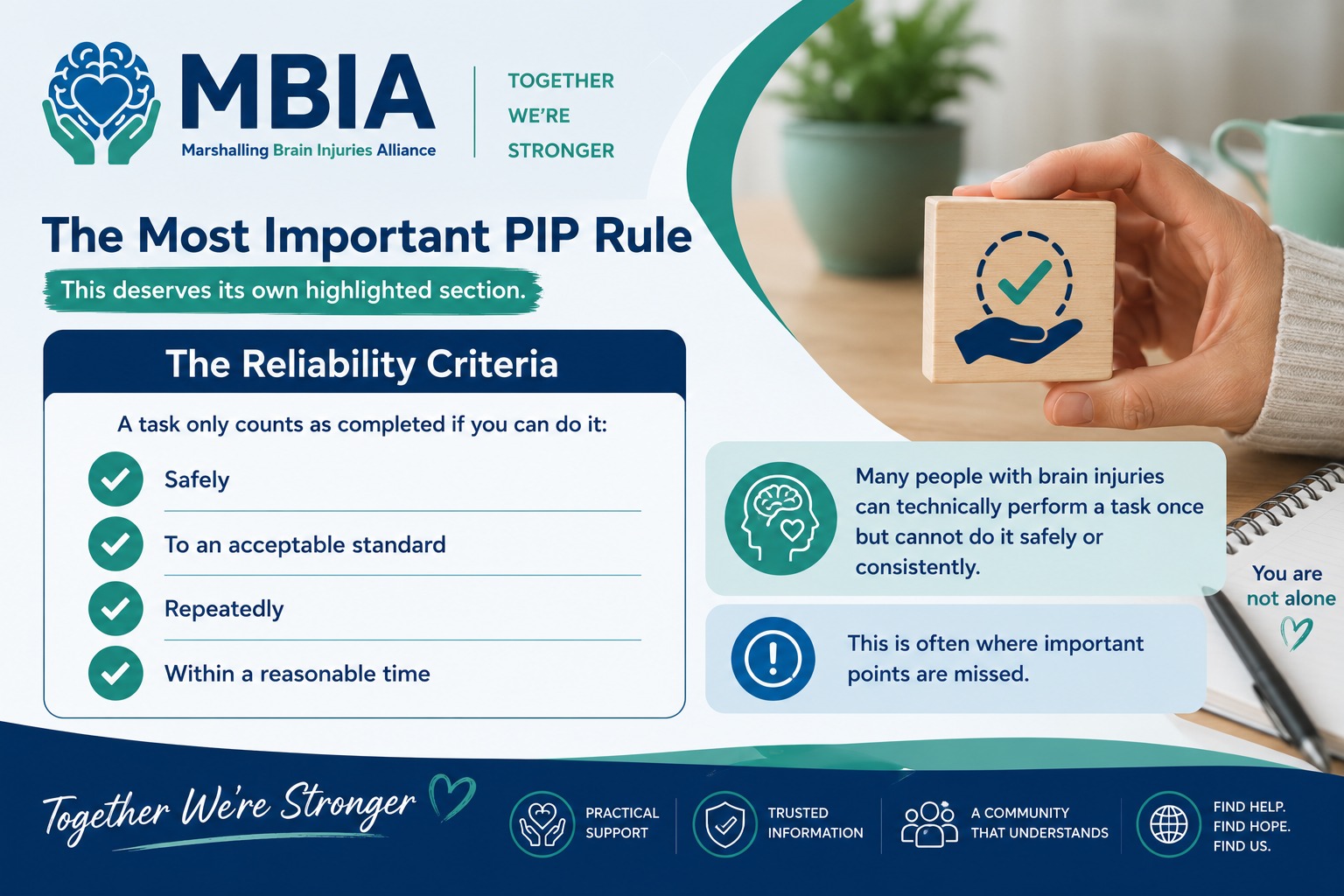
Words The DWP Uses
Important PIP Language
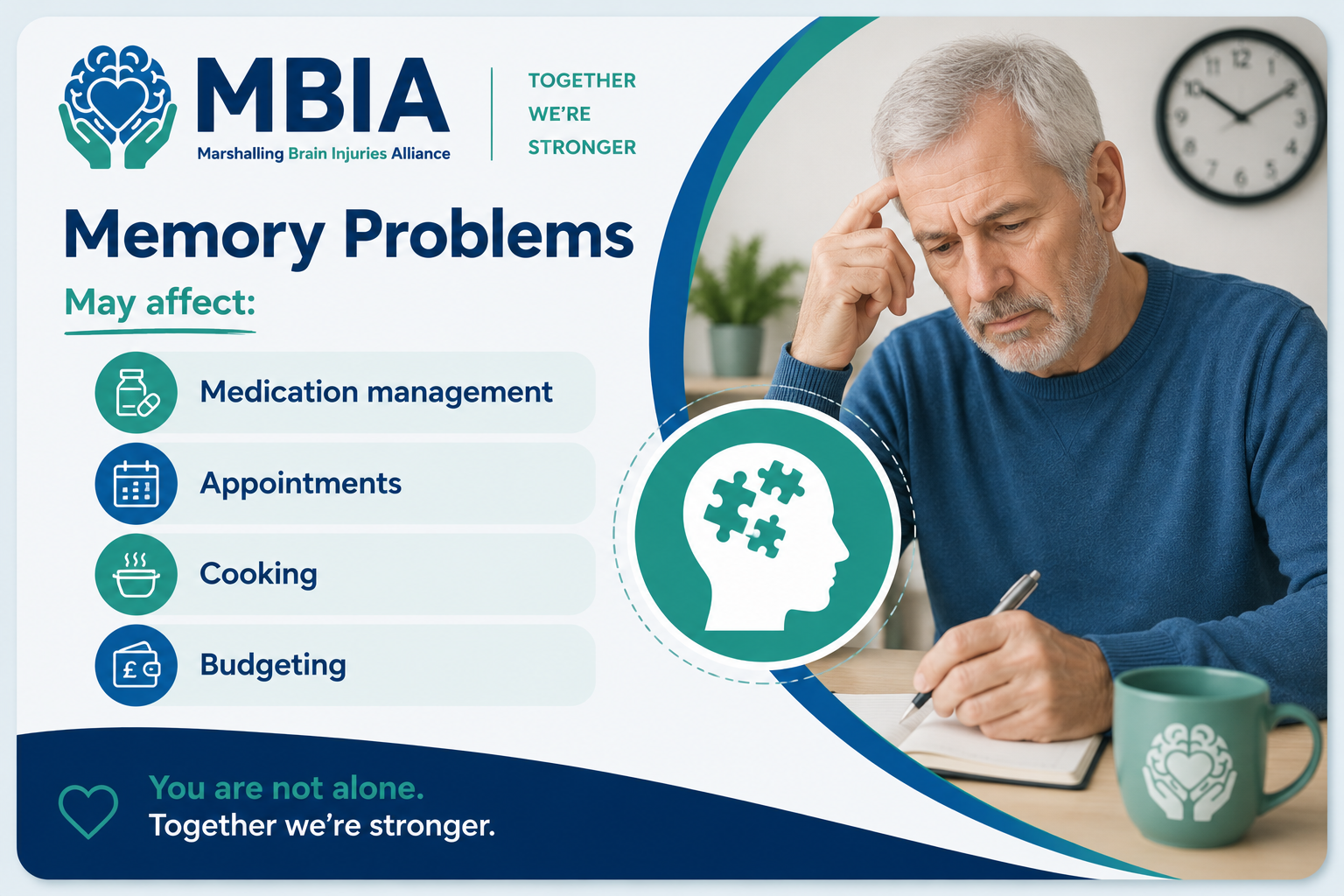
Needs Prompting
Requires reminders because of:
- Memory problems
- Cognitive difficulties
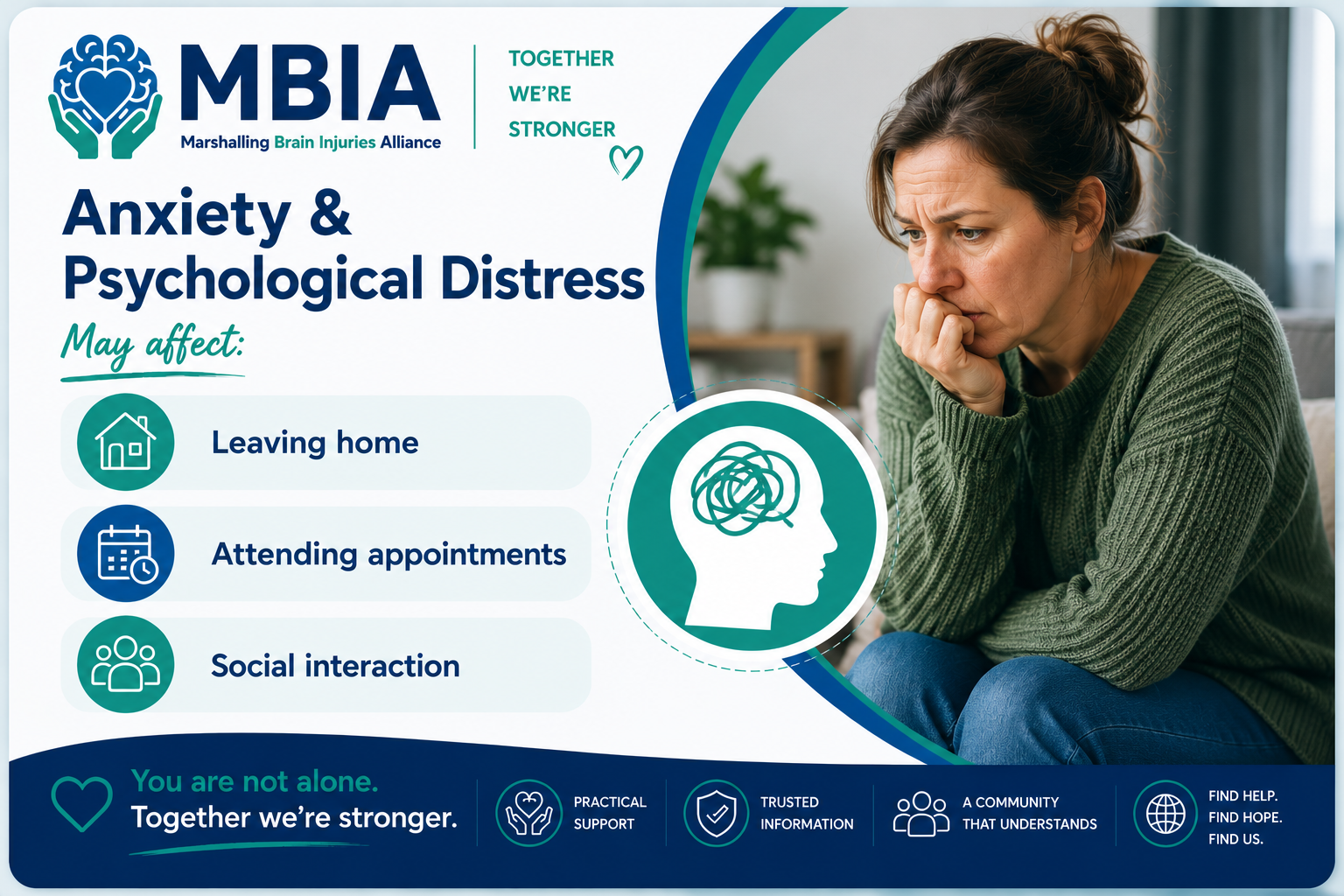
- Anxiety
- Mental health challenges
Needs Supervision
Requires someone nearby to keep you safe.
Needs Assistance
Requires physical help from another person.
Uses Aids Or Appliances
Examples:
- Walking stick
- Grab rails
- Shower chair
- Medication reminder systems
- Adapted cutlery
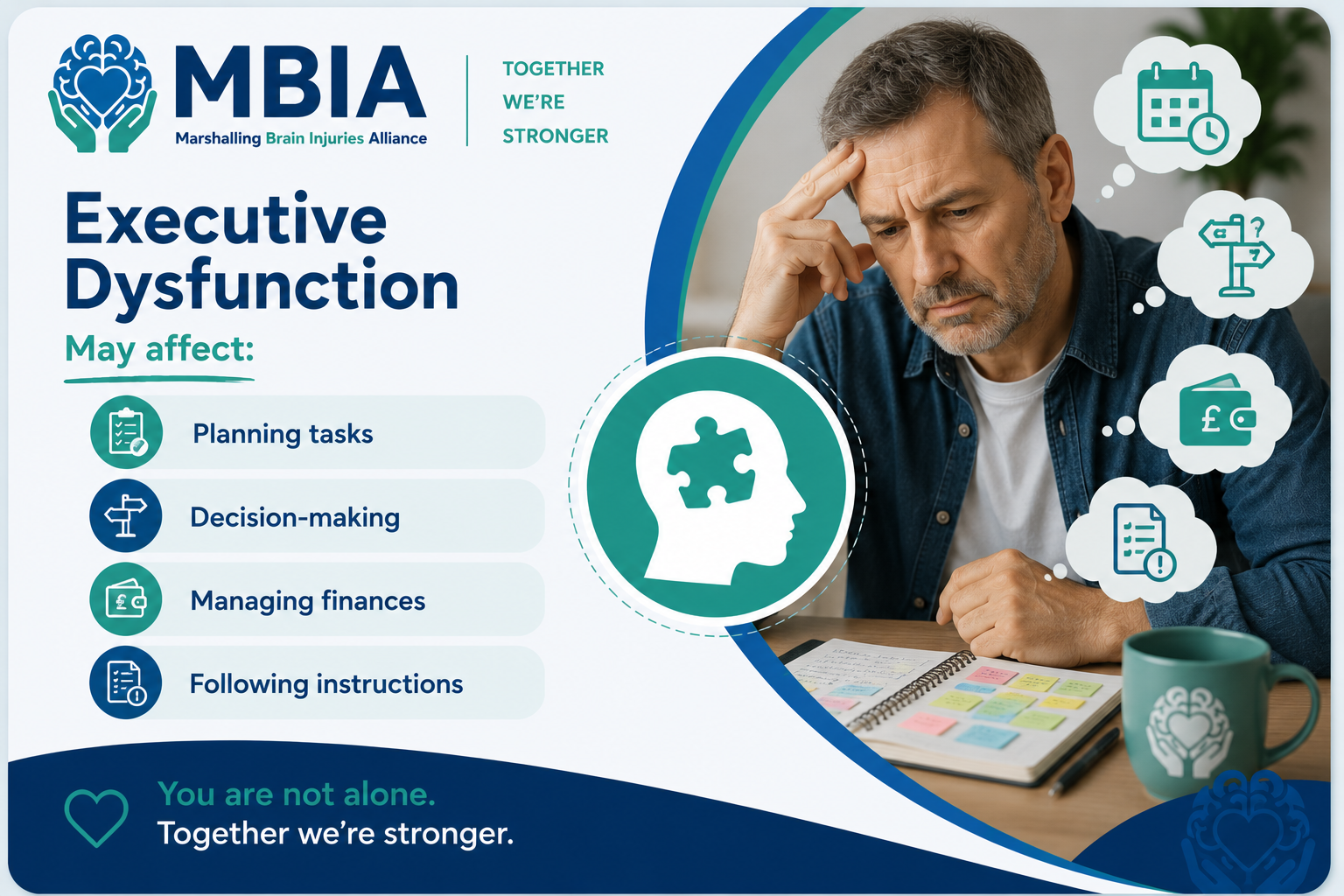
Executive Dysfunction
Difficulties with:
- Planning
- Organisation
- Decision-making
- Time management
- Following instructions
- Emotional regulation
How Brain Injury Symptoms Relate to PIP
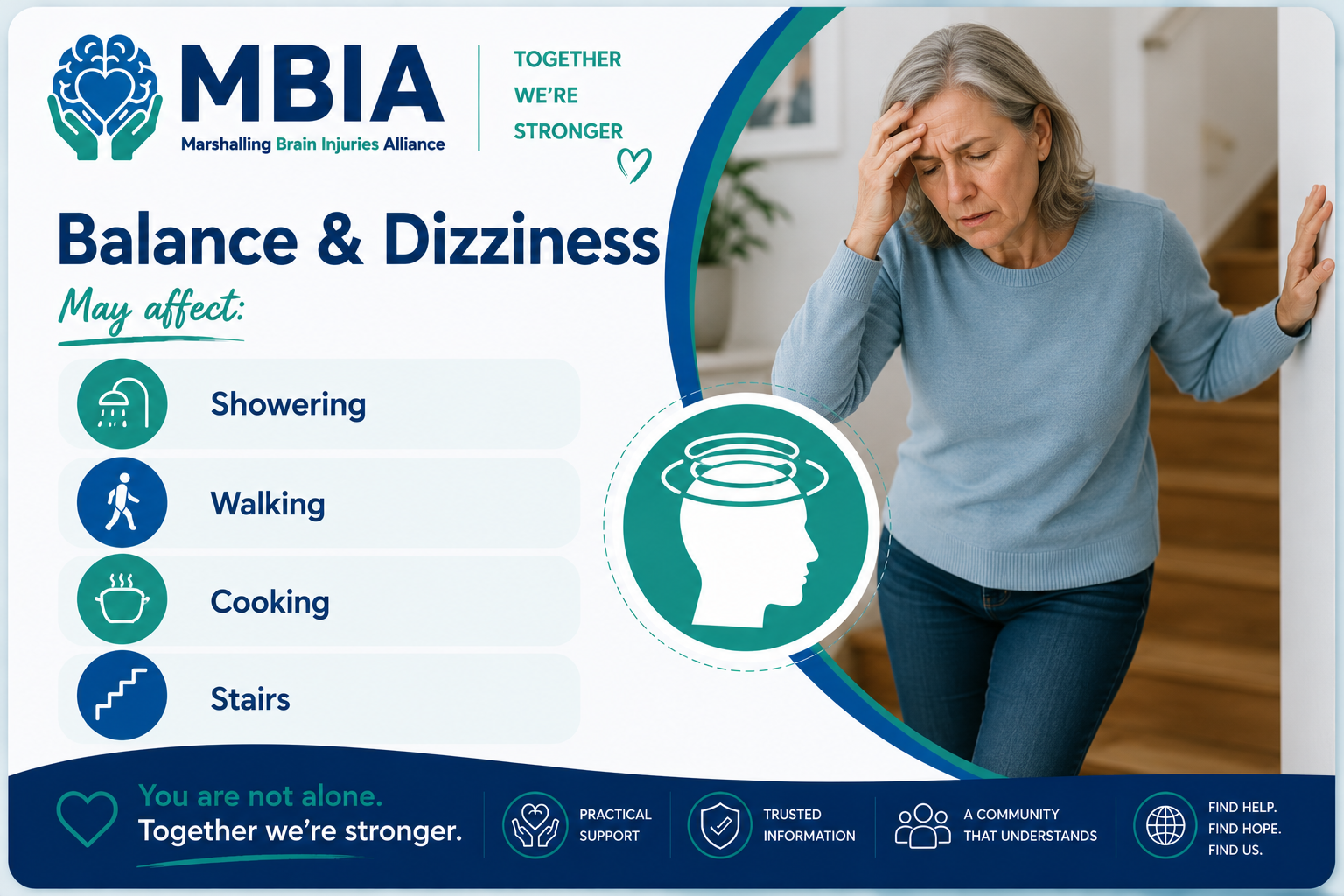
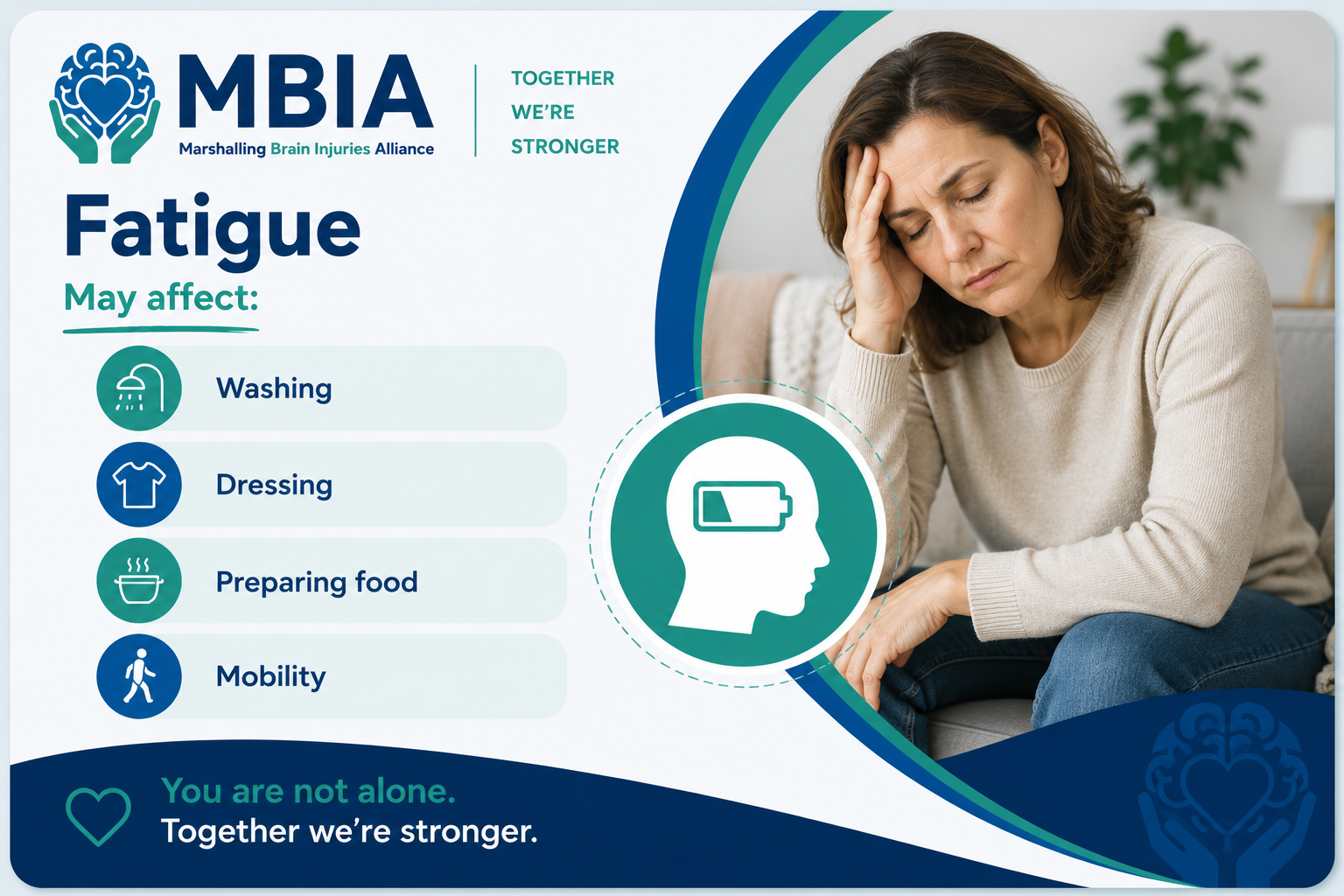
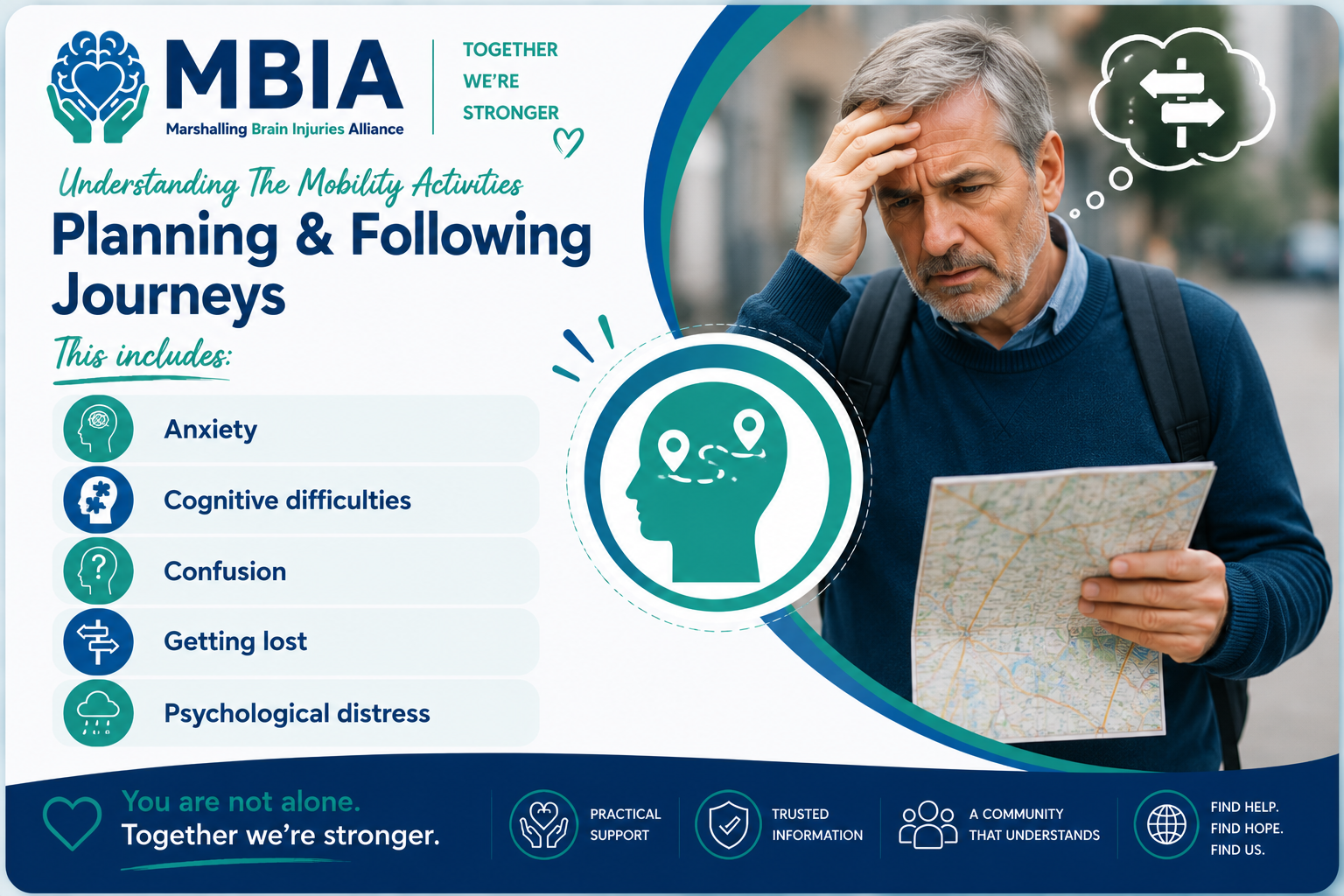
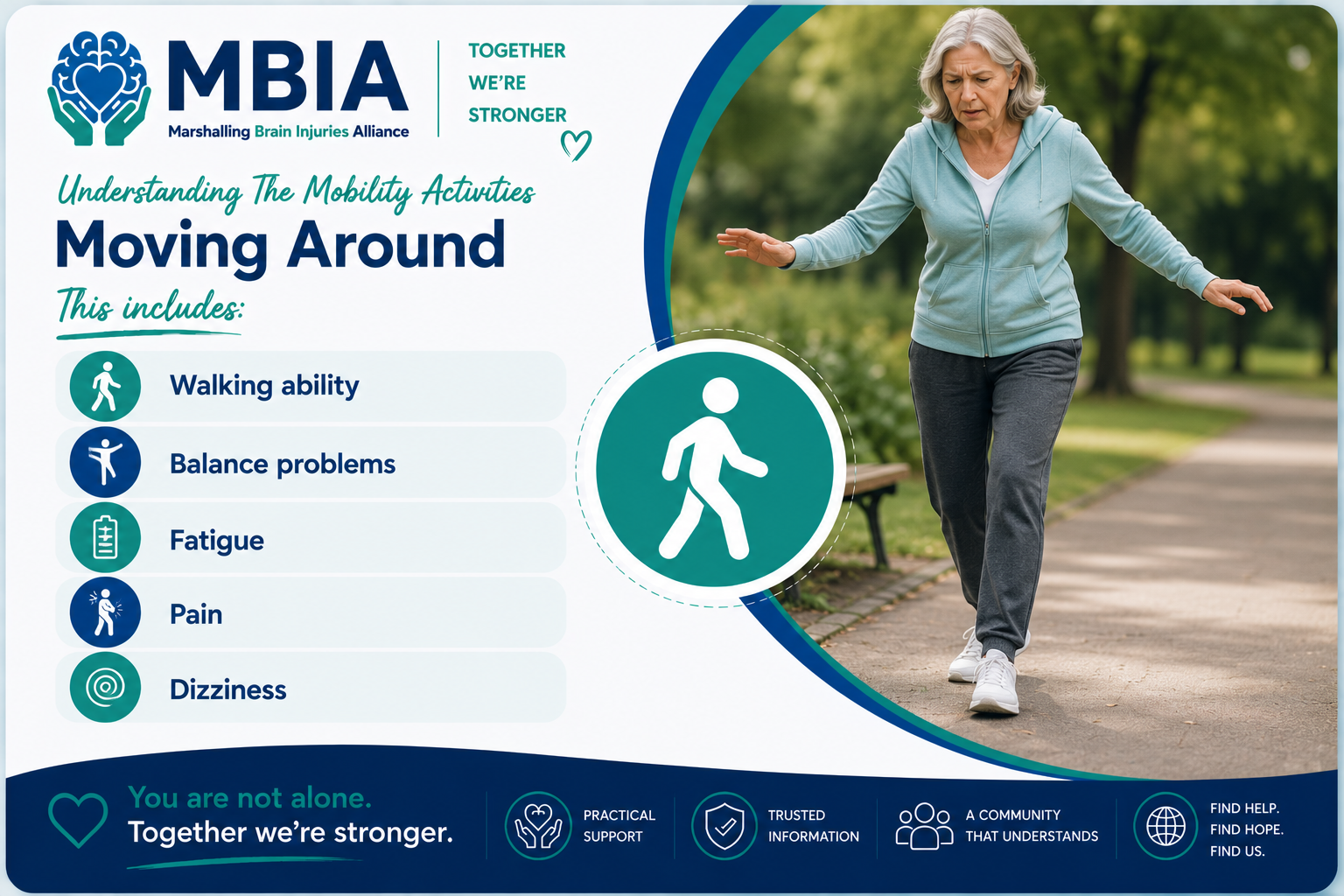
Understanding The Mobility Activities
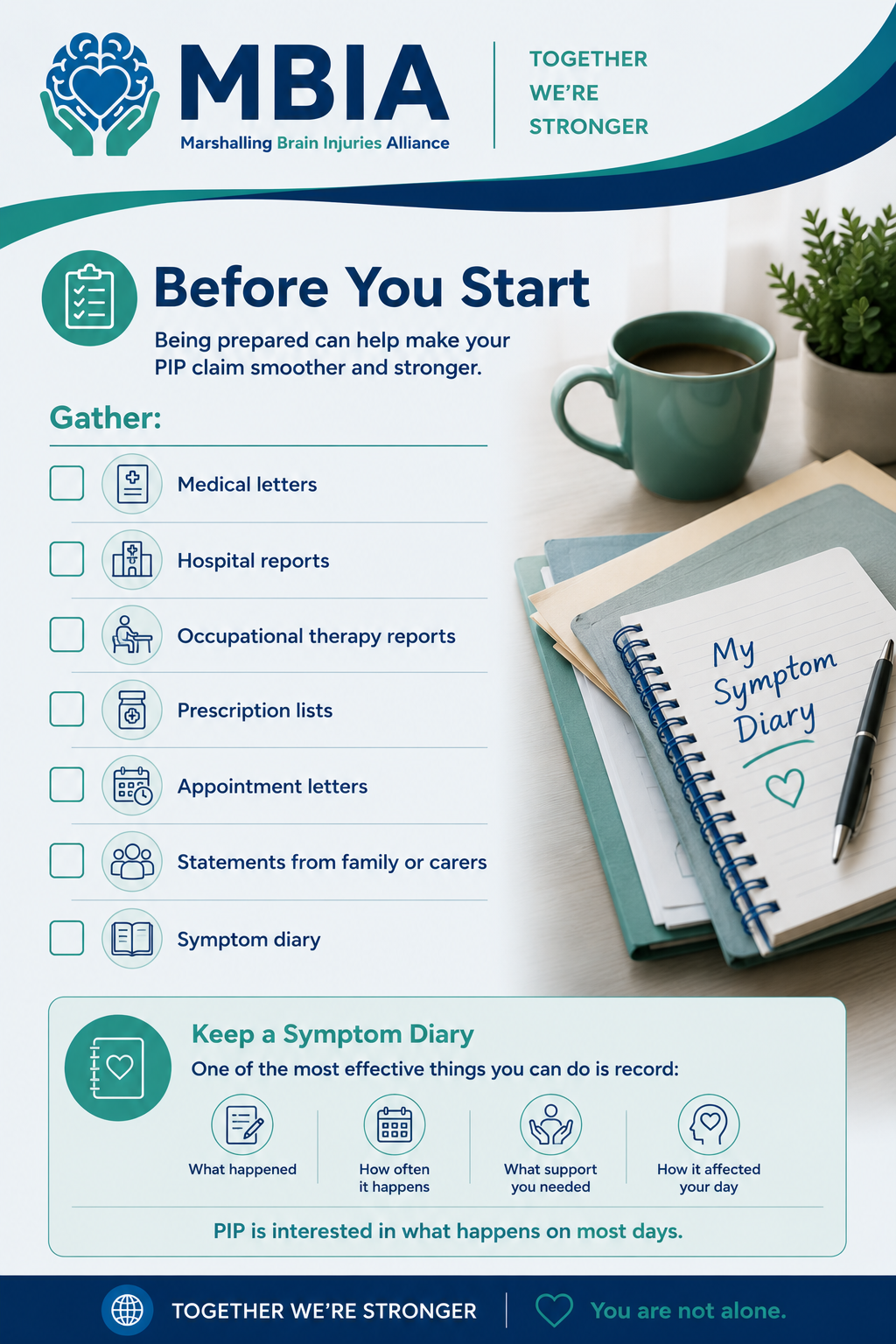
Keep A Symptom Diary
One of the most effective things you can do is record:
- What happened
- How often it happens
- What support you needed
- How it affected your day
PIP is interested in what happens on most days.
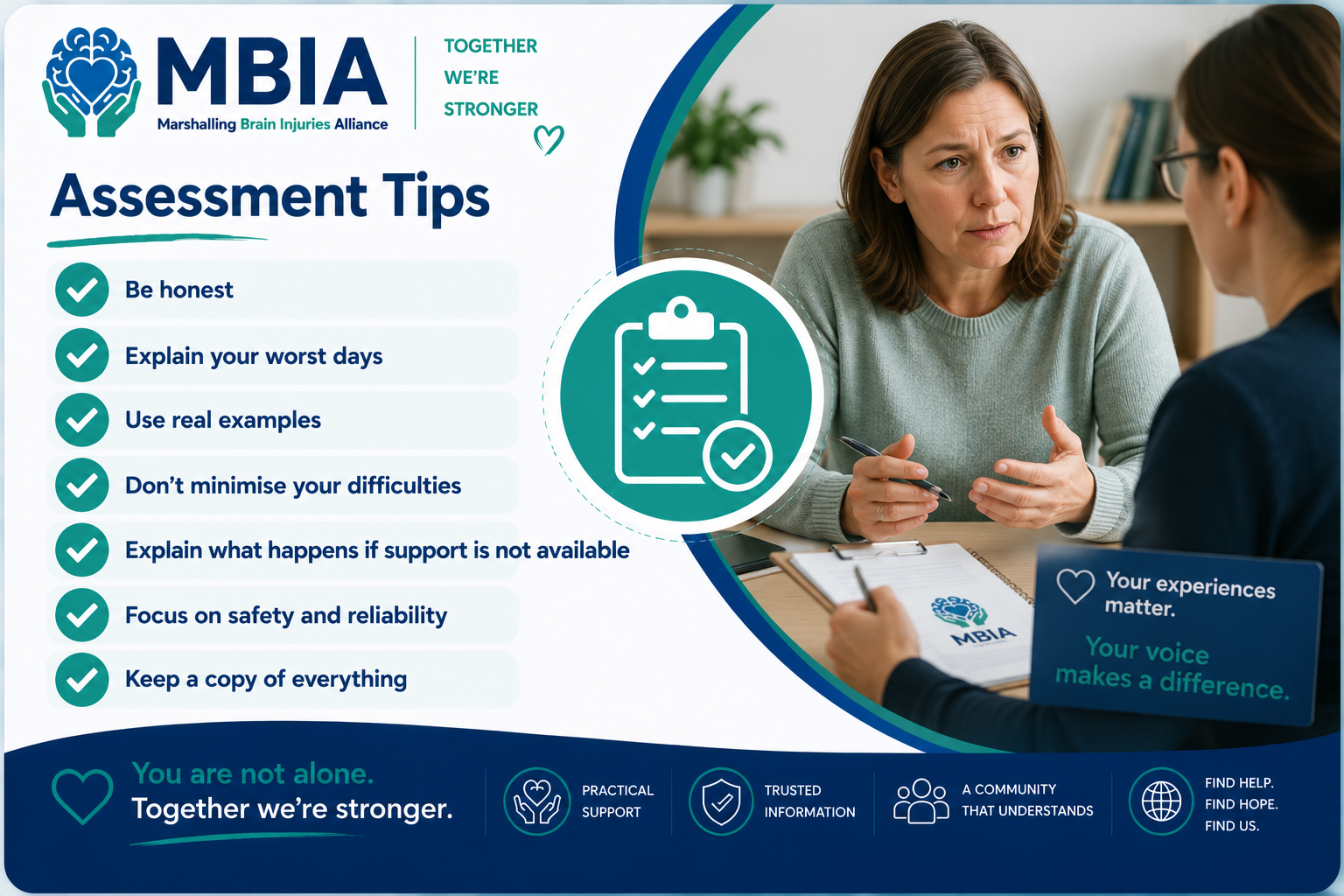
Evidence That Can Help
Strong Evidence
- Neurologist letters
- Neuropsychology reports
- Occupational therapy reports
- Hospital records
Helpful Evidence
- GP records
- Medication lists
- Support worker reports
- Family statements
Personal Evidence
- Symptom diaries
- Daily living examples
- Carer observations
Useful Resources




Need Support With A PIP Claim?
Many people living with brain injury, concussion, dementia, and probable CTE find the PIP process stressful and confusing.
While we cannot guarantee outcomes, we may be able to:
✅ Explain the process
✅ Help you understand the descriptors
✅ Signpost you to specialist organisations
✅ Share peer support from others with lived experience