Understanding the Connection
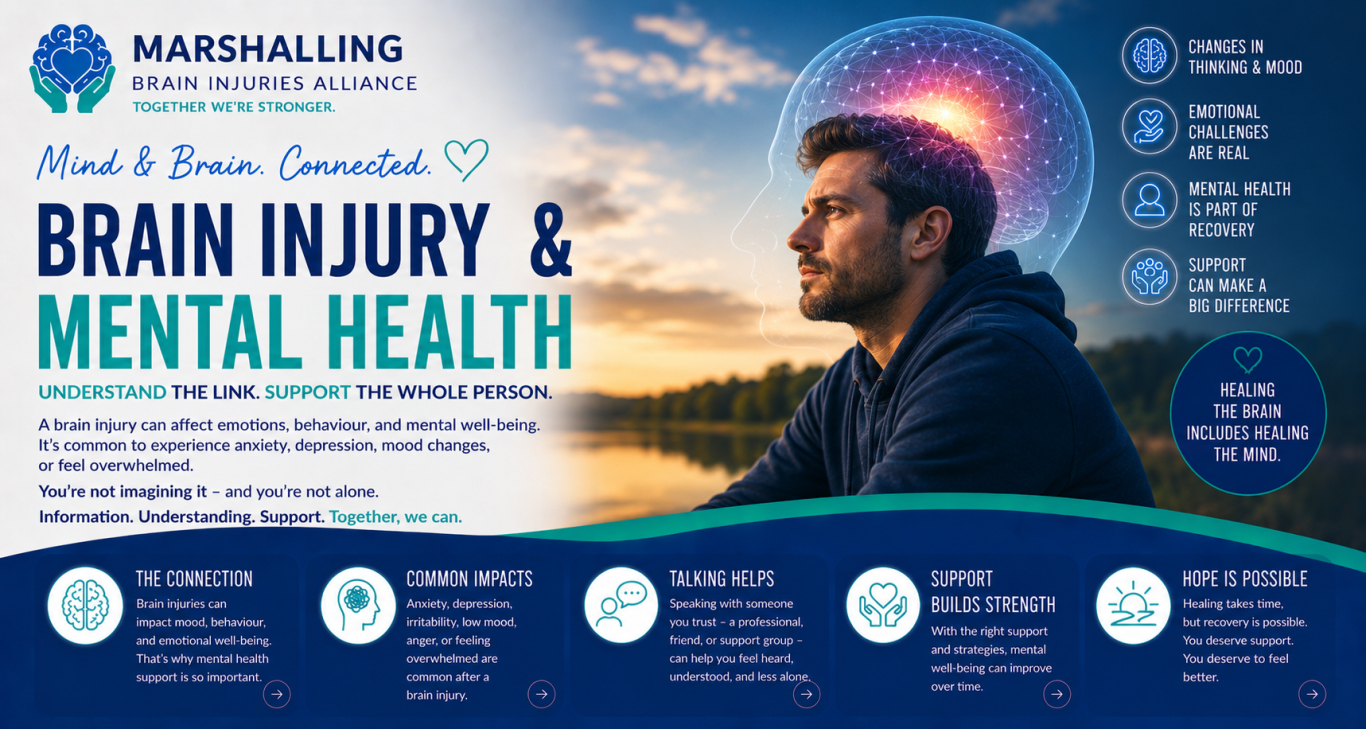
Living with a brain injury can affect much more than memory, concentration, or physical health.
For many people, it also has a significant impact on mental health and emotional wellbeing.
Following a brain injury, it is common to experience:
- Anxiety
- Depression
- Low mood
- Irritability
- Emotional overwhelm
- Loss of confidence
- Social withdrawal
- Feelings of grief and loss
These experiences are real, common, and understandable.
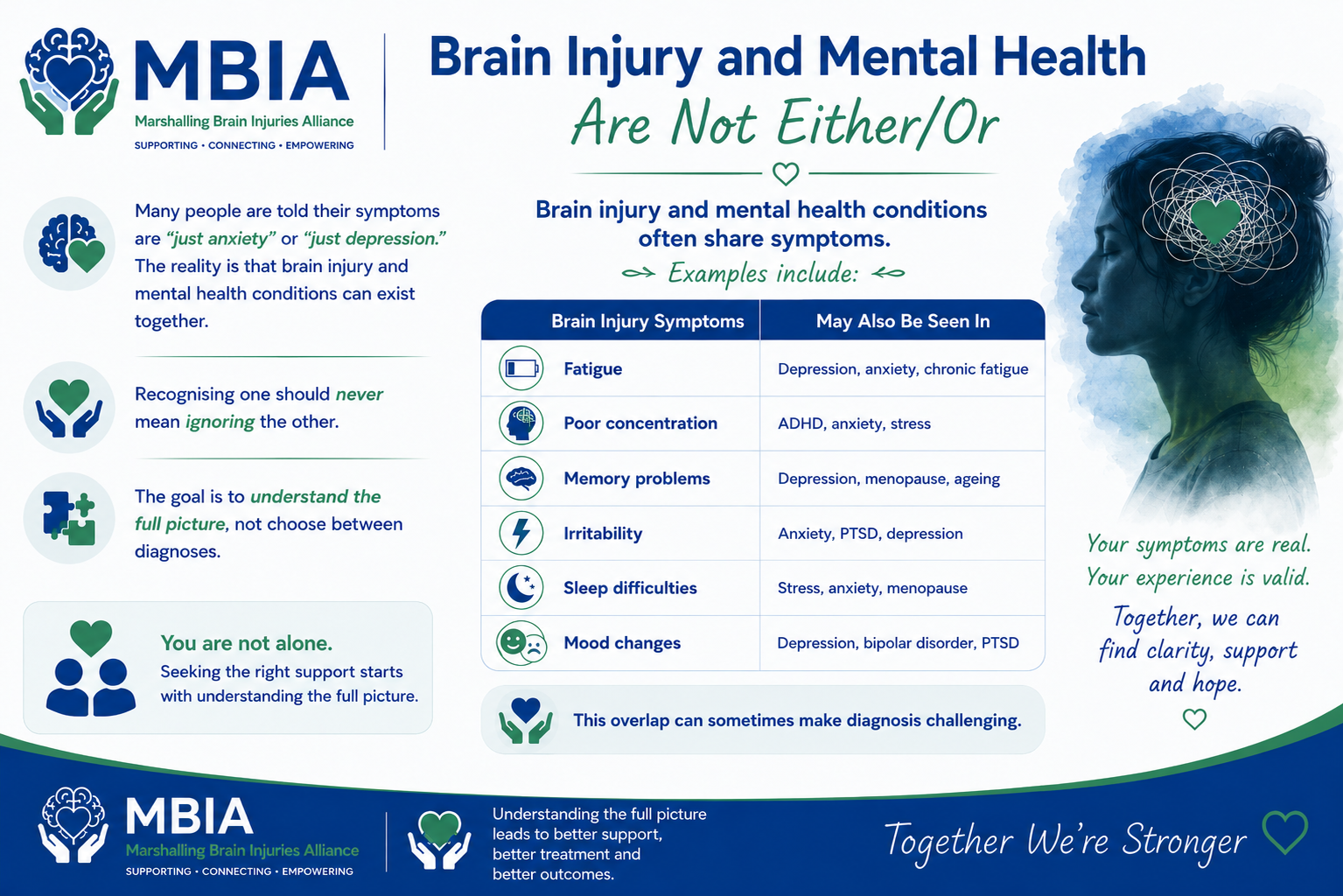
Unfortunately, many people feel isolated or misunderstood because mental health struggles are often invisible, just like many brain injury symptoms.
Understanding the connection between brain injury and mental health can help people recognise what they are experiencing and seek appropriate support.
Can a Brain Injury Affect Mental Health?
Yes.
Brain injuries can affect mental health in several ways.
Sometimes the injury directly affects areas of the brain involved in:
- Mood regulation
- Emotional control
- Stress responses
- Motivation
- Social behaviour
At the same time, living with the challenges of a brain injury can place enormous emotional strain on an individual and their family.
For many people, mental health difficulties are caused by a combination of neurological changes and the life changes that often follow injury.
Anxiety After Brain Injury
Mental Health Difficulties Are Common
Many people experience anxiety following a brain injury.
This may involve:
- Excessive worrying
- Feeling on edge
- Panic attacks
- Fear of symptoms
- Fear of reinjury
- Social anxiety
- Health anxiety
Some people become anxious because symptoms feel unpredictable.
Others worry about:
- Work
- Finances
- Relationships
- Their future
Anxiety is a common response to uncertainty.
Experiencing mental health challenges after a brain injury does not mean there is something wrong with you.
It does not mean you are weak.
It does not mean you are failing to cope.
It means you are dealing with a significant life event that can affect both the brain and the person living with it.
Depression After Brain Injury
Depression is also common.
Symptoms may include:
- Persistent sadness
- Loss of interest in activities
- Reduced motivation
- Hopelessness
- Fatigue
- Social withdrawal
- Changes in sleep
- Changes in appetite
Depression following a brain injury may be influenced by:
- Changes within the brain
- Chronic symptoms
- Loss of independence
- Changes in identity
- Social isolation
For many people, it is a combination of factors.
Grief and Loss
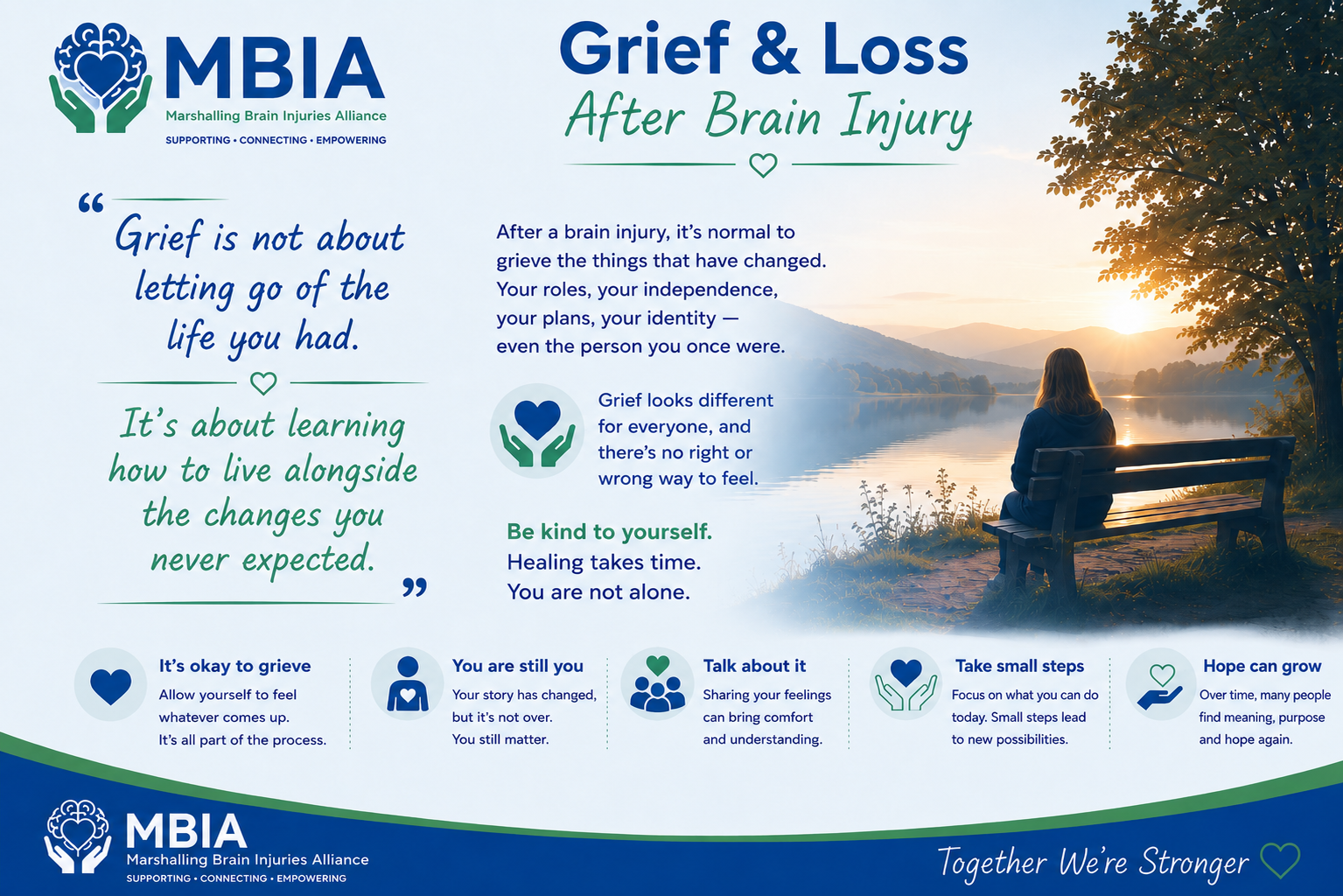
Many people experience grief following a brain injury.
This grief is often overlooked because it is not always linked to bereavement.
You may grieve:
- Your previous abilities
- Your career
- Your independence
- Your hobbies
- Your relationships
- Your future plans
- The person you were before the injury
This grief is real and valid.
Loss of Identity
One of the most difficult aspects of brain injury can be feeling like you no longer recognise yourself.
People often say:
"I'm not the person I used to be."
"I don't know who I am anymore."
"I miss the old me."
Adjusting to changes in ability, personality, or lifestyle can have a profound emotional impact.
Emotional Regulation Difficulties
Brain injury can affect the brain's ability to regulate emotions.
This may result in:
- Irritability
- Anger
- Emotional outbursts
- Crying more easily
- Emotional sensitivity
These reactions are often neurological rather than intentional.
Social Isolation
Many people become isolated after a brain injury.
Reasons may include:
- Fatigue
- Sensory overload
- Anxiety
- Communication difficulties
- Reduced confidence
- Changes in friendships
Isolation can significantly affect mental wellbeing.
Humans are social beings, and connection is important for recovery and quality of life.
The Impact of Invisible Symptoms
Living with symptoms that others cannot see can be exhausting.
Many people hear:
- "You look fine."
- "You're just stressed."
- "Everyone gets tired."
- "You need to think positive."
These comments may be well intentioned but can leave people feeling dismissed and misunderstood.
Brain Injury & PTSD
Post-Traumatic Stress Disorder (PTSD) can occur alongside brain injury.
This is particularly common in:
- Veterans
- Emergency service personnel
- Survivors of domestic abuse
- Assault survivors
- Road traffic collision survivors
PTSD symptoms may include:
- Flashbacks
- Hypervigilance
- Nightmares
- Avoidance
- Anxiety
Brain injury and PTSD often overlap and can exist together.
When Mental Health Affects Recovery
Mental health difficulties do not mean recovery is impossible.
However, they can make recovery more challenging.
For example:
- Anxiety may increase symptom awareness.
- Depression may reduce motivation.
- Poor sleep may worsen cognition.
- Stress may increase fatigue.
Supporting mental health is therefore an important part of overall recovery.
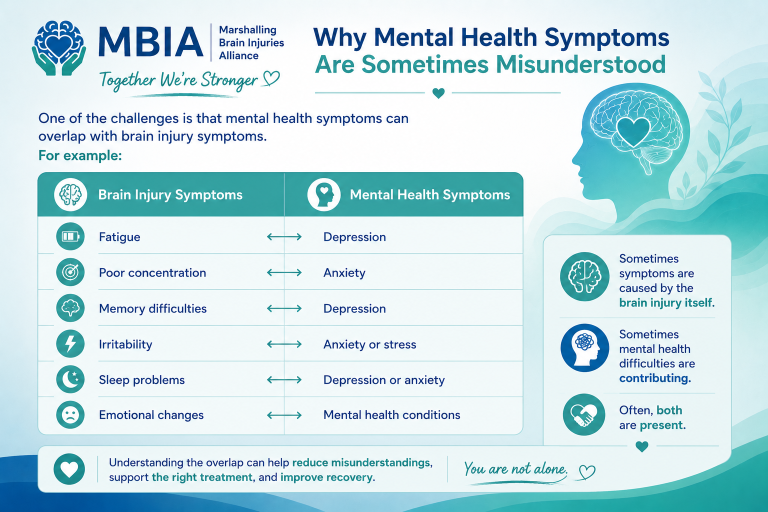
The Relationship Between Fatigue and Mental Health
Fatigue and mental health often influence each other.
When fatigue is severe:
- Mood may worsen
- Anxiety may increase
- Stress tolerance may decrease
Likewise, poor mental health can make fatigue feel worse.
Understanding this relationship is important.
Education
Understanding your symptoms often reduces fear and uncertainty.
Knowing that your experiences are recognised and common can be reassuring.
Peer Support
Talking to others who understand can make a huge difference.
Support groups often help reduce:
- Isolation
- Shame
- Self-doubt
Many people find comfort in knowing they are not alone.
Professional Support
Support from qualified professionals may be helpful, including:
- GPs
- Psychologists
- Counsellors
- Neuropsychologists
- Mental health services
Seeking support is a sign of strength, not weakness.
Physical Activity
Appropriate exercise may help support:
- Mood
- Sleep
- Stress management
- Overall wellbeing
Always work within your own limits and abilities.
Sleep Management
Improving sleep can positively affect both mental health and brain injury symptoms.
Social Connection
Maintaining meaningful connections can help protect mental wellbeing.
Even small amounts of social contact can make a difference.
Self-Compassion
Many people living with brain injury are far harder on themselves than they would ever be on someone else.
Try to remember:
You are dealing with a genuine neurological condition.
You deserve the same compassion you would offer a friend.
What Can Help?
There is no single approach that works for everyone, but many people find support through a combination of strategies.
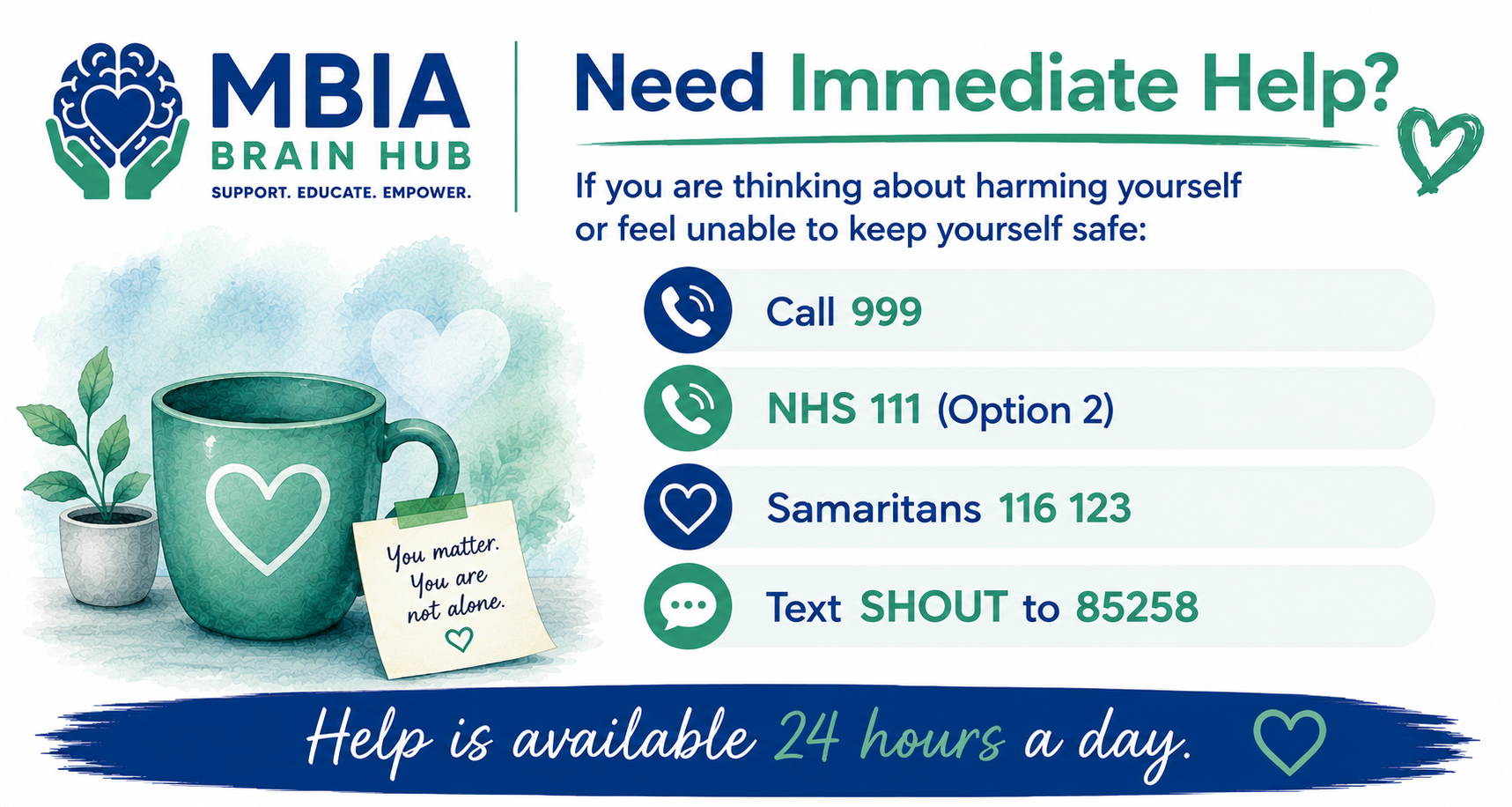
It is important to seek support if you are experiencing:
Persistent low mood
Severe anxiety
Feelings of hopelessness
Social withdrawal
Thoughts of self-harm
Thoughts of suicide
You do not have to struggle alone.
Support is available.
When Should You Seek Help?
Key Takeaways
- Mental health difficulties are common after brain injury.
- Anxiety, depression, grief, loss of identity, and emotional regulation difficulties may occur.
- Brain injury and mental health conditions often influence one another.
- Mental health symptoms do not mean someone is weak or failing.
- Supporting mental health is an important part of recovery.
- Peer support, education, professional help, sleep, exercise, and social connection can all help.
- Help is available, and nobody should face these challenges alone.
- There is always hope.
Continue Exploring
Together We're Stronger