The Injury May Have Happened Years Earlier
One of the biggest reasons brain injuries are overlooked is because the injury itself may not seem important at the time.
People often say:
- "I never lost consciousness."
- "It was only a concussion."
- "I just had my bell rung."
- "I got back up and carried on."
- "It happened years ago."
Many people don't realise that symptoms can persist long after the initial injury.
Others may have experienced multiple injuries over many years without recognising their cumulative impact.
Normal Scans Can Create Confusion
Many people assume that if a CT or MRI scan is normal, there cannot be a brain injury.
This is not always true.
Standard scans are excellent at detecting:
- Skull fractures
- Bleeding
- Large structural injuries
However, they may not detect:
- Concussion
- Microscopic damage
- Diffuse axonal injury
- Functional changes within the brain
A normal scan does not automatically mean the brain is functioning normally.
Mental Health Conditions Can Look Similar
Brain injury and mental health conditions often share symptoms.
Examples include:
- Brain Injury Symptoms
- May Also Be Seen In
- Fatigue
- Depression, anxiety, chronic fatigue
- Poor concentration
- ADHD, anxiety, stress
- Memory problems
- Depression, menopause, ageing
- Irritability
- Anxiety, PTSD, depression
- Sleep difficulties
- Stress, anxiety, menopause
- Mood changes
- Depression, bipolar disorder, PTSD
This overlap can sometimes make diagnosis challenging.
PTSD and Brain Injury
Many symptoms of PTSD and brain injury look remarkably similar.
Both can cause:
- Memory difficulties
- Poor concentration
- Sleep problems
- Anxiety
- Irritability
- Emotional changes
This is particularly relevant for:
- Veterans
- Emergency service personnel
- Survivors of domestic abuse
- Road traffic collision survivors
In some cases, both conditions may exist together.
Many people living with a brain injury spend months or even years searching for answers.
They may see multiple healthcare professionals, undergo numerous tests, and receive various diagnoses before someone finally considers the possibility of a brain injury.
For some, the diagnosis comes quickly.
For others, it can take years.
During that time, many people are told their symptoms are caused by:
- Stress
- Anxiety
- Depression
- PTSD
- Fibromyalgia
- Menopause
- Burnout
- Chronic fatigue
- Ageing
- ADHD
Sometimes these conditions are present alongside a brain injury.
Sometimes they are not.
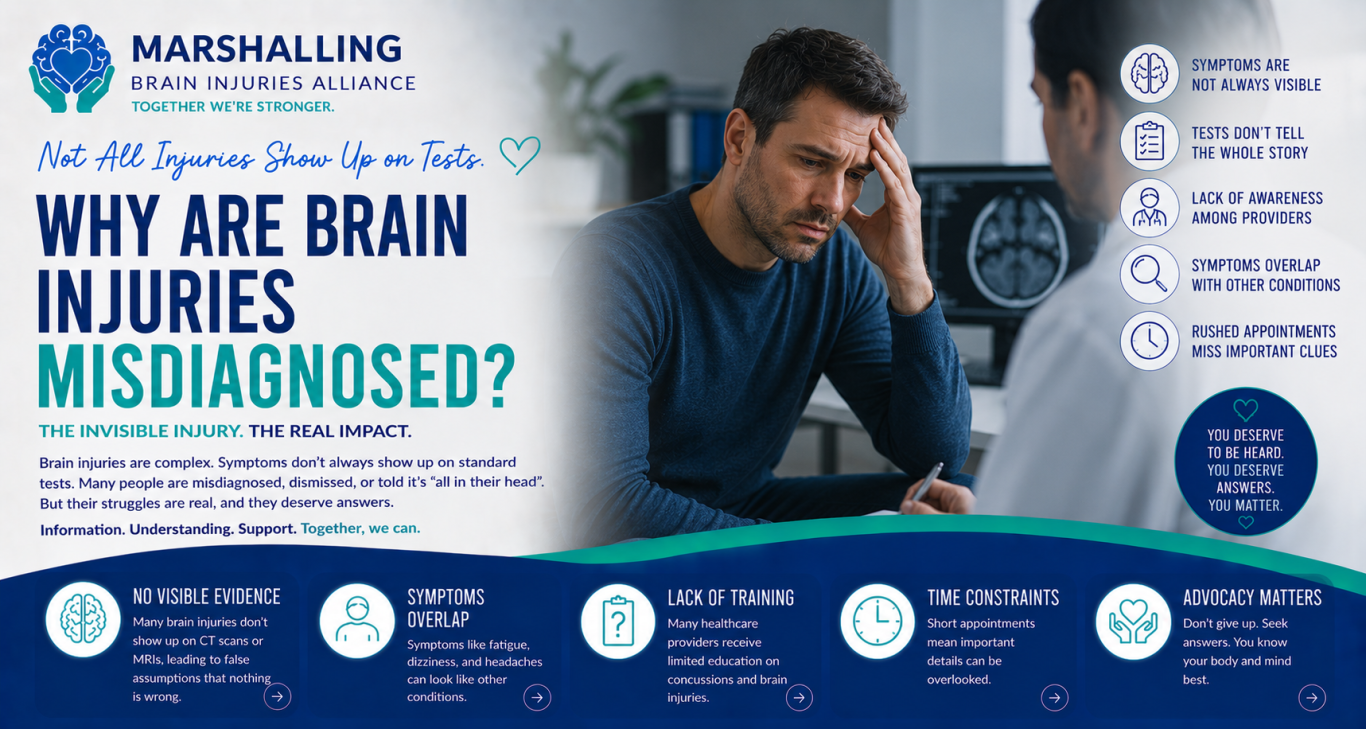
The reality is that brain injuries are often misunderstood, overlooked, and misdiagnosed.
Misdiagnosed Brain Injuries
Why Does This Happen?
There is rarely one simple reason.
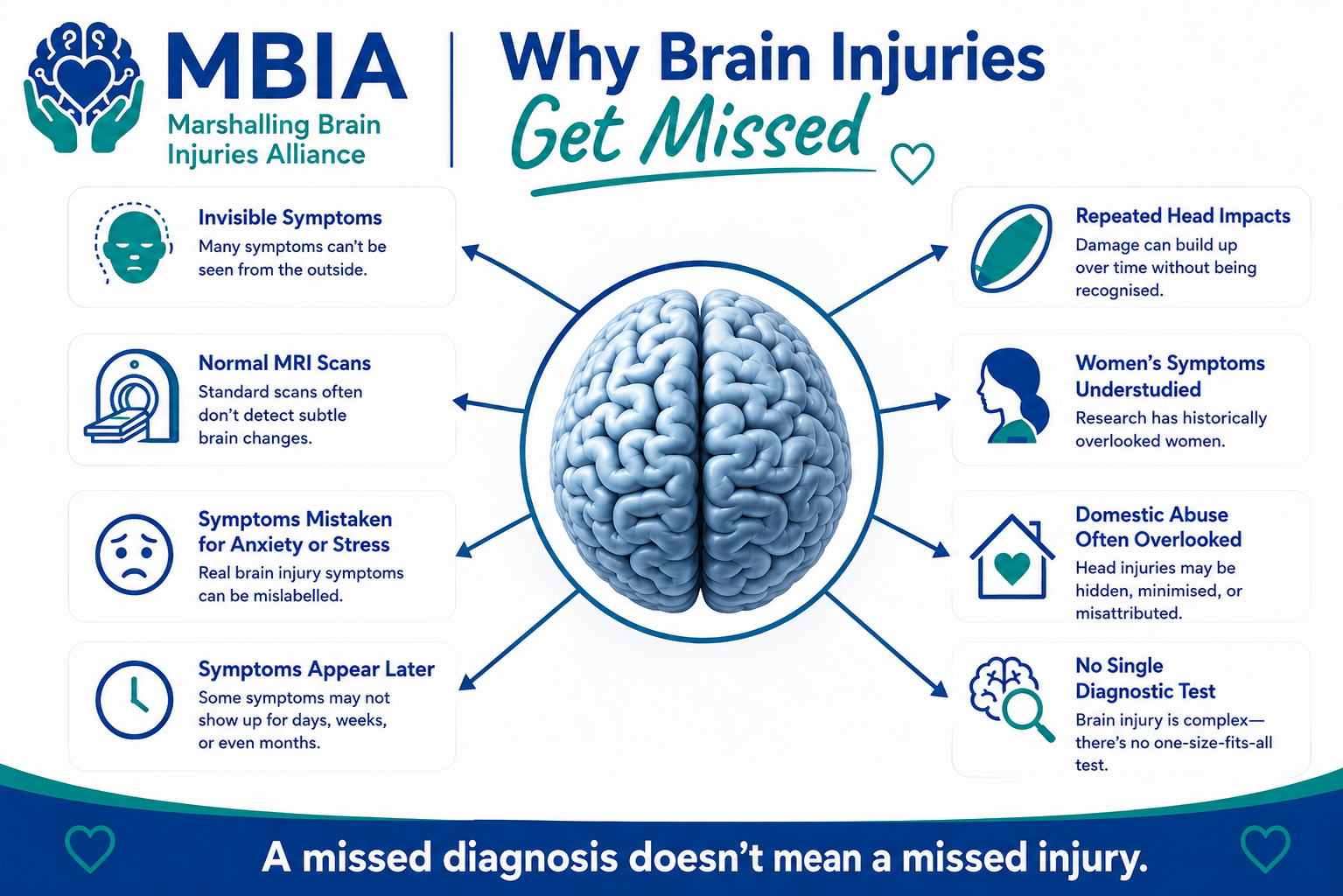
Brain injuries can be difficult to identify because many of the symptoms overlap with other medical and mental health conditions.
To make matters more complicated, many brain injury symptoms are invisible.
Someone may appear physically healthy while struggling significantly behind the scenes.
Many Symptoms Are Non-Specific
Common brain injury symptoms include:
- Fatigue
- Memory problems
- Poor concentration
- Brain fog
- Anxiety
- Depression
- Sleep problems
- Irritability
- Headaches
- Sensory sensitivity
The challenge is that these symptoms can occur in many other conditions too.
Without a detailed history, the underlying brain injury may be missed.
Menopause and Brain Injury
Many women report that their symptoms were initially attributed solely to menopause.
Both menopause and brain injury can cause:
- Brain fog
- Memory difficulties
- Fatigue
- Mood changes
- Sleep disturbances
- Anxiety
This overlap can make diagnosis particularly difficult for women.
Importantly, the two conditions are not mutually exclusive.
Someone may be experiencing both at the same time.
Women Are Often Diagnosed Later
Research suggests that women may face additional challenges in receiving a brain injury diagnosis.
Several factors may contribute, including:
- Differences in symptom presentation
- Hormonal influences
- Assumptions about anxiety or stress
- Overlap with menopause symptoms
Historically, much brain injury research has focused on male populations, particularly athletes and military personnel.
Awareness of brain injury in women continues to improve but remains an important area of focus.
Fibromyalgia and Chronic Fatigue
People living with brain injury are sometimes diagnosed with:
- Fibromyalgia
- Chronic Fatigue Syndrome (ME/CFS)
- Functional neurological disorders
- because of symptoms such as:
- Fatigue
- Pain
- Sleep problems
- Cognitive difficulties
Again, overlap exists, and some people may experience more than one condition simultaneously.
Repetitive Head Trauma Is Often Overlooked
Many people do not experience one major injury.
Instead, they experience repeated smaller impacts over time.
Examples include:
- Contact sports
- Military service
- Domestic abuse
- Falls
- Certain occupations
The cumulative effects of repeated head impacts are often under-recognised.
People may not realise these experiences could be contributing to their symptoms.
The Cost of Misdiagnosis
When brain injuries are missed, people may experience:
- Delayed treatment
- Delayed rehabilitation
- Increased frustration
- Relationship difficulties
- Employment challenges
- Mental health difficulties
- Feeling dismissed or disbelieved
Many people describe the emotional impact of being repeatedly told that nothing is wrong.
A Message for Patients and Families
Being misdiagnosed does not mean your symptoms were not real.
It does not mean you imagined them.
It does not mean you were weak.
Brain injuries are complex, and symptoms often overlap with other conditions.
Awareness is improving, but many people still face significant delays in receiving the answers they deserve.
If your symptoms have been dismissed in the past, know that you are not alone.
Many others have walked the same path.
What Patients Often Say
People frequently tell us:
- "I knew something wasn't right."
- "Nobody connected the dots."
- "I started questioning myself."
- "I was made to feel like it was all in my head."
- "Getting a diagnosis was a relief because I finally had an explanation."
These experiences are sadly common.
What Should You Do If You Suspect a Brain Injury?
If you have a history of:
- Concussion
- Head injury
- Repeated head impacts
- Military blast exposure
- Domestic violence involving head trauma
- Falls
- Sporting injuries
and are experiencing ongoing symptoms, it may be worth discussing this history with a healthcare professional.
Providing a detailed injury history can sometimes be an important piece of the puzzle.
Key Takeaways
- Brain injury recovery is different for everyone.
- Recovery is rarely linear and often includes setbacks.
- Many people move through stages of acute recovery, rehabilitation, and long-term adaptation.
- Emotional challenges are a normal part of recovery.
- Symptoms often fluctuate depending on fatigue, sleep, stress, and other factors.
- Neuroplasticity allows the brain to continue adapting and improving over time.
- Progress may continue long after the injury occurred.
- Recovery is about more than healing—it is also about adaptation, resilience, and hope.
Continue Exploring
Together We're Stronger