Why Do Brain Injury Symptoms Fluctuate?
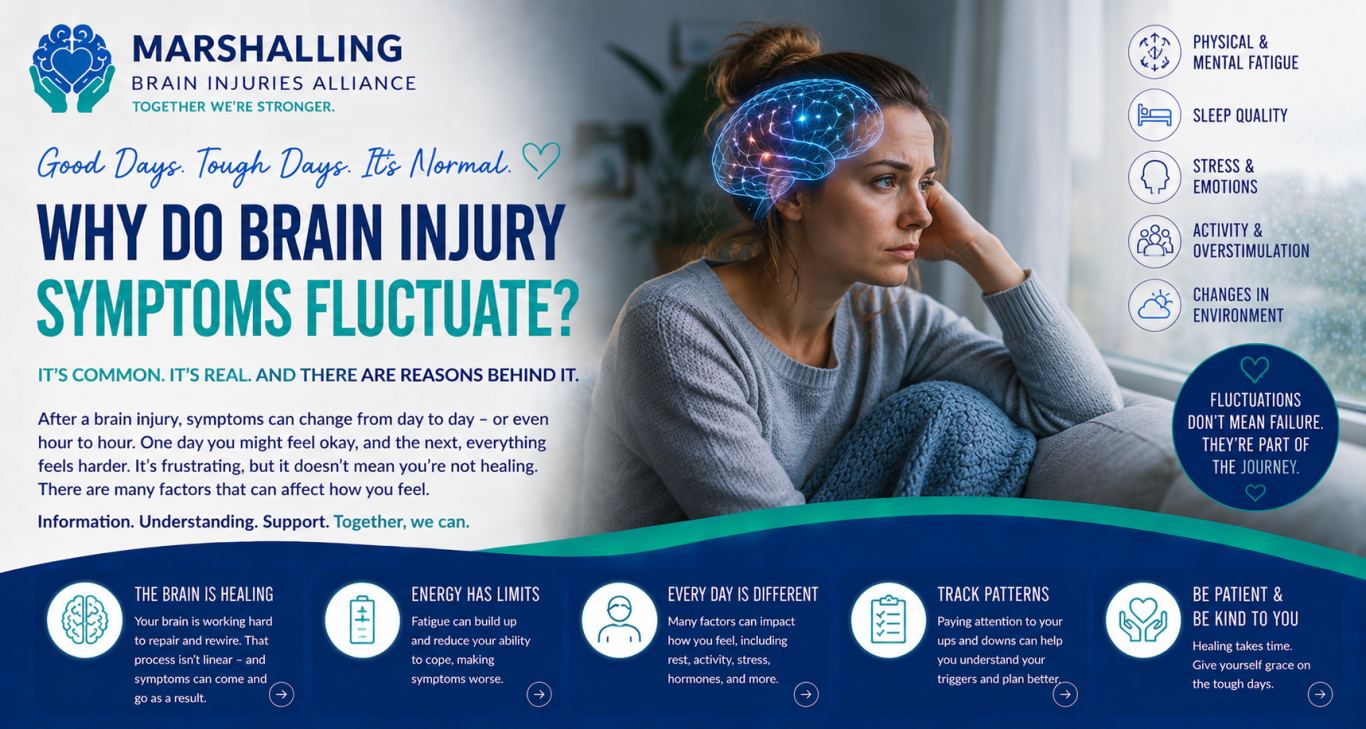
One of the most confusing and frustrating aspects of living with a brain injury is that symptoms often fluctuate.
You might have a good day where:
- Your memory feels better
- You have more energy
- Your headaches are reduced
- You feel more like yourself
Then the next day you may experience:
- Exhaustion
- Brain fog
- Headaches
- Irritability
- Difficulty concentrating
Many people begin to wonder:
- "Am I getting worse?"
- "Have I undone my recovery?"
- "Is this normal?"
The answer is usually yes.
Recovery Is not linear
Many people expect recovery to follow a straight line.
They imagine symptoms gradually improving day after day.
In reality, recovery often looks more like this:
📈📉📈📉📈📉📈
Progress.
Setbacks.
Good days.
Bad days.
Periods of improvement.
Periods where symptoms suddenly seem worse.
This is often a normal part of the recovery and adaptation process.
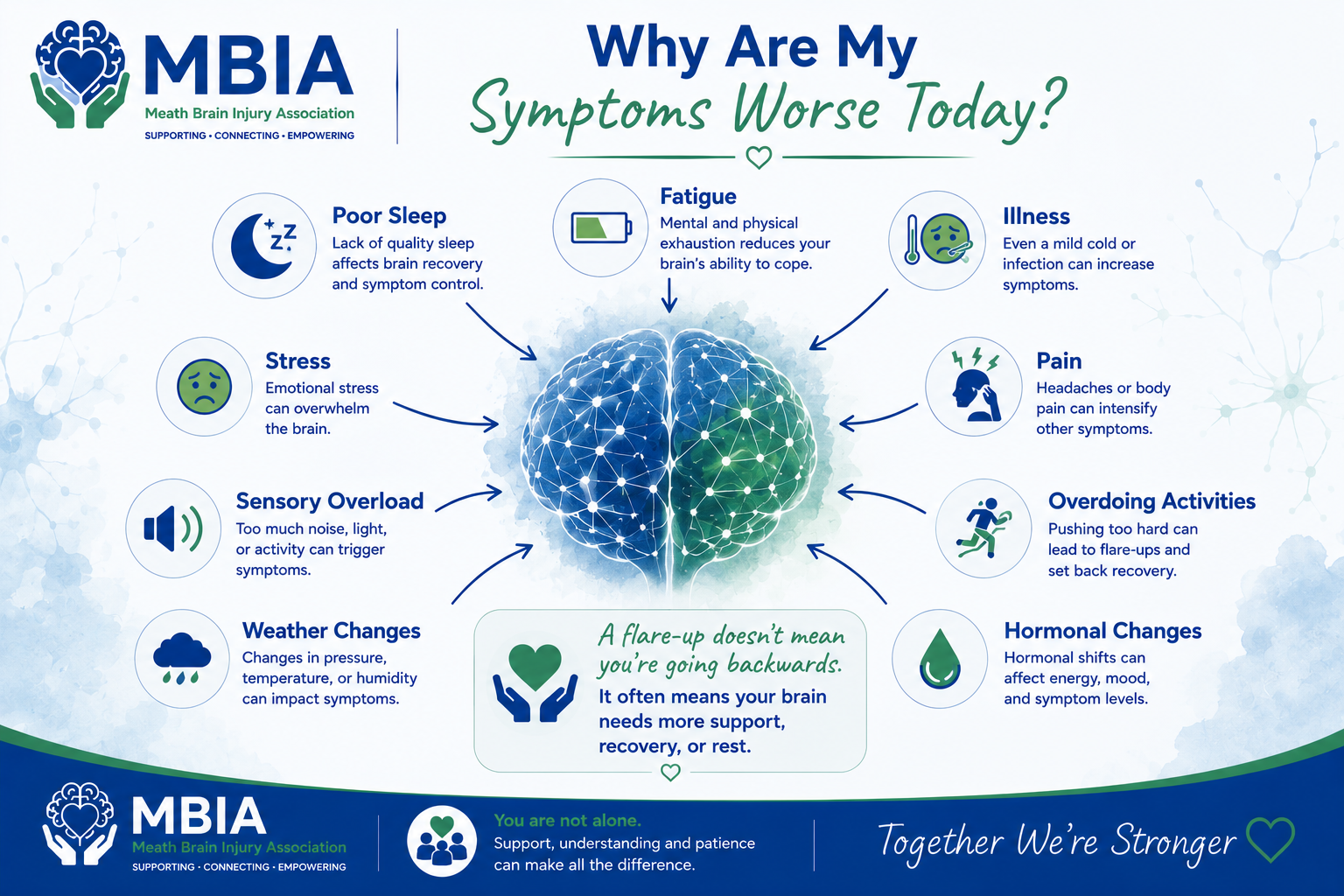
Why Do Symptoms Fluctuate?
The brain is incredibly complex.
After an injury, many different factors can influence how symptoms appear from day to day.
Often it is not one thing causing a flare-up but several factors occurring at the same time.
Neuro Fatigue
One of the most common causes of fluctuating symptoms is neuro fatigue.
Following a brain injury, the brain often has to work harder to complete everyday tasks.
Things that once happened automatically now require more effort.
Examples include:
- Concentrating
- Holding conversations
- Reading
- Shopping
- Working
- Driving
- Socialising
When the brain becomes fatigued, symptoms often increase.
You may notice:
- Brain fog
- Memory difficulties
- Slower thinking
- Irritability
- Emotional changes
- Doing Too Much
Many people experience what is sometimes called a "boom and bust" cycle.
A good day arrives.
You feel better.
You catch up on:
- Housework
- Shopping
- Work
- Social activities
Then the following day symptoms worsen.
This does not necessarily mean the activity was harmful.
It may simply mean your brain's energy reserves were exceeded.
Stress
Stress places additional demands on the brain and nervous system.
Whether the stress comes from:
- Work
- Finances
- Relationships
- Health concerns
it can often trigger symptom flare-ups.
Common examples include:
- Increased headaches
- Greater fatigue
- More brain fog
- Emotional dysregulation
- Illness
Even minor illnesses can worsen brain injury symptoms.
Examples include:
- Colds
- Flu
- Infections
- COVID-19
When the body is fighting illness, fewer resources are available for managing existing symptoms.
Poor Sleep
Sleep has a huge impact on brain function.
Even one poor night's sleep can worsen:
- Fatigue
- Memory
- Concentration
- Mood
- Headaches
Many people notice symptoms increase significantly when sleep quality declines.
Pain
Chronic pain and headaches can increase cognitive load.
The brain is forced to divide attention between managing pain and carrying out everyday tasks.
This can make symptoms feel worse.
Sensory Overload
The injured brain may struggle to process large amounts of sensory information.
Examples include:
- Busy shopping centres
- Crowds
- Loud environments
- Bright lights
- Multiple conversations
You may cope well initially and then experience symptoms hours later.
Emotional Stress
Strong emotions can affect symptoms too.
Examples include:
- Anxiety
- Anger
- Grief
- Frustration
- Excitement
Even positive events can be draining if they require significant emotional energy.
Hormonal Changes
Many people report symptom fluctuations linked to hormonal changes.
This may be particularly noticeable during:
- Menstrual cycles
- Perimenopause
- Menopause
- Hormonal treatments
Hormones influence many systems within the body and brain.
Changes in Routine
Many people with brain injuries thrive on structure and routine.
Changes such as:
- Travelling
- Visitors
- Busy schedules
- Unexpected events
can increase cognitive demands and trigger symptoms.
Weather Changes
Some people notice worsening symptoms during:
- Hot weather
- Sudden weather changes
- Storms
- High humidity
- Changes in barometric pressure
While experiences vary, this is something commonly reported within the brain injury community.
What Can Help?
While symptom fluctuations cannot always be prevented, there are ways to reduce their impact.
Learn Your Triggers
Start paying attention to patterns.
- Consider:
- Sleep
- Stress
- Activity levels
- Diet
- Social commitments
- Environment
Many people find symptom diaries helpful.
Pace Yourself
Pacing is one of the most important brain injury management strategies.
Try to balance:
- Activity
- Rest
- Cognitive demands
throughout the day.
Respect Fatigue
Fatigue is not weakness.
It is often the brain's way of signalling that it needs recovery time.
Listening to those signals can prevent larger setbacks.
Prioritise Sleep
Sleep is one of the most powerful tools for recovery and symptom management.
Manage Stress
Stress management techniques may include:
- Mindfulness
- Breathing exercises
- Gentle exercise
- Counselling
- Support groups
Plan Recovery Time
After busy days, try to schedule time for rest and recovery.
Think of recovery as part of the activity rather than something separate from it.
Be Kind to Yourself
Many people become frustrated when symptoms return.
Remember:
- A difficult day does not mean you are failing.
- It does not mean recovery has stopped.
- It does not mean you are back at the beginning.
What Family Members Should Know
Family members often struggle to understand why symptoms vary so much.
One day their loved one may appear capable and independent.
The next day they may be exhausted and overwhelmed.
This inconsistency is often a genuine symptom of brain injury.
It is not laziness.
It is not a lack of effort.
It is often the result of fluctuating brain function and energy levels.
A Message of Hope
Symptom fluctuations can be frustrating, unpredictable, and sometimes frightening.
But they are also incredibly common.
Most people living with a brain injury experience good days and bad days.
Learning your triggers, understanding your limits, and treating yourself with patience can make these fluctuations easier to manage.
Progress is not measured by one bad day.
It is measured over weeks, months, and years.
Keep looking at the bigger picture.
Key Takeaways
- Symptom fluctuations are a normal part of brain injury recovery and adaptation.
- Common triggers include fatigue, poor sleep, stress, illness, pain, sensory overload, hormonal changes, and overexertion.
- Good days do not mean you are fully recovered.
- Bad days do not mean recovery has stopped.
- Pacing, sleep, stress management, and understanding personal triggers can help.
- Families should understand that fluctuating symptoms are often a genuine part of brain injury.
- Progress is measured over time, not day by day.
Continue Exploring
Together We're Stronger