A new study has revealed that one of football's longest-standing beliefs may not be true.
For years, many people have believed that the old, heavy leather footballs used decades ago were the main reason players developed long-term brain problems. It seems logical: old footballs absorbed water, became heavier in the rain and must have hit the head much harder than today's lightweight synthetic balls.
But new research from Loughborough University suggests the story is much more complicated.
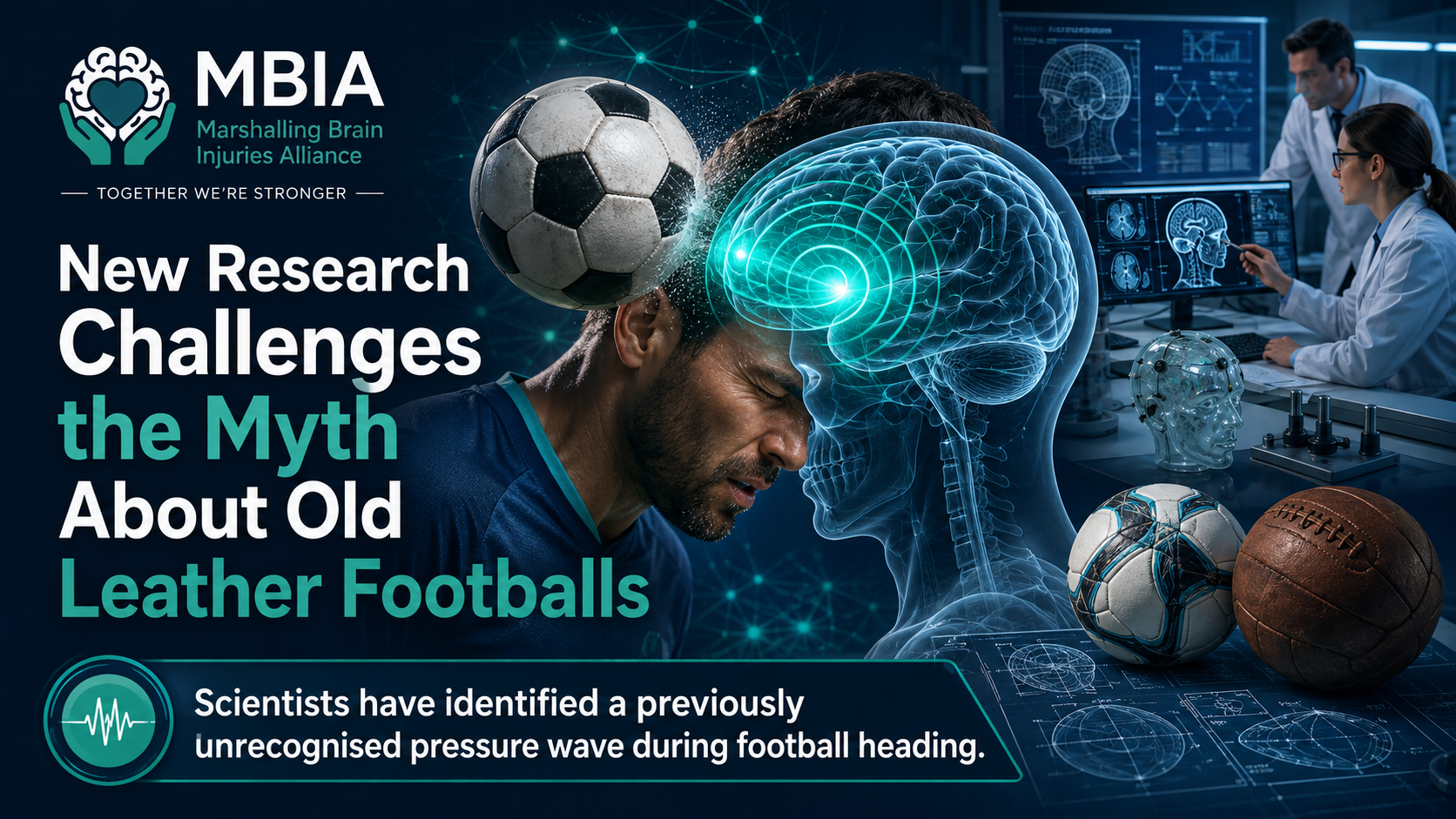
Scientists have identified a previously unrecognised way that energy may travel into the brain during heading, and surprisingly, they found that the age or material of the football isn't the most important factor.
Instead, the design of the football itself appears to play a much bigger role.
As always, it's important to separate what this study actually found from what it did not find.
Why Scientists Wanted to Study Heading
Heading is a unique skill in football.
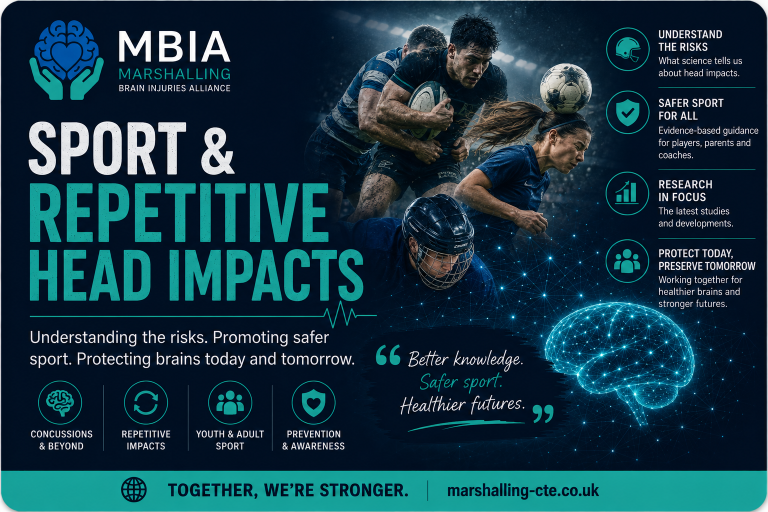
Unlike most sports, players deliberately use their heads to control and direct the ball. Professional footballers may perform thousands of headers throughout their careers, while many more are completed during training than in matches.
Over the past two decades, researchers have become increasingly interested in whether these repeated impacts could contribute to long-term brain health problems, including chronic traumatic encephalopathy (CTE).
Previous studies have mainly focused on two types of force:
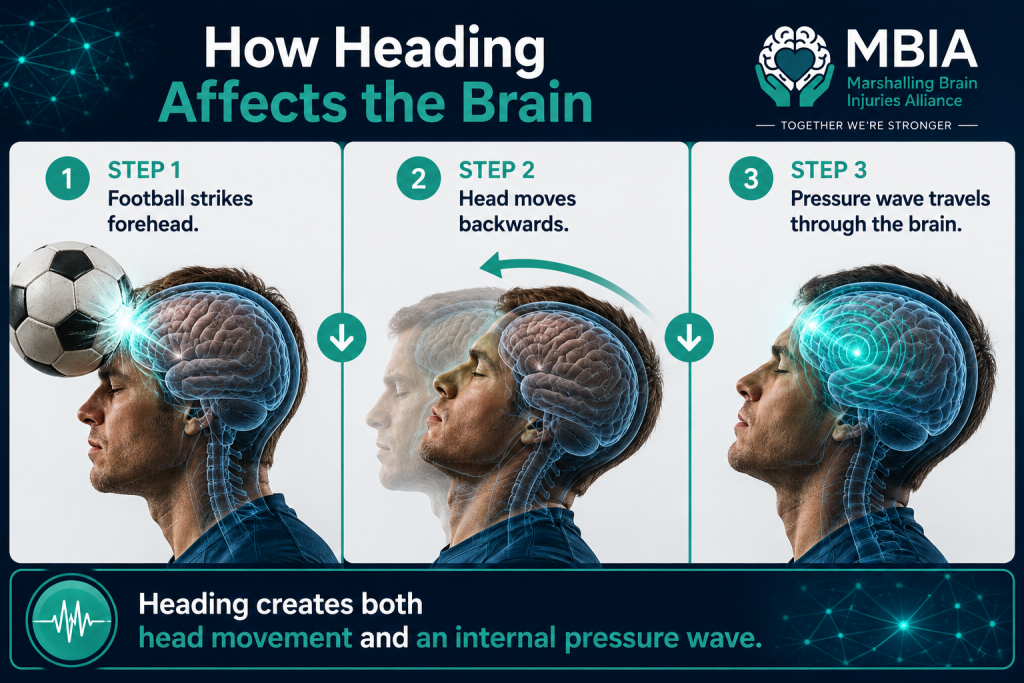
- Linear acceleration – when the head moves backwards after impact.
- Rotational acceleration – when the head twists or rotates.
Both are known to place stress on the brain.
However, researchers wondered whether something else might also happen at the exact moment the ball strikes the head.
A Different Way Energy May Reach the Brain

The researchers investigated something called a pressure wave.
Imagine dropping a pebble into a pond.
The pebble creates ripples that spread rapidly across the water.
Scientists believe something similar may happen inside the brain during heading.
When the football strikes the forehead, it doesn't simply move the head backwards. It also creates a tiny wave of pressure that travels through the brain tissue almost instantly.
Until now, this pressure wave had not been directly measured during football heading.
How Was the Study Performed?
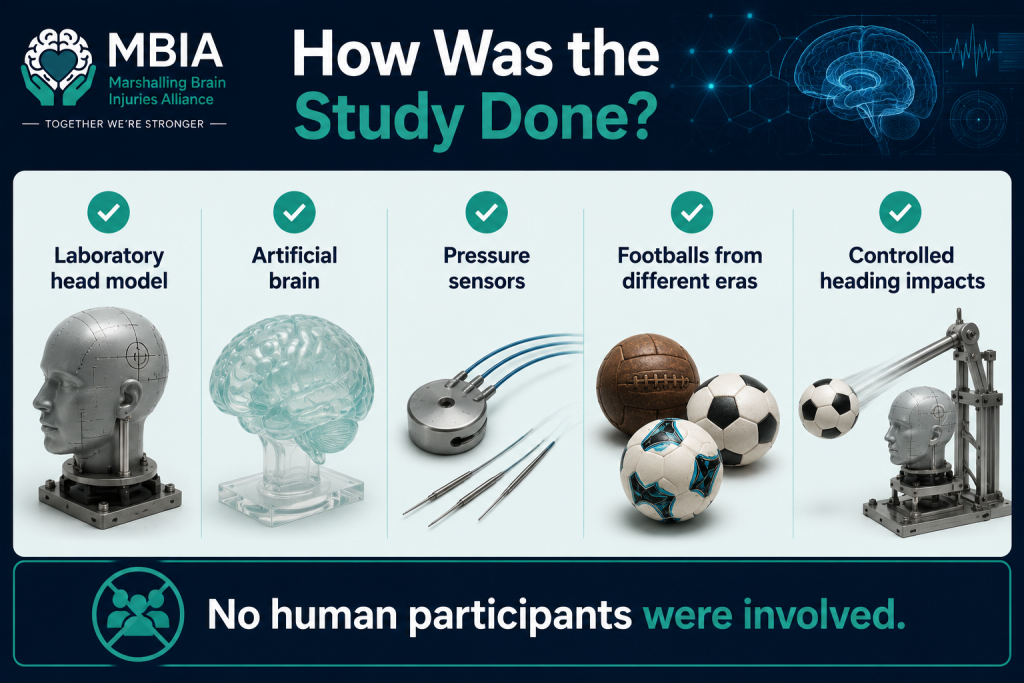
One important point is that no footballers took part in this study.
Instead, the researchers used:
- an advanced laboratory model of the human head
- a realistic artificial brain
- highly sensitive pressure sensors
- footballs from different eras
- heading impacts at realistic speeds
Using this setup allowed them to measure pressure inside the brain model in ways that would not be possible in living people.
This type of laboratory research is often the first step towards understanding new injury mechanisms before studies involving athletes are carried out.
What Did They Discover?
The researchers made three particularly interesting findings.
1. Every Header Produced a Pressure Wave
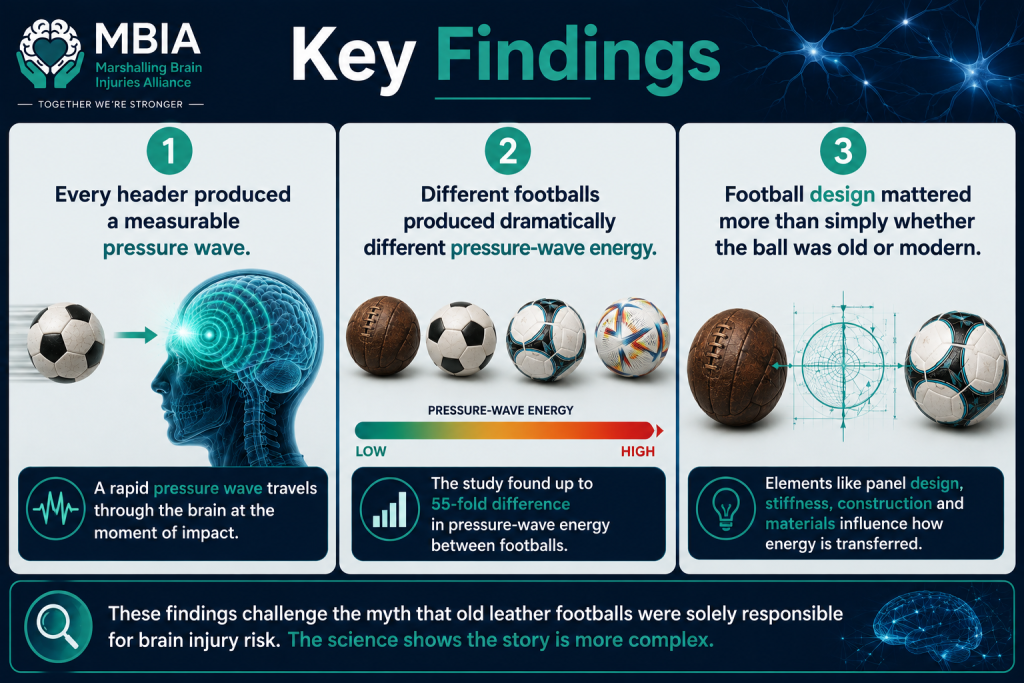
Every football they tested generated a rapid pressure wave inside the brain model.
This means heading appears to involve more than simply moving the head backwards.
Energy also travels through the brain itself.
This doesn't necessarily mean damage occurs, but it does show that scientists may need to think about brain mechanics in a more complex way than previously understood.
2. Football Design Made a Huge Difference
Perhaps the most surprising finding was that different footballs transferred vastly different amounts of pressure-wave energy.
Some footballs generated up to 55 times more pressure-wave energy than others.
That's an enormous difference.
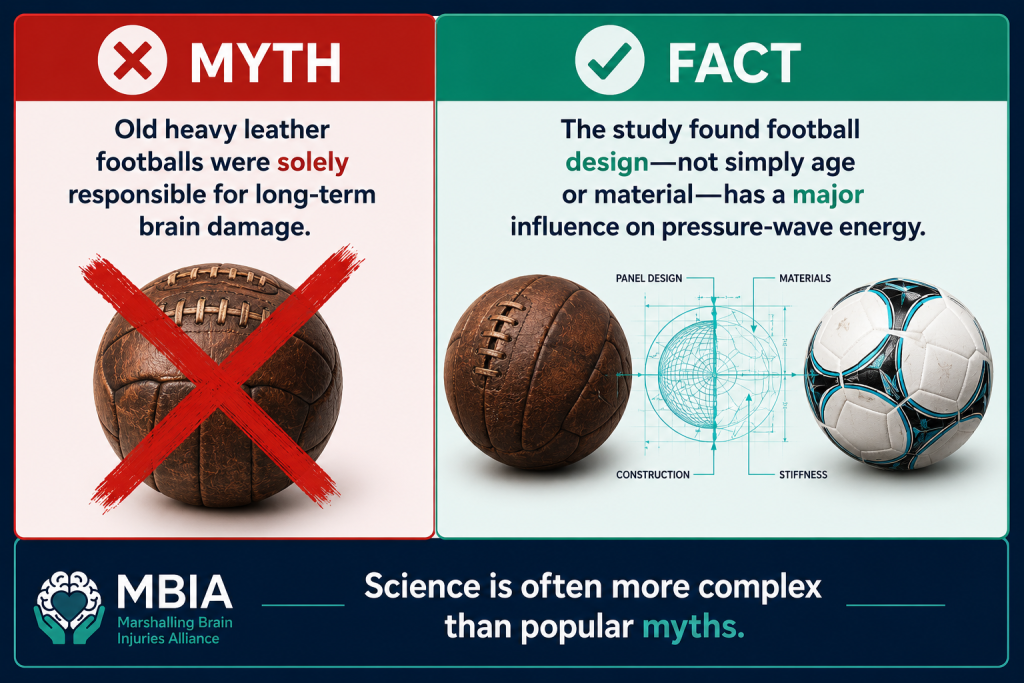
Researchers believe factors such as:
- panel design
- internal construction
- stiffness
- materials
- overall engineering
all influence how energy is transferred during heading.
3. The Old Leather Football Myth Was Challenged
This is the finding that attracted the most media attention.
Many people assume:
"Old leather footballs caused the damage. Modern footballs solved the problem."
The research suggests this is an oversimplification.
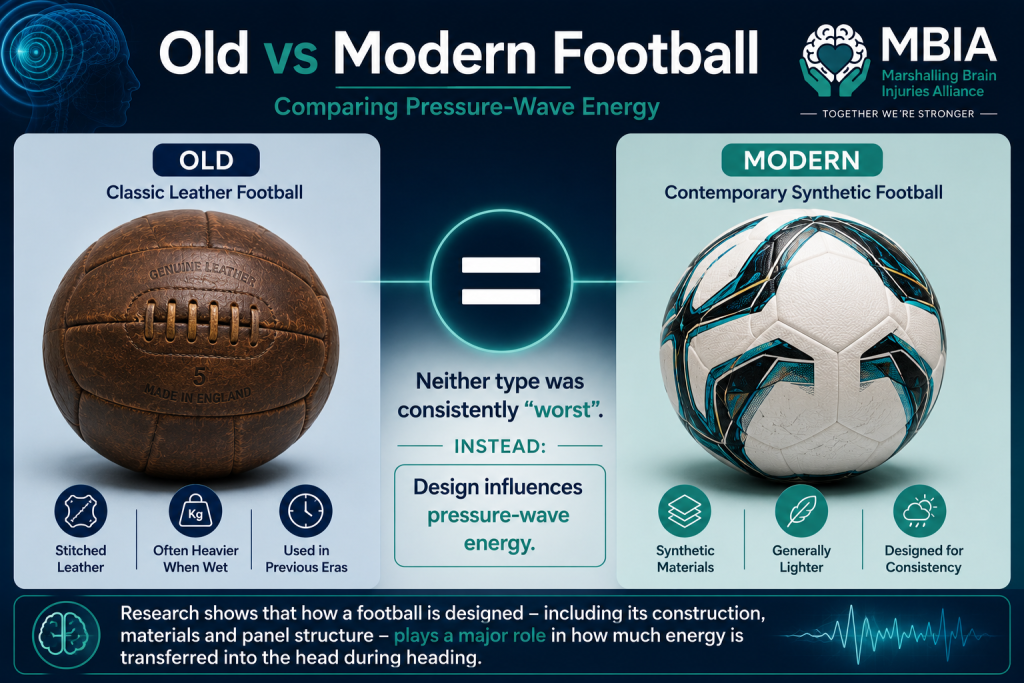
Some older footballs produced relatively high pressure waves.
Some modern footballs also produced relatively high pressure waves.
There was no simple relationship between whether a football was old or modern and how much pressure-wave energy it generated.
In other words:
It's not simply about leather versus synthetic materials.
The way the football is designed appears to matter much more.
Does This Mean Modern Footballs Are Safe?
No.
The study does not say that any football is completely safe.
Nor does it suggest modern footballs eliminate brain injury risk.
Instead, it shows that some football designs may transfer energy differently from others.
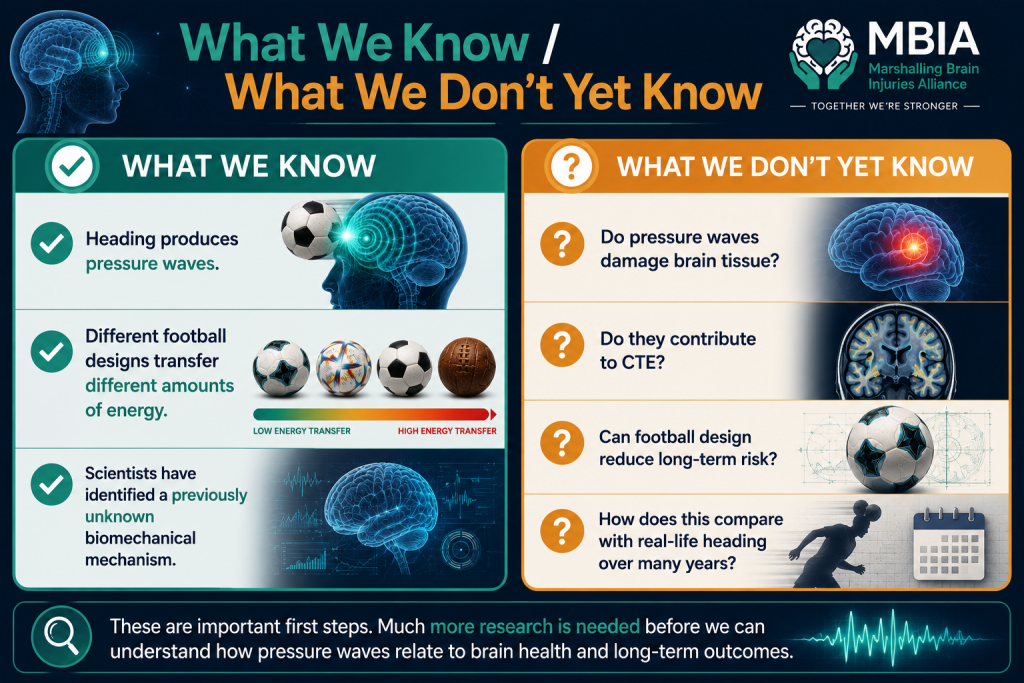
Exactly what that means for long-term brain health remains unknown.
Does This Prove Heading Causes CTE?
No.
This is probably the most important point.
The study did not investigate CTE.
It did not examine dementia.
It did not study retired footballers.
It did not look at brain scans or brain tissue.
Instead, it simply measured how impact energy moved through a laboratory brain model.
That is a very important scientific discovery—but it is only one piece of a much larger puzzle.
Why Is This Still Important?
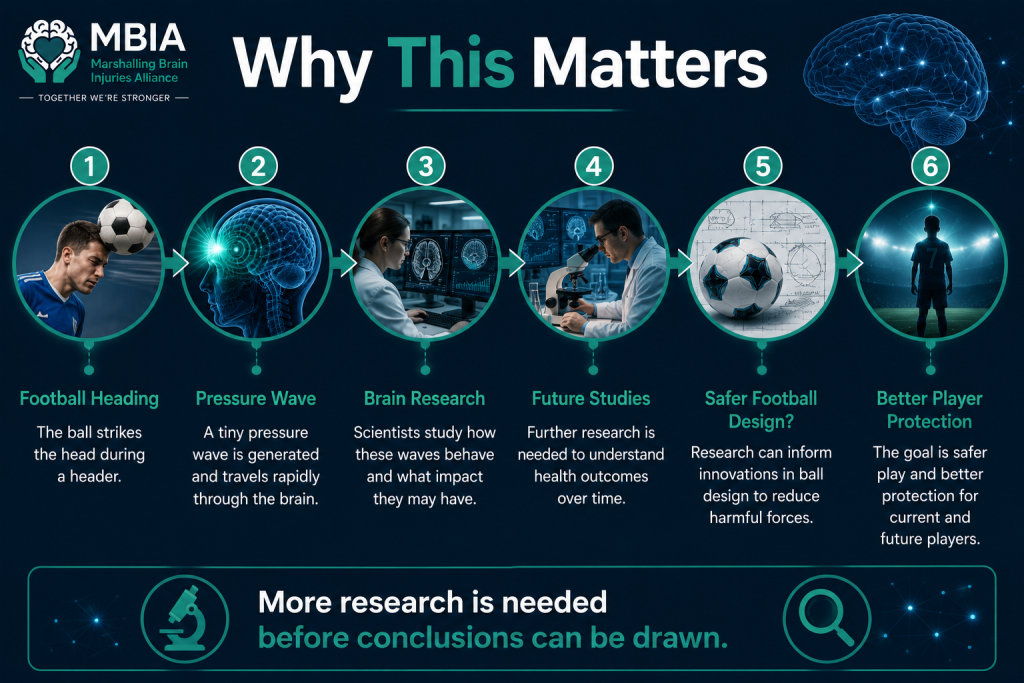
Although this study cannot answer questions about disease, it gives scientists something entirely new to investigate.
CTE is thought to develop through a combination of factors, including:
- repeated stretching of nerve fibres
- microscopic brain injury
- inflammation
- disruption of the blood-brain barrier
- abnormal build-up of tau protein
Researchers can now investigate whether pressure waves contribute to any of these processes.
If they do, it could improve our understanding of how repetitive head impacts affect the brain.
If they do not, scientists will have ruled out another possible mechanism.
Either outcome advances knowledge.
Could This Change Football Design?
Potentially.
If future research confirms that reducing pressure-wave energy lowers stress on the brain, manufacturers may eventually be able to design footballs that transfer less energy during heading.
That could become another way of making football safer without fundamentally changing the game itself.
However, much more research would be needed before any recommendations could be made.
What About Heading Guidelines?
Many football associations already recommend reducing repetitive heading during training, particularly in children and young players.
This new study supports continued research into those precautions.
Reducing unnecessary repetitive impacts while scientists continue to learn more is a sensible, evidence-based approach.
What Are the Limitations of This Study?
Like all research, this study has limitations.
It was conducted using a laboratory model rather than living people.
Laboratory models cannot perfectly reproduce the complexity of the human brain.
The study also measured pressure waves—not brain injury.
Finally, we do not yet know whether larger pressure waves translate into greater long-term neurological risk.
Future research involving athletes, advanced imaging and long-term follow-up will be needed to answer these questions.

Separating Fact From Fiction
✅ What the study found
- A previously unrecognised pressure wave occurs during heading.
- Football design influences how much pressure-wave energy is transferred.
- Some footballs generated far more pressure-wave energy than others.
- The common belief that old leather footballs were automatically the most dangerous was not supported.
❌ What the study did not find
- That pressure waves cause CTE.
- That modern footballs are safe.
- That one type of football prevents brain injury.
- That heading has been proven to cause dementia in this experiment.
MBIA View

This is an exciting piece of biomechanics research because it challenges a long-standing myth and encourages scientists to look at brain injury from a new perspective.
For many years, discussions about football heading have focused almost entirely on the weight of old leather footballs. This study reminds us that the science is far more complex. How impact energy moves through the brain may depend on factors we have only just begun to understand.
While this research does not prove a link between pressure waves and CTE, it provides an important new avenue for future investigation. It also reinforces why reducing unnecessary repetitive heading in training remains a sensible precaution while the science continues to evolve.
At Marshalling Brain Injuries Alliance, we believe the best decisions come from following the evidence—not myths. Every high-quality study brings us one step closer to understanding how repetitive head impacts affect the brain and, ultimately, how we can make sport safer for everyone.

References
Phillips I, Harland A, Lepper P, Mitchell S. The effect of football design on pressure wave energy transfer during football heading. Proceedings of the Institution of Mechanical Engineers, Part P: Journal of Sports Engineering and Technology. 2026. doi:10.1177/17543371261438388.
Loughborough University. Researchers identify previously unrecognised pressure wave during football heading. 2026.
BBC Sport. New research challenges assumptions about football heading and ball design. 2026.