AFL CTE Cases Rise Sharply: What The Latest Findings Mean For Players, Families And The Future Of Sport
By Marshalling Brain Injuries Alliance (MBIA)
Thirty-Three Confirmed Cases Shine A Spotlight On Australian Rules Football
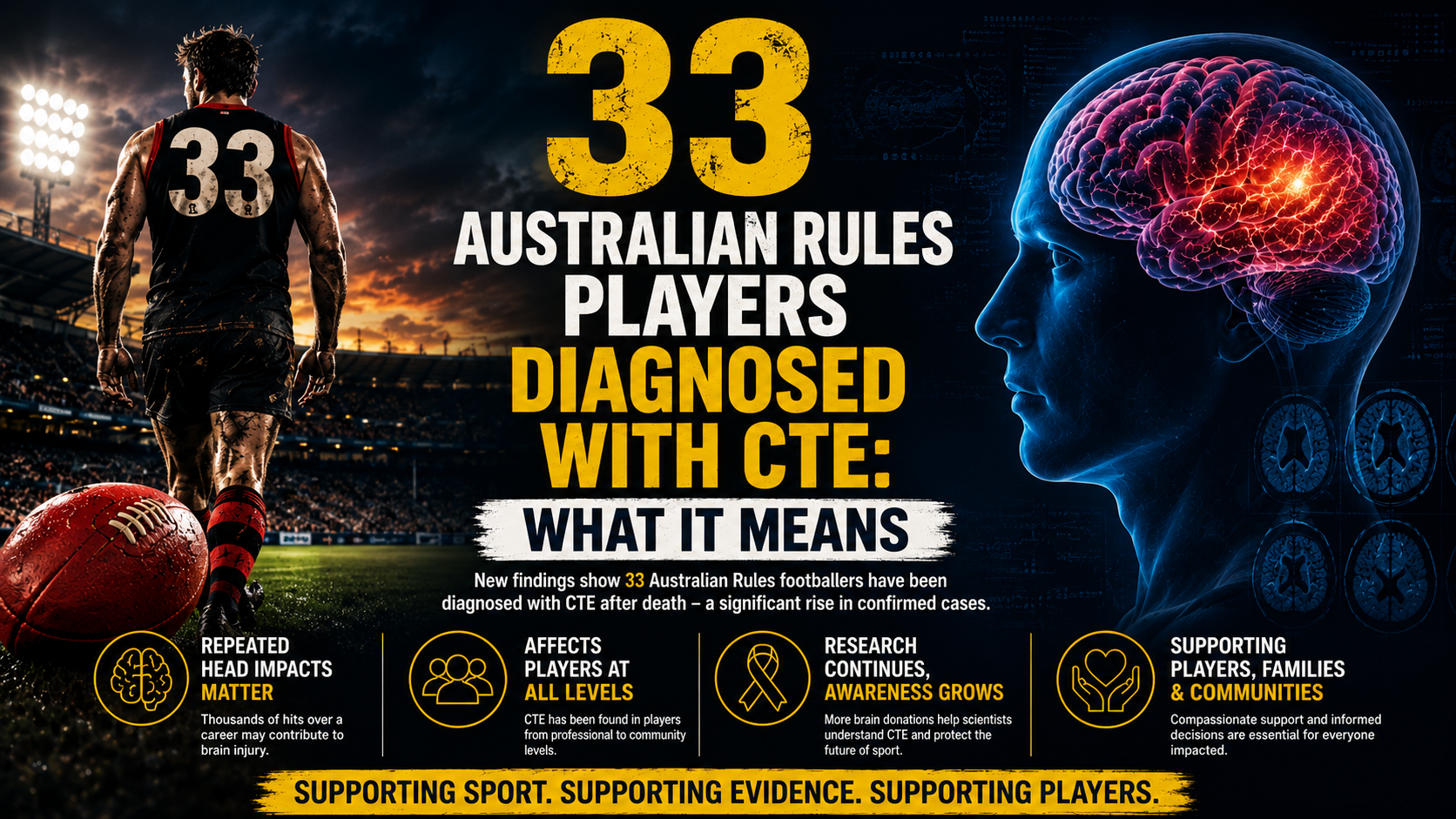
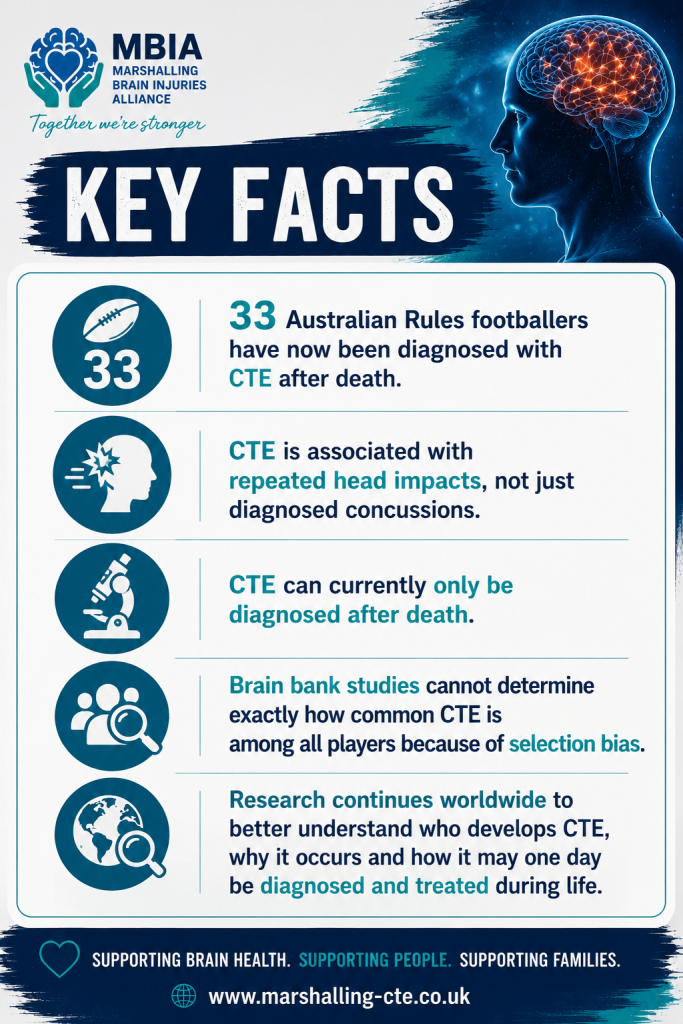
A new investigation by ABC's Four Corners has revealed that 33 former Australian Rules footballers have now been diagnosed with chronic traumatic encephalopathy (CTE) following examination of their brains after death. According to the report, 19 of these were professional or semi-professional players, with others having played at community or amateur levels. Until now, only five confirmed AFL player diagnoses had been publicly reported. This represents a substantial increase in recognised cases and raises important questions about long-term brain health in contact sport.
The findings come from examinations performed by the Australian Sports Brain Bank, one of the world's leading centres for post-mortem research into sports-related brain disease.
What Is CTE?
Chronic traumatic encephalopathy (CTE) is a progressive neurodegenerative disease associated with repeated head impacts.
These impacts may include:
- Diagnosed concussions
- Undiagnosed concussions
- Thousands of seemingly minor, subconcussive impacts that occur during training and competition
Over time, repeated mechanical forces acting on the brain can trigger the abnormal accumulation of hyperphosphorylated tau protein, particularly around small blood vessels deep within the folds (sulci) of the brain. This pattern is considered the hallmark of CTE.
At present, CTE can only be definitively diagnosed after death through neuropathological examination of brain tissue.
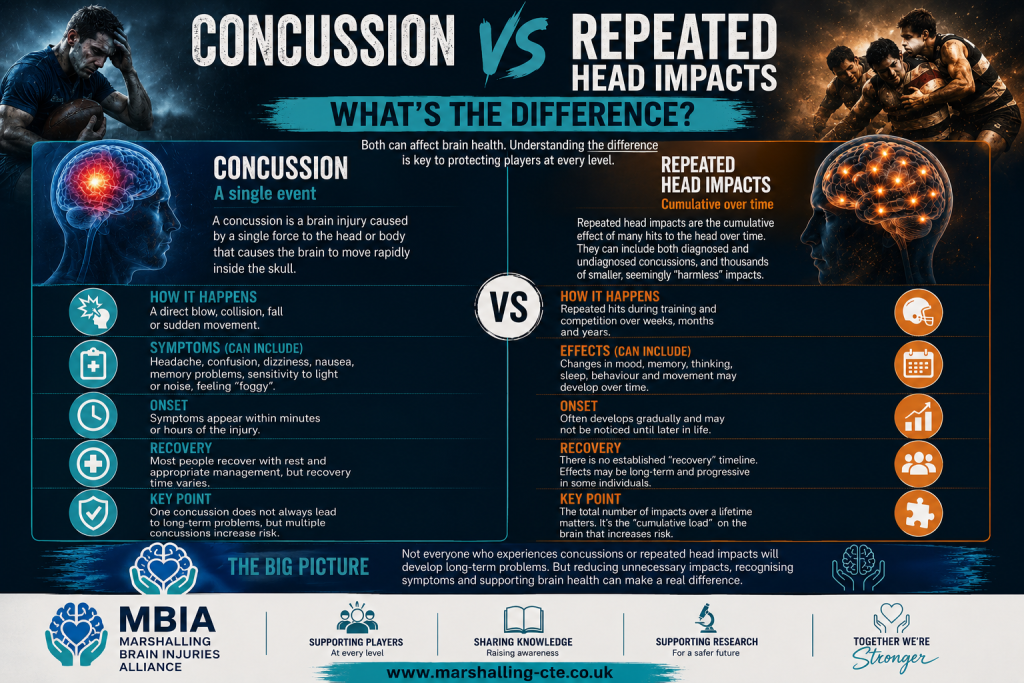
It's Not Just About Concussion
One of the biggest misconceptions surrounding CTE is that it is caused only by diagnosed concussions.
Modern research increasingly suggests that total lifetime exposure to repeated head impacts is likely to be the most important risk factor.
This means:
- Every tackle
- Every spoil
- Every collision
- Every training session
- Every season played
may contribute to the overall mechanical load experienced by the brain.
Not everyone exposed to repeated head impacts develops CTE, and researchers are still working to understand why some individuals appear more susceptible than others. Factors such as genetics, years of exposure, age at first exposure and cumulative impact burden are all being investigated.
What The New AFL Findings Tell Us
The ABC investigation demonstrates several important points.
CTE Is Not Limited To Elite Players
Although professional athletes remain the focus of most research, the Australian Sports Brain Bank has identified CTE in players from multiple levels of Australian Rules football.
This reinforces a growing body of evidence suggesting that risk is related to cumulative exposure rather than professional status alone.
The Disease Is Being Found In Younger People
The report includes former players who died in their 20s, 30s and 40s. While CTE is often associated with older retired athletes, neuropathologists are increasingly identifying pathological changes in much younger individuals.
Numbers Continue To Rise
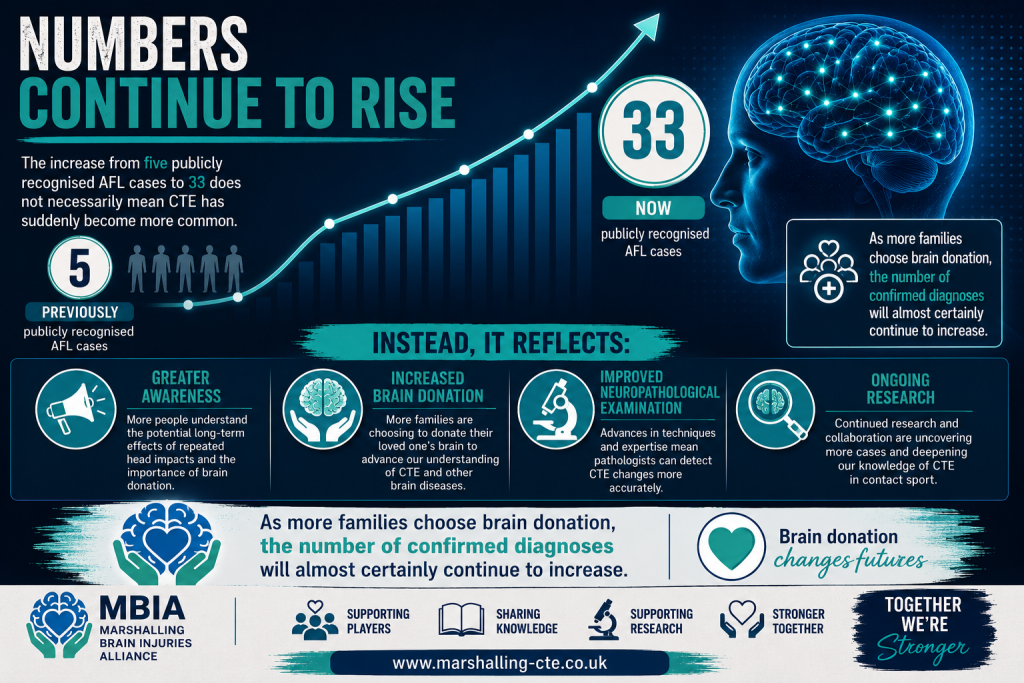
The increase from five publicly recognised AFL cases to 33 does not necessarily mean CTE has suddenly become more common.
Instead, it reflects:
- greater awareness
- increased brain donation
- improved neuropathological examination
- ongoing research
As more families choose brain donation, the number of confirmed diagnoses will almost certainly continue to increase.
Important Limitations
Although these findings are significant, they must be interpreted carefully.
Brain bank studies cannot tell us how common CTE is across all footballers.
This is because donated brains are not a random sample of everyone who has played sport. Families are often more likely to donate when their loved one experienced neurological, cognitive or behavioural symptoms during life.
Scientists refer to this as selection bias.
For this reason, current brain bank studies cannot determine:
- the percentage of all AFL players who develop CTE
- the exact level of risk for an individual player
- why some athletes develop CTE while others do not
Large prospective longitudinal studies are still needed to answer these important questions.
Does CTE Always Cause Symptoms?
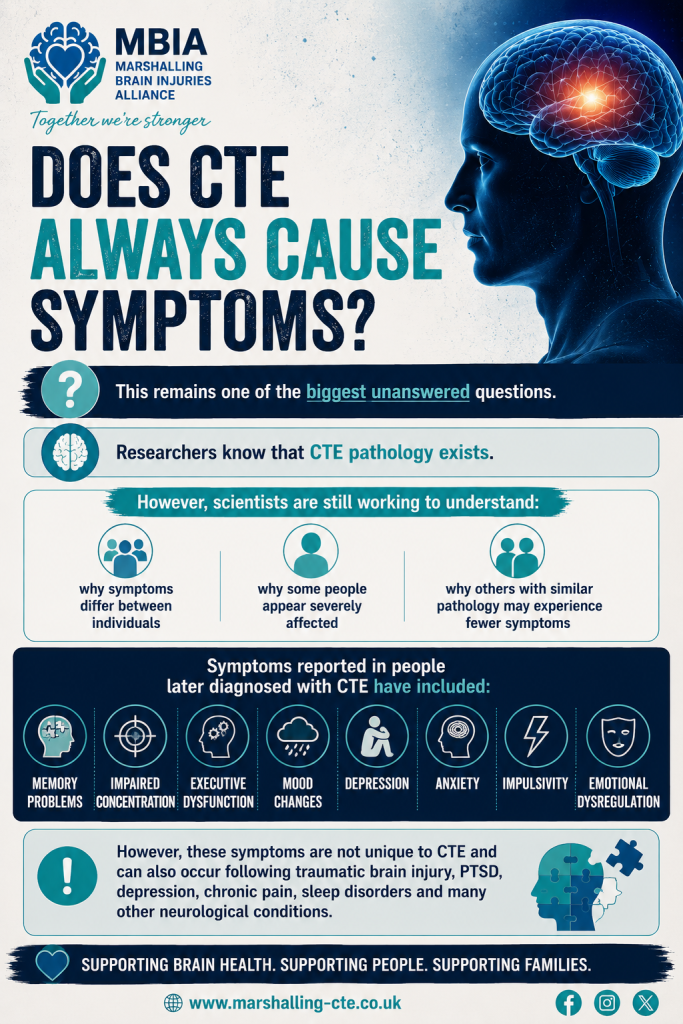
This remains one of the biggest unanswered questions.
Researchers know that CTE pathology exists.
However, scientists are still working to understand:
- why symptoms differ between individuals
- why some people appear severely affected
- why others with similar pathology may experience fewer symptoms
Symptoms reported in people later diagnosed with CTE have included:
- memory problems
- impaired concentration
- executive dysfunction
- mood changes
- depression
- anxiety
- impulsivity
- emotional dysregulation
However, these symptoms are not unique to CTE and can also occur following traumatic brain injury, PTSD, depression, chronic pain, sleep disorders and many other neurological conditions.
The AFL Response
According to the ABC report, the AFL says player health remains its highest priority and has announced plans to further reduce physical contact during pre-season training from 2027. The league states that it has invested heavily in concussion research and continues to review its player safety measures.
Many experts welcome improvements in concussion management but argue that reducing overall exposure to repeated head impacts, rather than focusing solely on diagnosed concussions, should remain a key priority.
What This Means For Contact Sports
The conversation surrounding CTE is no longer limited to one sport or one country.
Evidence continues to emerge across:
- Australian Rules football
- Rugby union
- Rugby league
- American football
- Ice hockey
- Boxing
- Soccer
- Military populations exposed to repeated blast injury
While each sport has different patterns of exposure, the underlying scientific message is increasingly consistent:
Repeated impacts to the head matter.
That does not mean everyone who plays contact sport will develop CTE.
Nor does it mean sport should stop.
Instead, it highlights the importance of:
- reducing unnecessary head impacts
- improving concussion recognition
- supporting affected athletes
- investing in high-quality research
- continuing to improve player safety at every level of sport
MBIA's View
At Marshalling Brain Injuries Alliance, we support sport.
We support players.
We support families.
And we support evidence.
Stories such as this are not about creating fear or discouraging participation. They are about ensuring that players, parents, coaches and sporting organisations have access to the best available scientific evidence so that informed decisions can be made.
As research continues, the goal should not be to choose between sport and safety.
The goal should be to make sport as safe as possible, while providing compassionate support for those living with the long-term consequences of brain injury.
Enjoyed this article? Join thousands of readers receiving our monthly Brain Injury Brief