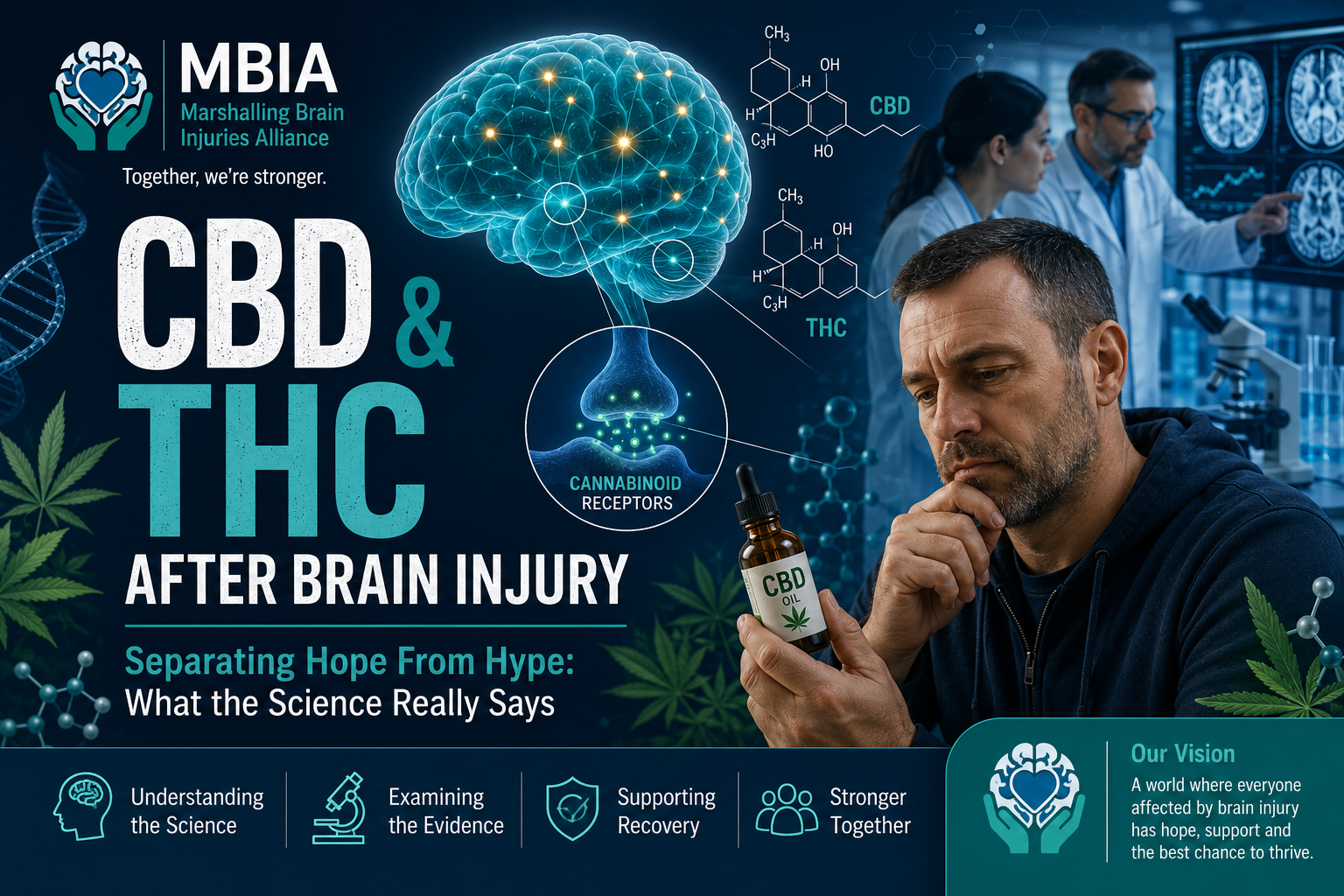
CBD and THC After Brain Injury: What Does the Science Really Say?
Cannabis-based products are becoming increasingly popular among people living with traumatic brain injury (TBI), persistent post-concussion symptoms (PCS) and suspected chronic traumatic encephalopathy (CTE). Many people tell us they use CBD oil, gummies or medical cannabis to help with headaches, anxiety, poor sleep, pain or low mood.
Some describe life-changing improvements. Others notice little benefit or unpleasant side effects.
So what does the science actually say?
At Marshalling Brain Injuries Alliance (MBIA), our aim is to provide trusted, evidence-based information—not to tell people what they should or shouldn't use. This article looks at what researchers have discovered so far, where the evidence is promising, and where important questions remain unanswered.
First Things First: CBD and THC Are Not the Same
Although both come from the cannabis plant, they work very differently.
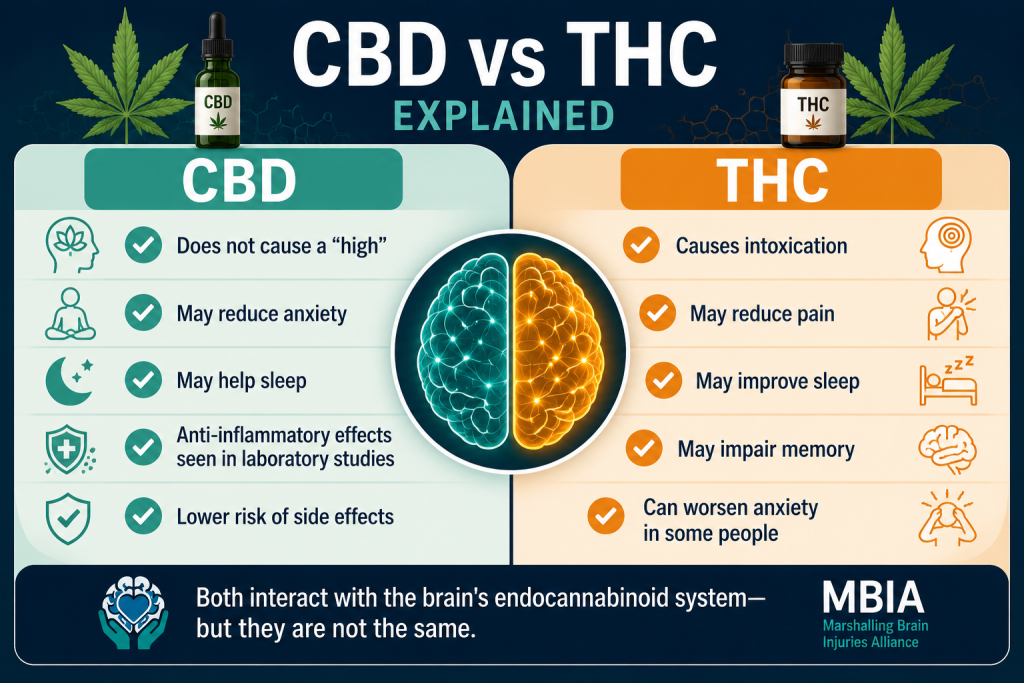
CBD (Cannabidiol)
CBD is not intoxicating and does not produce the "high" associated with cannabis.
Researchers are investigating CBD because it may influence:
- Inflammation
- Anxiety
- Sleep
- Pain
- Oxidative stress
- The brain's natural protective systems
CBD products are widely available in the UK.
THC (Tetrahydrocannabinol)
THC is the main psychoactive ingredient in cannabis.
It can:
- Produce a "high"
- Alter perception
- Affect memory and concentration
- Slow reaction times
Medical cannabis prescribed in specialist clinics often contains THC, CBD or a combination of both.
Why Are Scientists Interested in Cannabis After Brain Injury?
The brain contains its own endocannabinoid system (ECS).
Think of it as one of the brain's balancing systems.
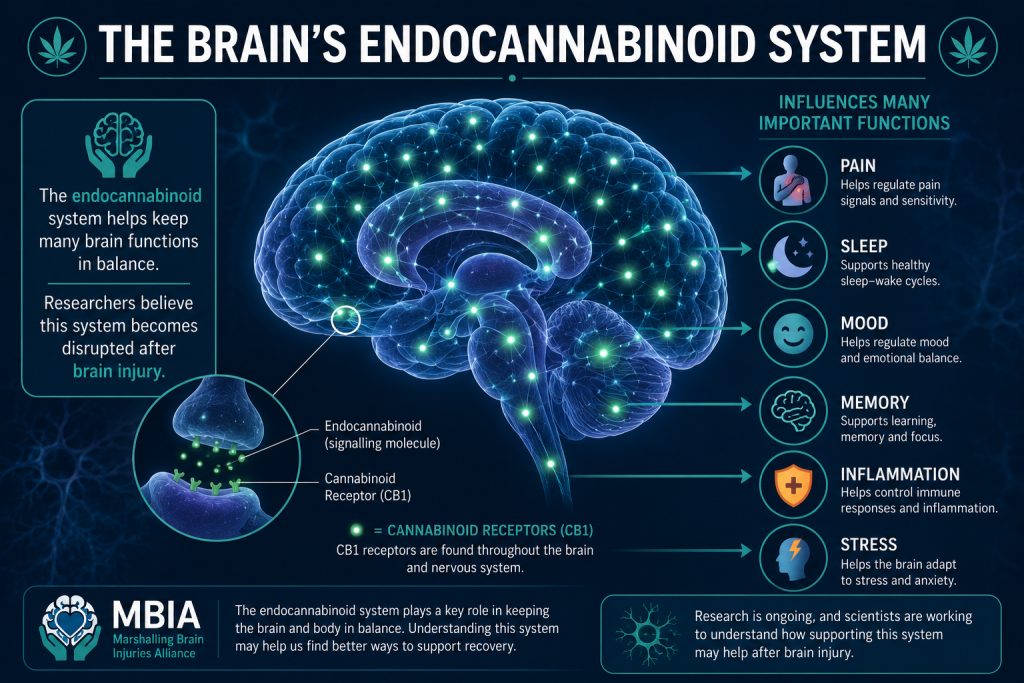
It helps regulate:
- Sleep
- Pain
- Mood
- Stress
- Inflammation
- Memory
- Appetite
- Brain plasticity
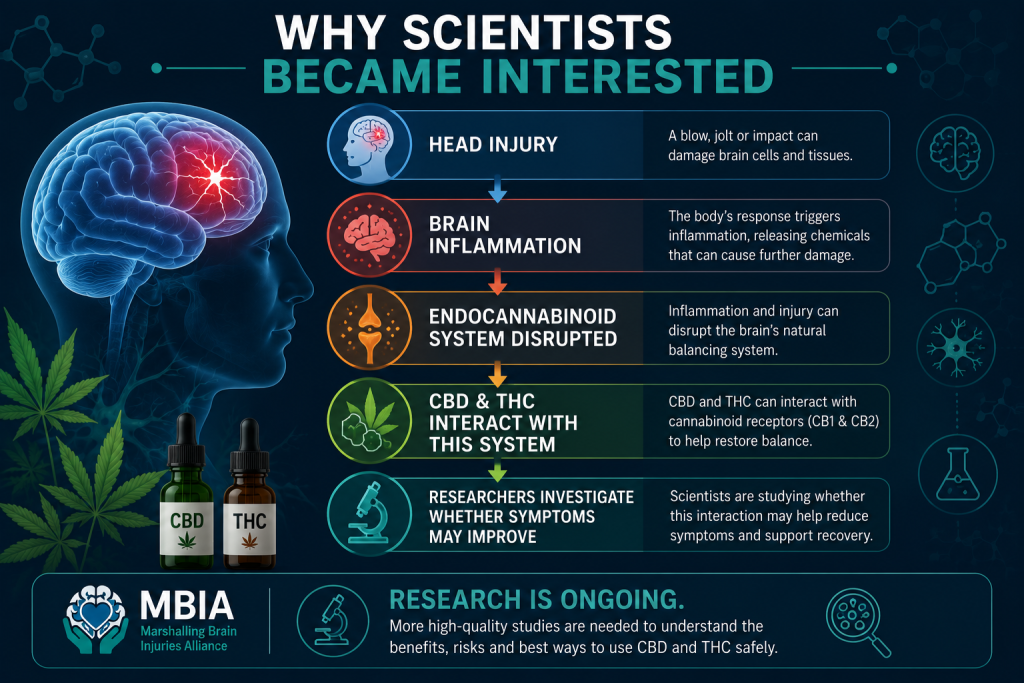
After a brain injury, this system appears to become disrupted.
Animal studies suggest cannabinoids may help reduce:
- Neuroinflammation
- Oxidative stress
- Damage caused by excessive glutamate
- Blood-brain barrier dysfunction
This is one reason researchers are excited.
However...
Most of this evidence comes from laboratory and animal studies—not human clinical trials.
Can CBD Reduce Brain Inflammation?
This is probably the biggest claim made online.
The answer is:
Possibly—but we don't yet know in people with brain injuries.
Laboratory studies show CBD can reduce inflammatory chemicals such as:
- TNF-alpha
- IL-1 beta
- IL-6
These are involved in the inflammatory response after brain injury.
Animal studies have also shown CBD may reduce:
- Swelling
- Oxidative damage
- Nerve cell death
Unfortunately, there are currently no large human clinical trials proving CBD reduces brain inflammation after TBI or CTE.
That doesn't mean it doesn't work.
It means the research hasn't reached that stage yet.
What Dose of CBD Has Been Used in Studies?
This is one of the biggest areas of confusion.
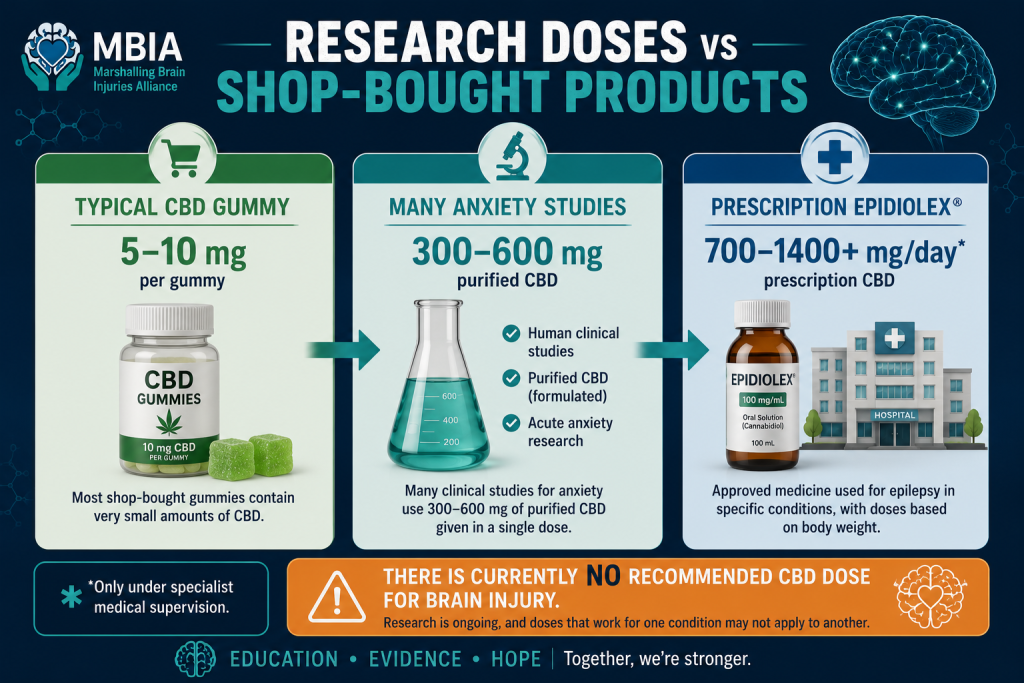
Many people buy CBD gummies containing 5–10 mg of CBD and assume this matches research studies.
In reality, it usually doesn't.
Anxiety Studies
Many well-designed clinical studies investigating acute anxiety have used:
300–600 mg of purified CBD
These studies often found reduced anxiety in stressful situations, such as public speaking tests.
Epilepsy
The prescription medicine Epidiolex uses much higher doses.
Typical doses are:
10–20 mg per kilogram of body weight per day
For a 70 kg adult, this equates to approximately 700–1,400 mg daily, but only under specialist medical supervision because of potential side effects and drug interactions.
Pain and Sleep
Studies vary enormously.
Researchers have investigated doses ranging from:
25 mg to over 300 mg per day
Results have been inconsistent.
Some people improved.
Others did not.
Brain Injury
This is the important point.
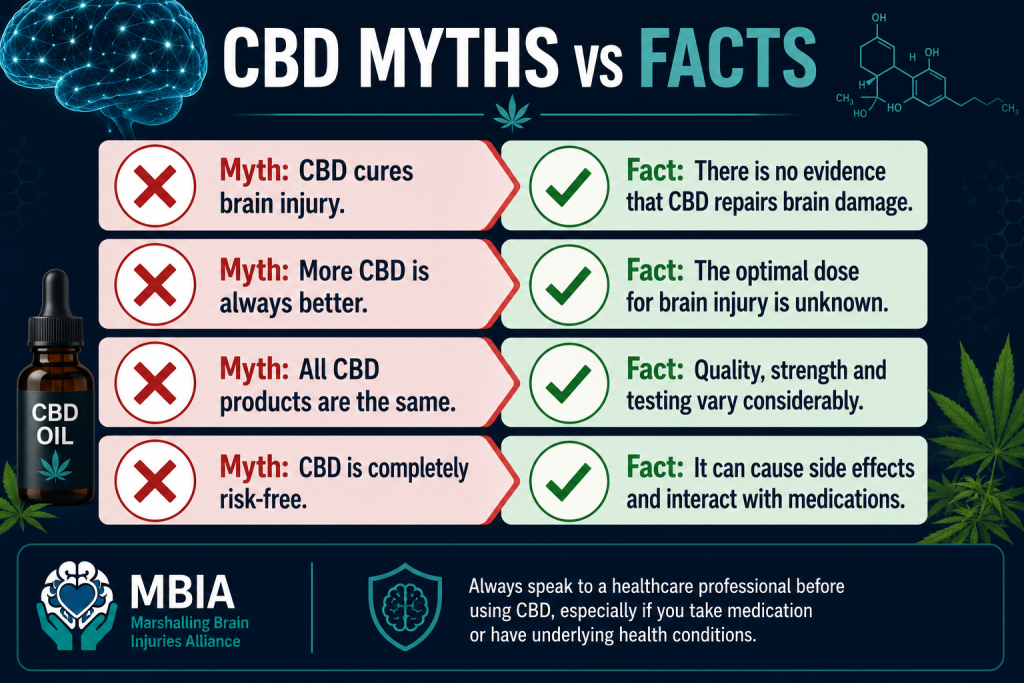
There is currently no scientifically established dose of CBD for treating TBI, PCS or CTE.
No professional organisation recommends a specific dose because the necessary clinical trials have not yet been completed.
Why Do Many Gummies Contain Only 10 mg?
There are several reasons.
CBD is expensive to produce.
Lower doses reduce manufacturing costs.
Many companies market products as wellness supplements rather than medicines.
The result is that many over-the-counter products contain doses far below those used in clinical research.
This doesn't necessarily mean they won't help an individual—but it does mean they may not reflect the doses being investigated by scientists.
Could Higher Doses Work Better?
Not necessarily.
CBD does not always work in a straight line where "more is better."
Some studies suggest a bell-shaped response, where moderate doses may be more effective than either very low or very high doses.
Researchers are still trying to understand this.
This is why increasing the dose dramatically without medical advice is not recommended.
What Does the Evidence Say for Common Brain Injury Symptoms?
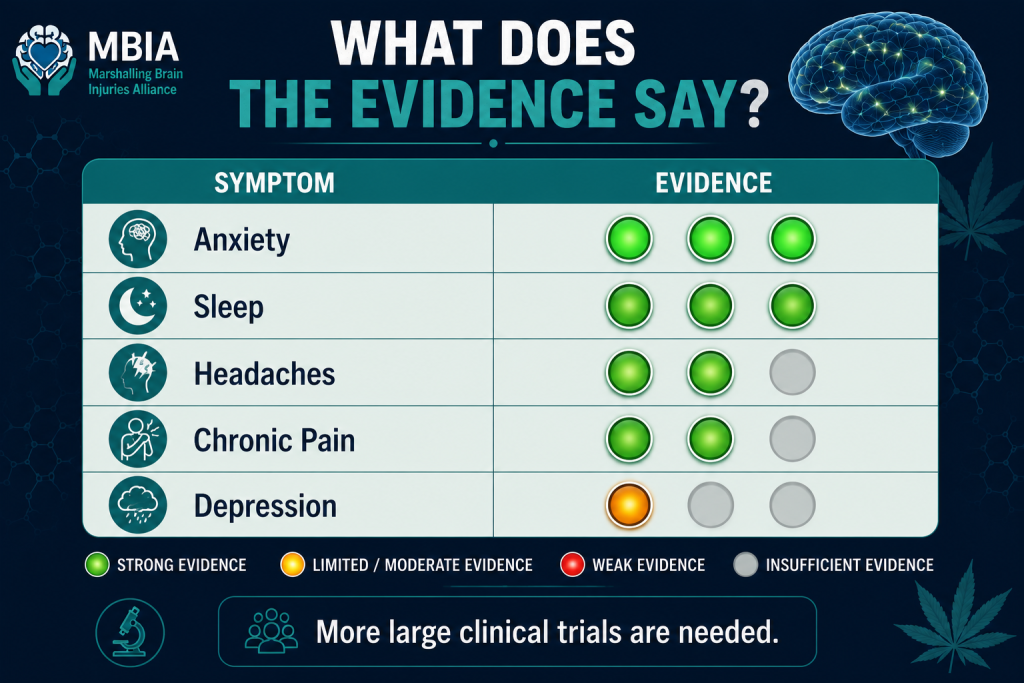
Headaches
Some people report significant improvements.
Most evidence is actually stronger for THC-containing medical cannabis than CBD alone.
However, the studies are generally small and observational.
Evidence: Limited but promising.
Anxiety
This is one of CBD's most promising research areas.
Several human studies suggest purified CBD may reduce anxiety in stressful situations.
However, larger studies are still needed before CBD can be recommended as a treatment for anxiety disorders.
Evidence: Moderate but incomplete.
Depression
Despite many claims online, there is currently no convincing evidence that CBD or THC treats depression itself.
Some people feel better because:
- They sleep better.
- They have less pain.
- Their anxiety improves.
That is different from treating depression directly.
Evidence: Weak.
Sleep
This is one area where many people report benefit.
THC often helps people fall asleep faster.
CBD may improve sleep indirectly by reducing anxiety.
However, long-term THC use may alter normal sleep architecture and can lead to poorer sleep if stopped suddenly.
Evidence: Moderate.
Chronic Pain
Cannabis medicines have shown benefits for some types of chronic pain, particularly neuropathic pain.
Evidence specifically for brain injury-related pain remains limited.
What About CTE?
At the moment:
No study has shown CBD or THC can stop, slow or reverse CTE.
Researchers hope cannabinoids may eventually prove neuroprotective.
But that has not yet been demonstrated in humans.
Anyone claiming CBD "treats CTE" is going beyond the available evidence.
Are There Risks?
Yes.
Although CBD has a relatively good safety profile, it is not risk-free.
Possible side effects include:
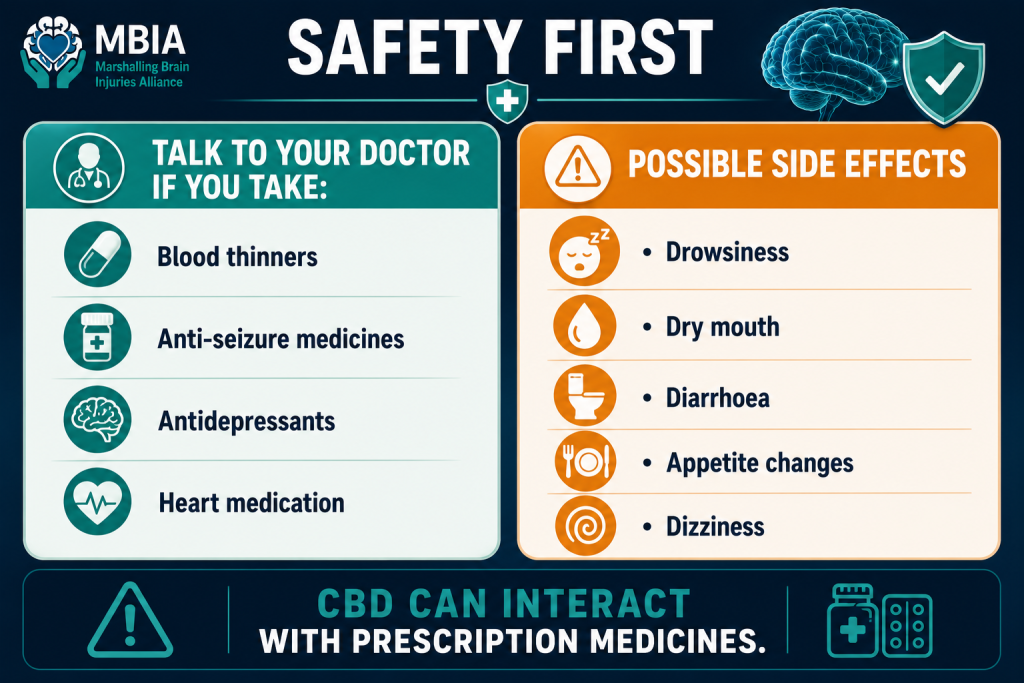
- Sleepiness
- Diarrhoea
- Reduced appetite
- Dry mouth
- Changes in liver enzymes
CBD can also interact with medicines, including:
- Blood thinners (such as warfarin)
- Some anti-seizure medications
- Certain antidepressants
- Some heart medications
Always discuss CBD with your healthcare professional if you take prescription medicines.
THC carries additional risks.
These include:
- Impaired memory
- Slower thinking
- Reduced concentration
- Increased falls risk
- Anxiety
- Panic attacks
- Paranoia
- Dependence in some people
These effects are particularly relevant after a brain injury, where memory, balance and thinking may already be affected.
If You're Thinking About Trying CBD
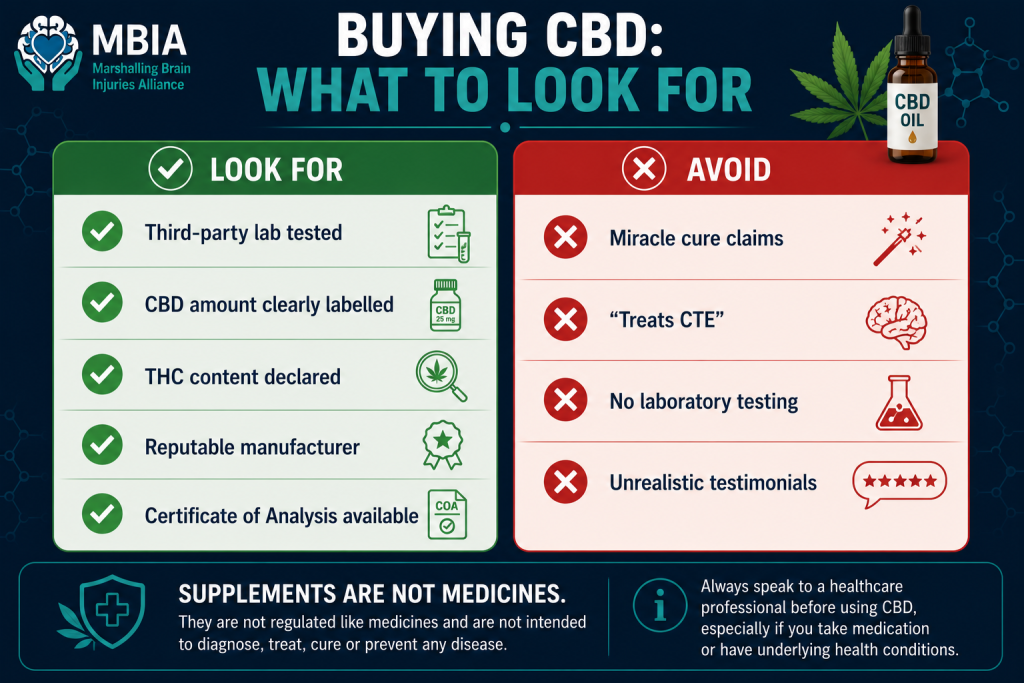
If you and your healthcare professional decide CBD may be appropriate, consider the following:
✔ Buy from reputable companies that provide independent third-party laboratory certificates showing the CBD content and confirming the product has been tested for contaminants.
✔ Check how much CBD is in each serving, not just the total amount in the bottle.
✔ Remember that many products contain much lower doses than those investigated in research.
✔ Keep a symptom diary so you can monitor whether it is genuinely helping.
✔ Tell your doctor or pharmacist, especially if you take prescription medicines.
What We Know
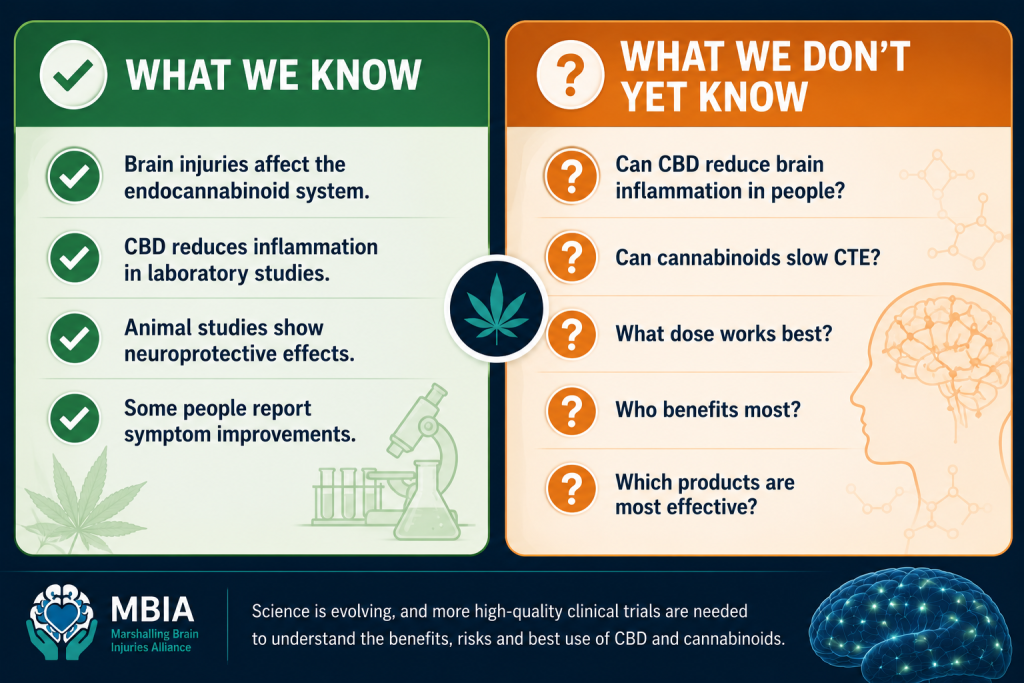
✅ The brain has its own endocannabinoid system.
✅ CBD has anti-inflammatory and antioxidant effects in laboratory studies.
✅ Animal studies suggest cannabinoids may protect nerve cells after injury.
✅ Many people with brain injuries report improvements in symptoms such as sleep, headaches or anxiety.
✅ CBD appears to have a better safety profile than THC.
What We Don't Yet Know
❓Can CBD reduce brain inflammation in people after TBI?
❓Can cannabinoids slow neurodegeneration?
❓Can they prevent or delay CTE?
❓Which patients benefit the most?
❓What is the ideal dose for brain injury?
❓Should CBD be used alone or with THC?
The honest answer is that we simply don't know yet.
MBIA's View
Cannabis-based medicines are one of the most talked-about areas of brain injury research.
The science is exciting.
The personal stories are often compelling.
But it is important not to confuse hope with proof.
At present, CBD and THC should be viewed as potential tools for managing symptoms rather than treatments that repair the brain or cure conditions such as CTE.
As research continues, we hope future clinical trials will provide clearer answers about who may benefit, which products are most effective and what doses are both safe and beneficial.
Until then, the best approach is to stay informed, ask questions, discuss any treatment with your healthcare team and be cautious of products making claims that are not supported by evidence.
Because when it comes to brain injury, hope should always be guided by science—not headlines.
Evidence reviewed for this article
- UK clinical guidance (NICE)
- World Health Organization reports
- Randomised controlled trials
- Systematic reviews and meta-analyses
- Neuroscience research on the endocannabinoid system
- Animal studies (clearly identified where applicable)
Last reviewed: July 2026