Could Tiny Nanoparticles Help the Brain Clean Itself? Separating Fact from Hype—and What It Could Mean for CTE
Every few months, headlines appear claiming that scientists have found a "cure" for Alzheimer's disease. Most of the time, those headlines promise far more than the research actually shows.
Recently, however, a study caught the attention of neuroscientists for a different reason. Instead of trying to destroy amyloid plaques directly, researchers developed tiny engineered nanoparticles that appeared to restore one of the brain's own natural waste-removal systems.
The results in mice were impressive—but they are not the same as proving the treatment works in people.
So, what did the study actually show? And could this approach one day have implications beyond Alzheimer's disease, including conditions such as chronic traumatic encephalopathy (CTE)?
Let's separate the evidence from the excitement.
Why the Brain Needs a Waste-Removal System
Your brain is incredibly active.
Every second, billions of brain cells communicate with one another, producing energy, proteins and waste products. Like every busy city, the brain constantly generates rubbish that needs to be removed.
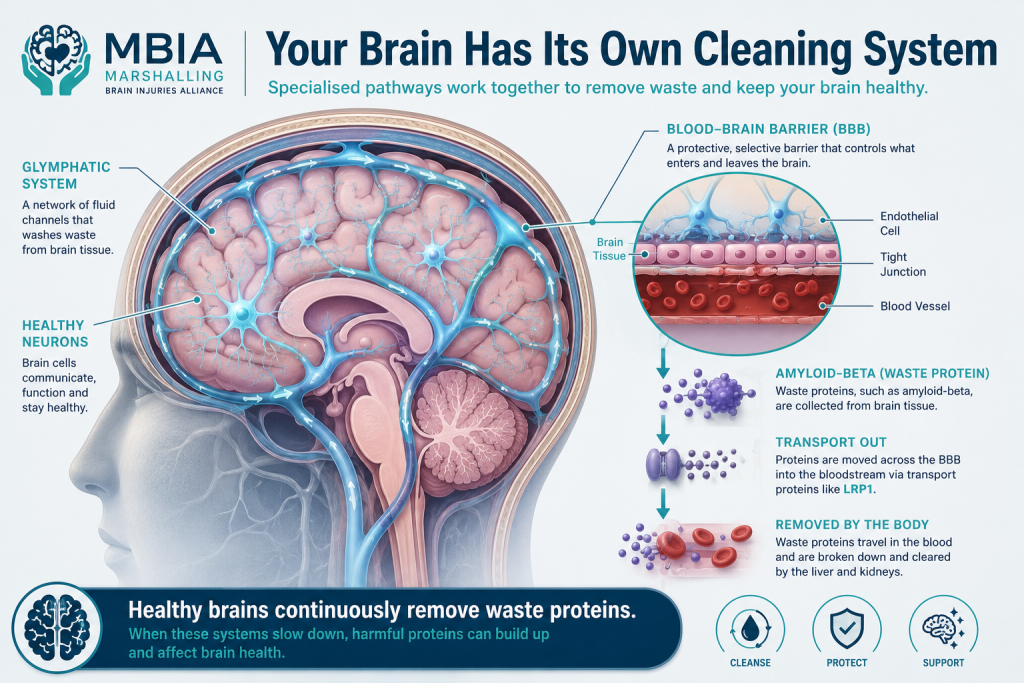
Fortunately, healthy brains have several ways of clearing waste, including:
- The blood-brain barrier (BBB)
- The glymphatic system (often described as the brain's "cleaning system")
- Immune cells called microglia
- Transport proteins that move unwanted molecules out of the brain
When these systems work well, harmful proteins are continually removed before they can build up.
As we age—and in many neurological diseases—these clearance systems become less efficient.
What Happens in Alzheimer's Disease?
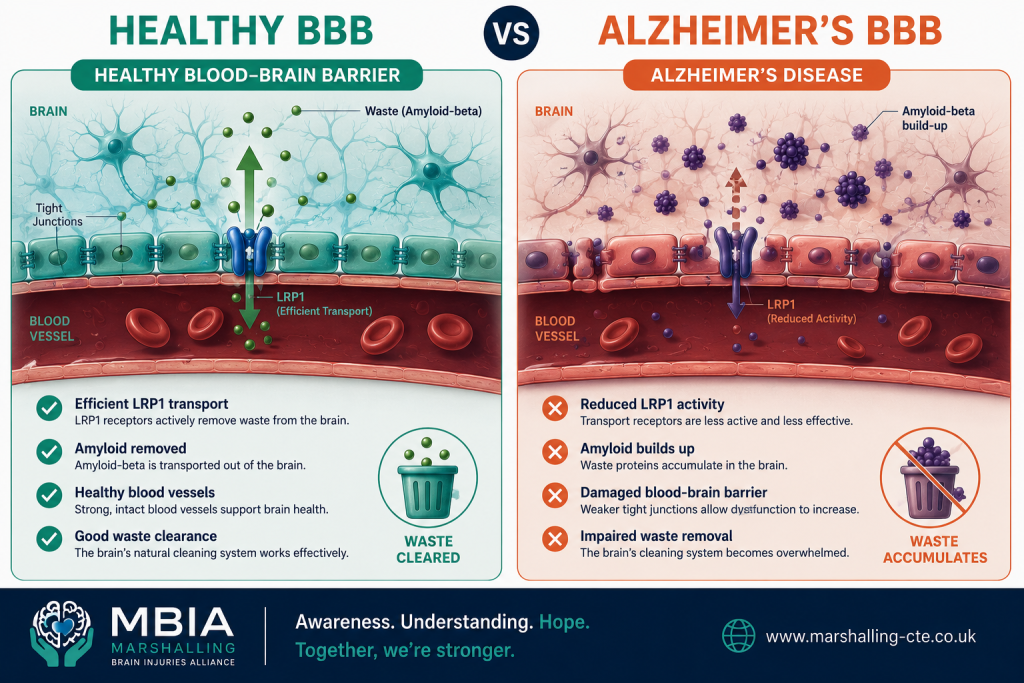
Alzheimer's disease is complex.
Scientists believe several processes contribute to the disease, including:
- Amyloid-beta protein accumulation
- Tau tangles inside nerve cells
- Chronic inflammation
- Blood-brain barrier dysfunction
- Loss of synapses
- Progressive death of brain cells
For decades, most treatments have focused on removing amyloid plaques.
Some newer antibody treatments can reduce amyloid in selected patients and modestly slow disease progression. However, they do not reverse Alzheimer's disease, and they can carry significant risks, including brain swelling and small brain bleeds.
That has led researchers to ask a different question:
What if the real problem isn't simply producing too much amyloid—but failing to remove it efficiently?
The Blood-Brain Barrier Is More Than a Barrier
Despite its name, the blood-brain barrier isn't simply a wall.
It is an active transport system that carefully controls what enters and leaves the brain.
It allows:
- Oxygen
- Glucose
- Nutrients
- Hormones
to enter the brain while removing waste products.
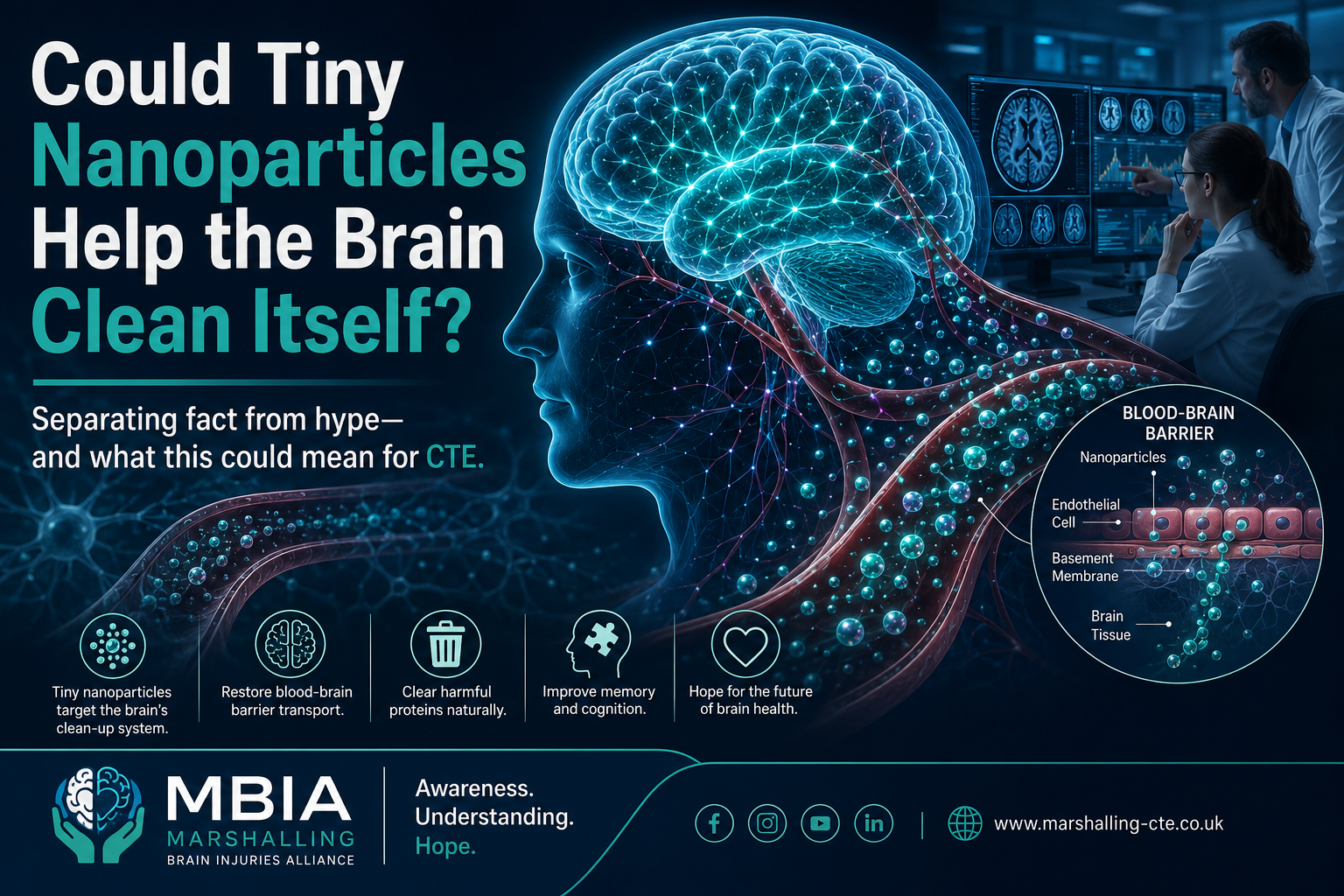
One of its key transport proteins is called LRP1 (Low-density Lipoprotein Receptor-related Protein 1).
Think of LRP1 as part of the brain's recycling service.
It helps transport amyloid-beta from the brain into the bloodstream, where it can eventually be broken down and removed by the body.
In Alzheimer's disease, LRP1 becomes less effective.
As this clearance system slows down, amyloid begins accumulating faster than it can be removed.
What Did Researchers Develop?
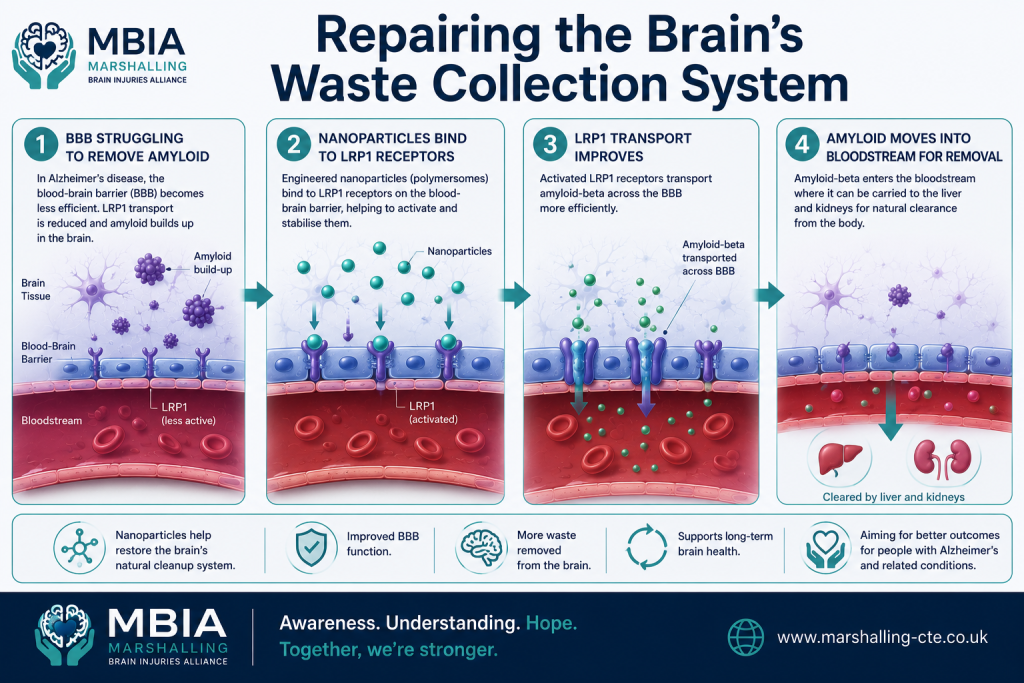
This is where the study becomes particularly interesting.
Rather than creating another drug designed to attack amyloid directly, scientists engineered microscopic nanoparticles called polymersomes.
These are incredibly small—thousands of times smaller than the width of a human hair.
Unlike most nanoparticles, which are designed to carry medicines, these particles appear to act as the treatment themselves.
Researchers describe them as "supramolecular drugs."
Instead of delivering another medicine, the particles interact with the blood-brain barrier and encourage LRP1 to transport amyloid out of the brain more efficiently.
In simple terms:
Rather than cleaning the rubbish themselves...
...they appear to repair the brain's own rubbish collection service.
What Happened in the Mice?
The researchers tested the treatment in mice genetically engineered to develop Alzheimer's-like disease.
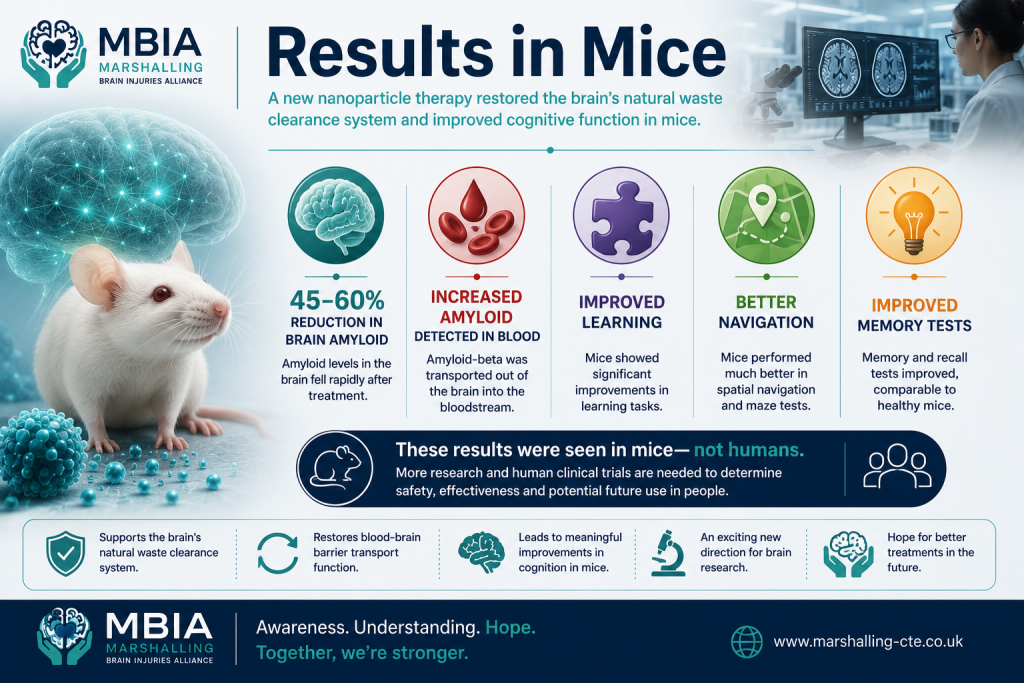
The findings were striking.
Within a short period:
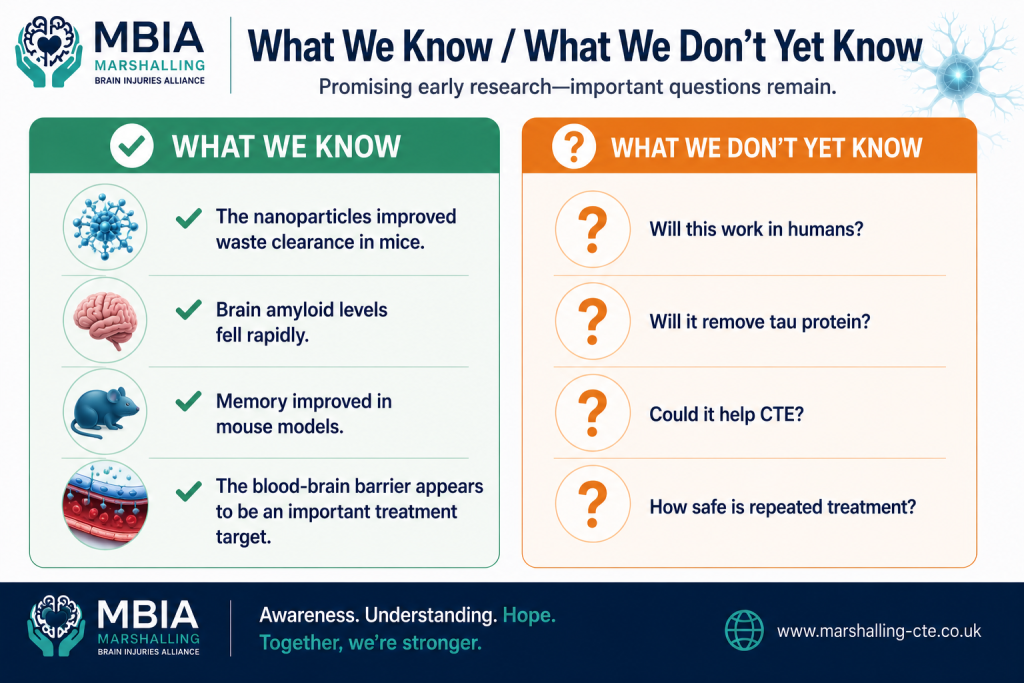
- Brain amyloid levels fell dramatically.
- Amyloid levels increased in the bloodstream, suggesting it had been transported out of the brain.
- Brain imaging confirmed widespread reductions in amyloid burden.
Perhaps even more impressive were the behavioural changes.
Older mice with memory problems performed much better in learning and navigation tests after treatment.
In some experiments, their performance became similar to healthy mice.
These improvements also appeared to persist for several months.
Why Are Scientists Excited?
Most Alzheimer's drugs work by attacking amyloid directly.
This treatment works differently.
Instead of forcing amyloid to disappear, it appears to restore the brain's own natural ability to remove waste.
That represents a completely different therapeutic strategy.
If future studies confirm these findings, restoring normal waste clearance could become just as important as targeting amyloid itself.
Separating Fact From Hype
Whenever exciting neuroscience research appears online, it is important to ask one question:
What did the study actually prove?
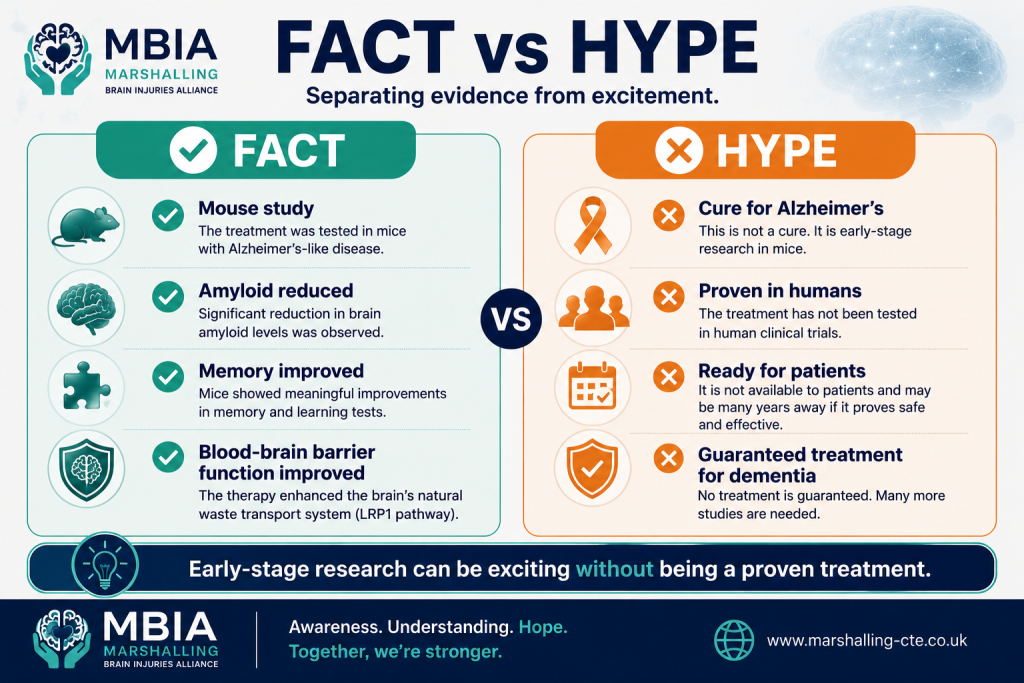
✅ FACT
The treatment rapidly reduced amyloid levels in mice.
✅ FACT
The mice performed better in memory and learning tests after treatment.
✅ FACT
The therapy appeared to improve blood-brain barrier transport through the LRP1 system.
❌ HYPE
"This cures Alzheimer's."
No human has been cured.
The treatment has not yet been tested in clinical trials.
❌ HYPE
"This will be available soon."
It may still be many years before researchers know whether it is safe or effective in people.
❌ HYPE
"This proves amyloid causes Alzheimer's."
Alzheimer's disease remains much more complex than amyloid alone.
Tau, inflammation, blood vessel changes, genetics and many other factors are also involved.
Could This Help People Living With CTE?
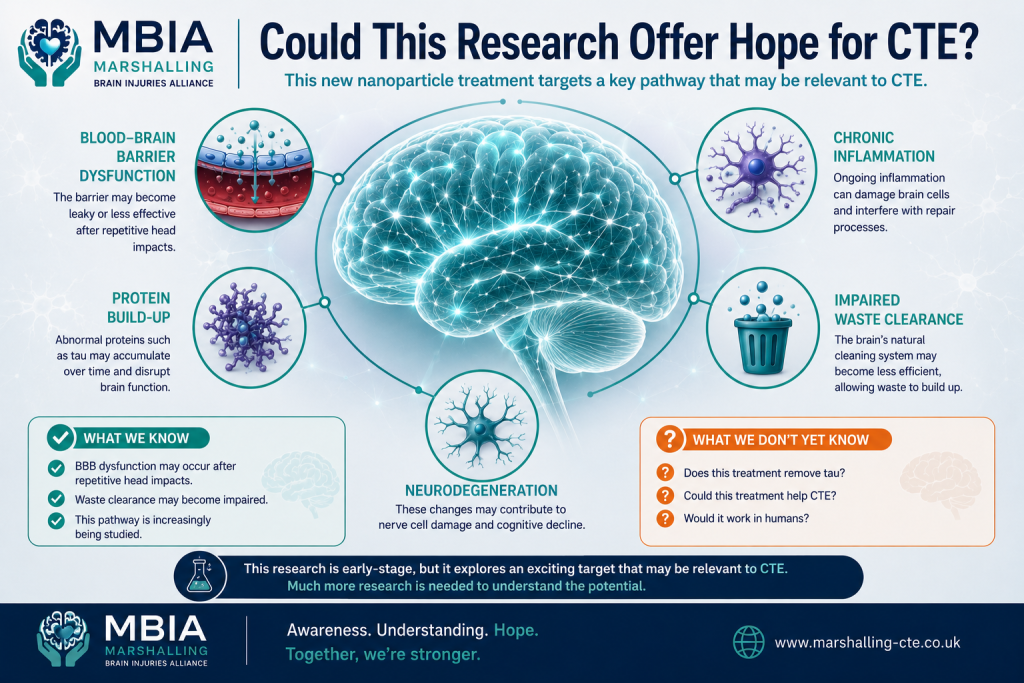
This is the question many of our members will understandably ask.
The honest answer is:
Possibly—but nobody knows yet.
CTE shares some features with Alzheimer's disease, but it is not the same condition.
CTE is primarily a tauopathy, meaning abnormal tau proteins are the main pathological hallmark.
Amyloid plaques are much less common and are not required for a diagnosis of CTE.
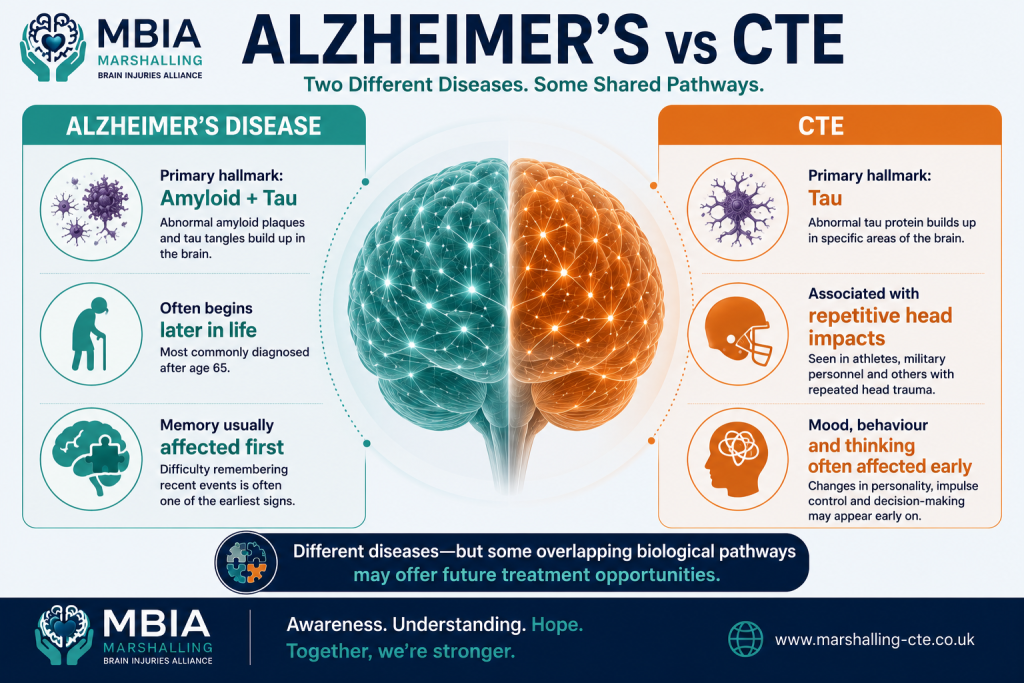
However, there are some interesting overlaps.
Research increasingly suggests that repetitive head impacts may lead to:
- Blood-brain barrier disruption
- Impaired waste clearance
- Chronic inflammation
- Reduced glymphatic function
- Progressive accumulation of abnormal proteins
If future treatments can restore the brain's natural clearance systems, they might theoretically help remove a range of harmful molecules—not just amyloid.
That is an exciting possibility.
But at present, it remains a scientific hypothesis rather than an established fact.
No studies have shown that this nanoparticle treatment works in CTE.
No studies have shown that it removes abnormal tau.
No studies have shown that it improves symptoms caused by repetitive head impacts.
Those questions still need to be answered.
Why This Research Still Matters for Brain Injury
Even if this treatment never becomes a therapy for CTE, the study highlights something much bigger.
For years, researchers largely focused on removing toxic proteins after they had already accumulated.
Increasingly, scientists are asking whether we should instead focus on repairing the brain's own protective systems, including:
- The blood-brain barrier
- The glymphatic system
- Brain blood vessels
- Immune regulation
- Neuroinflammation
These systems are relevant not only to Alzheimer's disease but also to traumatic brain injury, stroke, vascular dementia and possibly CTE.
This shift in thinking may prove just as important as the treatment itself.
What Happens Next?
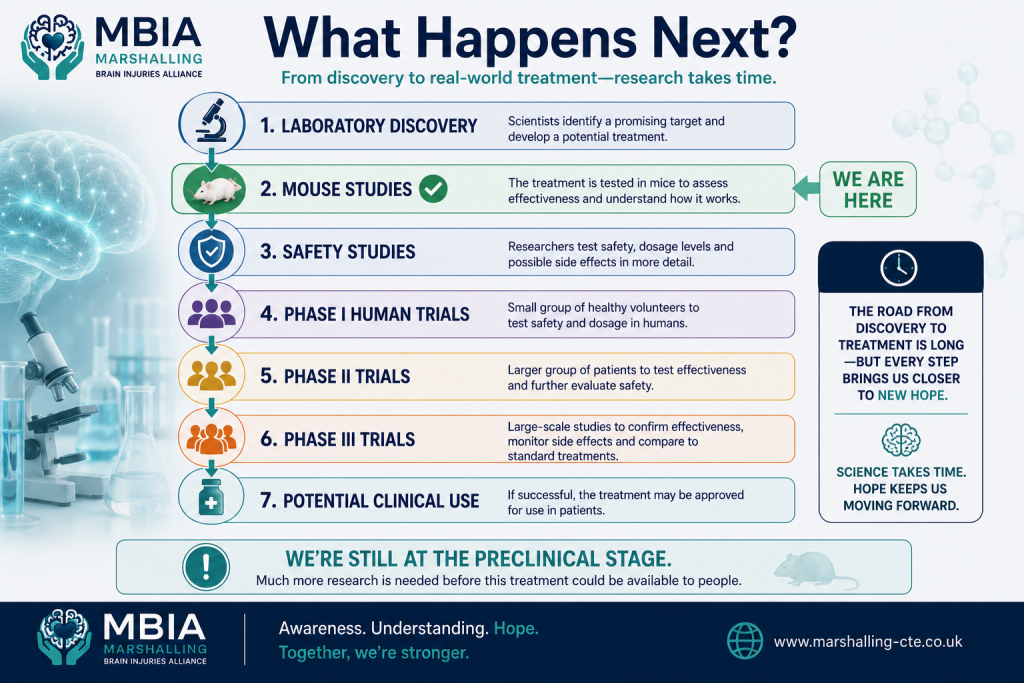
Before this treatment could ever become available for patients, researchers still need to:
- Confirm the findings in larger animal studies.
- Demonstrate long-term safety.
- Begin Phase I human clinical trials.
- Show that the treatment is both safe and effective in people.
- Understand whether it works alongside or instead of existing Alzheimer's therapies.
If those stages are successful, researchers could then begin exploring whether similar approaches might benefit other neurological conditions.
MBIA's View
This study represents one of the more innovative developments in Alzheimer's research because it focuses on repairing the brain's own waste-clearance system rather than simply attacking protein deposits.

The results in mice are genuinely encouraging and suggest that restoring blood-brain barrier function could become an important future treatment strategy.
However, it is essential to keep these findings in perspective.
This is not a cure for Alzheimer's disease.
It has not yet been tested in humans.
And it provides no evidence that it can currently treat CTE.
Nevertheless, the research offers something that is increasingly valuable in brain science: a new way of thinking.
For people living with brain injury and their families, hope should always be grounded in evidence—not headlines.
As our understanding of the blood-brain barrier, glymphatic system and brain repair continues to grow, we may discover treatments that support the brain's own ability to heal rather than simply treating the damage after it has occurred.
For those affected by CTE and other brain injuries, that possibility is worth watching closely.
Enjoyed this article? Join thousands of readers receiving our monthly Brain Injury Brief
References
Chen J, Battaglia G, et al. Rapid amyloid-β clearance and cognitive recovery through multivalent modulation of blood-brain barrier transport. Signal Transduction and Targeted Therapy (2025).
ScienceDaily. Nanotechnology restores the brain's natural waste-removal system in Alzheimer's mouse model. Updated May 2026.