HBOT: What Does the Evidence Really Say?
Hyperbaric Oxygen Therapy (HBOT) has become one of the most talked-about therapies in brain injury recovery. Professional athletes, military veterans, people living with traumatic brain injury (TBI), stroke survivors and even healthy individuals looking to optimise their wellbeing are increasingly exploring its potential.
But with so much information online, it can be difficult to separate genuine scientific evidence from exaggerated claims.
At Marshalling Brain Injuries Alliance (MBIA), our aim is always to provide balanced, evidence-based information. HBOT is a promising therapy with strong evidence for certain medical conditions and growing evidence for some neurological conditions—but it is not a miracle cure, and research is still evolving.
Let's explore what the science actually says.
What Is Hyperbaric Oxygen Therapy?
Hyperbaric Oxygen Therapy involves breathing high concentrations of oxygen inside a pressurised chamber.
During treatment, the air pressure inside the chamber is increased above normal atmospheric pressure—typically between 1.3 and 3.0 atmospheres absolute (ATA) depending on the condition being treated.
At normal air pressure:
- Air contains around 21% oxygen
- Oxygen is carried mainly by red blood cells
Inside a hyperbaric chamber:
- Oxygen concentration increases dramatically
- Blood plasma dissolves much larger amounts of oxygen
- Oxygen can reach tissues that may not normally receive enough
Think of it like increasing both the amount of oxygen and the delivery system throughout the body.
This increased oxygen availability is what produces HBOT's biological effects.
How Does HBOT Work?
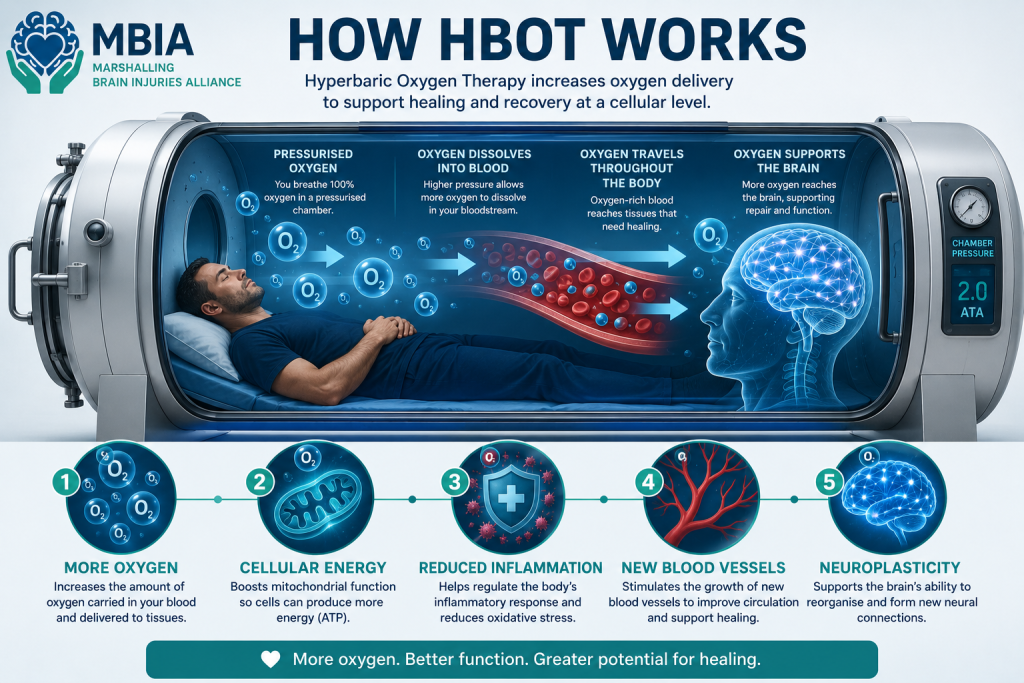
Scientists now understand several ways HBOT appears to influence the body.
1. It Increases Oxygen Delivery
Every cell needs oxygen to produce energy.
When tissues are injured or inflamed, oxygen delivery can be reduced.
HBOT temporarily floods the bloodstream with oxygen, helping support cells while normal blood flow recovers.
2. It Supports Cellular Energy
Our cells make energy inside tiny structures called mitochondria.
More oxygen allows mitochondria to produce ATP (the body's energy molecule) more efficiently.
This is particularly important for tissues with high energy demands—such as the brain.
3. It Reduces Harmful Inflammation
Inflammation is an important part of healing.
However, after brain injury, inflammation sometimes continues for much longer than necessary.
Laboratory and clinical studies suggest HBOT may help regulate inflammatory pathways rather than simply switching inflammation off.
4. It Encourages New Blood Vessel Growth
HBOT stimulates the release of growth factors involved in:
- Angiogenesis (formation of new blood vessels)
- Tissue repair
- Wound healing
Improved blood supply may help damaged tissue recover over time.
5. It May Stimulate Neuroplasticity
Perhaps the most exciting area of research is HBOT's possible role in neuroplasticity.
Neuroplasticity is the brain's ability to reorganise and build new neural connections after injury.
Researchers believe HBOT may create an environment that supports this natural repair process by improving oxygen availability, reducing inflammation and encouraging the release of growth factors.
What Conditions Is HBOT Already Proven To Treat?
This is an important distinction.
HBOT is already an established medical treatment for several conditions.
Examples include:
- Carbon monoxide poisoning
- Decompression sickness ("the bends")
- Gas embolism
- Certain severe infections
- Radiation tissue injury
- Difficult-to-heal diabetic foot ulcers
- Crush injuries
- Compromised skin grafts and flaps
For these conditions, the evidence is considered strong and HBOT is recommended by recognised medical organisations in many countries.
Could HBOT Improve General Health?
Many people use HBOT not because they have a specific medical condition, but because they hope it will improve their overall wellbeing.
Research is exploring whether HBOT may help:
- Improve energy levels
- Reduce fatigue
- Support healthy ageing
- Improve exercise recovery
- Reduce inflammation
- Support wound healing
- Improve sleep quality
- Enhance cognitive performance
- Improve overall quality of life
Some early studies have shown encouraging findings, but many of these areas still require larger, well-controlled clinical trials before firm conclusions can be drawn.
HBOT And Brain Health
The brain uses approximately 20% of the body's oxygen despite making up only around 2% of body weight.
This means even small improvements in oxygen availability could potentially influence brain function.
Researchers are investigating HBOT for:
- Traumatic brain injury (TBI)
- Persistent post-concussion symptoms
- Stroke recovery
- Mild cognitive impairment
- Alzheimer's disease
- Parkinson's disease
- Long COVID-related cognitive symptoms
- Brain fog
- Military blast injury
Some of these areas have stronger evidence than others.
HBOT After Traumatic Brain Injury
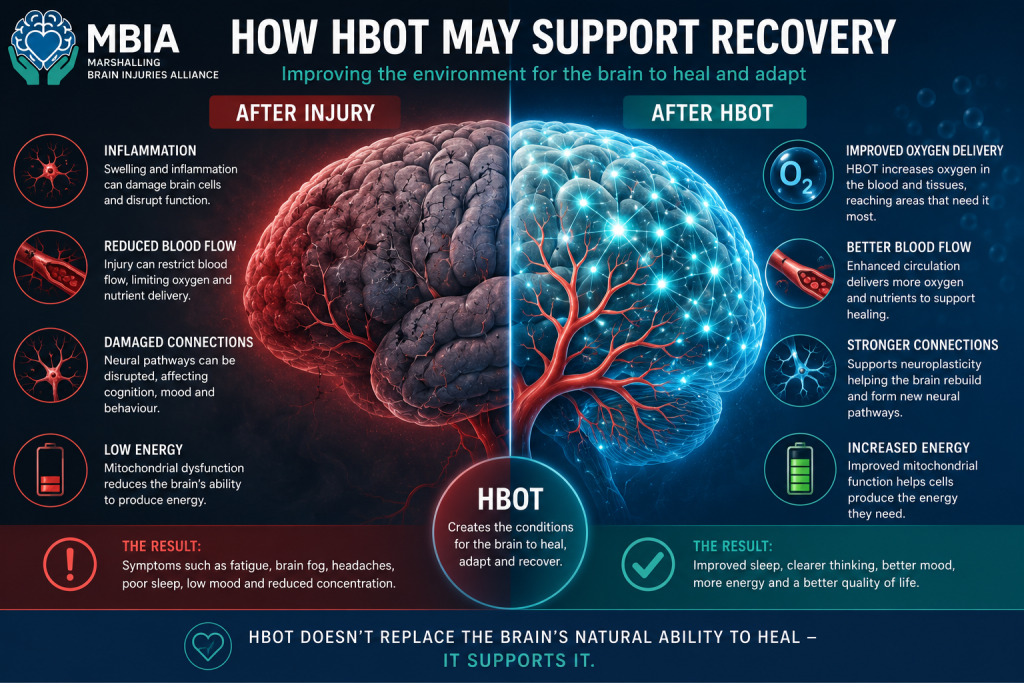
Traumatic brain injury triggers a complex cascade inside the brain.
Immediately after injury there may be:
- Reduced blood flow
- Increased inflammation
- Mitochondrial dysfunction
- Oxidative stress
- Reduced energy production
- Damage to the blood-brain barrier
These changes can continue for months or even years in some individuals.
HBOT aims to improve the environment in which the brain attempts to recover.
Rather than "repairing" damaged brain cells directly, it may support the brain's own healing processes.
What Does The Research Show?
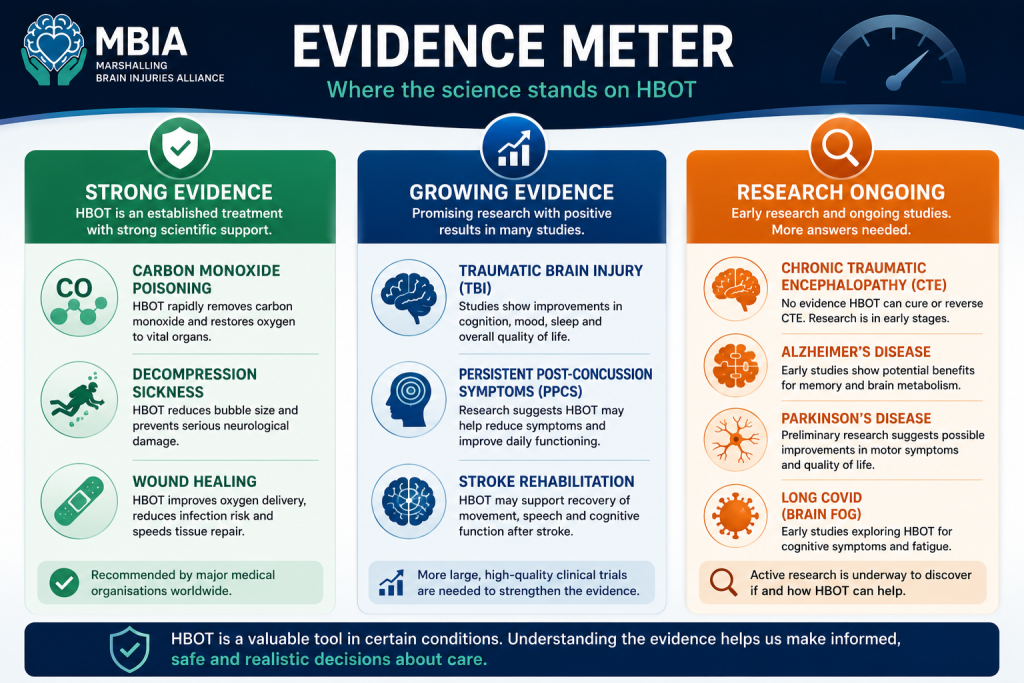
Mild Traumatic Brain Injury
Several randomised controlled trials have investigated HBOT in people with persistent symptoms following concussion and mild TBI.
Some studies have reported improvements in:
- Memory
- Attention
- Processing speed
- Sleep
- Mood
- Headaches
- Fatigue
- Quality of life
Brain imaging studies have also shown changes in brain metabolism and increased activity in areas involved in cognition following HBOT treatment in some participants.
However, not every study has found the same degree of benefit.
Some trials have shown little difference compared with control groups, particularly when sham (placebo) chambers were used.
This is one reason why researchers believe larger, better-designed studies are still needed.
Military Veterans
One of the largest areas of HBOT research involves military veterans with blast-related brain injuries.
Several studies have found improvements in:
- PTSD symptoms
- Sleep
- Cognitive function
- Depression
- Anxiety
- Quality of life
Again, results vary between studies, but overall the evidence suggests HBOT may benefit some veterans living with chronic post-concussion symptoms.
Stroke
Stroke research is also growing.
Several clinical trials suggest HBOT may improve:
- Movement
- Speech
- Cognitive function
- Daily activities
Even when treatment begins months or years after stroke.
Researchers believe HBOT may stimulate dormant brain tissue surrounding damaged areas through neuroplasticity.
Alzheimer's Disease And Cognitive Decline
This is still an emerging field.
Small studies have suggested HBOT may improve:
- Memory
- Blood flow
- Brain metabolism
Animal studies have also demonstrated reduced inflammation and improved learning.
However, there is currently insufficient evidence to recommend HBOT as a routine treatment for Alzheimer's disease.
What About CTE?
This is one of the questions we are asked most often.
At present:
There is no evidence that HBOT can cure Chronic Traumatic Encephalopathy (CTE).
However, some symptoms experienced by people with probable CTE—such as:
- Fatigue
- Sleep disturbance
- Brain fog
- Mood changes
- Headaches
- Cognitive slowing
may overlap with symptoms that have shown improvement in some HBOT studies involving traumatic brain injury.
Whether HBOT alters the underlying disease process in CTE remains completely unknown.
This is an important area for future research.
What Are Our Members Experiencing?
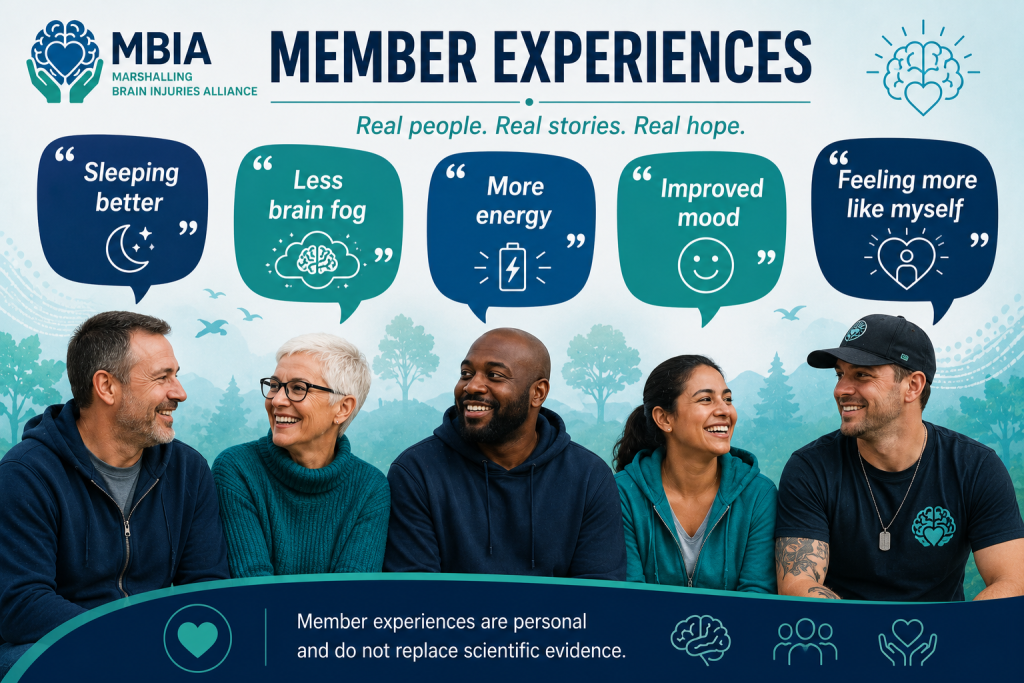
While personal experiences are not the same as scientific proof, they can provide valuable real-world insight.
Many members of the Marshalling Brain Injuries Alliance community have been using Hyperbaric Oxygen Therapy as part of their wider recovery approach.
Some of the improvements they have reported include:
- Better quality sleep
- Reduced brain fog
- Improved concentration
- Better mood
- Reduced fatigue
- Increased energy
- Improved overall wellbeing
Not everyone experiences the same benefits, and improvements can vary considerably from person to person.
These experiences are encouraging, but they should be viewed alongside the growing body of scientific research rather than as proof that HBOT works for everyone.
Is HBOT Safe?
HBOT is generally considered safe when provided by appropriately trained professionals and when individuals are properly screened.
Possible side effects include:
- Ear pressure or discomfort (similar to flying)
- Temporary changes in vision
- Sinus discomfort
- Fatigue after treatment
- Rare oxygen toxicity
- Rare lung injury with high-pressure treatments
People with certain medical conditions—such as an untreated pneumothorax (collapsed lung)—may not be suitable candidates.
Always discuss HBOT with an appropriately qualified healthcare professional before beginning treatment.
We Work With CryoCube
At MBIA, we work closely with CryoCube in South Wales, who provide Hyperbaric Oxygen Therapy services and also offer soft-shell HBOT chamber rental throughout the UK, making treatment more accessible for people who may benefit from home-based programmes. Their rental service includes delivery, setup and training for suitable users.
If you'd like to learn more about their HBOT services, visit:
Although we work closely with CryoCube and many of our members have had positive experiences, MBIA does not claim HBOT is a cure for brain injury. Our role is to help people understand the available evidence and make informed decisions alongside their healthcare team.
The Bottom Line
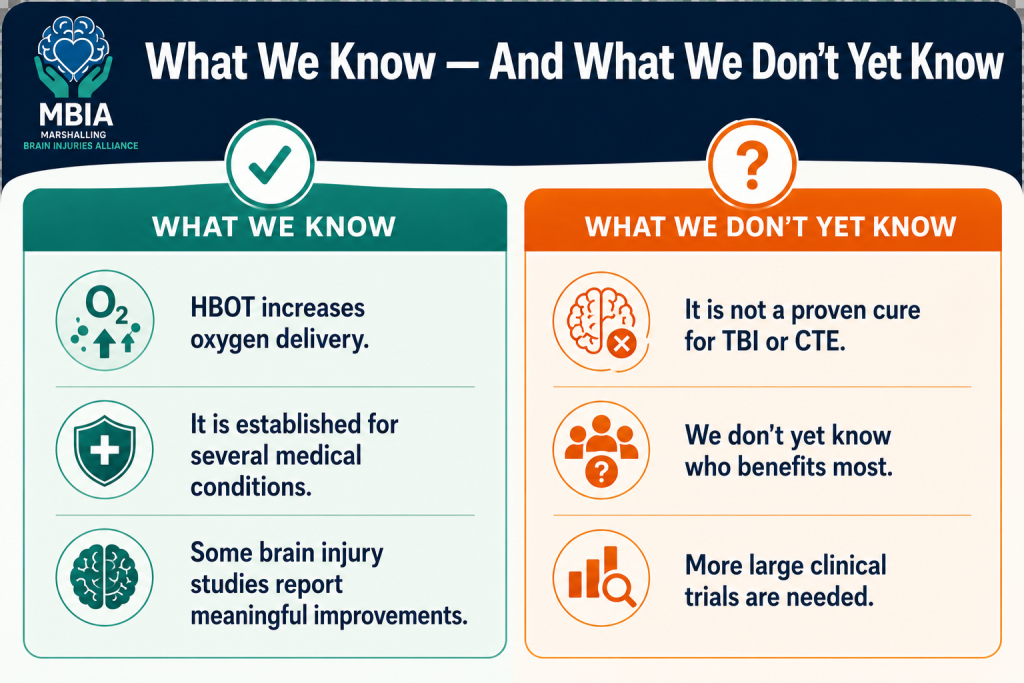
Hyperbaric Oxygen Therapy is one of the most promising areas of rehabilitation research for brain injury.
The science suggests HBOT may:
✔ Improve oxygen delivery to injured tissue
✔ Reduce harmful inflammation
✔ Support cellular energy production
✔ Encourage blood vessel growth
✔ Promote neuroplasticity
✔ Improve symptoms for some people living with chronic brain injury
However:
❌ It is not a proven cure for concussion, TBI or CTE.
❌ Results vary between individuals.
❌ Larger, high-quality clinical trials are still needed to determine who benefits most, which treatment protocols are most effective and how long any improvements last.
For many people, HBOT appears to be a valuable addition to a broader rehabilitation programme that may also include good sleep, nutrition, exercise, psychological support, cognitive rehabilitation and other evidence-based therapies.
As research continues, we hope to gain a clearer understanding of where HBOT fits within the future of brain injury treatment.
References
- Harch PG. Hyperbaric Oxygen Therapy for Mild Traumatic Brain Injury.
- Boussi-Gross R et al. Hyperbaric Oxygen Therapy Can Improve Post-Concussion Syndrome Years After Mild Traumatic Brain Injury.
- Hadanny A, Efrati S. The Hyperoxic-Hypoxic Paradox and Neuroplasticity.
- Rockswold SB et al. Hyperbaric Oxygen in Severe Traumatic Brain Injury.
- Bennett MH et al. Hyperbaric Oxygen Therapy for Traumatic Brain Injury (Cochrane Review).
- Efrati S, Ben-Jacob E. Reflections on the Neurotherapeutic Effects of Hyperbaric Oxygen.
- Harch PG et al. National Brain Injury Rescue and Rehabilitation Study.
- Weaver LK. Hyperbaric Oxygen Therapy Indications.
Enjoyed this article? Join thousands of readers receiving our monthly Brain Injury Brief