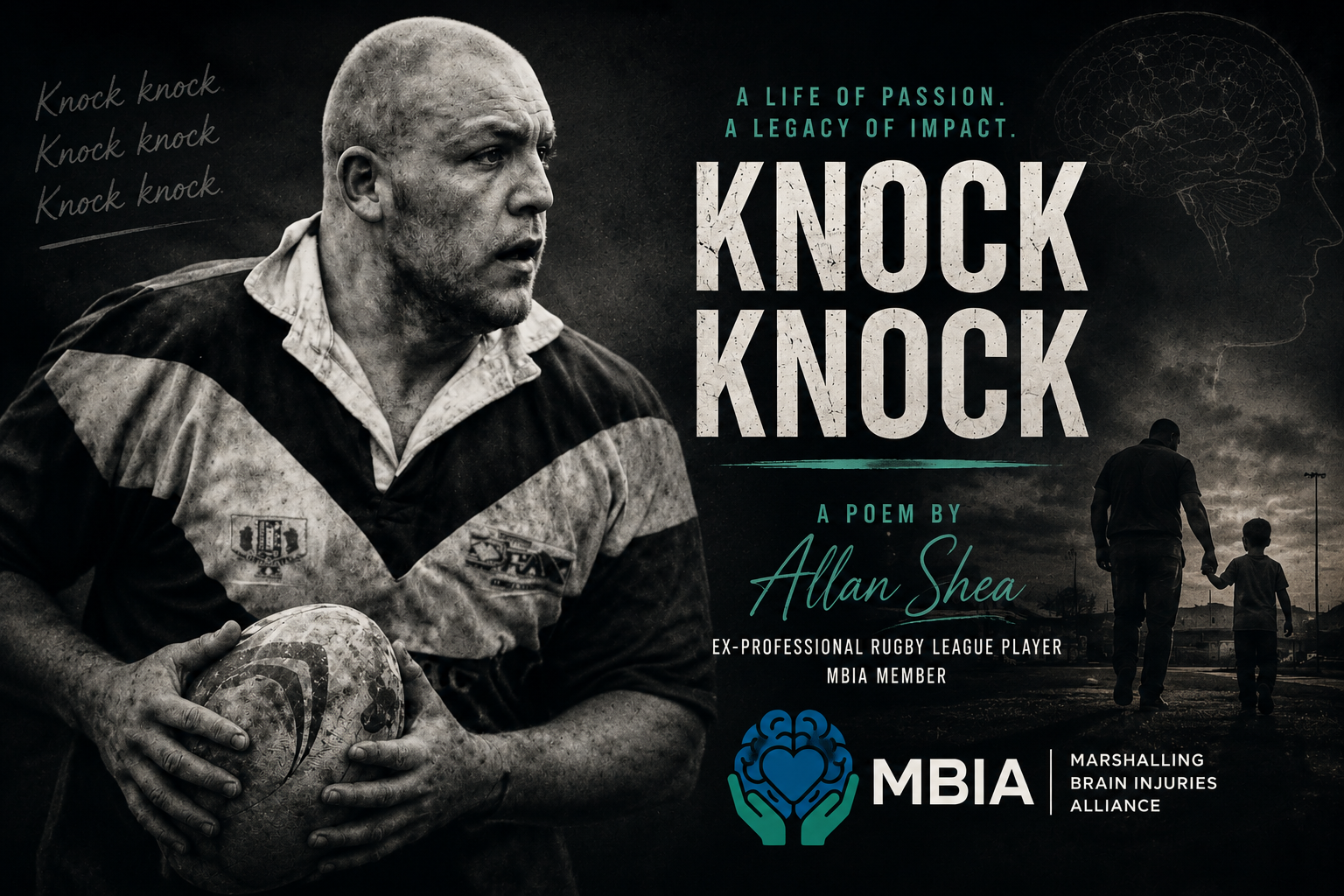
Knock Knock — A Poem by Allan Shea
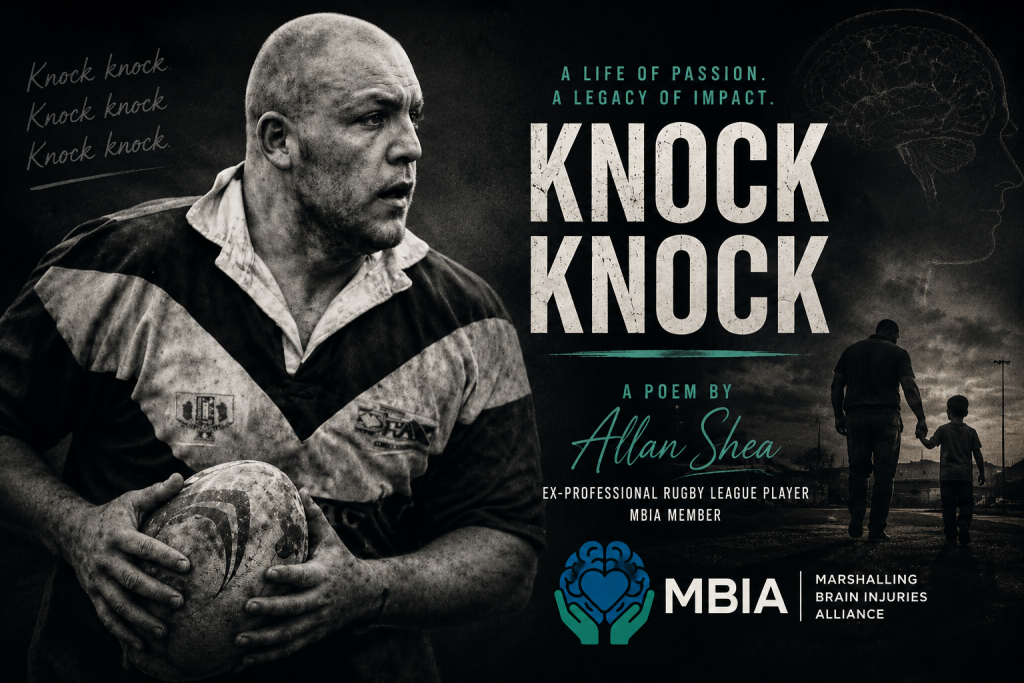
Sometimes lived experience communicates what statistics, research papers and medical terminology cannot.
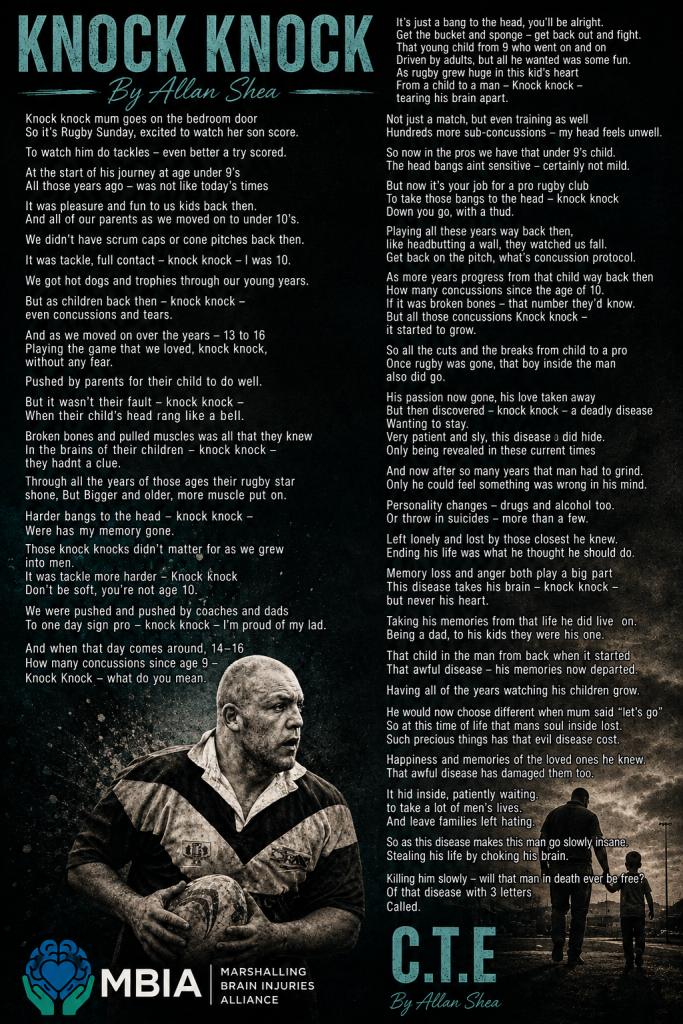
“Knock Knock” was written by Allan Shea, a former professional rugby league player and member of the Marshalling Brain Injuries Alliance (MBIA) community. Allan has kindly given us permission to share his poem in the hope that his words will help raise awareness of the potential long-term consequences associated with years of repeated head impacts in contact sport.
Beginning with a child being called from his bedroom for Sunday rugby, Allan traces a journey that will be familiar to generations of players: falling in love with the game, progressing through the age groups, becoming bigger and stronger, and eventually reaching the professional game.
But running throughout that journey is another story.
Knock knock.
The tackles. The collisions. The concussions that were brushed off. The countless smaller head impacts that may never have been recognised as injuries at all.
Through his poem, Allan reflects on how attitudes towards head injuries have changed and asks difficult questions about what previous generations of players — including children — were exposed to at a time when the possible long-term consequences were poorly understood.
The poem then moves beyond the rugby field to something MBIA believes must receive far greater attention: what can happen years after the playing career has ended.
Memory problems. Personality and behavioural changes. Anger. Substance misuse. Relationship breakdown. Suicidal thoughts. And the devastating impact neurological disease can have not only on the person affected, but on their partners, children, friends and wider family.
At the centre of Allan's poem is chronic traumatic encephalopathy (CTE) — a neurodegenerative disease associated with exposure to repeated head impacts. CTE can currently only be definitively diagnosed after death, and research continues into why some people with substantial exposure develop the disease while others apparently do not.
This poem is Allan's personal expression and should be read as lived-experience advocacy rather than a medical or scientific account. But the questions behind it are important.
Because conversations about brain health cannot begin only when someone becomes a professional athlete.
They must begin with the child who first walks onto the pitch.
We are incredibly grateful to Allan for trusting MBIA with his words and allowing us to share them.