Motor Neurone Disease, Rugby & Repeated Head Impacts
Why MND Is Being Talked About In Rugby
Motor neurone disease, often shortened to MND, has become a major topic within rugby and wider contact sport because several high-profile players have been diagnosed, including Rob Burrow, Doddie Weir, Ed Slater, Lewis Moody, and more recently Jai Arrow, who retired from rugby league after his diagnosis in May 2026. (Sky Sports)
These diagnoses have understandably raised difficult questions:
Is there a link between MND and rugby? Could repeated head impacts, concussions, intense training, or other factors increase risk?
At present, the honest answer is: research suggests a possible association, especially in elite contact sport, but there is not yet enough evidence to say rugby directly causes MND.
What Is Motor Neurone Disease?
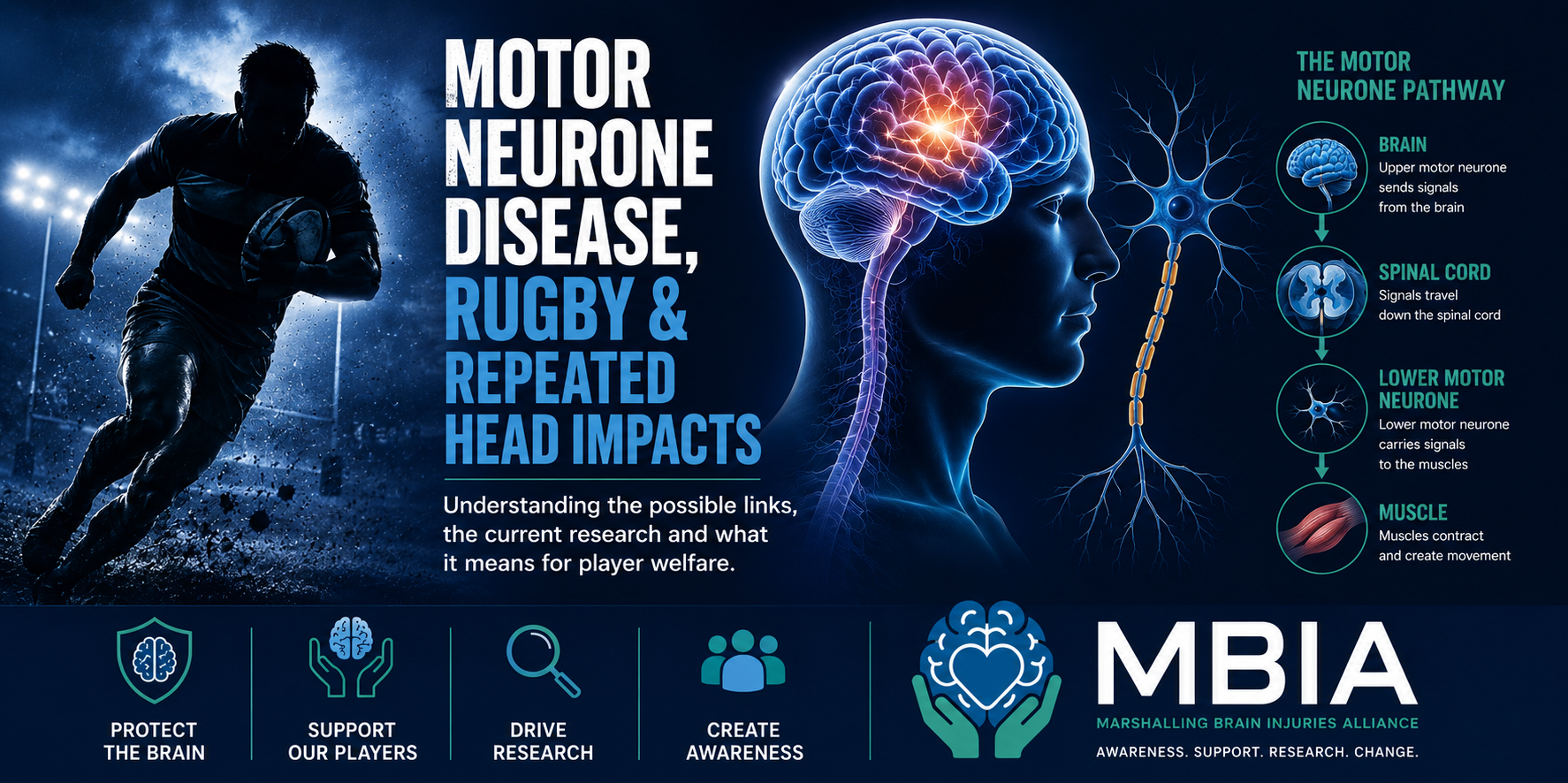
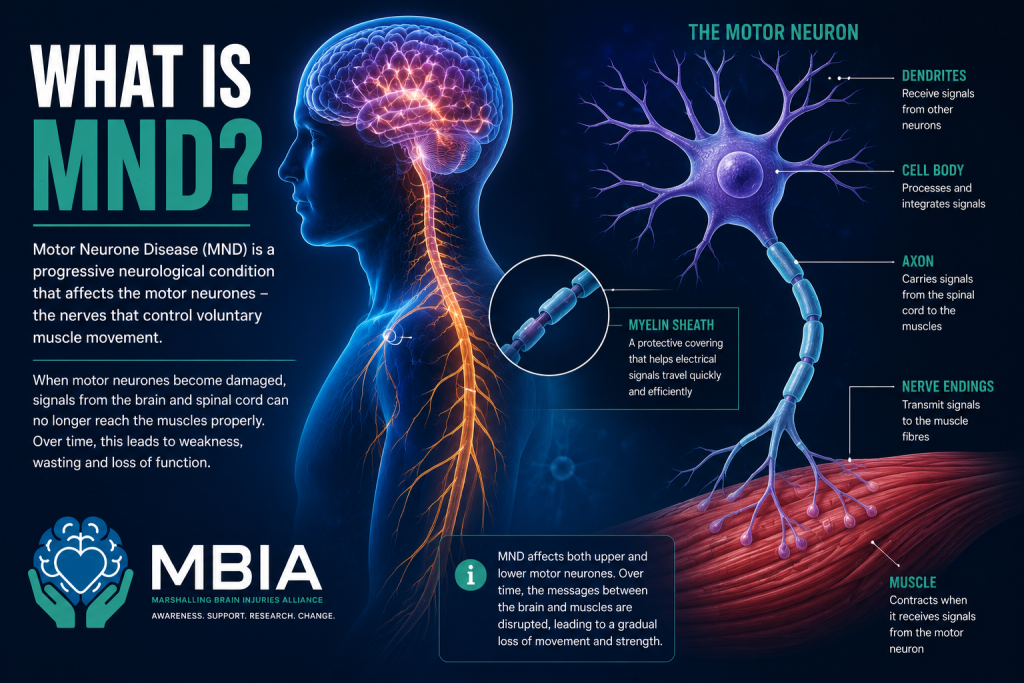
Motor neurone disease is a progressive neurological condition that affects the nerves controlling voluntary movement. These nerves, called motor neurones, carry messages from the brain and spinal cord to the muscles.
When motor neurones become damaged, the messages stop reaching the muscles properly. Over time, this can lead to:
- Muscle weakness
- Muscle wasting
- Twitching or fasciculations
- Cramps and stiffness
- Slurred speech
- Swallowing difficulties
- Breathing problems
- Fatigue
- Mobility problems
MND usually gets worse over time. It does not usually affect sight, hearing, taste, smell or touch, although every person’s experience can be different. (MND Association)
Different Types Of MND
MND is an umbrella term. The most common form is amyotrophic lateral sclerosis, or ALS.
Other forms include:
ALS
The most common type. It affects both upper and lower motor neurones and commonly causes weakness, wasting, stiffness and cramps.
Progressive Bulbar Palsy
Often affects speech, swallowing, tongue movement and facial muscles first.
Progressive Muscular Atrophy
A rarer form that mainly affects lower motor neurones and may progress more slowly.
Primary Lateral Sclerosis
A rare, usually slower-progressing form that mainly affects upper motor neurones. (MND Association)
How Common Is MND?
MND is rare, but life-changing.
In the UK:
- Around six people are diagnosed every day
- More than 5,000 adults are living with MND at any one time
- Lifetime risk is estimated at around 1 in 300 (MND Association)
Most cases are sporadic, meaning they occur without a clear family history. A smaller percentage are inherited or linked to known genetic changes. (Sheffield University)
How Is MND Diagnosed?
There is no single test that confirms MND on its own. Diagnosis is usually made by a neurologist through a combination of clinical examination, symptom history and tests to rule out other conditions.
Tests may include:
- Neurological examination
- EMG, which measures electrical activity in muscles
- Nerve conduction studies
- MRI scans of the brain and spinal cord
- Blood tests
- Sometimes genetic testing
- Sometimes further specialist tests
MRI scans do not diagnose MND directly, but they can help rule out other causes such as spinal cord compression, multiple sclerosis or stroke. (Brain & Spine Foundation)
NICE guidance says suspected MND should be referred without delay to neurological services, and diagnosis should be given by a consultant neurologist with expertise in MND wherever possible. (NICE)
Is There A Link Between Rugby And MND?
What We Know So Far
The MND Association states that the simple answer is: we do not know yet. There is not currently enough evidence to prove that sport, rugby, or one single factor causes MND. MND is thought to develop through a complex interaction between genetics, environment, lifestyle and possibly other triggers. (MND Association)
However, some research has found higher rates of neurodegenerative disease among former elite contact-sport athletes.
Key Rugby Study: Former Scottish International Rugby Players
A major University of Glasgow study looked at 412 former male Scottish international rugby union players and compared them with 1,236 matched members of the general population.
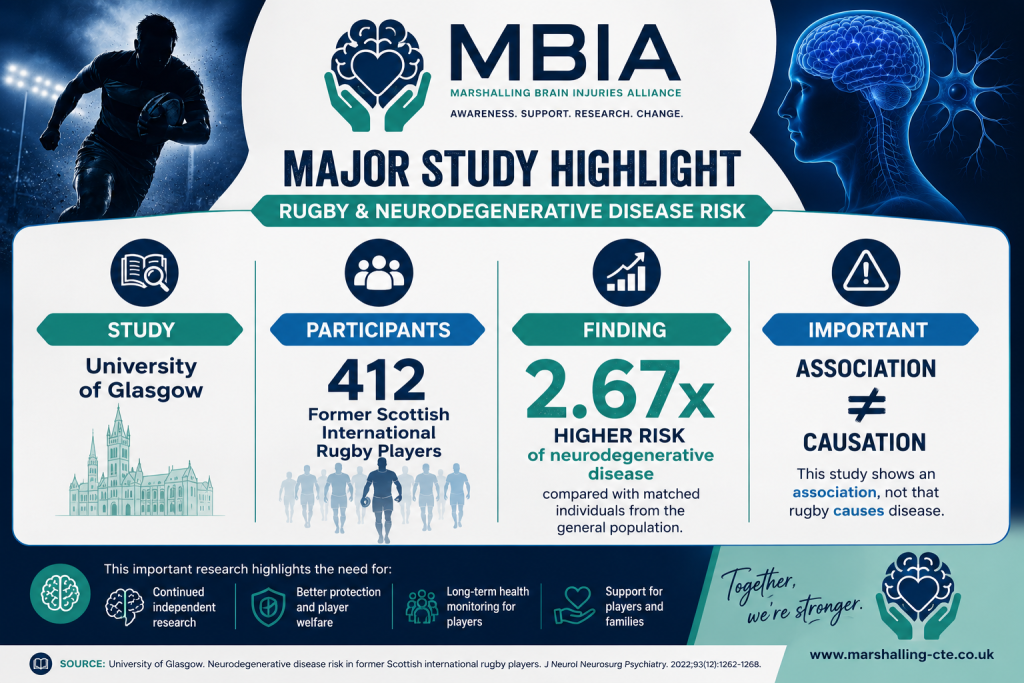
The study found that former rugby players had:
- A higher overall risk of neurodegenerative disease
- Around 2.67 times higher risk of being diagnosed with a neurodegenerative disease
- A reported increased risk of specific conditions, including dementia, Parkinson’s disease and motor neurone disease
The study concluded that further research is needed, but that strategies to reduce exposure to head impacts and head injuries in sport should be promoted. (JNNP)
The BMJ reported that the MND risk estimate in this study was up to 15 times higher, but this figure should be interpreted carefully because the number of MND cases was small. (BMJ)
Why The Evidence Needs Careful Interpretation
This research is important, but it does not prove that rugby causes MND.
Possible limitations include:
- Small numbers of MND cases
- Focus on elite male international players
- Difficulty separating head impacts from other factors such as intense exercise, body size, injuries, genetics, inflammation, lifestyle or environmental exposures
- Historic playing eras being different from the modern professional game
- Lack of lifetime impact-count data
This means the safest wording is:
There is emerging evidence of an association between elite rugby participation and increased neurodegenerative disease risk, including MND, but causation has not been proven.
Could Repeated Head Impacts Be Involved?
Repeated head impacts are already strongly debated in relation to brain injury, chronic traumatic encephalopathy and long-term neurodegenerative risk.
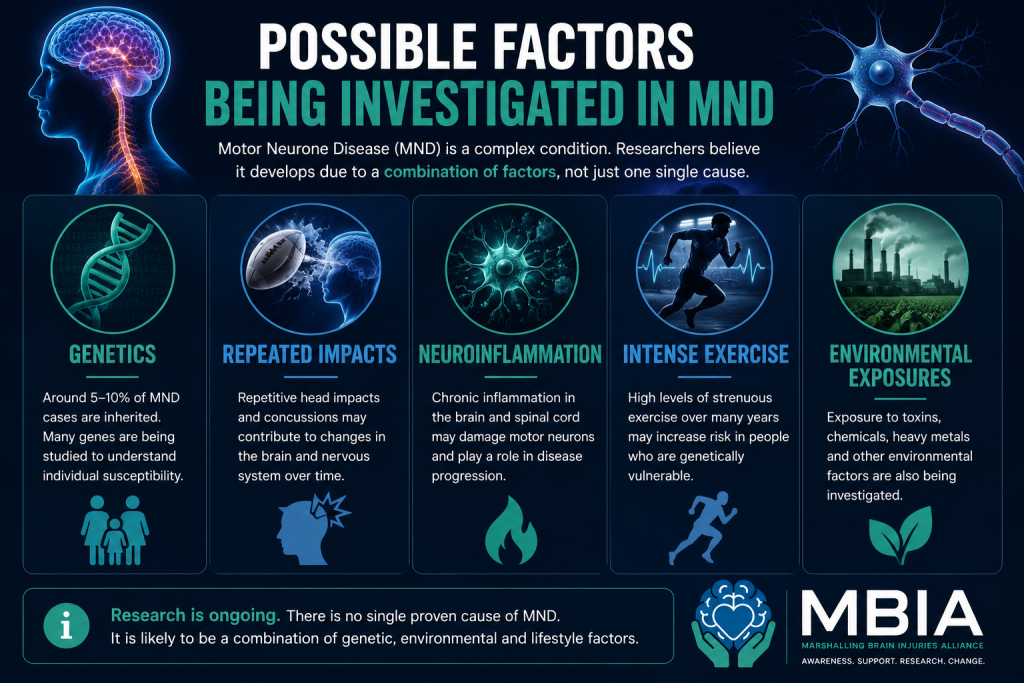
In MND, the possible mechanisms being explored include:
- Repeated disruption to the blood-brain barrier
- Neuroinflammation
- Oxidative stress
- Axonal injury
- Repeated trauma to the brain, spinal cord or peripheral nerves
- Interaction between trauma and genetic vulnerability
- High-intensity exercise placing metabolic stress on motor neurones
The MND Association lists possible links that have been studied, including mechanical trauma, military service, high levels of exercise, agricultural chemicals and heavy metals, but states that evidence has often been conflicting and clear conclusions cannot yet be given. (MND Association)
Is It Head Impacts, Intense Exercise, Or Both?
One important area of research is whether frequent strenuous exercise may increase MND risk in people who are genetically vulnerable.
A University of Sheffield study reported that frequent strenuous exercise may contribute to motor neurone injury in people with a predisposing genetic profile. The researchers stressed that most people who exercise intensely do not develop MND, and people should not stop healthy exercise because of this research. (Sheffield University)
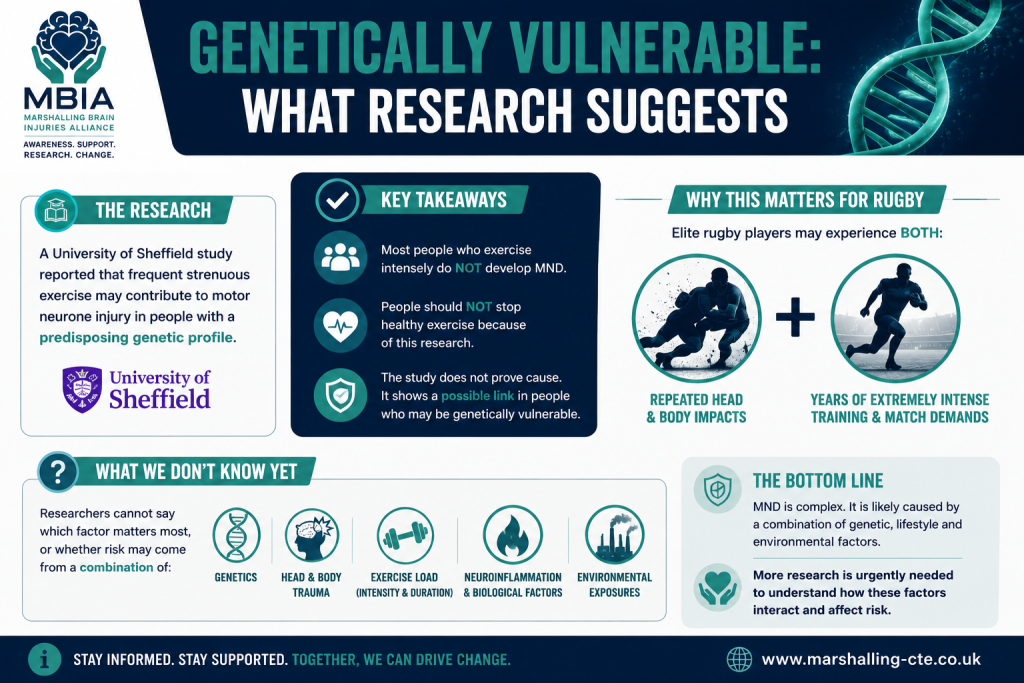
This matters for rugby because elite players may experience both:
- Repeated head and body impacts
- Years of extremely intense training and match demands
At present, researchers cannot say which factor matters most, or whether risk may come from a combination of genetics, exercise load, trauma and environmental exposures.
Other Sports Research
Research in football has also raised concerns about neurodegenerative disease risk among former professional players. A Scottish cohort study of male former professional footballers found neurodegenerative disease risk varied by position and career length. (JAMA Network)
This does not mean football and rugby carry the same risks, but it supports the wider concern that repetitive head impacts and elite-level sport exposure deserve more research.
What This Means For Rugby
The current evidence does not mean every rugby player is at high risk of MND.
Most people who play rugby will never develop MND.
Most people who experience concussion will never develop MND.
Most people who exercise intensely will never develop MND.
But the pattern of diagnoses in rugby, combined with emerging research, means the issue should be taken seriously.
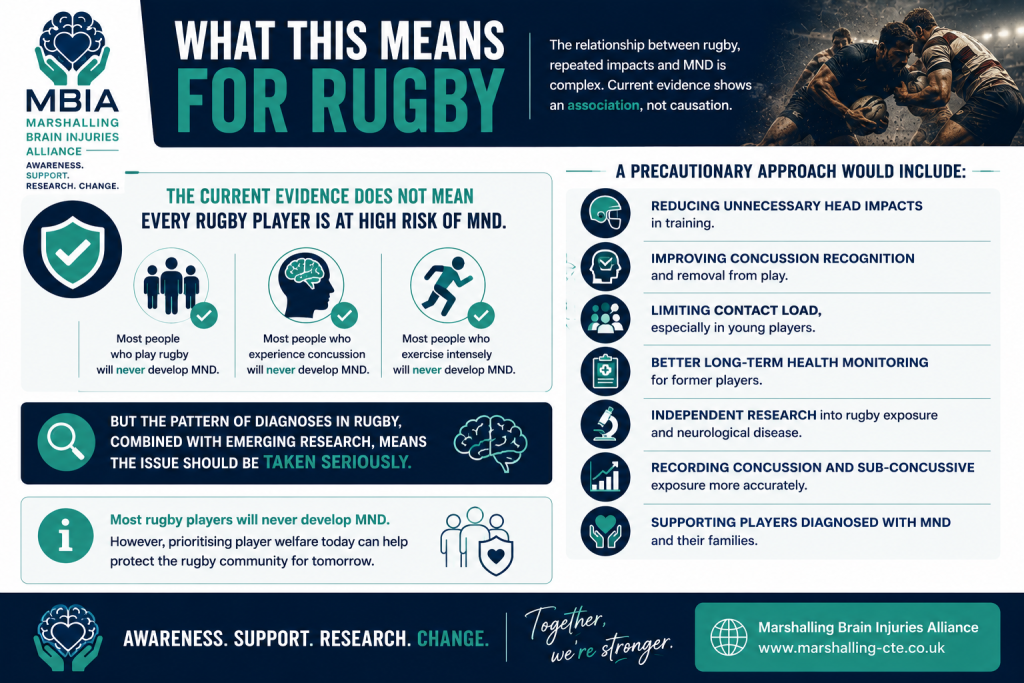
A precautionary approach would include:
- Reducing unnecessary head impacts in training
- Improving concussion recognition and removal from play
- Limiting contact load, especially in young players
- Better long-term health monitoring for former players
- Independent research into rugby exposure and neurological disease
- Recording concussion and sub-concussive exposure more accurately
- Supporting players diagnosed with MND and their families
When To Seek Medical Advice
Anyone experiencing progressive, unexplained symptoms should seek medical advice, especially if they notice:
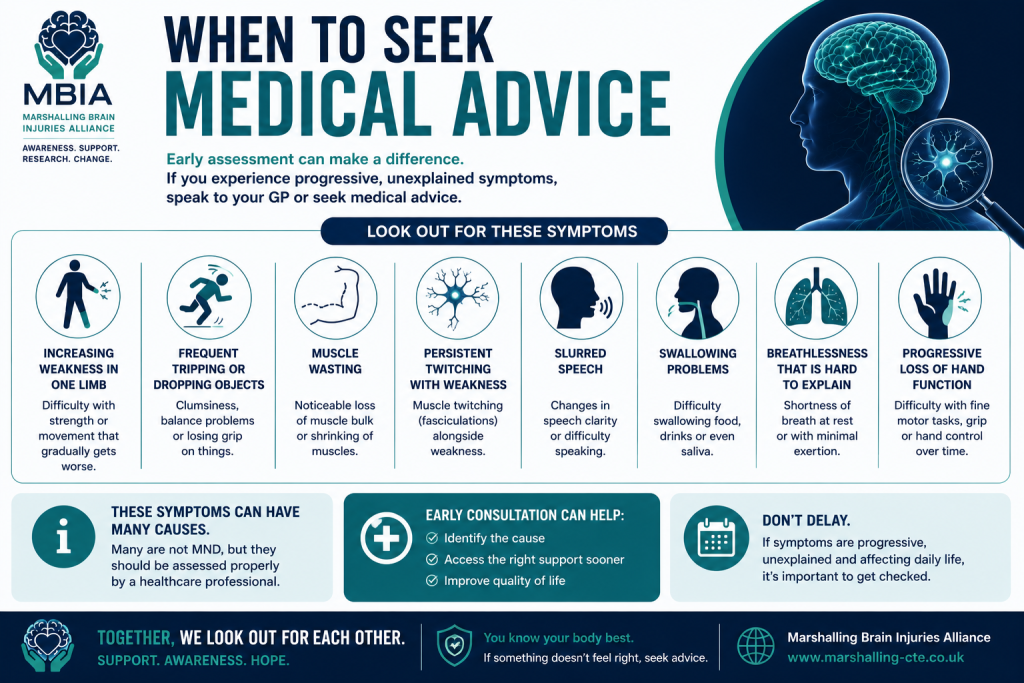
- Increasing weakness in one limb
- Frequent tripping or dropping objects
- Muscle wasting
- Persistent twitching with weakness
- Slurred speech
- Swallowing problems
- Breathlessness that is hard to explain
- Progressive loss of hand function
These symptoms can have many causes, and many are not MND, but they should be assessed properly.
MBIA Position
At Marshalling Brain Injuries Alliance, we believe this subject needs careful, compassionate and evidence-based discussion.
MND is devastating for individuals and families. Rugby has given many people purpose, identity and community, but player welfare must come first.
The current evidence does not prove that rugby causes MND, but it does raise serious questions about the long-term neurological effects of elite contact sport, repeated head impacts and intense physical exposure.
More independent research is urgently needed.
Until then, reducing avoidable brain trauma, improving education and supporting affected players and families should be a priority.
Enjoyed this article? Join thousands of readers receiving our monthly Brain Injury Brief