Peptides: A Hot Topic in Health, Medicine and Brain Research
Peptides have become a hot topic across many areas of health, medicine, fitness, anti-ageing, injury recovery and brain health.
Online, they are often spoken about as if they are a new breakthrough. In reality, peptides are not new at all. Some of the most important medicines in modern healthcare are peptide-based. Insulin, for example, is one of the best-known peptide medicines and has been used for over a century.
What is new is the growing public interest in peptides outside traditional medicine. Some are prescribed, regulated medicines. Others are experimental compounds being discussed online, sold as “research chemicals”, or promoted in wellness clinics despite limited human evidence.
This makes it important to understand what peptides actually are, where they are already used in medicine, and what the research does — and does not — show when it comes to brain health.
What are peptides?
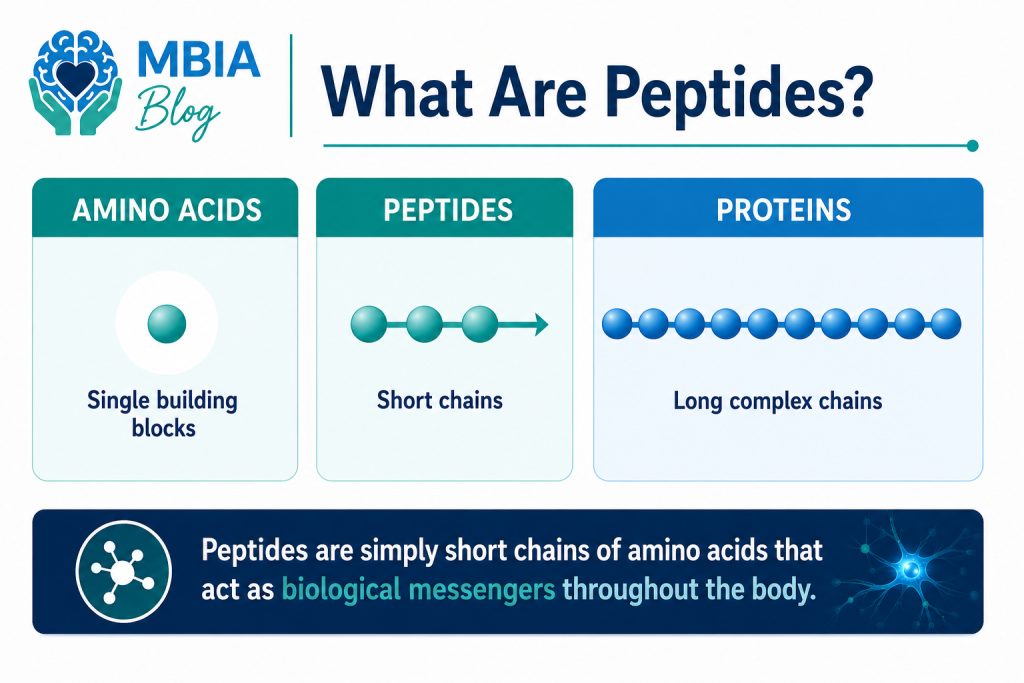
Peptides are short chains of amino acids.
Amino acids are often described as the building blocks of proteins. When amino acids join together in a chain, they can form either peptides or proteins.
The difference is mainly size:
- Peptides are shorter chains of amino acids.
- Proteins are longer, more complex chains.
Peptides are naturally found throughout the body. They act like messengers, signals and regulators. They can influence many biological processes, including:
- Hormone signalling
- Blood sugar regulation
- Immune system activity
- Inflammation
- Tissue repair
- Appetite and metabolism
- Blood vessel function
- Brain signalling
- Cell survival and repair pathways
Because peptides can send specific biological signals, scientists have long been interested in using them as medicines.
Peptides already used in medicine
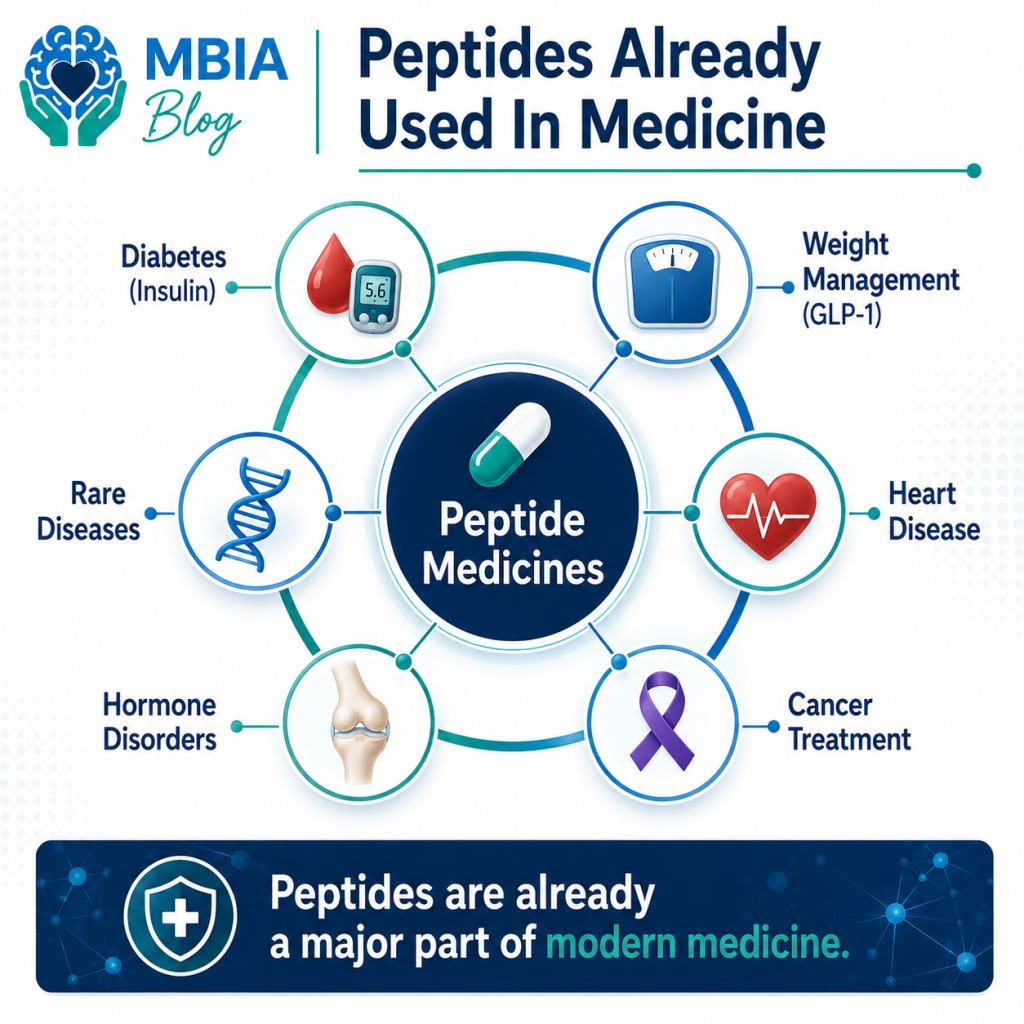
Peptides are already used in mainstream healthcare.
Some of the best-known examples include:
Insulin
Insulin is a peptide hormone used to treat diabetes. It helps regulate blood sugar and remains one of the most important peptide medicines ever developed.
GLP-1 receptor agonists
GLP-1 medicines, such as semaglutide and tirzepatide-related therapies, have become widely known for type 2 diabetes and obesity treatment. These drugs mimic or enhance natural hormone signalling involved in blood sugar, appetite and metabolism.
Cardiovascular medicines
Some peptide-based drugs are used in cardiovascular medicine, including medicines that affect clotting, blood vessels and heart function.
Cancer treatments
Peptides are also used in some cancer therapies, including peptide receptor-targeted treatments and peptide-drug conjugates, where peptides help deliver treatment more precisely.
Hormonal and endocrine disorders
Peptide-based medicines are used in areas such as fertility, growth hormone pathways, osteoporosis, rare endocrine disorders and other hormone-related conditions.
Rare diseases
Newer peptide medicines are being developed for rare genetic and mitochondrial-related conditions, showing how peptide therapeutics continue to expand.
Why are peptides attractive as medicines?
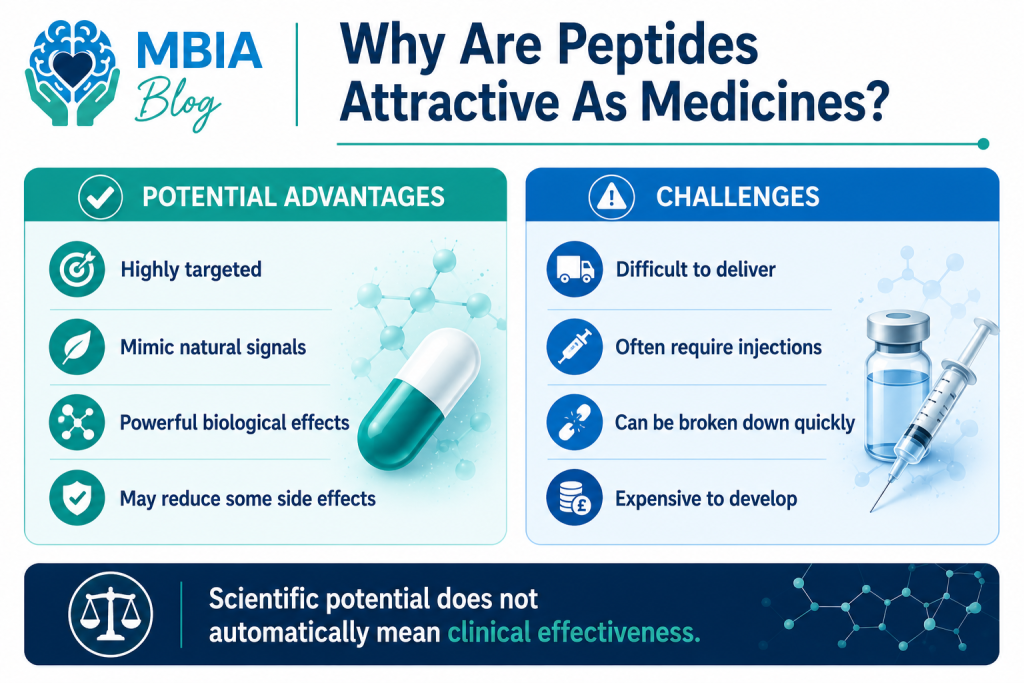
Peptides are interesting to researchers because they can be highly specific.
This means they may be able to target certain receptors, cells or biological pathways more precisely than some traditional small-molecule drugs.
Potential advantages include:
- Strong biological activity
- Specific signalling effects
- Ability to mimic natural body messengers
- Potential for targeted treatment
- Lower risk of some off-target effects compared with broader drugs
However, peptides also have challenges.
Many peptides are fragile. They can be broken down quickly by enzymes in the body. Some cannot survive digestion, which is why many peptide medicines are injected rather than taken as tablets.
Challenges include:
- Poor oral absorption
- Short half-life
- Need for injections or special delivery systems
- Manufacturing complexity
- Risk of immune reactions
- Stability and storage issues
- Quality-control concerns if made outside regulated pharmaceutical systems
This is why regulated peptide medicines go through strict testing for safety, dosing, purity, manufacturing quality and effectiveness.
Peptides and brain health: why the interest?
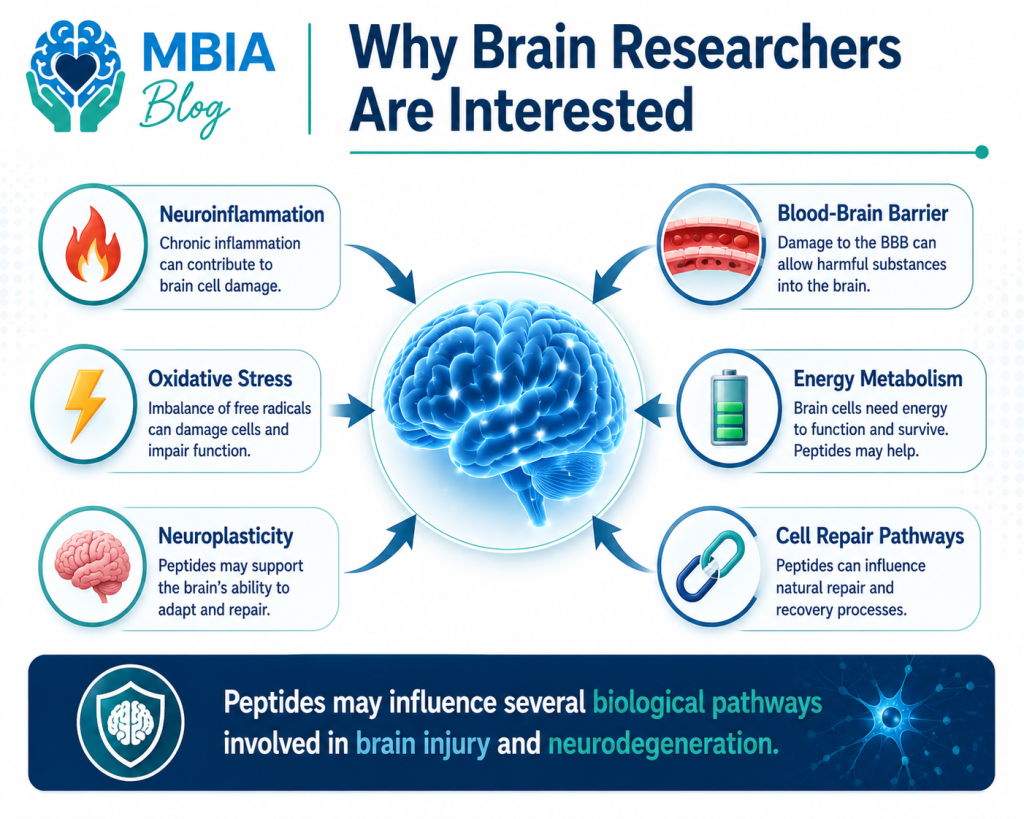
Brain injury and neurodegenerative disease involve complex processes, including:
- Neuroinflammation
- Oxidative stress
- Mitochondrial dysfunction
- Blood-brain barrier disruption
- Axonal injury
- Reduced neuroplasticity
- Impaired repair signalling
- Cell death pathways
- Problems with glucose and energy metabolism
Because peptides can influence signalling, inflammation, repair and metabolism, researchers have explored whether certain peptides or peptide-like medicines could support brain health or reduce damage after neurological injury.
This does not mean peptides are cures for brain injury, CTE, dementia, concussion or neurodegenerative disease.
At present, there is no proven peptide cure for these conditions.
However, some peptide-based or peptide-related treatments have been studied in areas such as traumatic brain injury, stroke, Alzheimer’s disease, Parkinson’s disease and cognitive impairment.
Cerebrolysin: one of the better-studied neuropeptide mixtures
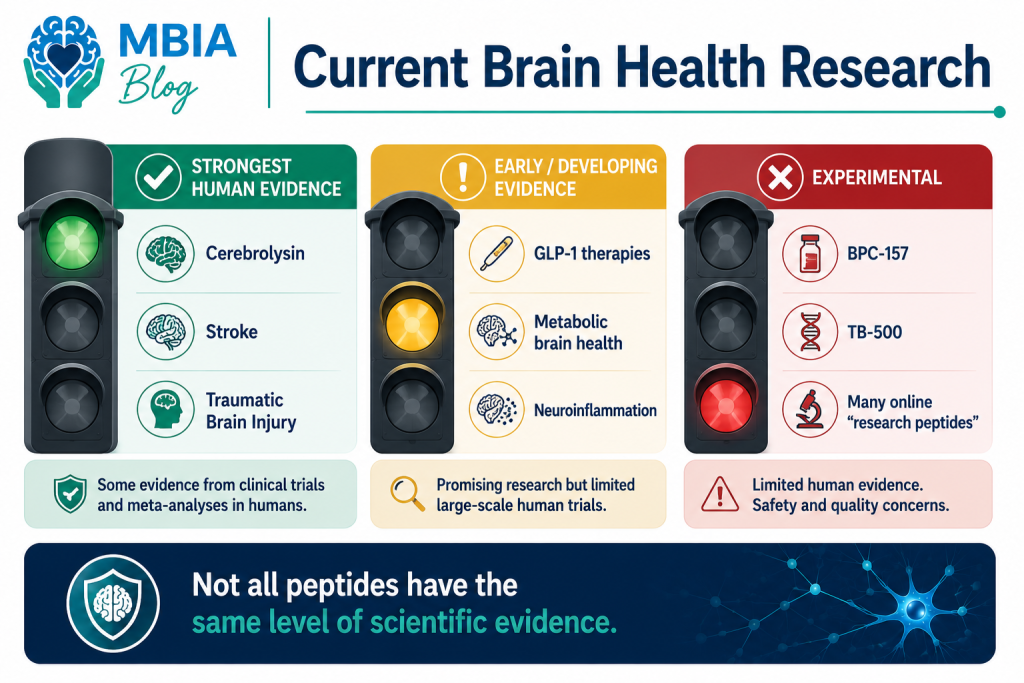
Cerebrolysin is a peptide-based preparation derived from porcine brain tissue. It contains a mixture of low-molecular-weight peptides and amino acids.
It has been studied in several neurological conditions, including:
- Stroke
- Traumatic brain injury
- Dementia
- Cognitive impairment
Some studies and meta-analyses suggest possible benefits in functional outcome after traumatic brain injury. However, the research is not universally accepted, and it is not licensed or routinely used in many countries, including the UK and US.
The evidence is stronger than for many “wellness peptides”, but it still needs careful interpretation. Study quality, trial size, patient selection, timing, dosing and outcome measures all matter.
For brain injury communities, Cerebrolysin is interesting because it targets mechanisms linked to neurorepair and neuroplasticity. But it should not be viewed as a guaranteed treatment or something to self-source online.
Davunetide: early promise, mixed clinical outcomes
Davunetide is a neuroprotective peptide that was studied for neurodegenerative diseases.
Preclinical research suggested it might help protect neurons, support microtubule stability and reduce cell death pathways. It was investigated in conditions such as Alzheimer’s disease, progressive supranuclear palsy and cognitive impairment.
Early safety data suggested it was generally well tolerated, and there were signs of possible benefit in some studies. However, later clinical development did not establish it as an approved treatment for neurodegenerative disease.
Davunetide is a useful example of why caution is needed. A peptide can look promising in laboratory and early clinical studies but still fail to become an effective approved medicine.
GLP-1 medicines and the brain
GLP-1 receptor agonists are best known for diabetes and weight management, but researchers have also investigated their potential effects on the brain.
This interest comes from links between:
- Insulin resistance
- Obesity
- Type 2 diabetes
- Inflammation
- Vascular health
- Dementia risk
- Brain energy metabolism
Some observational studies have suggested that people using GLP-1 medicines may have lower dementia risk, but observational studies cannot prove cause and effect.
Large clinical trials have tested oral semaglutide in early Alzheimer’s disease. These trials did not show a statistically significant slowing of Alzheimer’s disease progression, although some biomarker changes were reported.
This is important because it shows both sides of the research picture:
GLP-1 medicines remain highly valuable for diabetes and obesity, and brain-health research continues.
But they should not currently be presented as proven Alzheimer’s or dementia treatments.
Peptides being discussed online: BPC-157, TB-500, Semax, Selank and others
Many peptides discussed online are not approved medicines.
Examples often mentioned in wellness, injury recovery or “biohacking” spaces include:
- BPC-157
- TB-500
- CJC-1295
- Ipamorelin
- Semax
- Selank
- MOTS-c
- GHK-Cu
Some of these have interesting laboratory or animal research behind them. Some have been studied in limited human contexts. But many do not have large, independent, high-quality human trials proving safety and effectiveness.
BPC-157 is a good example.
It is heavily promoted online for tissue repair, gut health, tendon injury and sometimes even neurological recovery. However, it is not FDA-approved for any condition, and regulators have raised concerns about limited safety information, immune reactions, impurities and manufacturing complexity.
This does not mean every claim is automatically false. It means the evidence is not strong enough to treat it as proven medicine.
The difference between a medicine and a “research peptide”
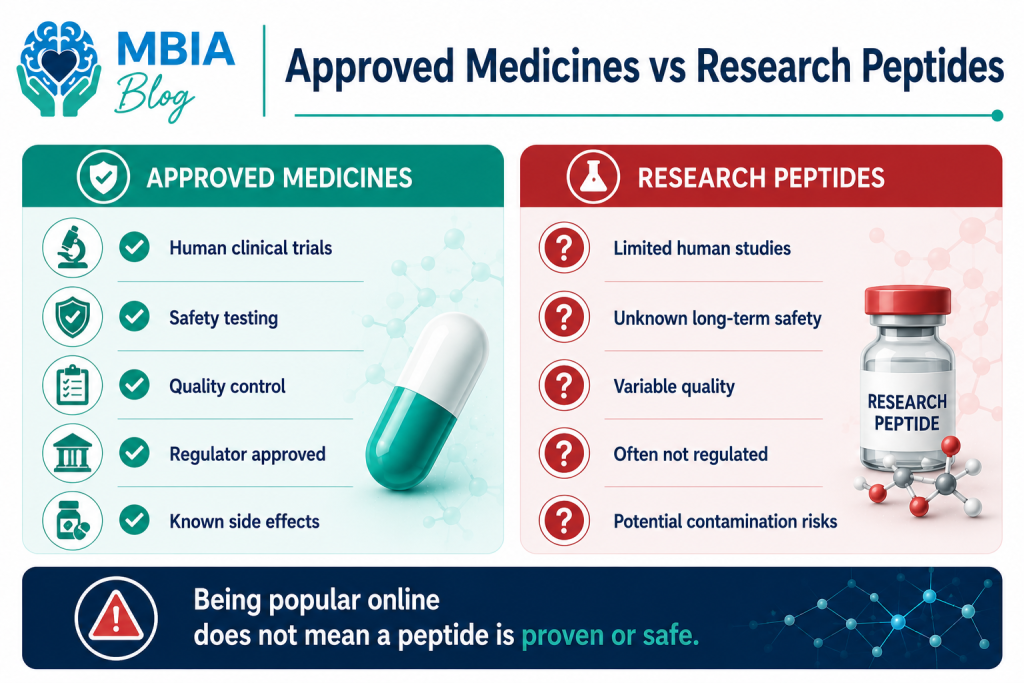
This distinction is crucial.
A regulated medicine has gone through formal testing. This includes:
- Dose finding
- Safety trials
- Human efficacy trials
- Manufacturing controls
- Purity testing
- Stability testing
- Monitoring for adverse effects
- Regulatory review
A “research peptide” sold online may not have gone through any of this.
Possible risks include:
- Incorrect dose
- Contamination
- Impurities
- Mislabelled contents
- Poor sterility
- Unknown long-term effects
- Interactions with medication
- Immune reactions
- Unsafe injection practices
This is especially concerning for people with brain injuries, dementia, seizures, psychiatric symptoms, hormone issues, immune problems or complex medication regimes.
Why brain-injury communities need balanced information
People living with brain injury, suspected CTE, post-concussion syndrome or neurodegenerative symptoms are often desperate for answers.
That desperation is understandable.
When someone is living with headaches, fatigue, memory loss, mood changes, sleep disruption, sensory overload, personality changes or cognitive decline, it is natural to search for anything that might help.
But vulnerable communities are also at risk of being targeted by exaggerated claims.
Peptides may have a future role in neurological medicine. Some already have legitimate medical uses. Some are being studied in serious research.
But “promising” does not mean proven.
“Natural” does not mean safe.
“Research-backed” does not always mean clinically proven in humans.
And “used by others online” does not mean safe for someone with a brain injury.
What does the research suggest so far?
The current picture is mixed.
There is genuine scientific interest in peptide-based therapies for brain health.
Some studies suggest possible benefits in areas such as:
- Neuroprotection
- Neuroplasticity
- Neuroinflammation
- Stroke recovery
- Traumatic brain injury recovery
- Mitochondrial function
- Metabolic brain health
However, much of the research is still early-stage, preclinical, condition-specific or based on small trials.
Some larger trials have produced disappointing results, including semaglutide trials in Alzheimer’s disease.
This does not close the door on peptide research. It simply reminds us that brain disease is complex, and treatments that influence biomarkers do not always translate into real-world improvements in memory, function or quality of life.
What patients and families should know
Peptides are not one single thing.
Some are approved medicines.
Some are experimental drugs.
Some are supplements.
Some are cosmetic ingredients.
Some are unregulated research chemicals.
They should not all be treated the same.
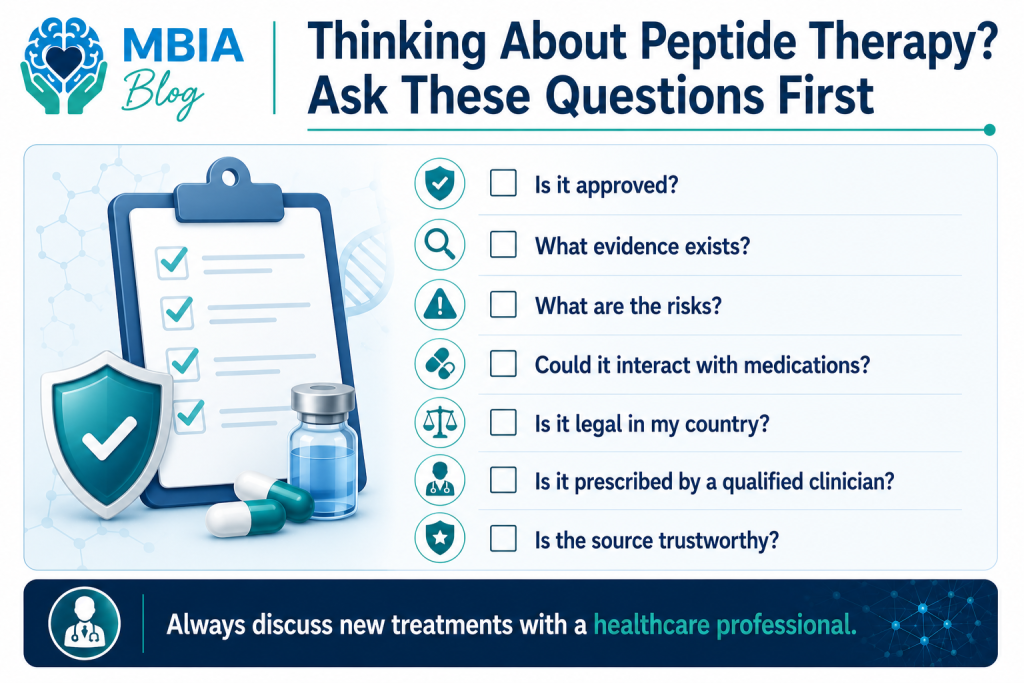
Before considering any peptide therapy, people should ask:
- Is this approved for human use?
- Is it prescribed by a qualified medical professional?
- Is there human clinical trial evidence?
- Is it being used for the condition I have?
- What are the known risks?
- What are the unknown risks?
- Could it interact with my medication?
- Is it safe with my medical history?
- Where is it manufactured?
- Has it been independently tested?
- Is it legal in my country?
- Is the claim based on human evidence or animal/lab research?
MBIA’s position
At Marshalling Brain Injuries Alliance, our role is to help people understand emerging areas of brain-health research without exaggeration or false hope.
Peptides are a fascinating and fast-moving area of medicine.
They already have important roles in diabetes, obesity, cancer, cardiovascular disease and rare conditions. They may also have future potential in brain injury, dementia, stroke and neurodegenerative disease.
But at present, there is no peptide proven to cure brain injury, CTE or dementia.
Anyone considering peptide therapy should speak to a qualified medical professional and avoid self-injecting or buying unregulated products online.
Hope matters.
But hope must be matched with safety, evidence and honest information.
Final thoughts
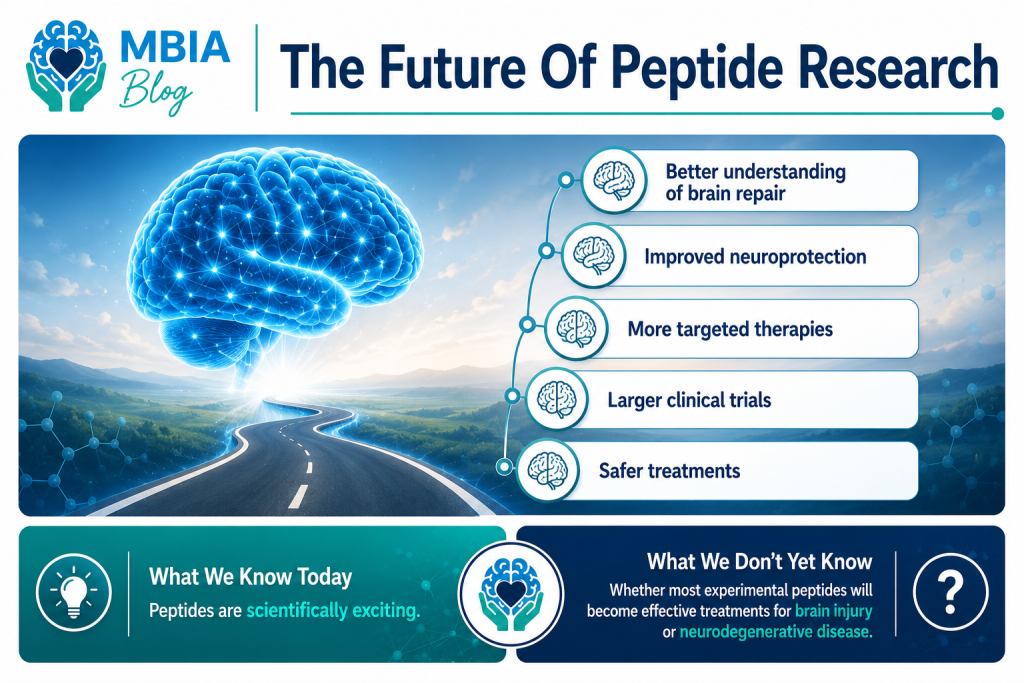
Peptide research is likely to continue growing over the coming years.
As scientists learn more about inflammation, metabolism, mitochondria, neuroplasticity and repair pathways, peptide-based medicines may become increasingly important in neurological care.
For now, the most responsible message is this:
Peptides are scientifically exciting.
Some are already powerful medicines.
Some may have future potential in brain health.
But many popular online peptides remain experimental, unproven and potentially risky.
For people affected by brain injury, CTE or neurodegenerative symptoms, the safest path is to stay informed, ask careful questions and involve qualified medical professionals before trying anything new.
Enjoyed this article? Join thousands of readers receiving our monthly Brain Injury Brief