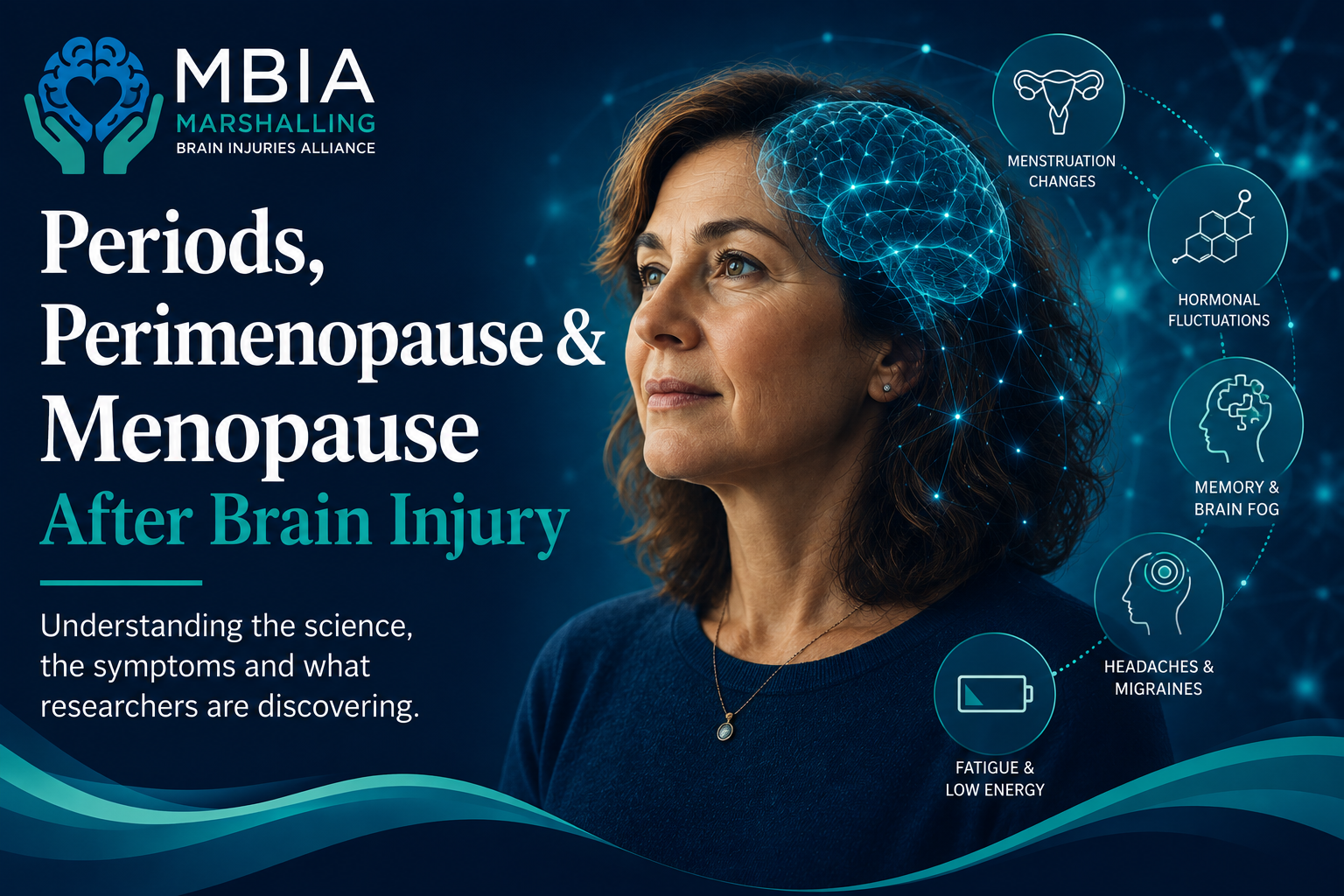
Periods, Perimenopause and Menopause After Brain Injury: What Every Woman Needs to Know
If you're a woman living with a brain injury, you've probably noticed something that isn't talked about nearly enough.
Perhaps your headaches become unbearable just before your period. Your brain fog suddenly worsens for a few days every month. Fatigue becomes overwhelming. You struggle to find words, your emotions feel harder to regulate, or sensory overload becomes almost impossible to cope with.
Then, as you enter your forties or fifties, everything seems to change again.
Symptoms you had learned to manage suddenly become more severe. Sleep becomes disrupted, anxiety increases, your memory feels worse than ever and you're left wondering:
Is this my brain injury? Is this menopause? Or is it both?
These are questions we hear time and time again from women in the Marshalling Brain Injuries Alliance community. Yet despite these shared experiences, many women tell us they feel dismissed, misunderstood or are simply told that their symptoms are "just hormones" or "just part of getting older."
The reality is far more complicated.
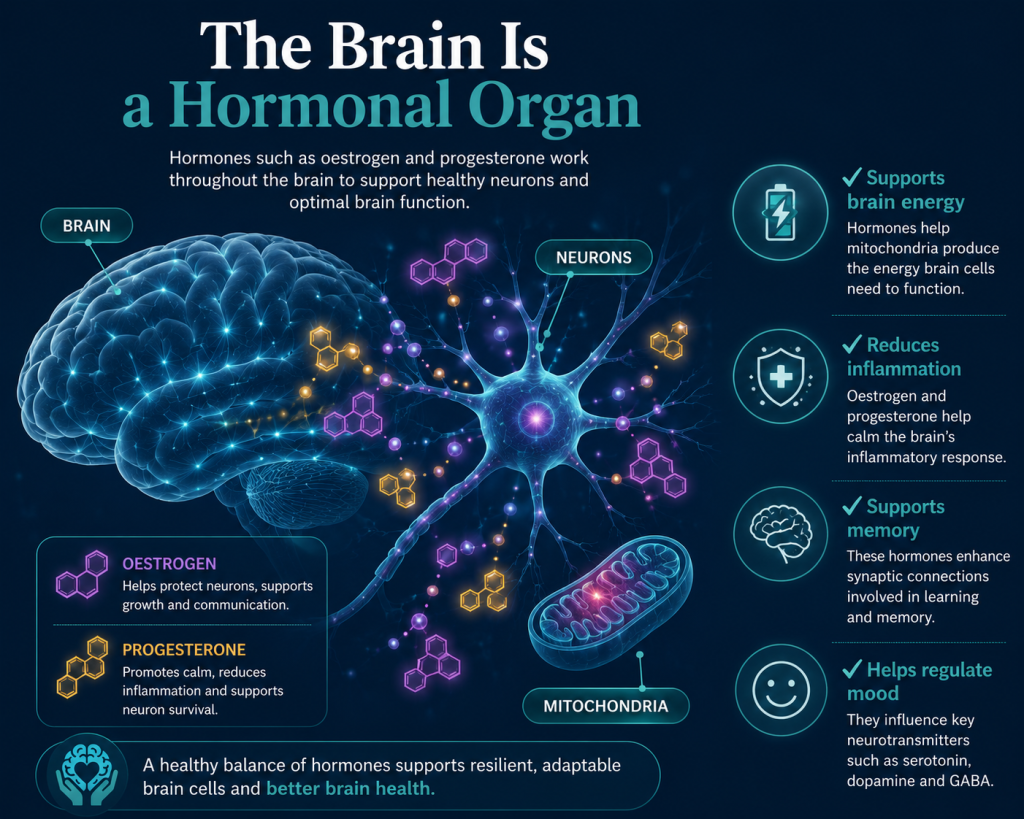
We now know that the brain and hormones are closely connected. Hormones such as oestrogen and progesterone do much more than regulate the menstrual cycle—they also influence memory, mood, sleep, inflammation, pain, blood flow, energy production and the brain's remarkable ability to repair and adapt. Because of this, it makes biological sense that hormonal changes could affect life after a brain injury.
Over the past decade, researchers have begun to investigate these connections. Studies have shown that traumatic brain injury can disrupt the hormonal systems that control menstruation, that many women experience changes to their menstrual cycle following injury, and that symptoms may worsen during certain phases of the menstrual cycle or throughout perimenopause and menopause. Scientists are also beginning to recognise that hormonal status at the time of a concussion may even influence recovery.
But despite this growing body of research, we still have far more questions than answers.
Most studies have focused on traumatic brain injury and concussion, with very little research exploring other forms of acquired brain injury such as stroke, hypoxic brain injury, brain infections, brain tumours, domestic abuse-related brain injury or chronic traumatic encephalopathy (CTE). We also still don't fully understand why some women experience profound hormonal changes after brain injury while others do not, or whether treatments such as hormone replacement therapy (HRT) can improve neurological symptoms.
For too long, women's experiences have been underrepresented in brain injury research. Historically, much of what we know about concussion and traumatic brain injury has come from studies involving men, despite clear biological differences that may influence injury, recovery and long-term health.
That is beginning to change.
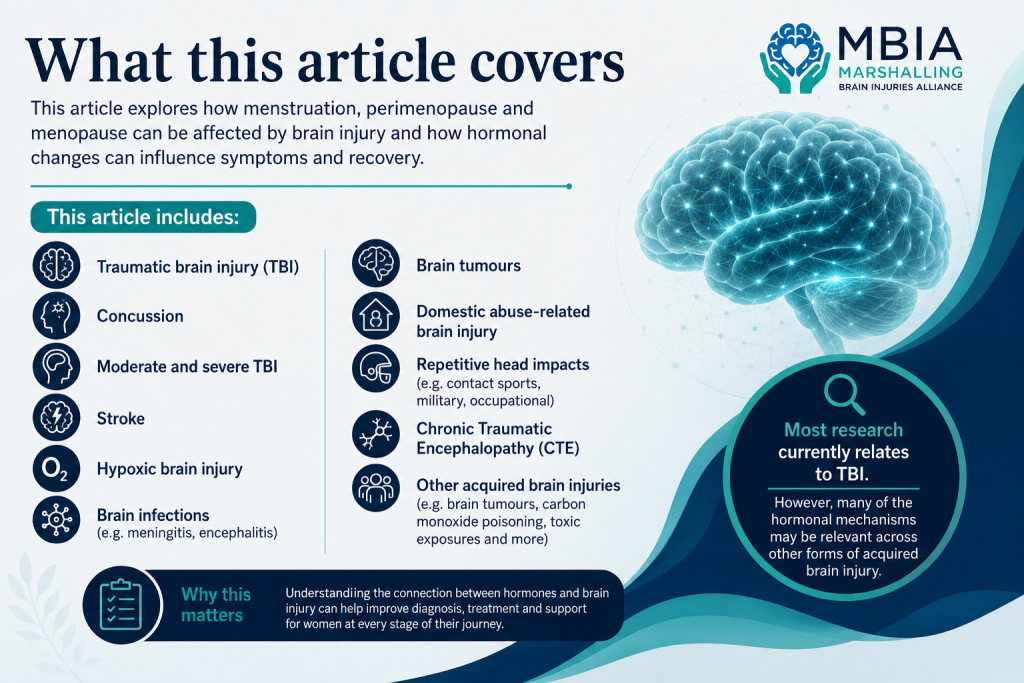
In this article, we'll explore what the latest science tells us about menstruation, perimenopause and menopause after brain injury. We'll explain the complex relationship between hormones and the brain in plain English, separate established evidence from unanswered questions, and provide practical information to help you better understand your symptoms and discuss them with your healthcare team.
Whether you're living with a concussion, traumatic brain injury, stroke, hypoxic brain injury or another acquired brain injury—or you're supporting someone who is—we hope this guide helps you feel informed, validated and reassured that you're not imagining these changes. Your experiences matter, and they deserve to be better understood.
Why Hormones Matter to the Brain
When most people think about hormones such as oestrogen or progesterone, they naturally think about fertility, pregnancy or the menstrual cycle.
But hormones do far more than regulate reproduction.
In fact, they play a vital role in how our brains develop, function and repair themselves throughout life. Every day, hormones help billions of brain cells communicate, produce energy, form memories and respond to stress. They influence everything from how well we sleep and concentrate to how we regulate our emotions and cope with pain.
This is one of the reasons why hormonal changes during menstruation, pregnancy, perimenopause and menopause can have such a noticeable effect on brain function—even in people who have never experienced a brain injury.
After a brain injury, however, these changes may become even more significant.
Researchers are increasingly discovering that many of the hormones involved in the menstrual cycle also help regulate inflammation, blood flow, energy production and neuroplasticity—the brain's ability to adapt and reorganise itself after injury. This means that changes in hormone levels may influence how brain injury symptoms feel from day to day, although scientists are still working to understand exactly how these complex interactions occur.
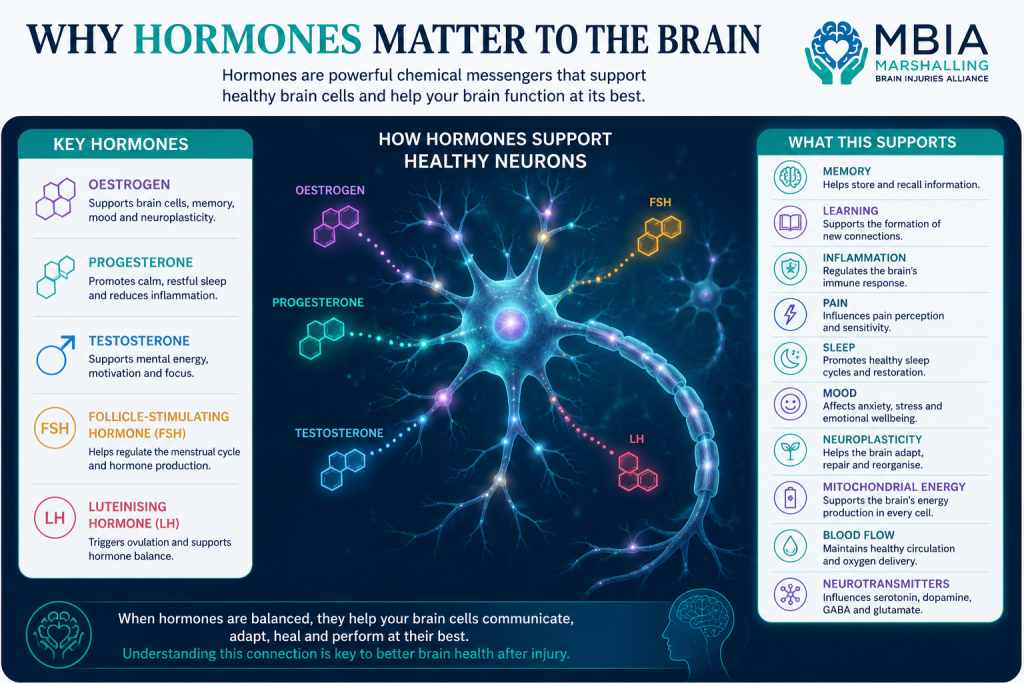
Let's look at the five key hormones involved.
Oestrogen: The Brain's Multi-Tasking Protector
Oestrogen is often thought of as the primary female sex hormone, but it is also one of the brain's most important chemical messengers.
Oestrogen receptors are found throughout the brain, particularly in areas responsible for memory, learning, decision-making and emotional regulation.
Research suggests that oestrogen helps to:
- Support memory formation and recall
- Improve learning and concentration
- Increase communication between brain cells
- Reduce inflammation
- Improve blood flow to the brain
- Protect nerve cells from oxidative stress
- Support healthy mitochondrial function, allowing cells to produce energy more efficiently
- Influence serotonin and dopamine, two neurotransmitters involved in mood and motivation
- Promote neuroplasticity, helping the brain adapt and form new connections
As oestrogen levels fluctuate throughout the menstrual cycle and decline during menopause, many women notice changes in memory, concentration, mood and fatigue. Scientists believe these changes are partly due to the loss of these protective effects, although every woman's experience is different.
Progesterone: The Brain's Calming Hormone
Progesterone is produced after ovulation and plays an important role in preparing the body for pregnancy. However, it also has significant effects within the brain.
Progesterone is often described as having a calming influence because it interacts with the brain's GABA system—a neurotransmitter network that helps reduce excessive brain activity.
Research suggests progesterone may help:
- Promote restful sleep
- Reduce anxiety
- Regulate mood
- Reduce inflammation
- Protect nerve cells after injury in laboratory studies
- Support the repair of myelin, the protective coating around nerve fibres
- Reduce oxidative stress
Because progesterone naturally falls just before menstruation, some women notice worsening headaches, anxiety, irritability or brain fog in the days before their period.
Scientists have also investigated whether progesterone could be used as a treatment after traumatic brain injury. Although early animal studies and small human trials were promising, larger clinical trials did not show clear benefits. At present, progesterone is not recommended as a routine treatment for brain injury, but research into hormone-related recovery continues.
Testosterone: Important for Women Too
Although testosterone is often thought of as a male hormone, women also produce it in smaller amounts, and it plays an important role in brain health.
Testosterone contributes to:
- Mental energy
- Motivation
- Attention
- Processing speed
- Muscle strength
- Mood
- Cognitive performance
Some research suggests testosterone may also help protect brain cells and reduce inflammation, but its role in brain injury recovery is much less well understood than oestrogen and progesterone.
Testosterone levels naturally decline with age and may also be affected if a brain injury disrupts the pituitary gland, which controls hormone production.
FSH (Follicle-Stimulating Hormone)
FSH is produced by the pituitary gland—a small gland located at the base of the brain.
Its main job is to stimulate the ovaries and regulate the menstrual cycle.
FSH levels naturally rise during perimenopause and menopause as the ovaries become less responsive.
While FSH itself does not directly control brain function in the same way as oestrogen or progesterone, it is an important indicator of hormonal changes occurring within the body.
Because the pituitary gland can sometimes be affected by brain injury, FSH levels may become abnormal. In some cases, this can contribute to irregular periods, fertility problems or early menopause, particularly after moderate or severe traumatic brain injury.
LH (Luteinising Hormone)
LH is another hormone produced by the pituitary gland.
It works alongside FSH to regulate ovulation and stimulate the production of oestrogen and progesterone.
Like FSH, LH levels change throughout the menstrual cycle and increase during menopause.
If a brain injury affects the hypothalamus or pituitary gland, LH production may also become disrupted, potentially leading to:
- Irregular menstrual cycles
- Missed periods
- Reduced fertility
- Hormonal imbalance
Although these hormonal changes are not experienced by everyone after a brain injury, they are increasingly recognised as an important part of post-traumatic endocrine dysfunction.
How These Hormones Support a Healthy Brain
Together, these hormones help regulate many of the brain's most important functions.
They influence:
🧠 Memory – Helping us store and retrieve information.
📚 Learning – Supporting the formation of new neural connections.
🔥 Inflammation – Helping regulate the brain's immune response.
⚡ Pain – Influencing how we perceive headaches, migraines and chronic pain.
😴 Sleep – Supporting healthy sleep cycles and restorative rest.
💙 Mood – Affecting anxiety, depression, stress resilience and emotional regulation.
🌱 Neuroplasticity – Helping the brain adapt, reorganise and recover after injury.
🔋 Mitochondrial Energy Production – Supporting the tiny "power stations" inside our cells that produce the energy brain cells need to function.
🩸 Blood Flow – Helping maintain healthy circulation and oxygen delivery to the brain.
🧪 Neurotransmitters – Influencing serotonin, dopamine, GABA and glutamate, which regulate mood, motivation, memory and communication between brain cells.
Why This Matters After Brain Injury
One of the biggest advances in neuroscience over the past two decades has been the growing recognition that hormones and the brain cannot be considered separately.
After a brain injury, the brain may already be working harder to compensate for damaged networks, altered energy production and ongoing inflammation. When hormone levels naturally fluctuate during the menstrual cycle or decline during perimenopause and menopause, this can place additional demands on an already vulnerable brain.
This doesn't mean hormones cause brain injury symptoms. Rather, they may influence how those symptoms are experienced, helping to explain why many women notice predictable changes in headaches, fatigue, memory, concentration or emotional wellbeing at different stages of their cycle or during menopause.
Scientists are only beginning to understand these interactions, but one thing is becoming increasingly clear: understanding hormones is likely to be an important part of improving brain injury care for women in the future.
Your Brain Controls Your Menstrual Cycle
Many people think of the menstrual cycle as something controlled by the ovaries.
In reality, the process begins much higher up—in the brain.
Every menstrual cycle relies on a sophisticated communication network that links the brain to the ovaries through a carefully balanced series of hormonal signals. Scientists call this the hypothalamic-pituitary-ovarian (HPO) axis, but it can be thought of simply as the body's hormonal communication system.
Here's how it works:
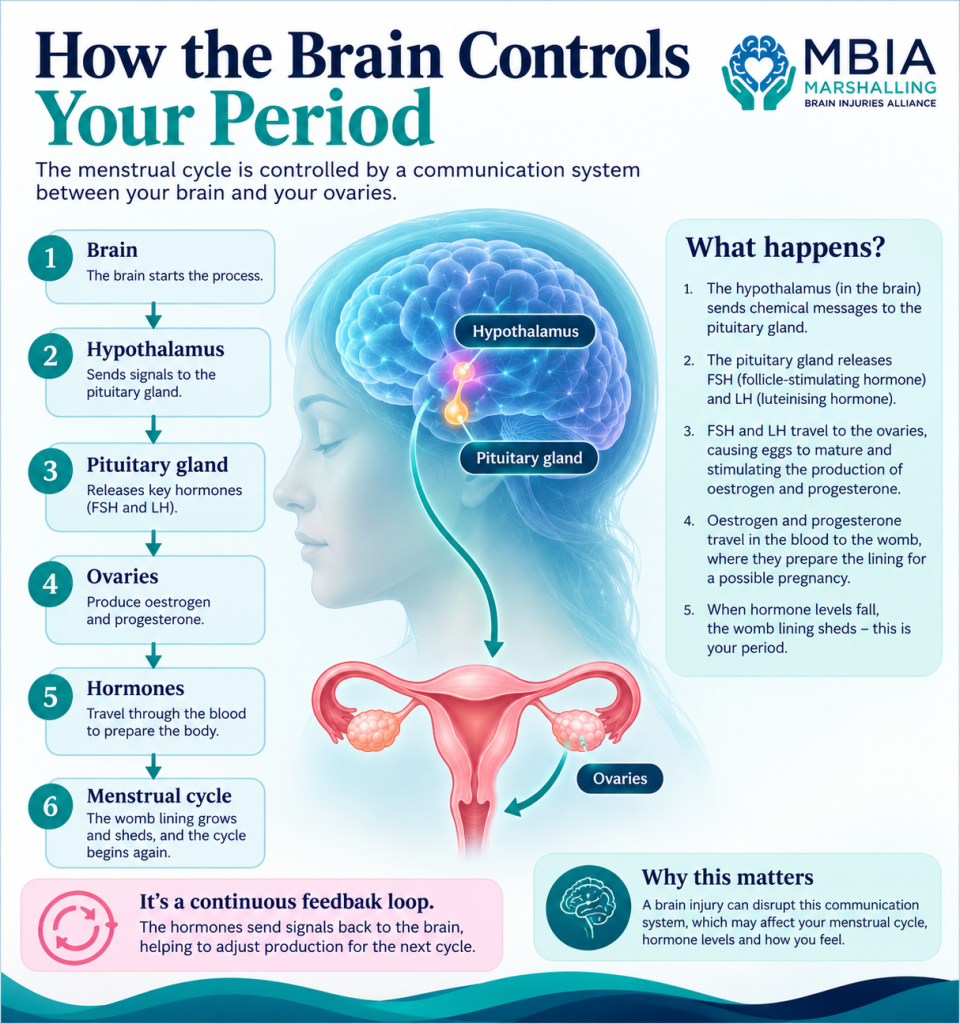
Each part of this system depends on the others working correctly.
The hypothalamus constantly monitors what is happening inside the body. When the timing is right, it sends chemical messages to the pituitary gland, a pea-sized gland located at the base of the brain.
The pituitary then releases two key hormones:
- Follicle-stimulating hormone (FSH), which helps eggs mature in the ovaries.
- Luteinising hormone (LH), which triggers ovulation and stimulates the production of oestrogen and progesterone.
In response, the ovaries produce the hormones that regulate the menstrual cycle. Those hormones then send signals back to the brain, allowing the hypothalamus and pituitary to adjust hormone production throughout the month.
It's a continuous feedback loop, with the brain and ovaries constantly "talking" to one another.
What Happens After a Brain Injury?
Because the hypothalamus and pituitary gland are both located within the brain, they can sometimes be affected by a brain injury.
This is particularly recognised after moderate and severe traumatic brain injury, but it can also occur following concussion and other forms of acquired brain injury, although much less research has been carried out in these groups.
If the injury disrupts communication between the hypothalamus, pituitary gland and ovaries, the hormonal messages may become weaker, stronger or mistimed. As a result, some women experience changes to their menstrual cycle shortly after their injury, while others develop hormonal problems months or even years later.
These changes can include:
- Irregular periods
- Missed periods (amenorrhoea)
- Heavier or lighter bleeding
- Changes in cycle length
- Difficulty becoming pregnant
- Early menopause
- Worsening brain injury symptoms around the menstrual cycle
Not every woman experiences these changes, and for many they are temporary. However, they can have a significant impact on quality of life and are often overlooked during rehabilitation.
The Pituitary Gland: Small but Powerful
The pituitary gland is often called the body's "master gland" because it controls many of the hormones produced throughout the body—not just those involved in reproduction.
As well as regulating the menstrual cycle, it influences:
- Thyroid function
- Growth hormone
- Stress hormones such as cortisol
- Fertility
- Metabolism
- Sexual function
- Bone health
- Energy levels
If the pituitary gland is damaged or its function is disrupted after a brain injury, it can affect one or several of these hormonal systems.
This condition is known as post-traumatic hypopituitarism or pituitary dysfunction.
How Common Is Pituitary Dysfunction After Traumatic Brain Injury?
Over the past two decades, researchers have realised that pituitary hormone problems after traumatic brain injury are far more common than previously thought.
Recent systematic reviews suggest that around one in three people (approximately 30–35%) experience some degree of pituitary hormone dysfunction following traumatic brain injury, although the exact figure varies depending on the severity of the injury, when testing takes place and which hormones are measured.
The good news is that having an abnormal hormone test does not automatically mean someone will develop symptoms or require treatment.
Some hormonal changes are temporary and recover naturally as the brain heals. Others may be mild and never cause noticeable problems. However, for a smaller number of people, pituitary dysfunction can contribute to ongoing symptoms such as fatigue, brain fog, low mood, menstrual changes, reduced fertility or difficulties with recovery.
Because many of these symptoms overlap with those commonly seen after brain injury itself, pituitary dysfunction can easily go unrecognised unless healthcare professionals specifically consider it.
Why This Matters
Understanding the hypothalamic-pituitary-ovarian axis helps explain why menstruation, perimenopause and menopause can sometimes feel so different after a brain injury.
A brain injury doesn't just affect the networks involved in thinking, memory or movement—it can also disrupt the hormonal communication system that links the brain and the ovaries. Researchers are increasingly recognising that this connection may help explain why so many women notice changes in their menstrual cycle, worsening symptoms at certain times of the month or new hormonal difficulties after injury.
Although there is still much to learn, recognising this relationship is an important step towards ensuring that women's experiences are better understood, investigated and supported.
Can a Brain Injury Affect Your Periods?
The short answer is yes.
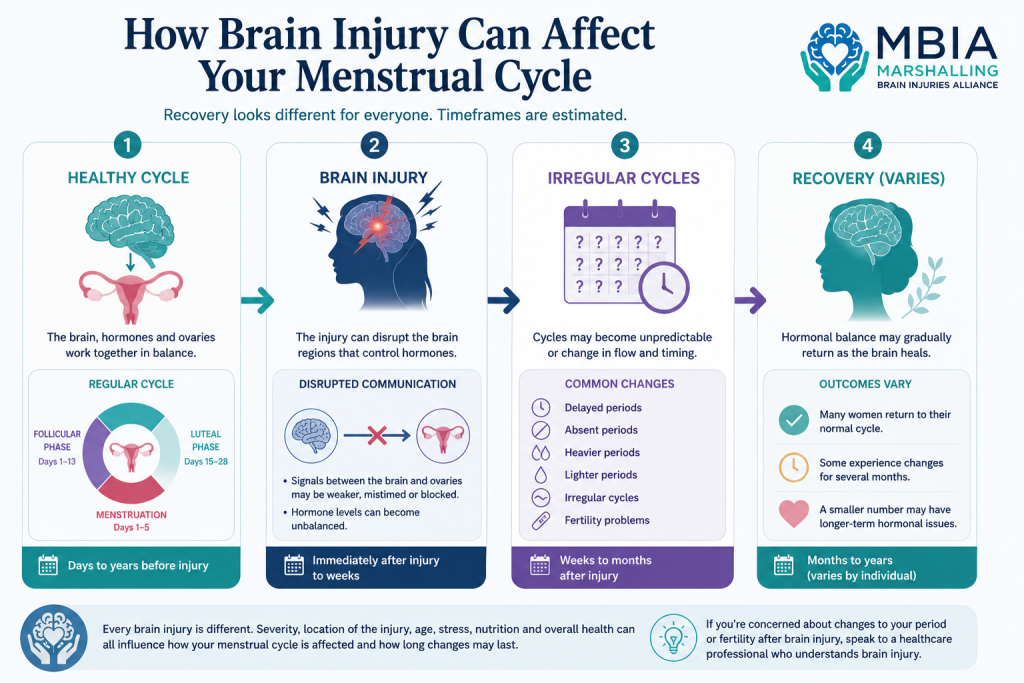
Although this is not widely discussed, research over the past two decades has shown that brain injury can affect the hormonal systems responsible for regulating the menstrual cycle. Many women notice changes to their periods after a traumatic brain injury, and these changes may occur immediately after the injury or develop over the following months.
The reason is simple: the menstrual cycle is controlled by the brain.
As we've already explored, the hypothalamus and pituitary gland work together to send hormonal signals to the ovaries. If these areas are affected by a brain injury—or if communication between them is disrupted—the normal hormonal rhythm that regulates menstruation can be altered.
Researchers have documented a range of menstrual changes following brain injury, although not every woman will experience them.
Delayed or Missed Periods
One of the most commonly reported changes is that periods stop altogether for a time after a brain injury. This is known as amenorrhoea.
In the days and weeks following a moderate or severe traumatic brain injury, the body often enters a period of intense physiological stress. During this time, the brain may temporarily reduce reproductive hormone production while it focuses on maintaining essential functions and healing.
For some women, menstruation returns within a few weeks.
For others, it may take several months before their cycle becomes established again.
In a small number of cases, particularly where the pituitary gland has been affected, periods may remain absent until the underlying hormonal problem is identified and treated.
Irregular Menstrual Cycles
Even when periods continue, many women find that their cycle becomes unpredictable.
Instead of arriving every 28–35 days, periods may occur:
- Earlier than expected
- Much later than expected
- At different intervals each month
- With occasional skipped cycles
Several rehabilitation studies have found that women experience significantly more menstrual irregularities after traumatic brain injury than before their injury.
These changes may reflect temporary disruption of the hypothalamic-pituitary-ovarian (HPO) axis while the brain recovers, although in some cases longer-term hormonal dysfunction may be responsible.
Heavier or Lighter Periods
Some women notice changes in menstrual flow.
Periods may become:
- Heavier than usual
- Lighter than usual
- Shorter
- Longer
- More painful
Scientists believe these changes are likely related to altered levels of oestrogen and progesterone, which help regulate the growth and shedding of the uterine lining.
However, because relatively few studies have specifically examined menstrual bleeding patterns after brain injury, researchers cannot yet predict who is most likely to experience these changes.
Fertility and Ovulation
Because brain injury can affect hormone production, it may also interfere with ovulation.
If ovulation becomes irregular or stops altogether, fertility may be reduced.
This does not mean that everyone who experiences a brain injury will have difficulty becoming pregnant. Many women go on to have completely healthy pregnancies after recovering from a brain injury.
However, if menstrual cycles remain absent or highly irregular for several months, or if pregnancy is not occurring despite trying, it is important to discuss this with a healthcare professional. In some cases, hormone testing may identify a treatable pituitary or ovarian problem.
How Long Do These Changes Last?
One of the most common questions women ask is:
"Will my periods ever go back to normal?"
Unfortunately, there is no single answer.
Research shows that recovery varies considerably between individuals.
For some women, menstrual changes last only a few weeks before the normal cycle returns.
Others continue to experience irregular periods for several months as the brain and hormonal systems gradually recover.
A smaller number may develop longer-term hormonal problems, particularly if the hypothalamus or pituitary gland has been injured.
Current evidence suggests that the likelihood of prolonged hormonal disruption increases with more severe traumatic brain injuries, although hormonal changes have also been reported after some mild traumatic brain injuries and concussions.
What Does the Research Tell Us?
One of the first studies to examine menstrual function after traumatic brain injury found that menstrual disturbances were common during recovery. Women reported significantly higher rates of missed periods, irregular cycles and changes in menstrual function than before their injury, with more severe injuries generally associated with longer-lasting disruption.
More recent research has strengthened these findings by showing that pituitary hormone dysfunction may affect around one-third of people following traumatic brain injury, although not everyone develops symptoms or requires treatment. This helps explain why some women experience persistent menstrual or hormonal changes while others recover without long-term difficulties.
It's important to remember that most of this research has been carried out in women with traumatic brain injury. Much less is known about menstrual changes following stroke, hypoxic brain injury, brain infections, brain tumours or repeated brain injuries such as those associated with domestic abuse or repetitive head impacts. These are important gaps in our understanding that future research needs to address.
The Bottom Line
Changes to your menstrual cycle after a brain injury are real, they are recognised in the scientific literature, and they may reflect changes in the complex hormonal communication between the brain and the ovaries.
While many women see their cycle gradually return to normal, others experience longer-term changes that deserve proper investigation—not dismissal.
If your periods have become absent, very irregular, unusually heavy or light, or are accompanied by other symptoms such as severe fatigue, low mood, reduced libido or difficulty becoming pregnant, it is worth discussing whether hormonal assessment may be appropriate as part of your ongoing brain injury care.
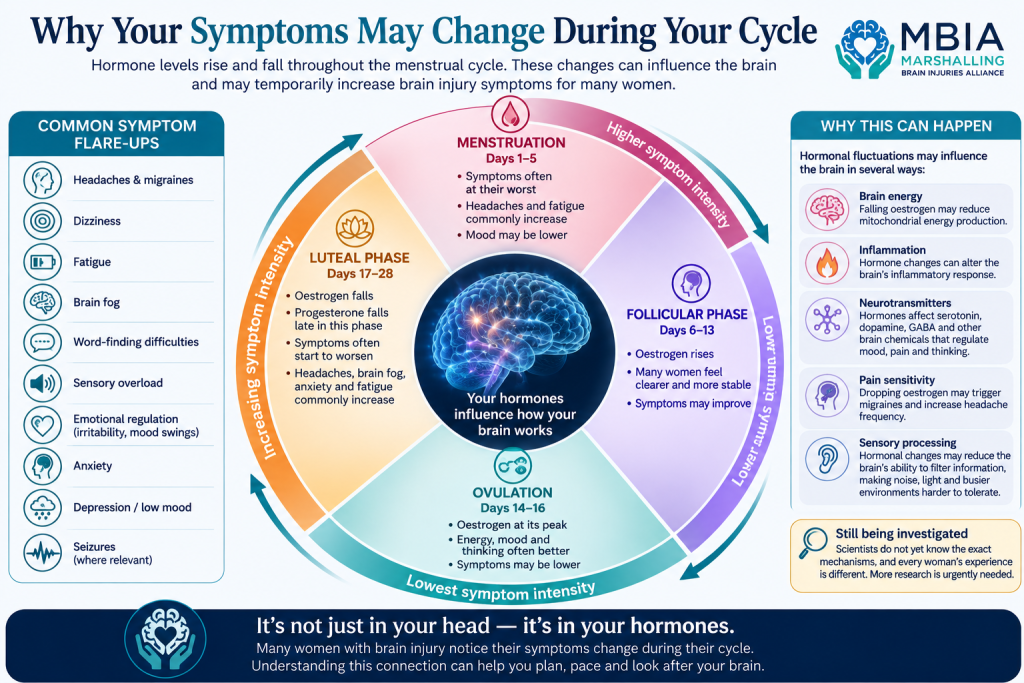
Why Do Brain Injury Symptoms Often Flare Around Your Period?
One of the most common questions we hear from women living with brain injury is:
"Why do I feel so much worse just before or during my period?"
Many women describe a predictable pattern. They may have found a routine that keeps their symptoms relatively stable, only for everything to deteriorate for several days each month.
Headaches become more intense.
Brain fog returns.
Fatigue feels overwhelming.
Noise and bright lights become unbearable.
Words become harder to find.
Emotions feel much more difficult to control.
For some women, it feels as though their brain injury has suddenly become worse.
The reassuring news is that you're not imagining it. While researchers are still trying to understand exactly why this happens, there is growing scientific evidence that hormonal fluctuations can influence brain function and may temporarily amplify existing brain injury symptoms.
Importantly, this does not necessarily mean the brain injury itself is worsening. Instead, scientists believe the normal hormonal changes that occur throughout the menstrual cycle may affect an already vulnerable brain, making existing symptoms more noticeable.
Which Symptoms Can Become Worse?
Every woman's experience is different, but studies and patient reports consistently describe flare-ups in symptoms such as:
- Headaches
- Migraines
- Dizziness and balance problems
- Extreme fatigue
- Brain fog
- Poor concentration
- Memory difficulties
- Word-finding problems
- Sensitivity to light and sound
- Sensory overload
- Irritability
- Anxiety
- Low mood or depression
- Emotional regulation difficulties
- Sleep disturbance
Women living with epilepsy or post-traumatic seizures may also notice that seizures become more frequent around certain stages of the menstrual cycle. This phenomenon, known as catamenial epilepsy, has been recognised for many years in epilepsy research. While it has not been studied specifically in people with traumatic brain injury, it highlights how powerful hormonal changes can be in influencing brain excitability.
Why Might This Happen?
Scientists don't yet have all the answers, but several biological mechanisms are thought to contribute.
Rather than one single cause, it's likely that multiple systems within the brain are affected simultaneously.
Hormones Are Constantly Changing
Throughout the menstrual cycle, levels of oestrogen and progesterone naturally rise and fall.
These hormones don't just affect the reproductive system—they also influence many of the same brain networks that are commonly affected by brain injury.
As hormone levels change, they can alter:
- Communication between brain cells
- Blood flow within the brain
- Energy production
- Pain sensitivity
- Mood
- Sleep
- Memory
- Concentration
For most women, these changes are subtle and go largely unnoticed.
After a brain injury, however, the brain may already be working harder to compensate for damaged or less efficient neural networks. Hormonal fluctuations may temporarily reduce that reserve, making existing symptoms more noticeable.
The Brain's Energy Supply May Already Be Reduced
One of the best-understood consequences of brain injury is that brain cells often become less efficient at producing energy.
Scientists sometimes describe this as an energy crisis, where the brain needs more energy to perform everyday tasks while producing less of it.
Oestrogen appears to support the function of mitochondria—the tiny structures inside our cells that produce energy.
As oestrogen levels fall, particularly in the days before menstruation, some researchers believe brain cells may become temporarily less efficient at generating energy.
If the brain is already struggling to meet its energy demands following an injury, this additional reduction could contribute to symptoms such as:
- Fatigue
- Brain fog
- Slower thinking
- Poor concentration
- Mental exhaustion
This theory is biologically plausible, but more research is needed to determine exactly how important it is in women living with brain injury.
Hormones Help Regulate Inflammation
Inflammation is a normal part of the body's healing response.
After a brain injury, however, inflammation can persist for months or even years.
Both oestrogen and progesterone help regulate the immune system and influence inflammatory pathways throughout the body, including the brain.
As these hormone levels fluctuate during the menstrual cycle, researchers believe inflammatory activity within the brain may also change.
Some scientists think this could help explain why symptoms such as:
- Headaches
- Fatigue
- Brain fog
- Pain
- Sensory sensitivity
often become more noticeable around menstruation.
At present, this remains an active area of research, and scientists are still investigating exactly how hormonal changes influence neuroinflammation after brain injury.
Hormones Influence Neurotransmitters
Hormones also affect many of the brain's chemical messengers, known as neurotransmitters.
These include:
- Serotonin, which influences mood, sleep and pain perception.
- Dopamine, which helps regulate motivation, attention and movement.
- GABA, the brain's main calming neurotransmitter.
- Glutamate, an important excitatory neurotransmitter involved in learning and memory.
As oestrogen and progesterone rise and fall throughout the menstrual cycle, these neurotransmitter systems also change.
This may contribute to:
- Increased anxiety
- Mood swings
- Irritability
- Poor sleep
- Reduced concentration
- Increased pain sensitivity
In someone recovering from a brain injury—where these neurotransmitter systems may already have been disrupted—the effects may be more noticeable than in someone without an injury.
Why Headaches and Migraines Often Get Worse
Many women notice that headaches or migraines become significantly worse in the days before or during their period.
This is true both in the general population and among people living with brain injury.
Researchers believe the rapid fall in oestrogen that occurs just before menstruation may trigger migraine pathways in susceptible individuals.
When combined with the altered pain processing, inflammation and nervous system sensitivity that often follow a brain injury, this may help explain why menstrual migraines or post-traumatic headaches become particularly severe at this time of the month.
What About Sensory Overload?
Many women with brain injury describe becoming much more sensitive to:
- Bright lights
- Loud noises
- Busy environments
- Strong smells
- Multiple conversations
around their period.
Although there has been very little research specifically examining sensory overload during the menstrual cycle after brain injury, scientists believe hormonal changes may temporarily alter how the brain processes sensory information.
If the injured brain is already using extra energy to filter and organise incoming information, hormonal fluctuations may reduce its ability to compensate, making everyday environments feel much more overwhelming.
Emotional Changes Are Real
Many women report feeling:
- More anxious
- More emotional
- More irritable
- More tearful
- Less resilient
during certain phases of their menstrual cycle.
This is not simply "being hormonal."
Oestrogen and progesterone influence several neurotransmitters involved in emotional regulation, including serotonin and GABA.
At the same time, brain injuries commonly affect areas responsible for regulating emotions, such as the frontal lobes and the connections between different brain networks.
When these two factors combine, emotional symptoms may become temporarily more pronounced.
For many women, recognising this pattern can be reassuring and may help them plan ahead with additional rest, reduced demands or extra support during more difficult days.
What We Still Don't Know
Although the relationship between hormones and brain injury is becoming increasingly recognised, many important questions remain unanswered.
Researchers still don't know:
- Why some women experience severe monthly symptom flare-ups while others do not.
- Which hormonal changes have the greatest effect on recovery.
- Whether hormonal treatments can reduce symptom fluctuations.
- How these patterns differ between concussion, moderate or severe TBI, stroke, hypoxic brain injury and other acquired brain injuries.
- Whether similar hormonal effects occur in women living with probable CTE.
These are now some of the most important unanswered questions in women's brain injury research.
The Bottom Line
Many women notice that their brain injury symptoms become worse around their period, and growing scientific evidence suggests there is a genuine biological reason for these experiences.
Hormonal fluctuations can influence inflammation, brain energy production, blood flow and the chemical messengers that allow brain cells to communicate. In an already injured brain, these normal hormonal changes may temporarily reduce the brain's ability to compensate, making existing symptoms more noticeable.
Exactly how these processes interact is still being investigated, but one message is becoming increasingly clear: women's experiences deserve to be listened to, taken seriously and studied far more closely than they have been in the past.
Concussion and the Menstrual Cycle
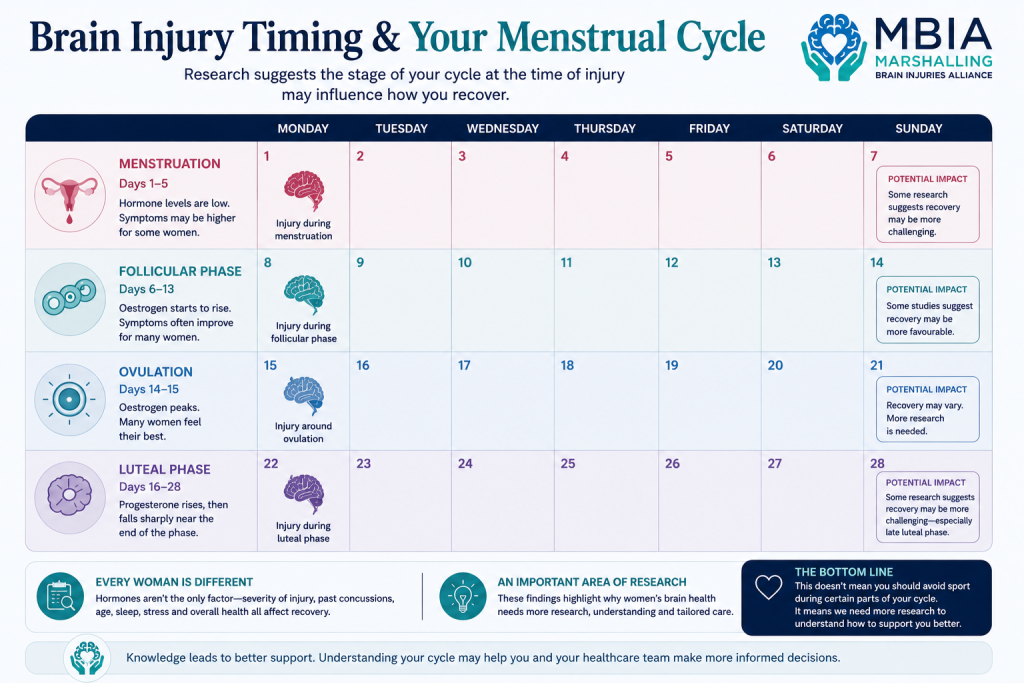
One of the more surprising discoveries in recent concussion research is that the stage of a woman's menstrual cycle at the time of injury may influence how she recovers.
This doesn't mean that the menstrual cycle causes concussion, nor does it mean that women are more likely to sustain a concussion during a particular phase of their cycle.
Instead, researchers are exploring whether the brain's hormonal environment at the moment an injury occurs could affect the body's response during the days and weeks that follow.
Although this research is still developing, it has opened up an important new area of investigation into why recovery after concussion can vary so widely between individuals.
What Have Studies Found?
Several studies have suggested that women who sustain a concussion during the late luteal phase of their menstrual cycle—the days immediately before menstruation—may experience a slower or more difficult recovery than women injured during other phases of their cycle.
The late luteal phase is characterised by a rapid fall in progesterone levels as the body prepares for menstruation.
Researchers have observed that some women injured during this phase reported:
- More severe post-concussion symptoms
- Slower recovery
- Greater difficulties with memory and concentration
- Increased headaches and dizziness
- Poorer overall quality of life during the weeks following injury
It is important to stress that these findings have not been seen in every study, and much larger studies are still needed. However, they have led scientists to explore one of the most widely discussed theories in this field: the progesterone withdrawal hypothesis.
The Progesterone Withdrawal Hypothesis
Progesterone is more than a reproductive hormone.
Laboratory studies suggest it may also help protect brain cells by:
- Reducing inflammation
- Supporting nerve cell survival
- Reducing oxidative stress
- Helping stabilise communication between neurons
- Supporting myelin repair
Progesterone levels naturally rise after ovulation and reach their highest point during the second half of the menstrual cycle before falling sharply if pregnancy does not occur.
The progesterone withdrawal hypothesis proposes that if a concussion occurs while progesterone levels are high, the injury may be followed by a sudden natural drop in progesterone over the following days.
Some scientists believe this rapid withdrawal could temporarily remove some of progesterone's protective effects on the brain at a time when they may be most needed.
In other words, it is not necessarily the high progesterone level that is thought to be important—it may be the sudden fall in progesterone immediately after the injury.
This remains a theory, not an established fact, but it is one of the leading explanations currently being investigated.
What About Hormonal Contraceptives?
Some early studies found that women using hormonal contraceptives appeared to have more consistent outcomes after concussion than women who were not using them.
One possible explanation is that many hormonal contraceptives reduce the large fluctuations in oestrogen and progesterone that occur during a natural menstrual cycle. By keeping hormone levels more stable, they may reduce the sudden hormonal changes thought to contribute to symptom severity.
However, later studies have produced mixed results.
Some have found little or no difference in recovery between women using hormonal contraception and those who are not.
Others suggest that any differences may depend on:
- The type of contraceptive used
- Whether it contains oestrogen, progesterone or both
- The individual's hormonal profile
- The severity of the concussion
- Other medical and lifestyle factors
At present, there is no evidence that hormonal contraception should be started, stopped or changed to improve concussion recovery.
Why Is the Evidence Still Uncertain?
Although this research is exciting, it is important to recognise its limitations.
Most studies have involved relatively small numbers of participants and have often relied on women accurately recalling the timing of their last menstrual period after sustaining a concussion. Researchers have also used different methods to measure symptoms and recovery, making it difficult to compare results directly.
Other factors can also influence recovery, including:
- Previous concussions
- Age
- Sleep quality
- Mental health
- Migraine history
- Medications
- Hormonal disorders
- Physical fitness
- Genetics
Because of these variables, scientists cannot yet say with certainty how much the menstrual cycle itself influences recovery.
More large, carefully designed studies are needed before firm conclusions can be drawn.
Does This Mean Women Should Avoid Sport at Certain Times of the Month?
No.
This is one of the most important messages to take away from this research.
Current evidence does not suggest that women should avoid playing sport, exercising or taking part in normal activities during certain phases of their menstrual cycle.
The studies do not show that concussion is more likely to occur during one stage of the cycle than another, nor do they provide evidence that changing sporting participation would reduce risk.
Instead, these findings highlight something much more important:
Women's hormones may be one of the many biological factors that influence recovery after concussion.
Understanding those differences could eventually help researchers develop more personalised approaches to concussion management.
Why This Research Matters
For decades, most concussion research was carried out almost exclusively in men and boys.
As a result, scientists knew very little about how female hormones might influence brain injury.
That is finally beginning to change.
Researchers are increasingly recognising that sex hormones are an important part of brain biology, and that understanding their role could improve diagnosis, treatment and recovery for millions of women worldwide.
While we still have many unanswered questions, one thing is already clear: women should not have to fit into evidence that was never designed with them in mind.
The Bottom Line
Early research suggests that the stage of the menstrual cycle at the time of concussion may influence recovery for some women, particularly during the late luteal phase when progesterone levels naturally fall.
The progesterone withdrawal hypothesis provides one possible explanation, and researchers are also exploring whether more stable hormone levels in some women using hormonal contraceptives could influence recovery. However, the evidence remains mixed, and no changes to contraception or sporting participation are currently recommended based on these findings alone.
Rather than changing how women participate in sport, this research reinforces the need for larger, higher-quality studies that include women at every stage of life. By understanding how hormones interact with concussion, we can move closer to more personalised care and ensure that future guidance reflects the unique biology of women as well as men.
The Pituitary Gland: The Forgotten Consequence of Brain Injury
When people think about the effects of a brain injury, they usually think about memory problems, headaches, dizziness or difficulties with concentration.
What many people don't realise is that a brain injury can also affect the body's hormone-producing system.
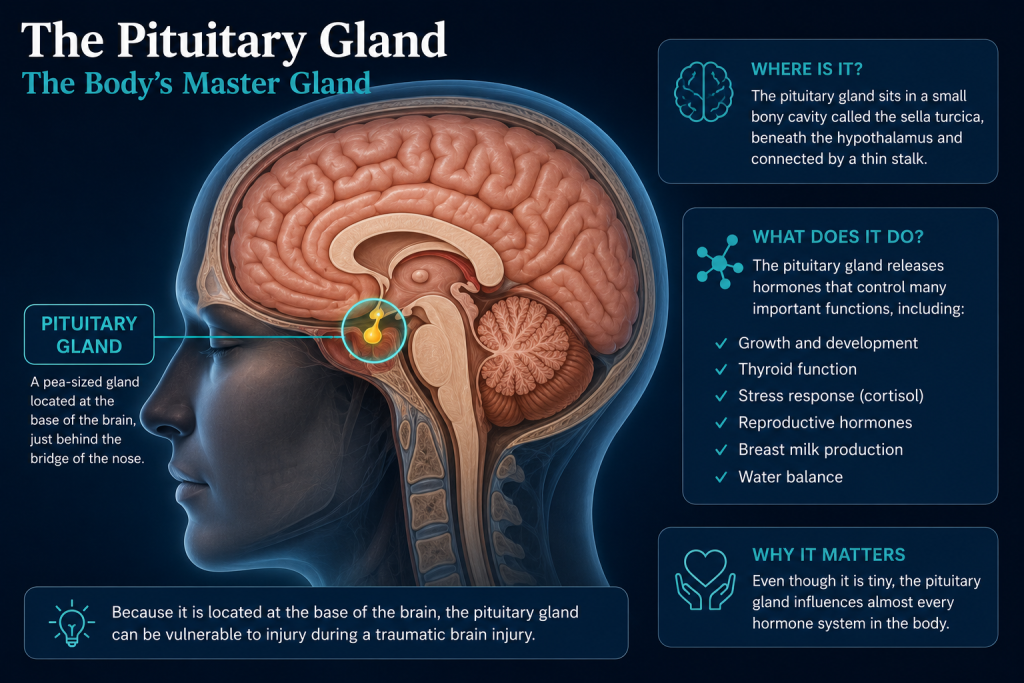
Hidden deep within the brain is a tiny gland no bigger than a pea called the pituitary gland. Despite its small size, it is often referred to as the body's "master gland" because it controls the production and release of many of the hormones that regulate growth, metabolism, reproduction, stress, energy levels and many other essential functions.
If the pituitary gland is damaged—or its communication with the brain is disrupted—the effects can be wide-ranging and may easily be mistaken for ongoing brain injury symptoms.
For this reason, many experts now believe pituitary dysfunction is one of the most under-recognised consequences of traumatic brain injury.
What Does the Pituitary Gland Do?
The pituitary sits just beneath the brain, connected to the hypothalamus by a thin stalk of specialised tissue.
Together, the hypothalamus and pituitary form the body's main hormonal control centre.
The pituitary releases hormones that regulate:
- The thyroid gland, which controls metabolism and energy.
- The adrenal glands, which produce cortisol and help the body respond to stress.
- The ovaries and testes, which produce reproductive hormones.
- Growth hormone, which supports tissue repair, muscle strength and bone health.
- Breast milk production after pregnancy.
- Water balance within the body.
Almost every major hormone system depends on the pituitary working correctly.
Because of its location beneath the brain, the pituitary can be vulnerable during a traumatic brain injury. Sudden acceleration, deceleration and rotational forces may stretch or damage the delicate blood vessels and nerve connections that supply the gland, while swelling or bleeding after injury can also interfere with its normal function.
What Is Hypopituitarism?
When the pituitary gland no longer produces enough of one or more hormones, the condition is called hypopituitarism.
The word simply means "reduced function of the pituitary gland."
Some people develop deficiencies in just one hormone, while others experience problems affecting several hormone systems.
The symptoms depend on which hormones are affected, but because hormones influence almost every organ in the body, the effects can sometimes be surprisingly broad.
What Symptoms Can It Cause?
Many of the symptoms of hypopituitarism overlap with those commonly experienced after a brain injury.
These may include:
- Persistent fatigue or exhaustion
- Loss of menstrual periods or irregular periods
- Reduced sex drive (low libido)
- Difficulty becoming pregnant (infertility)
- Unexplained weight gain or weight loss
- Low blood pressure
- Feeling unusually cold or struggling to tolerate cold temperatures
- Brain fog
- Poor concentration
- Memory difficulties
- Depression or low mood
- Reduced motivation
- Muscle weakness
- Reduced exercise tolerance
Looking at this list, it becomes clear why pituitary dysfunction is so easily missed.
Many of these symptoms are often assumed to be simply "part of the brain injury," when in some cases they may reflect a hormone deficiency that could potentially be identified and treated.
How Common Is Pituitary Dysfunction After Traumatic Brain Injury?
Until the early 2000s, doctors believed pituitary hormone problems after traumatic brain injury were extremely rare.
We now know this isn't the case.
Over the past two decades, dozens of studies have investigated pituitary function after traumatic brain injury, and recent systematic reviews and meta-analyses suggest that pituitary dysfunction is relatively common, although estimates vary depending on the study population, the severity of injury, when hormone testing is performed and which hormones are measured.
Overall, research suggests that around one-third of people experience some form of pituitary hormone dysfunction after traumatic brain injury at some point during their recovery.
However, this figure should be interpreted carefully.
Not everyone with an abnormal hormone test develops symptoms.
Some hormone deficiencies are temporary and recover naturally over weeks or months as the brain heals. Others may only affect one hormone and have little clinical impact. A smaller proportion of people develop persistent hormone deficiencies that require long-term treatment and follow-up by an endocrinologist.
Researchers have also found that different hormone systems are affected at different stages after injury. For example, some hormone deficiencies are more common in the first few months, while others may not become apparent until many months—or even years—later.
This is one reason why ongoing follow-up can be important in people with persistent or unexplained symptoms.
Why Is It Often Missed?
Pituitary dysfunction has been described as one of the "hidden" consequences of traumatic brain injury.
There are several reasons for this.
First, many symptoms—such as fatigue, poor concentration and depression—are already common after brain injury.
Second, hormone deficiencies often develop gradually rather than suddenly.
Third, routine hormone screening is not currently performed for everyone after a traumatic brain injury, meaning problems may only be recognised if healthcare professionals specifically consider the possibility.
For women, hormonal changes may be even more difficult to recognise because symptoms can overlap with menstruation, perimenopause or menopause.
When Should Hormone Problems Be Considered?
Not everyone who sustains a brain injury needs hormone testing.
However, many experts recommend that persistent symptoms should prompt healthcare professionals to consider whether pituitary dysfunction could be contributing—particularly after moderate or severe traumatic brain injury.
An endocrine assessment may be appropriate if someone experiences ongoing or unexplained symptoms such as:
- Severe fatigue that does not improve with rehabilitation.
- Loss of periods or major menstrual changes.
- Difficulty becoming pregnant.
- Low libido.
- Persistent depression that seems out of proportion to the injury.
- Unexplained weight changes.
- Recurrent dizziness or low blood pressure.
- Feeling unusually cold.
- Poor recovery despite otherwise appropriate rehabilitation.
Assessment usually begins with a review of symptoms, followed by blood tests to measure hormone levels. Depending on the results, further testing or referral to an endocrinologist—a doctor specialising in hormone disorders—may be recommended.
A Balanced Perspective
Although pituitary dysfunction is increasingly recognised after traumatic brain injury, it is important not to assume that every ongoing symptom is caused by a hormone problem.
Fatigue, headaches, memory difficulties and mood changes are common after brain injury for many different reasons.
Similarly, not everyone with an abnormal hormone test requires treatment.
Hormone results always need to be interpreted alongside symptoms, medical history and examination by an appropriately qualified healthcare professional.
The good news is that when clinically significant hormone deficiencies are identified, many can be managed with hormone replacement therapy tailored to the individual's needs.
The Bottom Line
The pituitary gland may be small, but its influence on the body is enormous.
Growing evidence suggests that pituitary dysfunction is not an uncommon consequence of traumatic brain injury, yet it often goes unrecognised because its symptoms closely resemble those of brain injury itself.
Understanding this connection is important because, for some people, persistent fatigue, menstrual changes, infertility, low mood or brain fog may not simply be part of recovery—they may also reflect an underlying hormonal imbalance that deserves further assessment.
As our understanding of post-traumatic endocrine dysfunction continues to improve, recognising and investigating hormone problems has the potential to improve quality of life for many people living with the long-term effects of brain injury.
Perimenopause After Brain Injury
For many women living with a brain injury, one of the most difficult stages of life isn't the injury itself—it's what happens years later.
You've worked hard to understand your symptoms. You've learned how to manage fatigue, pace your activities, avoid sensory overload and recognise when your brain needs rest.
Then, often in your forties, everything seems to change.
The headaches return more often.
Your memory seems worse than it has been for years.
Finding the right word becomes more difficult.
Sleep becomes fragmented.
Fatigue becomes overwhelming.
Anxiety increases.
You begin wondering whether your brain injury is getting worse.
For many women, this is the beginning of perimenopause—the transition leading up to menopause.
The challenge is that the symptoms of perimenopause and brain injury overlap so closely that it can be almost impossible to know which is responsible.
In many cases, the answer is probably both.
What Is Perimenopause?
Perimenopause is the natural transition before menopause, when the ovaries gradually produce less oestrogen and progesterone.
It usually begins between the ages of 40 and 50, although it can occur earlier or later.
Unlike menopause—which is officially diagnosed after 12 consecutive months without a menstrual period—perimenopause may last anywhere from a few months to more than ten years.
During this time, hormone levels don't simply decline in a straight line.
They fluctuate.
Sometimes dramatically.
One month, oestrogen levels may be relatively high.
The next, they may fall sharply.
These hormonal ups and downs can affect almost every organ in the body—but particularly the brain.
Why Does Perimenopause Affect the Brain?
Many people are surprised to learn that the brain contains thousands of receptors for oestrogen and progesterone.
These hormones help regulate:
- Memory
- Learning
- Attention
- Mood
- Sleep
- Pain perception
- Brain energy production
- Blood flow
- Neuroplasticity
- Communication between brain cells
As hormone levels become less predictable during perimenopause, these brain systems also become less stable.
Even women who have never experienced a brain injury commonly report:
- Brain fog
- Forgetfulness
- Difficulty concentrating
- Anxiety
- Mood changes
- Sleep problems
- Increased headaches
For someone already living with a brain injury, these changes may add another layer of complexity to an already vulnerable nervous system.
Why It Can Feel Like Your Brain Injury Is Getting Worse
One of the most common fears women describe is:
"I was improving... then suddenly everything got worse."
This doesn't necessarily mean the brain injury itself is deteriorating.
Instead, researchers believe the hormonal changes of perimenopause may reduce some of the brain's natural support systems.
Imagine living with a brain injury is like driving a car uphill.
You've learnt how to manage the journey.
You know when to slow down, when to stop and when to conserve fuel.
Perimenopause doesn't change the hill—but it may reduce the amount of fuel available to climb it.
The journey suddenly feels much harder, even though the underlying injury hasn't necessarily changed.
This analogy isn't perfect, but it helps explain why symptoms that had become manageable can suddenly become much more noticeable.
Brain Injury or Perimenopause?
The truth is...
Sometimes it simply isn't possible to separate the two.
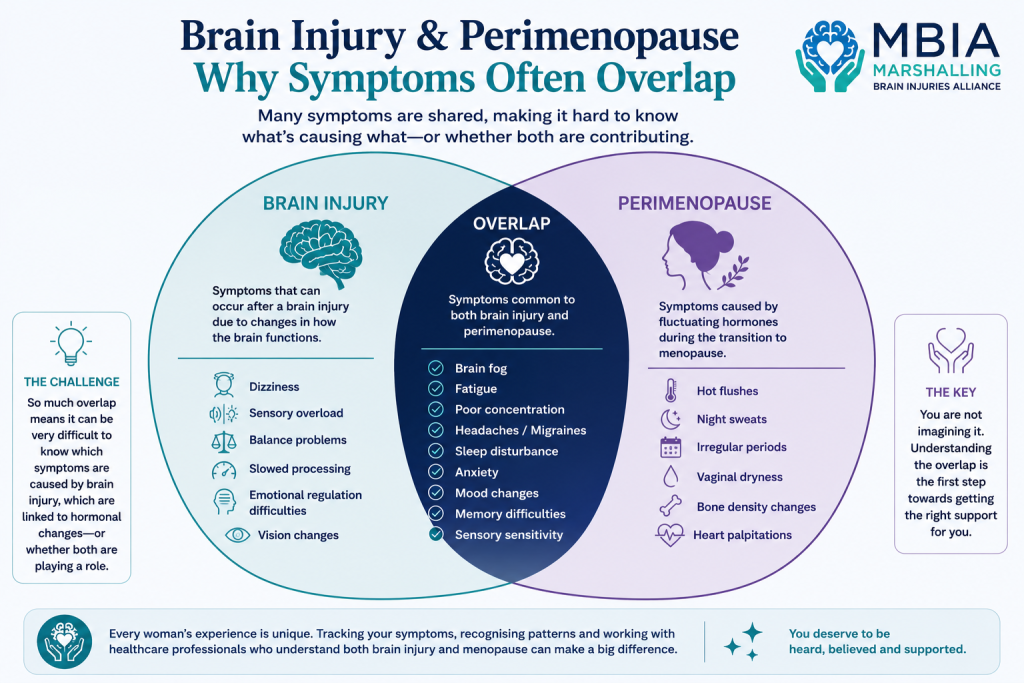
As you can see, there is enormous overlap.
This is one reason why many women feel frustrated when seeking help.
Symptoms may be attributed entirely to menopause.
Or entirely to the brain injury.
In reality, both may be contributing.
The Science Behind the Overlap
Researchers believe several biological mechanisms may explain why perimenopause can amplify brain injury symptoms.
Falling Oestrogen
Oestrogen supports:
- Brain energy production
- Blood flow
- Synaptic communication
- Memory
- Anti-inflammatory pathways
As oestrogen levels become more erratic, these protective effects may fluctuate.
Reduced Brain Energy
After a brain injury, mitochondria—the tiny energy-producing structures inside cells—often become less efficient.
Oestrogen also helps mitochondria produce energy.
As hormone levels fall, brain cells may temporarily struggle even more to meet their energy demands.
This may contribute to:
- Fatigue
- Mental exhaustion
- Brain fog
- Poor concentration
Changes in Neurotransmitters
Hormones influence several important neurotransmitters including:
- Serotonin
- Dopamine
- GABA
- Glutamate
These chemical messengers regulate:
- Mood
- Motivation
- Sleep
- Anxiety
- Pain perception
When hormone levels fluctuate, these systems also fluctuate.
For someone recovering from brain injury, the effects may be amplified.
Increased Inflammation
Scientists also know that oestrogen helps regulate inflammation.
As hormone levels decline during perimenopause, inflammatory activity may become less tightly controlled.
Although research is still ongoing, some scientists suspect this could contribute to worsening headaches, fatigue and cognitive symptoms in women living with brain injury.
What Does the Research Show?
Although research is still limited, the studies that have been carried out paint a consistent picture.
Women living with traumatic brain injury report:
- More severe menopausal symptoms
- Greater fatigue
- More memory problems
- Increased anxiety
- Poorer sleep
- More emotional symptoms
- Greater impact on quality of life
A recent multicentre study comparing menopausal women with and without traumatic brain injury found that women with TBI experienced significantly greater symptom burden during the menopause transition.
Researchers concluded that menopause represents an important—but often overlooked—factor affecting long-term recovery and quality of life after brain injury.
However, most of this research has focused on traumatic brain injury. We know far less about perimenopause after stroke, hypoxic brain injury, brain tumours, encephalitis, meningitis, domestic abuse-related brain injury or repetitive head impacts. These are important areas where further research is urgently needed.
Why Women Often Feel Dismissed
Many women tell us they have heard comments like:
"It's just menopause."
Or...
"It's just your brain injury."
Unfortunately, healthcare professionals often have limited training in both conditions together.
Neurologists may not routinely assess menopause.
Menopause specialists may have limited experience of brain injury.
As a result, women can feel as though they are caught between two specialties, with neither fully recognising how the two conditions interact.
This is beginning to change, but there is still a long way to go.
Should You Talk to Your Doctor?
If you're approaching your forties or fifties and notice a significant change in your symptoms, it is worth discussing this with your healthcare team.
Keeping a diary of:
- Menstrual cycles
- Hot flushes
- Sleep
- Headaches
- Brain fog
- Fatigue
- Mood
- Sensory overload
may help identify patterns and guide further assessment.
For some women, referral to a menopause specialist, endocrinologist or neurologist may be appropriate, particularly if symptoms are having a major impact on daily life.
The Bottom Line
Perimenopause is a time of profound hormonal change, and because hormones play such an important role in brain function, it is perhaps unsurprising that many women notice changes in their brain injury symptoms during this stage of life.
Current evidence suggests that perimenopause does not necessarily make the underlying brain injury worse, but it may amplify existing symptoms by affecting brain energy production, inflammation, neurotransmitters and sleep.
For many women, it isn't a question of brain injury or menopause.
It's brain injury and menopause, interacting in ways that researchers are only just beginning to understand.
As awareness grows and more women are included in brain injury research, we hope future studies will provide clearer answers—and ultimately lead to better, more personalised care for every woman living with the long-term effects of brain injury.
What Recent Research Has Discovered
For many years, very little research examined what happens when women with a traumatic brain injury (TBI) reach perimenopause or menopause. Most studies focused on younger adults or looked at brain injury recovery in general, with little consideration of how changing hormone levels might influence long-term symptoms.
That is finally beginning to change.
Over the past few years, researchers have started to recognise that women living with TBI may experience the menopause transition differently from women who have never sustained a brain injury. Although the research is still limited, the findings are remarkably consistent: women with TBI often report a greater burden of menopausal symptoms and a larger impact on their quality of life.
More Severe Symptoms During Menopause
One of the most important recent studies compared menopausal women with a history of traumatic brain injury to women of a similar age without TBI.
The researchers found that women living with TBI were significantly more likely to report:
- More severe memory problems
- Greater difficulty concentrating
- Increased mental fatigue
- Poorer sleep quality
- Higher levels of anxiety
- More emotional symptoms
- Greater overall impact on daily life
Importantly, these differences remained even after accounting for normal menopausal changes.
This suggests that menopause may place additional demands on an already vulnerable brain, potentially amplifying symptoms that women have been managing since their injury.
Why Might This Happen?
Scientists are still working to answer this question, but several biological explanations have been proposed.
One theory is that oestrogen normally provides important support for brain function by helping regulate inflammation, blood flow, communication between nerve cells and mitochondrial energy production.
After a brain injury, many of these systems may already be functioning less efficiently.
As oestrogen levels begin to fluctuate during perimenopause—and eventually decline after menopause—the brain may lose some of this natural support.
Rather than causing entirely new symptoms, these hormonal changes may make existing difficulties more noticeable.
Researchers believe this could help explain why women often describe:
- Feeling mentally exhausted much more quickly.
- Forgetting words they would previously have remembered.
- Struggling to concentrate for long periods.
- Becoming overwhelmed by busy environments.
- Finding it harder to regulate emotions.
- Experiencing worsening headaches or migraines.
Although this explanation fits what we know about brain biology, scientists emphasise that it is still a theory. More research is needed to confirm exactly how hormonal changes affect recovery after brain injury.
Fatigue: One of the Most Common Complaints
Fatigue is already one of the most disabling long-term symptoms after traumatic brain injury.
It is also one of the most common symptoms of perimenopause and menopause.
Recent studies suggest that when these two conditions occur together, fatigue may become particularly severe.
Many women describe feeling as though their "brain battery" drains much more quickly than before.
Tasks that once felt manageable may suddenly require significantly more effort, and recovery after physical or mental activity may take much longer.
Researchers suspect this may reflect the combined effects of altered brain energy production after TBI together with hormonal changes affecting mitochondrial function and sleep, although this has not yet been fully established.
Memory and Concentration
The recent studies also found that memory and concentration problems were among the symptoms most commonly reported by women with TBI during the menopause transition.
This is perhaps unsurprising.
Both brain injury and menopause can affect:
- Working memory
- Attention
- Information processing speed
- Executive functioning
- Word retrieval
When both conditions are present, these difficulties may overlap, making everyday tasks—such as following conversations, remembering appointments or multitasking—feel much more challenging.
This does not necessarily mean the brain injury is worsening. Instead, it may reflect the combined effects of two conditions influencing many of the same brain networks.
Anxiety, Mood and Emotional Wellbeing
Another consistent finding has been the effect on emotional wellbeing.
Compared with women without TBI, women with a history of brain injury reported:
- Higher anxiety levels
- Greater emotional distress
- Increased irritability
- More difficulty coping with stress
- Poorer overall quality of life
There are likely to be several reasons for this.
Hormonal fluctuations can influence neurotransmitters such as serotonin, dopamine and GABA, all of which play an important role in mood regulation.
At the same time, brain injuries commonly affect the frontal lobes and other brain networks involved in emotional control.
Researchers believe these overlapping changes may contribute to the greater emotional challenges reported during perimenopause.
Sleep May Be a Missing Piece of the Puzzle
Sleep disturbance emerged as another important finding.
Women with TBI often reported poorer sleep during perimenopause and menopause than women without a history of brain injury.
This is particularly significant because poor sleep can itself worsen:
- Memory
- Concentration
- Fatigue
- Mood
- Pain
- Headaches
In other words, disrupted sleep may amplify many of the symptoms already associated with both brain injury and menopause, creating a cycle in which each problem makes the others more difficult to manage.
An Emerging Field of Research
While these findings are encouraging because they validate many women's lived experiences, it is important to keep them in perspective.
This is still a very young area of research.
Most studies have involved relatively small groups of women, and almost all have focused on traumatic brain injury.
We still know very little about:
- Perimenopause after stroke
- Menopause following hypoxic brain injury
- Hormonal changes after brain infections
- Menopause in women with repetitive head impacts
- Domestic abuse-related brain injury
- Chronic traumatic encephalopathy (CTE)
Researchers also do not yet know why some women experience profound symptom worsening while others notice very little change.
Large, long-term studies following women before, during and after menopause will be essential to answer these questions.
Why This Research Matters
For many years, women have described feeling as though their brain injury symptoms became worse during perimenopause, only to be told there was little evidence to explain why.
The latest research is beginning to change that.
Although the evidence is still emerging, studies are increasingly showing that women with traumatic brain injury often experience greater memory difficulties, fatigue, anxiety, sleep problems and reduced quality of life during the menopause transition than women without TBI.
Perhaps most importantly, this research validates what countless women have been saying for years: their experiences are real and deserve to be taken seriously.
As more women are included in brain injury research, scientists hope to better understand these interactions and ultimately develop more personalised approaches to assessment, treatment and long-term support.
Menopause and Stroke
When discussing menopause and the brain, it's important to recognise that most of the research has focused on stroke risk rather than the experiences of women living with stroke.
Scientists know a great deal about how menopause influences the likelihood of having a stroke.
We know far less about how menopause affects women who are already recovering from one.
This is an important distinction.
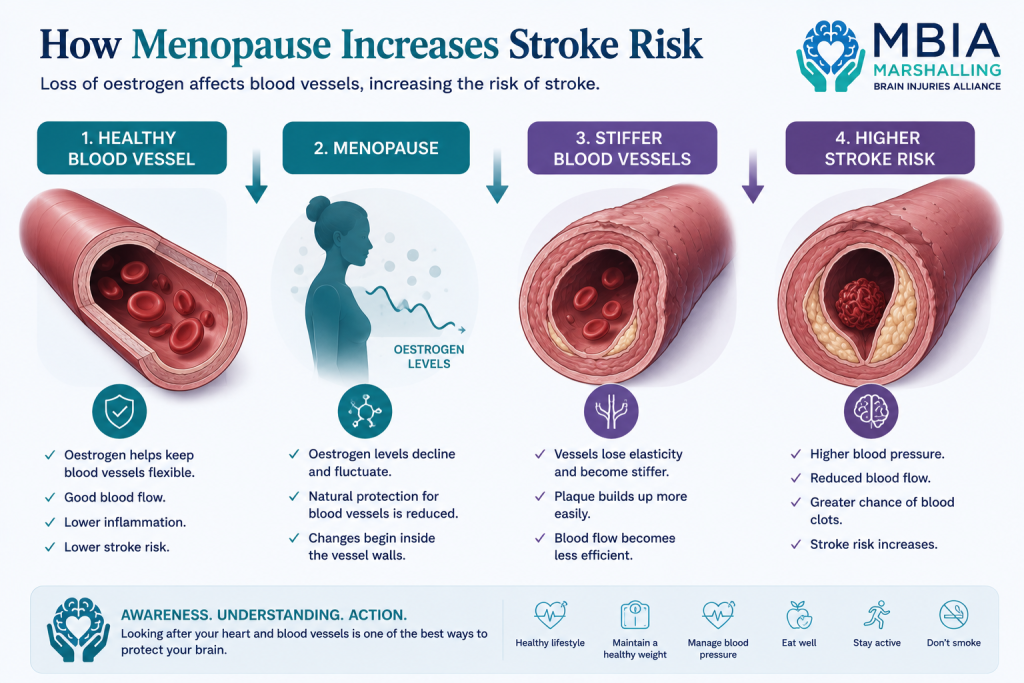
Why Does Stroke Risk Increase After Menopause?
Before menopause, women generally have a lower risk of stroke than men of the same age.
However, after menopause, that difference begins to disappear.
One of the main reasons is thought to be the natural decline in oestrogen.
While oestrogen is often associated with reproductive health, it also plays an important role in protecting the cardiovascular system.
Researchers believe oestrogen helps to:
- Keep blood vessels flexible.
- Support healthy blood flow.
- Reduce inflammation.
- Help regulate cholesterol levels.
- Influence how blood clots.
- Support the cells lining blood vessels (the endothelium).
As menopause progresses and oestrogen levels decline, some of these protective effects are gradually lost.
This contributes to changes such as:
Falling oestrogen
⬇️
Blood vessels become less flexible
⬇️
Inflammation and atherosclerosis increase
⬇️
Blood pressure often rises
⬇️
Stroke risk gradually increases
It's important to remember that menopause itself does not cause stroke.
Stroke risk is influenced by many factors working together, including:
- Age
- High blood pressure
- Diabetes
- Smoking
- High cholesterol
- Obesity
- Physical inactivity
- Heart rhythm disorders such as atrial fibrillation
- Family history
Menopause is one part of this much bigger picture.
Oestrogen and the Brain
Scientists also know that oestrogen affects many of the same systems involved in stroke recovery.
It helps regulate:
- Blood flow within the brain.
- Neuroplasticity (the brain's ability to reorganise after injury).
- Inflammation.
- Mitochondrial energy production.
- Communication between nerve cells.
- Oxidative stress.
Because of this, researchers have long wondered whether the loss of oestrogen during menopause might also influence how the brain recovers after a stroke.
At present, however, the evidence is surprisingly limited.
What Do We Know About Menopause After Stroke?
Compared with traumatic brain injury, there has been very little research examining how women experience perimenopause and menopause after a stroke.
We know that many stroke survivors experience symptoms such as:
- Fatigue
- Memory problems
- Poor concentration
- Sleep disturbance
- Anxiety
- Depression
- Emotional changes
These are also among the most common symptoms reported during perimenopause and menopause.
As a result, many women may find it difficult to know whether changes they experience in midlife are due to:
- Their previous stroke.
- Hormonal changes.
- Or a combination of both.
Unfortunately, there are very few studies that have directly investigated this question.
Unlike traumatic brain injury—where researchers have begun comparing menopausal women with and without TBI—similar large-scale studies in stroke survivors are largely absent.
Could Menopause Make Stroke Symptoms Feel Worse?
Many healthcare professionals believe it is biologically plausible.
As hormone levels fluctuate during perimenopause and decline after menopause, they may influence many of the same brain systems already affected by stroke.
For example, falling oestrogen levels could potentially contribute to:
- Increased mental fatigue.
- Poorer concentration.
- More noticeable memory problems.
- Reduced sleep quality.
- Mood changes.
- Greater sensitivity to stress.
However, it is important to be clear:
This has not yet been proven.
At present, there is insufficient evidence to say whether menopause directly worsens long-term stroke symptoms or whether the overlap simply makes symptoms more noticeable.
Answering this question is now recognised as an important priority for future research.
What About Hormone Replacement Therapy (HRT)?
Hormone replacement therapy (HRT) is often discussed in relation to stroke, but it can be confusing because different studies have looked at different questions.
Current evidence suggests that HRT should not be used to prevent stroke.
The effect of HRT on stroke risk depends on several factors, including:
- Age.
- The type of hormones used.
- Whether treatment is started around the time of menopause or many years later.
- Whether hormones are taken as tablets, patches or gels.
- A woman's individual cardiovascular risk factors.
For women who have already experienced a stroke, decisions about HRT are highly individual and should always be discussed with a stroke specialist, GP or menopause specialist who can balance the potential benefits and risks.
Importantly, there is currently no evidence that HRT repairs brain damage caused by stroke, although it may still be appropriate for managing menopausal symptoms in carefully selected individuals.
Why More Research Is Needed
As awareness grows around women's brain health, researchers are beginning to recognise an important gap.
We understand far more about how menopause affects the risk of having a stroke than how menopause affects women living with the long-term consequences of stroke.
Questions that still need answering include:
- Does perimenopause make post-stroke fatigue worse?
- How do hormonal changes affect cognitive recovery?
- Does menopause influence neuroplasticity after stroke?
- Are some women more vulnerable than others?
- Can better management of menopausal symptoms improve quality of life after stroke?
These are questions that matter to millions of women worldwide.
The Bottom Line
The relationship between menopause and stroke is complex.
There is strong evidence that the natural decline in oestrogen after menopause contributes to changes in blood vessels and helps explain why stroke risk increases with age after menopause.
However, far less is known about how menopause affects women who are already living with the long-term effects of a stroke.
Many stroke symptoms—such as fatigue, memory problems, poor concentration, sleep disturbance and mood changes—overlap closely with those experienced during perimenopause and menopause, making it difficult to distinguish one from the other.
As researchers continue to explore women's brain health across the lifespan, understanding how hormonal changes influence stroke recovery will be an important step towards providing more personalised care and ensuring that women receive the support they need at every stage of life.
Other Brain Injuries: What Do We Know About Hormones and Menopause?
Much of the research discussed so far has focused on traumatic brain injury (TBI), particularly concussion and moderate-to-severe TBI.
But brain injuries occur in many different ways.
Stroke, lack of oxygen to the brain, infections, brain tumours, domestic abuse-related injuries and repetitive head impacts can all affect the brain's structure and function. Many women living with these conditions report similar hormonal changes, menstrual disturbances and worsening symptoms during perimenopause and menopause.
The problem is that, in many of these conditions, the scientific research simply hasn't been done yet.
An absence of evidence does not mean there is no connection—it means researchers have not yet studied it in sufficient detail.
Let's look at what we know—and, just as importantly, what we don't.
Hypoxic Brain Injury
A hypoxic brain injury occurs when the brain does not receive enough oxygen.
This may happen following:
- Cardiac arrest
- Near drowning
- Severe asthma attacks
- Drug overdose
- Carbon monoxide poisoning
- Complications during surgery
- Other medical emergencies
The brain is extremely sensitive to oxygen deprivation, particularly areas such as the hippocampus, which is involved in memory, and the hypothalamus, which helps regulate hormones.
What Evidence Exists?
At present, there is very little research specifically examining menstruation, perimenopause or menopause after hypoxic brain injury.
However, scientists know that hypoxic brain injury can affect areas of the brain involved in hormonal regulation, making it biologically plausible that some women may experience hormonal changes or menstrual disturbances.
Many survivors report symptoms such as:
- Fatigue
- Brain fog
- Memory problems
- Poor concentration
- Sleep disturbance
These overlap considerably with symptoms of perimenopause.
What Evidence Doesn't Exist?
We do not currently know:
- Whether hypoxic brain injury increases the risk of early menopause.
- Whether hormonal changes are more common than in the general population.
- Whether menopause worsens cognitive symptoms after hypoxic brain injury.
- Whether hormone replacement therapy (HRT) influences recovery.
These are major gaps in the research.
Brain Infections
Brain infections such as:
- Encephalitis
- Meningitis
- Cerebral abscesses
can leave survivors with long-term neurological symptoms.
Many people continue to experience:
- Fatigue
- Memory problems
- Difficulty concentrating
- Mood changes
- Headaches
months or years after the infection has resolved.
What Evidence Exists?
Very little research has examined how menstruation or menopause affects women recovering from brain infections.
Because infections can occasionally damage areas of the brain involved in hormone regulation, some experts believe hormonal effects are possible.
However, there are currently no large studies specifically investigating this.
What Evidence Doesn't Exist?
There is currently no high-quality evidence showing:
- Whether menopause affects recovery after encephalitis.
- Whether menstrual cycles commonly change after brain infections.
- Whether pituitary dysfunction occurs more frequently.
- Whether HRT improves neurological symptoms.
At present, we simply do not know.
Brain Tumours
Brain tumours can affect hormone production in several different ways.
Some tumours grow close to the hypothalamus or pituitary gland, while surgery, radiotherapy and chemotherapy may also influence hormone production.
What Evidence Exists?
Compared with other brain injuries, brain tumours are one area where hormonal effects are better recognised.
Doctors routinely monitor hormone function in people with tumours affecting the pituitary or surrounding brain structures.
Women may experience:
- Irregular periods
- Infertility
- Early menopause
- Reduced sex hormone production
depending on the tumour's location and treatment.
What Evidence Doesn't Exist?
Despite this, there is surprisingly little research examining:
- How natural menopause affects women living with long-term cognitive effects of brain tumours.
- Whether menopausal symptoms interact with tumour-related cognitive impairment.
- The best strategies for managing overlapping symptoms.
Much of the available research focuses on hormone replacement after pituitary tumours rather than menopause itself.
Domestic Abuse-Related Brain Injury
This is one of the most overlooked areas of brain injury research.
Many survivors of domestic abuse experience:
- Repeated concussions.
- Blows to the head.
- Facial injuries.
- Falls.
- Non-fatal strangulation.
Repeated injuries may occur over many years.
At the same time, survivors often experience prolonged psychological trauma and chronic stress, both of which can affect the body's hormonal systems.
What Evidence Exists?
Research increasingly shows that brain injury is common among survivors of domestic abuse.
Researchers also know that chronic stress can disrupt the hypothalamic-pituitary-adrenal (HPA) axis, while repeated brain injuries may affect the hypothalamic-pituitary-ovarian (HPO) axis.
Many survivors report:
- Menstrual irregularities.
- Fatigue.
- Memory problems.
- Brain fog.
- Mood changes.
However, most of these reports come from observational studies or lived experience rather than large clinical trials.
What Evidence Doesn't Exist?
There are currently no large studies specifically investigating:
- Menopause after domestic abuse-related brain injury.
- Whether repeated intimate partner violence affects the timing of menopause.
- How hormonal changes influence recovery.
- Whether menopause amplifies neurological symptoms.
Given the number of women affected worldwide, this represents a significant gap in women's health research.
Chronic Traumatic Encephalopathy (CTE)
CTE is a progressive neurodegenerative disease associated with repeated head impacts.
Most published research has focused on:
- Male athletes.
- Military veterans.
- Brain tissue donated after death.
Women remain dramatically underrepresented in CTE research.
What Evidence Exists?
At present, there are no published studies specifically examining menstruation, perimenopause or menopause in women with confirmed or probable CTE.
Scientists do know that:
- Oestrogen influences inflammation.
- Oestrogen affects tau proteins in laboratory studies.
- Hormones influence brain metabolism and neuroplasticity.
These findings suggest hormones could play a role in CTE, but this remains speculative.
What Evidence Doesn't Exist?
We currently have no direct evidence answering questions such as:
- Does menopause worsen symptoms of probable CTE?
- Does hormonal decline influence disease progression?
- Are women with repetitive head impacts affected differently from men?
- Does HRT alter symptoms or outcomes?
At present, these questions remain unanswered.
Repeated Subconcussive Head Impacts
Not every brain injury involves a diagnosed concussion.
Activities such as heading a football, rugby tackles, boxing, martial arts and military blast exposure can involve thousands of smaller impacts over many years.
Researchers are increasingly studying whether these repeated impacts have cumulative effects on brain health.
What Evidence Exists?
Scientists know that repeated subconcussive impacts can produce measurable changes in:
- Brain structure.
- Brain connectivity.
- Blood biomarkers.
- Cognitive performance.
However, almost all of this research has involved men.
Very few studies have examined female hormonal health in this context.
What Evidence Doesn't Exist?
We currently do not know:
- Whether repeated subconcussive impacts affect menstrual cycles.
- Whether menopause changes how the brain responds to repetitive impacts.
- Whether hormonal fluctuations influence recovery.
- Whether female athletes experience different long-term outcomes.
As women's participation in contact sports continues to grow, understanding these questions is becoming increasingly important.
Why These Gaps Matter
One of the strongest themes throughout this article is not what we know—but what we still don't know.
For decades, brain injury research has been dominated by studies involving men, younger adults or people with traumatic brain injuries.
Women, particularly those experiencing menstruation, perimenopause and menopause, have often been overlooked.
Similarly, many other forms of acquired brain injury—including hypoxic brain injury, encephalitis, domestic abuse-related brain injury and probable CTE—remain significantly under-researched when it comes to hormonal health.
This lack of evidence should never be interpreted as evidence that women's experiences are not real.
Instead, it highlights an urgent need for future research that reflects the full diversity of people living with brain injury.
The Bottom Line
While there is growing evidence that hormones influence recovery after traumatic brain injury, there are major knowledge gaps for many other forms of acquired brain injury.
For hypoxic brain injury, brain infections, domestic abuse-related brain injury, CTE and repeated subconcussive head impacts, there is currently insufficient evidence to draw firm conclusions about menstruation, perimenopause or menopause.
That doesn't mean there is no relationship—it means the research hasn't caught up with the experiences that many women report.
As awareness grows, future studies must include women across all types of brain injury so that healthcare professionals can provide advice based on evidence rather than assumptions.
Can Hormone Replacement Therapy (HRT) Help?
One of the questions we hear most often from women living with brain injury is:
"Would hormone replacement therapy help my brain injury symptoms?"
It's an understandable question.
We know that oestrogen and progesterone influence many of the same brain functions that are affected after a brain injury, including memory, sleep, mood, inflammation, blood flow and energy production.
If hormone levels decline during perimenopause and menopause, could replacing those hormones help?
The honest answer is:
We don't yet know.
Research in this area is still in its early stages, and while HRT may help some women manage menopausal symptoms, there is currently no evidence that it treats or repairs brain injury itself.
What Is HRT?
Hormone Replacement Therapy (HRT) is a treatment used to replace some of the hormones that naturally decline during perimenopause and menopause.
Depending on an individual's needs, HRT may include:
- Oestrogen alone (usually for women who have had a hysterectomy).
- Combined oestrogen and progesterone (progestogen) for women who still have a uterus, helping protect the lining of the womb.
- In some cases, testosterone may also be prescribed for specific symptoms, such as persistent low sexual desire, following specialist assessment.
HRT can be taken in several forms, including:
- Skin patches
- Gels
- Sprays
- Tablets
- Vaginal creams, pessaries or rings (for local symptoms)
The most appropriate option depends on a woman's medical history, symptoms and individual preferences.
How Might HRT Affect the Brain?
Researchers know that oestrogen has important effects throughout the brain.
It helps to support:
- Brain energy production.
- Communication between nerve cells.
- Blood flow.
- Neuroplasticity.
- Sleep.
- Mood regulation.
- Memory.
- Inflammatory balance.
As oestrogen levels fall during menopause, some women experience worsening cognitive symptoms, fatigue or headaches.
Because of this, researchers have asked whether replacing oestrogen might help support brain function in women living with a brain injury.
It is an interesting hypothesis.
However, it has not yet been proven.
Possible Benefits of HRT
For women whose symptoms are primarily related to perimenopause or menopause, HRT can be highly effective.
Current evidence shows it can help reduce many common menopausal symptoms, including:
- Hot flushes.
- Night sweats.
- Sleep disturbance.
- Mood changes related to menopause.
- Vaginal dryness.
- Joint aches and pains.
- Reduced quality of life associated with menopausal symptoms.
Better sleep alone may indirectly improve daytime fatigue, concentration and emotional wellbeing for some women.
If menopausal symptoms are adding to the challenges of living with a brain injury, treating those symptoms may help some women feel better overall.
However, it is important to recognise that this is not the same as treating the brain injury itself.
For example, if poor sleep caused by night sweats is making fatigue worse, improving sleep with appropriate menopause treatment may reduce fatigue. That doesn't necessarily mean HRT is repairing the injured brain—it means it is addressing another factor that was making symptoms harder to manage.
What About Memory and Brain Fog?
Many women hope that HRT will improve memory or "brain fog."
At present, the evidence is mixed.
Some women report feeling mentally sharper after starting HRT, particularly if treatment is begun during the early stages of menopause and if symptoms were largely related to hormonal changes.
However, large clinical studies have not shown that HRT consistently improves long-term cognitive function in all women.
Similarly, there is no evidence that HRT reverses memory problems caused by traumatic brain injury, stroke or other acquired brain injuries.
If improvements occur, they are more likely to reflect better sleep, improved mood and relief of menopausal symptoms rather than repair of damaged brain tissue.
Could HRT Protect the Brain?
Scientists are actively studying whether oestrogen might have neuroprotective effects.
Laboratory studies suggest that oestrogen can:
- Reduce inflammation.
- Support mitochondrial function.
- Improve blood flow.
- Reduce oxidative stress.
- Promote healthy communication between neurons.
These findings are scientifically interesting and help explain why researchers are investigating hormones in relation to brain health.
However, laboratory studies do not always translate into real-life clinical benefits.
So far, clinical trials have not demonstrated that HRT prevents or treats brain injury, chronic traumatic encephalopathy (CTE) or dementia caused by brain injury.
This remains an important area for future research.
What Are the Possible Risks?
Like any medical treatment, HRT has potential benefits and potential risks.
The balance depends on factors such as:
- Age.
- How long it has been since menopause began.
- Whether the uterus is present.
- Personal medical history.
- Family history.
- Smoking status.
- Blood pressure.
- Weight.
- Previous blood clots.
- Stroke risk.
- Certain cancers.
For many healthy women who begin HRT around the time of menopause, the benefits outweigh the risks.
However, HRT is not suitable for everyone.
Some women may need alternative approaches to managing menopausal symptoms.
The type of HRT also matters.
For example, transdermal HRT (patches, gels or sprays) is associated with a lower risk of blood clots than oral tablets and may be preferred for some women, particularly those with cardiovascular risk factors. Decisions about HRT should always be individualised and made with a healthcare professional.
Brain Injury Changes the Conversation—But Not the Evidence
One of the challenges for women living with brain injury is that there are almost no studies specifically examining HRT after traumatic brain injury, stroke, hypoxic brain injury or probable CTE.
As a result, doctors often have to rely on evidence from menopause research rather than brain injury research.
This means we currently cannot say:
- Whether HRT improves recovery after brain injury.
- Whether it reduces post-traumatic headaches.
- Whether it improves cognitive symptoms caused by brain injury.
- Whether it slows neurodegeneration following repeated head impacts.
- Whether it influences the development or progression of CTE.
These are important questions, but they remain unanswered.
There Is No Evidence That HRT Treats Brain Injury
This is perhaps the most important message in this section.
Despite understandable interest, there is currently no scientific evidence that HRT repairs brain damage or treats traumatic brain injury, stroke, chronic traumatic encephalopathy (CTE) or other acquired brain injuries.
HRT should not be viewed as a treatment for brain injury itself.
Instead, its role is to help manage menopausal symptoms in women for whom it is appropriate, according to established menopause guidelines.
If treating menopausal symptoms leads to better sleep, improved wellbeing and an improved quality of life, some women may find that their overall ability to cope with their brain injury also improves.
That is very different from saying HRT heals the injured brain.
Should You Discuss HRT With Your Doctor?
If you are experiencing symptoms of perimenopause or menopause alongside a brain injury, it is worth having an open discussion with your healthcare team.
Consider speaking to your:
- GP
- Menopause specialist
- Gynaecologist
- Endocrinologist (if hormone deficiencies are suspected)
- Neurologist or rehabilitation specialist, where appropriate
Before recommending HRT, your clinician will usually consider:
- Your age.
- Whether you are still having periods.
- Your symptoms.
- Your medical history.
- Stroke and cardiovascular risk.
- Blood clot risk.
- Family history of breast or ovarian cancer.
- Current medications.
- Your personal preferences and treatment goals.
Together, you can weigh up the potential benefits and risks and decide whether HRT—or another approach—is the most appropriate option for you.
The Bottom Line
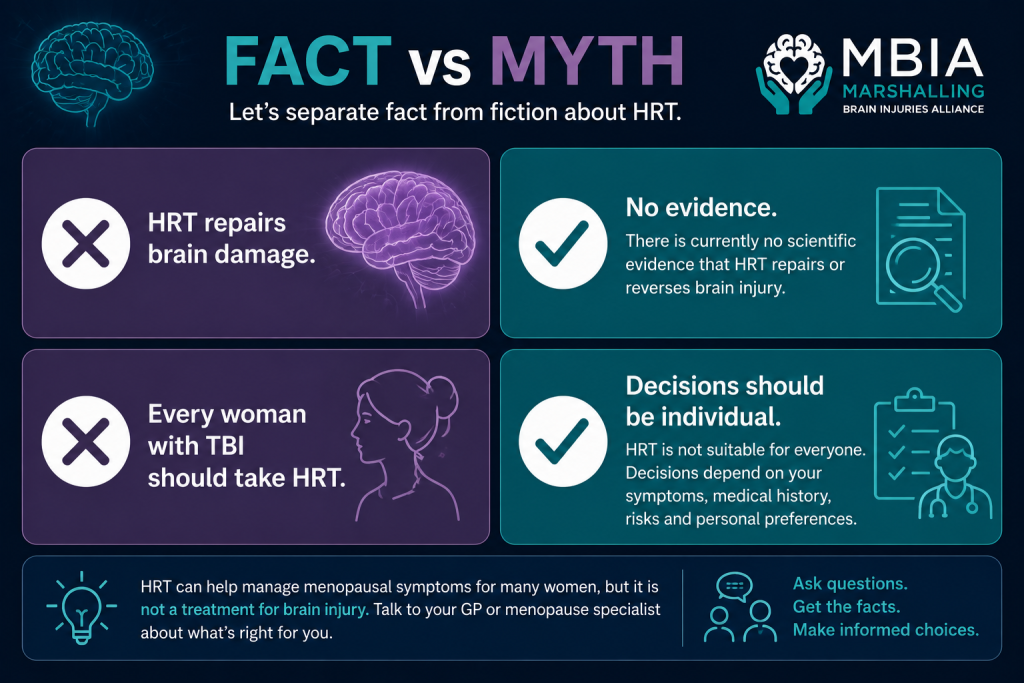
Hormone Replacement Therapy can be a highly effective treatment for menopausal symptoms, and for many women it improves sleep, hot flushes, mood and overall quality of life.
For women living with a brain injury, this may also make day-to-day life feel more manageable if menopausal symptoms have been adding to the burden of fatigue, poor sleep or emotional wellbeing.
However, there is currently no evidence that HRT treats, repairs or reverses brain injury itself. While laboratory research suggests hormones play an important role in brain health, clinical studies have not shown that HRT improves neurological recovery after traumatic brain injury, stroke or other acquired brain injuries.
As research continues, we hope to better understand how hormonal therapies may fit into the long-term care of women with brain injuries. Until then, decisions about HRT should always be made on an individual basis, in partnership with a GP or menopause specialist, taking into account each woman's symptoms, medical history and personal priorities.
Practical Strategies: Tracking Your Symptoms
Living with a brain injury often means learning to recognise patterns.
Many women tell us they know they have "good days" and "bad days," but it isn't always obvious why those changes happen. During perimenopause and menopause, hormonal fluctuations can make this even more complicated.
One of the simplest—and often most useful—tools is a symptom diary.
Keeping a diary won't diagnose the cause of your symptoms, but it can help you identify patterns that might otherwise go unnoticed. Over time, it may become clear that certain symptoms regularly occur at particular stages of your menstrual cycle or become more severe during periods of hormonal change.
This information can also be invaluable when speaking to your GP, neurologist, rehabilitation team or menopause specialist.
What Should You Track?
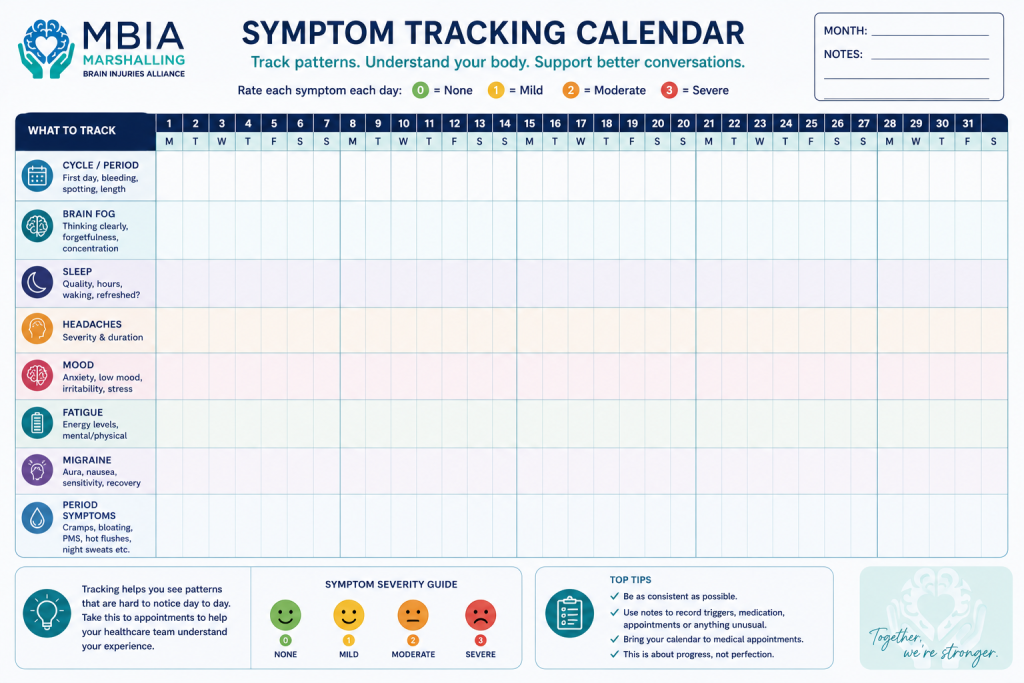
You don't need to record every detail of your day.
Instead, try to note a few key areas consistently.
📅 Menstrual Cycle
Record:
- The first day of your period.
- How long it lasts.
- Whether bleeding is heavier or lighter than usual.
- Any spotting or unexpected bleeding.
- Changes in cycle length.
If you are post-menopausal, note any unexpected bleeding and seek medical advice promptly, as this should always be assessed by a healthcare professional.
🧠 Brain Fog
Ask yourself:
- Was it harder to think clearly today?
- Did conversations feel more difficult?
- Were you forgetting words or appointments?
- Did everyday tasks require more effort?
Giving your brain fog a simple score out of 10 can help you see patterns over time.
😴 Sleep
Poor sleep affects almost every aspect of brain injury recovery.
Record:
- How many hours you slept.
- How often you woke during the night.
- Whether you felt refreshed in the morning.
- Night sweats or hot flushes, if relevant.
🤕 Headaches and Migraines
Record:
- Whether you had a headache or migraine.
- How severe it was.
- How long it lasted.
- Any possible triggers.
- Whether medication helped.
Many women notice headaches become more frequent just before menstruation or during hormonal fluctuations.
💙 Mood
Consider recording:
- Anxiety.
- Irritability.
- Low mood.
- Emotional overwhelm.
- Tearfulness.
- Stress levels.
Again, a simple score from 1–10 is often enough.
🔋 Fatigue
Brain injury fatigue is different from simply feeling tired.
Record:
- Your overall energy levels.
- Whether you needed extra rest.
- How much activity you managed before becoming exhausted.
- Whether your "brain battery" drained more quickly than usual.
⚡ Migraine
If you experience migraines separately from headaches, it can be helpful to record:
- Aura symptoms.
- Light sensitivity.
- Sound sensitivity.
- Nausea.
- Recovery time.
You may begin to notice hormonal patterns that were previously difficult to recognise.
🩸 Periods
Alongside the timing of your cycle, it may also be helpful to note:
- Cramping.
- PMS symptoms.
- Hot flushes.
- Night sweats.
- Breast tenderness.
- Other menopausal symptoms.
These can help distinguish hormonal changes from brain injury symptoms.
Looking for Patterns
After tracking your symptoms for two or three months, take a step back and look for recurring patterns.
For example, you might notice:
- Brain fog consistently worsens two or three days before your period.
- Migraines occur during the first two days of menstruation.
- Fatigue increases during periods of poor sleep.
- Anxiety becomes more noticeable during hormonal changes.
- Sensory overload is worse on days when headaches are present.
Recognising these patterns won't necessarily change the symptoms, but it can help explain why they occur and make them feel less unpredictable.
Why This Information Matters
Symptom diaries can also make appointments with healthcare professionals much more productive.
Rather than trying to remember how you've felt over the past six months, you can show clear, written evidence of:
- When symptoms occur.
- How severe they are.
- Whether they relate to your menstrual cycle.
- Whether they are becoming more frequent.
- Whether treatments or lifestyle changes have made a difference.
This information may help your healthcare professional decide whether further assessment is needed, such as:
- Hormone testing.
- Referral to an endocrinologist.
- Referral to a menopause specialist.
- Migraine management.
- Medication review.
- Additional rehabilitation support.
Don't Try to Track Everything Perfectly
A symptom diary should support you—not become another source of stress.
Some women enjoy using smartphone apps.
Others prefer a simple notebook or calendar.
Some record a few notes each evening, while others use a weekly checklist.
There is no "right" way to do it.
The most important thing is to find a method that is realistic and sustainable for you.
Even a few months of consistent tracking can provide valuable insights into how your hormones and brain injury symptoms interact.
The Bottom Line
Many women living with a brain injury describe their symptoms as unpredictable, but careful tracking often reveals patterns linked to the menstrual cycle, perimenopause or menopause.
A simple symptom diary can help you better understand your own body, recognise triggers, prepare for more challenging days and provide valuable information for discussions with your healthcare team.
While it won't provide all the answers, it can be one of the most powerful tools for turning uncertainty into understanding—and ensuring that your experiences are recognised, documented and taken seriously.
Questions to Ask Your Doctor
Many women tell us they leave medical appointments thinking of questions they wish they had asked.
If you're living with a brain injury and are experiencing changes to your menstrual cycle, new symptoms during perimenopause or menopause, or worsening cognitive problems, it can help to prepare in advance.
Taking a written list of questions—and, if possible, a symptom diary—can help ensure that the issues most important to you are discussed during your appointment.
Remember, you are the expert on your own experiences.
Could My Hormones Be Contributing to My Symptoms?
Many symptoms associated with brain injury and hormonal changes overlap.
You could ask:
- Could hormonal changes be contributing to my fatigue, headaches or brain fog?
- Do my symptoms fit with perimenopause or menopause?
- Could changes in my menstrual cycle be related to my brain injury?
- Are there other possible explanations that should also be considered?
Your healthcare professional can help assess whether your symptoms are more likely to be related to your brain injury, hormonal changes or a combination of both.
Do I Need Pituitary Hormone Testing?
Not everyone with a brain injury requires hormone testing.
However, if you have persistent symptoms such as severe fatigue, loss of periods, reduced libido, infertility, unexplained weight changes or ongoing brain fog, it may be reasonable to ask whether hormonal assessment should be considered.
You might ask:
- Could my pituitary gland have been affected by my brain injury?
- Would blood tests for hormone levels be appropriate?
- Are there any hormone deficiencies that should be investigated?
- If testing is normal, what other causes should we consider?
Would a Referral to an Endocrinologist Help?
An endocrinologist is a doctor who specialises in hormones and hormone-producing glands, including the pituitary gland.
If hormone problems are suspected, you could ask:
- Would seeing an endocrinologist help in my situation?
- Should my hormone levels be assessed by a specialist?
- Are there any additional tests that might be useful?
Your GP or neurologist can advise whether a referral is appropriate based on your symptoms and medical history.
Could Menopause Be Interacting With My Brain Injury?
Many women notice that symptoms change significantly during their forties and fifties.
You may wish to ask:
- Could perimenopause be making my brain injury symptoms feel worse?
- Are my cognitive changes likely to be related to menopause, my brain injury or both?
- How can we tell the difference?
- Would treating my menopausal symptoms improve my overall quality of life?
While there are still many unanswered questions, recognising the possible interaction between menopause and brain injury can help guide future assessment and management.
Should I See a Menopause Specialist?
Not every woman needs specialist menopause care, but if symptoms are having a significant impact on daily life or are difficult to manage, it may be helpful to ask whether referral is appropriate.
You could ask:
- Would I benefit from seeing a menopause specialist?
- Am I a suitable candidate for hormone replacement therapy (HRT)?
- What are the potential benefits and risks in my situation?
- Are there non-hormonal treatments that could help if HRT is not appropriate?
A menopause specialist can discuss the latest evidence, explain the treatment options available and help you make an informed decision based on your individual circumstances.
Other Questions You May Find Helpful
Depending on your symptoms, you might also consider asking:
- Could any of my current medications be affecting my hormones or menopausal symptoms?
- Are there lifestyle changes that could help improve my symptoms?
- Would physiotherapy, psychology or occupational therapy support be helpful?
- Should my headaches or migraines be reviewed separately?
- How often should my symptoms be reassessed?
- Are there any local menopause or brain injury support services you would recommend?
Remember: You Know Your Body Best
No one knows your symptoms better than you do.
If you feel that something has changed, trust your instincts and don't be afraid to ask questions or seek a second opinion if you feel your concerns haven't been fully explored.
Healthcare professionals bring medical expertise, but you bring the lived experience of living with your brain injury every day. The best care comes from working together, sharing information and making decisions as a team.
The Bottom Line
Preparing questions before your appointment can help you get the most from your consultation and ensure your concerns are fully discussed.
While research into hormones and brain injury is still evolving, asking about pituitary function, menopause, hormone testing and specialist referrals may help identify factors that could be contributing to your symptoms.
Most importantly, remember that your symptoms deserve to be taken seriously. Whether they are related to brain injury, hormonal changes or a combination of both, you deserve compassionate, evidence-based care that looks at the whole picture rather than treating each symptom in isolation.
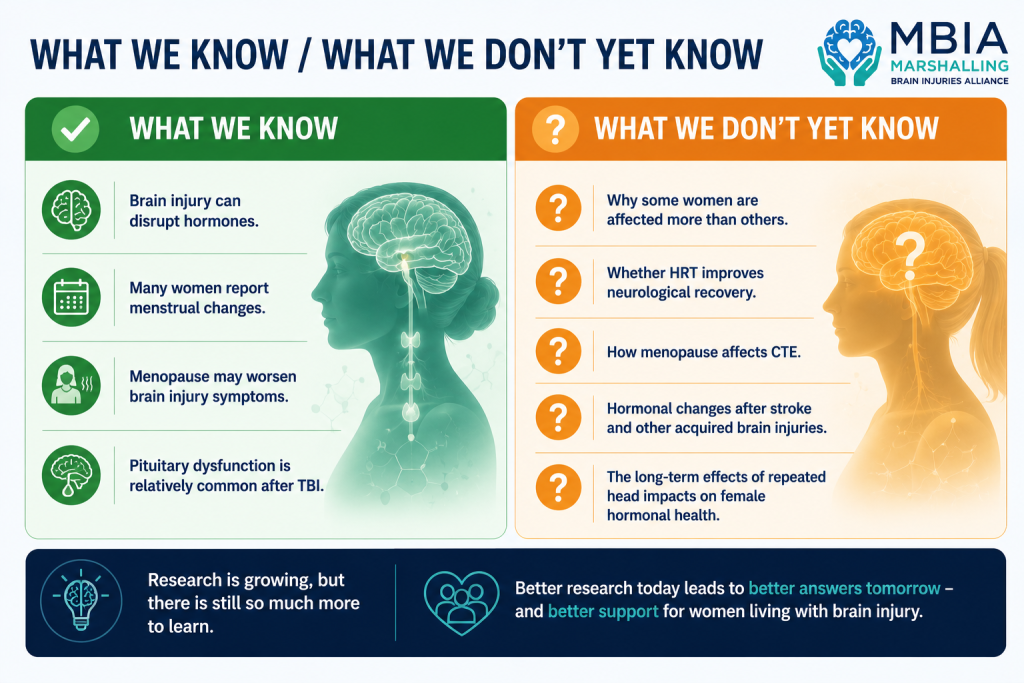
For decades, brain injury research has largely been built on evidence gathered from men. While that research has taught us a great deal, it has also left significant gaps in our understanding of how brain injuries affect women throughout their lives.
Women are not simply "smaller men." Their brains are influenced by complex hormonal changes across puberty, menstruation, pregnancy, perimenopause and menopause. These hormonal transitions affect brain energy production, inflammation, blood flow, sleep, mood and cognition—all of which are also affected by brain injury.
Yet until recently, these interactions have received remarkably little attention.
At MBIA, we believe women's experiences deserve to be heard, validated and investigated—not dismissed as "just hormones" or accepted as an inevitable part of ageing.
Throughout writing this article, one message has become clear: many women have been describing these experiences for years. They have spoken about worsening brain fog before their periods, increased headaches, overwhelming fatigue during perimenopause and feeling as though their recovery changed dramatically as they approached menopause.
Science is now beginning to catch up with those lived experiences.
While many important questions remain unanswered, the growing body of research suggests these experiences have a genuine biological basis. That should encourage healthcare professionals to ask better questions, researchers to design better studies and women to feel confident that their concerns deserve to be taken seriously.
We also believe this highlights a much broader issue.
Future brain injury research should routinely include women of different ages, consider menstrual status and menopause, and investigate all forms of acquired brain injury—not just traumatic brain injury. Women living with stroke, hypoxic brain injury, brain infections, brain tumours, domestic abuse-related brain injuries and probable CTE deserve the same level of scientific attention.
Better evidence leads to better care.
Better care leads to earlier recognition of hormonal problems, more personalised treatment, improved quality of life and, ultimately, better outcomes for women and their families.
At Marshalling Brain Injuries Alliance, we will continue to advocate for research that reflects the realities of women's lives, challenge the gaps that still exist and share balanced, evidence-based information that helps people make informed decisions.
Because every woman living with a brain injury deserves to know that her experiences matter—and that the scientific community is only just beginning to understand the full picture.
References
Brain Injury and Endocrine Dysfunction
- Ghigo E, Masel B, Aimaretti G, et al. Consensus guidelines on screening for hypopituitarism following traumatic brain injury. Brain Injury. 2005.
- Schneider HJ, Kreitschmann-Andermahr I, Ghigo E, et al. Hypopituitarism after traumatic brain injury and subarachnoid haemorrhage: a systematic review. JAMA. 2007.
- Tan CL, Alavi SA, Baldeweg SE, et al. The screening and management of pituitary dysfunction following traumatic brain injury in adults. Endocrine Connections. 2017.
- Quinn L, Agha A. Post-traumatic hypopituitarism—who should be screened, when and how? Frontiers in Endocrinology. 2018.
- Bondanelli M, Ambrosio MR, Cavazzini L, et al. Anterior pituitary function may predict functional and cognitive outcome after traumatic brain injury. Journal of Neurotrauma.
- Klose M, Feldt-Rasmussen U. Hypopituitarism in traumatic brain injury—a critical review.
- Kelly DF, Gonzalo IT, Cohan P, et al. Hypopituitarism following traumatic brain injury.
- Agha A, Phillips J, O'Kelly P, et al. The natural history of post-traumatic hypopituitarism.
- Glynn N, Agha A. Which patients require endocrine assessment after TBI?
- Tanriverdi F, Kelestimur F. Pituitary dysfunction after traumatic brain injury.
Female Hormones and Brain Function
- Brinton RD. Estrogen-induced plasticity from cells to circuits.
- Brinton RD. The healthy cell bias of estrogen action.
- Maki PM. Menopause and cognition.
- Henderson VW. Estrogen-containing hormone therapy and cognition.
- McEwen BS. Estrogen actions throughout the brain.
- Woolley CS. Estrogen-mediated synaptic plasticity.
- Arevalo MA, Santos-Galindo M, Bellini MJ, et al. Neuroprotective actions of estrogen.
- Vegeto E, Benedusi V, Maggi A. Estrogen anti-inflammatory mechanisms in the brain.
- Morrison JH, Brinton RD, Schmidt PJ, et al. Estrogen and the ageing female brain.
- Gibbs RB. Effects of estrogen on cognition.
Menstrual Cycle and Concussion
- Wunderle K, Hoeger KM, Wasserman E, Bazarian JJ. Menstrual phase as predictor of outcome after mild traumatic brain injury.
- Snook ML, Henry LC, Sanfilippo JL, et al. Association of concussion with menstrual cycle abnormalities.
- Gallagher V, Kramer N, Abbott K, et al. The effects of concussion on menstrual function.
- Bazarian JJ, et al. Hormonal influences on concussion recovery.
- Covassin T, Elbin RJ, Larson E, et al. Sex differences in concussion outcomes.
- Broshek DK, Kaushik T, Freeman JR, et al. Sex differences in outcome following sports-related concussion.
- Bretzin AC, et al. Female athlete concussion recovery research.
- Wasserman EB, et al. Sex-specific concussion outcomes.
Menopause and Traumatic Brain Injury
- Bayley MT, et al. Menopause symptom burden in women with traumatic brain injury.
- Mollayeva T, Mollayeva S, Colantonio A. Women's health after traumatic brain injury.
- Colantonio A, et al. Sex and gender differences after TBI.
- Haag HL, et al. Women's experiences after traumatic brain injury.
- Mollayeva T, et al. Fatigue and cognition after TBI in women.
- Bayley M, et al. Collaborative studies of menopause and TBI.
- Brain Injury Special Interest Group publications on female brain injury.
- International Brain Injury Association (IBIA) publications on women and TBI.
Stroke and Menopause
- American Heart Association. Guidelines for the prevention of stroke in women.
- Bushnell C, et al. Sex differences in stroke risk.
- European Stroke Organisation guidelines.
- Women's Health Initiative hormone therapy publications.
- North American Menopause Society. Menopause hormone therapy position statement.
- NICE Guideline NG23: Menopause.
- British Menopause Society guidance.
Hormone Replacement Therapy
- North American Menopause Society (NAMS). 2022 Position Statement.
- British Menopause Society. Tools for Clinicians.
- NICE Guideline NG23.
- International Menopause Society recommendations.
- ACOG Practice Bulletin on Menopause.
- Endocrine Society Clinical Practice Guideline on Menopause.
- The Menopause Society: Hormone Therapy Recommendations.
Neuroinflammation, Neuroplasticity and Hormones
- McEwen BS.
- Pike CJ.
- Brinton RD.
- Schumacher M.
- Garcia-Segura LM.
- Arevalo MA.
- Vegeto E.
- Roof RL.
- Stein DG.
- Wei J.
Brain Injury Rehabilitation
- INCOG Guidelines for Cognitive Rehabilitation.
- Brain Trauma Foundation Guidelines.
- American Congress of Rehabilitation Medicine (ACRM) Cognitive Rehabilitation Guidelines.
- International Brain Injury Association Consensus Statements.
- VA/DoD Clinical Practice Guideline for Mild Traumatic Brain Injury.
Domestic Abuse and Brain Injury
- Valera EM, Kucyi A. Brain injury in intimate partner violence.
- Haag HL, et al. Traumatic brain injury and intimate partner violence.
- Goldin Y, et al. Cognitive consequences of domestic abuse-related brain injury.
Chronic Traumatic Encephalopathy and Repetitive Head Impacts
- McKee AC, et al. The spectrum of disease in chronic traumatic encephalopathy.
- Katz DI, Bernick C, Dodick DW, et al. National Institute of Neurological Disorders and Stroke Consensus Diagnostic Criteria for Traumatic Encephalopathy Syndrome.