PIP Reform, Media Speculation and Brain Injury: What Claimants and Families Need to Know
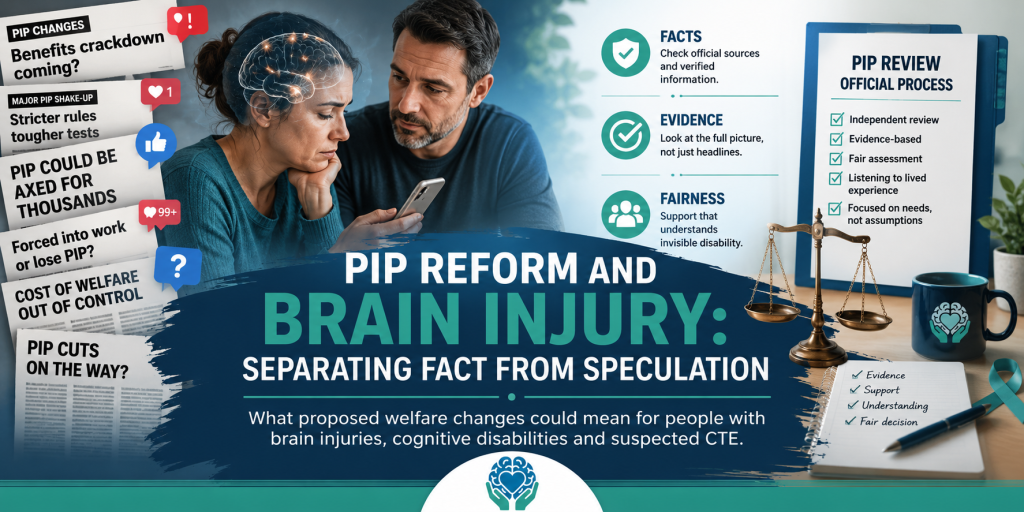
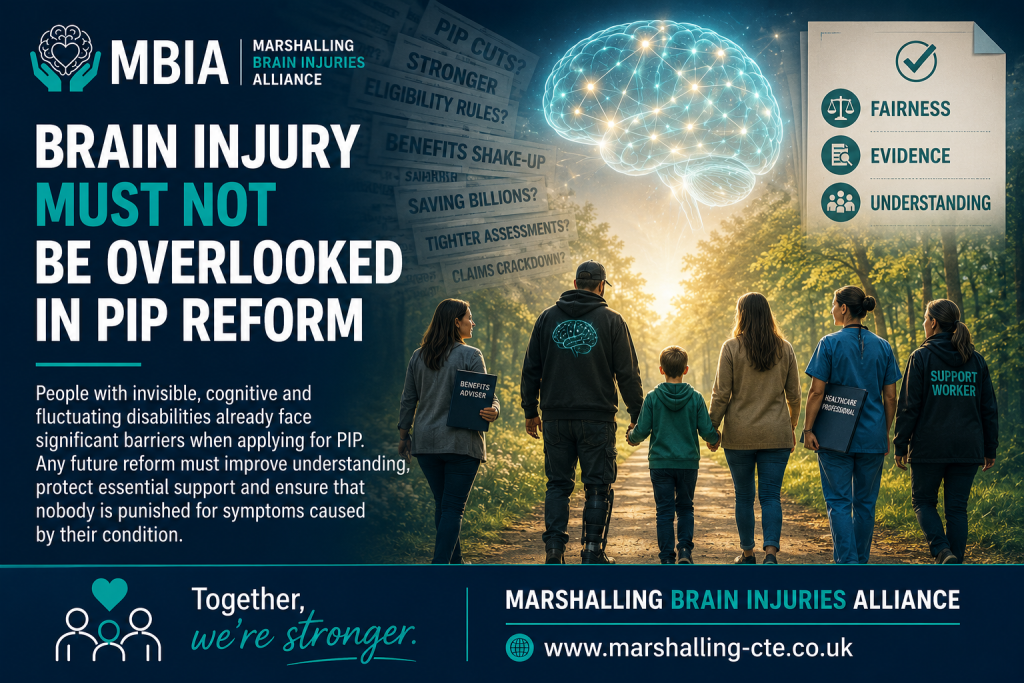
In recent weeks, there has been a great deal of speculation about the future of Personal Independence Payment, commonly known as PIP.
Newspaper headlines, online articles and social-media graphics have suggested that major restrictions are coming, that people may be forced into work or training to keep their payments, and that the government intends to make PIP much harder to obtain.
Some reporting is based on genuine political comments and ongoing government reviews. However, much of what is being shared combines confirmed information with assumptions, predictions and political opinion.
For people living with brain injuries, post-concussion syndrome, cognitive impairment, dementia or suspected chronic traumatic encephalopathy, these headlines can be deeply frightening. Many people already struggle to navigate the PIP process, obtain suitable evidence and explain disabilities that cannot always be seen.
It is therefore important to separate:
- what has been confirmed;
- what is currently being reviewed;
- what politicians have discussed;
- and what remains speculation.
This article explains what the current discussion may mean, why people with brain injuries could be particularly affected and what a fairer PIP system should look like.
The most important point: speculation is not policy
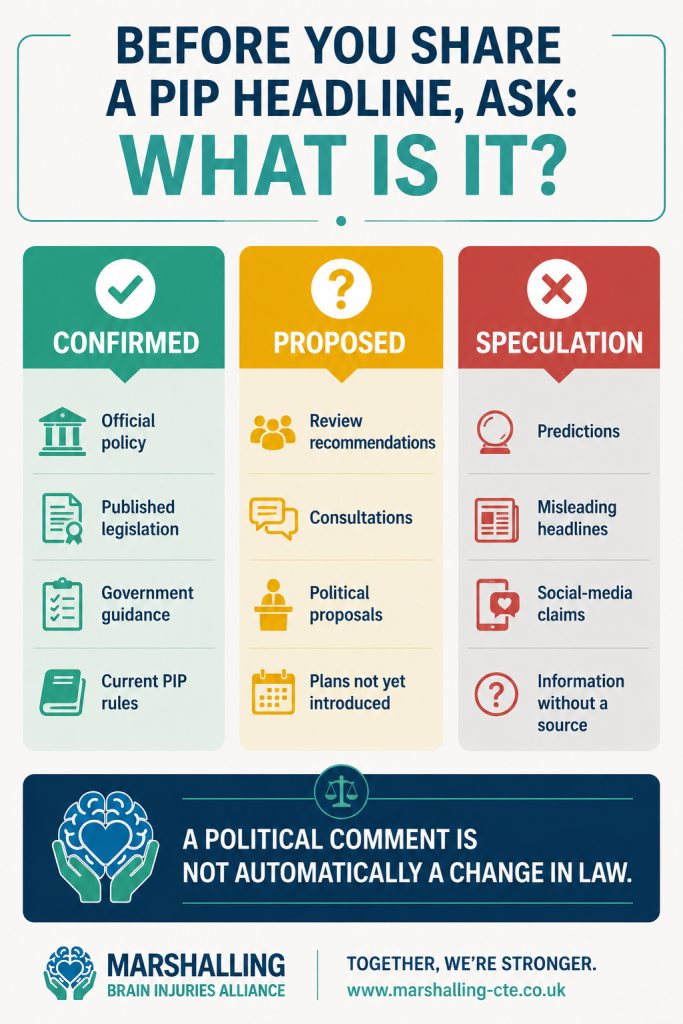
At the time of writing, there has been no confirmed announcement that PIP will automatically become conditional on accepting employment, training, treatment or work placements.
There have been political discussions about:
- reducing the overall welfare bill;
- helping more disabled people and people with health conditions into work;
- reforming employment support;
- providing more mental-health support in workplaces;
- reviewing PIP eligibility and assessments;
- and examining whether the current welfare system delivers the right support.
However, a political statement, media report or proposal is not the same as a change in law.
Until formal proposals are published, debated and introduced, people should be cautious about headlines claiming that particular changes are definitely going to happen.
This does not mean concerns should be dismissed. Government reviews can lead to major reforms, and disabled people should be included in those discussions. But inaccurate or exaggerated information can cause unnecessary fear among people who are already managing serious health conditions and financial uncertainty.
What is PIP actually for?
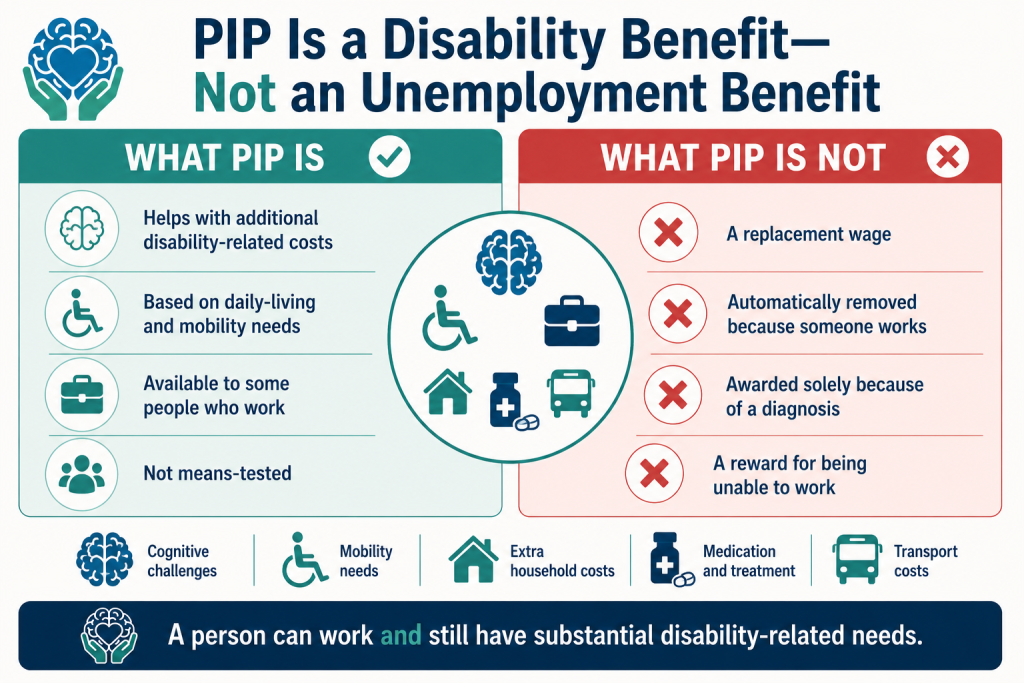
PIP is a disability benefit designed to help with the additional costs of living with a long-term health condition or disability.
It is not an unemployment benefit.
A person may receive PIP while they are:
- employed;
- self-employed;
- working part time;
- studying;
- volunteering;
- looking for work;
- or unable to work.
PIP is not awarded simply because someone has a particular diagnosis. It is awarded according to how a person’s condition affects specific daily-living and mobility activities.
This distinction is essential.
Someone may be capable of doing a small amount of work while still needing:
- help preparing food;
- reminders to take medication;
- supervision because of safety risks;
- help managing money and correspondence;
- support communicating with other people;
- assistance planning or following journeys;
- taxis because public transport is unsafe or overwhelming;
- or several days of recovery after activity.
Employment does not automatically remove disability-related needs.
Why comparisons between PIP and wages can be misleading
Some media coverage compares the amount a person may receive through PIP with the amount someone might earn in a part-time job.
This can create the impression that people choose between receiving PIP and working, or that PIP is being offered as an alternative wage.
That is not how PIP is intended to work.
A disabled person may receive wages and PIP at the same time. PIP is intended to help with disability-related costs, not replace employment income.
For someone with a brain injury, these additional costs might include:
- transport to appointments;
- help with household tasks;
- specialist equipment;
- support with paperwork;
- prepared meals when cooking is unsafe;
- additional heating or electricity;
- assistance from carers;
- private treatment or rehabilitation;
- replacing lost items;
- and reducing working hours because of fatigue or cognitive limitations.
Comparing a disability payment directly with a wage ignores the purpose of the benefit and the additional costs that disabled people may face.
It can also contribute to the harmful idea that people receiving disability benefits are financially better off than people who work.
For most claimants, the reality is far more complicated.
Why PIP is already difficult for people with brain injuries
Many of our members know from personal experience that obtaining the correct PIP award can be extremely challenging.
Brain injury does not always produce visible physical disability. A person may walk into an assessment, speak clearly and appear physically well while experiencing serious difficulties with memory, judgement, planning, fatigue, emotional regulation or safety.
The assessment system does not always capture this complexity.
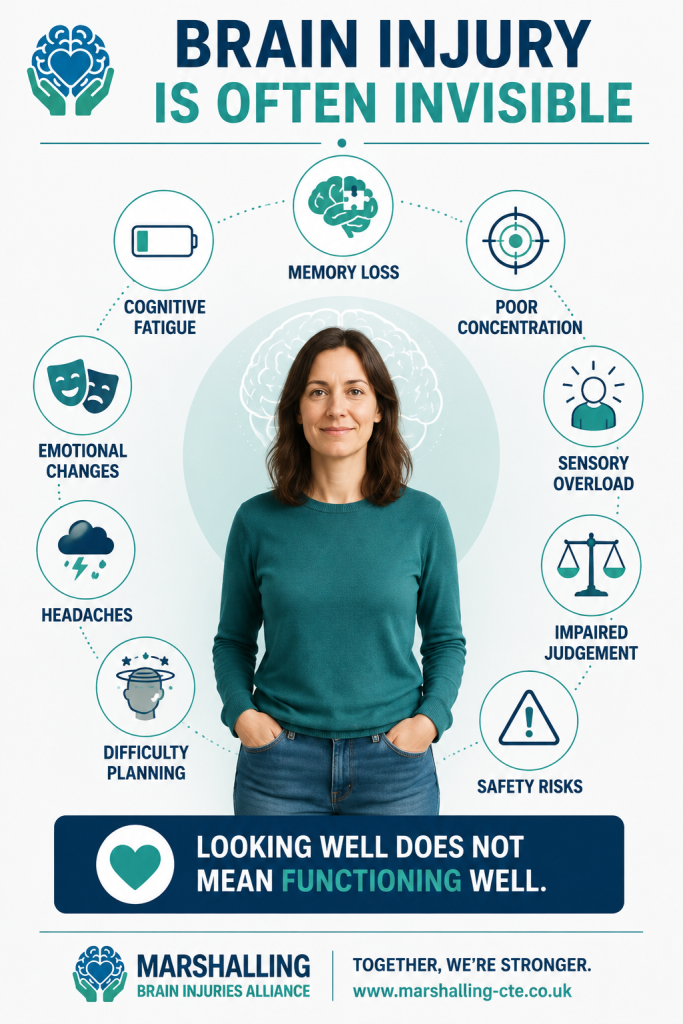
Invisible symptoms
Brain injury can affect:
- short-term memory;
- concentration;
- processing speed;
- organisation;
- initiation;
- judgement;
- impulse control;
- emotional regulation;
- sensory processing;
- balance;
- vision;
- communication;
- mental stamina;
- and awareness of danger.
None of these difficulties may be immediately obvious to an assessor.
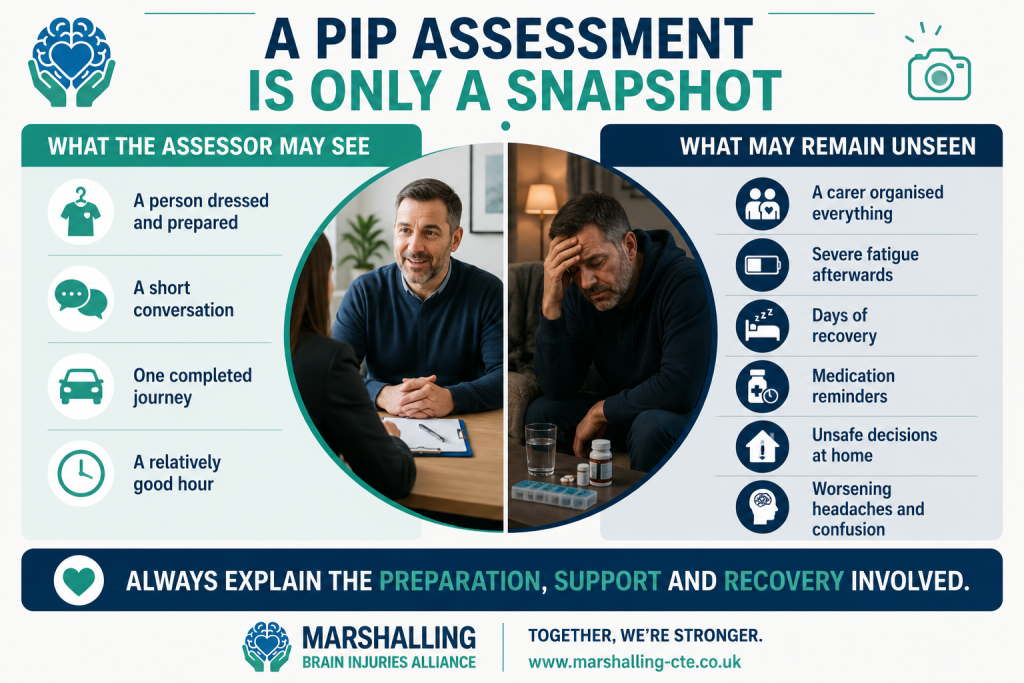
A claimant may hold a conversation for 40 minutes but then experience severe exhaustion, headaches, confusion or emotional distress for the rest of the day.
An assessment that only considers how the person appeared during the appointment may fail to recognise the true effect of the activity.
Cognitive fatigue is not ordinary tiredness
One of the most misunderstood effects of brain injury is cognitive fatigue.
After a brain injury, everyday activities may require far more mental effort than they did before. Listening to questions, recalling information, travelling, making decisions and coping with unfamiliar surroundings can rapidly exhaust the brain.
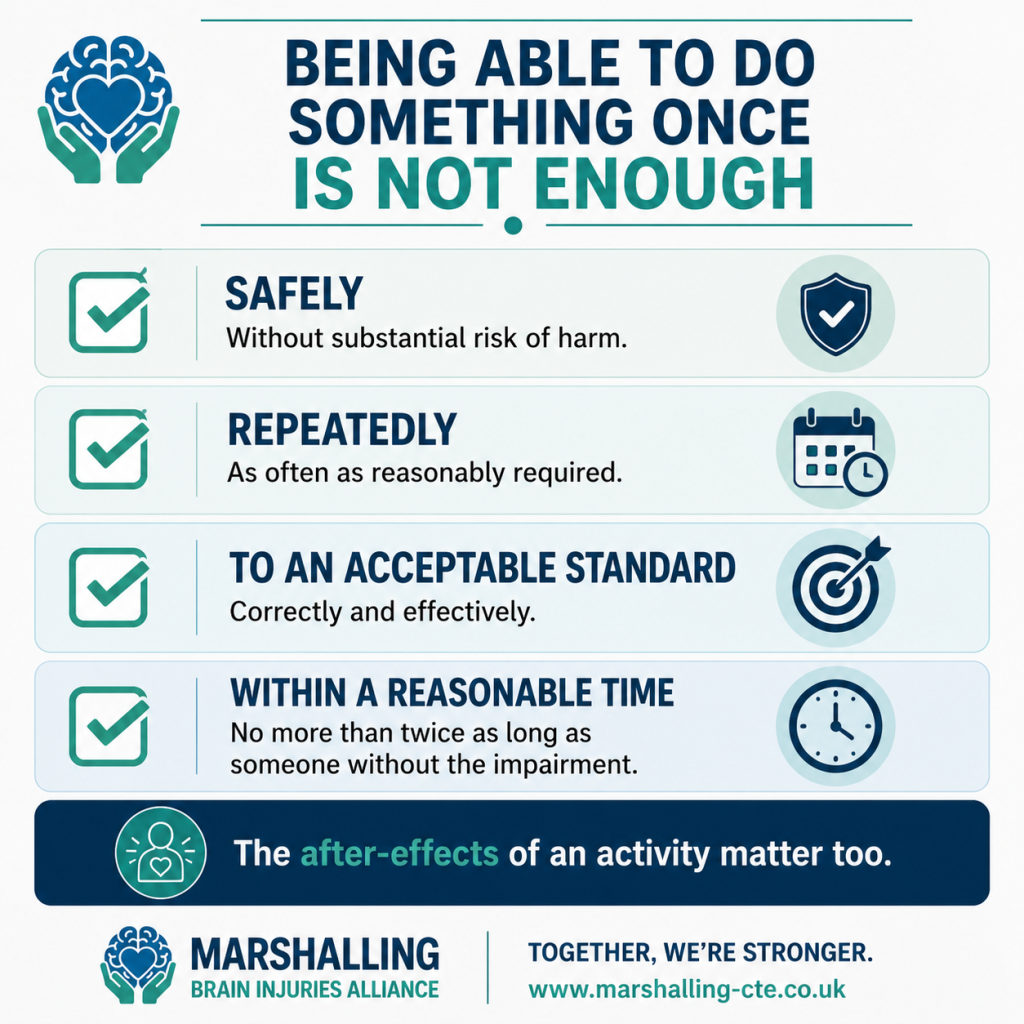
A person may manage one appointment but be unable to prepare food, communicate effectively or complete another task afterwards.
The relevant question is not simply:
Can the person do this once?
It should be:
Can the person do this safely, repeatedly, to an acceptable standard and within a reasonable time?
The effect of the activity afterwards must also be considered.
Impaired insight can affect the evidence given
Some brain injuries affect a person’s awareness of their own difficulties.
This is sometimes described as impaired insight or anosognosia.
A person may genuinely believe that they are independent because they do not remember:
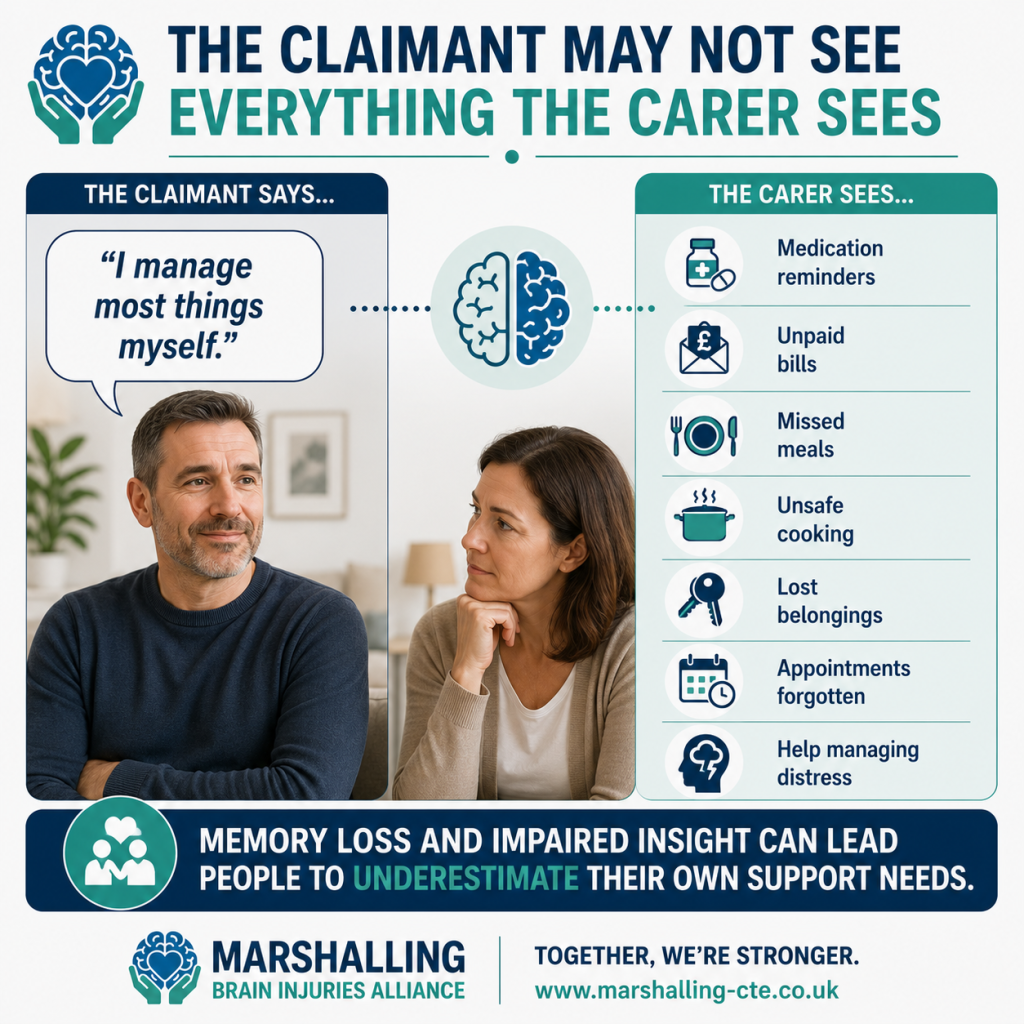
- leaving the cooker on;
- missing medication;
- becoming lost;
- forgetting appointments;
- making unsafe purchases;
- behaving impulsively;
- or needing repeated help from family members.
They may tell an assessor that they manage well, while their spouse, relative or carer is providing substantial supervision every day.
This is why evidence from family members and carers can be so important in brain-injury claims.
The claimant’s account should not automatically be treated as complete when cognitive impairment may affect their memory, judgement or self-awareness.
Symptoms may fluctuate
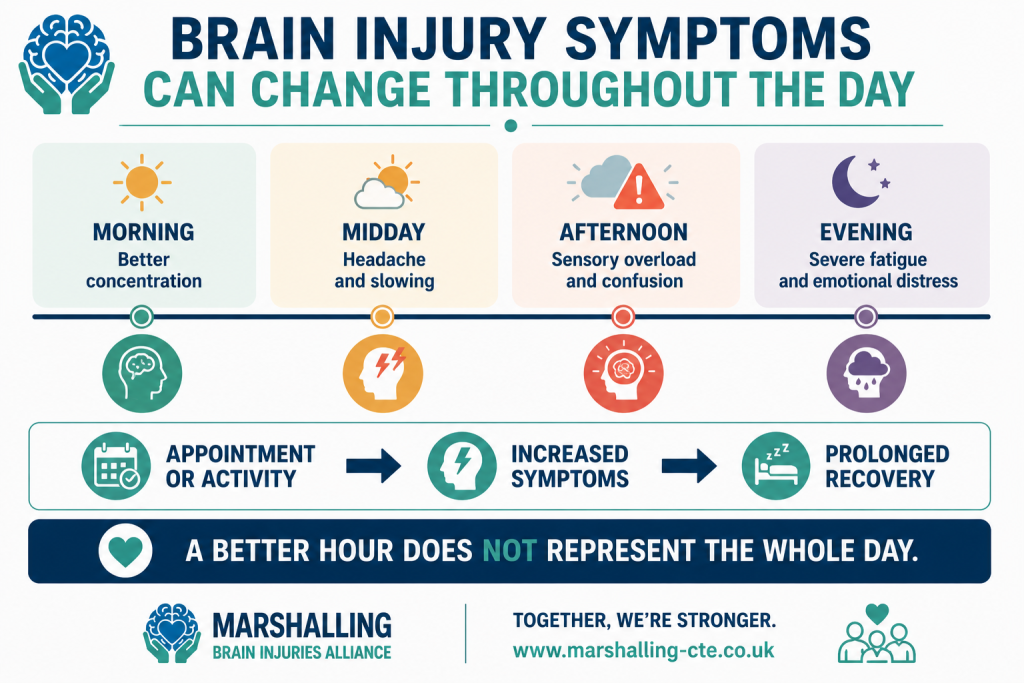
People living with post-concussion syndrome, traumatic brain injury or suspected CTE may have better and worse periods.
Someone may appear relatively capable in the morning but experience:
- worsening headaches;
- reduced concentration;
- irritability;
- confusion;
- sensory overload;
- speech difficulties;
- or severe fatigue later in the day.
Symptoms may also worsen after:
- poor sleep;
- stress;
- travelling;
- social interaction;
- screens;
- noise;
- physical exertion;
- or several activities being completed close together.
A single assessment is only a snapshot.
Decision-makers must consider how the person functions over time and whether an activity can be completed on the majority of days.
Executive dysfunction does not fit neatly into the system
Executive functions allow us to plan, start, organise, monitor and complete tasks.
After a brain injury, someone may know how to perform an activity but still be unable to initiate or complete it without help.
For example, a person may physically be able to prepare a meal but may:
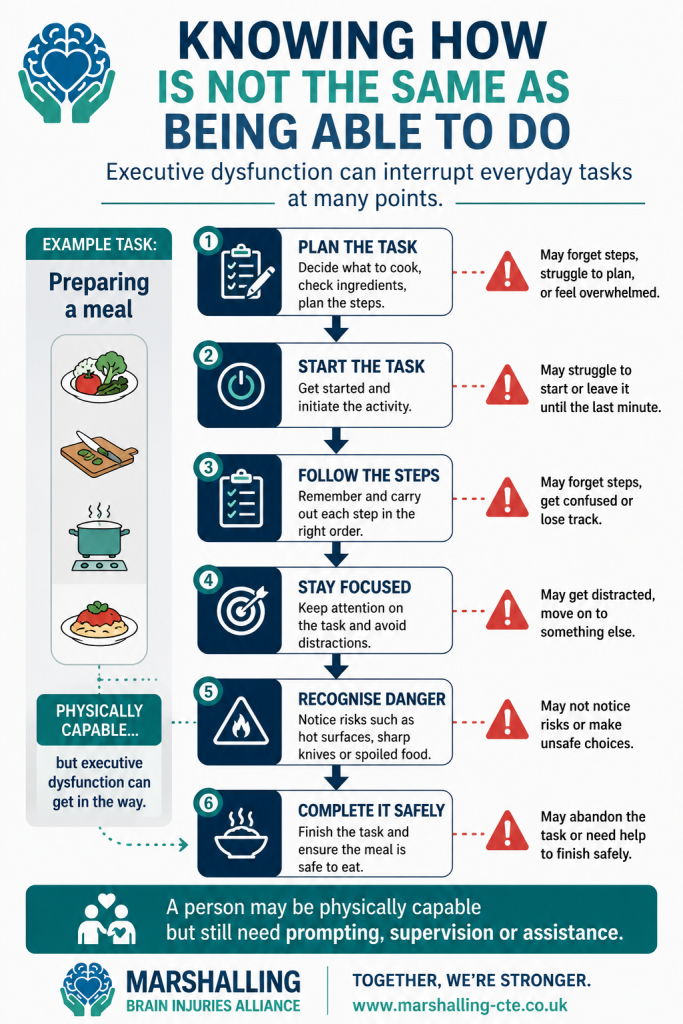
- forget to start cooking;
- become distracted;
- leave appliances switched on;
- miss important steps;
- use unsafe food;
- become overwhelmed;
- or abandon the task halfway through.
They may physically be able to take medication but still:
- forget doses;
- take them twice;
- take the wrong medication;
- or need another person to organise and prompt them.
This difference between physical ability and reliable functional ability is often poorly understood.
Why suspected CTE can be especially difficult to explain
Chronic traumatic encephalopathy is associated with a history of repeated head impacts.
At present, CTE is still definitively confirmed through examination of brain tissue after death. During life, clinicians may diagnose other conditions or use terms such as traumatic encephalopathy syndrome, probable CTE, neurocognitive disorder, dementia, mood disorder or cognitive impairment.
This uncertainty can create difficulties for claimants.
Some people may have substantial symptoms linked to decades of repetitive head impacts but lack a single definitive diagnostic test.
However, PIP is supposed to be based on functional difficulties rather than the name of the condition.
A person should not need a confirmed post-mortem diagnosis of CTE to have their current difficulties taken seriously.
Relevant evidence may include:
- documented concussion history;
- a history of repetitive head impacts;
- memory assessment results;
- neuropsychological reports;
- occupational-therapy evidence;
- neurology or dementia-service records;
- mental-health evidence;
- statements from carers;
- and clear examples of day-to-day support needs.
A normal MRI or CT scan does not automatically mean that someone has normal brain function.
What could be positive about PIP reform?
The current system is not working well for many people with invisible, cognitive, fluctuating and complex conditions.
A properly designed review could lead to meaningful improvements.
Better recognition of cognitive disability
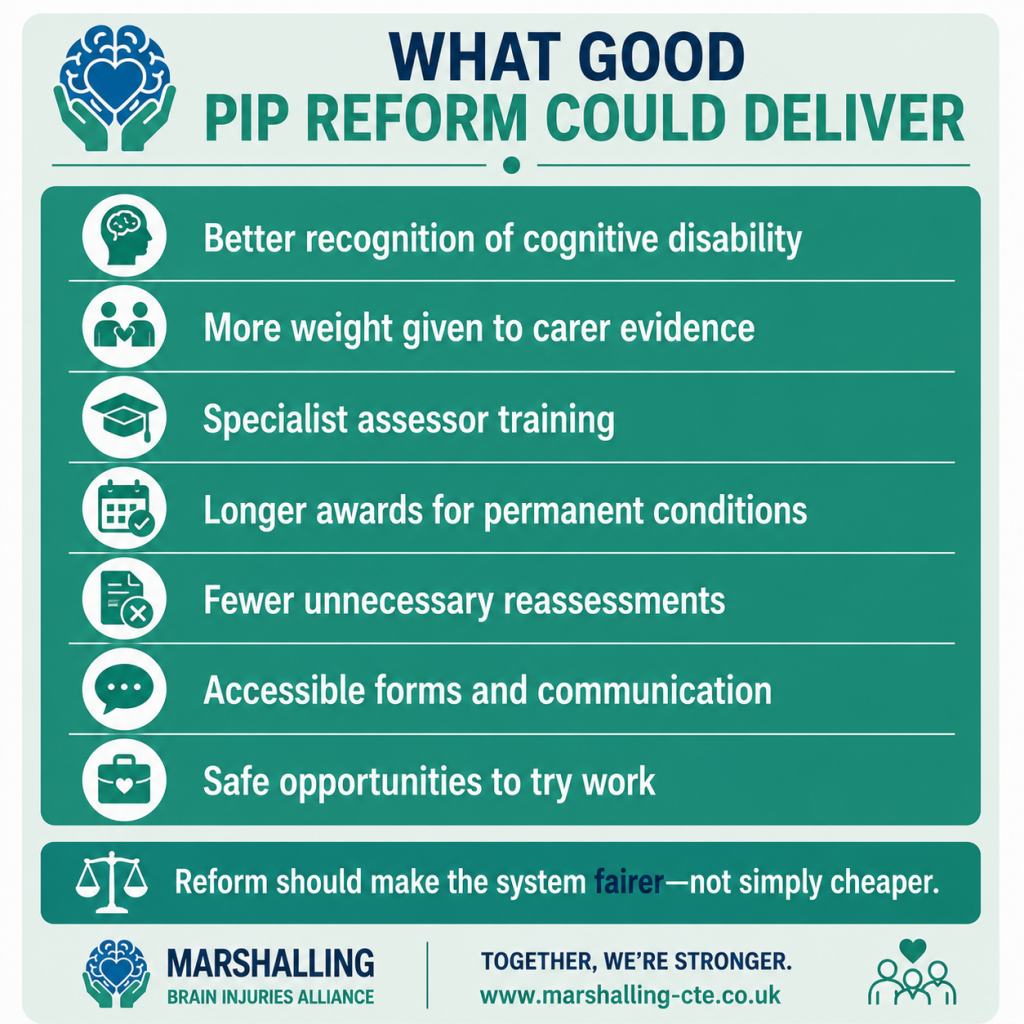
Reform could create clearer consideration of:
- memory impairment;
- executive dysfunction;
- mental fatigue;
- impaired judgement;
- initiation difficulties;
- vulnerability;
- emotional dysregulation;
- and reduced awareness of danger.
This would be particularly important for people with acquired brain injury, post-concussion syndrome, dementia and suspected traumatic encephalopathy.
More weight given to carer evidence
Some claimants cannot provide a complete or reliable account of their own difficulties.
A better system would properly consider evidence from the people who provide day-to-day support.
This may include spouses, parents, adult children, friends, support workers and professional carers.
Fewer unnecessary reassessments
People with permanent, progressive or long-term conditions should not be repeatedly required to prove that they remain disabled when meaningful improvement is not expected.
Unnecessary reassessments can cause severe stress and may worsen symptoms.
Longer awards and light-touch reviews could reduce this burden.
Better assessor training
Specialist training could help assessors understand:
- cognitive fatigue;
- fluctuating symptoms;
- impaired insight;
- neurobehavioural changes;
- sensory overload;
- post-concussion syndrome;
- executive dysfunction;
- dementia;
- and the relationship between brain injury and mental health.
Safer opportunities to try work
Many people with brain injuries want to work, volunteer or participate in their communities.
They should be able to explore suitable opportunities without automatically being treated as though they no longer have a disability.
Work and disability are not opposites.
Someone may be capable of limited, supported or flexible employment while still having substantial daily-living and mobility needs.
What could be potentially harmful?
The biggest concern is that the desire to reduce expenditure may become more important than improving fairness.
Making PIP conditional on work or training
Making PIP dependent on accepting employment, training or treatment would fundamentally change the nature of the benefit.
A person’s additional disability costs do not disappear because they decline a particular placement or cannot attend a programme.
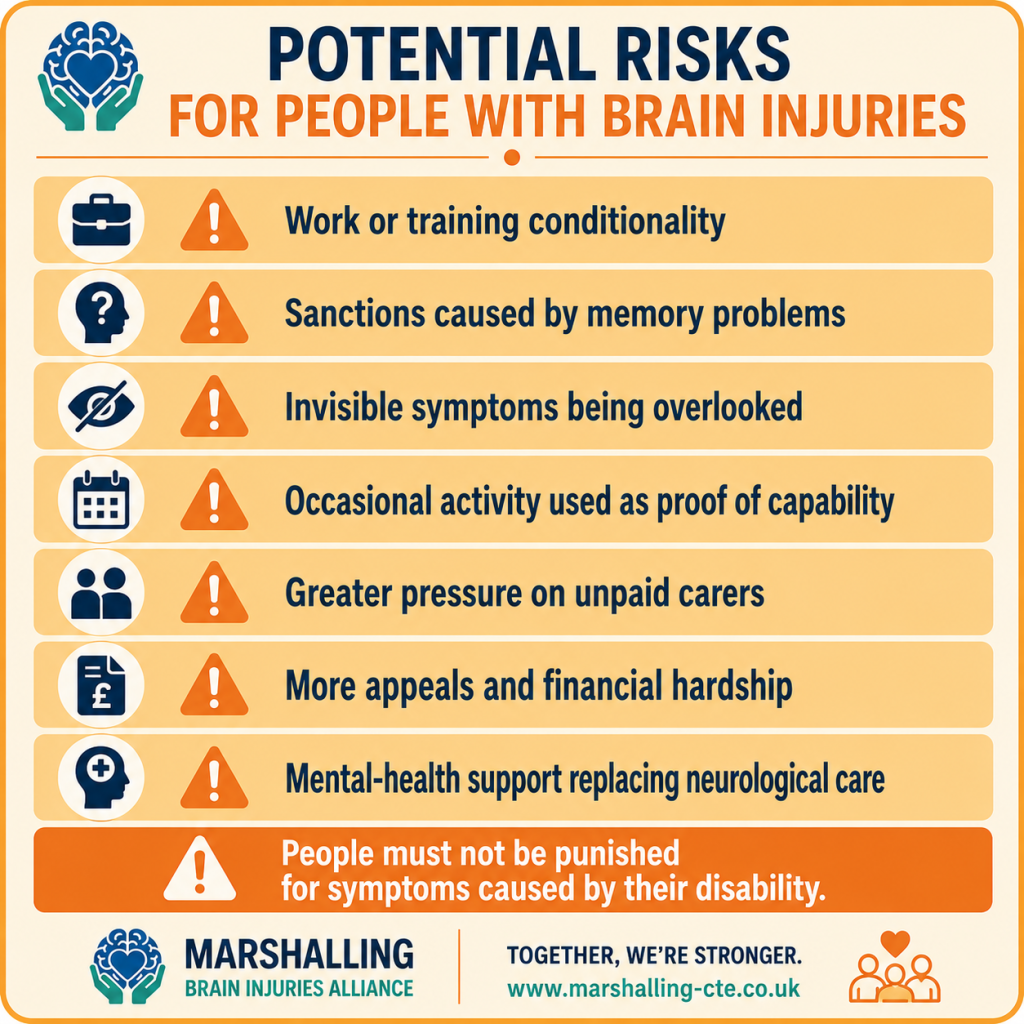
A person may be unable to participate because of:
- cognitive fatigue;
- memory problems;
- unpredictable symptoms;
- lack of safe transport;
- behavioural changes;
- severe anxiety;
- sensory overload;
- seizures;
- headaches;
- dizziness;
- or the absence of suitable local support.
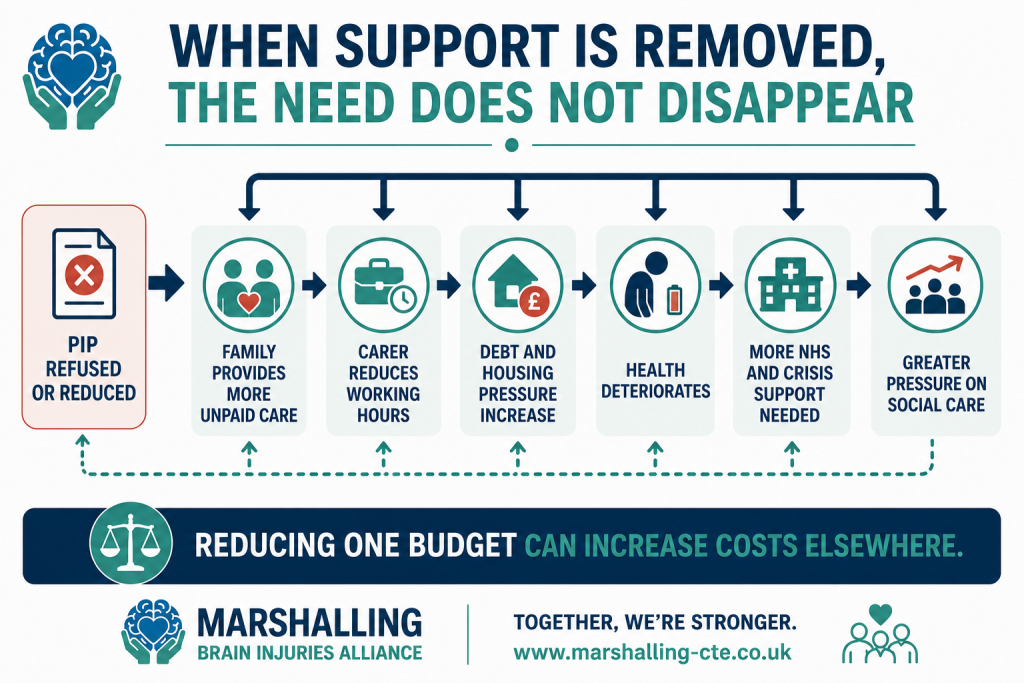
Removing disability support in these circumstances would not remove the underlying need.
It could simply increase poverty, dependence on carers and pressure on health and social-care services.
Punishing symptoms as though they were non-compliance
Brain injury can affect the ability to:
- open and respond to letters;
- remember appointments;
- use online systems;
- follow instructions;
- meet deadlines;
- manage telephone calls;
- organise transport;
- and cope with unfamiliar people.
In a conditional system, these symptoms could be mistaken for refusal or lack of cooperation.
A missed appointment may be caused by memory impairment.
An unanswered letter may be caused by executive dysfunction.
Leaving a training placement may be caused by sensory overload, fatigue or behavioural symptoms.
People must not be sanctioned for difficulties arising directly from their disability.
Treating occasional activity as proof of full capability
Attending a support group, charity event, appointment or short volunteering session does not prove that someone can sustain regular employment.
A person may require:
- help preparing beforehand;
- transport from a family member;
- supervision during the activity;
- reduced participation;
- and several days of recovery afterwards.
Photographs, social-media activity and isolated examples can be misleading when taken out of context.
The correct question is not whether a person can ever participate.
It is whether they can perform the relevant activity reliably and on the majority of days.
Overlooking neurological needs by focusing only on mental health
Brain injuries can cause or worsen:
- depression;
- anxiety;
- irritability;
- impulsivity;
- emotional instability;
- sleep disturbance;
- and suicidal thoughts.
Mental-health treatment may be extremely valuable, but it does not replace neurological assessment, cognitive rehabilitation or specialist brain-injury support.
A person with cognitive decline or executive dysfunction may require more than workplace counselling or general wellbeing support.
Reform must recognise the overlap between brain injury and mental health without assuming that every difficulty can be resolved through motivation, counselling or employment.
Increasing pressure on unpaid carers
When PIP is refused or reduced, the person’s support needs remain.
Family members may then have to provide more:
- supervision;
- transport;
- financial help;
- crisis support;
- medication management;
- household assistance;
- and advocacy.
Some carers reduce their own working hours or leave employment entirely.
Any reduction in disability support can therefore transfer costs from government departments to families, the NHS, social care, housing services and emergency services.
What a fairer PIP system should look like
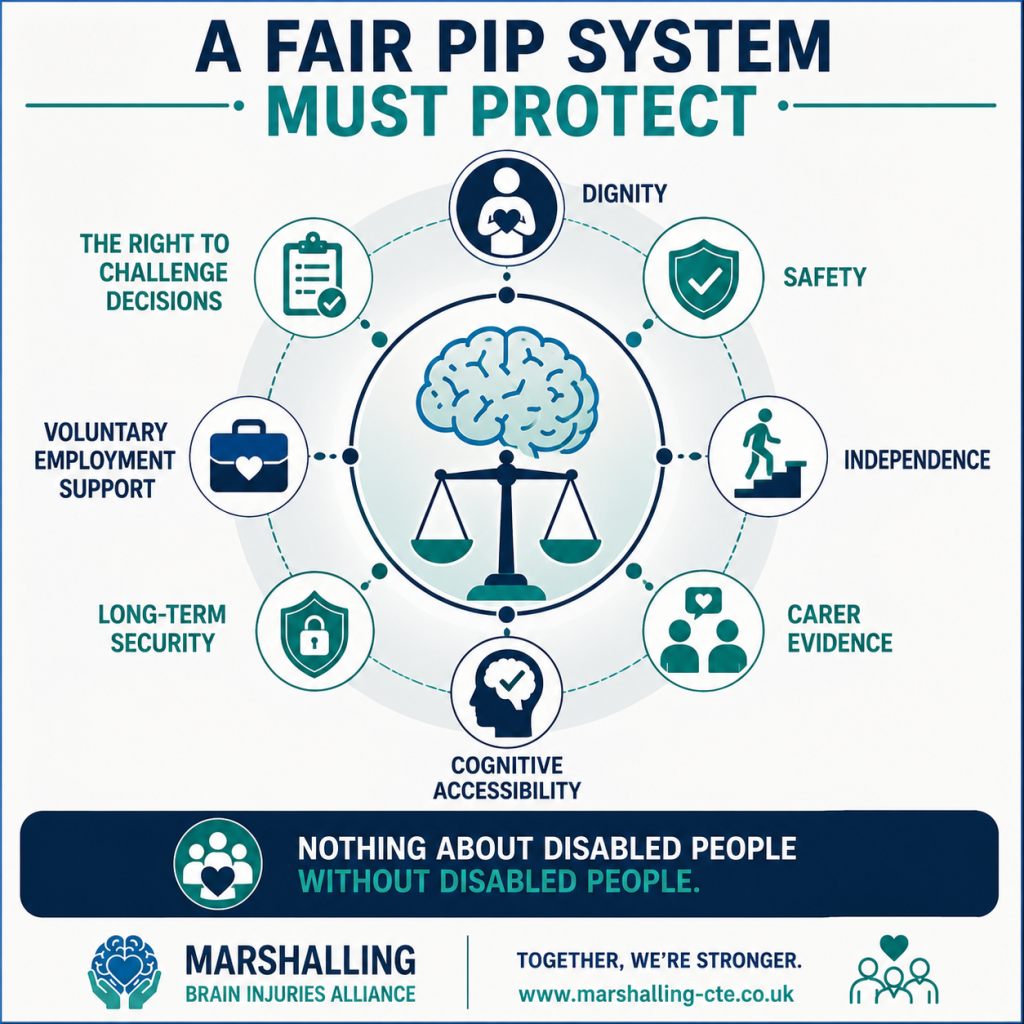
A reformed PIP system should be designed with disabled people, families, carers, clinicians and specialist organisations.
For people affected by brain injury, it should include the following protections.
Clear recognition of executive dysfunction
Assessments should consider whether a person can:
- begin a task;
- plan the steps;
- remain focused;
- recognise danger;
- adapt when something changes;
- complete the task;
- and monitor whether it has been done correctly.
Knowing how to do something is not the same as being able to do it independently.
Proper consideration of prompting and supervision
Help does not always involve physical assistance.
A person may need someone to:
- remind them;
- encourage them;
- repeat instructions;
- redirect their attention;
- check the result;
- prevent unsafe behaviour;
- or intervene when they become confused.
This support must be recognised.
Assessment of the after-effects of activity
Assessors should ask:
- What preparation was needed?
- Did someone prompt or supervise the person?
- How long did the task take?
- Were mistakes made?
- Did symptoms worsen?
- How long did recovery take?
- Could the task be repeated later that day?
- Could it be completed on most days?
Recognition of impaired insight
Where there is evidence of memory loss, cognitive impairment or reduced self-awareness, decision-makers should actively seek information from carers and professionals.
Suitable long-term awards
People with established progressive dementia, severe acquired brain injury or permanent neurological impairment should not face frequent, stressful reassessments without good reason.
Accessible communication
A cognitively accessible system should offer:
- clear language;
- shorter letters;
- reminders;
- extra time where appropriate;
- alternative communication methods;
- a named representative;
- and consistent reasonable adjustments.
Separation from employment conditionality
Employment support should be genuinely supportive, voluntary and tailored to the individual.
PIP should remain focused on disability-related needs and additional costs.
What claimants and families can do now
No one should assume that their PIP award is about to stop because of a newspaper headline or social-media post.
Until formal changes are announced, the existing rules remain important.
People with brain injuries may find it helpful to:
- keep copies of medical, rehabilitation and assessment evidence;
- maintain a short symptom and support diary;
- record the help provided by family members;
- explain what happens after an activity;
- describe better days, worse days and how often each occurs;
- include examples of prompting, supervision and safety risks;
- explain how long tasks take;
- and challenge decisions that do not accurately reflect their needs.
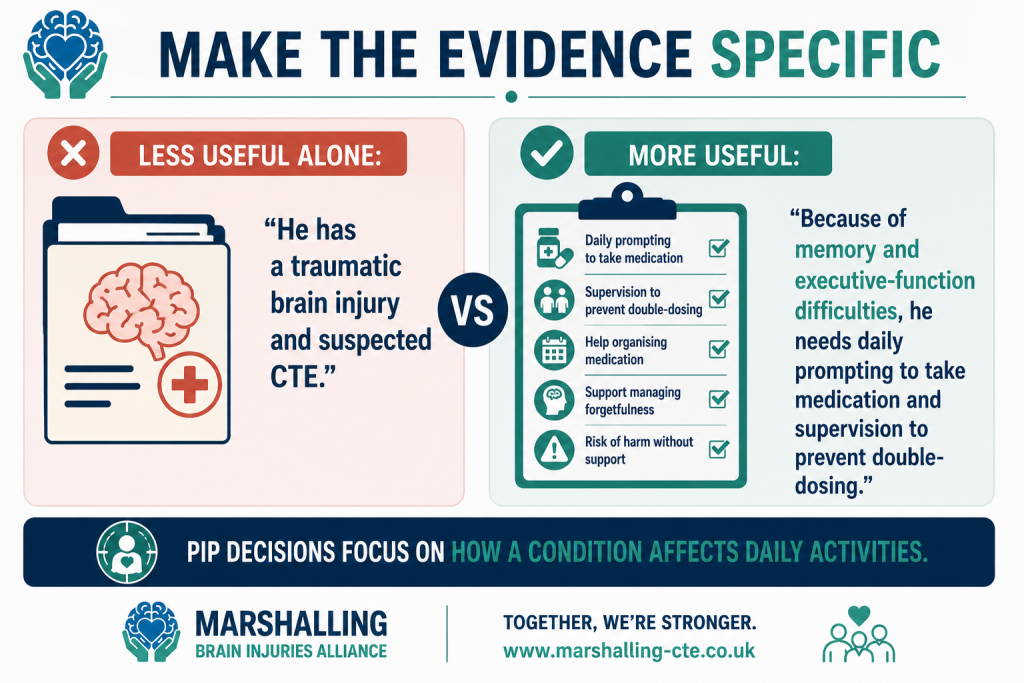
When completing a PIP form or preparing for an assessment, do not only list diagnoses.
Describe what happens in daily life.
For example:
Because of memory and executive-function difficulties, he needs prompting to take his prescribed medication and supervision to prevent him taking a second dose. Without support, medication errors occur several times a week.
This is clearer than simply stating:
He has a traumatic brain injury and suspected CTE.
The diagnosis matters, but the PIP decision is usually based on the support required.
Our position at Marshalling Brain Injuries Alliance
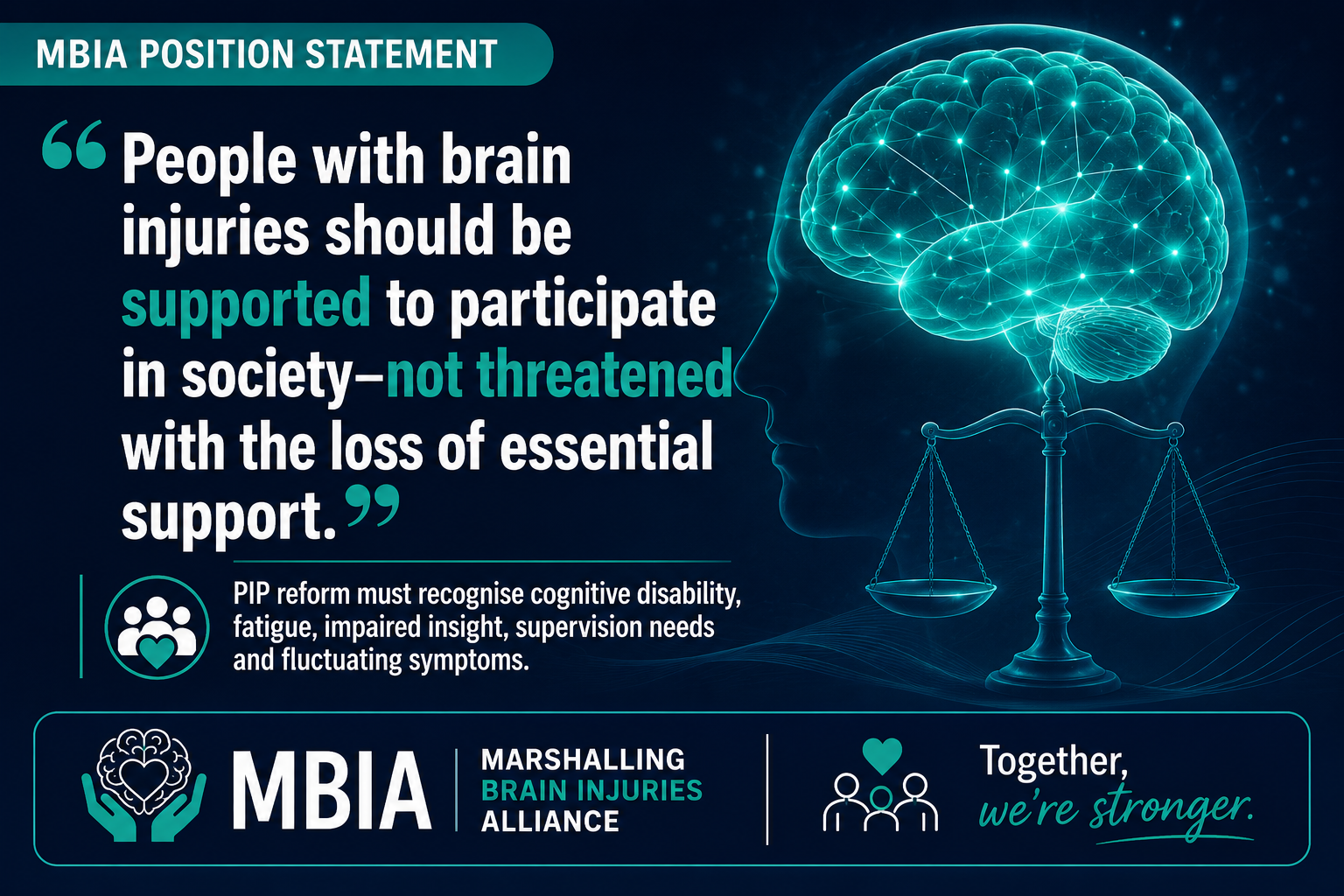
Marshalling Brain Injuries Alliance supports properly funded, individually tailored opportunities for disabled people who wish to work, volunteer, study or participate in their communities.
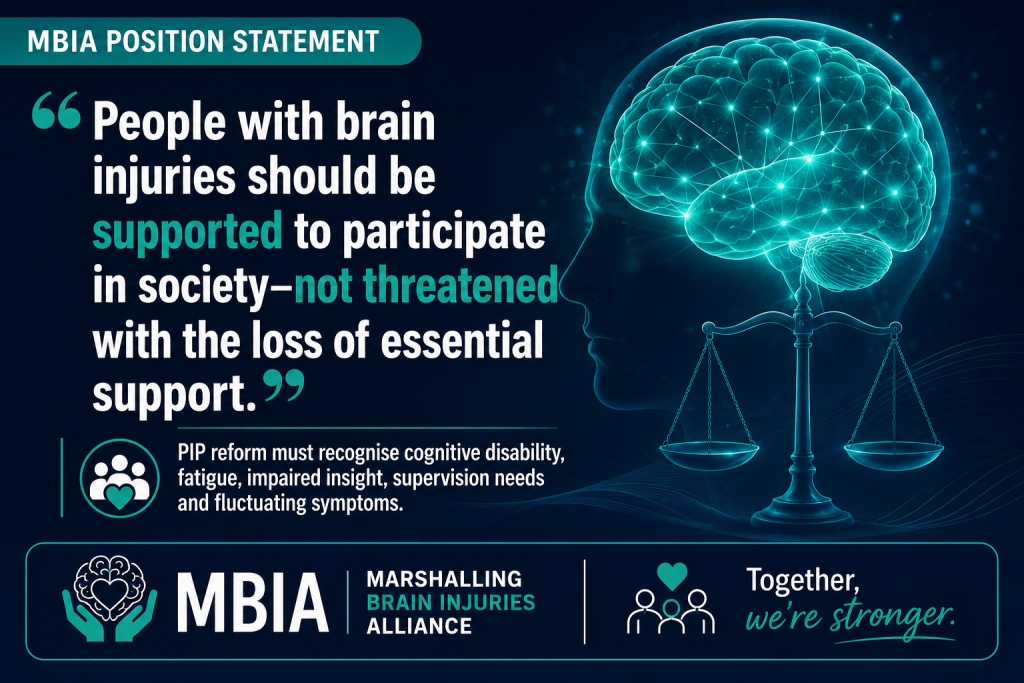
People should be helped to explore what is possible without being threatened with the loss of essential financial support.
We also welcome recognition that the current PIP system frequently fails people with invisible, cognitive and fluctuating conditions.
However, PIP is not an unemployment payment.
It helps people meet the additional costs associated with disability. Those costs may continue whether someone is employed, unemployed, studying, volunteering or trying to return to work.
Any future reform must:
- protect people with cognitive and neurological disabilities;
- recognise prompting, supervision and mental fatigue;
- properly consider evidence from carers;
- avoid punishing people for disability-related difficulties;
- preserve the distinction between PIP and employment benefits;
- and ensure that nobody is pressured into unsafe or unsuitable activity merely to retain essential support.
People living with brain injuries already face significant barriers when applying for PIP.
Reform should remove those barriers—not create new ones.
The key message
There is a genuine review of PIP and wider political pressure to reduce welfare spending.
That deserves careful attention.
However, much of the information currently circulating online goes beyond what has been formally confirmed.
The future of PIP should not be debated through fear, stigma or misleading comparisons between disability payments and wages.
It should be based on evidence, lived experience and a proper understanding of disability.
For people living with brain injury, post-concussion syndrome, dementia and suspected CTE, the central question must remain:
What support does this person need to live safely, manage everyday life and participate in society with dignity?
Important: This article provides general information and does not constitute legal or benefits advice. Welfare policy may change, and individual circumstances differ. Claimants should seek advice from a qualified welfare-rights adviser, Citizens Advice or another specialist service before making decisions about an existing claim or award.