Stem Cell Therapy for CTE: A Genuine Breakthrough or Too Soon to Tell?
Over the past few weeks, headlines have suggested that a stem cell treatment for Chronic Traumatic Encephalopathy (CTE) is finally entering human clinical trials.
For a condition with no approved disease-modifying treatment, this has understandably generated excitement throughout the brain injury community.
But how much of that excitement is supported by evidence?
At Marshalling Brain Injuries Alliance (MBIA), we believe in sharing both hope and scientific reality. Here is what we currently know.
The Headlines
A Texas biotechnology company, TriCelX, has announced that the U.S. Food and Drug Administration (FDA) has authorised a Phase 1/2 clinical trial of its investigational stem cell therapy, XytriX™, for adults living with probable or confirmed CTE. The study is expected to enrol approximately 24 participants, with the option to expand to 36 if early safety results are encouraging. Participants will be followed for two years.
This is significant because:
- There are currently no approved treatments that slow or stop CTE.
- Most treatment today focuses on managing symptoms such as depression, cognitive impairment, headaches, sleep problems and behavioural changes.
- This appears to be the first FDA-authorised clinical trial specifically investigating a stem cell therapy for CTE.
That makes this an important milestone.
However, it is equally important to understand what this trial is—and what it is not.
What Is XytriX?
XytriX is an investigational cell therapy created from mesenchymal stromal cells (MSCs) obtained from donated umbilical cord tissue, specifically Wharton's Jelly.
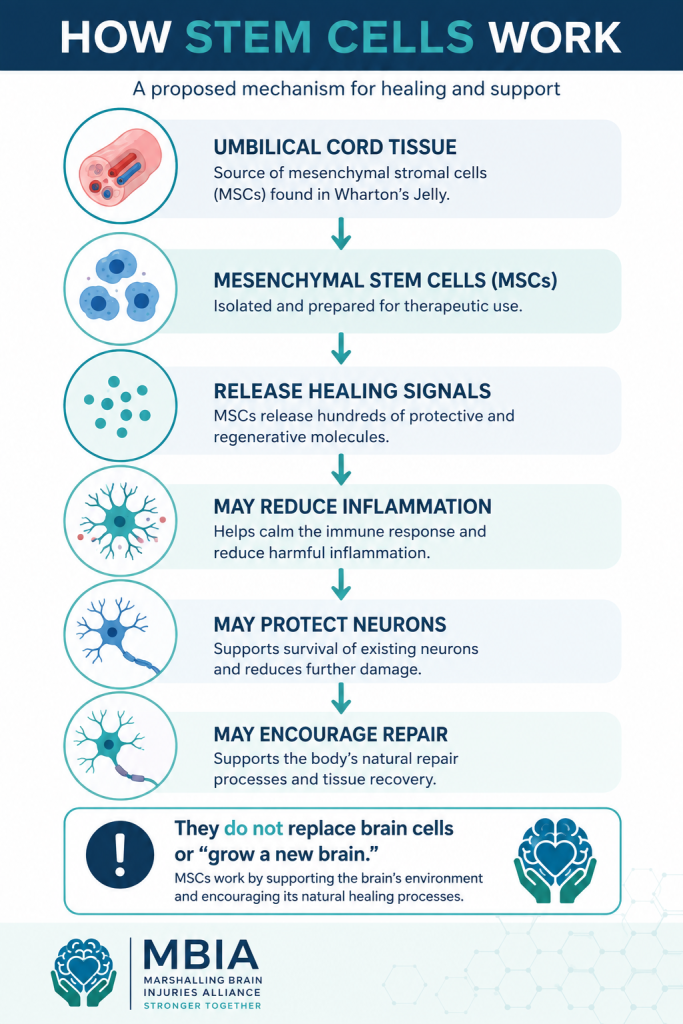
Unlike embryonic stem cells, these cells do not replace damaged brain tissue by becoming new neurones.
Instead, researchers believe they may work by releasing hundreds of signalling molecules that can:
- reduce harmful inflammation
- calm excessive immune responses
- protect surviving nerve cells
- encourage the brain's own repair mechanisms
- support blood vessel health
- promote tissue healing
Scientists often describe these effects as paracrine signalling, where the cells influence surrounding tissue rather than replacing it.
This is an important distinction because many media reports incorrectly suggest stem cells simply "grow new brain cells." Current evidence does not support that claim.
Why Might Stem Cells Help CTE?
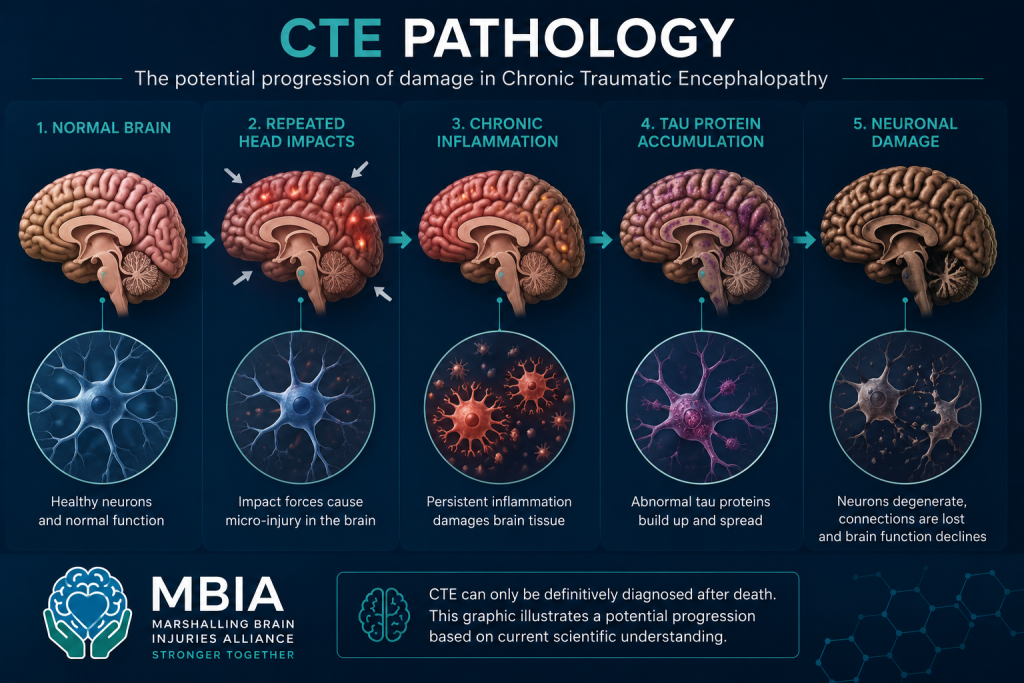
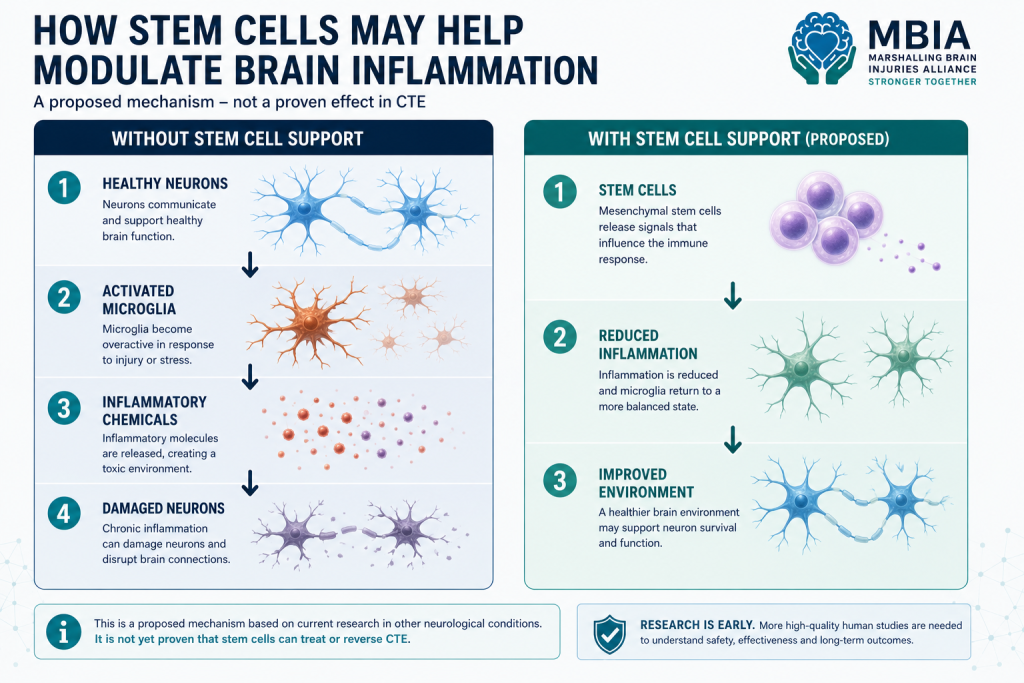
One of the hallmarks of CTE is persistent neuroinflammation.
Following repeated head impacts, the brain's immune cells (called microglia) can remain activated for years.
Rather than switching off after an injury has healed, they may continue producing inflammatory chemicals that contribute to ongoing damage.
Researchers believe that reducing this chronic inflammation could potentially slow further injury.
Mesenchymal stem cells have shown anti-inflammatory effects in laboratory studies and animal models.
Some research has also suggested they may:
- reduce brain swelling
- improve blood-brain barrier function
- increase production of growth factors
- encourage repair of damaged neural connections
This biological rationale is one of the reasons researchers are interested in testing MSCs in CTE.
What Does the Trial Actually Involve?
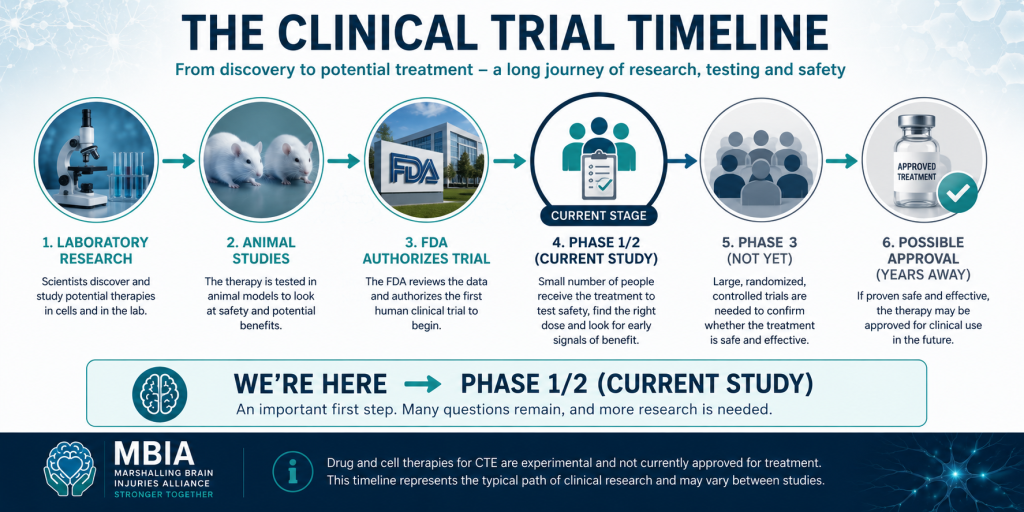
Despite some headlines, this is not a large study designed to prove the treatment works.
It is primarily a Phase 1/2 safety study.
The trial is:
- open-label (everyone receives the treatment)
- dose-escalation (different doses are tested gradually)
- relatively small
- conducted at a single specialist centre
Participants receive multiple treatment cycles and are monitored using neurological examinations, neuropsychological testing and safety assessments over approximately two years.
Because there is no placebo group, researchers cannot reliably determine whether improvements are caused by the treatment itself, natural variation, expectation effects or other factors.
Why Phase 1 Trials Matter
When many people hear the words "clinical trial", they naturally assume researchers are testing whether a treatment works.
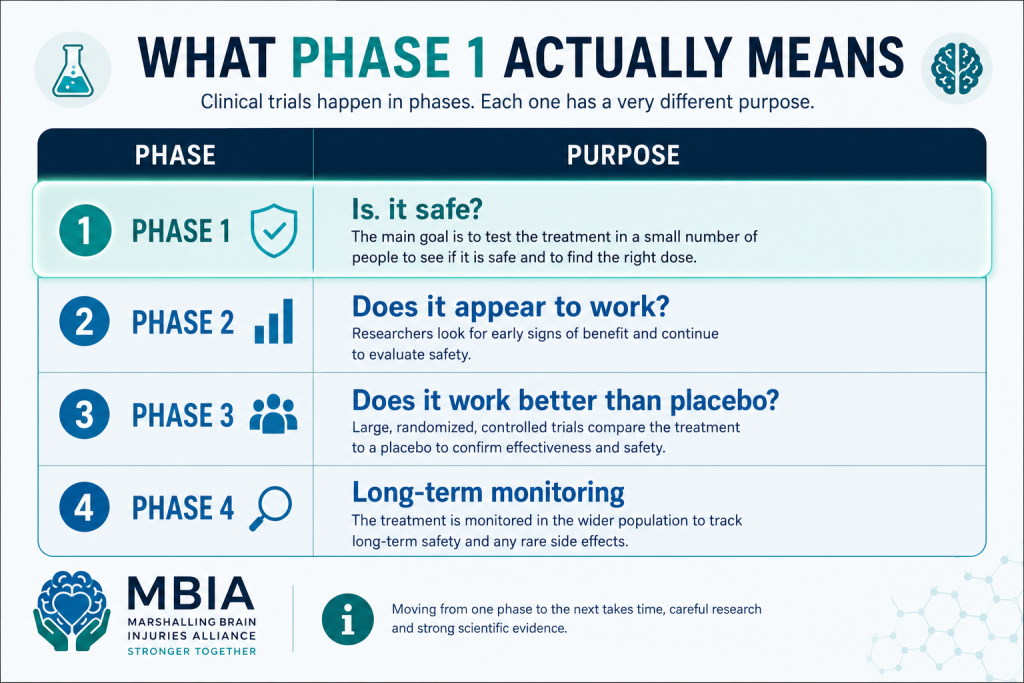
That is not the main purpose of a Phase 1 study.
Phase 1 trials are designed primarily to answer questions such as:
- Is the treatment safe?
- What dose should be used?
- Are there serious side effects?
- Is it practical to administer?
Only after these questions are answered do larger randomised controlled trials investigate whether the treatment actually improves patient outcomes.
This means that even if every participant improves, scientists still cannot conclude that the stem cells caused the improvement.
That requires much larger controlled studies.
What Does Previous Research Tell Us?
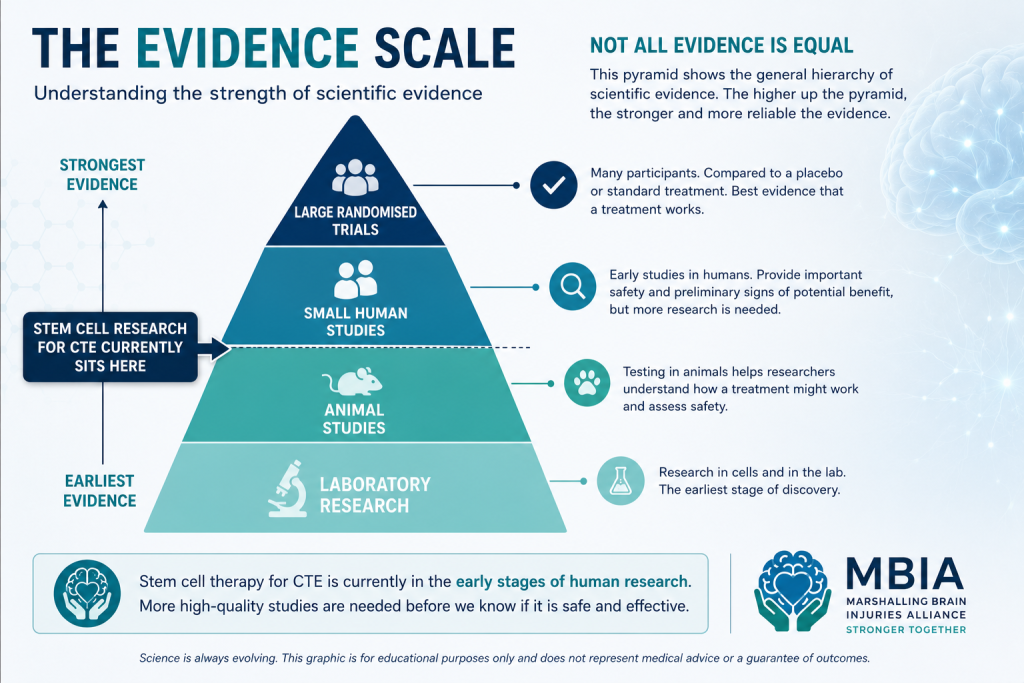
Although this is one of the first human trials specifically targeting CTE, stem cells have been studied for traumatic brain injury (TBI) for many years.
Animal research has generally been encouraging.
Several systematic reviews have found that mesenchymal stem cells improved:
- memory performance
- learning
- movement
- brain tissue preservation
- inflammation markers
in experimental models of traumatic brain injury.
However, it is important to remember that treatments that work in mice frequently fail in humans.
Human studies have been far fewer and much smaller.
Most early trials have shown that MSC therapy appears reasonably safe, but evidence that it produces meaningful long-term improvements remains limited.
This is one reason why larger, well-designed randomised trials are still needed before conclusions can be drawn.
Is This an FDA-Approved Treatment?
No.
This is probably the most important point.
The FDA has authorised a clinical trial.
That is completely different from approving a treatment.
Authorising a trial simply means researchers have provided enough pre-clinical and manufacturing data to begin testing the therapy in humans under carefully controlled conditions.
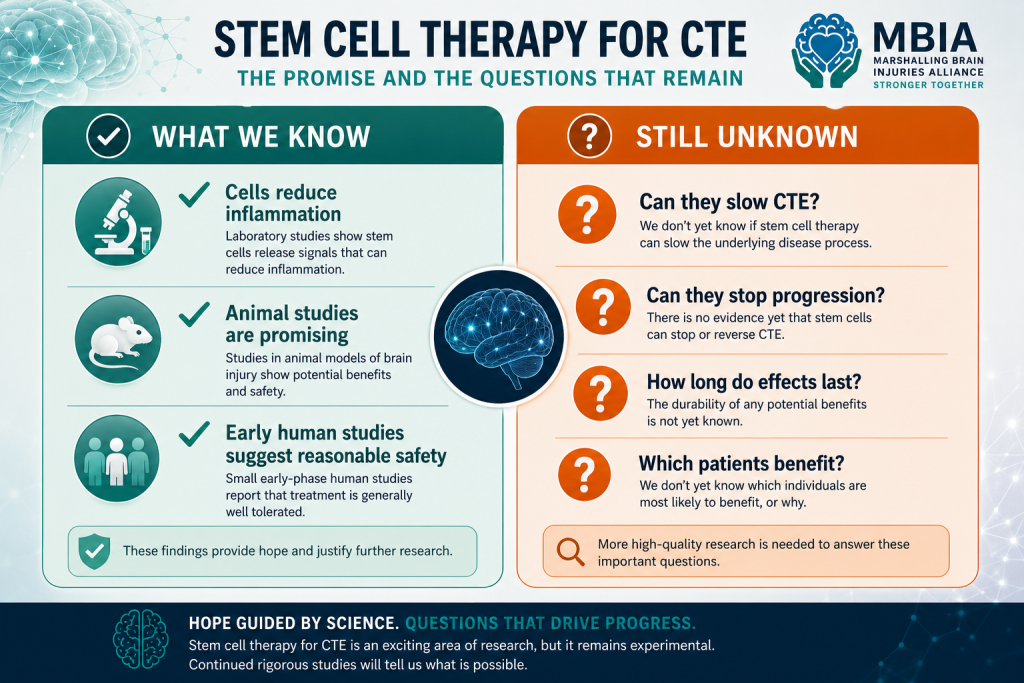
It does not mean:
- the treatment has been proven effective
- patients should seek it privately
- it is ready for routine clinical use
In fact, the FDA continues to warn patients about clinics offering unapproved stem cell treatments for neurological diseases outside properly regulated research studies.
Should People Travel Overseas for Stem Cell Therapy?
At present, there is no high-quality evidence showing that commercial stem cell treatments cure or reverse CTE.
Many overseas clinics advertise impressive testimonials but provide little peer-reviewed scientific evidence.
Some treatments are extremely expensive.
Others are offered without placebo-controlled trials or long-term safety data.
Patients considering these treatments should ask:
- Has the therapy completed randomised clinical trials?
- Has it been independently published?
- Is it approved by a recognised medicines regulator?
- Are realistic expectations being provided?
Hope is important.
False hope can be harmful.
Why This Research Still Matters
Although this trial should not be viewed as proof that stem cells work for CTE, it is still genuinely significant.
For decades, research into CTE has focused almost entirely on understanding the disease.
We are now beginning to see early studies investigating potential treatments.
That represents an important shift.
Every effective treatment begins somewhere.
Today's Phase 1 trial could become tomorrow's larger Phase 3 study.
Or it may demonstrate that another approach is needed.
Either outcome moves science forward.
MBIA's View
We welcome this research.
People living with probable CTE urgently need better treatment options.
However, it is essential that research is communicated responsibly.
At this stage:
- Stem cells are not a cure for CTE.
- They have not yet been shown to slow disease progression.
- This trial is designed mainly to assess safety, not effectiveness.
- Larger placebo-controlled studies will be needed before any conclusions can be drawn.
There is genuine scientific reason to be optimistic.
There is not yet scientific reason to claim victory.
The coming years should provide some of the first high-quality evidence on whether stem cell therapy can play a meaningful role in treating CTE.
For the thousands of former athletes, military veterans, emergency service personnel and others living with the consequences of repeated head impacts, that is a development worth watching carefully—not because it proves we have found the answer, but because it represents another important step towards finding one.
Enjoyed this article? Join thousands of readers receiving our monthly Brain Injury Brief