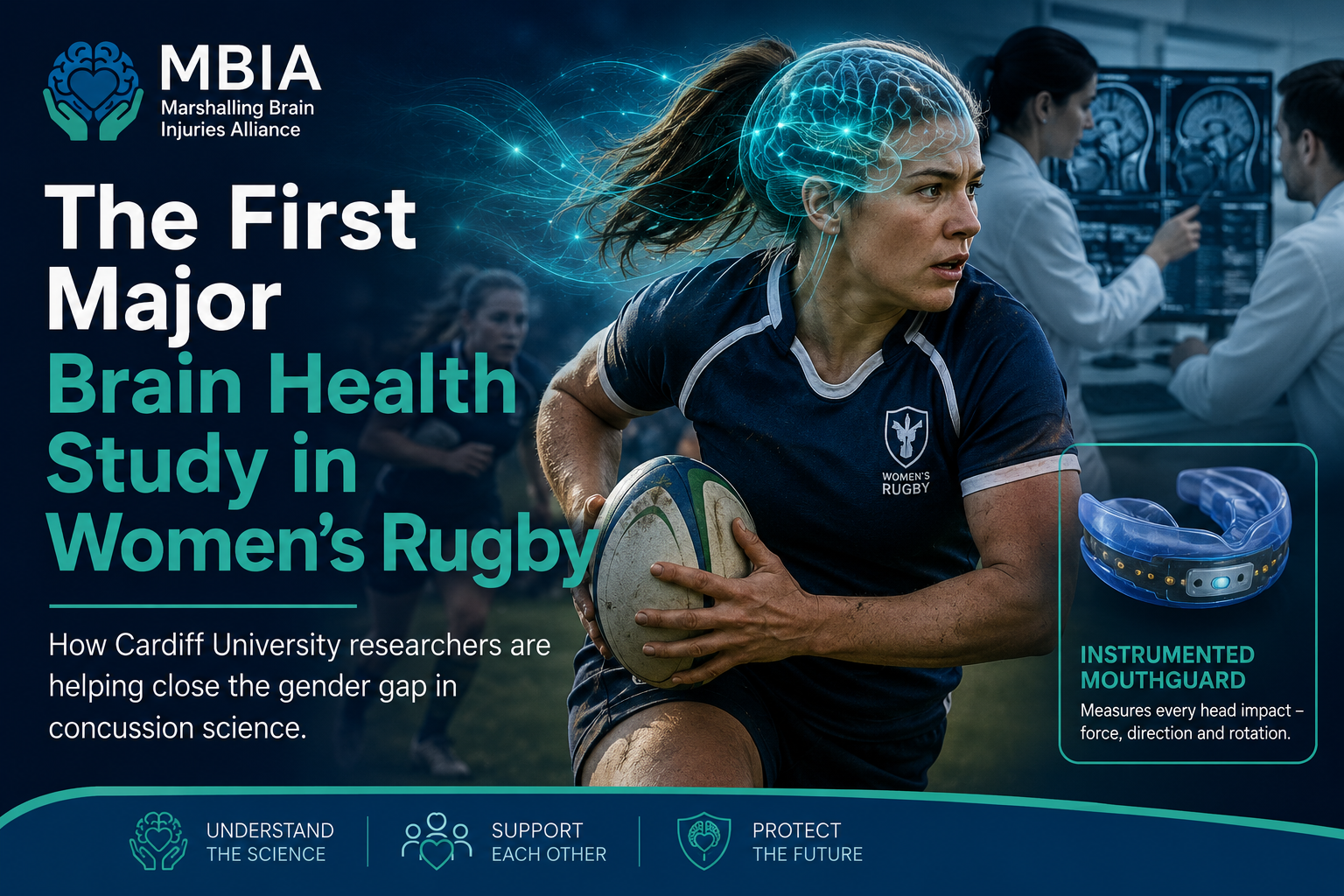
The First Major Brain Health Study in Women's Rugby Could Change the Future of Player Safety
Why this research matters
For decades, almost everything we know about concussion, repetitive head impacts and long-term brain health in rugby has come from studies of male athletes.
Yet women's rugby has grown rapidly around the world, with thousands more girls and women taking up the sport every year.
Despite that growth, one important question has remained largely unanswered:
Does the female brain respond differently to repeated head impacts than the male brain?
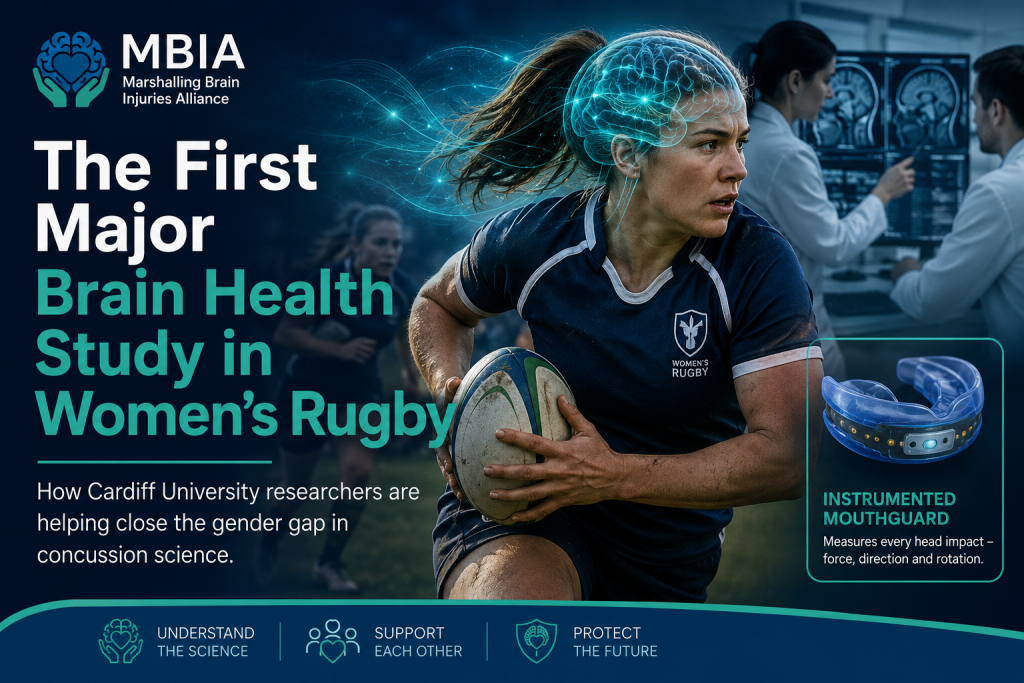
Researchers at Cardiff University are now attempting to answer that question through what they describe as the most advanced study yet of brain health in female contact sport. Their project, Towards Precise Brain Health Guidelines for Women's Rugby, aims to provide evidence that could help improve player safety for generations to come.
Why has there been so little research?
Historically, sports science has focused predominantly on male athletes.
That means many of today's concussion protocols, return-to-play guidelines and head injury assessment tools were originally developed using data collected from men.
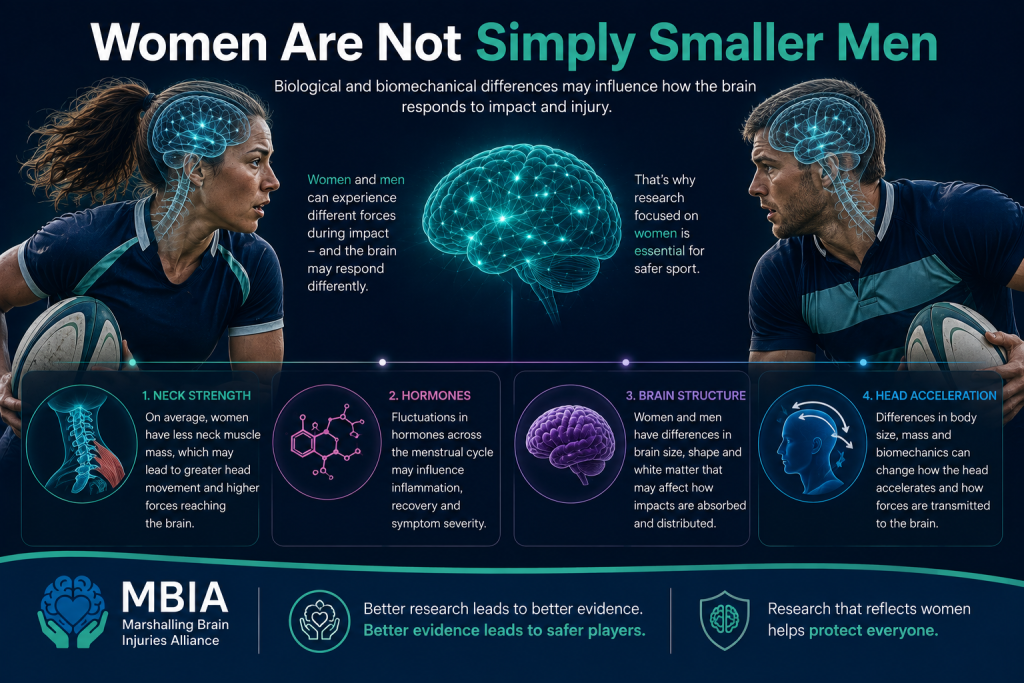
While these protocols have undoubtedly improved player safety, researchers increasingly recognise that women are not simply smaller men.
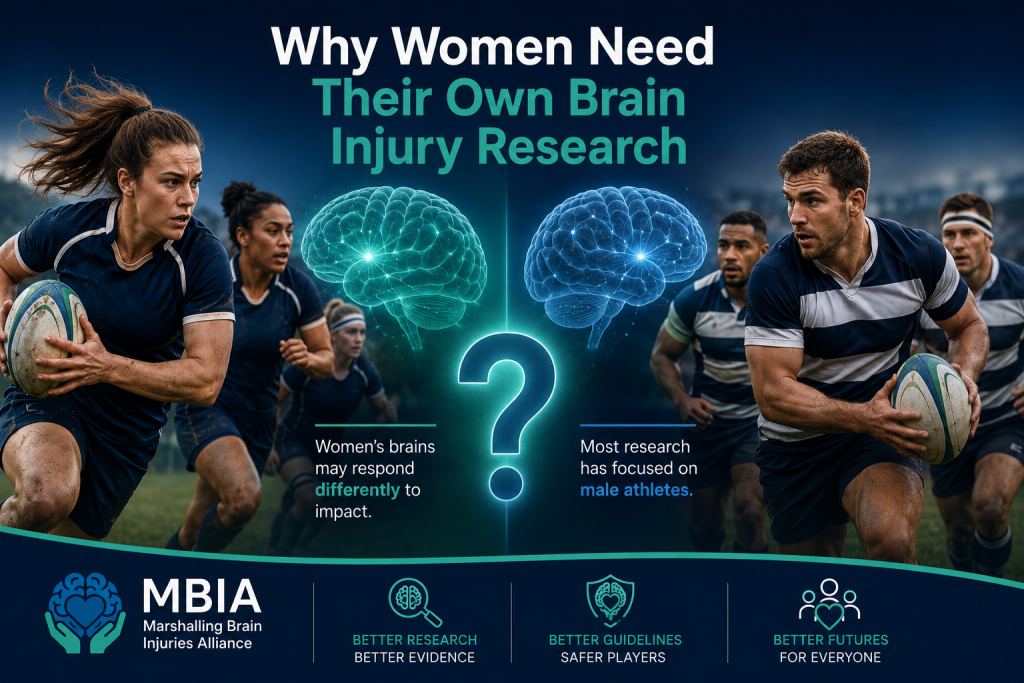
There are important biological differences that may influence how the brain responds to injury, including:
- Brain structure
- Neck strength
- Hormonal influences
- Body mass
- Head acceleration during impacts
Scientists simply don't yet know whether these differences alter the long-term effects of repetitive head impacts.
This Cardiff study hopes to begin filling that evidence gap.
What is the study doing?
Rather than relying on one type of measurement, researchers are combining several cutting-edge techniques.
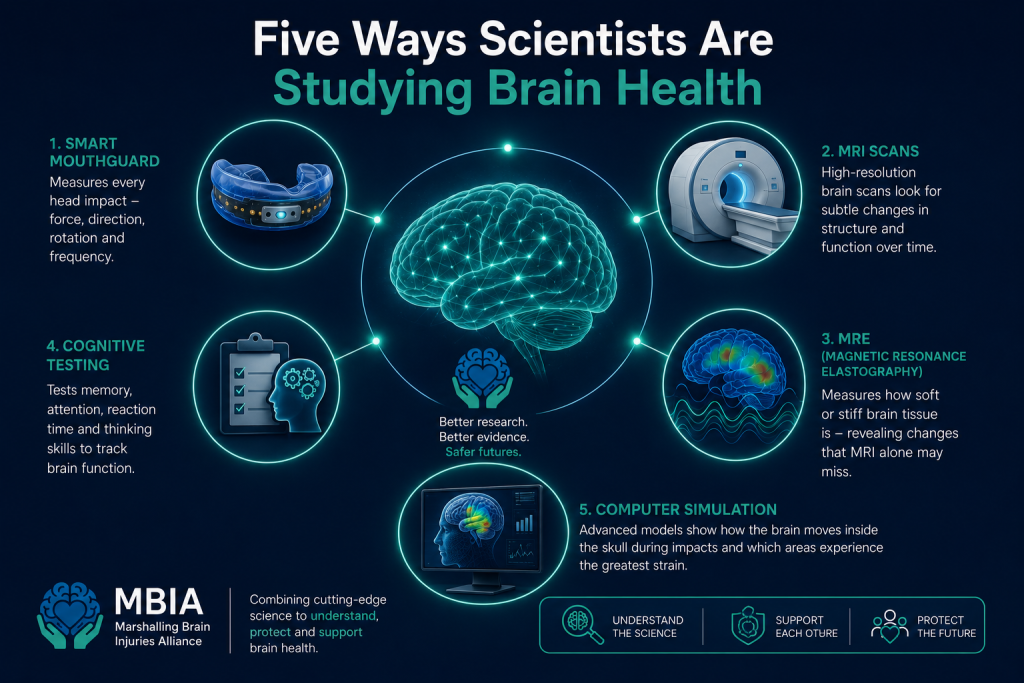
1. Instrumented mouthguards
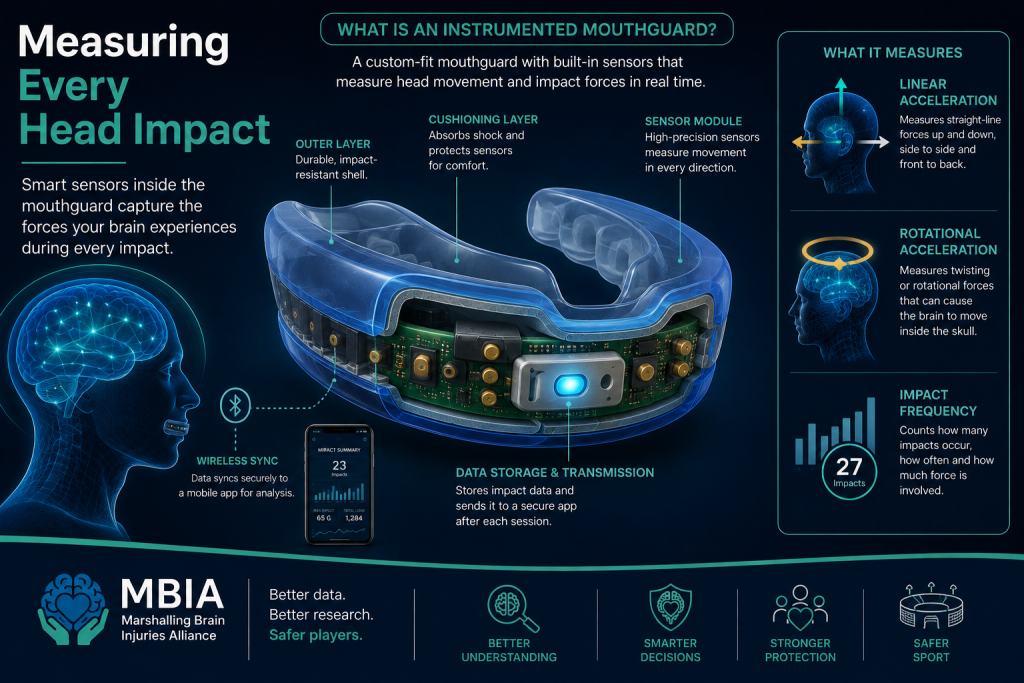
Players wear specially designed mouthguards containing tiny sensors.
These record:
- Every significant head impact
- How hard each impact was
- The direction of the force
- Rotational movement of the head
This allows researchers to build an accurate picture of the number and severity of impacts each player experiences during training and matches.
2. Brain MRI scans
Players undergo detailed MRI scans.
These are looking for subtle changes that cannot be detected by ordinary medical examinations.
Importantly, MRI is not being used to diagnose concussion.
Instead, researchers want to see whether repeated head impacts are associated with tiny changes in brain structure or function over time.
3. Magnetic Resonance Elastography (MRE)
One particularly exciting part of the project is the use of Magnetic Resonance Elastography (MRE).
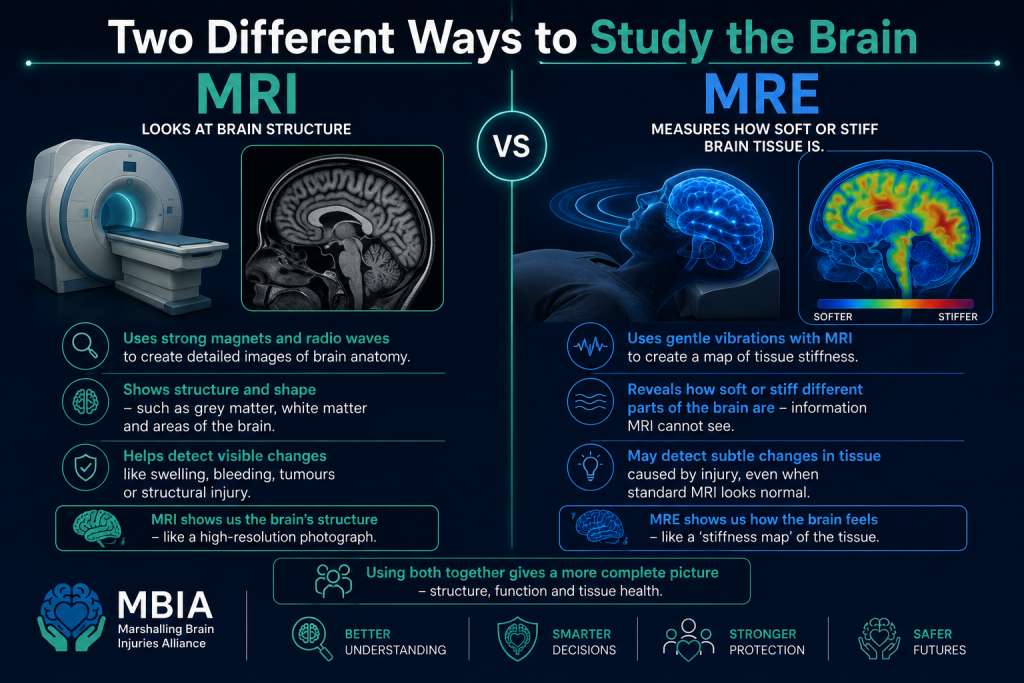
Most people have never heard of this technique.
Think of it like an ultrasound—but instead of measuring sound waves, it measures how soft or stiff different parts of the brain are.
Researchers believe this may provide clues about:
- Brain tissue health
- Small injuries
- Recovery
- Changes that ordinary MRI cannot detect
Very few sports concussion studies have used this technology.
4. Cognitive testing
Players also complete tests assessing:
- Memory
- Attention
- Processing speed
- Reaction time
- Thinking skills
Researchers can compare these results with impact data and brain scans.
The goal is to understand whether greater exposure to repetitive impacts is linked with measurable changes in brain function.
5. Computer modelling
Scientists create computer models showing how each player's brain moves inside the skull during impacts.
Rather than simply measuring how hard someone was hit, these models estimate:
- Which brain regions experience the greatest strain
- How forces travel through brain tissue
- Which impacts may be most likely to cause injury
This is becoming one of the most important tools in modern concussion research.
Why combine all these methods?
Most previous concussion studies only measured one or two things.
This project combines:
- Head impact measurements
- Brain imaging
- Brain tissue mechanics
- Cognitive testing
- Computer simulations
Using all these approaches together provides a much more complete picture of what happens inside the brain.
Researchers believe this is the first time all of these techniques have been used together in the same group of female rugby players.
Are women more vulnerable to concussion?
This is one of the biggest questions in sports medicine.
Some previous research suggests women may:
- Experience concussion more often in comparable sports
- Report symptoms for longer
- Recover more slowly in some cases
However, scientists still do not fully understand why.
Possible explanations include:
- Less neck muscle strength leading to greater head acceleration
- Hormonal differences
- Differences in brain structure
- Greater symptom reporting
- A combination of several factors
At the moment, there is no definitive answer, which is exactly why studies like this are needed.
Will this tell us about CTE?
Not directly.
CTE can currently only be diagnosed after death by examining brain tissue under a microscope.
This study is not looking for CTE.
Instead, researchers are investigating:
- Repetitive head impacts
- Brain biomechanics
- Short-term changes in brain health
- Possible biological markers that may improve our understanding of long-term risk
Over time, research like this could help scientists better understand how repeated impacts affect the brain throughout an athlete's career.
What could this research change?
If successful, the study could help develop:
- Female-specific concussion assessment tools
- Better return-to-play decisions
- Safer training guidelines
- More accurate injury thresholds
- Improved understanding of repetitive head impacts in women
Researchers hope this will eventually lead to evidence-based guidelines designed specifically for female athletes, rather than adapting protocols originally developed using male data.
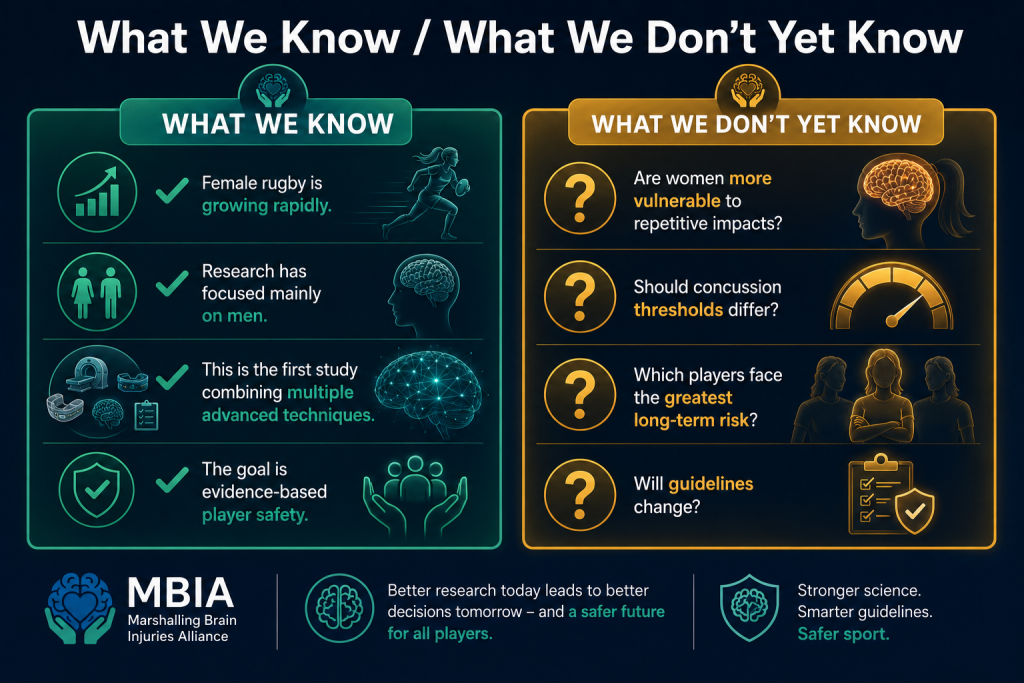
What we know
🟢 Women's rugby participation is growing rapidly.
🟢 Most concussion research has focused on male athletes.
🟢 This is the most comprehensive female rugby brain health study undertaken so far.
🟢 Researchers are combining impact sensors, MRI, MRE, cognitive testing and computer modelling.
🟢 The goal is to improve evidence-based player safety.
What we don't yet know
🟠 Whether women are biologically more vulnerable to repetitive head impacts.
🟠 Whether female concussion thresholds should differ from men's.
🟠 Whether repeated subconcussive impacts produce different brain changes in women.
🟠 Which players may be at greatest long-term risk.
🟠 Whether findings will lead to changes in rugby safety regulations.
These are exactly the questions this research hopes to answer.
MBIA View

At Marshalling Brain Injuries Alliance, we welcome research that helps us better understand brain injury across all sports and all populations.
For too long, women have been underrepresented in concussion research. That means important questions about female brain health have remained unanswered.
This study isn't about discouraging women and girls from playing rugby. It's about ensuring that every athlete has access to the best possible evidence so they can make informed decisions and so governing bodies can develop safer, evidence-based guidelines.
Every new discovery brings us one step closer to protecting future generations of players.

References
- Cardiff University. Tackling the Gender Gap in Sports Research. Cardiff University. Available at: https://www.cardiff.ac.uk/stories/tackling-the-gender-gap-in-sport-research
- BBC Sport. Women's rugby brain study aims to improve concussion understanding. BBC Sport. Available at: https://www.bbc.co.uk/sport/rugby-union/articles/cm2g06d03emo
- The Guardian. Pioneering study aims to find out how repeated blows to the head in women's rugby affect the brain. Available at: https://www.theguardian.com/education/2026/may/24/pioneering-study-aims-to-find-out-how-repeated-blows-to-head-in-womens-rugby-affects-brain
- World Rugby. Concussion Guidance and Head Injury Assessment (HIA). Available at: https://www.world.rugby/player-welfare/concussion
- World Rugby. Player Welfare. Available at: https://www.world.rugby/player-welfare