The Hidden Brain Injury Epidemic: Why Domestic Abuse Survivors Are Being Missed
How repeated head trauma, strangulation and concussion are leaving thousands of survivors with invisible brain injuries that are too often mistaken for mental illness.
For decades, conversations about repeated head injuries have focused almost exclusively on sport and the military.
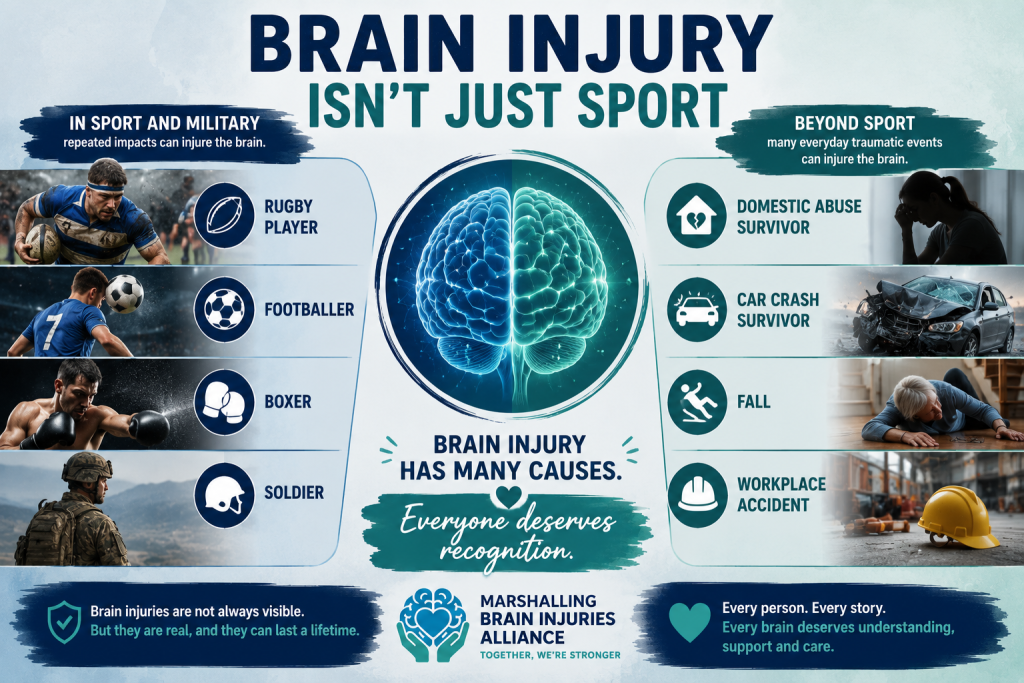
Football.
Rugby.
Boxing.
American football.
But there is another group living with repeated brain trauma that has remained largely invisible.
Domestic abuse survivors.
For many, the violence doesn't end when they escape. The injuries to the brain can remain for years—even decades.
As research into chronic traumatic encephalopathy (CTE), traumatic brain injury (TBI), and intimate partner violence grows, one uncomfortable truth is becoming impossible to ignore:
Many survivors may have been living with undiagnosed brain injuries all along.
An Invisible Epidemic
Worldwide, around one in three women experience physical or sexual intimate partner violence during their lifetime.
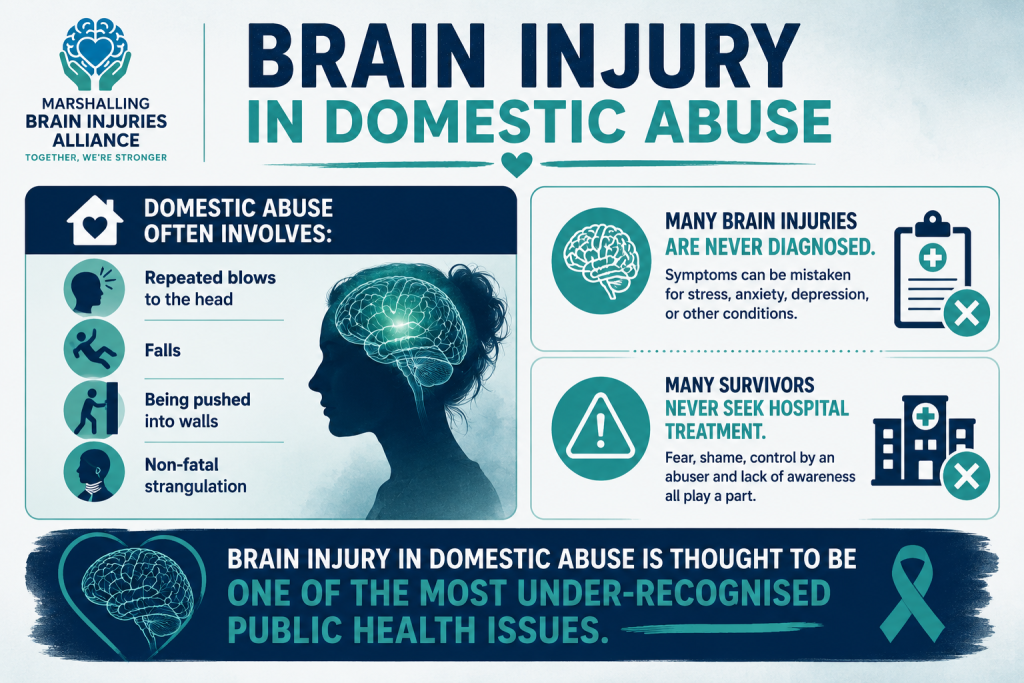
Many experience repeated:
- punches to the head
- kicks
- being thrown into walls or furniture
- falls
- blows with objects
- shaking
- non-fatal strangulation
Each event has the potential to injure the brain.
Unlike athletes, however, these injuries are rarely recognised as concussions.
Many survivors never attend hospital.
Many lose consciousness without seeking help.
Many experience dozens—or even hundreds—of head impacts over years of abuse.
Researchers now believe intimate partner violence may be one of the largest unrecognised causes of traumatic brain injury in women.
The Missing Question
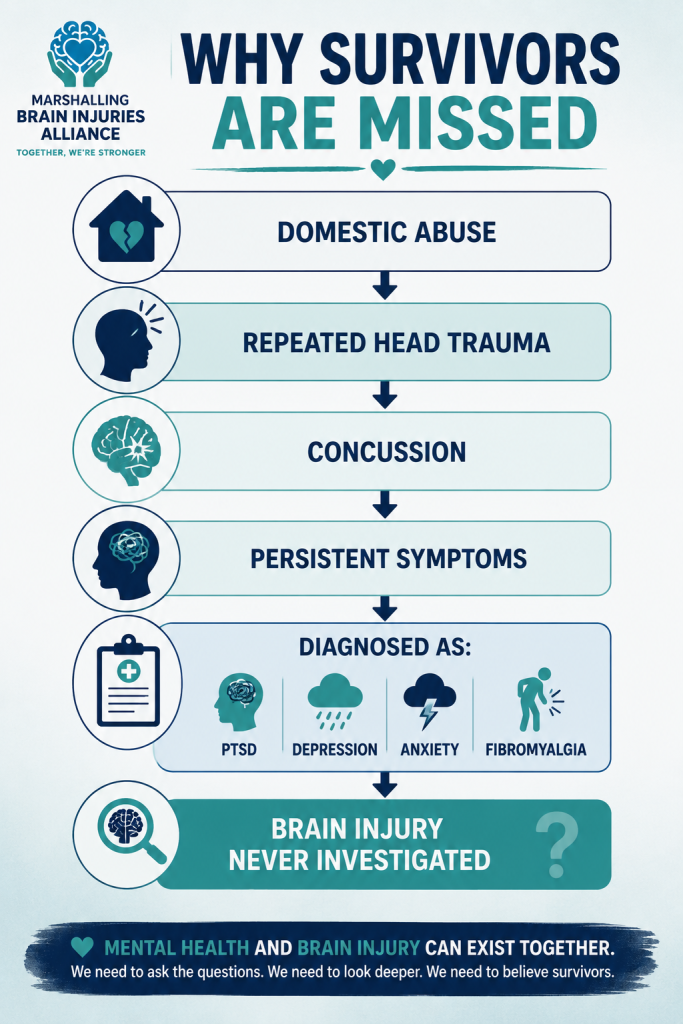
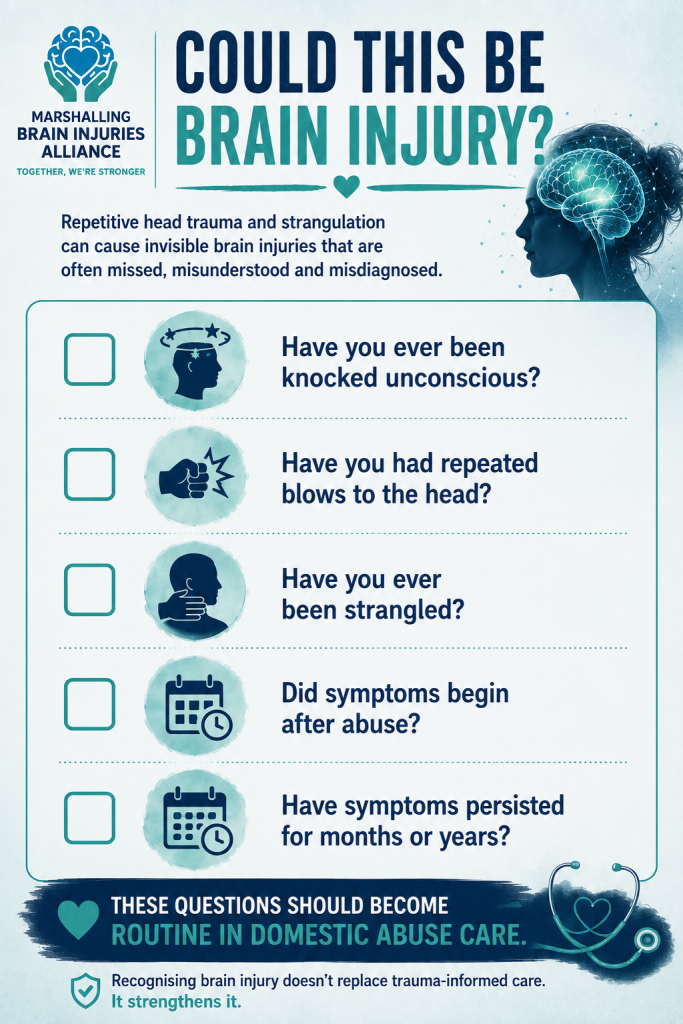
One of the biggest problems is that healthcare professionals often don't ask about brain injury.
They ask about depression.
They ask about anxiety.
They ask about PTSD.
But many never ask:
"Have you ever been repeatedly hit in the head?"
"Have you ever lost consciousness?"
"Have you ever been strangled?"
Without those questions, the brain injury remains invisible.
The Symptoms Look Almost Identical
This is where the problem becomes incredibly complex.
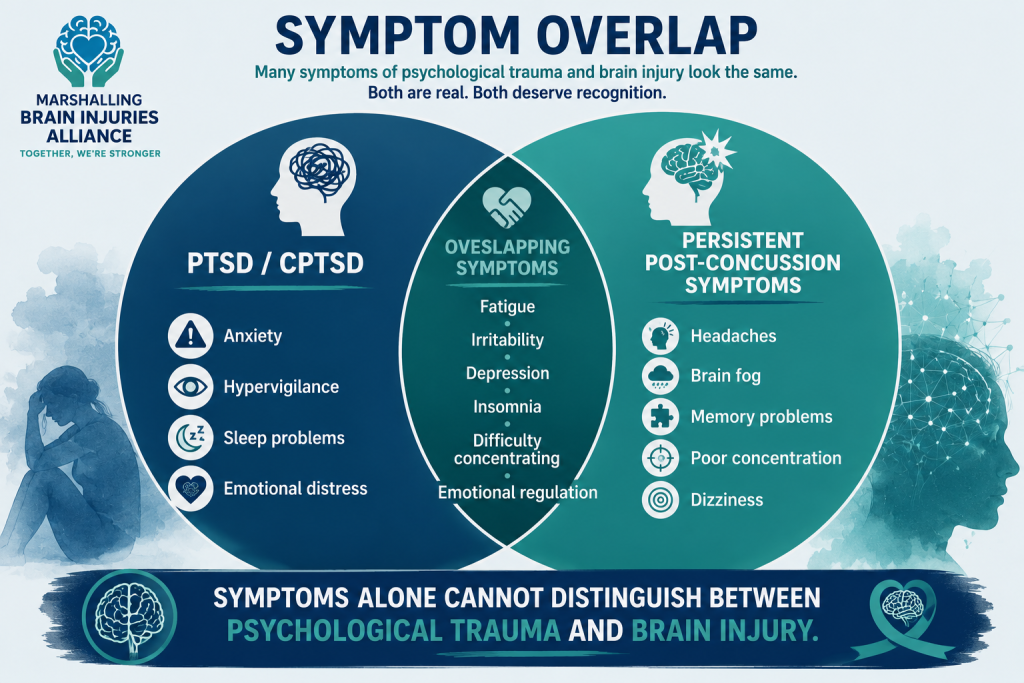
Persistent post-concussion symptoms (sometimes called post-concussion syndrome) can include:
- headaches
- migraines
- dizziness
- insomnia
- fatigue
- brain fog
- poor concentration
- memory problems
- slowed thinking
- emotional regulation difficulties
- irritability
- anxiety
- depression
- sensitivity to light and noise
Now compare that list with common symptoms of PTSD, complex PTSD and fibromyalgia.
The overlap is remarkable.
Researchers have warned for years that traumatic brain injury and PTSD frequently occur together following domestic abuse, making diagnosis particularly challenging if clinicians do not specifically consider brain injury.
That doesn't mean every survivor's symptoms are caused by brain injury.
Nor does it mean PTSD or CPTSD aren't real.
Many survivors experience both.
The problem is that brain injury is often never investigated at all.
Strangulation: More Than "Just" Assault
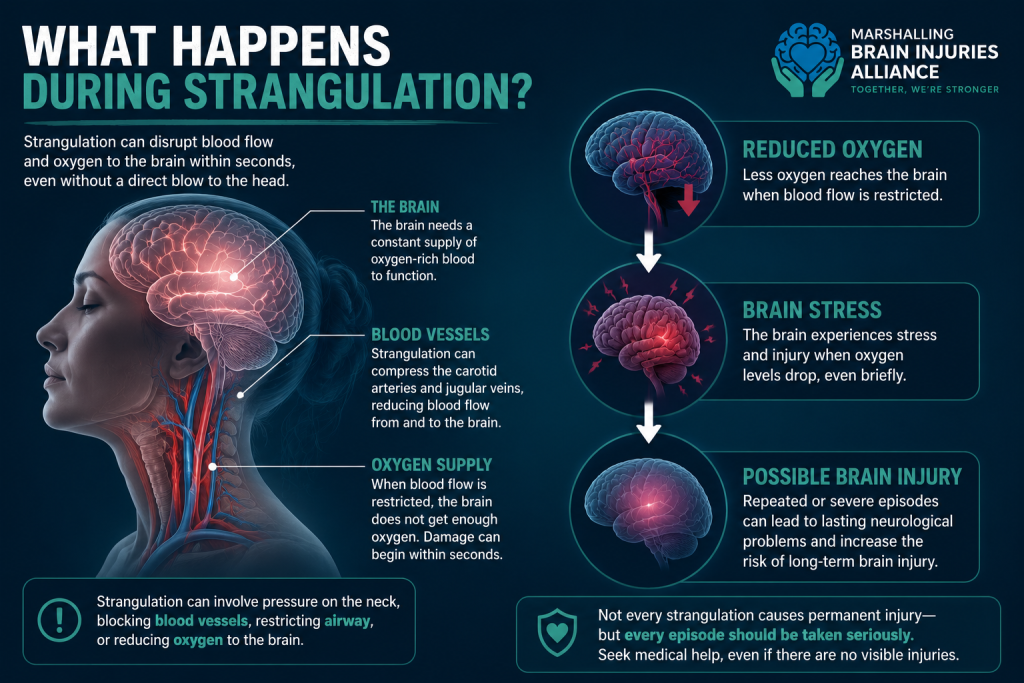
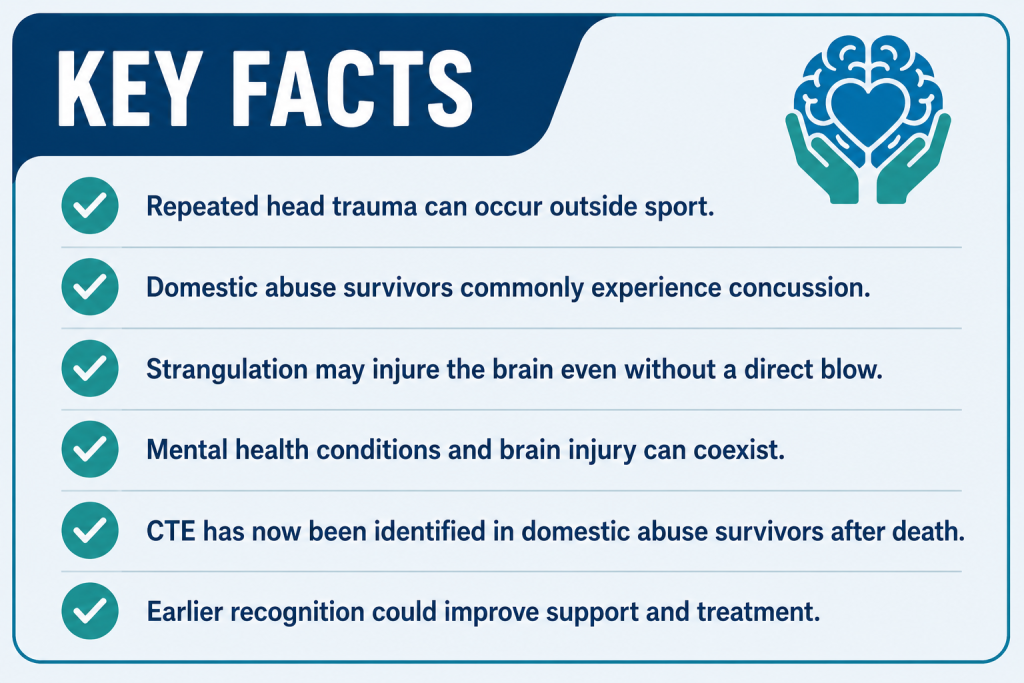
Many people don't realise that non-fatal strangulation can injure the brain even without a direct blow to the head.
When oxygen supply to the brain is interrupted, brain cells can be damaged.
Researchers are increasingly studying the combined effects of concussion and strangulation because survivors experiencing both appear to have worse neurological symptoms than concussion alone.
This is particularly important because strangulation is tragically common in domestic abuse.
Could Some Survivors Be Living With CTE?
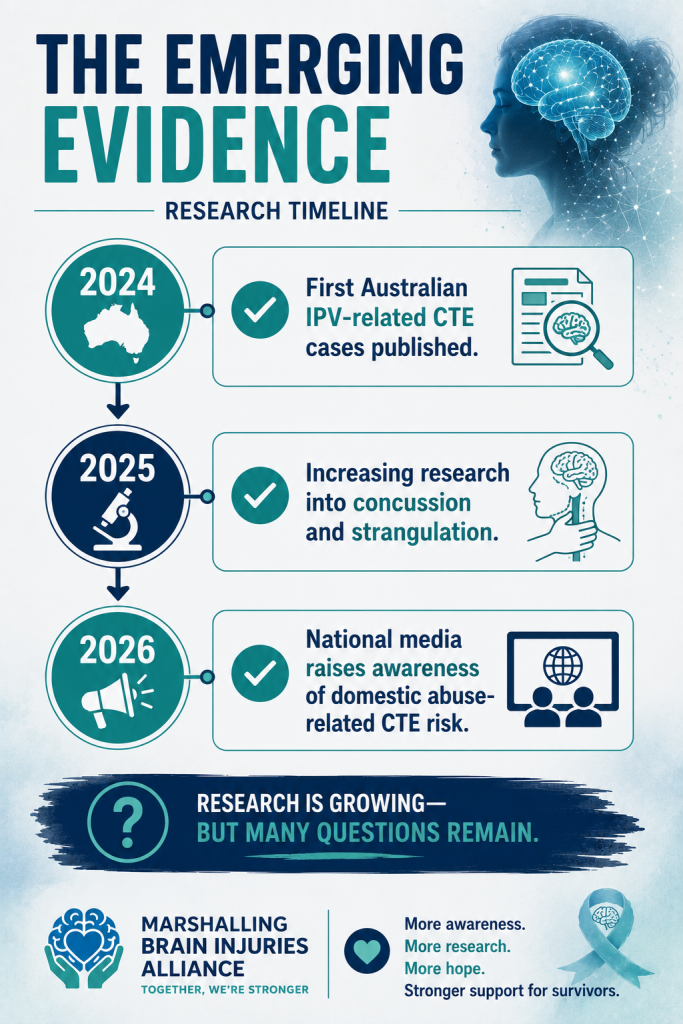
This question is now being taken seriously.
In 2024, Australian researchers reported the first confirmed cases of CTE in two women who had experienced years of severe intimate partner violence involving repeated head trauma. The report demonstrated that CTE is not limited to athletes—it can also occur following repetitive brain injury in domestic abuse survivors.
The recent ABC investigation has brought this issue to a much wider audience, highlighting growing concern that many victim-survivors may have experienced repeated brain trauma that has never been recognised.
This does not mean every survivor with repeated head injuries will develop CTE.
It does mean domestic abuse must now be recognised as another source of repetitive brain trauma that deserves the same scientific attention as contact sports.
Our Co-Founder Jennifer's Story
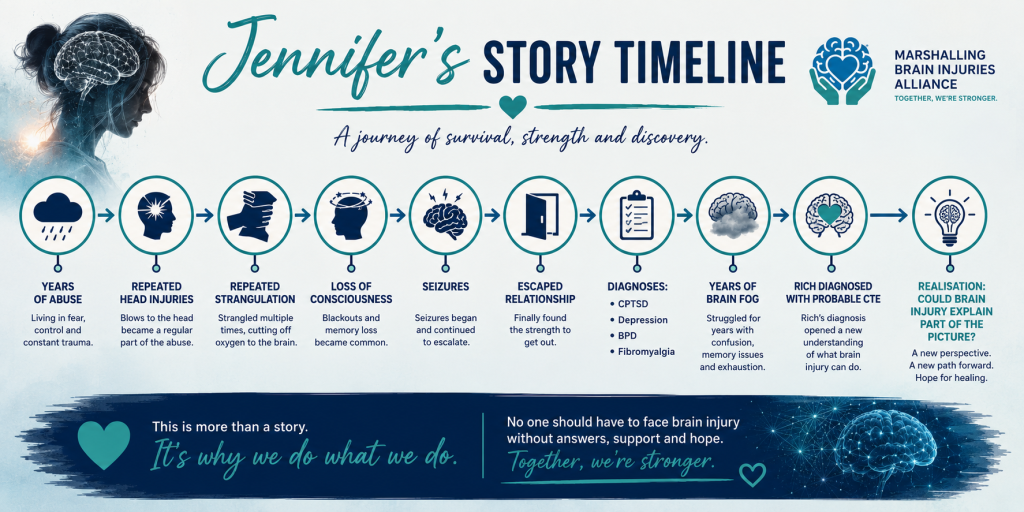
For our CEO and co-founder, Jennifer Coates, this research is deeply personal.
Before founding MBIA, Jennifer survived years of domestic abuse.
During that relationship she experienced countless blows to the head.
She was repeatedly strangled.
On one occasion she was knocked unconscious, suffered a seizure afterwards, and continued fitting over the following days.
After escaping, doctors understandably recognised the psychological trauma.
She was diagnosed with complex PTSD, borderline personality disorder and severe depression.
As the years passed, other symptoms appeared:
- constant brain fog
- insomnia
- headaches
- memory problems
- cognitive difficulties
- overwhelming fatigue
These symptoms were attributed to complex PTSD and fibromyalgia.
Despite healthcare professionals knowing about the years of domestic violence, no one suggested that repeated brain trauma might also be contributing.
No one investigated the possibility of traumatic brain injury.
No one explained that repeated concussions and strangulation can have lasting neurological consequences.
It wasn't until Rich Coates was diagnosed with probable CTE and early-onset dementia that Jennifer immersed herself in the scientific literature.
The more she read, the more she recognised her own story reflected in the research being published around the world.
And then she realised something even bigger.
If this had happened to her...
How many thousands of other survivors had been missed too?
We Need a Different Conversation
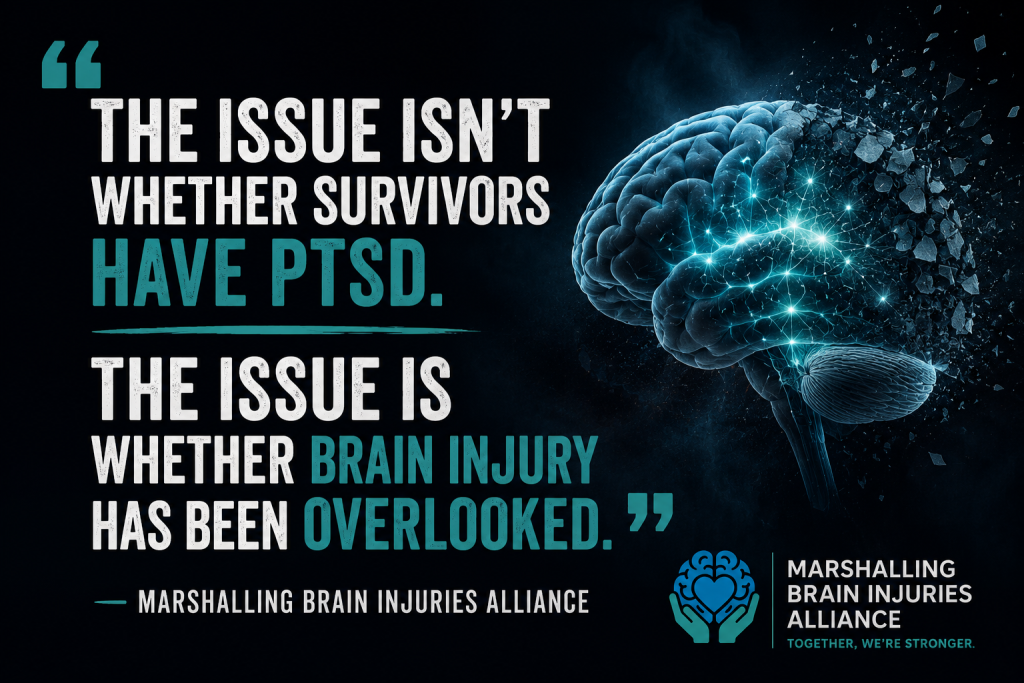
The issue isn't that doctors diagnose PTSD.
The issue is that brain injury should be considered alongside it.
Survivors deserve clinicians who ask about:
- repeated head injuries
- loss of consciousness
- strangulation
- persistent post-concussion symptoms
Because recognising brain injury doesn't invalidate psychological trauma.
It acknowledges that many survivors may be living with both.
Where Do We Go From Here?
Research is moving quickly.
Awareness is growing.
Healthcare professionals are beginning to understand that domestic abuse is not only a mental health issue—it can also be a neurological one.
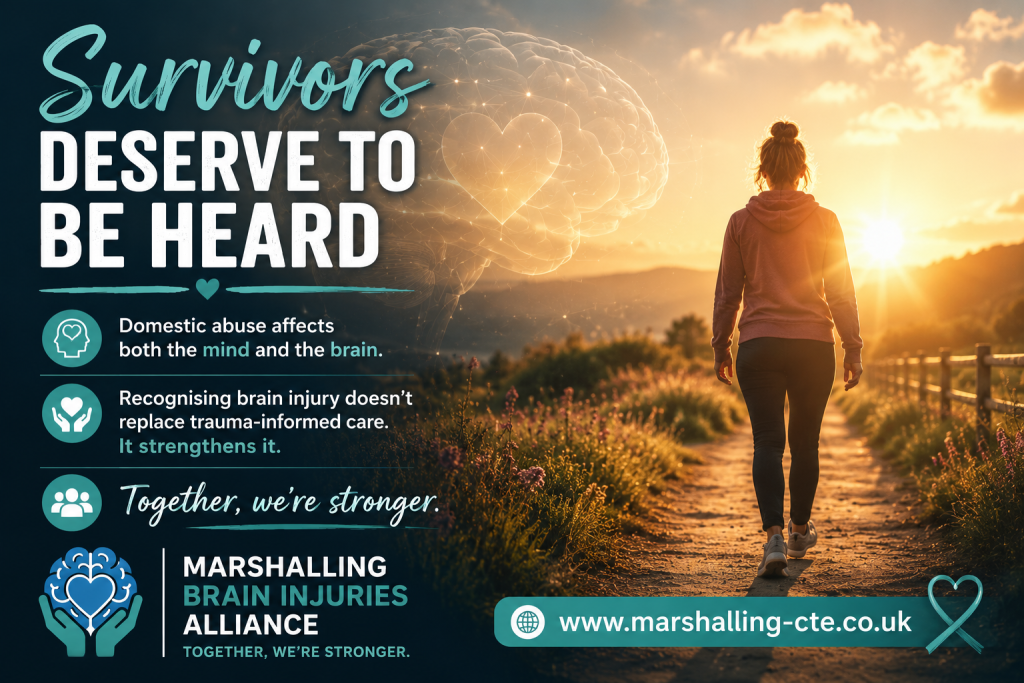
At MBIA, we believe survivors deserve to have the whole story considered.
Not just what happened to their mental health.
But what may have happened to their brain.
Because no survivor should spend years wondering why they still struggle, only to discover decades later that an invisible brain injury had been overlooked.
References
- ABC News (2026). Domestic and family violence survivors at risk of CTE.
- Haag HL et al. Traumatic Brain Injury Among Women Survivors of Intimate Partner Violence: A Scoping Review.
- Costello K et al. Update on Domestic Violence and Traumatic Brain Injury.
- Sun M et al. (2025). Pathophysiology, blood biomarkers and functional deficits following IPV-related concussion and strangulation.
This article could become one of MBIA's cornerstone resources because it connects CTE, traumatic brain injury, post-concussion symptoms, strangulation, domestic abuse, and misdiagnosis in a way that is evidence-based while being grounded in Jennifer's lived experience. It also naturally links MBIA's work beyond sport, reinforcing that repetitive brain injury can affect anyone exposed to repeated head trauma.
Enjoyed this article? Join thousands of readers receiving our monthly Brain Injury Brief