Tom Brady's Comments on CTE: Why High-Profile Interviews Like This Matter
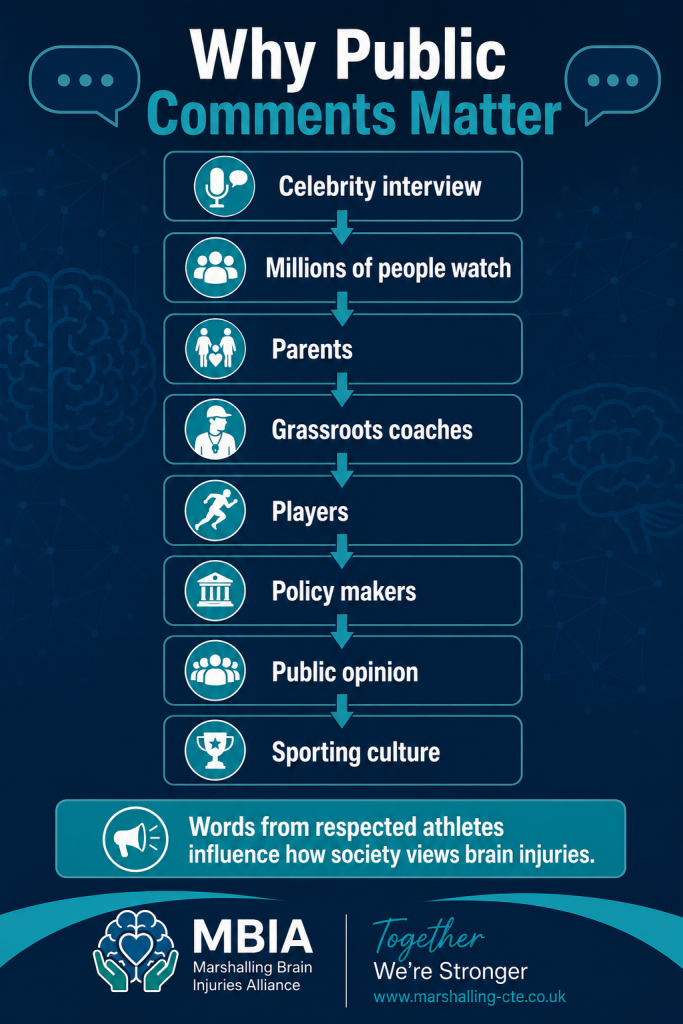
When one of the greatest athletes in sporting history speaks, millions listen.
That is exactly why recent comments made by Tom Brady regarding Chronic Traumatic Encephalopathy (CTE) and the risks associated with American football deserve careful scrutiny.
Tom Brady is entitled to his opinion and nobody should question his remarkable achievements in the NFL. However, when comments from globally recognised athletes appear to minimise or dismiss well-established scientific evidence surrounding repetitive brain trauma, they risk influencing public perception in ways that can ultimately harm athletes, families and the wider sporting community.
At Marshalling Brain Injuries Alliance, we believe discussions about brain injury should always be guided by evidence rather than reputation.
What Was Said?
In the interview, Brady suggests that concerns surrounding CTE have become exaggerated and argues that football has become "soft", implying that today's approach to player safety has gone too far. He also suggests that athletes have become less physically prepared because of reduced contact during training, and that this may contribute to injuries.
While these opinions generate headlines, they are not supported by the current body of scientific evidence.
Where the Interview Goes Wrong
1. CTE is Not a Myth or Media Creation
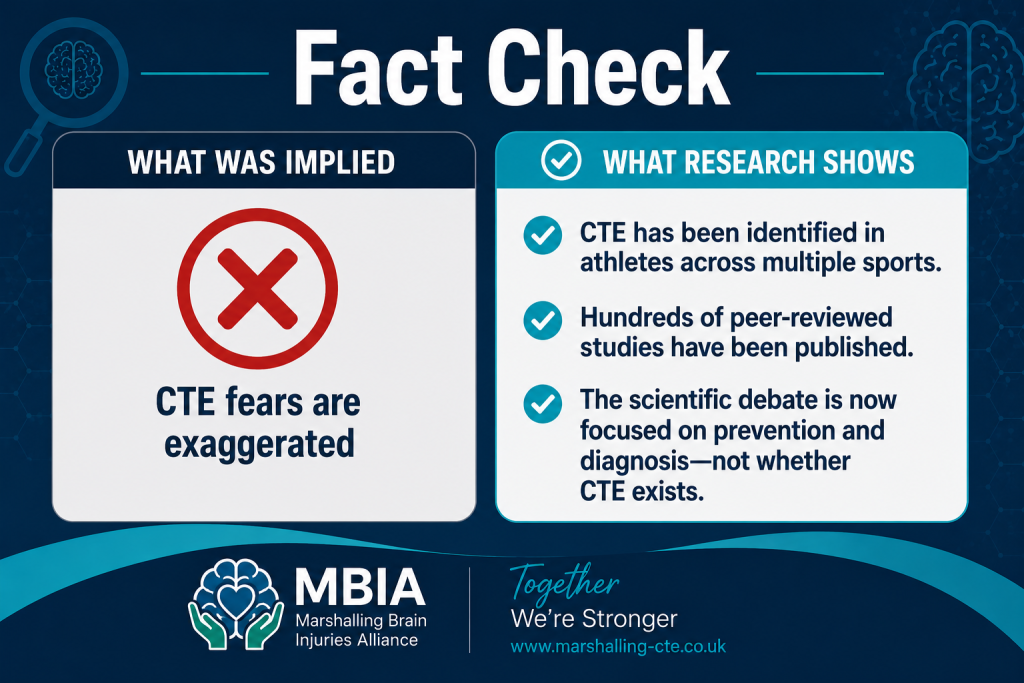
Perhaps the most damaging implication is the suggestion that fears surrounding CTE are somehow overblown.
They are not.
Over the past two decades, hundreds of scientific publications have demonstrated an association between repetitive head impacts and the development of CTE.
Importantly, research now shows that:
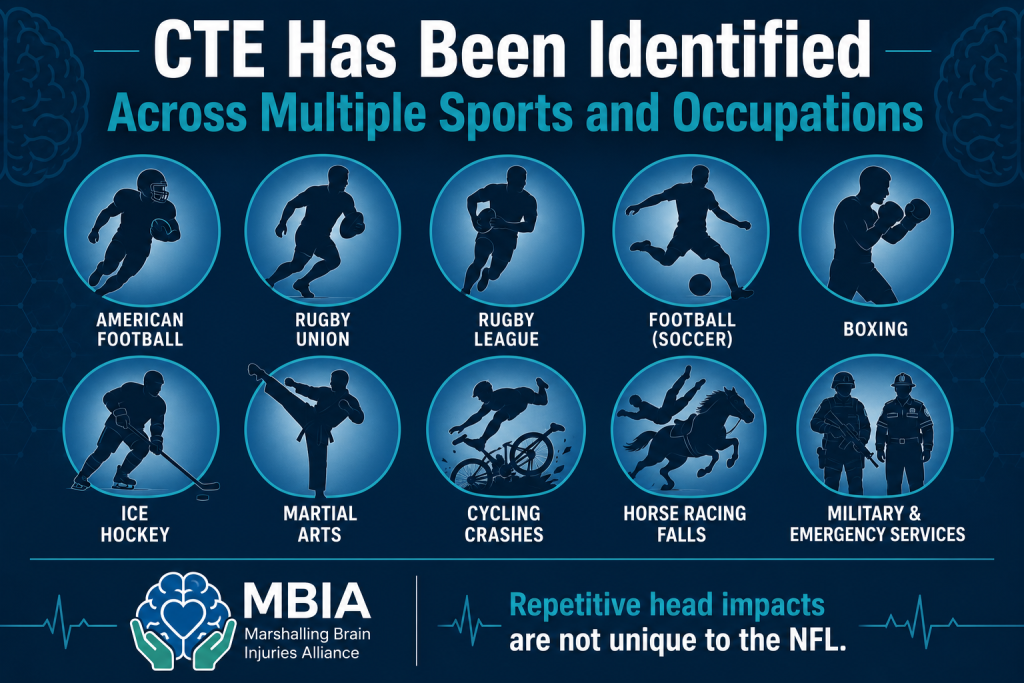
- CTE has been identified in athletes from numerous sports including American football, rugby union, rugby league, football (soccer), boxing, ice hockey, Australian Rules football, military veterans and others.
- The disease has been confirmed by neuropathologists across multiple countries.
- CTE is recognised by leading research centres around the world.
This is no longer a controversial theory.
The scientific debate today is focused on who develops CTE, why some people are more susceptible than others, how to diagnose it during life and how to prevent it—not whether the disease exists.
2. Concussion Is Not the Whole Story
One of the biggest misconceptions repeated in sport is that concussion is the only injury that matters.
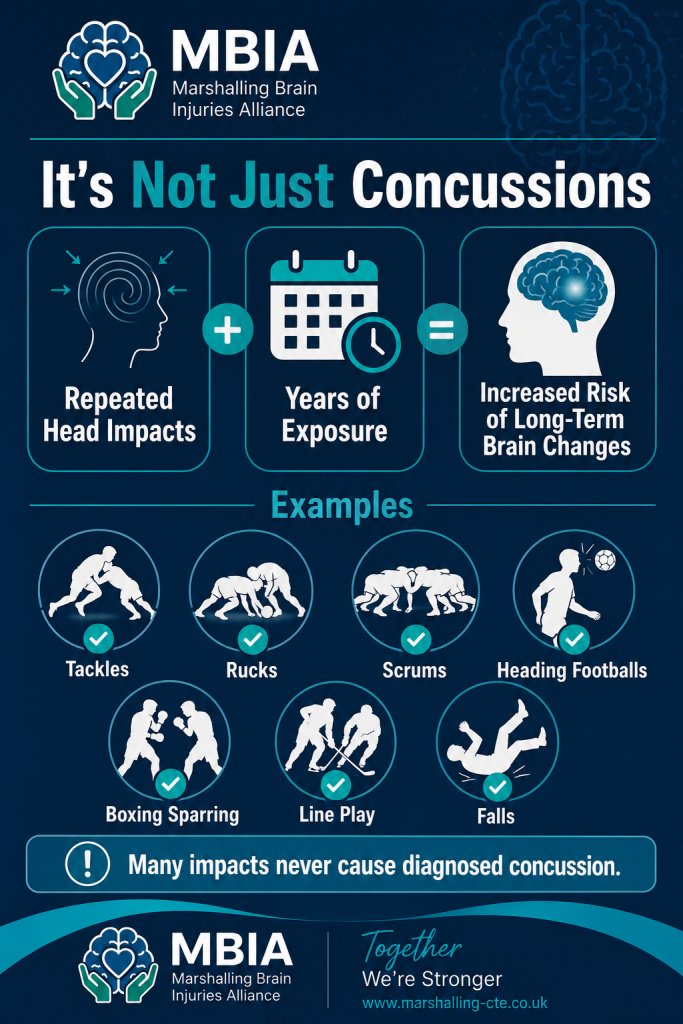
Current research increasingly suggests that the cumulative effect of thousands of repetitive head impacts—many of which never cause recognised concussion—may be just as important.
These impacts occur every week across numerous sports:
- Tackles
- Rucks
- Scrums
- Heading footballs
- Boxing sparring
- Wrestling
- American football line play
- Ice hockey collisions
Many athletes finish careers having suffered very few diagnosed concussions but many thousands of repetitive impacts.
That distinction is critical.
3. "Being Tough" Does Not Protect the Brain
Professional athletes often possess extraordinary resilience.
They play through pain.
They recover from injuries quickly.
They continue performing despite physical punishment.
Unfortunately, the brain does not care how mentally tough someone is.
Brain tissue responds to physics, not determination.
An athlete can feel perfectly fine while microscopic changes are occurring inside the brain.
That is one reason why CTE cannot currently be diagnosed during life with certainty.
4. Modern Safety Measures Exist for Good Reason
Brady also argues that reducing contact in practice has contributed to poorer technique and more injuries.
This argument has circulated for years.
However, research examining changes following reductions in NFL contact practices has not demonstrated a clear increase in overall injuries attributable to those rule changes.
Reducing unnecessary head impacts is based on a simple principle:
If repetitive brain trauma contributes to long-term neurological disease, reducing unnecessary exposure is a sensible preventative strategy.
No safety measure eliminates risk.
But reducing exposure remains one of the few preventative tools currently available.
Why This Matters Beyond the NFL
This interview is not just about Tom Brady.
It affects every level of sport.
Grassroots coaches.
Parents.
Teachers.
Junior athletes.
Former players.
Medical professionals.
When one of the most respected players in history appears to dismiss concerns surrounding brain injury, some people may conclude that:
- CTE is exaggerated.
- Repetitive head impacts are harmless.
- Concussion protocols are unnecessary.
- Returning to play quickly is acceptable.
- Safety initiatives are overreactions.
These are dangerous messages.
The Invisible People Left Out of These Conversations
Media interviews often focus on elite athletes.
What they rarely show are the thousands of ordinary families living with the consequences.
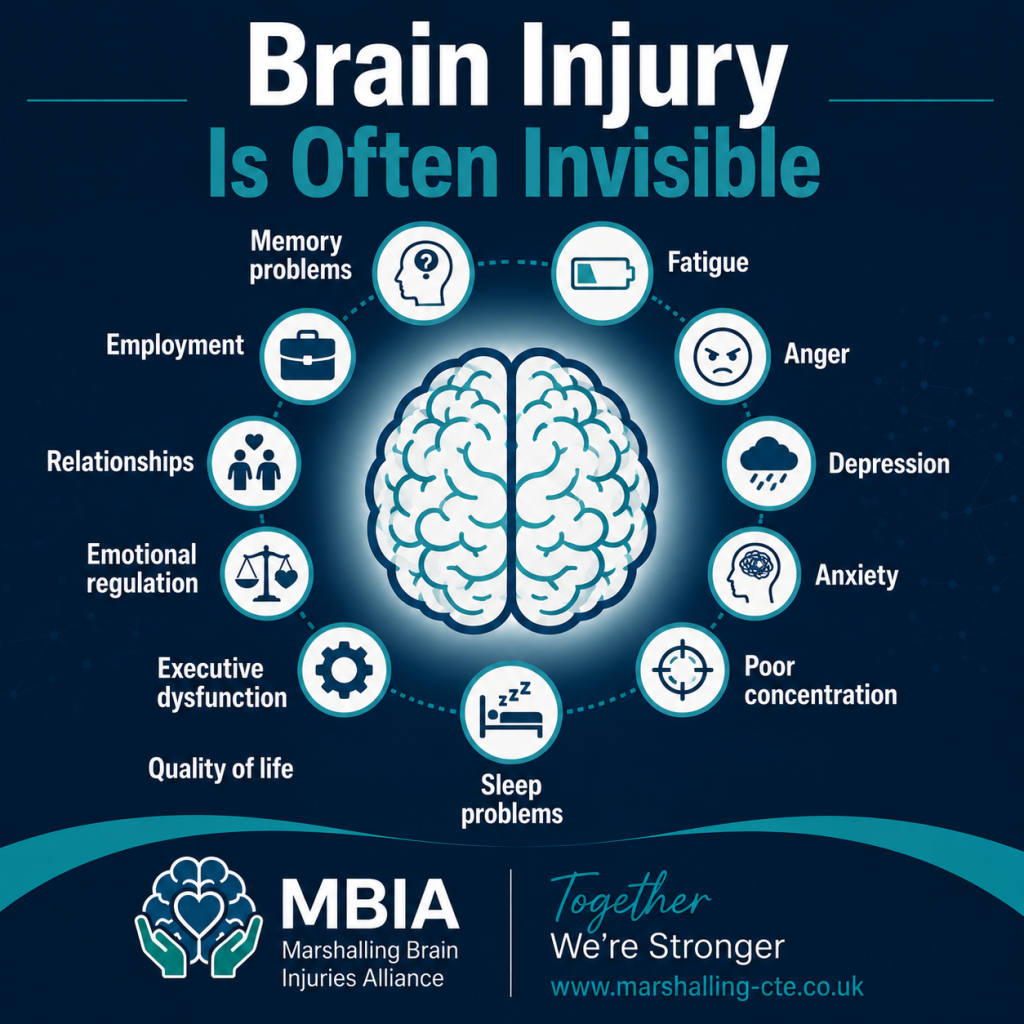
People experiencing:
- Memory loss
- Emotional dysregulation
- Depression
- Anxiety
- Executive dysfunction
- Impulse control problems
- Cognitive decline
- Relationship breakdown
- Loss of employment
- Loss of identity
These stories receive far less publicity than those of sporting legends.
Yet they represent the everyday reality for many people living with the long-term effects of repetitive brain trauma.
This Isn't About Attacking Tom Brady
It is important to be clear.
This is not a criticism of Tom Brady as an individual.
Nor is it suggesting he has experienced neurological disease.
His personal experience is his own.
Many retired athletes remain healthy.
Others do not.
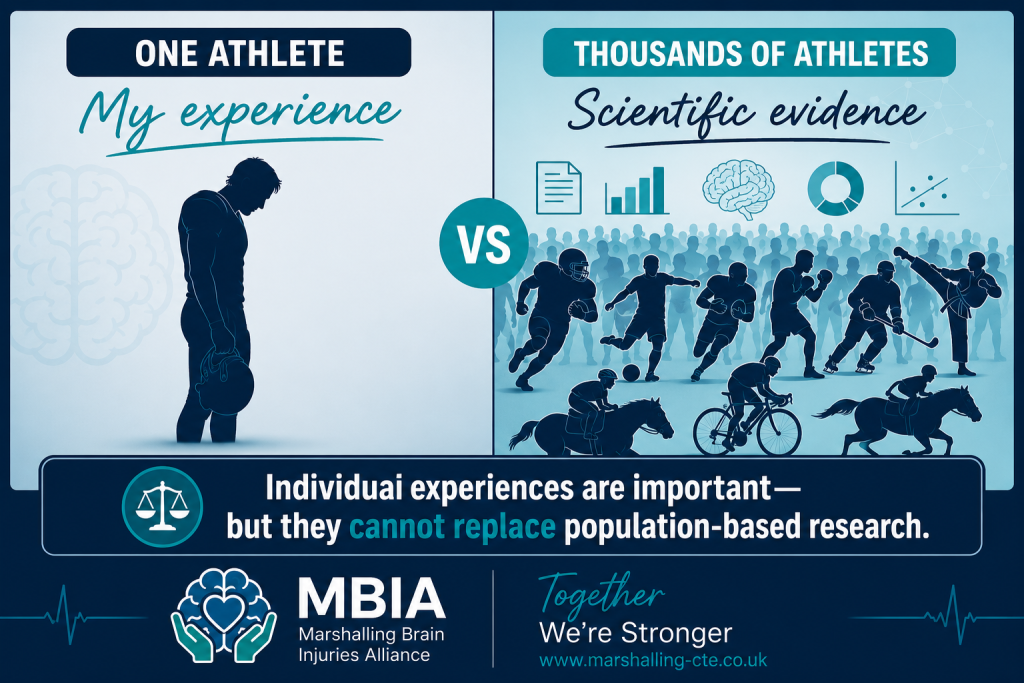
One person's experience should never be used to dismiss the experiences of thousands of others.
Anecdotes are not evidence.
Scientific understanding comes from studying large populations over many years.
Sport Can Be Both Wonderful and Honest
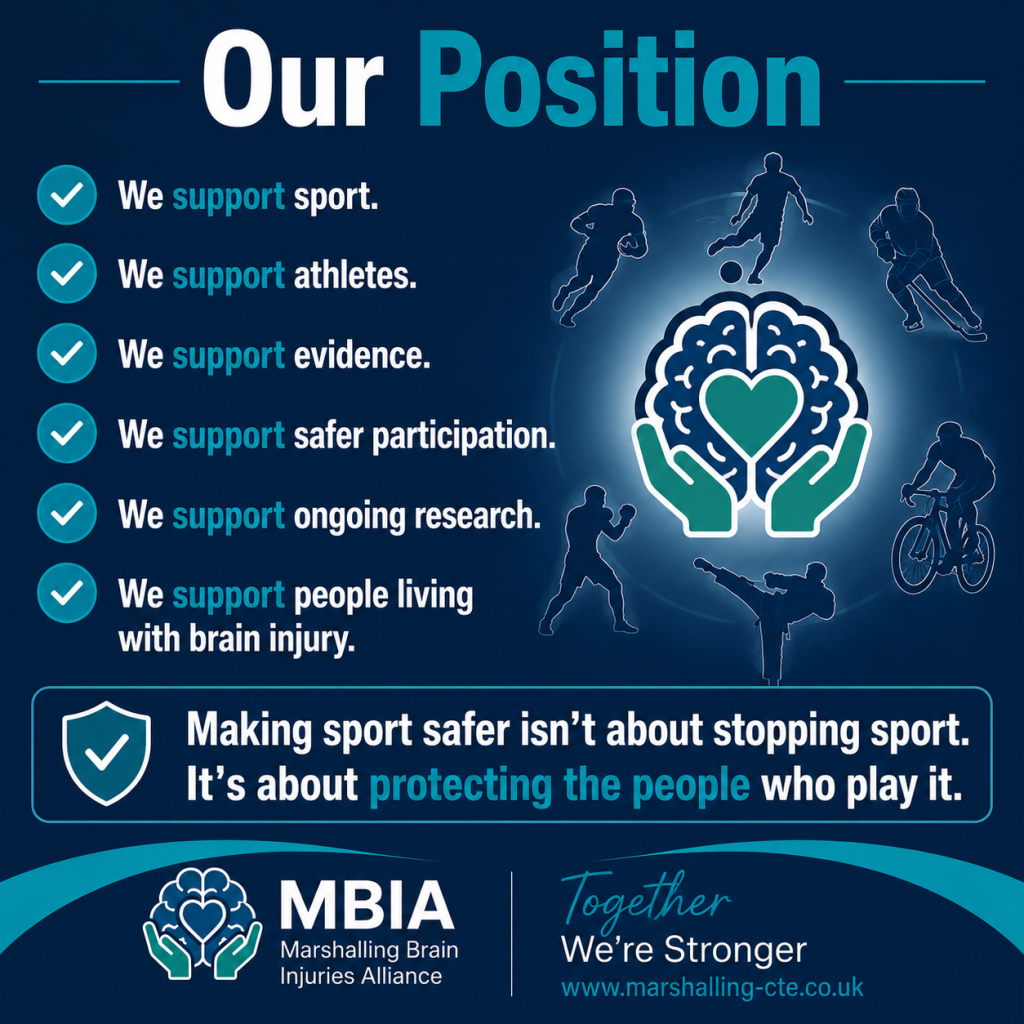
At MBIA, we strongly believe sport changes lives for the better.
It builds:
- Confidence
- Friendships
- Discipline
- Physical health
- Community
- Opportunity
Acknowledging brain injury risks does not mean discouraging participation.
Instead, it means making sport safer.
Better coaching.
Better education.
Better concussion management.
Improved equipment.
Appropriate rule changes.
Earlier recognition of symptoms.
Investment in research.
Supporting former athletes.
These goals are entirely compatible with preserving everything people love about sport.
Our Position
The evidence surrounding repetitive brain trauma continues to evolve, but one fact is increasingly clear:
Brain health deserves the same respect as every other aspect of athlete welfare.
High-profile interviews can shape public opinion in powerful ways.
That is why public discussions about CTE must reflect the best available scientific evidence rather than personal opinion alone.
Athletes deserve honesty.
Parents deserve accurate information.
Grassroots coaches deserve evidence-based guidance.
And the thousands of people already living with brain injuries deserve to know that their experiences are not being dismissed.
Ignoring difficult conversations has never made sport safer.
Learning from them will.
Enjoyed this article? Join thousands of readers receiving our monthly Brain Injury Brief