What Families Wish They Had Known Earlier: Lessons from Living with Brain Injury
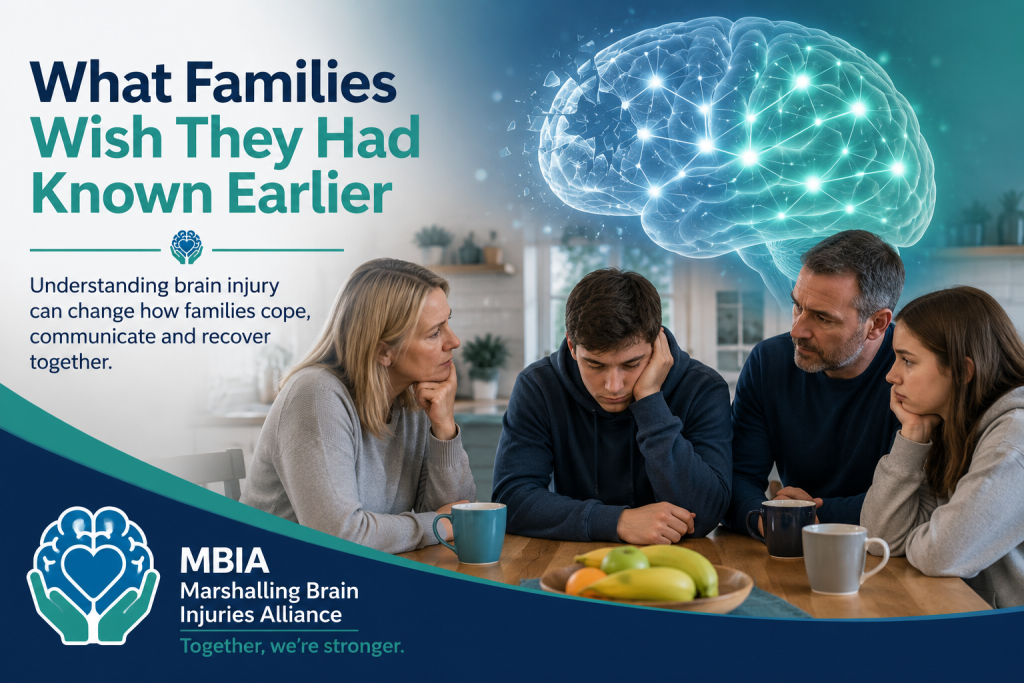
The hidden realities of brain injury that many families only discover months—or even years—after diagnosis.
When someone experiences a brain injury, life changes—not only for the injured person, but for everyone around them.
Many families spend months asking questions like:
- Why are they so different?
- Why are they angry?
- Why do they sleep so much?
- Why can't they remember simple things?
- Why do they seem like they've stopped caring?
These questions are incredibly common.
One of the hardest parts of brain injury is that many symptoms are invisible. Someone may look exactly the same on the outside while their brain is working much harder simply to get through the day.
At Marshalling Brain Injuries Alliance, we've spoken with many individuals and families affected by brain injury. Although every experience is unique, certain themes appear again and again.
These are some of the things families often tell us they wish they had understood much earlier.
1. They're Not Being Lazy
This is probably the biggest misunderstanding.
After brain injury, everyday activities can require enormous mental effort.
Getting dressed.
Following a conversation.
Going shopping.
Making dinner.
Driving.
Even sitting in a noisy café.
What once required little thought may now demand huge amounts of energy.
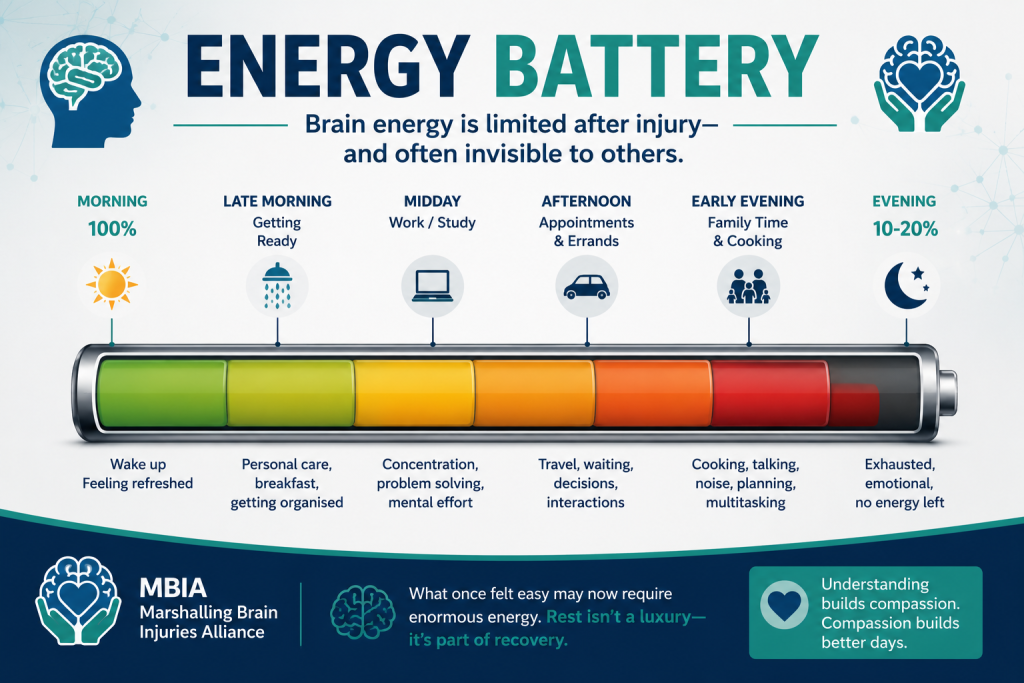
Many people describe living with an "energy budget." Every activity uses some of that budget, and once it's gone, the brain simply cannot keep performing at the same level.
Rest isn't a luxury—it is part of recovery and symptom management.
2. Fatigue Is Not Normal Tiredness
Brain injury fatigue is different from feeling sleepy after a poor night's sleep.
People often describe it as:
- their brain "switching off"
- suddenly being unable to think
- words disappearing
- feeling physically heavy
- overwhelming exhaustion without warning
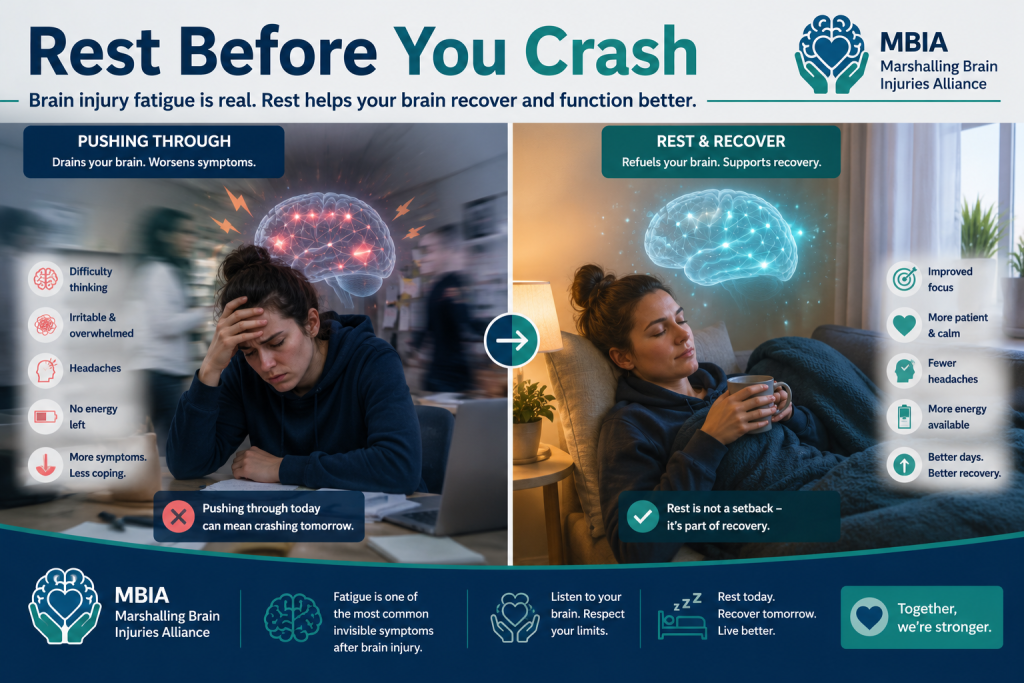
No amount of determination can simply push through it.
Ignoring fatigue often makes symptoms worse.
Learning to pace activities is one of the most effective ways of managing it.
3. Personality Changes Don't Mean They No Longer Love You
This is one of the most painful experiences for families.
Brain injury can affect:
- emotional regulation
- impulse control
- empathy
- patience
- social awareness
- frustration tolerance
Someone may become:
- quieter
- more emotional
- more withdrawn
- unusually blunt
- easily irritated
- emotionally flat
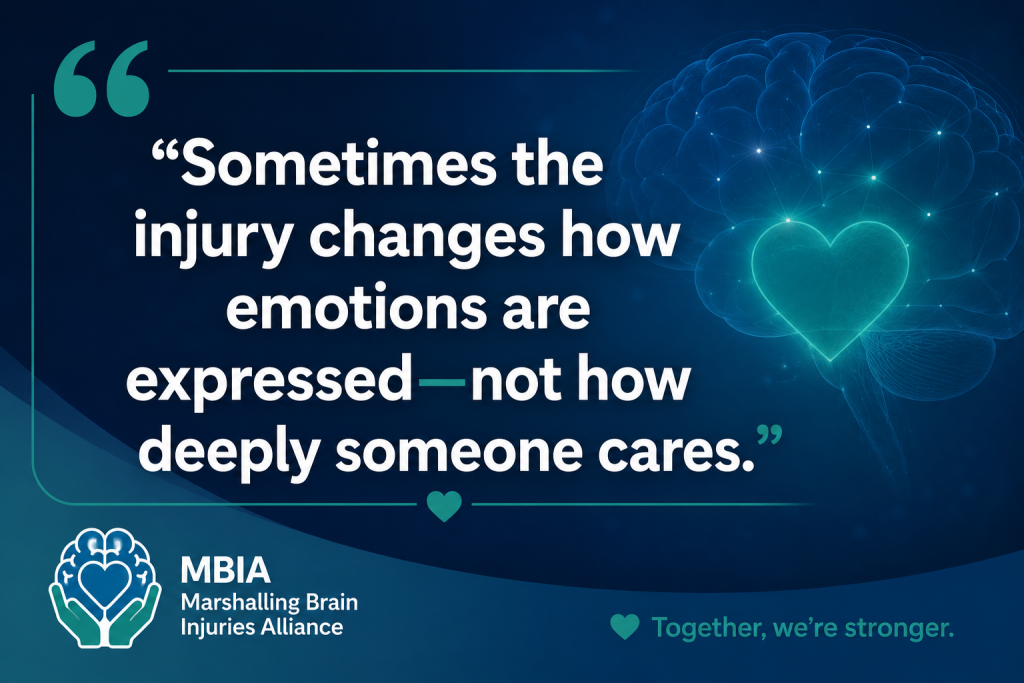
These changes are often neurological—not deliberate.
That doesn't excuse hurtful behaviour, but it does explain why it can happen.
Families often find it easier to respond with understanding once they realise these changes are symptoms rather than choices.
4. Memory Problems Are More Than Forgetfulness
Many people assume memory means forgetting names.
Brain injury affects far more than that.
Someone may struggle to:
- remember conversations
- remember appointments
- remember instructions
- keep track of several tasks
- learn new information
They may ask the same question repeatedly—not because they weren't listening, but because their brain never successfully stored the information.
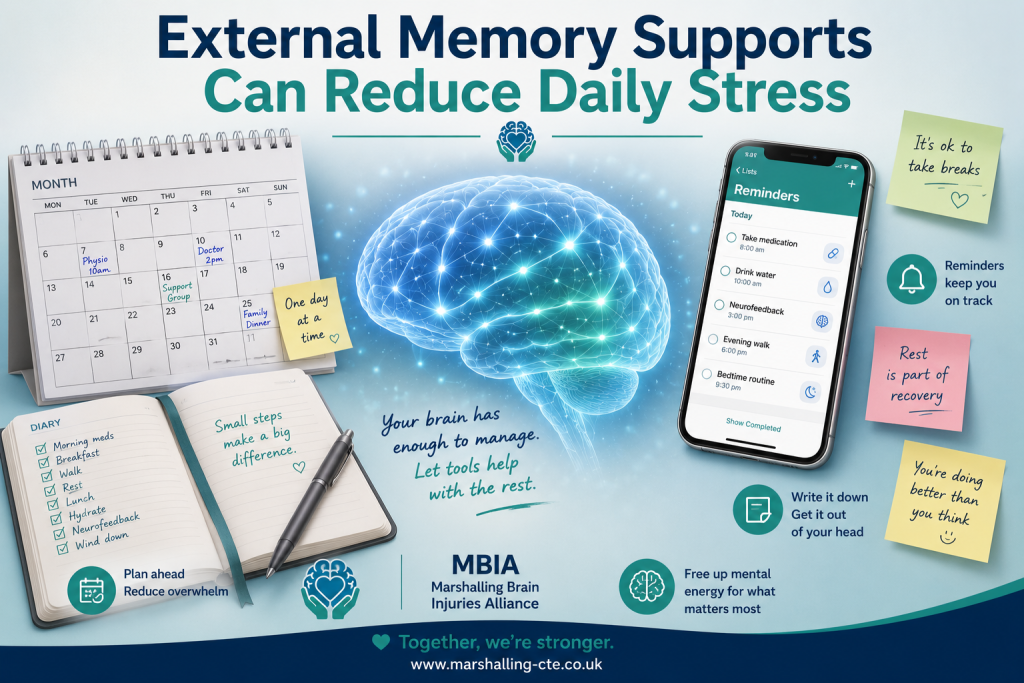
Memory aids are tools—not signs of failure.
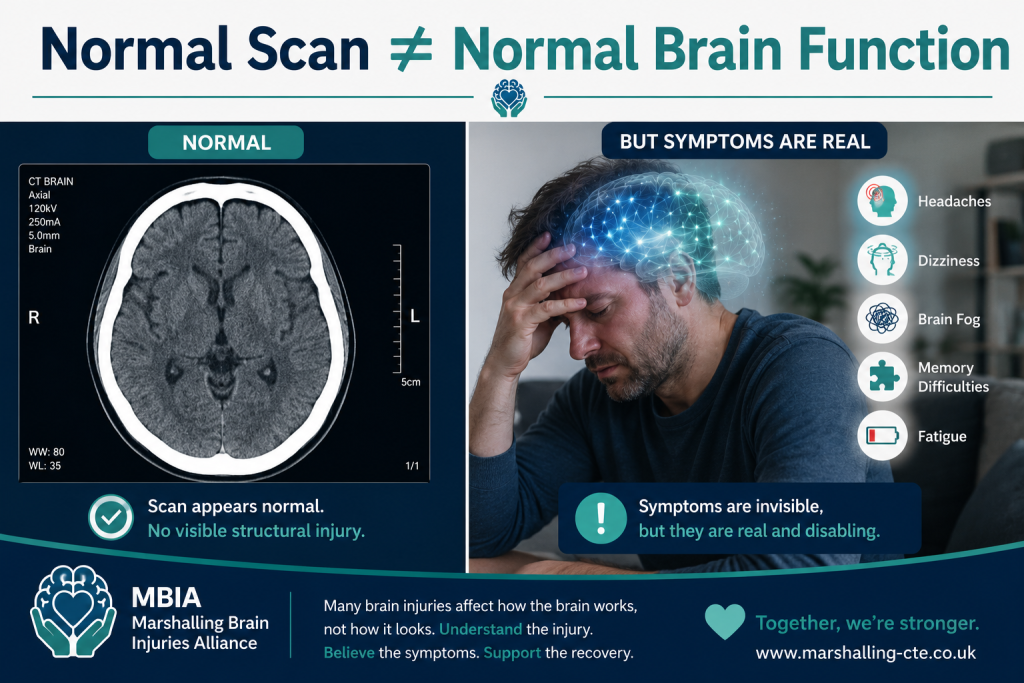
5. Normal Brain Scans Don't Mean Nothing Is Wrong
This surprises many families.
CT scans and standard MRI scans are designed mainly to detect structural damage such as:
- bleeding
- swelling
- fractures
- large strokes
Many brain injuries involve microscopic changes that cannot be seen on routine imaging.
Someone can therefore have:
✓ a normal scan
while still experiencing:
- headaches
- dizziness
- cognitive problems
- fatigue
- balance issues
- sensory overload
Symptoms are real even when scans appear normal.
6. Recovery Is Rarely a Straight Line
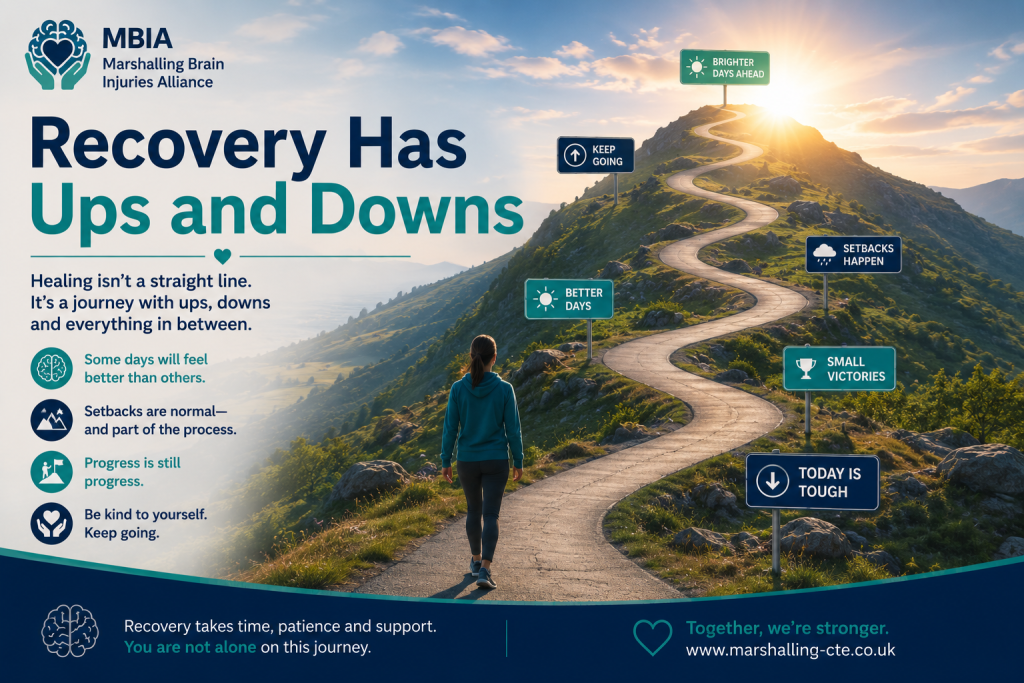
Families often expect steady improvement.
Instead, recovery usually looks more like waves.
Some days can feel almost normal.
The next day symptoms may suddenly worsen.
This doesn't necessarily mean something is wrong.
Symptoms commonly fluctuate because of:
- stress
- poor sleep
- illness
- overexertion
- emotional demands
- sensory overload
Recovery is often measured over months rather than days.
7. The Whole Family Is Affected
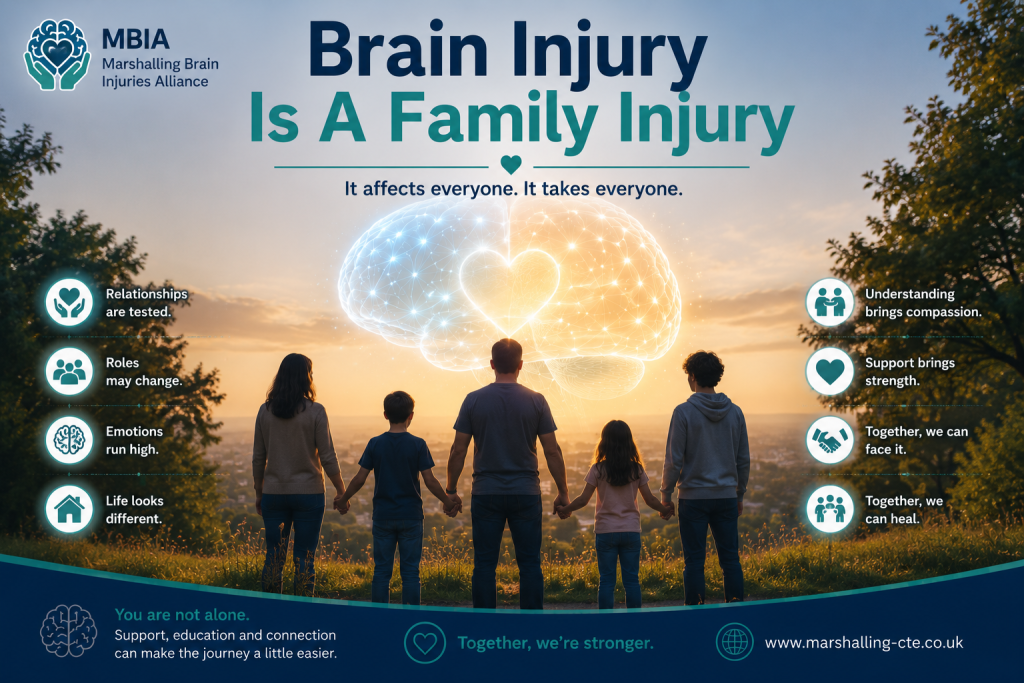
Brain injury rarely affects just one person.
Partners often become carers.
Children adapt to changing family dynamics.
Parents worry constantly.
Friends sometimes disappear because they don't understand invisible disability.
Families often grieve the life they expected while learning to build a new one together.
Support for families matters just as much as support for the injured person.
8. Hope Is Still Real
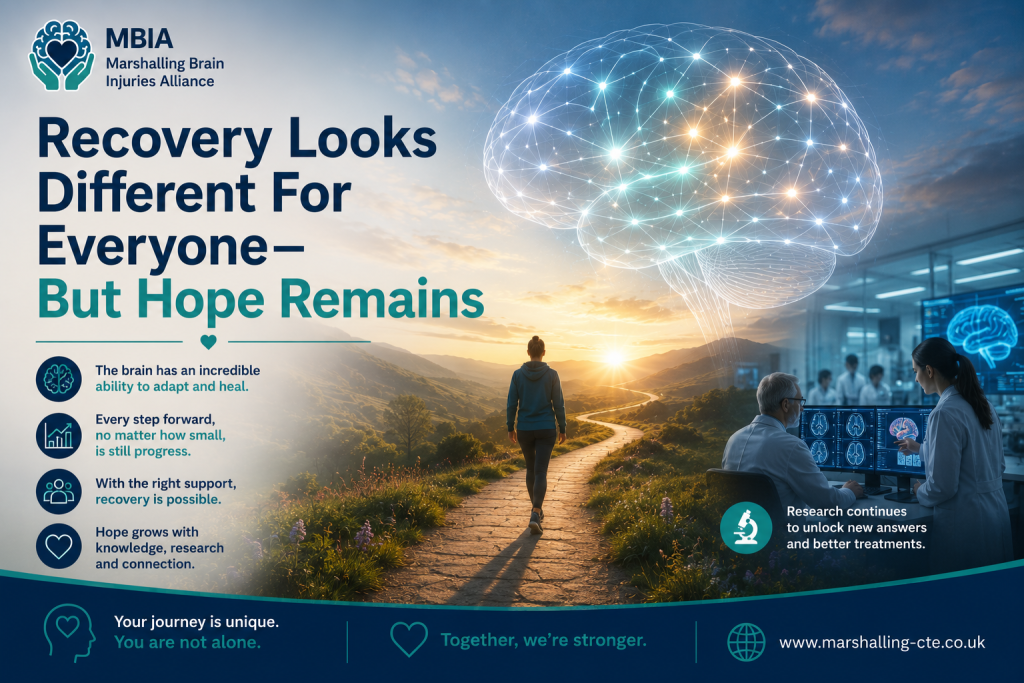
One of the biggest misconceptions is that recovery stops after a few months.
The brain remains capable of change throughout life.
This ability—known as neuroplasticity—means the brain can continue adapting and forming new connections.
Recovery doesn't always mean returning to life exactly as it was before.
Sometimes it means finding new ways to live well despite ongoing challenges.
Research continues to improve:
- rehabilitation
- symptom management
- brain imaging
- understanding of fatigue
- mental health support
- neurotechnology
- biomarkers
- potential future treatments
Every year we understand a little more.
That gives genuine reason for hope.
Practical Tips for Families
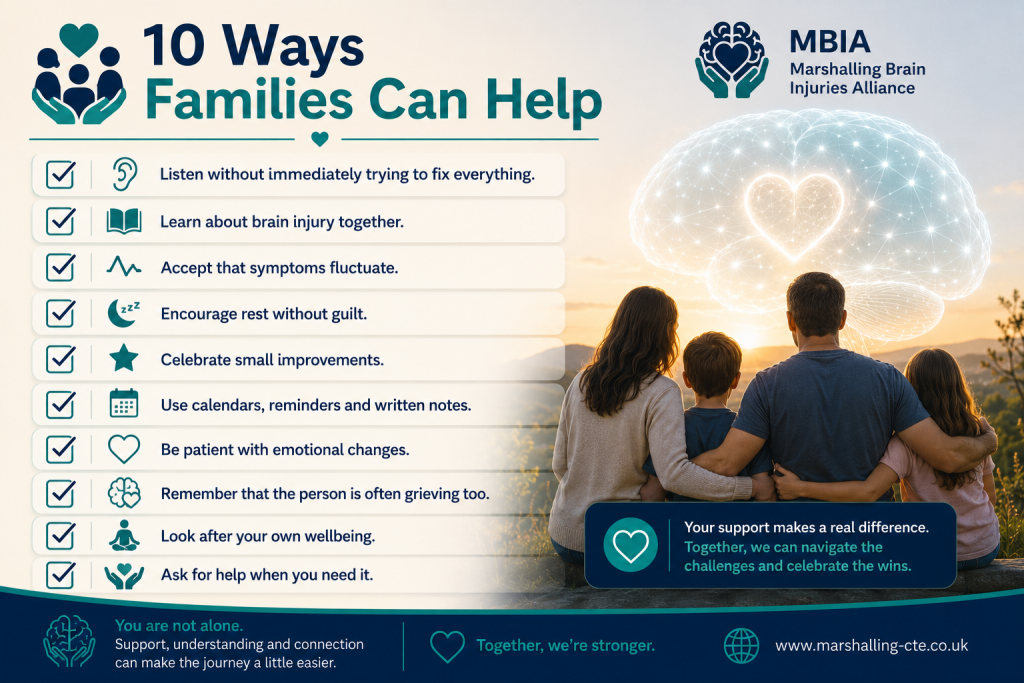
Key Takeaways
Families Often Wish They Had Known...
🧠 Fatigue is real.
🧠 Recovery isn't linear.
🧠 Normal scans don't rule out brain injury.
🧠 Personality changes may be neurological.
🧠 Memory problems are complex.
🧠 Invisible symptoms are still disabling.
🧠 Families need support too.
🧠 Hope is supported by ongoing research.
Final Thoughts
Brain injury changes lives in ways that are often difficult to explain.
Many families spend months blaming themselves, arguing over misunderstandings or wondering whether they are doing enough.
Knowledge changes that.
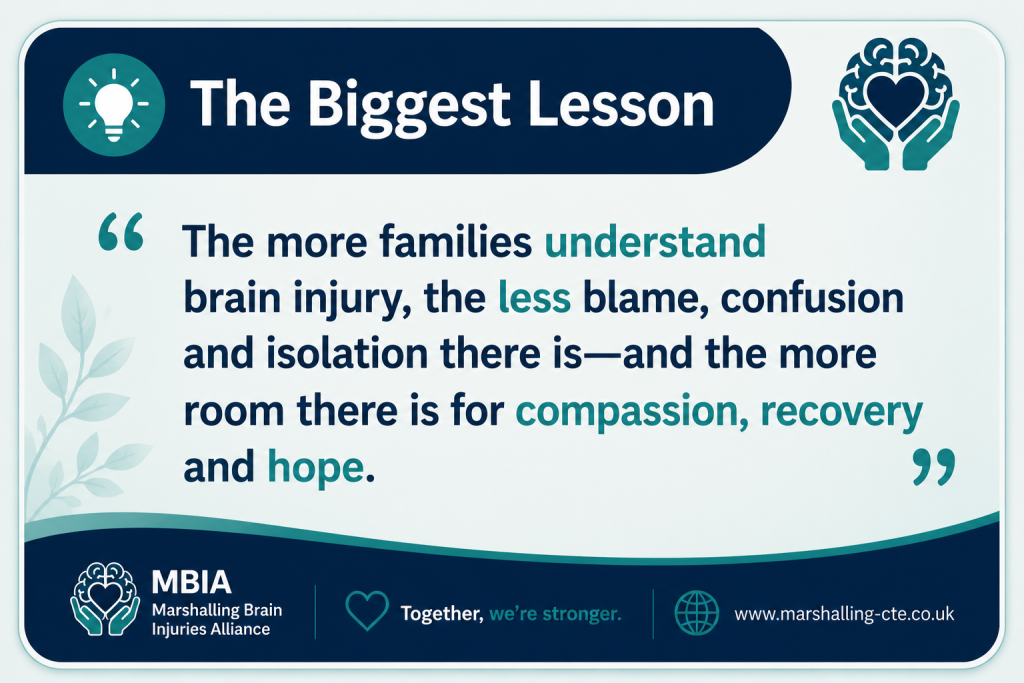
Understanding why symptoms happen doesn't remove the challenges, but it often transforms how families respond to them. Patience replaces frustration. Compassion replaces blame. Small victories become easier to recognise.
If there is one message we hope every family takes away, it is this:
You are not alone.
Thousands of families are walking this journey too, and with the right support, education and understanding, it is possible to build a meaningful life after brain injury.
References
- Silverberg ND, Iverson GL. Is Rest After Concussion "The Best Medicine?" Journal of Head Trauma Rehabilitation. 2013.
- McInnes K, Friesen CL, MacKenzie DE, et al. Mild Traumatic Brain Injury (mTBI) and chronic cognitive impairment: A scoping review. PLOS ONE. 2017.
- Cicerone KD, Goldin Y, Ganci K, et al. Evidence-Based Cognitive Rehabilitation: Systematic Review. Archives of Physical Medicine and Rehabilitation. 2019.
- Ponsford JL, Sloan S, Snow P. Traumatic Brain Injury: Rehabilitation for Everyday Adaptive Living. Psychology Press.
- Cantor JB, Ashman T, Bushnik T, et al. Fatigue after traumatic brain injury. Journal of Head Trauma Rehabilitation. 2008.
- National Institute for Health and Care Excellence (NICE). Head Injury: Assessment and Early Management (NG232).
- Maas AIR, Menon DK, Adelson PD, et al. Traumatic brain injury: integrated approaches to improve prevention, clinical care and research. The Lancet Neurology. 2017.
- Silver JM, McAllister TW, Arciniegas DB. Depression and cognitive complaints following traumatic brain injury. American Journal of Psychiatry. 2009.
Enjoyed this article? Join thousands of readers receiving our monthly Brain Injury Brief