When the Brain Turns the Volume Up: Understanding Central Sensitization After Brain Injury
Why pain, headaches, light sensitivity and sensory overload can persist long after the original injury.
"My scan is normal... so why do I still feel awful?"
This is one of the most common questions we hear from people living with brain injury.
Months—or even years—after a concussion or traumatic brain injury, many people continue to experience symptoms such as:
- Persistent headaches
- Neck pain
- Extreme sensitivity to light or noise
- Pain from gentle touch
- Fatigue
- Difficulty concentrating
- Feeling overwhelmed in busy environments
- Dizziness
- Poor sleep
Often, MRI or CT scans appear normal.
Some people are then told:
"Everything has healed."
"There's nothing more we can see."
"Maybe it's stress."
For many, these comments are frustrating because the symptoms are very real.
One possible explanation—although certainly not the only one—is something called central sensitization.
Over the past 30 years, researchers have discovered that following injury or prolonged pain, the nervous system itself can become over-responsive, almost as though someone has turned up the brain's sensitivity control.
The injury may have started the problem.
The nervous system may now be helping to keep it going.
What Is Central Sensitization?
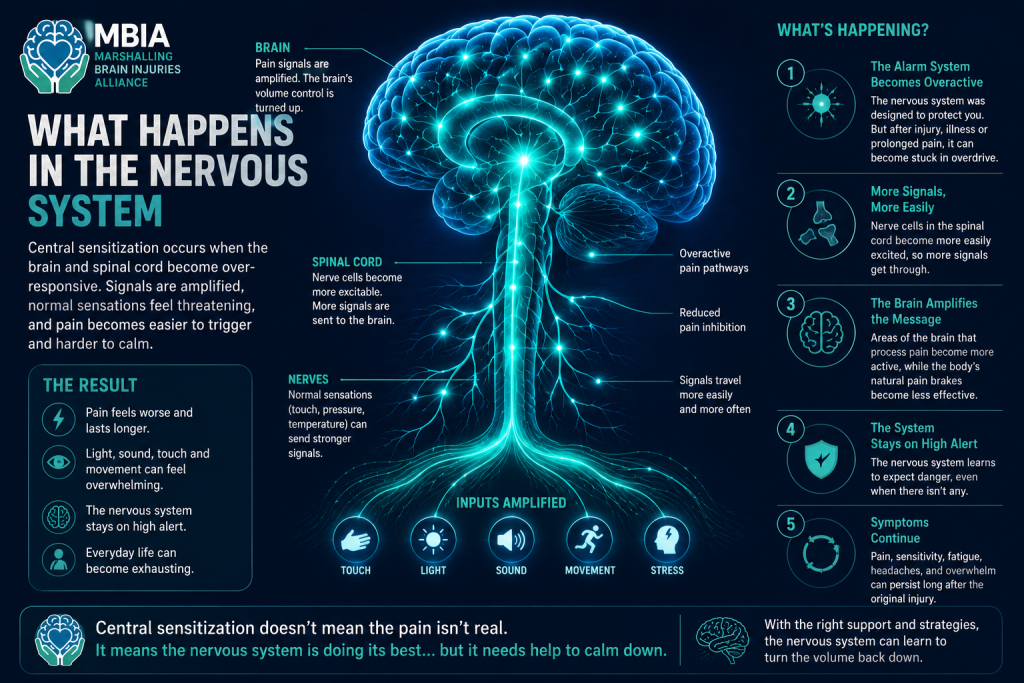
Central sensitization is a condition in which the brain and spinal cord become unusually sensitive to sensory information, particularly pain.
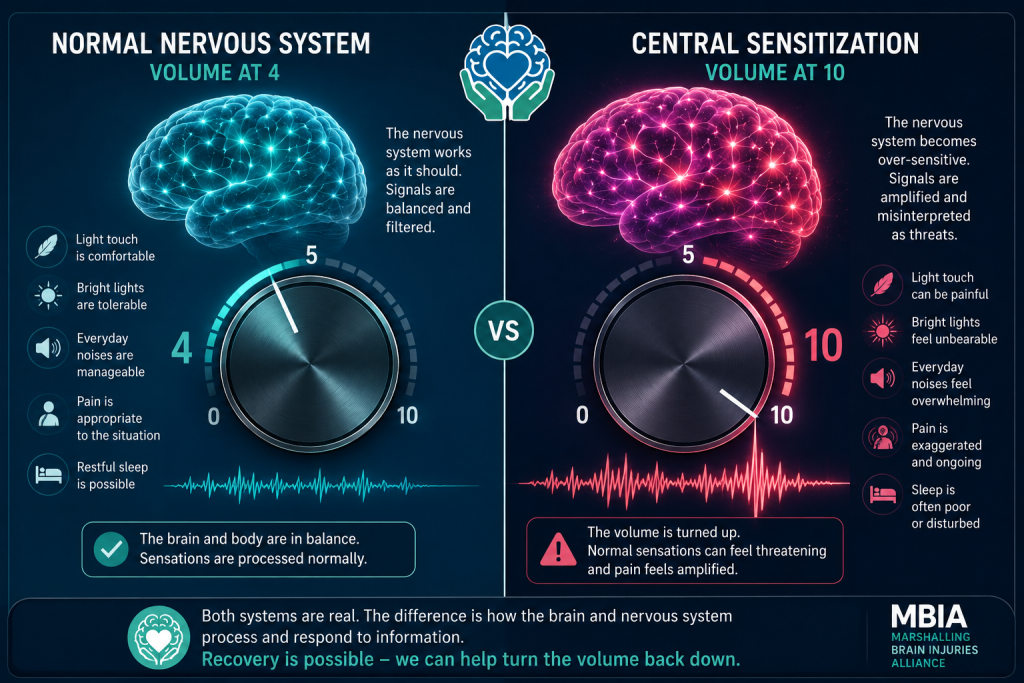
Think of your nervous system as the body's alarm system.
Normally:
- A minor bump produces mild discomfort.
- A fracture produces severe pain.
- Bright light feels bright.
- Loud music sounds loud.
Your brain processes these signals and decides how important they are.
But in central sensitization, that alarm system becomes much more sensitive.
It starts reacting more strongly than it should.
The result is that ordinary sensations may become uncomfortable or painful, while genuinely painful experiences can feel far worse than expected.
Pain is no longer simply a reflection of tissue damage—it is also influenced by how the nervous system is processing incoming information.
Importantly, this does not mean the pain is imagined.
The pain is real.
It is simply being generated by a nervous system that has become overly responsive.
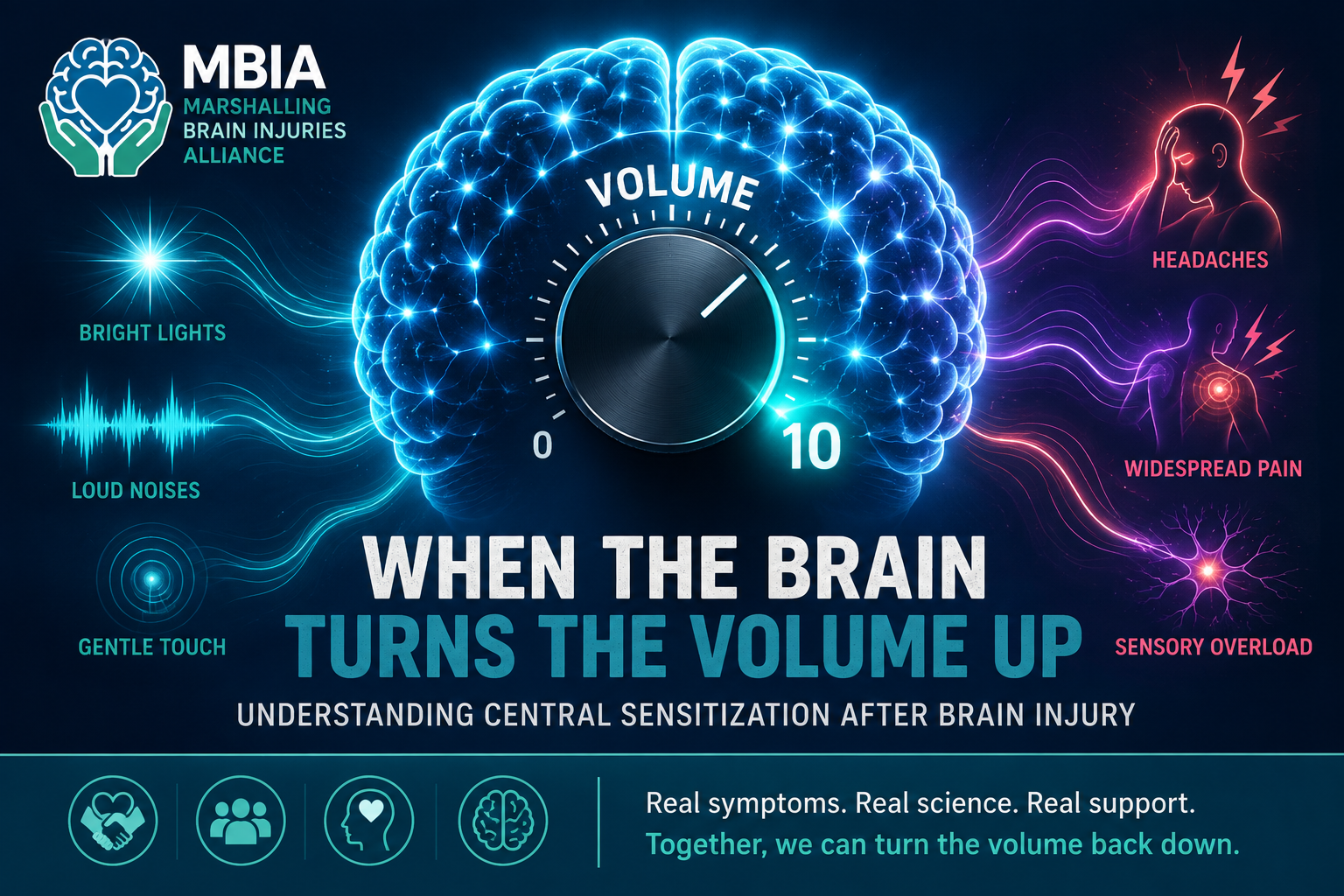
The Brain's Volume Control
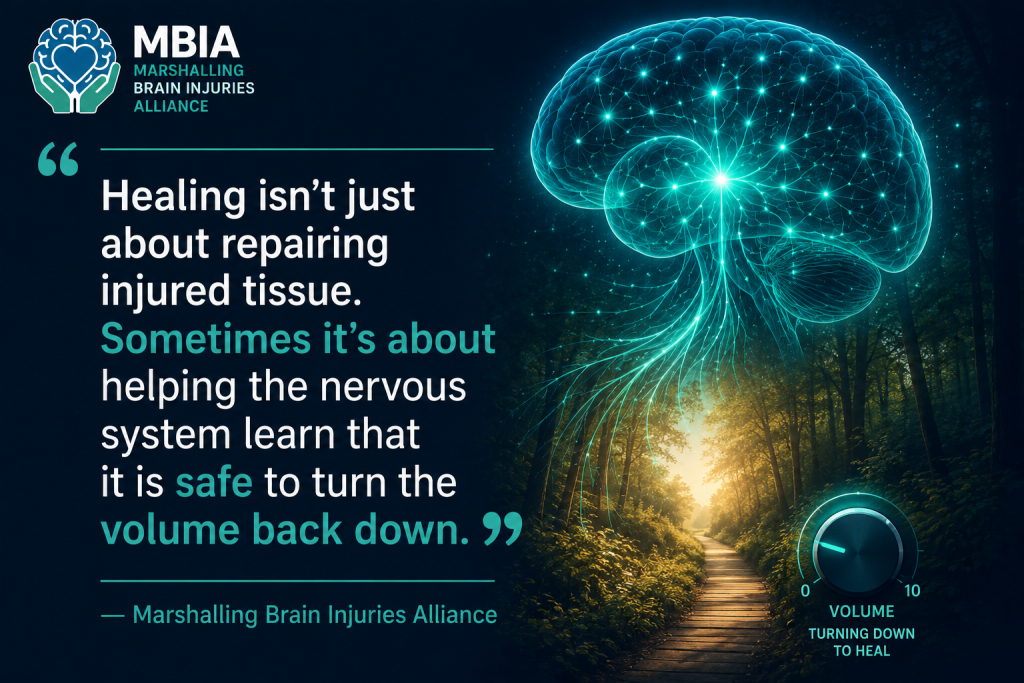
Imagine your nervous system has a volume knob.
For most people, it sits around 4 or 5 out of 10.
After injury, illness or prolonged pain, that volume can become stuck at 9 or 10.
Now everything feels louder.
Pain hurts more.
Bright lights feel brighter.
Noise becomes unbearable.
Clothing may feel irritating.
Even normal movement may trigger discomfort.
Nothing has changed in the environment.
The nervous system has changed.
Why Does It Happen?
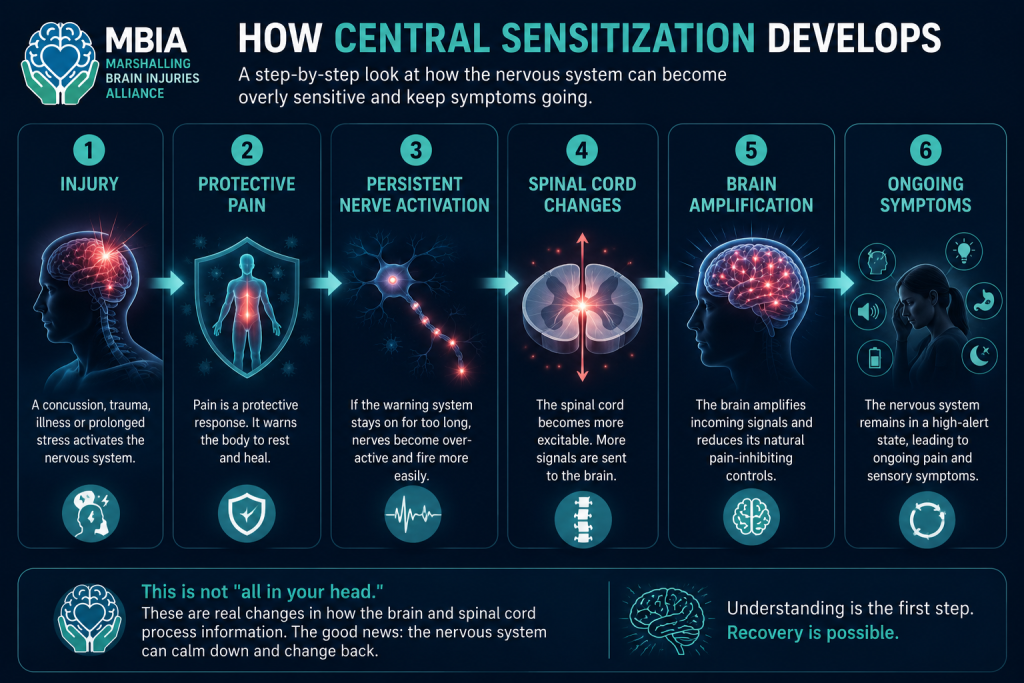
Scientists believe central sensitization develops because the nervous system is designed to protect us.
After an injury, pain encourages us to rest while tissues heal.
Normally, once healing is complete, the nervous system gradually calms down.
However, sometimes it doesn't.
Researchers believe several biological changes occur.
1. The Spinal Cord Becomes More Excitable
Specialised nerve cells within the spinal cord begin responding more easily.
Signals that would normally be ignored are now transmitted to the brain.
Pain pathways become more active.
Researchers often describe this as increasing the "gain" within the nervous system.
2. The Brain Amplifies Pain
Pain is not created by the injured body part.
Pain is created by the brain.
Normally, the brain carefully evaluates incoming information before deciding whether pain is necessary.
In central sensitization, areas involved in pain processing become more active.
At the same time, the brain's own pain-reducing systems become less effective.
The balance shifts towards amplification.
3. The Nervous System Learns Pain
One of the most fascinating discoveries in neuroscience is that the nervous system is constantly changing.
This ability is called neuroplasticity.
Usually, neuroplasticity helps us learn languages, develop new skills and recover after injury.
Unfortunately, it can also reinforce pain pathways.
The longer pain continues, the more efficient these pathways may become.
Researchers sometimes describe this as the nervous system becoming "trained" to overreact.
4. Inflammation May Play a Role
Scientists also believe ongoing inflammation within the brain and spinal cord may contribute.
Cells called microglia and astrocytes help protect the nervous system.
After injury they become activated.
Normally this is helpful.
However, prolonged activation may release inflammatory chemicals that increase the sensitivity of surrounding nerve cells.
This remains an active area of research.
What Symptoms Can It Cause?
Because central sensitization affects the nervous system rather than one specific body part, symptoms can be widespread.
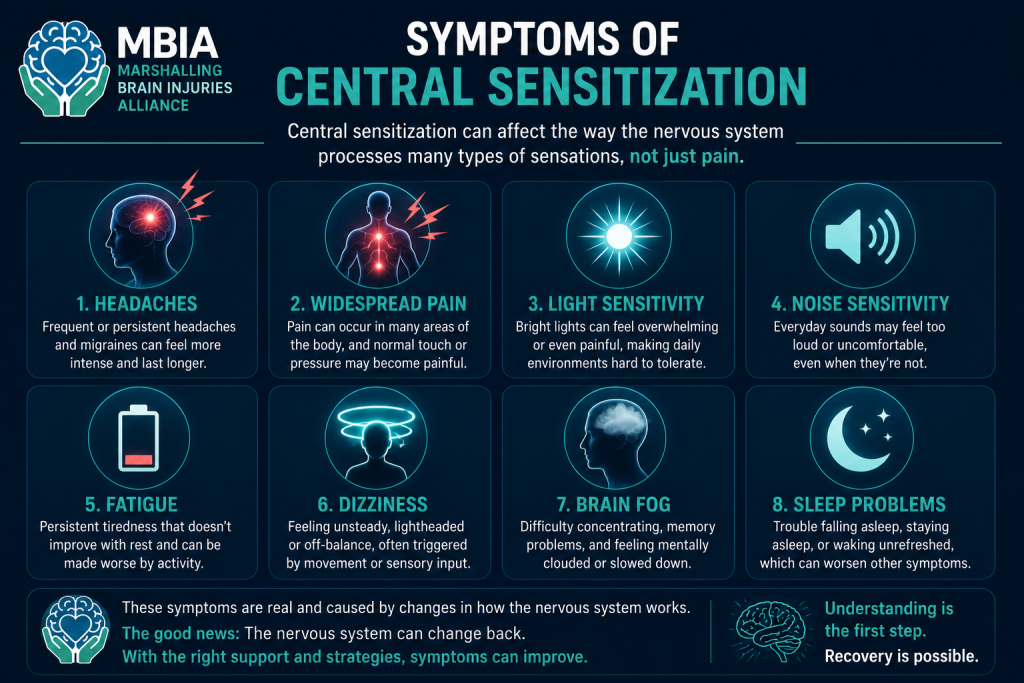
These may include:
- Persistent headaches
- Widespread pain
- Neck pain
- Burning or tingling sensations
- Increased sensitivity to touch
- Pain from clothing or gentle pressure
- Light sensitivity
- Noise sensitivity
- Difficulty coping with busy environments
- Sleep problems
- Fatigue
- Brain fog
- Difficulty concentrating
- Dizziness
- Increased sensitivity to smells
- Temperature sensitivity
Not everyone experiences all of these symptoms.
How Does This Relate to Brain Injury?
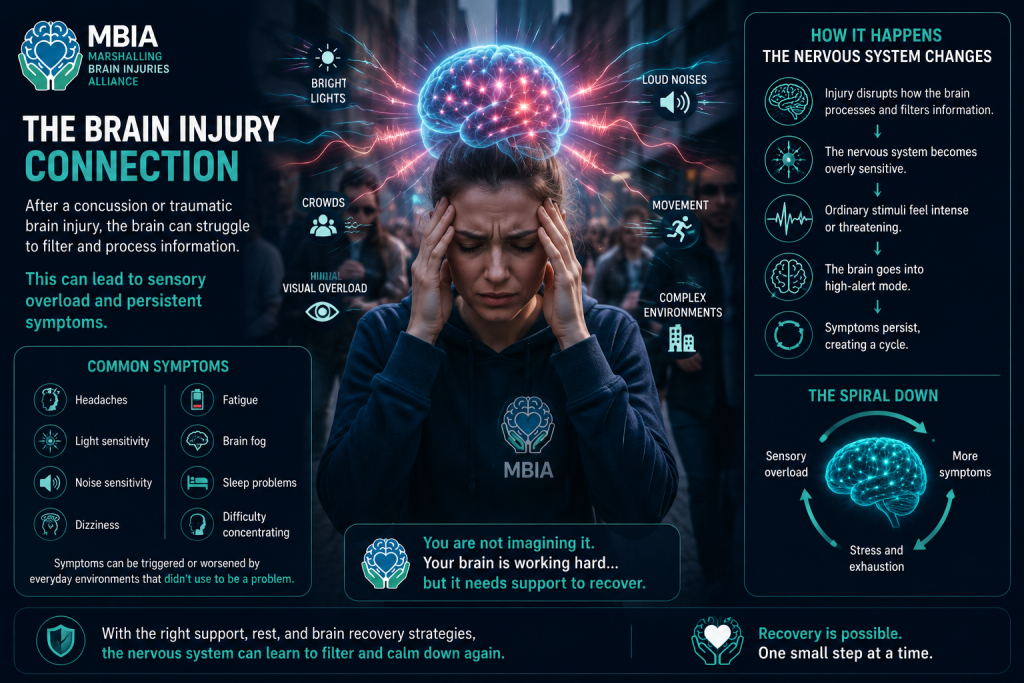
This is where things become particularly relevant for people living with concussion and traumatic brain injury.
A concussion doesn't simply bruise the brain.
It temporarily disrupts how brain cells communicate.
This includes the networks responsible for processing sensory information.
Following concussion, many people experience:
- Light sensitivity
- Noise sensitivity
- Headaches
- Motion sensitivity
- Visual overload
- Difficulty filtering background information
For most people these symptoms gradually improve.
However, in some individuals the nervous system appears to remain in a heightened state.
Researchers believe central sensitization may be one reason why some people continue experiencing symptoms months or years after injury.
Importantly, this is unlikely to be the only explanation.
Persistent post-concussion symptoms are thought to result from multiple overlapping factors, including vestibular dysfunction, vision problems, migraine, sleep disturbance, autonomic nervous system changes, psychological factors and ongoing alterations in brain function.
Central sensitization may be one important piece of that puzzle.
What About CTE?
At present, there is no evidence that central sensitization causes Chronic Traumatic Encephalopathy (CTE).
These are two completely different processes.
CTE is believed to involve the gradual accumulation of abnormal tau protein following years of repetitive head impacts.
Central sensitization involves changes in how the nervous system processes sensory information.
However, people living with suspected CTE often experience symptoms such as:
- Chronic headaches
- Widespread pain
- Poor sleep
- Fatigue
- Sensory overload
- Mood changes
Some of these symptoms could potentially be influenced by central sensitization.
At present, this has not been studied in detail.
Future research is needed to determine how frequently central sensitization occurs alongside suspected CTE and whether treating it could improve quality of life.
Conditions Linked to Central Sensitization
Researchers have identified evidence of central sensitization in numerous conditions, including:
- Fibromyalgia
- Persistent migraine
- Chronic neck pain
- Chronic low back pain
- Complex Regional Pain Syndrome (CRPS)
- Irritable Bowel Syndrome (IBS)
- Temporomandibular Joint Disorder (TMJ)
- Some cases of persistent post-concussion syndrome
- Some people with Long COVID
It is important to remember that not everyone with these conditions has central sensitization.
How Is It Diagnosed?
There is currently no blood test or brain scan that can diagnose central sensitization.
Doctors usually make the diagnosis by considering:
- Your symptoms
- Medical history
- Physical examination
- Other possible causes
Researchers also use Quantitative Sensory Testing (QST), which measures how people respond to pressure, heat, cold and vibration.
While useful in research, QST is not routinely available in most clinics.
Can It Be Treated?
The encouraging news is that the nervous system remains capable of change throughout life.
Just as it can become more sensitive, it may also become less sensitive over time.
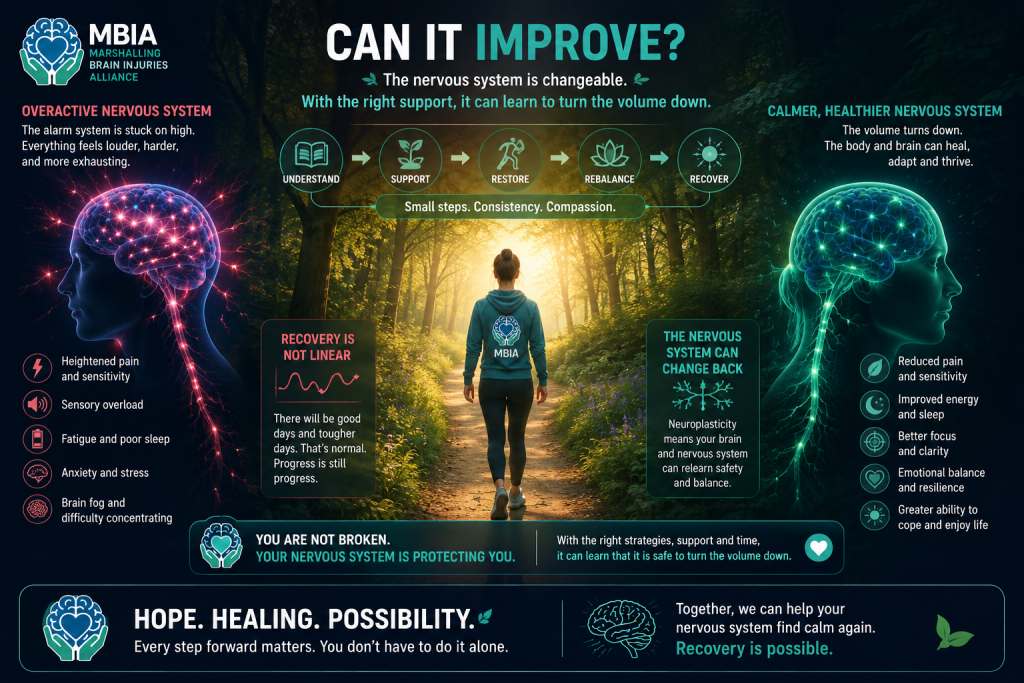
Treatment usually focuses on calming the nervous system rather than simply masking pain.
Depending on the individual, this may include:
- Education about pain neuroscience
- Good sleep management
- Gradually increasing activity levels (pacing and graded exercise where appropriate)
- Physiotherapy
- Vestibular rehabilitation after concussion
- Vision therapy where indicated
- Stress management techniques
- Mindfulness and relaxation exercises
- Cognitive Behavioural Therapy (CBT) to improve coping with persistent symptoms—not because the pain is imagined
- Medications such as amitriptyline, nortriptyline, duloxetine, gabapentin or pregabalin in selected cases
- Addressing headaches, migraine, anxiety, depression or other contributing conditions
There is no single treatment that works for everyone, and recovery often requires a combination of approaches tailored to the individual.
Separating Fact from Hype
✅ Fact
Central sensitization is recognised by pain specialists and supported by decades of neuroscience research.
✅ Fact
The pain and sensory symptoms experienced are real.
✅ Fact
It appears to contribute to several chronic pain conditions and may play a role in persistent symptoms after concussion.
⚠️ We Don't Yet Know
Exactly why some people develop central sensitization while others recover normally.
⚠️ We Don't Yet Know
How common central sensitization is in people with suspected CTE.
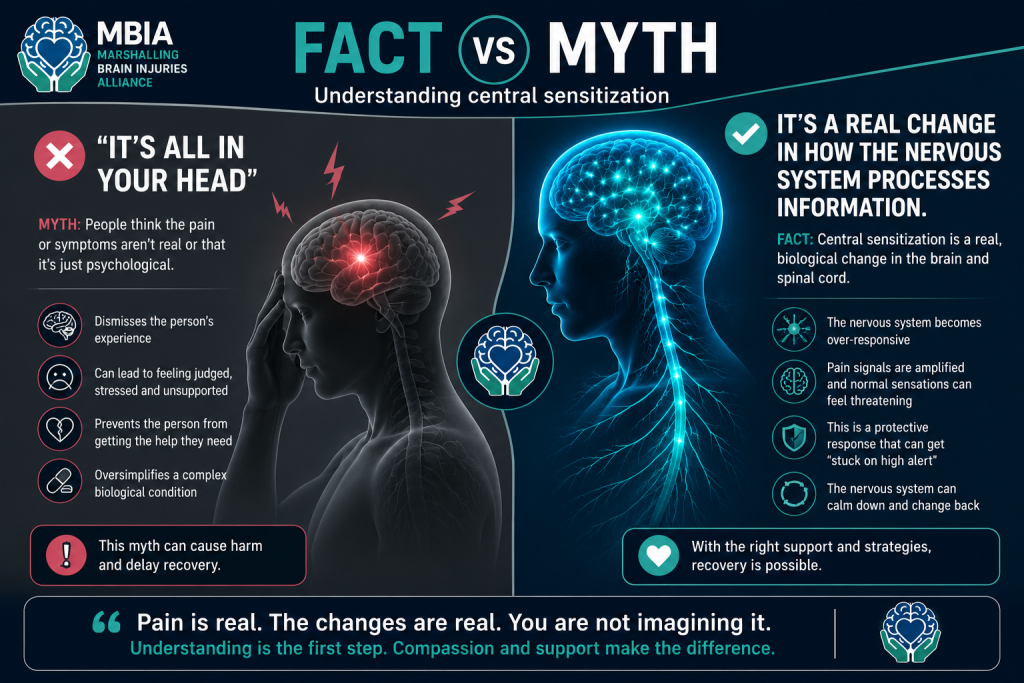
❌ Myth
Central sensitization means "it's all in your head."
No.
The changes occur within the brain and spinal cord, but they represent genuine biological alterations in how the nervous system processes information.
MBIA's View
Central sensitization reminds us that recovery from brain injury is not always as simple as waiting for damaged tissue to heal.
The brain is incredibly adaptable. Sometimes that adaptability helps recovery. Sometimes it can unintentionally reinforce symptoms such as pain, headaches and sensory overload.
Understanding these changes does not invalidate a person's experience. Quite the opposite—it provides a biological explanation for why symptoms may persist even when routine scans appear normal.
As research continues, we hope that a better understanding of central sensitization will lead to more effective treatments and improve the quality of life for people living with concussion, traumatic brain injury and, potentially, those affected by suspected CTE.
References
- Woolf CJ. Central sensitization: Implications for the diagnosis and treatment of pain. Pain. 2011.
- International Association for the Study of Pain (IASP). Central Sensitization Factsheet.
- Nijs J, et al. Treatment of central sensitization in patients with chronic pain. Expert Opinion on Pharmacotherapy. 2014.
- Latremoliere A, Woolf CJ. Central sensitization: A generator of pain hypersensitivity by central neural plasticity. Journal of Pain. 2009.
- Clauw DJ. Fibromyalgia and related conditions. JAMA. 2014.
- Meeus M, Nijs J. Central sensitization: A biopsychosocial explanation for chronic widespread pain. Clinical Rheumatology. 2007.
- Silverberg ND, Iverson GL. Research on persistent post-concussion symptoms and contributing mechanisms.
- IASP Terminology: Central Sensitization.
- Institute of Medicine. Relieving Pain in America. National Academies Press.
- Tracey I, Bushnell MC. How neuroimaging studies have challenged us to rethink: Is chronic pain a disease? Journal of Pain. 2009.