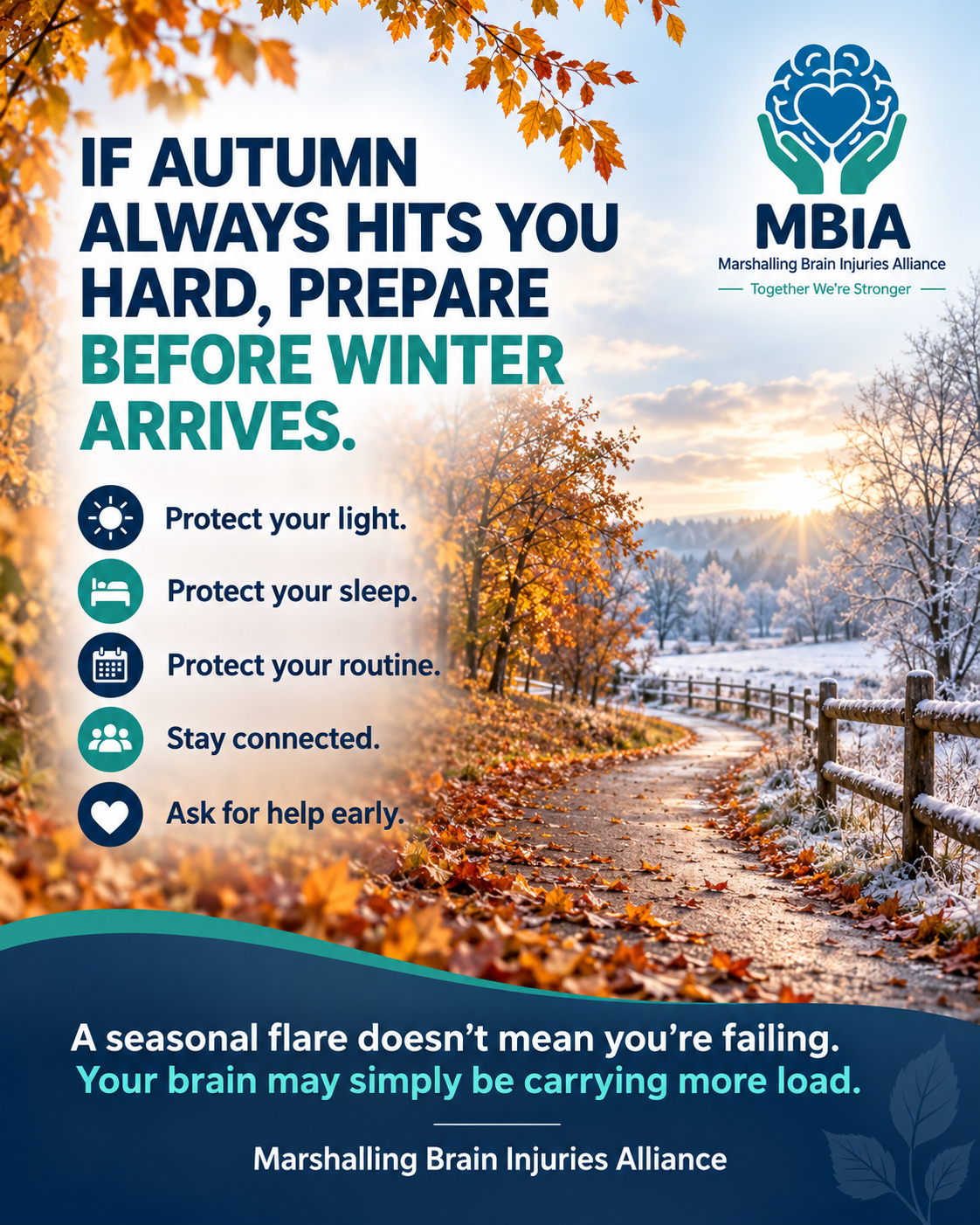
When the Days Get Darker
Why autumn and winter can be harder on your mental health — and your brain injury symptoms
Every year, as summer begins to disappear and autumn arrives, we notice something within the MBIA community.
People start struggling.
Mood drops. Fatigue increases. Headaches become harder to manage. Motivation disappears. Sleep changes. Brain fog becomes heavier. People become more withdrawn, overwhelmed or irritable.
For some, symptoms continue to worsen as autumn moves into winter.
And when you are already living with a brain injury, post-concussion symptoms, chronic migraine, neurological problems, cognitive impairment, chronic pain, depression, anxiety or suspected neurodegenerative disease, that change can be frightening.
You may find yourself wondering:
“Why am I getting worse?”
Or even:
“Does this mean my brain condition is progressing?”
Not necessarily.
There are several biological, neurological, psychological and behavioural reasons why autumn and winter can be particularly difficult.
And many of them can interact.
It isn't simply that people "don't like winter"
Seasonal changes in mood are real, although they do not affect everyone in the same way.
Seasonal Affective Disorder, usually abbreviated to SAD, is a recognised form of depression that typically occurs during autumn and winter and improves during spring and summer.
Symptoms can include low mood, loss of interest or pleasure, tiredness, sleeping more, increased appetite, difficulty concentrating, irritability, feelings of hopelessness and, in some cases, thoughts of suicide or self-harm.
However, there is an important distinction.
You do not have to meet the diagnostic criteria for Seasonal Affective Disorder to notice that your mental health or neurological symptoms become harder to manage during winter.
Research looking across whole populations has actually found a much more complicated picture than the popular idea that everyone becomes slightly depressed during winter. Some people show strong seasonal changes, some show very little, and others experience different patterns altogether.
A large 2025 meta-analysis estimated the pooled prevalence of SAD at around 5%, with a further group experiencing sub-syndromal seasonal symptoms. It also found that seasonal affective problems tended to become more common at higher latitudes, supporting the importance of seasonal changes in daylight.
For those living in the UK, that reduction in daylight becomes particularly noticeable from September onwards.
And light does far more to the brain than simply allow us to see.
Your brain has an internal clock
Deep within the brain is a biological timing system that helps regulate our approximately 24-hour cycle.
This is our circadian rhythm.
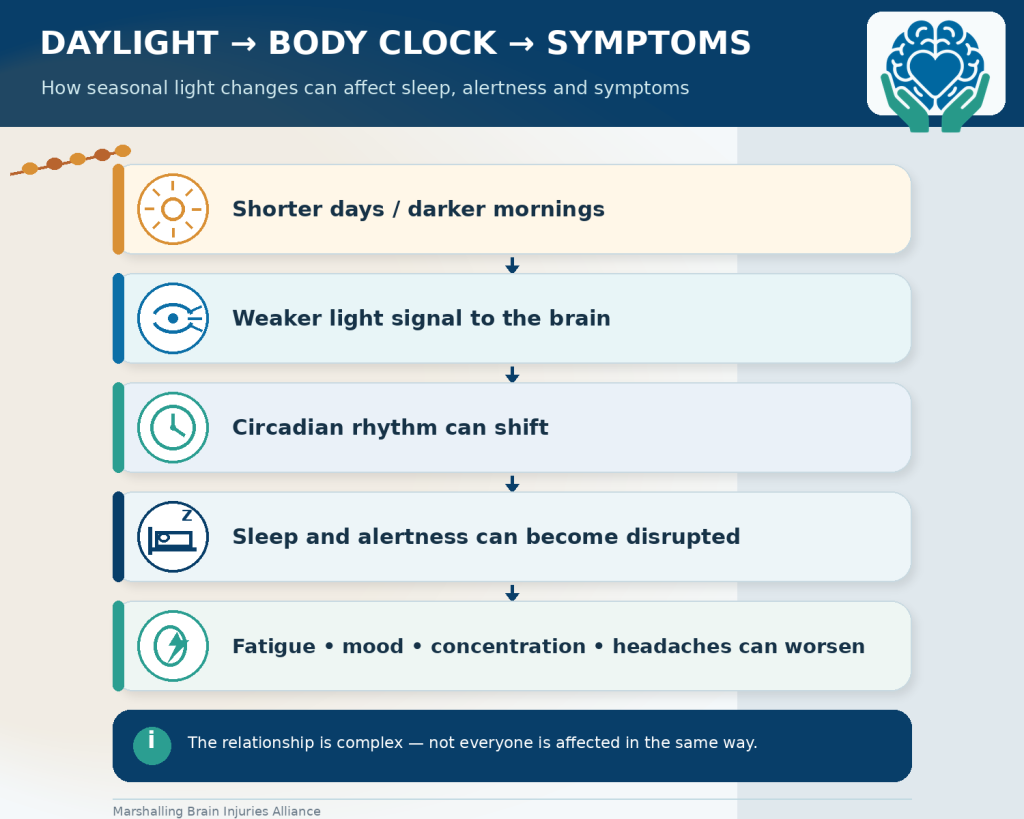
Light reaching the eyes sends timing information to the brain, helping regulate when we become alert, when we become sleepy, hormone release, body temperature, appetite and many other processes.
Morning daylight is one of the strongest signals telling that system:
It is daytime. Wake up.
As autumn progresses, mornings become darker and daylight becomes shorter.
That timing signal becomes weaker.
The NHS describes reduced winter daylight as one possible contributor to changes involving melatonin, serotonin and the body's circadian rhythm in Seasonal Affective Disorder. The exact biology remains under investigation, so it is too simplistic to say that winter depression is simply caused by "low serotonin."
But disruption of our light-dark cycle can influence sleep, energy, alertness and mood.
And for someone whose sleep and circadian systems are already vulnerable because of a brain injury, that may matter even more.
Brain injury and sleep are already closely connected
Sleep problems are extraordinarily common after traumatic brain injury.
A recent review reported sleep-wake disturbances in approximately 50–70% of people following TBI, regardless of the original severity of injury.
Problems can include insomnia, excessive daytime sleepiness, hypersomnia, fatigue and disrupted sleep-wake timing.
Importantly, these problems can interact with pain, anxiety, depression and PTSD, and may worsen cognitive difficulties. Researchers are increasingly recognising disruption of the circadian timing system itself as one contributor to post-TBI sleep problems.
That gives us an important way of thinking about autumn.
Someone with a healthy, resilient sleep system may adjust relatively easily to darker mornings and shorter days.
Someone whose neurological system is already struggling to regulate sleep, alertness, attention and energy may have much less room for disruption.
The seasonal change may not be creating a new brain injury.
It may simply be adding another load to a system that is already working close to its limits.
Think of it as neurological reserve
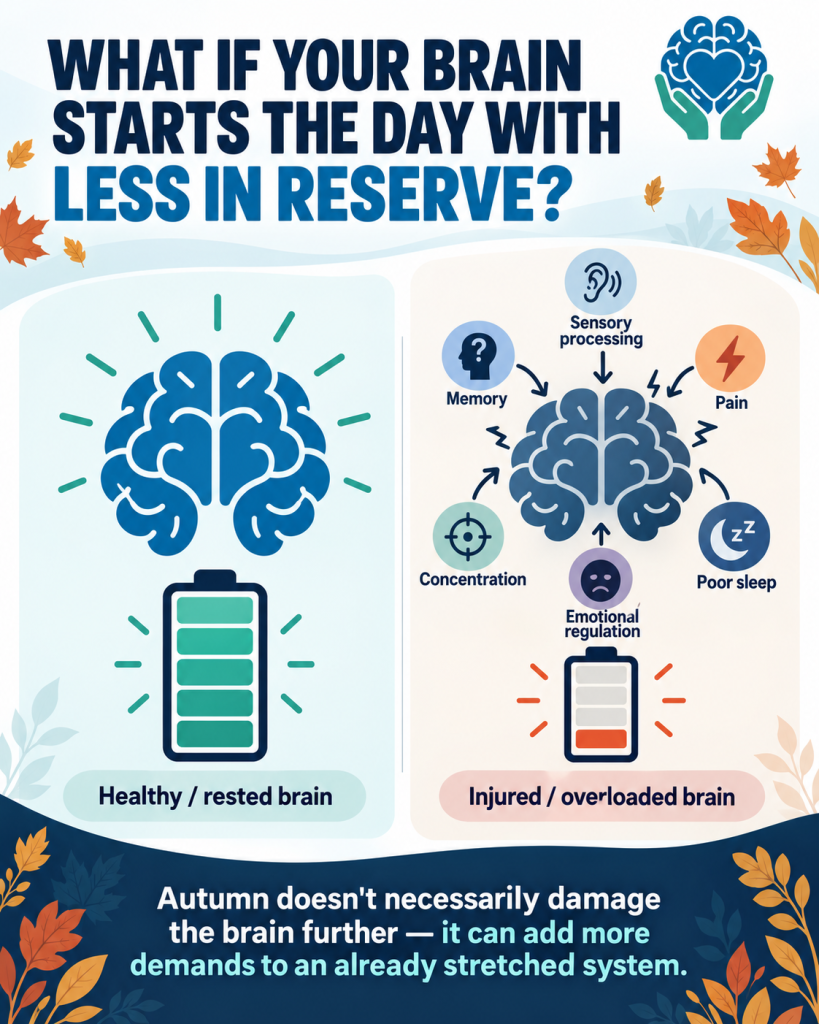
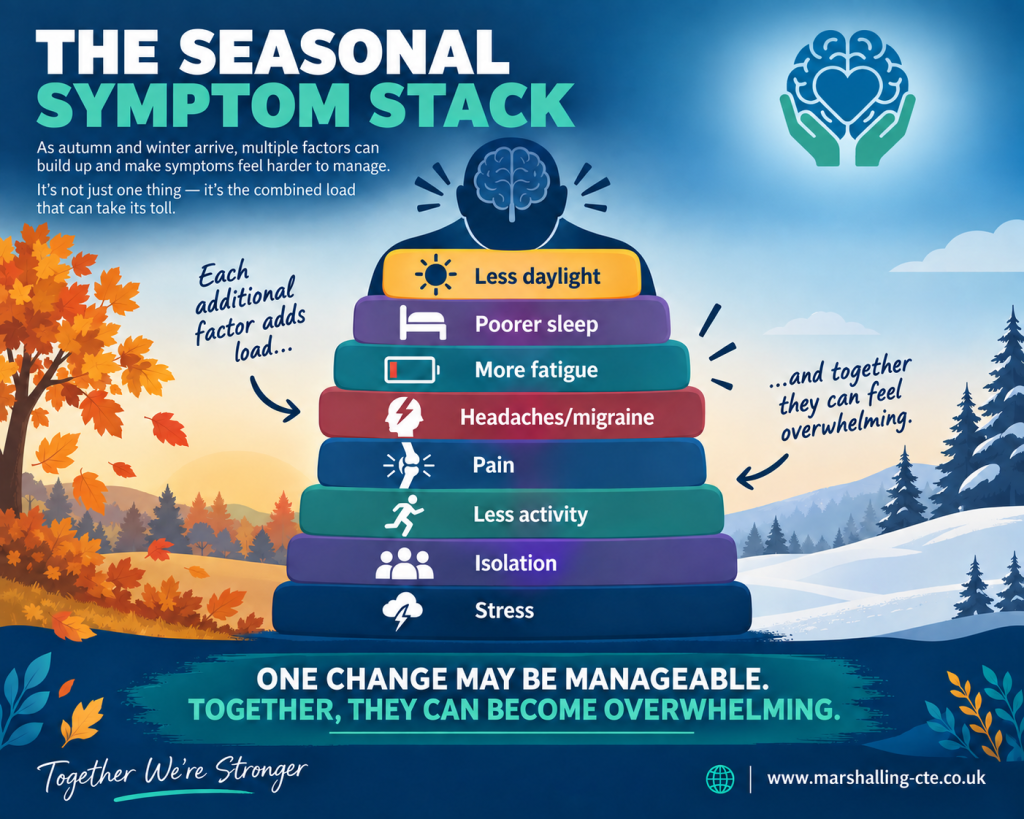
Imagine your brain has a daily battery.
A healthy brain may begin the day at 100%.
Someone living with brain injury might begin with considerably less available neurological energy because the brain is already using more resources to manage concentration, sensory processing, memory, balance, headaches, emotional regulation or fatigue.
Now add poorer sleep.
Add less daylight.
Add colder weather.
Add headaches.
Add pain.
Add less exercise.
Add more time indoors.
Add loneliness.
Add stress.
Add Christmas pressures.
Add disrupted routines.
Suddenly the amount of energy available for everything else becomes very small.
This can make existing symptoms feel dramatically worse.
Brain fog may increase. Emotional regulation may become harder. Small frustrations may produce much larger reactions. Sensory overload may happen faster. Executive function may deteriorate. Motivation may disappear.
This doesn't mean those symptoms are imaginary.
It means the total neurological load has changed.
Sleep can become a vicious cycle
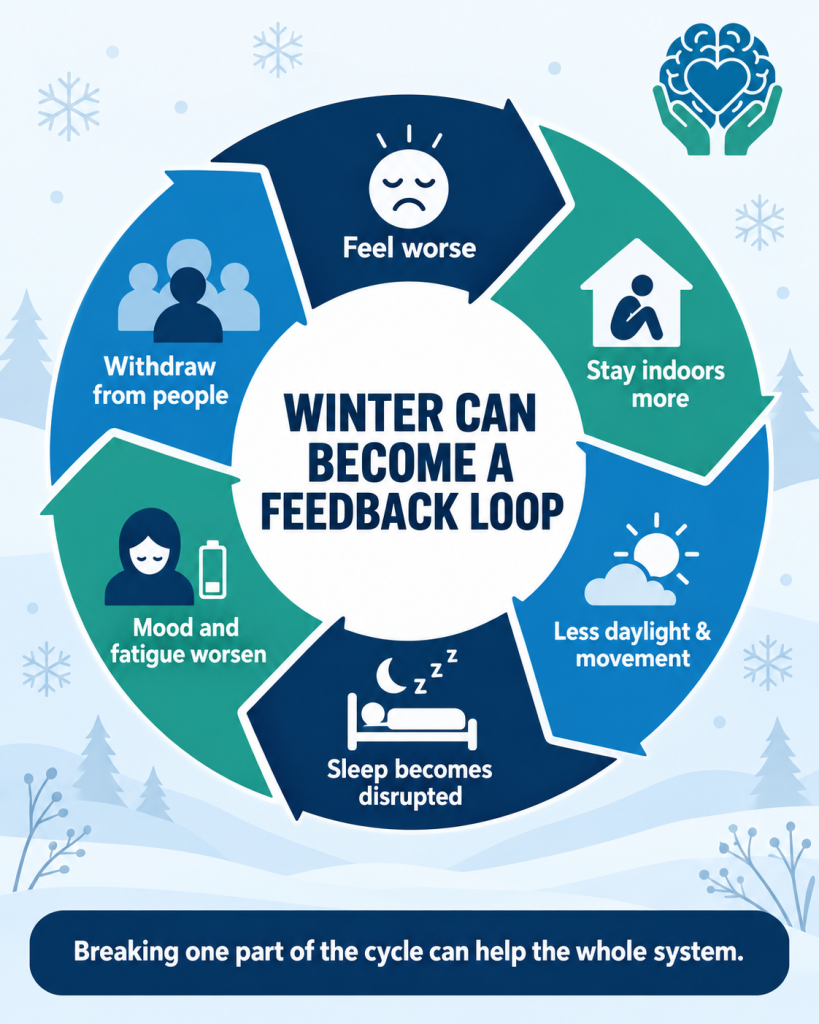
Reduced morning light and longer periods indoors can make sleep timing less stable.
People may start getting up later because they are exhausted.
They may nap more.
They may become less physically active.
They may spend more time using phones or watching television late at night.
They may then struggle to sleep properly at night, wake unrefreshed and become even more tired the following day.
That matters because sleep deprivation does not only cause tiredness.
It affects attention, memory, decision-making, emotional regulation, pain sensitivity and our ability to cope with stress.
For someone already experiencing these difficulties because of neurological injury, poor sleep can amplify the very symptoms they are already trying to manage.
Autumn can also change how much we move
There is consistent evidence that physical activity changes with the seasons.
A systematic review involving participants across multiple countries found activity levels were generally higher in summer and lower during winter, while sedentary behaviour tended to increase during winter.
Another review examining sleep, sedentary behaviour and activity found sleep tended to be highest during autumn, sedentary behaviour highest during winter and light physical activity highest during summer.
The reasons are obvious.
It gets dark earlier.
It is colder.
It rains more.
People go for fewer walks.
Gardening stops.
Outdoor social activities reduce.
People who already struggle with balance, dizziness, mobility or fatigue may become particularly reluctant to venture outside when pavements are wet, dark or icy.
Unfortunately, reducing activity can then affect sleep, mood, cardiovascular health, mobility and social contact.
Another feedback loop develops.
Feeling worse makes us move less. Moving less can sometimes make us feel worse.
Weather-sensitive migraine is not simply "in your head"
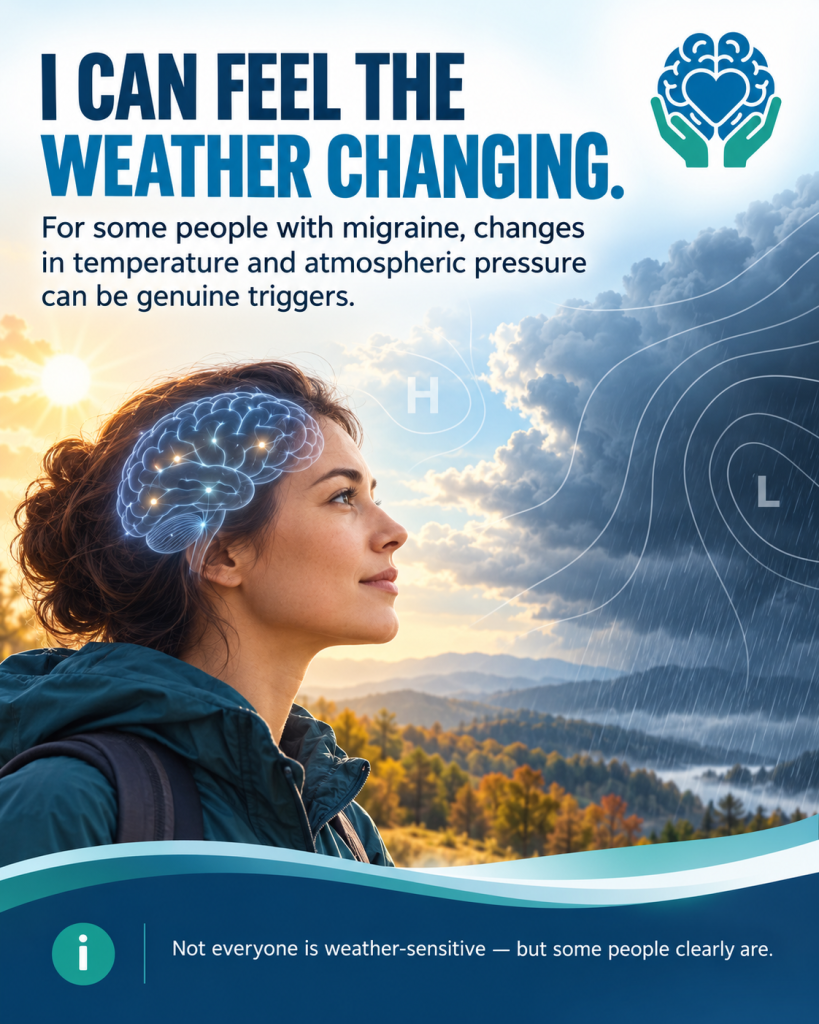
Many people with brain injury also experience migraine or persistent post-traumatic headache.
For years, people who reported that changes in the weather triggered migraines were sometimes dismissed.
The evidence is becoming clearer.
A 2025 systematic review and meta-analysis involving 31 studies found an association between migraine attacks and weather changes, with temperature and atmospheric pressure among the factors showing significant associations.
That does not mean everyone with migraine is weather-sensitive.
But some clearly appear to be.
Autumn weather in the UK often brings rapidly changing pressure systems, storms and temperature changes.
For someone already susceptible to post-traumatic headache or migraine, weather may therefore become another trigger layered on top of poor sleep, fatigue, stress and disrupted routines.
Pain may change too — although the evidence is complicated
People with chronic pain frequently report feeling worse during cold, damp or rapidly changing weather.
Scientific studies have produced mixed results, and the relationship varies considerably between individuals and conditions.
Some systematic reviews have found associations between weather variables such as temperature, humidity and atmospheric pressure and osteoarthritis pain, while broader reviews of musculoskeletal pain have found conflicting results.
The appropriate conclusion is therefore not:
"Cold weather definitely causes pain."
Nor should it be:
"Weather sensitivity isn't real."
A better conclusion is that some people appear more weather-sensitive than others.
And increased pain matters to brain health because pain itself consumes attention, interrupts sleep, increases fatigue and adds another demand to emotional regulation.
Again, the loads begin to accumulate.
Less daylight can also mean more isolation

Seasonal changes are not purely biological.
Our lives change too.
During summer, people may sit outside, attend events, see neighbours, visit family, walk to shops or simply spend more time around other human beings.
Winter can gradually shrink someone's world.
This can be particularly significant following brain injury.
People may already have stopped working.
They may no longer drive.
Crowded environments may be difficult because of sensory overload.
Fatigue may make socialising exhausting.
Memory or communication problems may cause embarrassment.
Relationships may have changed.
Friends may have disappeared.
Then winter arrives and removes some of the remaining opportunities for easy social contact.
A person can become increasingly isolated without consciously choosing isolation.
And depression often encourages exactly the behaviour that can allow depression to become deeper:
Stay home. Cancel plans. Don't answer the phone. Stay in bed. Withdraw.
Carers can struggle too
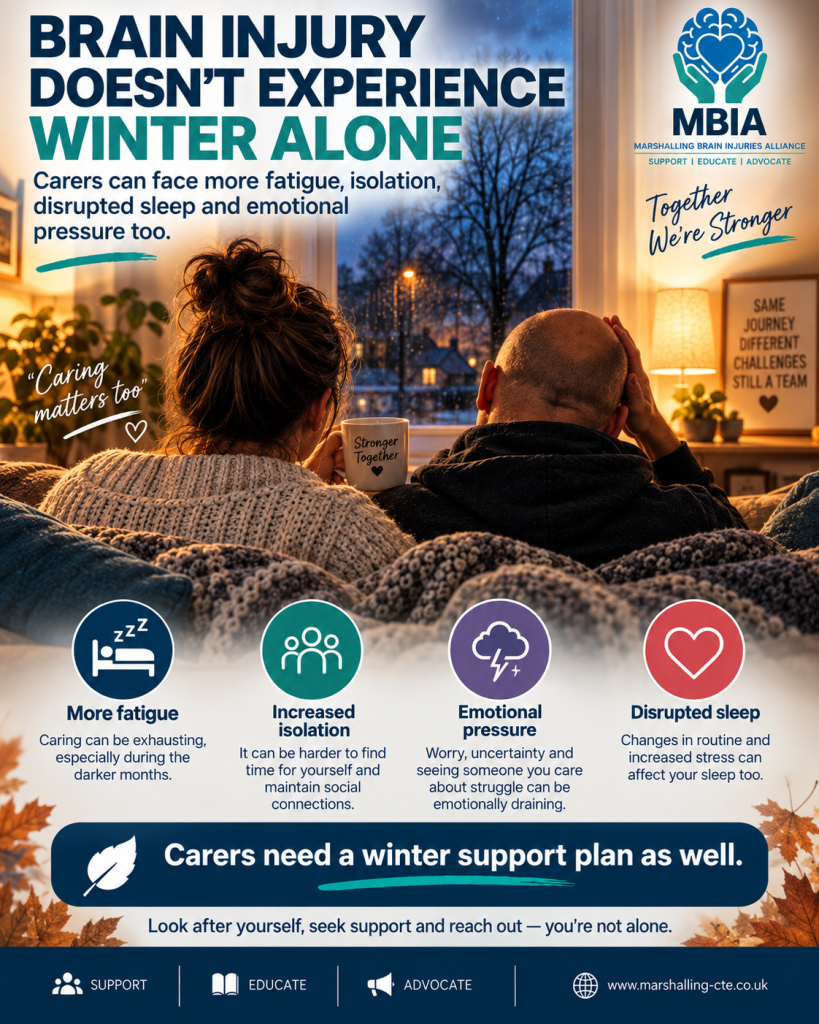
We should not think about seasonal mental health only from the perspective of the injured person.
Family members and carers may also be exhausted.
Winter can mean spending considerably more time together indoors. The person they care for may be more fatigued, irritable, depressed, forgetful, anxious or overwhelmed.
Carers may simultaneously be dealing with financial pressures, disrupted sleep, their own health problems and the emotional impact of watching someone they love change.
So when we talk about preparing for winter, carers deserve a plan too.
What about vitamin D?
Vitamin D often appears in conversations about winter depression, but it is important not to oversimplify the evidence.
Low vitamin D levels have been associated with depression in research, but that does not prove vitamin D deficiency is the cause of seasonal depression or that supplements are an antidepressant treatment.
There is, however, separate UK public-health guidance around vitamin D.
Between October and early March, sunlight in the UK is not strong enough for most people to produce sufficient vitamin D through their skin. The NHS therefore advises adults and children over four to consider taking 10 micrograms of vitamin D each day during autumn and winter, with year-round supplementation recommended for some higher-risk groups.
That recommendation is principally about maintaining adequate vitamin D levels and musculoskeletal health.
It should not be presented as a treatment for depression.
Light therapy deserves a little more explanation
Bright-light therapy uses a specially designed light box to provide strong visible light, normally during the morning.
There is clinical evidence supporting bright-light therapy for Seasonal Affective Disorder. A 2025 systematic review and network meta-analysis of randomised trials found white-light therapy effective in reducing seasonal mood symptoms.
Interestingly, researchers have also studied morning light exposure after traumatic brain injury.
A systematic review involving seven studies and 309 people found that morning short-wavelength or bright-white light interventions showed evidence of improvements in sleep timing, sleep duration, sleepiness, fatigue and mood, particularly following mild TBI.
This is promising, but it does not mean everybody with brain injury should immediately buy a powerful light box.
People with significant light sensitivity, certain eye conditions, bipolar disorder or medicines that increase photosensitivity should discuss light therapy with an appropriate healthcare professional first. The NHS also recommends checking that commercial light boxes are UV-free, suitably bright and properly marked for UK/European standards.
Natural daylight remains an important place to begin.
What can we actually do?
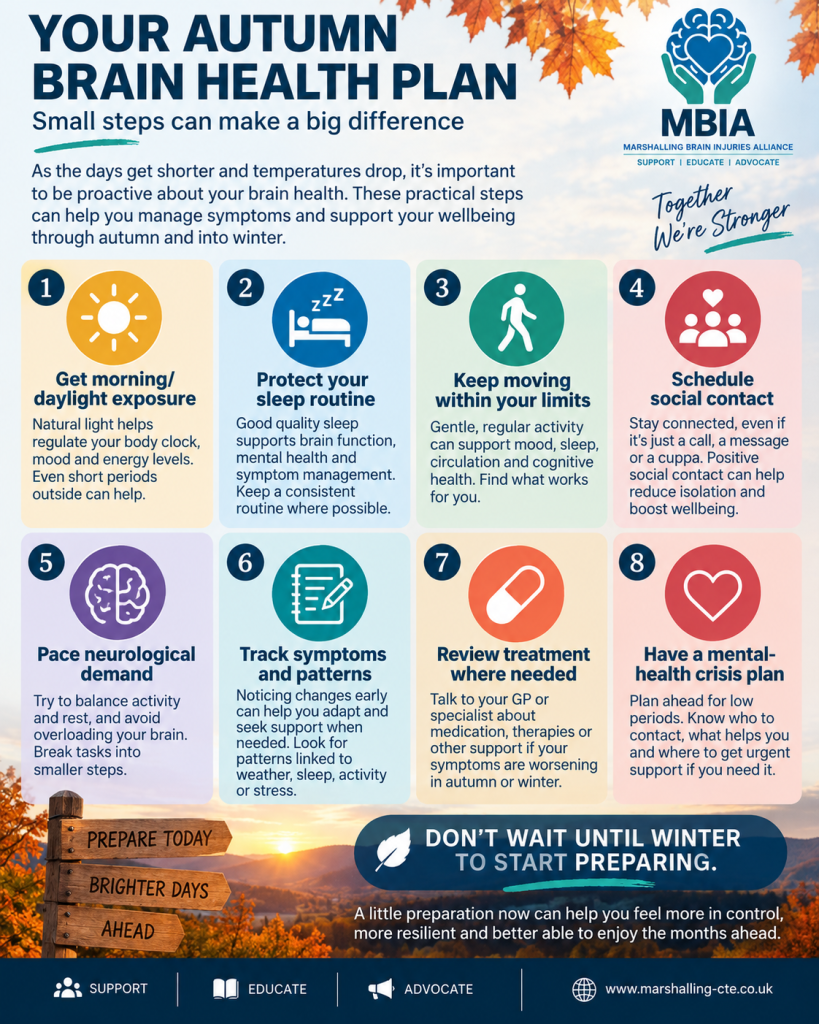
The most useful approach may be to stop treating winter deterioration as something that simply happens to us and begin preparing for it before symptoms become severe.
An Autumn Brain Health Plan could include:
- Protect your morning light. Try to get outside during daylight every day, particularly earlier in the day. Even an overcast outdoor environment normally provides substantially more light than sitting indoors. For people with significant light sensitivity, this may need to be gradual and individually tolerable.
- Anchor your wake-up time. Keeping roughly the same waking and sleeping schedule each day helps provide the brain with predictable timing signals. Try not to compensate for fatigue by allowing sleep and waking times to drift later and later.
- Keep moving within your limits. This does not have to mean going to a gym. Walking, stretching, rehabilitation exercises, seated exercise, swimming, gardening, gentle cycling or indoor movement all count. For people with post-exertional worsening or complex neurological conditions, activity needs to be individually paced rather than forced.
- Plan social contact rather than waiting for motivation. A weekly coffee, support group, phone call, online meeting or visit can act as an anchor. When depression arrives, motivation often disappears before we realise how isolated we have become.
- Track patterns rather than guessing. Record sleep, mood, headache, fatigue, activity, pain and significant weather changes for several weeks. Patterns can sometimes become visible that are difficult to recognise from memory alone.
- Reduce avoidable neurological load. During a symptom flare, simplify commitments, pace demanding tasks, build in recovery periods and use familiar sensory-regulation strategies. The objective is not necessarily complete inactivity; it is spending neurological energy more deliberately.
- Talk to your GP before things become unbearable. If you notice a recurring autumn/winter pattern, tell them. Seasonal Affective Disorder, depression, sleep disorders, migraine and other treatable conditions should not simply be accepted as inevitable consequences of brain injury.
- Create a crisis plan while you are well enough to make one. Write down who you will contact, warning signs that mean you need help, medicines, relevant health information and the people who can stay with or support you if your mental health deteriorates. A plan created before a crisis is much easier to use during one.
Start preparing before the darkest months arrive
One of the most useful things we can learn from seasonal illness is that it can sometimes be predictable.
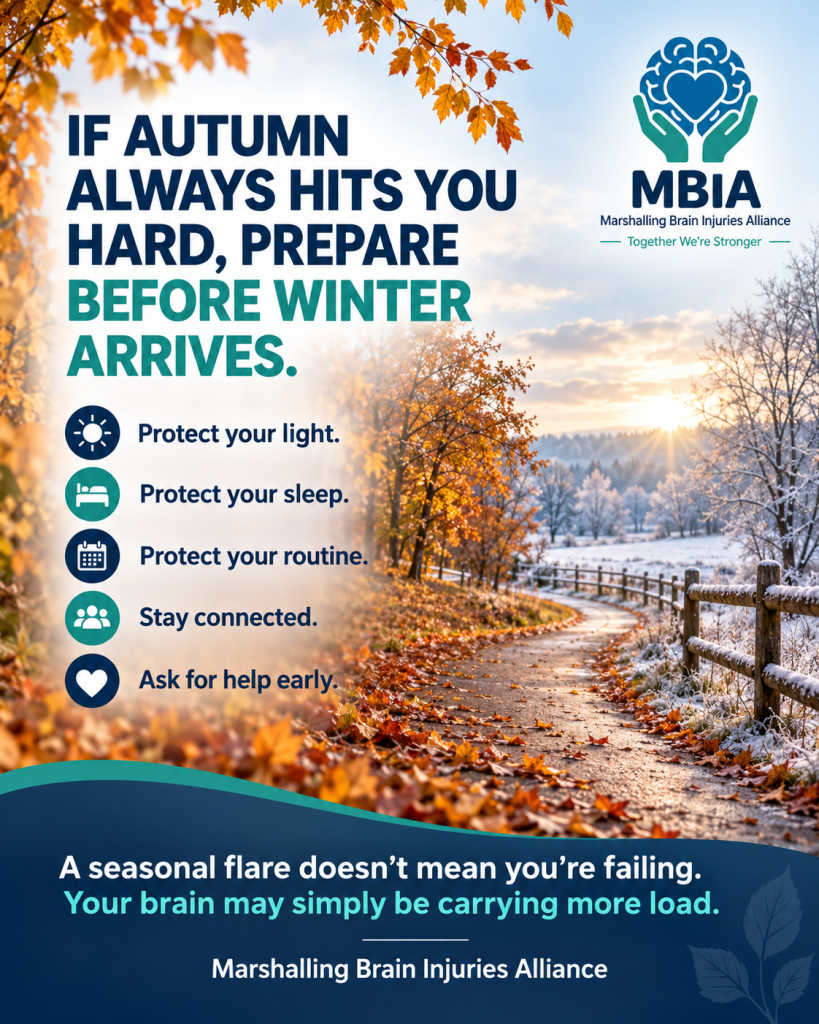
If September and October are consistently difficult, do not wait until December to act.
Start reinforcing routines now.
Protect daylight exposure.
Protect sleep.
Keep moving.
Stay connected.
Arrange medication reviews where necessary.
Prepare migraine management plans.
Check that support networks are still in place.
And tell the people around you that this is a vulnerable time of year.
Prevention does not mean you will have no bad days.
It means you may enter those bad days better prepared.
A symptom flare does not automatically mean disease progression
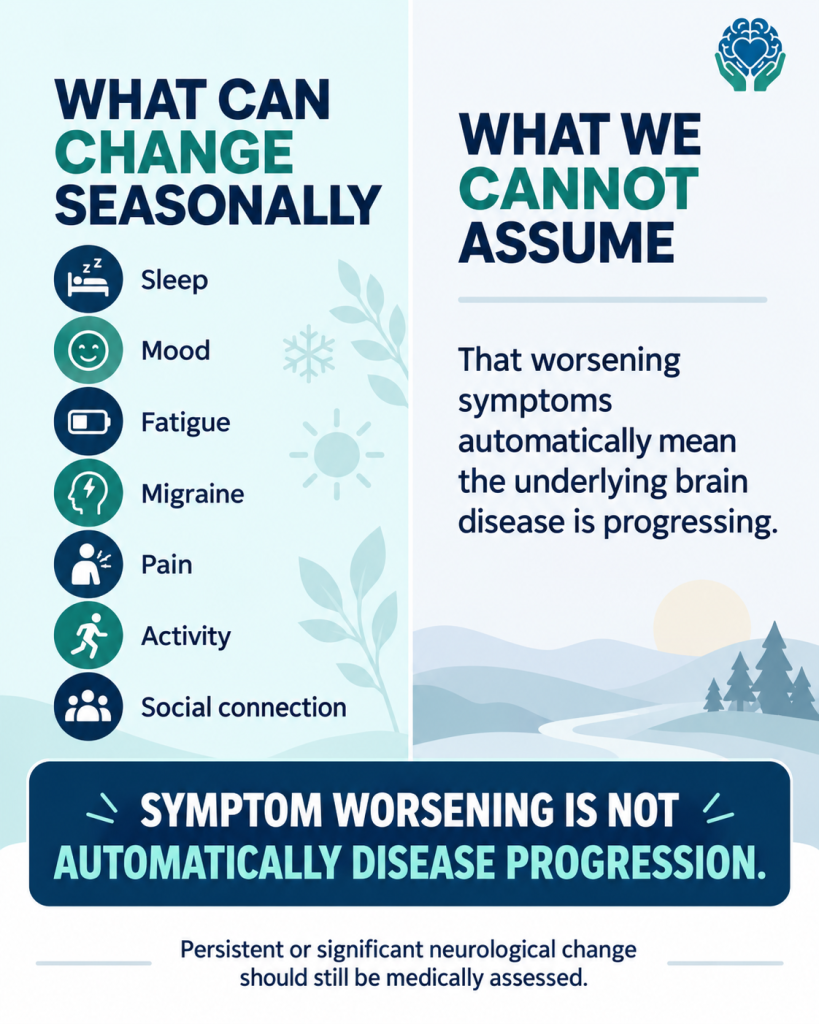
This point is especially important within the brain-injury community.
At present, there is not strong evidence demonstrating that autumn or winter causes traumatic brain injury or CTE pathology itself to suddenly progress faster.
Direct research specifically examining season-by-season symptom changes following TBI remains limited.
But there is strong evidence that factors capable of influencing brain-injury symptoms—sleep, circadian rhythm, mood, activity, migraine, pain and social connection—can change during autumn and winter.
So someone may genuinely function worse during winter without there necessarily being a corresponding acceleration of the underlying neuropathology.
That distinction matters.
Symptom worsening is not automatically disease progression.
But worsening symptoms still deserve to be taken seriously.
A significant or persistent change should never simply be dismissed as "the weather."
Watch for changes that need medical review
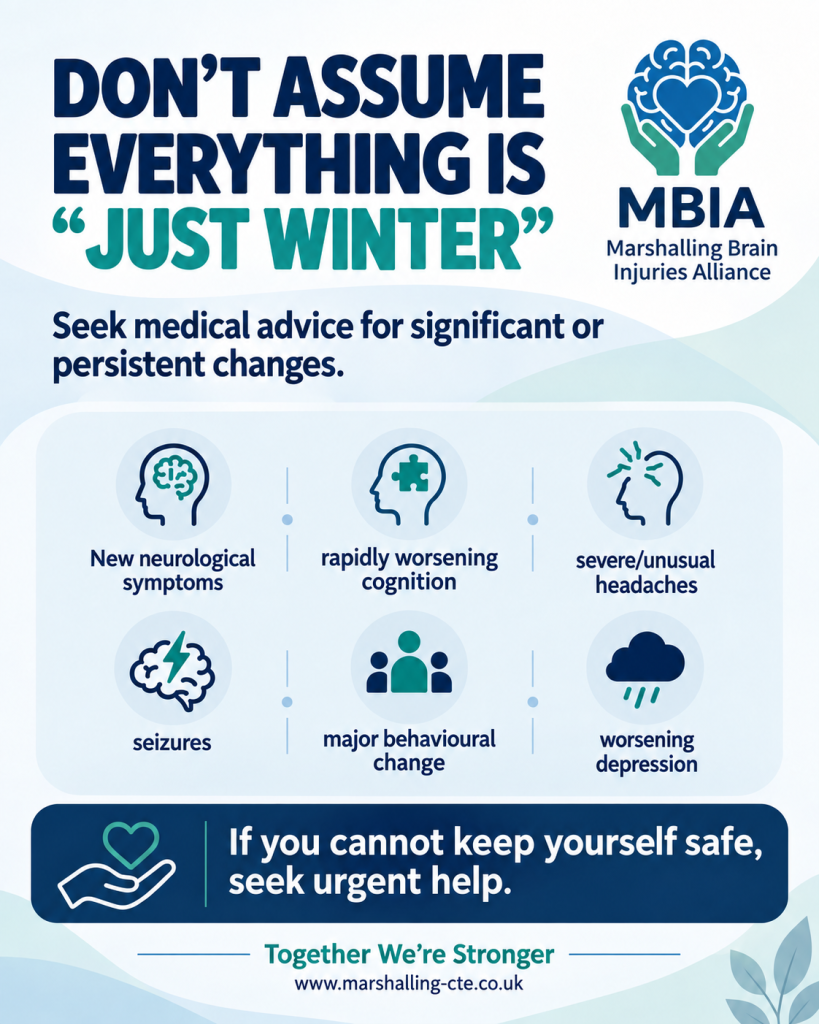
Seasonal patterns should not become an excuse to attribute every neurological change to winter.
New or significantly worsening confusion, neurological weakness, seizures, severe or unusual headaches, repeated falls, major behavioural changes, rapidly worsening cognition or other concerning neurological symptoms require appropriate medical assessment.
Likewise, persistent depression, inability to function, increasing alcohol or substance use, hopelessness or thoughts of suicide need support.
There is treatment available.
Seasonal Affective Disorder can be treated with approaches including talking therapies such as CBT, antidepressant medication and light therapy where appropriate.
If your mental health is becoming unsafe
Please do not wait for a crisis to become life-threatening before asking for help.
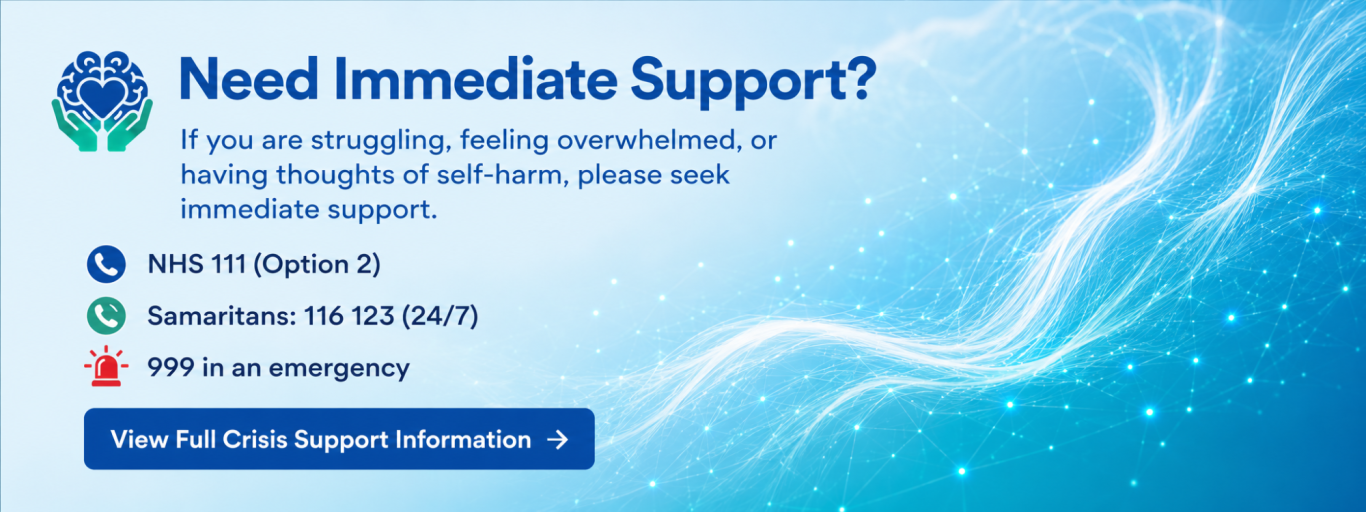
In England, urgent mental-health support is available through NHS 111 and the mental-health option. In Wales, NHS 111 Wales – Press 2 provides urgent mental-health support 24 hours a day, seven days a week.
Samaritans: 116 123, free, day or night.
If you or someone else is in immediate danger, has seriously harmed themselves, taken an overdose or cannot remain safe, call 999 or go to A&E.
Finally: believe the pattern you are seeing
If you notice every autumn that your battery seems to drain faster, headaches increase, sleep deteriorates and your mood begins to fall, you are not necessarily imagining that pattern.
Start recording it.
Talk about it.
Prepare for it.
And try to understand what may be driving it rather than simply blaming yourself for struggling.
For people living with brain injury, neurological illness and chronic symptoms, resilience does not mean pretending seasonal changes do not affect you.
Sometimes resilience means recognising that your brain has fewer resources available—and changing the demands placed upon it accordingly.
Autumn changes the environment around our brains.
For some people, particularly those whose neurological systems are already under strain, that can change how the brain feels and functions too.
Understanding why gives us something extremely valuable:
the chance to prepare.
References and further reading
- NHS. Seasonal affective disorder (SAD).
Covers seasonal depression, reduced winter daylight, circadian rhythm, symptoms and treatment options. - Kalantari N, Gosselin N. Sleep and circadian rhythms after traumatic brain injury. Handbook of Clinical Neurology. 2025;206:125–140.
Review of sleep-wake and circadian disturbance after TBI, including the finding that sleep-wake problems are reported by around 50–70% of people following TBI. - Chow CM, Ekanayake K, Hackett D. Efficacy of morning shorter-wavelength and bright-white light in regulating sleep, mood and fatigue in traumatic brain injury: a systematic review. Clocks & Sleep. 2024;6(2):255–266.
Useful for the section discussing morning light and TBI. The review included seven studies involving 309 participants, while emphasising that the evidence remains limited. - Li S, Liu Q, Ma M, Fang J, He L. Association between weather conditions and migraine: a systematic review and meta-analysis. Journal of Neurology. 2025;272:346.
Found associations between migraine attacks and weather changes, particularly temperature and atmospheric pressure. - Garriga A, Sempere-Rubio N, Molina-Prados MJ, Faubel R. Impact of Seasonality on Physical Activity: A Systematic Review. International Journal of Environmental Research and Public Health. 2022;19(1):2.
Found generally higher physical activity during summer and lower activity, with more sedentary behaviour, during winter. - NHS. Vitamin D.
UK guidance states that people should consider taking 10 micrograms of vitamin D daily during autumn and winter, because sunlight is generally insufficient for adequate skin production between October and early March. - NHS. Where to get urgent help for mental health.
Supports the crisis-information section: NHS 111 for urgent mental-health help, and 999/A&E when someone cannot keep themselves or another person safe.