Why Does Brain Injury Cause Fatigue?
Understanding One of the Most Common — and Most Misunderstood — Symptoms After Brain Injury
For many people living with a brain injury, fatigue isn't simply "feeling tired."
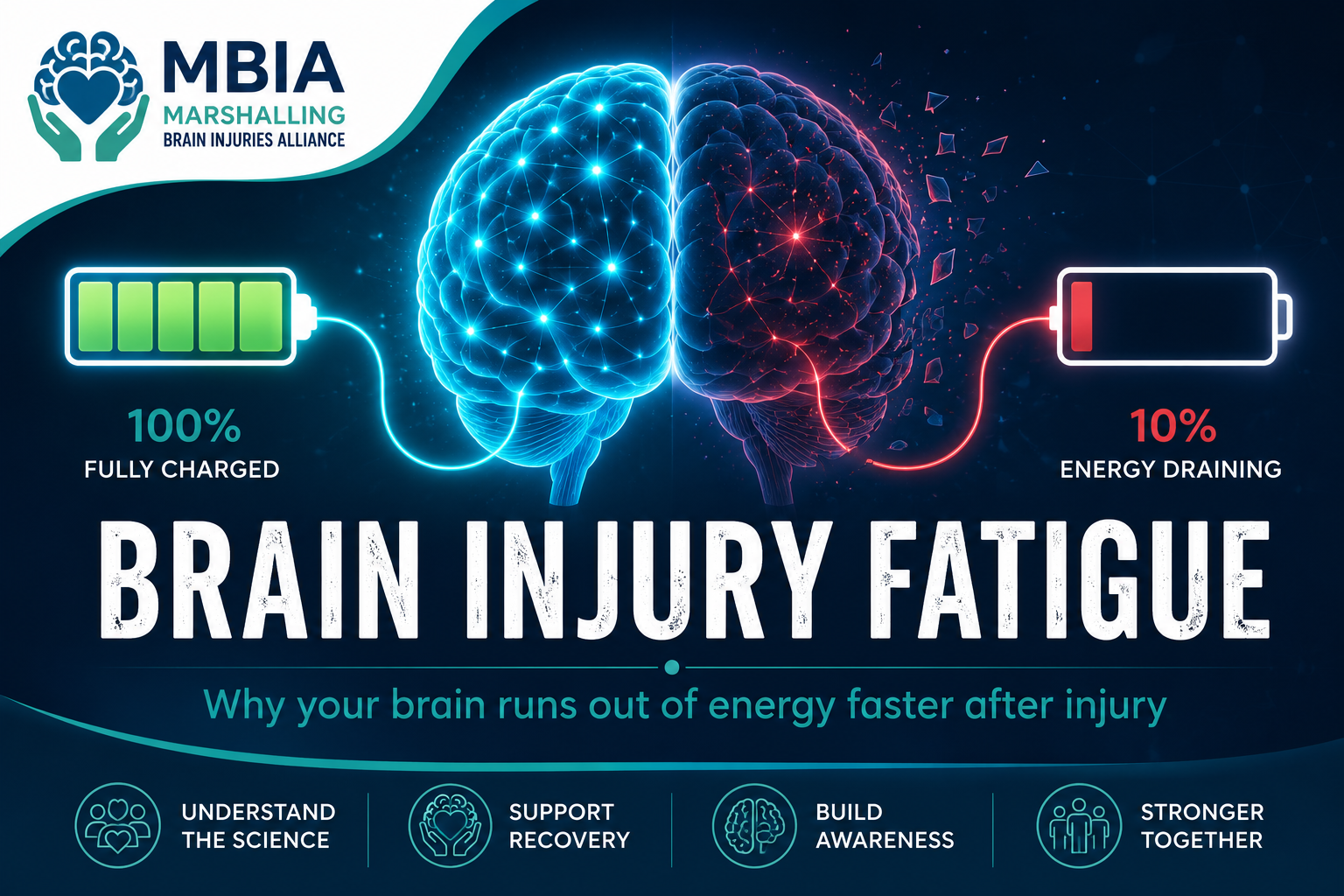
It can feel like someone has suddenly unplugged your brain.
Tasks that once seemed effortless—holding a conversation, reading a page of a book, shopping for groceries or answering emails—can become overwhelming. Many people describe feeling as though their brain "shuts down" without warning.
Unfortunately, because fatigue is invisible, it is often misunderstood by family, friends, employers and even healthcare professionals. People may hear comments such as:
- "You just need more sleep."
- "You look fine."
- "Maybe you're just out of shape."
- "Everyone gets tired."
The reality is very different.
Brain injury fatigue is recognised as one of the most common and disabling symptoms following concussion, traumatic brain injury (TBI) and other forms of acquired brain injury. It can affect every aspect of daily life and may continue for months or even years after the original injury.
The good news is that understanding why fatigue happens is the first step towards managing it more effectively.
What Is Brain Injury Fatigue?
Brain injury fatigue is a state of overwhelming physical, mental and emotional exhaustion that is out of proportion to the activity being performed.
Unlike ordinary tiredness:
- It can appear suddenly.
- Rest does not always fully relieve it.
- It may fluctuate from day to day.
- Mental tasks can be more exhausting than physical activity.
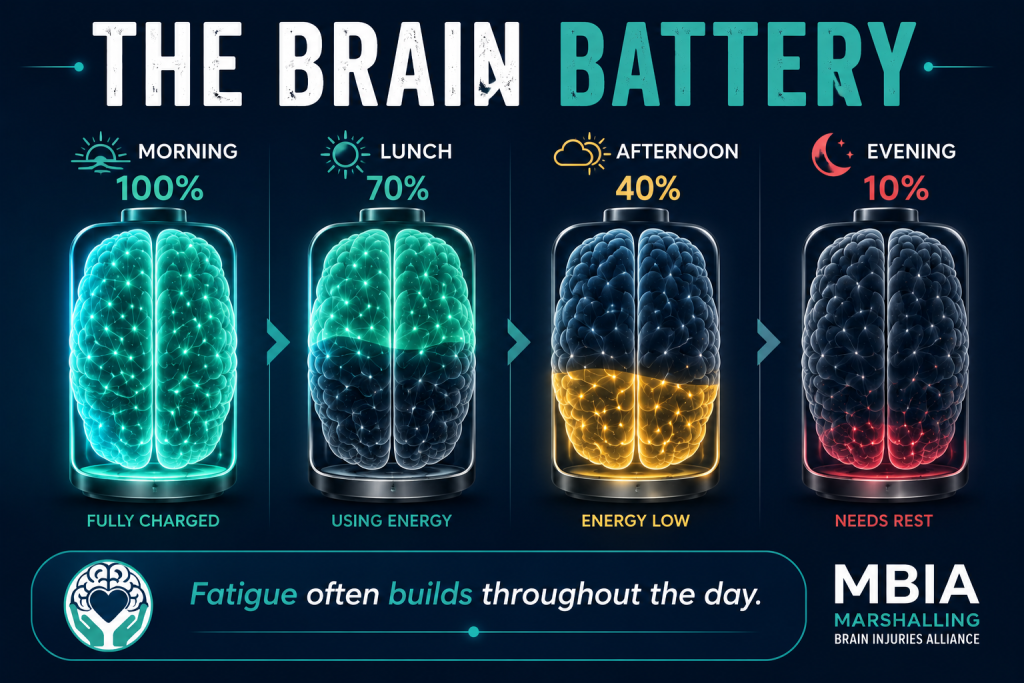
- Symptoms often worsen as the day progresses.
Many people describe it as:
"It's like my brain battery drains much faster than everyone else's."
This is actually a very good analogy.
Research suggests that after a brain injury, the brain often needs much more energy to perform everyday tasks.
How Much Energy Does the Brain Normally Use?
Although the brain makes up only about 2% of body weight, it uses approximately 20% of the body's energy while at rest.
That energy is needed to:
- maintain brain cells
- send electrical signals
- process information
- create memories
- control movement
- regulate emotions
- maintain attention
A healthy brain performs these tasks remarkably efficiently.
Following brain injury, that efficiency is often reduced.
Why Does Fatigue Happen After Brain Injury?
There isn't just one cause.
Scientists believe fatigue develops because several different processes occur inside the injured brain at the same time.
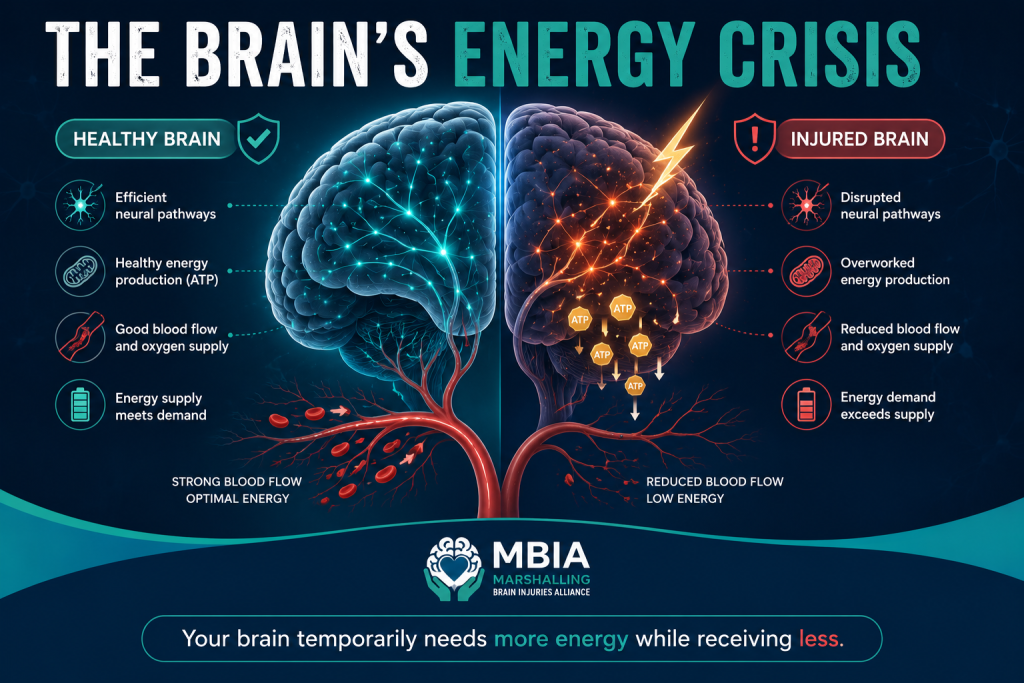
1. The Brain's Energy Crisis
One of the earliest effects of concussion or traumatic brain injury is something called an energy crisis.
Immediately after injury:
- brain cells release large amounts of potassium
- calcium floods into cells
- cells work overtime trying to restore balance
To do this they need enormous amounts of glucose and oxygen.
The problem is that, at exactly the same time, blood flow to the brain may temporarily decrease.
Imagine trying to drive your car uphill while running out of petrol.
The engine works harder...
...but there's less fuel available.
This mismatch between energy demand and energy supply is one reason many people feel exhausted after brain injury.
Although the acute energy crisis improves over days or weeks, some people continue to have less efficient brain metabolism long afterwards.
2. The Brain Has to Work Harder
Modern brain imaging has shown something fascinating.
When people with brain injuries perform memory or attention tasks, they often activate more areas of the brain than people without injuries.
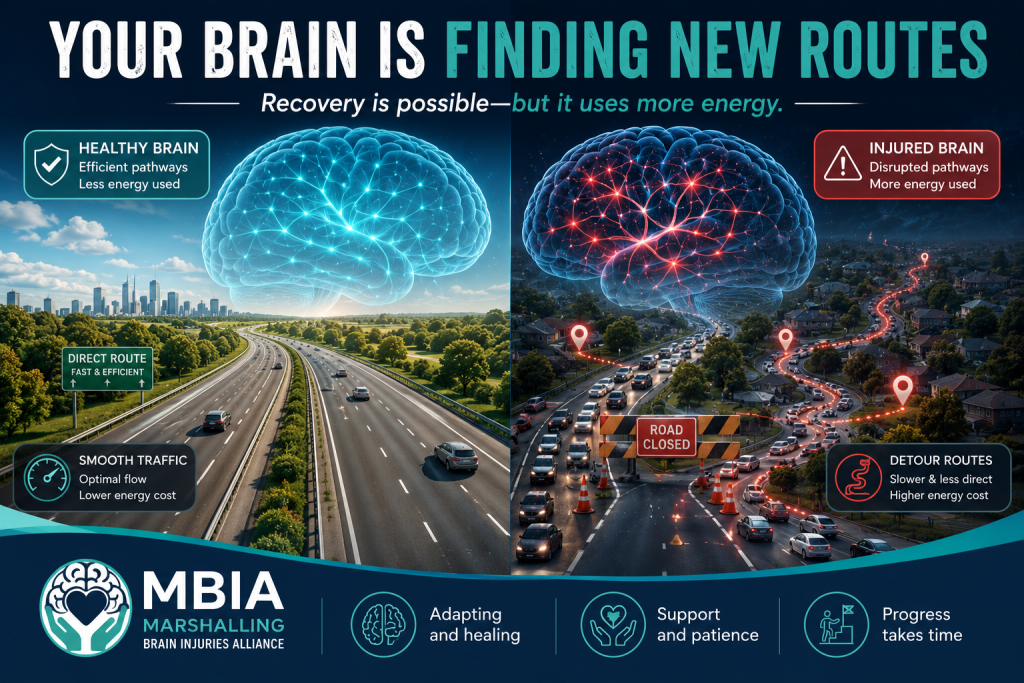
This suggests the brain is finding "detours" around damaged networks.
This is an example of neuroplasticity—the brain adapting by creating new pathways.
While this adaptation is remarkable, it is also less energy efficient.
Think of driving through a city.
Normally, you take the motorway.
If the motorway is closed, you can still reach your destination by using side roads—but the journey takes longer, requires more concentration and uses more fuel.
Your injured brain is doing something similar.
3. Inflammation
Brain injury triggers inflammation.
Inflammation is an important part of healing.
Specialised immune cells called microglia become active and help clear damaged tissue.
However, if inflammation persists longer than expected, it may contribute to ongoing symptoms including fatigue.
Researchers are still trying to understand:
- why inflammation settles quickly in some people
- why it persists in others
- how inflammation interacts with other symptoms
This remains an active area of research.
4. Sleep Disturbances
Many people assume fatigue simply means poor sleep.
Sleep certainly plays a role.
Brain injury commonly affects:
- falling asleep
- staying asleep
- deep restorative sleep
- REM sleep
- sleep-wake timing
Poor sleep then makes the brain work even harder during the day.
It becomes a vicious cycle.
Poor sleep → More fatigue → Less activity → Poor sleep again.
5. Sensory Overload
Many people with brain injury become sensitive to:
- bright lights
- noise
- busy environments
- crowds
- conversations
- screens
Your brain has to process all of this information.
If those filtering systems are less efficient after injury, the brain becomes overloaded much sooner.
This explains why a shopping centre may leave someone exhausted even though they have done very little physical activity.
6. Problems with Attention and Concentration
Many people don't realise concentration itself requires energy.
After brain injury:
- attention becomes harder
- multitasking becomes difficult
- filtering distractions becomes exhausting
Imagine trying to read while someone continuously changes the television channel.
That constant effort rapidly drains mental energy.
Why Mental Activity Can Be More Exhausting Than Physical Activity
This surprises many families.
Someone may appear physically well enough to:
- walk several miles
- mow the lawn
- exercise
Yet afterwards they cannot hold a conversation.
Mental effort often consumes far more energy than physical movement after brain injury.
Examples include:
- conversations
- reading
- paperwork
- driving
- shopping
- making decisions
- socialising
Why Fatigue Often Appears Later in the Day
Many people wake feeling relatively normal.
As the day progresses:
- energy stores reduce
- concentration becomes harder
- symptoms increase
This is sometimes called cognitive fatigue.
People may notice:
- headaches
- slower thinking
- irritability
- difficulty finding words
- dizziness
- increased mistakes
These are often signs that the brain needs a break.
How Long Can Fatigue Last?
Recovery varies enormously.
There is no fixed timeline.
Many people improve within:
Mild concussion
Days to several weeks.
Persistent post-concussion symptoms
Several months.
Moderate or severe brain injury
Months to years.
Some people continue to experience fatigue for many years.
This does not necessarily mean recovery has stopped.
The brain can continue adapting for a very long time.
Many people learn strategies that significantly improve quality of life even if fatigue does not disappear completely.
Factors That Can Make Fatigue Worse
Fatigue often fluctuates.
Common triggers include:
- poor sleep
- illness
- stress
- anxiety
- depression
- pain
- dehydration
- alcohol
- excessive screen time
- overheating
- busy environments
- trying to do too much in one day
Recognising personal triggers is often one of the most useful management strategies.
Practical Tips for People Living with Brain Injury
Fatigue cannot simply be "pushed through."
Trying to ignore it often leads to a "boom and bust" cycle—doing too much on a good day and paying for it with several bad days afterwards.
Strategies that many people find helpful include:
Pace yourself
Break larger jobs into smaller steps.
Prioritise
Ask:
"What absolutely needs doing today?"
Plan
Schedule important tasks when your energy is highest.
Take regular breaks
Don't wait until you're exhausted.
Short, planned rests are usually more effective than waiting until symptoms become severe.
Reduce multitasking
Focus on one task at a time.
Protect your sleep
Maintain regular sleep and wake times where possible.
Stay hydrated and eat regularly
The brain needs a steady supply of water and nutrients.
Exercise appropriately
Gentle activity, when recommended by your healthcare team, may improve long-term fatigue for some people, even though it may feel difficult initially.

Tips for Family Members
One of the hardest parts of fatigue is that it is invisible.
Your loved one may look completely well while feeling utterly exhausted.
Helpful approaches include:
- Believe what they tell you.
- Understand that mental activity is tiring.
- Allow breaks without guilt.
- Avoid comparing them with their pre-injury self.
- Help reduce unnecessary sensory overload.
- Encourage pacing rather than pushing through.
Compassion often makes a greater difference than advice.
Tips for Healthcare Professionals
Brain injury fatigue should be recognised as a genuine neurological symptom rather than a lack of motivation.
Good management includes:
- screening for fatigue routinely
- assessing sleep disorders
- identifying pain, anxiety or depression that may worsen fatigue
- educating patients about pacing
- encouraging gradual return to activity
- considering occupational therapy and fatigue management programmes where available
Helping patients understand why fatigue occurs can itself reduce frustration and anxiety.
What Does Current Research Tell Us?
Scientists continue to investigate why fatigue persists after brain injury.
Current areas of research include:
- brain energy metabolism
- neuroinflammation
- blood flow changes
- autonomic nervous system dysfunction
- hormonal changes
- advanced brain imaging
- blood biomarkers
Although many questions remain unanswered, researchers increasingly recognise fatigue as a biological consequence of brain injury—not simply a psychological response.
What We Know — and What We Don't Yet Know
✅ What We Know
- Fatigue is one of the most common symptoms after brain injury.
- The injured brain often uses energy less efficiently.
- Sleep, pain, stress and sensory overload can worsen fatigue.
- Pacing and energy management help many people.
- Recovery continues for much longer than many people expect.
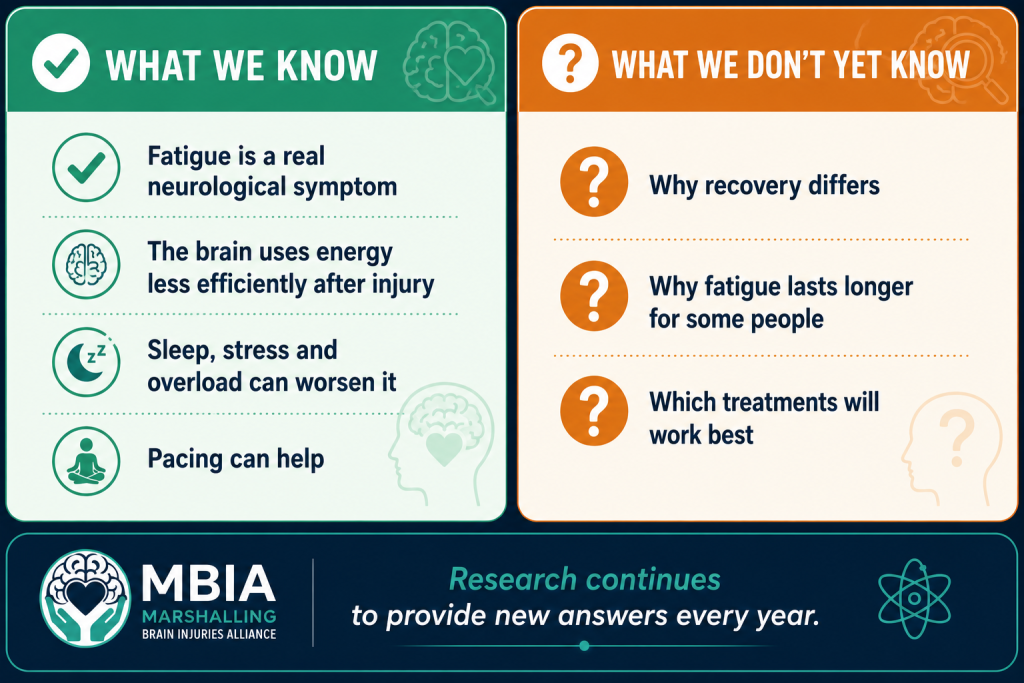
❓ What We Don't Yet Know
- Why fatigue lasts years for some people but not others.
- Exactly which biological processes drive long-term fatigue.
- Whether future medications or therapies will directly reduce fatigue.
- Which biomarkers may predict who develops persistent fatigue.
Research is moving forward, but there is still much to learn.
Final Thoughts
Brain injury fatigue is real.
It is not laziness.
It is not a lack of motivation.
It is not something people can simply "push through."
It reflects the extraordinary amount of work the brain is doing to recover, adapt and function after injury.
While fatigue can be one of the most frustrating symptoms, understanding why it happens allows people, families and healthcare professionals to work together to manage it more effectively.
Recovery rarely follows a straight line. There will be better days and harder days. But with education, pacing, support and ongoing research, many people find ways to improve their quality of life and regain confidence.
References
- American Congress of Rehabilitation Medicine. Management of Fatigue After Traumatic Brain Injury: Clinical Practice Recommendations.
- Cantor JB, et al. (2013). Fatigue after traumatic brain injury and its impact on participation and quality of life.
- Kluger BM, Krupp LB, Enoka RM. (2013). Fatigue and fatigability in neurological illness.
- Silverberg ND, Iverson GL. (2013). Is Rest After Concussion The Best Medicine?
- Theadom A, et al. (2016). Persistent problems one year following mild traumatic brain injury.
- Mollayeva T, et al. (2014). Fatigue in traumatic brain injury: a systematic review.
- Nampiaparampil DE. (2008). Prevalence of chronic pain after traumatic brain injury.
- Cicerone KD, et al. (2019). Evidence-Based Cognitive Rehabilitation: Updated Review.
- McInnes K, et al. (2017). Mild Traumatic Brain Injury (mTBI) and Chronic Cognitive Impairment: A Systematic Review.
- National Institute for Health and Care Excellence (NICE). Guidance relating to head injury rehabilitation and persistent symptoms.
Enjoyed this article? Join thousands of readers receiving our monthly Brain Injury Brief