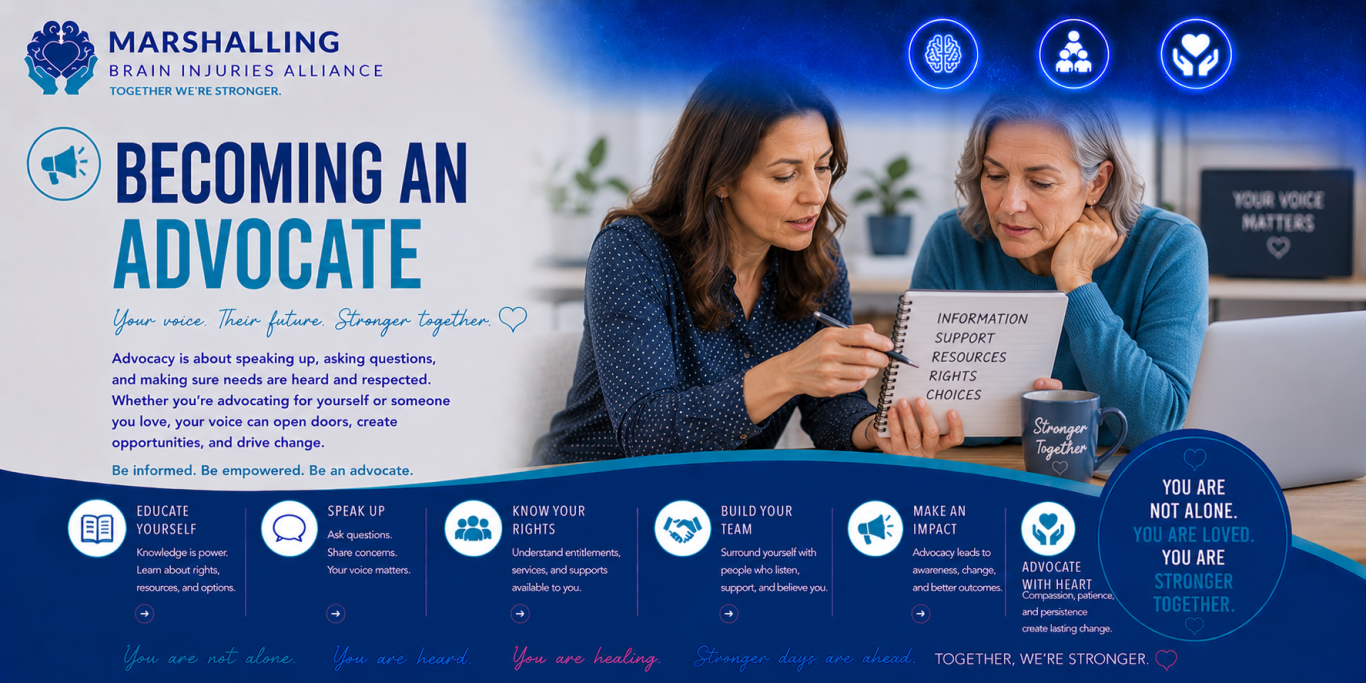
Why Advocacy Matters After Brain Injury
Brain injuries are often described as:
Invisible Disabilities
Many symptoms cannot be seen.
Examples include:
- Fatigue
- Brain fog
- Memory problems
- Sensory overload
- Emotional regulation difficulties
- Cognitive challenges
Because these symptoms are invisible, people are often misunderstood.
Many individuals report hearing comments such as:
"You look fine."
"Everyone forgets things."
"You're just stressed."
"Maybe you're depressed."
Advocacy helps ensure that invisible symptoms are recognised and taken seriously.
Advocating for Yourself
Self-advocacy means understanding your needs and communicating them clearly.
Examples include:
- Explaining symptoms
- Asking for adjustments
- Seeking clarification
- Requesting support
- Challenging inaccurate assumptions
Many people find self-advocacy difficult at first.
This is completely normal.
You Are the Expert on Your Experience
Healthcare professionals may understand medicine.
Employers may understand workplaces.
Benefits assessors may understand regulations.
But:
You are the expert on your own lived experience.
Your voice matters.
Your experiences matter.
Your symptoms matter.
What To Do If You Are Struggling
Healthcare
You may need to advocate for:
- Referrals
- Further investigations
- Symptom management
- Access to services
Sometimes healthcare professionals only see you for a short appointment.
Helping them understand the impact on daily life is important.
Benefits and Financial Support
Many people need to advocate for:
- Personal Independence Payment (PIP)
- Universal Credit
- Employment and Support Allowance (ESA)
- Blue Badge applications
Providing evidence and explaining how symptoms affect daily life is often crucial.
Workplace Adjustments
If you are working, you may need to request:
- Flexible hours
- Reduced workload
- Additional breaks
- Environmental adjustments
Advocacy can help ensure your needs are recognised.
Education
Children and young adults with brain injuries may need support in:
- School
- College
- University
Parents often become important advocates within education systems.
Social Care and Community Support
Advocacy may help people access:
- Assessments
- Support services
- Care packages
- Community resources
What Is Advocacy?
Advocacy means:
Speaking up for yourself or someone else to ensure needs, rights, and concerns are heard and understood.
Advocacy can take many forms.
Sometimes it is as simple as:
- Asking questions
- Requesting support
- Challenging misinformation
Other times it may involve:
- Appealing decisions
- Attending meetings
- Writing letters
- Raising awareness
Advocacy does not require special qualifications.
It starts with understanding your own situation and being willing to speak up.
Advocating for a Loved One
Many family members become advocates on behalf of
someone living with a brain injury.
This may involve:
- Attending appointments
- Completing paperwork
- Communicating concerns
- Challenging decisions
Advocating for someone else can be emotionally demanding.
Remember:
Supporting someone does not mean carrying everything alone.
What To Do If You Are Struggling
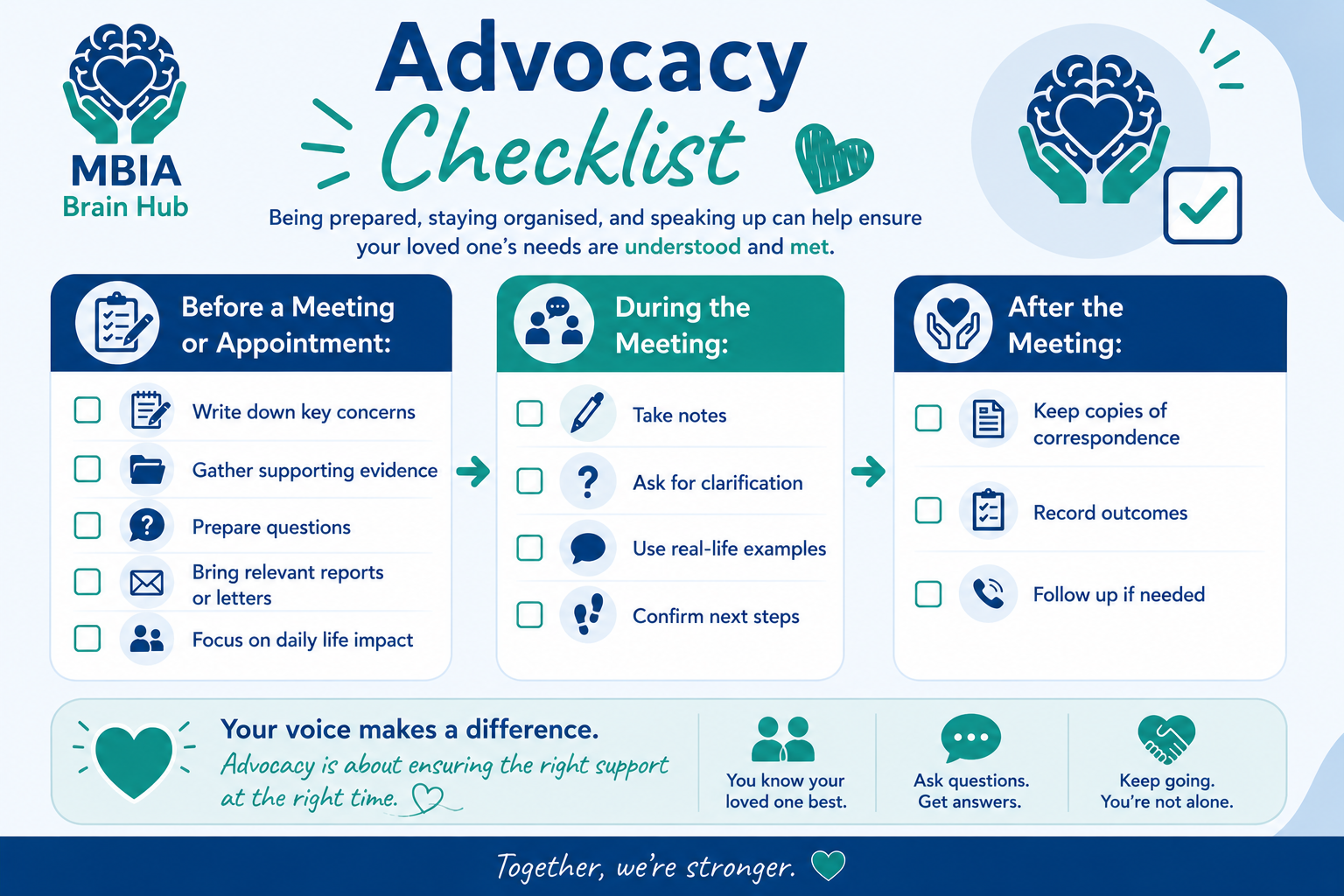
One of the most powerful advocacy tools is preparation.
Keep Records
Consider keeping records of:
- Symptoms
- Appointments
- Letters
- Reports
- Test results
Good records can provide valuable evidence when seeking support.
Use Real-Life Examples
Specific examples are often more effective than general statements.
Instead of:
❌ "My memory is poor."
Try:
✅ "I forgot three medical appointments last month despite using reminders."
Examples help people understand the impact of symptoms.
Focus on Daily Life
When advocating, explain:
How symptoms affect everyday activities.
For example:
- Work
- Parenting
- Driving
- Shopping
- Managing finances
- Relationships
Impact often matters more than diagnosis alone.
Ask Questions
You have the right to understand:
- Diagnoses
- Treatment options
- Decisions
- Processes
Never feel embarrassed to ask for clarification.
It's Okay to Take Someone With You
Many people find advocacy easier when supported by:
- A partner
- Family member
- Friend
- Support worker
Having someone alongside you can help reduce stress and improve communication.
Challenges Advocates Often Face
Advocacy is not always easy.
Common challenges include:
- Feeling dismissed
- Having to repeat yourself
- Delays
- Complex systems
- Emotional exhaustion
These experiences can be frustrating.
Persistence is often important.
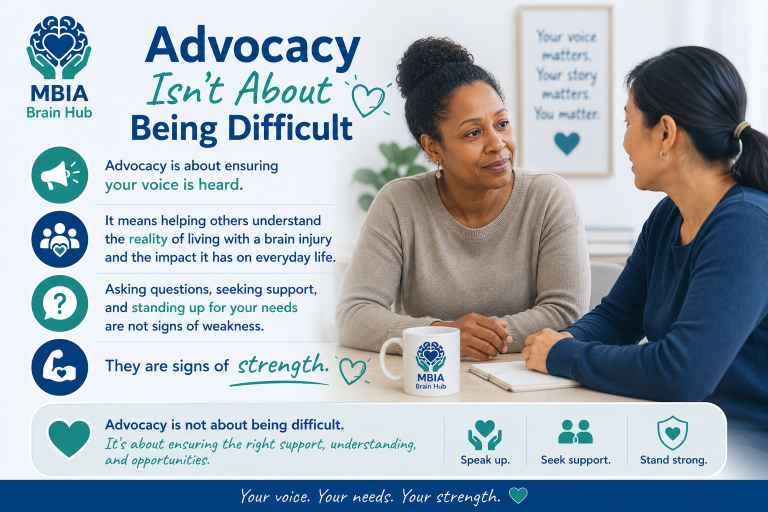
When Advocacy Feels Like Conflict
Many people worry that advocating means being confrontational.
It doesn't.
Effective advocacy is usually:
- Calm
- Respectful
- Clear
- Evidence-based
The goal is not to win an argument.
The goal is to ensure needs are understood.
Looking After Yourself
Advocacy can be exhausting.
Many people spend years:
- Fighting for support
- Chasing appointments
- Completing forms
- Explaining symptoms
It is important to recognise when you need a break.
You cannot advocate effectively if you are completely burned out.
You Don't Have to Do Everything
Not everyone wants to become a campaigner.
Not everyone wants to share their story publicly.
That is okay.
Advocacy can be as simple as:
- Asking for help
- Requesting an adjustment
- Explaining your symptoms
Every act of self-advocacy matters.
Advocacy and Awareness
Some people choose to take advocacy further.
They may:
- Share their story
- Join support groups
- Volunteer
- Campaign for change
- Raise awareness
This can help others feel less alone while contributing to wider understanding of brain injury.
A Message for People Living With Brain Injury
Your symptoms are real.
Your experiences are valid.
You deserve to be heard.
Advocacy is not about being difficult.
It is about ensuring your needs are recognised and understood.
Even small steps can make a difference.
A Message for Families
Families often become powerful advocates.
You may find yourself helping your loved one navigate systems that feel confusing and overwhelming.
Your support can make an enormous difference.
Just remember that your own wellbeing matters too.
You do not have to carry the entire burden alone.
Key Takeaways
- Advocacy means speaking up for yourself or someone else to ensure needs and rights are recognised.
- Brain injuries are often invisible, making advocacy particularly important.
- Good advocacy focuses on how symptoms affect daily life.
- Preparation, records, and real-life examples can strengthen your case.
- Advocacy does not need to be confrontational.
- Family members often play an important advocacy role.
- Looking after your own wellbeing is essential.
- Every act of advocacy, no matter how small, matters.
Continue Exploring
Together We're Stronger