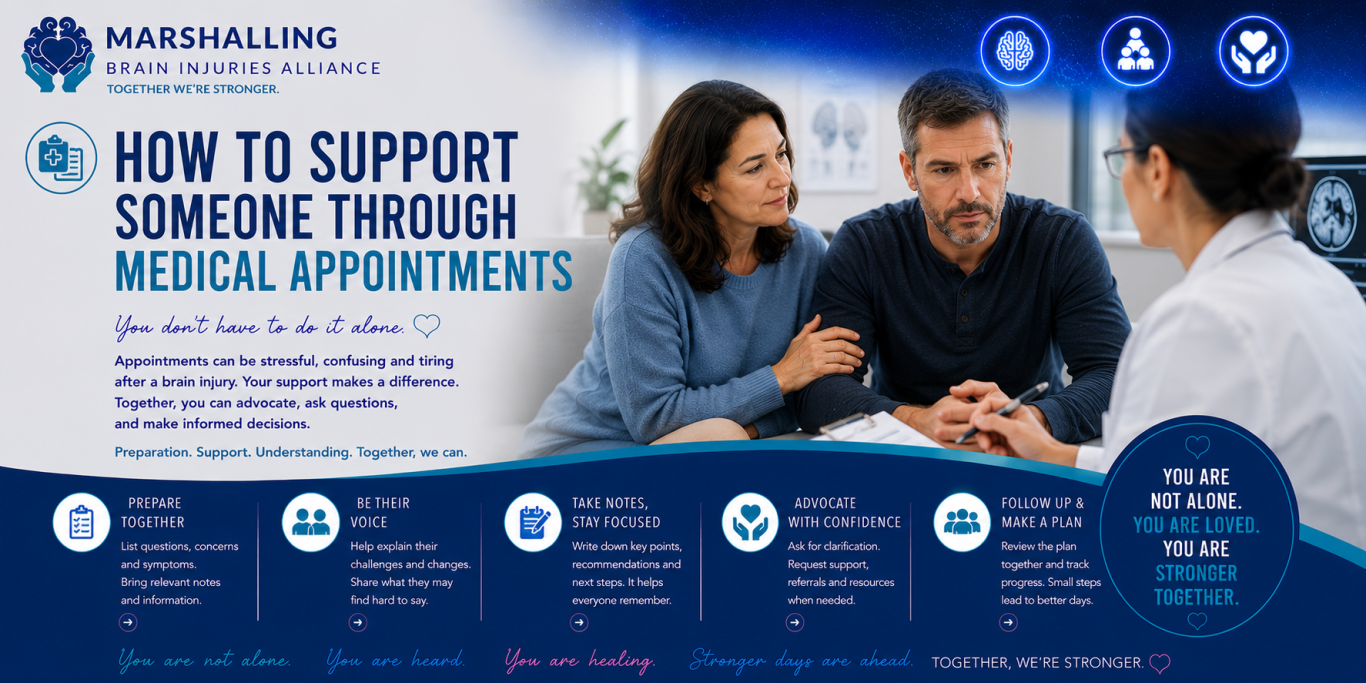
Why Medical Appointments Can Be Difficult After Brain Injury
Many people assume that if someone attends an appointment, they will remember what was discussed.
Unfortunately, it is not always that simple.
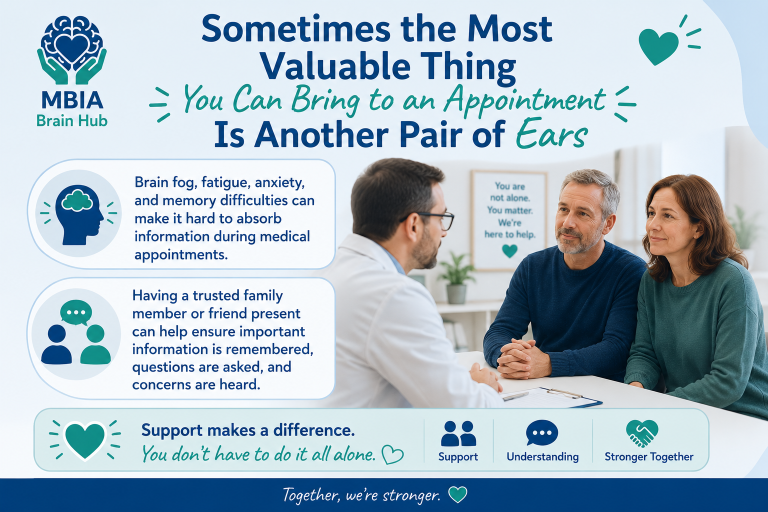
Brain injury symptoms can make appointments particularly challenging.
For example:
- Information may be difficult to process
- Questions may be forgotten
- Symptoms may be difficult to explain
- Important details may be missed
- Medical terminology may feel overwhelming
Many people leave appointments only to realise they forgot to mention the very reason they booked the appointment in the first place.
Why Having Support Helps
A supportive family member or carer can help by:
- Taking notes
- Providing reassurance
- Helping organise information
- Reminding the person of questions they wanted to ask
- Helping remember what was discussed
Having a second set of ears can be invaluable.
The Stress Factor
Medical appointments can also create anxiety.
People may worry about:
- Not being believed
- Forgetting information
- Getting emotional
- Receiving bad news
- Being dismissed
Stress can make memory and communication difficulties worse.
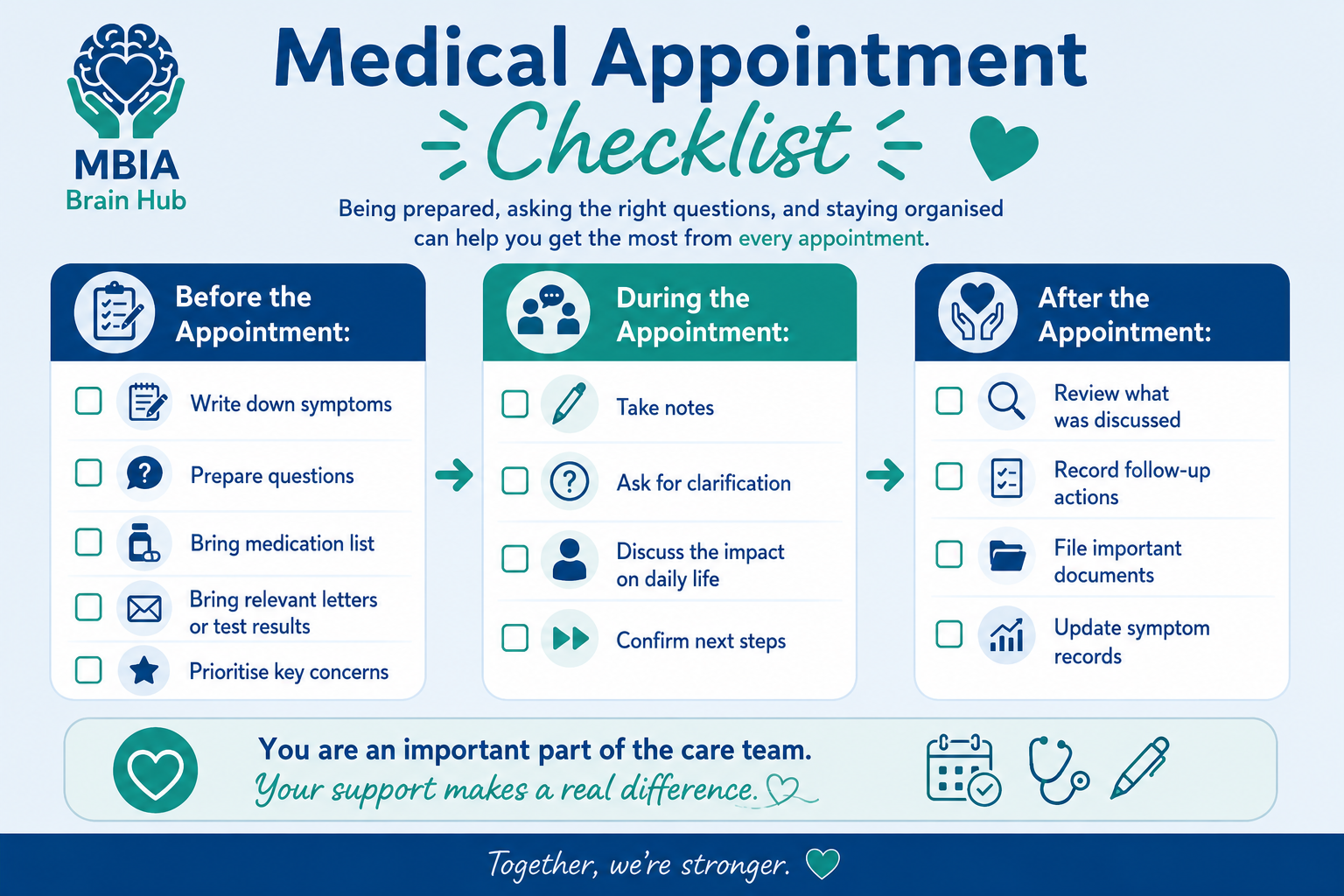
During The Appointment
Encourage Your Loved One to Speak First
One of the biggest challenges for family members is knowing when to step in.
As a general rule:
Allow the person with the brain injury to speak for themselves whenever possible.
This helps maintain:
- Independence
- Confidence
- Autonomy
Your role is to support, not replace.
Fill in the Gaps When Needed
Sometimes your loved one may:
- Forget information
- Become overwhelmed
- Lose their train of thought
This is where your support can be helpful.
You might say:
"Would it help if I added something?"
or
"Can I mention something we've noticed at home?"
This keeps the conversation collaborative rather than taking over.
Take Notes
Many people forget large parts of an appointment shortly after leaving.
Writing down:
- Advice
- Next steps
- Medication changes
- Referrals
can be extremely helpful.
Some families keep a dedicated medical notebook.
Ask for Clarification
Medical terminology can be confusing.
Never be afraid to ask:
"Could you explain that in simpler terms?"
or
"Can you tell us what that means in practice?"
Healthcare professionals would usually rather explain something twice than have it misunderstood.
Don't Be Afraid to Ask Questions
You are entitled to understand:
- Diagnoses
- Treatments
- Risks
- Benefits
- Next steps
Questions are not a nuisance.
They are part of good healthcare.
If You Feel Your Loved One Isn't Being Heard
Many people living with brain injuries report feeling dismissed or misunderstood.
If this happens:
Remain calm and respectful.
You might say:
"Can I explain how this is affecting daily life?"
or
"I don't think we've fully explained the impact these symptoms are having."
Providing real-life examples can often help.
Before the Appointment
Preparation is often one of the most effective ways to improve medical appointments.
Write Down Symptoms
Encourage your loved one to keep a record of:
- Symptoms
- Triggers
- Frequency
- Severity
- Changes over time
Many people struggle to recall symptoms accurately during appointments.
Having written information can help.
Create a Question List
Before attending, write down:
- Questions
- Concerns
- Topics you want discussed
This prevents important issues being forgotten.
A simple notebook or phone note can work well.
Prioritise What Matters Most
Appointments can feel rushed.
Identify:
What is the most important thing to discuss today?
Make sure this is addressed early in the appointment.
Gather Relevant Information
It can help to bring:
- Medication lists
- Previous letters
- Test results
- Symptom diaries
- Appointment notes
Having information readily available can save time and reduce stress.
What To Do If You Are Struggling
Review What Was Discussed
Many people benefit from going through the appointment afterwards.
Discuss:
- What was said
- What needs to happen next
- Any follow-up actions
This helps reinforce information.
Write Down Next Steps
Examples may include:
- Referrals
- Medication changes
- Blood tests
- Follow-up appointments
Having a written plan reduces confusion.
Keep Copies of Important Documents
Consider keeping:
- Medical letters
- Test results
- Appointment summaries
- Benefit evidence
in one organised location.
These records can be invaluable later.
Keep a Health Folder
Many families find it useful to have a:
Brain Injury Health Folder
This may contain:
- Medical history
- Medication lists
- Symptom records
- Contact details
- Copies of correspondence
Having everything together can reduce stress significantly.
Why Having Support Helps
Use Real-Life Examples
Instead of saying:
❌ "Their memory is bad."
Try:
✅ "They forgot three appointments this month despite reminders."
Specific examples are often more powerful.
Focus on Impact
Healthcare professionals often need to understand:
How symptoms affect daily life.
Explain:
- Work difficulties
- Family challenges
- Safety concerns
- Independence issues
Be Honest
Avoid exaggerating symptoms.
But don't minimise them either.
Many people living with brain injuries are so used to coping that they unintentionally downplay their struggles.
When You Need to Advocate
Sometimes family members need to advocate more actively.
This may be necessary when:
- Symptoms are severe
- Memory difficulties are significant
- Communication is affected
- The person becomes overwhelmed
Advocacy means helping someone communicate their needs.
It does not mean speaking over them or taking control unnecessarily.
Looking After Yourself
Supporting someone through healthcare appointments can be exhausting.
You may find yourself:
- Managing paperwork
- Chasing referrals
- Coordinating appointments
- Keeping records
These responsibilities can add significant pressure.
Remember that your wellbeing matters too.
A Message for People Living With Brain Injury
Accepting support does not mean losing independence.
Many people find that having someone alongside them reduces stress and improves communication.
Support and independence can exist together.
Key Takeaways
- Brain injury symptoms can make medical appointments difficult.
- Preparation is often the key to getting the most from appointments.
- Writing down symptoms and questions beforehand can be extremely helpful.
- Family members can support by taking notes and helping communicate concerns.
- Advocacy means helping someone be heard, not speaking over them.
- Real-life examples often help healthcare professionals understand the impact of symptoms.
- Keeping organised records can reduce stress and improve continuity of care.
- Supporting someone through appointments can make a meaningful difference.
Continue Exploring
Together We're Stronger