Why Self-Care Matters
When someone you love is living with a brain injury, it can be easy for your own needs to slowly disappear.
Many partners, family members, and carers find themselves focusing entirely on:
- Appointments
- Medications
- Support needs
- Safety concerns
- Finances
- Daily responsibilities
Over time, caring for someone else can become so consuming that you stop caring for yourself.
You may tell yourself:
- "They need me more than I need me."
- "I'll focus on myself later."
- "I don't have time."
- "I can't leave them."
While these thoughts are understandable, neglecting your own wellbeing can eventually affect both you and the person you care for.
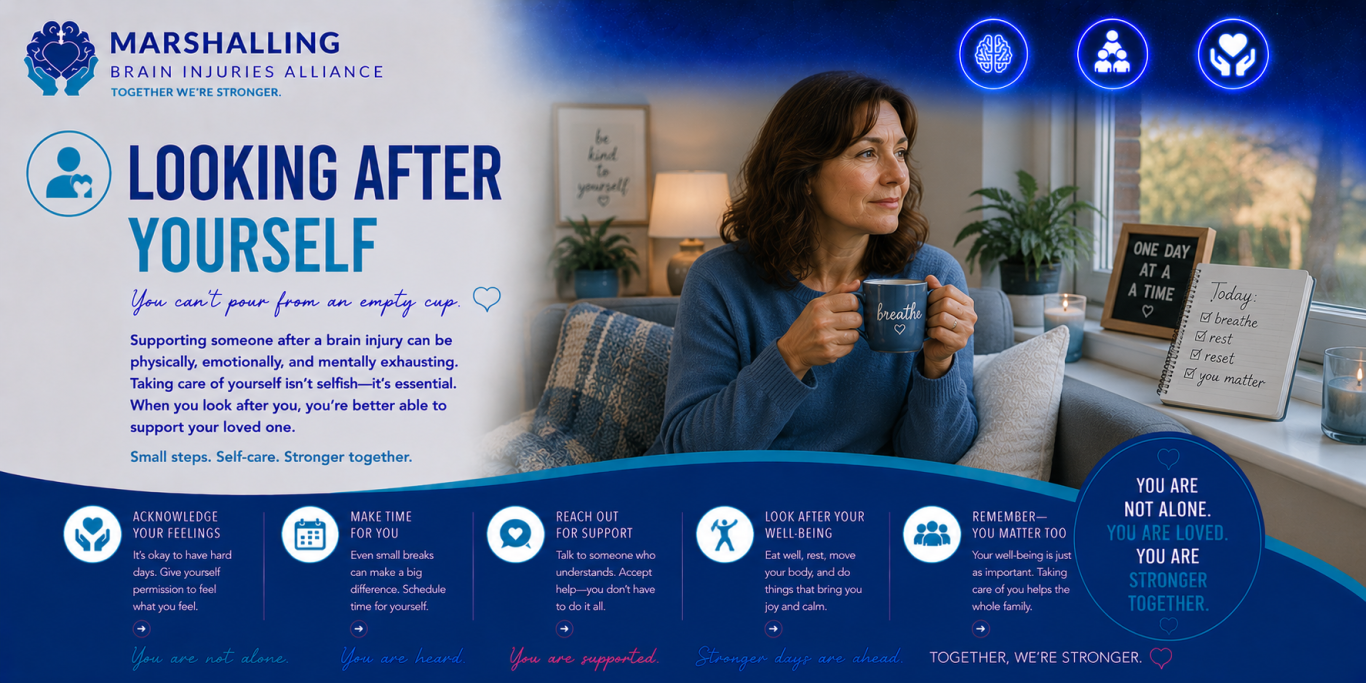
Looking after yourself is not selfish.
It is one of the most important things you can do.
The Risk of Caregiver Burnout
Many carers don't realise they are struggling until they are already exhausted.
Burnout can happen gradually.
Signs may include:
- Constant fatigue
- Feeling emotionally drained
- Irritability
- Anxiety
- Low mood
- Poor sleep
- Feeling resentful
- Feeling numb or detached
- Loss of enjoyment in things you once loved
- Feeling trapped or overwhelmed
These signs are not a reflection of how much you love the person you care for.
They are signs that you may need support too.
Why Carers Often Neglect Themselves
Many carers experience guilt when prioritising their own needs.
You may think:
- "How can I complain when they're the one with the injury?"
- "I shouldn't need a break."
- "I need to stay strong."
The reality is that caring for someone and caring for yourself are not competing priorities.
They are both essential.
The Oxygen Mask Principle
If you've ever listened to an airline safety briefing, you'll have heard:
"Put your own oxygen mask on before helping others."
This principle applies to caregiving too.
If you become completely exhausted, overwhelmed, or unwell, it becomes harder to support anyone else.
Looking after yourself allows you to continue caring in a healthier and more sustainable way.
Give Yourself Permission
Finding the Right Balance
The first step is often giving yourself permission to matter.
You are not "just" a carer.
You are still:
- A partner
- A parent
- A friend
- A family member
- An individual with your own needs and goals
Your identity matters too.
There is no perfect balance.
Some days will feel easier than others.
The goal is not to put yourself first all the time.
The goal is to make sure you don't disappear completely from your own life.
Make Time for Yourself
Even small amounts of time can make a difference.
This might be:
A walk
Reading a book
Meeting a friend
Going to the gym
Gardening
Listening to music
Enjoying a hobby
You don't need an entire day.
Sometimes 20 minutes can help you reset.
Key Takeaways
- Caring for someone with a brain injury can be rewarding but also exhausting.
- Neglecting your own wellbeing can lead to burnout, stress, and poor health.
- Looking after yourself is not selfish—it is essential.
- Small acts of self-care can have a significant impact.
- Staying connected, asking for help, and setting boundaries are important.
- You cannot pour from an empty cup.
- Supporting yourself allows you to better support your loved one.
Continue Exploring
Together We're Stronger