What Is Fatigue?
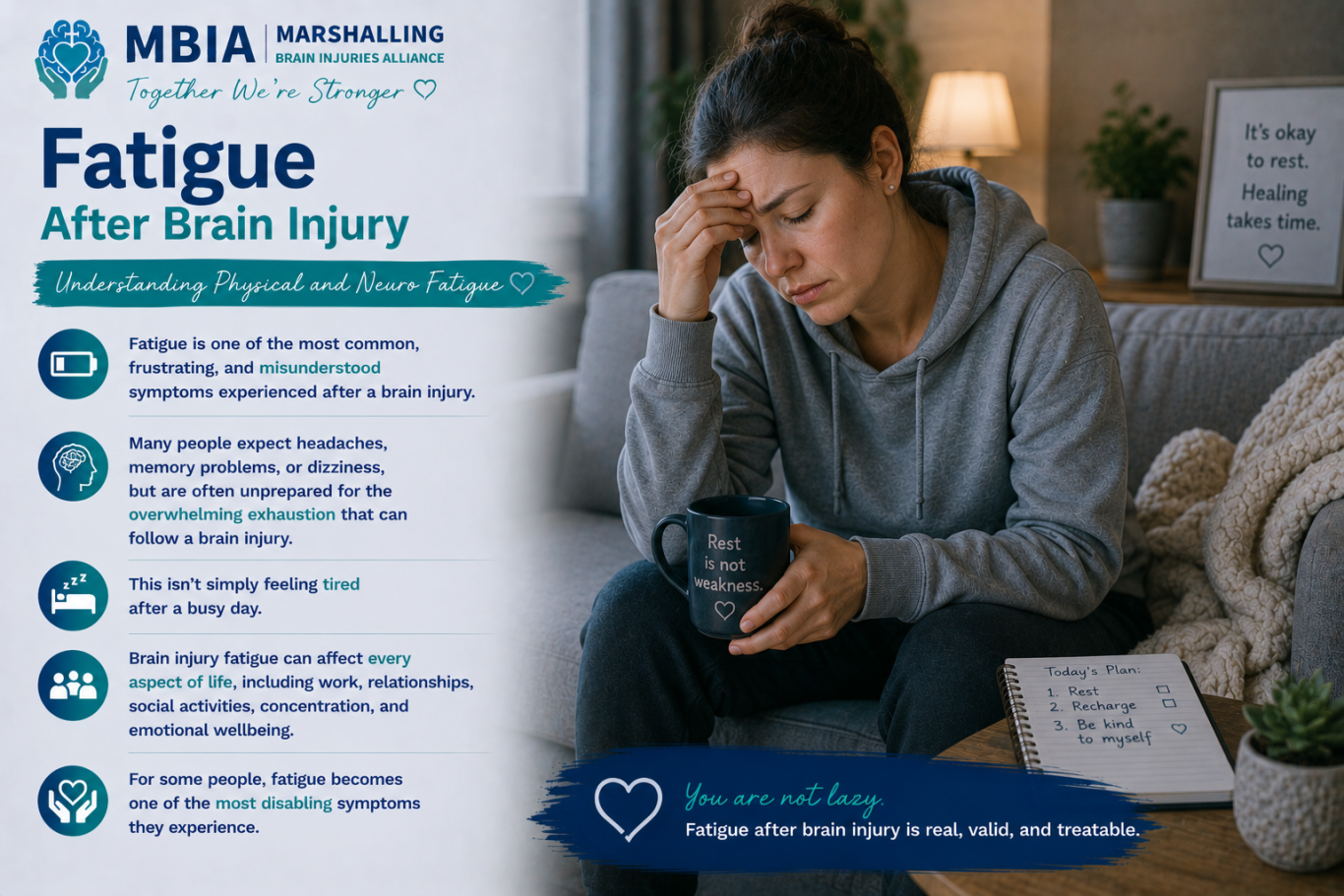
Fatigue is more than ordinary tiredness.
It is a feeling of physical, mental, or emotional exhaustion that
is often disproportionate to the activity performed.
People commonly describe it as:
- Feeling drained
- Running out of energy suddenly
- Hitting a "wall"
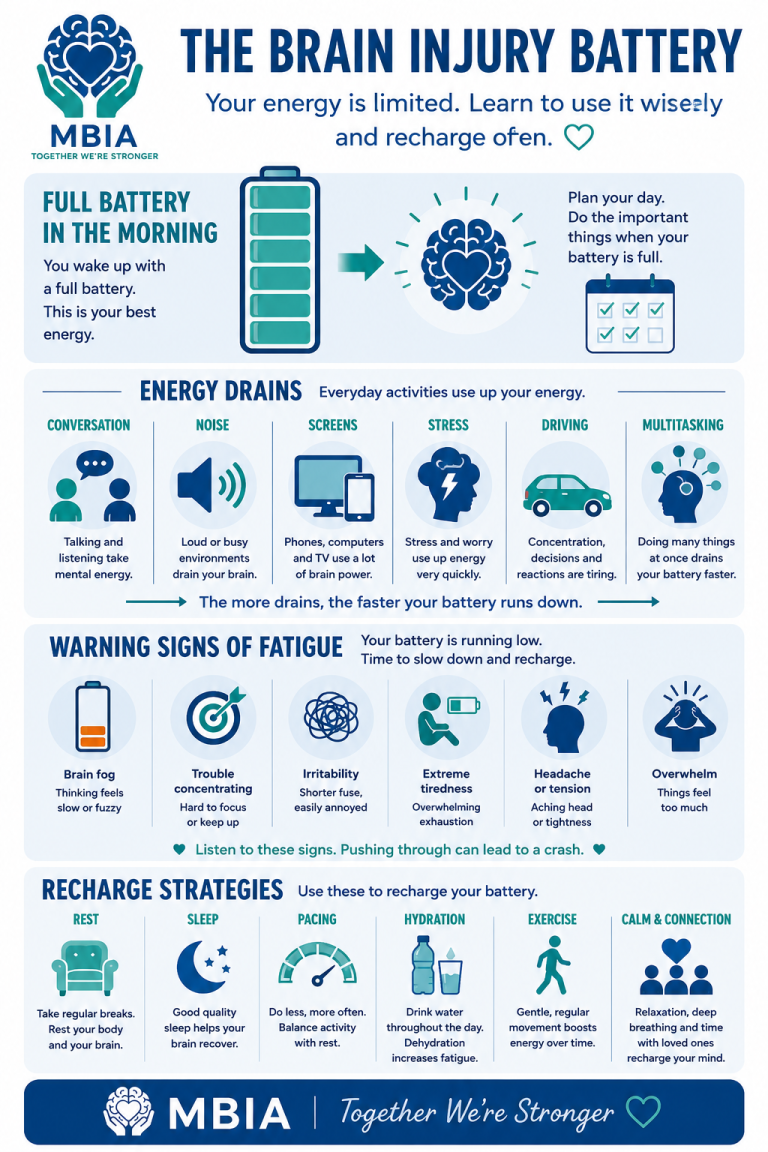
- Having an empty battery
- Feeling unable to think clearly
- Needing extended recovery time after activities
Unlike normal tiredness, fatigue often doesn't improve simply
by getting a good night's sleep.
What Is Neuro Fatigue?
Neuro fatigue (neurological fatigue or cognitive fatigue) is a
specific type of fatigue commonly experienced after brain injury.
It occurs because the injured brain often has to work much
harder to complete tasks that were once automatic.
Simple activities such as:
- Holding a conversation
- Reading
- Shopping
- Watching television
- Driving
- Making decisions
may require significantly more effort than before.
As a result, the brain uses more energy and becomes fatigued more quickly.
Many people describe neuro fatigue as:
"My brain runs out of energy before my body does."
Why Does Neuro Fatigue Happen?
Researchers are still learning about the exact mechanisms involved, but several factors are believed to contribute.
The Brain Is Working Harder
Following injury, the brain may need to use alternative pathways and additional resources to complete tasks.
This extra effort increases energy demands.
Imagine driving to work and suddenly finding your usual route closed.
You can still reach your destination, but it takes longer, requires more concentration, and uses more fuel.
The injured brain often operates in a similar way.
Reduced Processing Efficiency
Brain injuries can affect how efficiently information is processed.
The brain may take longer to:
- Understand information
- Respond to conversations
- Solve problems
- Make decisions
This increased effort can quickly drain mental energy.
Sleep Disturbances
Sleep problems are extremely common after brain injury.
Poor sleep can worsen fatigue and reduce the brain's ability to recover and recharge.
Pain and Headaches
Living with ongoing headaches or chronic pain consumes energy and can contribute significantly to fatigue.
Sensory Overload
Busy environments can place additional demands on the brain.
Many people find that:
- Crowds
- Noise
- Bright lights
- Multiple conversations
increase fatigue levels.
Emotional Stress
Anxiety, depression, frustration, and stress all require mental energy.
Emotional strain can make fatigue considerably worse.
The Boom and Bust Cycle
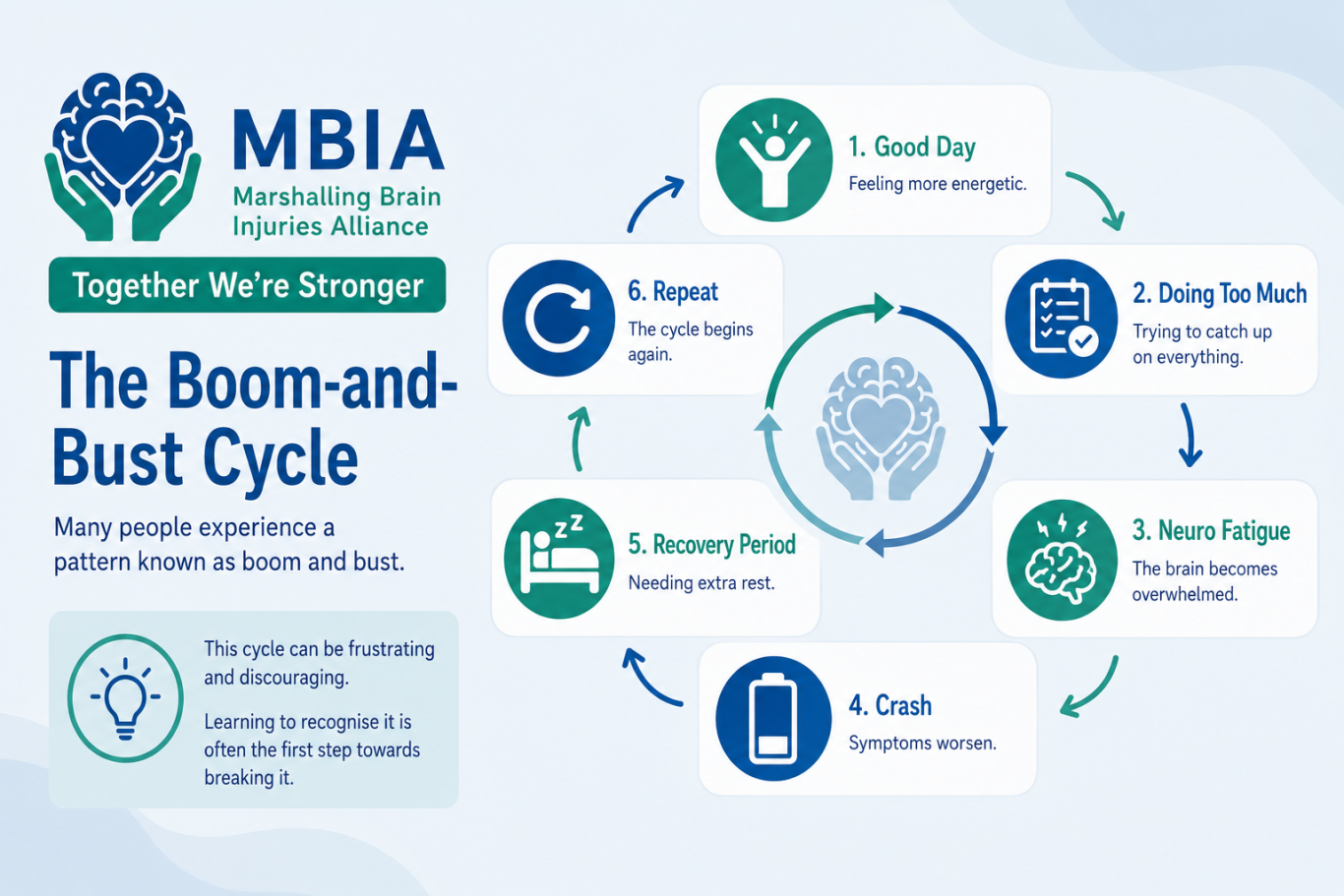
One of the most common patterns seen after brain injury is the "boom and bust" cycle.
It often looks like this:
Good Day
You feel better and decide to catch up on everything.
Overdoing It
You push through fatigue and complete far more than usual.
Crash
Symptoms worsen and recovery may take hours, days, or even longer.
Repeat
The cycle starts again.
Many people living with brain injury recognise this pattern.
Common Signs of Neuro Fatigue
Everyone experiences fatigue differently.
Common symptoms include:
- Feeling mentally exhausted
- Difficulty concentrating
- Increased forgetfulness
- Slower thinking
- Increased irritability
- Finding words harder to recall
- Difficulty following conversations
- Feeling overwhelmed easily
- Increased sensitivity to noise and light
- Needing frequent breaks
Many people notice symptoms worsen as the day progresses.
Practical Tips for Managing Fatigue
While fatigue may not disappear completely, many people find that certain strategies help.
1. Pace Yourself
Pacing is one of the most effective fatigue management tools.
Instead of waiting until exhaustion hits, plan regular breaks throughout the day.
Think of it as protecting your battery before it becomes empty.
2. Prioritise Important Tasks
Ask yourself:
"What absolutely needs to be done today?"
Focus on essentials first.
Not everything has to happen at once.
3. Break Tasks Into Smaller Steps
Large tasks can be overwhelming.
Breaking them into smaller chunks reduces mental demand.
For example:
Instead of cleaning the entire house:
- One room
- Rest
- Another room
- Rest
4. Learn Your Triggers
Many people notice fatigue worsens after:
- Busy environments
- Long conversations
- Screen use
- Driving
- Stress
- Poor sleep
Recognising triggers allows you to plan around them.
5. Protect Your Sleep
Good sleep is one of the most important tools for managing fatigue.
Helpful habits include:
- Consistent sleep times
- Limiting caffeine late in the day
- Reducing screen use before bed
- Creating a calm sleep environment
6. Stay Physically Active
Although it sounds counterintuitive, gentle physical activity may help improve energy levels over time.
Examples include:
- Walking
- Swimming
- Stretching
- Cycling
Always work within your own limits.
7. Manage Sensory Overload
If busy environments increase fatigue:
- Use earplugs or noise-cancelling headphones
- Take breaks from crowds
- Reduce unnecessary stimulation
8. Eat Regularly and Stay Hydrated
Skipping meals and dehydration can worsen fatigue.
Aim for:
- Balanced meals
- Adequate protein
- Healthy fats
- Plenty of fluids
9. Accept That Rest Is Part of Recovery
Many people feel guilty about resting.
However, rest is often a necessary part of managing a brain injury.
Rest is not laziness.
Rest is a management strategy.
How Fatigue Can Affect Daily Life
Fatigue can impact:
Work
Tasks may take longer and require more breaks.
Relationships
Socialising can become exhausting.
Parenting
Keeping up with family demands may feel overwhelming.
Hobbies
Activities you once enjoyed may require more energy than before.
Mental Health
Living with constant fatigue can be frustrating, isolating, and emotionally draining.
Can Fatigue Improve?
For many people, fatigue improves over time.
Others continue to experience some level of fatigue but learn effective ways to manage it.
Improvement may come from:
- Recovery and healing
- Better sleep
- Rehabilitation
- Exercise
- Lifestyle changes
- Improved pacing strategies
Recovery is different for everyone.
Key Takeaways
- Fatigue is one of the most common symptoms after brain injury.
- Neuro fatigue occurs when the brain uses more energy to perform everyday tasks.
- Fatigue is often invisible but can have a major impact on quality of life.
- Pacing, sleep, exercise, hydration, and stress management may help.
- Rest is a management tool, not a sign of weakness.
- Many people improve over time and develop effective strategies to manage their energy.
Continue Exploring
Together We're Stronger